In the front of his book The Fourth Estate, ex-editor of the Sunday Times Joel Mervis quotes former British Prime Minister Stanley Baldwin, who in 1937 said: "What the proprietorship of these papers is aiming at is power, and power without responsibility, a prerogative of the harlot throughout the ages".
Part of the ANC's resolution calling for debate on the Media Appeals Tribunal deals with accountability of the media.
Noting that "freedom of expression in society, including freedom of media, is located within the context of the Constitution of the Republic" and that the "media conducts itself in many instances to the detriment of the constitutional rights of others", the organisation argues that the media should contribute to the transformation of this new society and "be accountable for its actions".
What these quotes show is that the increasing exasperation felt by South Africans about media in general and the commercial press in particular, is not unique to South Africa. Of course here the dynamics are decidedly different from Britain in the 1930s, but the problem is the same a media that believes it is not subject to societal accountability. The most problematic fact about the South African media landscape is the lack of a diverse ownership profile, which in turn has an impact on the media products on offer from the commercial press.
Three large companies, Media 24, Independent Group and Johncom (the latter recently renamed Avuso), own virtually all the newspapers in this country. The vast majority publish only in English and Afrikaans. In the middle of last year, the ANC policy conference adopted the resolution cited above. It called for an investigation of the feasibility of establishing a Media Appeals Tribunal. This resolution was confirmed at the ANC's December conference in Polokwane. Not surprisingly, the commercial press is opposed to this idea. They argue that it is tantamount to interfering with the freedom of expression and freedom of media guaranteed under the Constitution.
The actual resolutions are interesting to read and should in fact be broadly circulated so that they can form the basis for public debate around the role of the media in a society in transition. Not surprisingly the print media has gone into attack mode and sensationalised the proposals as an attempt to control the media. What they fail to appreciate is that this is precisely the type of response that confirms to the public that the media is unwilling to introspect or acknowledge that there are problems.
On the whole, space is not provided for critical, independent-minded black people to air their views either about the media or matters that would upset white people. There are exceptions. When editor of The Star Moegsien Williams approached me in 2006 to write for the Independent Group, he stressed that he wished to make the opinion pages of more representative. City Press is also an exception. It is always possible to trivialise the ANC's concerns as an attempt to force the press to be less critical of it or the government. There is a far bigger body of public opinion that believes the commercial press does not reflect post-apartheid reality.
The resolution is a reflection of long and frustrating appeals to the media to respect the rights of all people and to try to be present in this democratic phase instead of being stuck in a default consciousness from our unequal past. If a referendum were to be to be held on the establishment of an Appeals Tribunal, it is probable most Africans who read the commercial press would say yes to the question of whether or not it should be established. The resolution reaffirms the ANC's commitment to media freedom, which it says is entrenched. It notes "that the ANC is faced with a major ideological offensive, largely driven by the opposition and factions in the mainstream media, whose key objective is the promotion of market fundamentalism, control of the media and the images it creates of a new democratic dispensation in order to retain old apartheid economic and social relations".
The ANC envisages the Tribunal to be a forum where the rights to freedom of expression can be balanced with other constitutional rights. It would adjudicate complaints by individuals against the print media in the same way as BCCSA and the Complaints and Compliance Committee of Icasa do in respect of the electronic media.
They believe that the Tribunal would not supplant, but strengthen the current Ombudsperson"s office. These are proposals for discussion. Despite my longstanding criticisms of the commercial press in this country, I have serious reservations about the desirability of such a Media Tribunal. While the motivation is persuasive, it is not likely to work in practice. It has the potential for acting as an editorial constraint, which is not at all what the intention is. The sense of responsibility and accountability that we seek as a nation, cannot be achieved through such a mechanism.
Other ways of ensuring representivity in the newsrooms and ownership is for Black business to either buy into existing media houses or set up their own. Also, all of us have a choice as to which newspapers to read. If papers do not reflect all perspectives, buy the one that does. Those who read poor quality newspapers out of habit, deserve to be aggravated. The key issue raised in the resolution is that as a matter of urgency the commercial press must be brought into the BEE charter processes.
The print media should give their readers an opportunity to debate the resolution by extracting it and giving a fair opportunity to ANC to explain to the public why they came to this conclusion. Scare tactics won't assist a balanced discussion of the implications. This is a chance for the commercial press to turn over a new leaf and to listen to the public. Humility can go a long way.
Source: IoL
Wednesday, February 13, 2008


Sunday, February 10, 2008
ANC rejects concerns over press freedom
South Africa's ruling African National Congress on Sunday rejected media accusations that its proposal for a new media complaints body was an attack on press freedom. The ANC said it had a good record on free speech in the country's vibrant media and said the press was over-reacting to the planned Media Appeals Tribunal, which would be accountable to parliament. "The aim is to strengthen the self-regulation mechanism of the print media... There is no such thing as an attack on media freedom," ANC Deputy President Kgalema Motlanthe told the South African National Editors Forum, the Sapa news agency reported.
At a congress in December the party called for the creation of a tribunal through which the public could file complaints against the media. How the new body would work in practice is not yet clear. South Africa already has an press ombudsman that deals with complaints. Relations between South Africa's government and its independent media has been strained at times, with ANC leaders often accusing it of harbouring a racist agenda. "As usual the media are over-reacting," Motlanthe said. "They say that the ANC is hyper-sensitive to criticism but look at the reaction of the media to this (the tribunal). They see it as an attack on media freedom," he said.
Pallo Jordan, a senior ANC member and minister of arts and culture, said media freedom had been "on the masthead of the ANC since its inception". "There is no (South African) political party with a comparable record on media freedom," Sapa quoted him as saying. "We value it ... it lends quality to our democracy and it should prevail," he added.
South Africa's print media is mainly privately owned, while the broadcast media is still dominated by state-owned SABC.
Source: IoL
At a congress in December the party called for the creation of a tribunal through which the public could file complaints against the media. How the new body would work in practice is not yet clear. South Africa already has an press ombudsman that deals with complaints. Relations between South Africa's government and its independent media has been strained at times, with ANC leaders often accusing it of harbouring a racist agenda. "As usual the media are over-reacting," Motlanthe said. "They say that the ANC is hyper-sensitive to criticism but look at the reaction of the media to this (the tribunal). They see it as an attack on media freedom," he said.
Pallo Jordan, a senior ANC member and minister of arts and culture, said media freedom had been "on the masthead of the ANC since its inception". "There is no (South African) political party with a comparable record on media freedom," Sapa quoted him as saying. "We value it ... it lends quality to our democracy and it should prevail," he added.
South Africa's print media is mainly privately owned, while the broadcast media is still dominated by state-owned SABC.
Source: IoL
Tuesday, February 5, 2008
CIA admit 'waterboarding' al-Qaida suspects
Interrogators used "waterboarding" on three men shortly after the September 11 attacks, the CIA admitted today, naming for the first time the victims of a technique widely perceived as torture.
The men subjected to waterboarding, which simulates drowning, were al-Qaida suspects Khalid Sheikh Mohammed, Abu Zubaydah and Abd al-Rahim al-Nashiri, the CIA director, Michael Hayden, told the US Congress. "We used it against these three detainees because of the circumstances at the time," Hayden said. "There was the belief that additional catastrophic attacks against the homeland were inevitable. And we had limited knowledge about al-Qaida and its workings. Those two realities have changed."
Hayden told the senate intelligence committee that Mohammed - the alleged mastermind of the 9/11 attacks - and the other two men were subject to waterboarding in 2002 and 2003. "The circumstances are different than they were in late 2001, early 2002," Hayden said, adding that he opposed limiting the CIA to interrogation techniques permitted in the US Army field manual, which bans waterboarding. Hayden told the committee that fewer than 100 people had been held in the CIA's terrorism detention and interrogation programme, with less than one-third subjected to "coercive" techniques. The CIA said in December that it had destroyed videotapes depicting the interrogations of Zubaydah and Nashiri, prompting a justice department investigation. The tapes were destroyed as Congress moved to pass a ban on inhumane interrogations and a prosecutor is investigating whether US intelligence officials broke the law or violated court orders in destroying the tapes.
In waterboarding, the victim's mouth is covered and water poured over his face, making the victim feel as if they are drowning. "Waterboarding taken to its extreme, could be death - you could drown someone," McConnell acknowledged. He said waterboarding remains a technique in the CIA's arsenal, but it would require the consent of the president and legal approval of the attorney general.
At the same hearing, the US director of national intelligence said the Taliban, which was overthrown in Afghanistan in late 2001, has expanded its operations into once-peaceful areas of western Afghanistan and around the capital, Kabul, despite the death or capture of three top commanders in the last year. McConnell also said al-Qaida maintains a "safe haven" in Pakistan's tribal areas, where the group is able to stage attacks supporting the Taliban in neighbouring Afghanistan. The Pakistani tribal areas provide al-Qaida "many of the advantages it once derived from its base across the border in Afghanistan, albeit on a smaller and less secure scale", allowing militants to train for strikes in Pakistan, the Middle East, Africa and the US, McConnell said. "Al-Qaida remains the pre-eminent threat against the United States, both here at home and abroad," McConnell said, even though the terror network had suffered setbacks in Iraq. He expressed concern that al-Qaida in Iraq is shifting its focus elsewhere in the region. "They may deploy resources to mount attacks outside the country," McConnell said, although fewer than 100 terrorists have moved to establish cells in other countries. McConnell also told the senate panel that US officials believe that Osama bin Laden is hiding in Pakistan's tribal areas. A report released in London said nearly 400 militant groups now operate around the world and the greatest proliferation has been in the border regions between Afghanistan, Pakistan and India.
The number of violent "non-state" groups has grown about 10% in the past year, according to the 2008 military balance report by the International Institute for Strategic Studies. Iraq and India, with more than 30 active guerrilla groups each, are the most volatile countries, the report said, with the Afghan-Pakistan border and the disputed Kashmir region between India and Pakistan the worst-affected areas.
Source: Guardian
The men subjected to waterboarding, which simulates drowning, were al-Qaida suspects Khalid Sheikh Mohammed, Abu Zubaydah and Abd al-Rahim al-Nashiri, the CIA director, Michael Hayden, told the US Congress. "We used it against these three detainees because of the circumstances at the time," Hayden said. "There was the belief that additional catastrophic attacks against the homeland were inevitable. And we had limited knowledge about al-Qaida and its workings. Those two realities have changed."
Hayden told the senate intelligence committee that Mohammed - the alleged mastermind of the 9/11 attacks - and the other two men were subject to waterboarding in 2002 and 2003. "The circumstances are different than they were in late 2001, early 2002," Hayden said, adding that he opposed limiting the CIA to interrogation techniques permitted in the US Army field manual, which bans waterboarding. Hayden told the committee that fewer than 100 people had been held in the CIA's terrorism detention and interrogation programme, with less than one-third subjected to "coercive" techniques. The CIA said in December that it had destroyed videotapes depicting the interrogations of Zubaydah and Nashiri, prompting a justice department investigation. The tapes were destroyed as Congress moved to pass a ban on inhumane interrogations and a prosecutor is investigating whether US intelligence officials broke the law or violated court orders in destroying the tapes.
In waterboarding, the victim's mouth is covered and water poured over his face, making the victim feel as if they are drowning. "Waterboarding taken to its extreme, could be death - you could drown someone," McConnell acknowledged. He said waterboarding remains a technique in the CIA's arsenal, but it would require the consent of the president and legal approval of the attorney general.
At the same hearing, the US director of national intelligence said the Taliban, which was overthrown in Afghanistan in late 2001, has expanded its operations into once-peaceful areas of western Afghanistan and around the capital, Kabul, despite the death or capture of three top commanders in the last year. McConnell also said al-Qaida maintains a "safe haven" in Pakistan's tribal areas, where the group is able to stage attacks supporting the Taliban in neighbouring Afghanistan. The Pakistani tribal areas provide al-Qaida "many of the advantages it once derived from its base across the border in Afghanistan, albeit on a smaller and less secure scale", allowing militants to train for strikes in Pakistan, the Middle East, Africa and the US, McConnell said. "Al-Qaida remains the pre-eminent threat against the United States, both here at home and abroad," McConnell said, even though the terror network had suffered setbacks in Iraq. He expressed concern that al-Qaida in Iraq is shifting its focus elsewhere in the region. "They may deploy resources to mount attacks outside the country," McConnell said, although fewer than 100 terrorists have moved to establish cells in other countries. McConnell also told the senate panel that US officials believe that Osama bin Laden is hiding in Pakistan's tribal areas. A report released in London said nearly 400 militant groups now operate around the world and the greatest proliferation has been in the border regions between Afghanistan, Pakistan and India.
The number of violent "non-state" groups has grown about 10% in the past year, according to the 2008 military balance report by the International Institute for Strategic Studies. Iraq and India, with more than 30 active guerrilla groups each, are the most volatile countries, the report said, with the Afghan-Pakistan border and the disputed Kashmir region between India and Pakistan the worst-affected areas.
Source: Guardian
Monday, February 4, 2008
South African court rules against extraditing Radovan Krejčíř
One of the country’s most notorious fugitives, billionaire Radovan Krejčíř, is another step closer to escaping Czech justice forever. Almost a year after he was arrested in South Africa, a Johannesburg court on Friday ruled against his extradition to the Czech Republic. The court said that the murder plot and three-billion-crown tax fraud he was accused of are not considered crimes in South Africa.
The news from Johannesburg was a bad blow for the Czech Republic where Krejčíř has already been sentenced in absentia to six and a half years for tax fraud and is charged with a variety of other crimes including conspiracy to murder, counterfeiting, extortion and abduction. Although the prosecutor in the case Deon Barnard is mulling over whether to file an appeal, saying he needs more time to study the court's justification of its decision, the Czech Justice Ministry has not given up on the case. On Friday the ministry’s spokeswoman Zuzana Kuncová read out a brief statement to the press: “The Czech Republic has cooperated fully with the South African authorities in this extradition request and we are prepared to continue doing so in the future. Friday’s ruling is that of an independent court in a sovereign state and the ministry is not in a position to pass judgment on it.”
Radovan Krejčíř has thumbed his nose at the Czech authorities for years. He first gained notoriety by giving the police the slip while they were raiding his luxury villa in Prague and escaping to the Seychelles where he and his family lived for two years – beyond the reach of Czech justice. The Interior Ministry vowed to catch up with him and when in April of last year he was apprehended at Johannesburg airport in South Africa Czech Interior Minister Ivan Langer said this was a message to all criminals that one could not escape justice forever. On Friday a triumphant Radovan Krejčíř parodied the minister’s words from Johannesburg: “I have two messages for my countrymen. First good news for all the decent people like myself – namely that justice has been done. And I have bad news for all the corrupt politicians back home, whom I warn that the truth will eventually come out and every one of them will be held accountable.”
Krejčíř’s latest triumph in his cat and mouse game with the Czech authorities is a major embarrassment, especially since the Czech side made some procedural mistakes which slowed down the Johannesburg court case, while Krejčíř never put a foot wrong. He had clearly studied the South African legal system in great detail and has asked for political asylum in the country. A decision on that request may take years and Krejčíř cannot be extradited before it is reached. If the court decides that it has reason to do so, which at present seems more unlikely than ever.
Source: Radio Praha
The news from Johannesburg was a bad blow for the Czech Republic where Krejčíř has already been sentenced in absentia to six and a half years for tax fraud and is charged with a variety of other crimes including conspiracy to murder, counterfeiting, extortion and abduction. Although the prosecutor in the case Deon Barnard is mulling over whether to file an appeal, saying he needs more time to study the court's justification of its decision, the Czech Justice Ministry has not given up on the case. On Friday the ministry’s spokeswoman Zuzana Kuncová read out a brief statement to the press: “The Czech Republic has cooperated fully with the South African authorities in this extradition request and we are prepared to continue doing so in the future. Friday’s ruling is that of an independent court in a sovereign state and the ministry is not in a position to pass judgment on it.”
Radovan Krejčíř has thumbed his nose at the Czech authorities for years. He first gained notoriety by giving the police the slip while they were raiding his luxury villa in Prague and escaping to the Seychelles where he and his family lived for two years – beyond the reach of Czech justice. The Interior Ministry vowed to catch up with him and when in April of last year he was apprehended at Johannesburg airport in South Africa Czech Interior Minister Ivan Langer said this was a message to all criminals that one could not escape justice forever. On Friday a triumphant Radovan Krejčíř parodied the minister’s words from Johannesburg: “I have two messages for my countrymen. First good news for all the decent people like myself – namely that justice has been done. And I have bad news for all the corrupt politicians back home, whom I warn that the truth will eventually come out and every one of them will be held accountable.”
Krejčíř’s latest triumph in his cat and mouse game with the Czech authorities is a major embarrassment, especially since the Czech side made some procedural mistakes which slowed down the Johannesburg court case, while Krejčíř never put a foot wrong. He had clearly studied the South African legal system in great detail and has asked for political asylum in the country. A decision on that request may take years and Krejčíř cannot be extradited before it is reached. If the court decides that it has reason to do so, which at present seems more unlikely than ever.
Source: Radio Praha
Friday, February 1, 2008
Fidentia financial director gets jail time
The financial director of Fidentia, Graham Maddock, was on Friday effectively jailed for seven years on 54 counts involving fraud, theft, money laundering, contraventions of the Financial Intelligence Centre Act and the reckless or fraudulent conduct of business. Maddock appeared in the Bellville Specialised Commercial Crime Court before magistrate Amrith Chabilall. His wife and family sat on benches behind the dock, and all embraced him before the police court orderly led him from the courtroom to the holding cells to be transported to Pollsmoor Prison. The hearing took the form of a plea-bargain agreement. Although the charges concerned his involvement with J Arthur Brown's Fidentia group as its financial director, Maddock's chartered accounting firm, Maddock Incorporated, was cited in the plea-bargain agreement as accused number one, and Maddock as accused number two.
Scorpions prosecutor senior counsel Bruce Morrison said the case was the fist time in South African legal history that any company had been found guilty of money laundering -- especially involving a sum of R200-million. Maddock was in the dock in his personal capacity, as well as representing Maddock Incorporated. Morrison said Maddock Incorporated was in fact Maddock's alter ego. The firm itself was fined R50-million for money laundering, but the fine was suspended for five years. For five violations of the Financial Intelligence Centre Act, the firm was fined an additional R10-million, also suspended for five years.
Morrison said the sentences imposed on both were a message to other accountable institutions that they had to comply with the Financial Intelligence Centre Act, as well as the Prevention of Organised Crime Act. Morrison added: "When we come after them, this is the kind of fine they will have to pay." On the money laundering charges, the plea agreement said Maddock's conduct was deliberately orchestrated by Brown.
Source: Mail & Guardian
Scorpions prosecutor senior counsel Bruce Morrison said the case was the fist time in South African legal history that any company had been found guilty of money laundering -- especially involving a sum of R200-million. Maddock was in the dock in his personal capacity, as well as representing Maddock Incorporated. Morrison said Maddock Incorporated was in fact Maddock's alter ego. The firm itself was fined R50-million for money laundering, but the fine was suspended for five years. For five violations of the Financial Intelligence Centre Act, the firm was fined an additional R10-million, also suspended for five years.
Morrison said the sentences imposed on both were a message to other accountable institutions that they had to comply with the Financial Intelligence Centre Act, as well as the Prevention of Organised Crime Act. Morrison added: "When we come after them, this is the kind of fine they will have to pay." On the money laundering charges, the plea agreement said Maddock's conduct was deliberately orchestrated by Brown.
Source: Mail & Guardian
Wednesday, January 23, 2008
Shielding Wall Street, US Supreme Court rejects Enron fraud case
Without explanation, the US Supreme Court Tuesday dismissed a lawsuit brought by pension and investment funds against major Wall Street banks for their part in the massive financial fraud carried out by the Enron Corporation, the Houston-based energy trading giant.
The suit sought to recover some $40 billion that were lost when Enron went bankrupt in late 2001. It charged the banks, including Merrill Lynch, Credit Suisse Group, Barclays Plc and other leading financial houses, with helping company executives cover up a mounting cash flow problem by disguising loans as revenues, setting up off-the-books partnerships and hiding losses in order to defraud investors.
The rejection of the case—an appeal of a lower court ruling barring the funds from suing the banks—came just one week after a 5-3 ruling that protected banks and other businesses that help companies falsify their financial pictures in order to defraud investors from lawsuits based on the federal securities fraud laws.
That ruling, issued in the case of Stoneridge Investment Partners, LLC v. Scientific-Atlanta, Inc., together with the dismissal of the Enron appeal are only the latest in a series of pro-business, anti-investor decisions from the Court designed to kill securities fraud lawsuits.
The Stonebridge decision was written by Justice Anthony Kennedy, who failed to take part in the deliberations on the Enron case. While Kennedy offered no explanation for his absence, the justice’s son is an investment banker at Credit Suisse in New York City.
The Stonebridge case charged that an accounting fraud by Charter Communications Inc., a St. Louis cable operator, was carried out with the collaboration of cable-television box manufacturers Motorola and Scientific-Atlanta (now owned by Cisco systems).
According to the lawsuit, Charter overpaid Motorola and Scientific-Atlanta $17 million for cable boxes, which the two manufacturers then kicked back to the operators by purchasing advertising, allowing Charter to add the money to its books as phony revenue.
In writing the majority decision, Kennedy made it clear that a key consideration was that holding such companies accountable for investment fraud could be bad for Wall Street. Allowing shareholder suits in such cases, he wrote, “may raise the cost of being a publicly traded company under our law and shift securities offerings away from domestic capital markets.”
Justice Stephen Breyer did not participate in the case, because he is a stockholder in Cisco Systems Inc., Scientific-Atlanta’s parent company.
Even a brief review of the decision and the history of the federal antifraud securities laws reveals that the ruling is utterly cynical, dishonest and result-driven.
In the wake of the 1929 stock market crash and in response to widespread fraud in the securities industry, the US Congress enacted the Securities Act of 1933 and the Securities Exchange Act of 1934. The 1933 law regulates the initial distribution of company shares, and the 1934 Act, for the most part, regulates post-distribution trading.
The general anti-fraud provision of the 1934 Act, Section 10(b), states:
“It shall be unlawful for any person, directly or indirectly, by the use of any means or instrumentality of interstate commerce or of the mails, or of any facility of any national securities exchange... To use or employ, in connection with the purchase or sale of any security registered on a national securities exchange or any security not so registered, any manipulative or deceptive device or contrivance in contravention of such rules and regulations as the Securities and Exchange Commission [the SEC, a federal agency] may prescribe.”
In 1942 the SEC adopted such a Rule, 10b-5, which provides that “It shall be unlawful for any person, directly or indirectly, by the use of any means or instrumentality of interstate commerce, or of the mails or of any facility of any national securities exchange, (a) To employ any device, scheme, or artifice to defraud, (b) To make any untrue statement of a material fact or to omit to state a material fact necessary in order to make the statements made, in the light of the circumstances under which they were made, not misleading, or (c) To engage in any act, practice, or course of business which operates or would operate as a fraud or deceit upon any person in connection with the purchase or sale of any security.”
Long ago, the Supreme Court approved suits for damages by private investors for violations of section 10(b) and SEC Rule 10b-5. Typically investors sue under the portion of Rule 10b-5 that forbids making false or incomplete statements. In those cases, the courts have required that the investors prove that they relied on fraudulent statements or a cover-up of information when buying or selling shares.
In a 1994 case, Central Bank of Denver v. First Interstate Bank, the Supreme Court decided that persons or businesses that knowingly or recklessly give “substantial assistance” to a company engaged in such deception cannot be held liable for defrauding investors. In a decision written by Justice Anthony Kennedy and backed by four other right-wing justices (former Chief Justice Rehnquist, retired Justice Sandra Day O’Connor and present Justices Antonin Scalia and Clarence Thomas), the Court refused, in the absence of a specific law passed by Congress, to apply the longstanding legal principle of aiding and abetting to those who help companies misrepresent or omit information in order to defraud investors, even if they themselves are not directly responsible for giving investors the misinformation.
In deciding the Central Bank case the Court however expressly recognized that the “commission of a manipulative act” was another, alternative basis for liability under 10(b) apart from directly making a misstatement. The Court decision said: “The absence of 10(b) aiding and abetting liability does not mean that secondary actors in the securities markets are always free from liability under the securities Acts. Any person or entity, including a lawyer, accountant, or bank, who employs a manipulative device or makes a material misstatement (or omission) on which a purchaser or seller of securities relies may be liable as a primary violator under 10b-5.” The Court stressed that the plaintiffs in the Central Bank case had conceded that the defendant bank had not committed a manipulative or deceptive act within the meaning of 10(b).
But in the Stoneridge case decided last week, the cable box manufacturers were charged with engaging precisely in such a manipulative or deceptive act.
The box suppliers knew that Charter wanted to use the kickback of money from the inflated cable box purchases in the form of advertising sales to inflate the company’s revenue picture by $17 million. Charter used the scheme to issue quarterly reports that would meet Wall Street expectations for operating cash flow and maintain its share price.
In order to keep Charter’s auditing firm from discovering the link between Charter’s increased payments for the boxes and the advertising purchases, the companies drafted documents to make it appear the transactions were unrelated and conducted in the ordinary course of business. The cable box companies sent documents to Charter falsely stating they had increased production costs on the boxes. Also, the new set-top box agreements were also backdated to make it appear that they were negotiated a month before the advertising agreements.
A class action lawsuit was filed on behalf of purchasers of Charter’s shares against not only Charter, but the cable box companies as well. The lawsuit charged that the companies were liable because they knowingly participated in a scheme that was aimed at and succeeded in inflating Charter’s revenue. If the companies had not assisted Charter, Charter’s auditor would not have been fooled, and the false financial statements would not have been issued.
Under this “scheme liability” legal theory, many banks and other companies had been successfully sued for assisting in massive accounting fraud by the likes of Enron and WorldCom in the 1990s. Nonetheless, the cable box companies succeed in getting the case dismissed in the lower courts.
Justice Kennedy, who wrote the majority decision in the Stonebridge case, was also the author of the 1994 decision. This time Kennedy was again joined by the far-right wing bloc of Justices—Scalia and Thomas, along with current Chief Justice John Roberts and Justice Samuel Alito.
In refusing to hold the cable box companies liable, Kennedy wrote that since they had not themselves made the public misstatements as to Charter’s revenues, to hold them liable would in effect permit the sort of aider and abettor liability thrown out in the Central Bank case. The investors, Kennedy wrote, were required to show they relied on these the manufacturing companies’ deceptive actions but could not do so “except in an indirect chain that we find too remote for liability.”
This is legal sophistry. Kennedy and the majority ignored that the conduct alleged was critically different from the Central Bank case because the bank in that case did not itself engage in a proscribed deceptive act and, therefore, did not itself directly violate section 10(b) and Rule 10b-5. In other words, they ignored their express recognition in Central Bank that such conduct is an additional ground for liability beyond that arising from publicly making a misstatement.
There is no reason to impose the requirement that investors prove they relied on misinformation produced by the companies’ actions to find them liable. Under the plain language of the statute banning deceptive practices, the real question is instead whether the defendants’ conduct caused the investors to purchase their shares under false pretenses.
In a dissenting opinion in the Stoneridge case, Justice John Paul Stevens argued that the acts of the cable box companies were enough to impose liability because they had the foreseeable effect of causing investors to purchase their shares under false pretenses. The law has long treated a misrepresentation made to a third person the maker intends or has reason to expect will be repeated or its substance communicated to the victim the same as direct falsehoods for liability purposes. For all practical purposes the sham transactions the manufacturing companies engaged in had the same effect on Charter’s profit and loss statement as if they had themselves made false entries directly on Charter’s books.
The Stoneridge ruling cannot be seen as anything other than a political decision to serve the reactionary economic interests of finance capital. In an interview with the New York Times, J. Edward Ketz, an associate professor of accounting at Pennsylvania State University’s Smeal College of Business, called the ruling “a travesty of justice” and a “huge step backwards in the fight to prevent further accounting frauds from harming investors and the American economy.”
The ruling provoked an audible sigh of relief on Wall Street and from such employers’ groups as the National Association of Manufacturers, because of fear that a ruling in the investors’ favor would have left large numbers of companies and banks vulnerable to lawsuits over the massive fraud that has characterized the US economy.
The ruling is particularly timely given the unwinding of the sub-prime mortgage scandal. Many investment and commercial banks that might otherwise face liability to investors under the securities laws will be able now to dodge it. The banks created all sorts of formally separate “off balance sheet” entities to foist packages of such mortgages onto investors. They will argue that, as in Stoneridge, only those entities and not the banks themselves should be liable for any fraud relating to the real value of these mortgages.
Source: Word Socialist Web Site
The suit sought to recover some $40 billion that were lost when Enron went bankrupt in late 2001. It charged the banks, including Merrill Lynch, Credit Suisse Group, Barclays Plc and other leading financial houses, with helping company executives cover up a mounting cash flow problem by disguising loans as revenues, setting up off-the-books partnerships and hiding losses in order to defraud investors.
The rejection of the case—an appeal of a lower court ruling barring the funds from suing the banks—came just one week after a 5-3 ruling that protected banks and other businesses that help companies falsify their financial pictures in order to defraud investors from lawsuits based on the federal securities fraud laws.
That ruling, issued in the case of Stoneridge Investment Partners, LLC v. Scientific-Atlanta, Inc., together with the dismissal of the Enron appeal are only the latest in a series of pro-business, anti-investor decisions from the Court designed to kill securities fraud lawsuits.
The Stonebridge decision was written by Justice Anthony Kennedy, who failed to take part in the deliberations on the Enron case. While Kennedy offered no explanation for his absence, the justice’s son is an investment banker at Credit Suisse in New York City.
The Stonebridge case charged that an accounting fraud by Charter Communications Inc., a St. Louis cable operator, was carried out with the collaboration of cable-television box manufacturers Motorola and Scientific-Atlanta (now owned by Cisco systems).
According to the lawsuit, Charter overpaid Motorola and Scientific-Atlanta $17 million for cable boxes, which the two manufacturers then kicked back to the operators by purchasing advertising, allowing Charter to add the money to its books as phony revenue.
In writing the majority decision, Kennedy made it clear that a key consideration was that holding such companies accountable for investment fraud could be bad for Wall Street. Allowing shareholder suits in such cases, he wrote, “may raise the cost of being a publicly traded company under our law and shift securities offerings away from domestic capital markets.”
Justice Stephen Breyer did not participate in the case, because he is a stockholder in Cisco Systems Inc., Scientific-Atlanta’s parent company.
Even a brief review of the decision and the history of the federal antifraud securities laws reveals that the ruling is utterly cynical, dishonest and result-driven.
In the wake of the 1929 stock market crash and in response to widespread fraud in the securities industry, the US Congress enacted the Securities Act of 1933 and the Securities Exchange Act of 1934. The 1933 law regulates the initial distribution of company shares, and the 1934 Act, for the most part, regulates post-distribution trading.
The general anti-fraud provision of the 1934 Act, Section 10(b), states:
“It shall be unlawful for any person, directly or indirectly, by the use of any means or instrumentality of interstate commerce or of the mails, or of any facility of any national securities exchange... To use or employ, in connection with the purchase or sale of any security registered on a national securities exchange or any security not so registered, any manipulative or deceptive device or contrivance in contravention of such rules and regulations as the Securities and Exchange Commission [the SEC, a federal agency] may prescribe.”
In 1942 the SEC adopted such a Rule, 10b-5, which provides that “It shall be unlawful for any person, directly or indirectly, by the use of any means or instrumentality of interstate commerce, or of the mails or of any facility of any national securities exchange, (a) To employ any device, scheme, or artifice to defraud, (b) To make any untrue statement of a material fact or to omit to state a material fact necessary in order to make the statements made, in the light of the circumstances under which they were made, not misleading, or (c) To engage in any act, practice, or course of business which operates or would operate as a fraud or deceit upon any person in connection with the purchase or sale of any security.”
Long ago, the Supreme Court approved suits for damages by private investors for violations of section 10(b) and SEC Rule 10b-5. Typically investors sue under the portion of Rule 10b-5 that forbids making false or incomplete statements. In those cases, the courts have required that the investors prove that they relied on fraudulent statements or a cover-up of information when buying or selling shares.
In a 1994 case, Central Bank of Denver v. First Interstate Bank, the Supreme Court decided that persons or businesses that knowingly or recklessly give “substantial assistance” to a company engaged in such deception cannot be held liable for defrauding investors. In a decision written by Justice Anthony Kennedy and backed by four other right-wing justices (former Chief Justice Rehnquist, retired Justice Sandra Day O’Connor and present Justices Antonin Scalia and Clarence Thomas), the Court refused, in the absence of a specific law passed by Congress, to apply the longstanding legal principle of aiding and abetting to those who help companies misrepresent or omit information in order to defraud investors, even if they themselves are not directly responsible for giving investors the misinformation.
In deciding the Central Bank case the Court however expressly recognized that the “commission of a manipulative act” was another, alternative basis for liability under 10(b) apart from directly making a misstatement. The Court decision said: “The absence of 10(b) aiding and abetting liability does not mean that secondary actors in the securities markets are always free from liability under the securities Acts. Any person or entity, including a lawyer, accountant, or bank, who employs a manipulative device or makes a material misstatement (or omission) on which a purchaser or seller of securities relies may be liable as a primary violator under 10b-5.” The Court stressed that the plaintiffs in the Central Bank case had conceded that the defendant bank had not committed a manipulative or deceptive act within the meaning of 10(b).
But in the Stoneridge case decided last week, the cable box manufacturers were charged with engaging precisely in such a manipulative or deceptive act.
The box suppliers knew that Charter wanted to use the kickback of money from the inflated cable box purchases in the form of advertising sales to inflate the company’s revenue picture by $17 million. Charter used the scheme to issue quarterly reports that would meet Wall Street expectations for operating cash flow and maintain its share price.
In order to keep Charter’s auditing firm from discovering the link between Charter’s increased payments for the boxes and the advertising purchases, the companies drafted documents to make it appear the transactions were unrelated and conducted in the ordinary course of business. The cable box companies sent documents to Charter falsely stating they had increased production costs on the boxes. Also, the new set-top box agreements were also backdated to make it appear that they were negotiated a month before the advertising agreements.
A class action lawsuit was filed on behalf of purchasers of Charter’s shares against not only Charter, but the cable box companies as well. The lawsuit charged that the companies were liable because they knowingly participated in a scheme that was aimed at and succeeded in inflating Charter’s revenue. If the companies had not assisted Charter, Charter’s auditor would not have been fooled, and the false financial statements would not have been issued.
Under this “scheme liability” legal theory, many banks and other companies had been successfully sued for assisting in massive accounting fraud by the likes of Enron and WorldCom in the 1990s. Nonetheless, the cable box companies succeed in getting the case dismissed in the lower courts.
Justice Kennedy, who wrote the majority decision in the Stonebridge case, was also the author of the 1994 decision. This time Kennedy was again joined by the far-right wing bloc of Justices—Scalia and Thomas, along with current Chief Justice John Roberts and Justice Samuel Alito.
In refusing to hold the cable box companies liable, Kennedy wrote that since they had not themselves made the public misstatements as to Charter’s revenues, to hold them liable would in effect permit the sort of aider and abettor liability thrown out in the Central Bank case. The investors, Kennedy wrote, were required to show they relied on these the manufacturing companies’ deceptive actions but could not do so “except in an indirect chain that we find too remote for liability.”
This is legal sophistry. Kennedy and the majority ignored that the conduct alleged was critically different from the Central Bank case because the bank in that case did not itself engage in a proscribed deceptive act and, therefore, did not itself directly violate section 10(b) and Rule 10b-5. In other words, they ignored their express recognition in Central Bank that such conduct is an additional ground for liability beyond that arising from publicly making a misstatement.
There is no reason to impose the requirement that investors prove they relied on misinformation produced by the companies’ actions to find them liable. Under the plain language of the statute banning deceptive practices, the real question is instead whether the defendants’ conduct caused the investors to purchase their shares under false pretenses.
In a dissenting opinion in the Stoneridge case, Justice John Paul Stevens argued that the acts of the cable box companies were enough to impose liability because they had the foreseeable effect of causing investors to purchase their shares under false pretenses. The law has long treated a misrepresentation made to a third person the maker intends or has reason to expect will be repeated or its substance communicated to the victim the same as direct falsehoods for liability purposes. For all practical purposes the sham transactions the manufacturing companies engaged in had the same effect on Charter’s profit and loss statement as if they had themselves made false entries directly on Charter’s books.
The Stoneridge ruling cannot be seen as anything other than a political decision to serve the reactionary economic interests of finance capital. In an interview with the New York Times, J. Edward Ketz, an associate professor of accounting at Pennsylvania State University’s Smeal College of Business, called the ruling “a travesty of justice” and a “huge step backwards in the fight to prevent further accounting frauds from harming investors and the American economy.”
The ruling provoked an audible sigh of relief on Wall Street and from such employers’ groups as the National Association of Manufacturers, because of fear that a ruling in the investors’ favor would have left large numbers of companies and banks vulnerable to lawsuits over the massive fraud that has characterized the US economy.
The ruling is particularly timely given the unwinding of the sub-prime mortgage scandal. Many investment and commercial banks that might otherwise face liability to investors under the securities laws will be able now to dodge it. The banks created all sorts of formally separate “off balance sheet” entities to foist packages of such mortgages onto investors. They will argue that, as in Stoneridge, only those entities and not the banks themselves should be liable for any fraud relating to the real value of these mortgages.
Source: Word Socialist Web Site
Monday, January 21, 2008
Selebi accepted R1.2m in bribes, NPA claims.
The National Prosecuting Authority (NPA) intends to tell the Pretoria high court that convicted drug dealer Glen Agliotti's friendship with Police Commissioner Jackie Selebi became corrupt at Selebi's insistence.
This is contained in the NPA's indictment against Selebi. The document was attached to the NPA's responding affidavit to Selebi's attempt to get the authority to halt his prosecution in the court yesterday.
Selebi is alleged to have accepted at least R1.2 million in bribes that "made no legitimate business sense" from Agliotti and others.
Source: Highbeam
This is contained in the NPA's indictment against Selebi. The document was attached to the NPA's responding affidavit to Selebi's attempt to get the authority to halt his prosecution in the court yesterday.
Selebi is alleged to have accepted at least R1.2 million in bribes that "made no legitimate business sense" from Agliotti and others.
Source: Highbeam
Saturday, January 19, 2008
Belgians killed in Yemen attack
Two female Belgian tourists and their driver have been killed after gunmen ambushed their convoy in eastern Yemen, officials say. Four other Belgians were hurt in the attack in the province of Hadramut. The Yemeni authorities have launched a hunt for the attackers, who they believe to be al-Qaeda militants. Last July, seven Spaniards and two Yemenis were killed when a suicide car bomber attacked a group of tourists visiting a temple in central Yemen.
The Belgian tourists were attacked as they travelled through Wadi Dawan, a desert valley about 300km (180 miles) east of the capital Sanaa. Survivor Karina Lambert said the convoy was ambushed by four gunmen hiding behind a truck parked at the side of the road. "They immediately started firing on three of the jeeps, the fourth one was further back so it was not hit," she said in a telephone interview with Belgian TV. "They wanted to kill, that's sure because after the first bursts of machine-gun fire, they approached the vehicles and fired into the cars." There are reports of a fourth fatality, with Reuters news agency citing the victim as a Yemeni national.
Belgian Foreign Minister Karel De Gucht identified one of the victims as Claudine Van Caille, 65, from Bruges. The family of the other female victim has not yet been informed. Mr de Gucht said he was horrified by the attack and that he had sent a "clear message" to the Yemeni government to hunt down the killers. Tourists are often drawn to Wadi Dawan area to visit the famous multi-storey mud buildings in the nearby town of Shibam. Al-Qaeda has been blamed for a series of attacks in Yemen, the ancestral home of the group's leader Osama Bin Laden.
In July 2006 seven Spanish tourists and their two local drivers died when a suicide bomber rammed his car packed with explosives into their vehicles. That was the most deadly attack on Westerners in the country since 17 US soldiers aboard the USS Cole were killed when the ship was attacked by al-Qaeda militants as it rested in port in Aden. In recent years Yemen's government has been fighting Islamists with the help of US special forces based in Djibouti, on the Horn of Africa.
Source: BBC
The Belgian tourists were attacked as they travelled through Wadi Dawan, a desert valley about 300km (180 miles) east of the capital Sanaa. Survivor Karina Lambert said the convoy was ambushed by four gunmen hiding behind a truck parked at the side of the road. "They immediately started firing on three of the jeeps, the fourth one was further back so it was not hit," she said in a telephone interview with Belgian TV. "They wanted to kill, that's sure because after the first bursts of machine-gun fire, they approached the vehicles and fired into the cars." There are reports of a fourth fatality, with Reuters news agency citing the victim as a Yemeni national.
Belgian Foreign Minister Karel De Gucht identified one of the victims as Claudine Van Caille, 65, from Bruges. The family of the other female victim has not yet been informed. Mr de Gucht said he was horrified by the attack and that he had sent a "clear message" to the Yemeni government to hunt down the killers. Tourists are often drawn to Wadi Dawan area to visit the famous multi-storey mud buildings in the nearby town of Shibam. Al-Qaeda has been blamed for a series of attacks in Yemen, the ancestral home of the group's leader Osama Bin Laden.
In July 2006 seven Spanish tourists and their two local drivers died when a suicide bomber rammed his car packed with explosives into their vehicles. That was the most deadly attack on Westerners in the country since 17 US soldiers aboard the USS Cole were killed when the ship was attacked by al-Qaeda militants as it rested in port in Aden. In recent years Yemen's government has been fighting Islamists with the help of US special forces based in Djibouti, on the Horn of Africa.
Source: BBC
Let's all arrest one another; South Africa
IT SEEMS, for the moment, as if South Africa's governing class is being engulfed by charges of corruption. Three weeks ago it was the turn of Jacob Zuma, the newly elected leader of the ruling African National Congress (ANC). He was charged with fraud, tax evasion and money laundering and is due in court in August.
This week it was the turn of Jackie Selebi, the head of the police. The National Prosecuting Authority says it will charge him with corruption and "defeating the ends of justice". He has been suspended from his job and he also resigned as head of Interpol, the international police body.
Source: Highbeam
This week it was the turn of Jackie Selebi, the head of the police. The National Prosecuting Authority says it will charge him with corruption and "defeating the ends of justice". He has been suspended from his job and he also resigned as head of Interpol, the international police body.
Source: Highbeam
Friday, January 18, 2008
Agliotti fingers Gauteng director general
Gauteng’s top official, provincial Director General Mogopodi Mokoena, co-owned a company with Brett Kebble’s murderer, Clint Nassif, and accepted a R250 000 cheque from him.
Mokoena’s links with Nassif were among issues raised by Glenn Agliotti in an affidavit the National Prosecuting Authority submitted to court last week in response to Jackie Selebi’s application to block his prosecution.
Agliotti stated: ‘Clint Nassif had a company with a member of the Gauteng local government [in reality, the provincial government] by the name of Machabudi [Mogopodi]. This was done, to secure other tenders from the government.”
Nassif and Agliotti were both involved with mining boss Kebble’s security and dirty tricks operation. Both have admitted to a role in Kebble’s ‘assisted suicide” and both have pleaded guilty in a massive drugs case.
Mokoena this week denied the company had pursued any government contracts and claimed that by the time he ‘pulled out” after the Mail & Guardian exposed Agliotti, Nassif and their links with Kebble and Selebi in May 2005, it had done no deals.
Mokoena also said: ‘If I knew who they were, I would not have met them or even had coffee with them.”
However, the M&G has independently established:
Mokoena accepted a R250 000 cheque from Nassif, supposedly to help him (Mokoena) buy a house at the luxury Zimbali resort in KwaZulu-Natal. Mokoena refused to confirm or deny this.
The company that Mokoena, Nassif and some of Nassif’s associates co-owned, the unusually named Add Kalusha to Legora Investment Holdings, owned major assets within Nassif’s Central National Security group. Mokoena claimed that if this was the case, it was after he had left.
It is alleged that Mokoena ‘pulled strings” to help a property developer acquire provincial government land by paying an ‘under the table” amount of more than R1-million. Mokoena denied knowing ‘anything about that”. He said he did not even know the name of the property developer, whose name the M&G is withholding for legal reasons.
Company records show that Mokoena, Nassif, and two of Nassif’s partners in the Central National Security group became directors of Add Kalusha to Legora Investment Holdings in November 2005, two months after Kebble’s death.
A source with direct knowledge, but who requested anonymity, told the M&G that Nassif wrote a R250 000 cheque for Mokoena soon after that. The source understood it to be to help Mokoena pay for the Zimbali house.
Mokoena refused to confirm or deny the payment, but reiterated that ‘Nassif doesn’t have any contracts from government, and I did not help him get contracts from government”.
The same source claimed that Mokoena had ‘pulled strings” to help the property developer acquire government land in the south of Johannesburg, and that the developer had made the ‘under the table” payment to be shared by Nassif, Mokoena and another person. The M&G has not been able to verify the allegation.
With regard to Add Kalusha, Mokoena said: ‘It was a company we were establishing to look at opportunities in general — We were going to buy properties. It was hardly six months. Immediately after that, when I knew who they were, I pulled out completely.”
Company records confirm that Mokoena resigned as a director effective May 31 2006, shortly after the M&G‘s exposé of Nassif and company. Mokoena claims that by that time Add Kalusha had done no deals and had no assets.
The M&G has established from a source close to the transaction that by the time Nassif and his associates sold Add Kalusha to Savika, another security group, it owned substantial assets in the security field, including the Central National Security group’s guarding, monitoring and response contracts and cars, radios and firearms.
This was about four months after Mokoena resigned, company records show.
Mokoena claimed that if Add Kalusha had such assets it would have acquired them after he left. This is partly contradicted by a businessman who knew Nassif well. He told the M&G his understanding was that ‘Mogopodi was supposed to be a shareholder in CNSG [Central National Security Group]”.
Source: Mail & Guardian
Mokoena’s links with Nassif were among issues raised by Glenn Agliotti in an affidavit the National Prosecuting Authority submitted to court last week in response to Jackie Selebi’s application to block his prosecution.
Agliotti stated: ‘Clint Nassif had a company with a member of the Gauteng local government [in reality, the provincial government] by the name of Machabudi [Mogopodi]. This was done, to secure other tenders from the government.”
Nassif and Agliotti were both involved with mining boss Kebble’s security and dirty tricks operation. Both have admitted to a role in Kebble’s ‘assisted suicide” and both have pleaded guilty in a massive drugs case.
Mokoena this week denied the company had pursued any government contracts and claimed that by the time he ‘pulled out” after the Mail & Guardian exposed Agliotti, Nassif and their links with Kebble and Selebi in May 2005, it had done no deals.
Mokoena also said: ‘If I knew who they were, I would not have met them or even had coffee with them.”
However, the M&G has independently established:
Mokoena accepted a R250 000 cheque from Nassif, supposedly to help him (Mokoena) buy a house at the luxury Zimbali resort in KwaZulu-Natal. Mokoena refused to confirm or deny this.
The company that Mokoena, Nassif and some of Nassif’s associates co-owned, the unusually named Add Kalusha to Legora Investment Holdings, owned major assets within Nassif’s Central National Security group. Mokoena claimed that if this was the case, it was after he had left.
It is alleged that Mokoena ‘pulled strings” to help a property developer acquire provincial government land by paying an ‘under the table” amount of more than R1-million. Mokoena denied knowing ‘anything about that”. He said he did not even know the name of the property developer, whose name the M&G is withholding for legal reasons.
Company records show that Mokoena, Nassif, and two of Nassif’s partners in the Central National Security group became directors of Add Kalusha to Legora Investment Holdings in November 2005, two months after Kebble’s death.
A source with direct knowledge, but who requested anonymity, told the M&G that Nassif wrote a R250 000 cheque for Mokoena soon after that. The source understood it to be to help Mokoena pay for the Zimbali house.
Mokoena refused to confirm or deny the payment, but reiterated that ‘Nassif doesn’t have any contracts from government, and I did not help him get contracts from government”.
The same source claimed that Mokoena had ‘pulled strings” to help the property developer acquire government land in the south of Johannesburg, and that the developer had made the ‘under the table” payment to be shared by Nassif, Mokoena and another person. The M&G has not been able to verify the allegation.
With regard to Add Kalusha, Mokoena said: ‘It was a company we were establishing to look at opportunities in general — We were going to buy properties. It was hardly six months. Immediately after that, when I knew who they were, I pulled out completely.”
Company records confirm that Mokoena resigned as a director effective May 31 2006, shortly after the M&G‘s exposé of Nassif and company. Mokoena claims that by that time Add Kalusha had done no deals and had no assets.
The M&G has established from a source close to the transaction that by the time Nassif and his associates sold Add Kalusha to Savika, another security group, it owned substantial assets in the security field, including the Central National Security group’s guarding, monitoring and response contracts and cars, radios and firearms.
This was about four months after Mokoena resigned, company records show.
Mokoena claimed that if Add Kalusha had such assets it would have acquired them after he left. This is partly contradicted by a businessman who knew Nassif well. He told the M&G his understanding was that ‘Mogopodi was supposed to be a shareholder in CNSG [Central National Security Group]”.
Source: Mail & Guardian
Thursday, January 17, 2008
NEC to discuss fate of Scorpions
The ANC's national executive committee (NEC) lekgotla, which starts on Friday, provides the new party leadership with its first real opportunity to put its policy stamp on the country, but budgetary and statutory constraints will force some painful compromises. Decisions on policy were taken at the party's national conference in December. Now the leaders must find a way - and the money - to implement them.
Among these decisions are the controversial plan to disband the National Prosecuting Authority's (NPA) Directorate Special Operations (the Scorpions) by June; providing free education to the poor up to undergraduate level; expanding "no-fee" schools to 60 percent by 2009; extending child support grants from 14 to 18 years; and providing antiretroviral treatment at all health facilities. Someone is going to have to pay. And although the newly empowered Left has long objected to President Thabo Mbeki and Finance Minister Trevor Manuel's budget surplus, ANC secretary-general Gwede Mantashe said this week the party would not deliberately eradicate that surplus in pursuit of greater social spending.
Most of the policy decisions are not new - some date back to the national conference of 1997 - but ANC leaders came under renewed pressure in Polokwane to speed up implementation. NEC members, ministers, directors-general and other government officials involved in policy implementation will therefore meet over the next three days to find a way to do this. The meeting takes place amid great division and uncertainty - government officials fear for their positions.
The new party leadership under Jacob Zuma will be imposing ANC policy on a government led by Mbeki, who is still smarting from his defeat in Polokwane. High on the list of things to do will be to decide the future of the Scorpions. The ANC plan involves moving Scorpions investigators back to the SAPS and sending its prosecutors to the NPA, effectively disbanding the crack crime-fighting unit. But this will not be as easy as it sounds.
Scorpions investigators are governed by the NPA Act (and derived regulations). The police are governed by the Public Service Act. Moving them to the SAPS will require a new law - something that will not be achieved within the six-month deadline. Since Scorpions investigators are better paid than their counterparts in the SAPS, they are unlikely to accept the unilateral amendment of their service conditions should they be incorporated into the SAPS. This also presents problems in terms of labour law. Similarly, SAPS officers are unlikely to accept a dual pay structure within the police force. It is hard to see how the party will get around these issues, and they will probably not be resolved by June.
In other policy, the party has recognised that the poor are likely to be hardest hit by the effects of climate change and committed itself to treat this issue as "a new threat on a global scale". The suggestion to make antiretroviral treatment available at all government medical institutions will no doubt be welcomed, but implementation will be hampered by costs and the lack of trained health care workers. The plan to classify HIV and Aids as a notifiable disease is likely to spark heated debate in Midrand.
The party also plans to scrap the unpopular floor-crossing legislation and develop a "regulatory architecture" for private funding of political parties.
The decision to establish a statutory Media Appeals Tribunal to compliment existing self-regulatory mechanisms in the print media environment will also be discussed.
Source: IoL
Among these decisions are the controversial plan to disband the National Prosecuting Authority's (NPA) Directorate Special Operations (the Scorpions) by June; providing free education to the poor up to undergraduate level; expanding "no-fee" schools to 60 percent by 2009; extending child support grants from 14 to 18 years; and providing antiretroviral treatment at all health facilities. Someone is going to have to pay. And although the newly empowered Left has long objected to President Thabo Mbeki and Finance Minister Trevor Manuel's budget surplus, ANC secretary-general Gwede Mantashe said this week the party would not deliberately eradicate that surplus in pursuit of greater social spending.
Most of the policy decisions are not new - some date back to the national conference of 1997 - but ANC leaders came under renewed pressure in Polokwane to speed up implementation. NEC members, ministers, directors-general and other government officials involved in policy implementation will therefore meet over the next three days to find a way to do this. The meeting takes place amid great division and uncertainty - government officials fear for their positions.
The new party leadership under Jacob Zuma will be imposing ANC policy on a government led by Mbeki, who is still smarting from his defeat in Polokwane. High on the list of things to do will be to decide the future of the Scorpions. The ANC plan involves moving Scorpions investigators back to the SAPS and sending its prosecutors to the NPA, effectively disbanding the crack crime-fighting unit. But this will not be as easy as it sounds.
Scorpions investigators are governed by the NPA Act (and derived regulations). The police are governed by the Public Service Act. Moving them to the SAPS will require a new law - something that will not be achieved within the six-month deadline. Since Scorpions investigators are better paid than their counterparts in the SAPS, they are unlikely to accept the unilateral amendment of their service conditions should they be incorporated into the SAPS. This also presents problems in terms of labour law. Similarly, SAPS officers are unlikely to accept a dual pay structure within the police force. It is hard to see how the party will get around these issues, and they will probably not be resolved by June.
In other policy, the party has recognised that the poor are likely to be hardest hit by the effects of climate change and committed itself to treat this issue as "a new threat on a global scale". The suggestion to make antiretroviral treatment available at all government medical institutions will no doubt be welcomed, but implementation will be hampered by costs and the lack of trained health care workers. The plan to classify HIV and Aids as a notifiable disease is likely to spark heated debate in Midrand.
The party also plans to scrap the unpopular floor-crossing legislation and develop a "regulatory architecture" for private funding of political parties.
The decision to establish a statutory Media Appeals Tribunal to compliment existing self-regulatory mechanisms in the print media environment will also be discussed.
Source: IoL
Tuesday, January 15, 2008
Who Really Killed Thomas Sankara?
As the Charles Taylor trial continues, African historian Carina Ray looks at the possibility that Taylor was complicit in Sankara's assassination.
In January 2008, after much delay, the trial of former Liberian president, Charles Ghankay Taylor, is scheduled to begin at the International Criminal Court in The Hague. Taylor faces an 11-count indictment for crimes against humanity, war crimes, and other violations of international humanitarian law. These charges stem from his involvement in the atrocities committed during Sierra Leone’s armed conflict dating back to 1996, and more specifically his support of the main rebel group, the Revolutionary United Front (RUF), headed by Foday Sankoh. The brutality of the war and its direct toll on the civilian population are most visible today in the thousands of amputees throughout Sierra Leone whose limbs were hacked off in a bid to stifle civilian resistance through fear. While Taylor’s path of destruction arguably came to its apex during the war in Sierra Leone, his history prior to that also deserves our scrutiny since we know his much longer record of wanton destabilization in West Africa is precisely what allowed him to wield so much power within the RUF.
In particular, Taylor’s return to West Africa from the United States in 1985 and the events that followed deserve our attention. Taylor arrived in Ghana after escaping from a prison in Boston, Massachusetts where he was being held pending extradition to Liberia on embezzlement charges levied against him by the Doe regime. Ghanaian authorities eventually jailed Taylor twice for his increasingly subversive activities. By 1987, however, he had arrived in Burkina Faso. The approximate timing of his appearance in the country coincided with the assassination of President Thomas Sankara, the charismatic revolutionary leader of Burkina Faso, on 15 October 1987.
While it is commonly accepted that Burkina Faso’s current head of state, Blaise Compaore, ordered Sankara’s assassination after their once close relationship soured, for years people have also been linking Taylor to the assassination. In 1993 Liberian economist, S. Byron Tarr, published an article in the respected academic journal, Issue: A Journal of Opinion, on the Economic Community of West African States Monitoring Group’s (ECOMOG) intervention in the Liberian civil war (1989-1996). Therein Tarr gave the most detailed account to date of Taylor’s movements prior to Sankara’s assassination. According to Tarr, in 1987 Taylor approached the Burkinabe embassy in Accra to ask for assistance in overthrowing the Doe regime in Liberia. The Burkinabe ambassador to Ghana, Madam Mamouna Ouattara, a Compaore loyalist, appears to have solicited Compaore’s assistance in getting the Ghanaian authorities to release Taylor into Burkinabe custody. This was facilitated by the fact that Ghana neither wanted to hand Taylor over to the Americans nor to Doe, and so Rawlings apparently released him to Compaore who had come to Accra as part of a mediation process Rawlings had undertaken to resolve the mounting disagreements between Sankara and Compaore. Tarr, notes that “Not long after Taylor was delivered to Compaore, Sankara was murdered.” In exchange for Taylor’s assistance in carrying out Sankara’s assassination, Tarr suggests that Compaore provided assistance to Taylor who was in the process of organizing the guerilla war that would eventually lead to the overthrow of the Doe regime. Crucially, Compaore is believed to have introduced Taylor to Libyan president, Muammar Qaddafi. Taylor and his recruits subsequently traveled to Libya where they underwent guerrilla training and formed a strategic alliance with Qaddafi who supported his desire to overthrow the Doe regime. The training he gained there was critical to his ability to launch the Liberian civil war in 1989 from his base in Ivory Coast. This general version of events has been echoed more recently in articles that have appeared in several other forums, including the Liberian Democratic Future’s (LDF) on-line newsmagazine, The Perspective, and The Liberian Mandingo Association of New York’s website.
It must be pointed out, however, that this version of events has been called into question. Ghanaian political scientist Eboe Hutchful who serves as the executive director of the Accra-based NGO, African Security Dialogue and Research, has suggested that his Ghanaian informants dispute the idea that Ghana released Taylor to Compaore; rather they contend that he was taken to the Ivorian border and released there. From Ivory Coast he is said to have made his way to Burkina Faso, “where the Libyans introduced him to Compaore,” rather than the other way around. Moreover, Hutchful suggests that Sankara may have already been killed by the time the Ghanaian authorities released Taylor.
The striking aspect of each of these sources is that they treat Taylor’s possible involvement in Sankara’s assassination as a side note. To date, the question of what role he played in organizing and carrying out Sankara’s murder has not been the focal point of investigation.
In March 2006 the United Nations Human Rights Committee ruled that Sankara’s family has “the right to know the circumstances of his death.” Any attempt to shed light on these circumstances, therefore, must seriously consider whether Taylor was involved in the assassination, and if so, to what extent and under whose direction.
Source: pambazuka
In January 2008, after much delay, the trial of former Liberian president, Charles Ghankay Taylor, is scheduled to begin at the International Criminal Court in The Hague. Taylor faces an 11-count indictment for crimes against humanity, war crimes, and other violations of international humanitarian law. These charges stem from his involvement in the atrocities committed during Sierra Leone’s armed conflict dating back to 1996, and more specifically his support of the main rebel group, the Revolutionary United Front (RUF), headed by Foday Sankoh. The brutality of the war and its direct toll on the civilian population are most visible today in the thousands of amputees throughout Sierra Leone whose limbs were hacked off in a bid to stifle civilian resistance through fear. While Taylor’s path of destruction arguably came to its apex during the war in Sierra Leone, his history prior to that also deserves our scrutiny since we know his much longer record of wanton destabilization in West Africa is precisely what allowed him to wield so much power within the RUF.
In particular, Taylor’s return to West Africa from the United States in 1985 and the events that followed deserve our attention. Taylor arrived in Ghana after escaping from a prison in Boston, Massachusetts where he was being held pending extradition to Liberia on embezzlement charges levied against him by the Doe regime. Ghanaian authorities eventually jailed Taylor twice for his increasingly subversive activities. By 1987, however, he had arrived in Burkina Faso. The approximate timing of his appearance in the country coincided with the assassination of President Thomas Sankara, the charismatic revolutionary leader of Burkina Faso, on 15 October 1987.
While it is commonly accepted that Burkina Faso’s current head of state, Blaise Compaore, ordered Sankara’s assassination after their once close relationship soured, for years people have also been linking Taylor to the assassination. In 1993 Liberian economist, S. Byron Tarr, published an article in the respected academic journal, Issue: A Journal of Opinion, on the Economic Community of West African States Monitoring Group’s (ECOMOG) intervention in the Liberian civil war (1989-1996). Therein Tarr gave the most detailed account to date of Taylor’s movements prior to Sankara’s assassination. According to Tarr, in 1987 Taylor approached the Burkinabe embassy in Accra to ask for assistance in overthrowing the Doe regime in Liberia. The Burkinabe ambassador to Ghana, Madam Mamouna Ouattara, a Compaore loyalist, appears to have solicited Compaore’s assistance in getting the Ghanaian authorities to release Taylor into Burkinabe custody. This was facilitated by the fact that Ghana neither wanted to hand Taylor over to the Americans nor to Doe, and so Rawlings apparently released him to Compaore who had come to Accra as part of a mediation process Rawlings had undertaken to resolve the mounting disagreements between Sankara and Compaore. Tarr, notes that “Not long after Taylor was delivered to Compaore, Sankara was murdered.” In exchange for Taylor’s assistance in carrying out Sankara’s assassination, Tarr suggests that Compaore provided assistance to Taylor who was in the process of organizing the guerilla war that would eventually lead to the overthrow of the Doe regime. Crucially, Compaore is believed to have introduced Taylor to Libyan president, Muammar Qaddafi. Taylor and his recruits subsequently traveled to Libya where they underwent guerrilla training and formed a strategic alliance with Qaddafi who supported his desire to overthrow the Doe regime. The training he gained there was critical to his ability to launch the Liberian civil war in 1989 from his base in Ivory Coast. This general version of events has been echoed more recently in articles that have appeared in several other forums, including the Liberian Democratic Future’s (LDF) on-line newsmagazine, The Perspective, and The Liberian Mandingo Association of New York’s website.
It must be pointed out, however, that this version of events has been called into question. Ghanaian political scientist Eboe Hutchful who serves as the executive director of the Accra-based NGO, African Security Dialogue and Research, has suggested that his Ghanaian informants dispute the idea that Ghana released Taylor to Compaore; rather they contend that he was taken to the Ivorian border and released there. From Ivory Coast he is said to have made his way to Burkina Faso, “where the Libyans introduced him to Compaore,” rather than the other way around. Moreover, Hutchful suggests that Sankara may have already been killed by the time the Ghanaian authorities released Taylor.
The striking aspect of each of these sources is that they treat Taylor’s possible involvement in Sankara’s assassination as a side note. To date, the question of what role he played in organizing and carrying out Sankara’s murder has not been the focal point of investigation.
In March 2006 the United Nations Human Rights Committee ruled that Sankara’s family has “the right to know the circumstances of his death.” Any attempt to shed light on these circumstances, therefore, must seriously consider whether Taylor was involved in the assassination, and if so, to what extent and under whose direction.
Source: pambazuka
Monday, January 14, 2008
Charges against Gerrie Nel withdrawn
Charges against Gerrie Nel, the head of the Directorate of Special Operations (DSO), or the Scorpions, in Gauteng, were withdrawn in the Pretoria Regional Court on Monday "After careful consideration of the evidence in the docket, the decision was made to withdraw the charges," chief prosecutor Matric Lupondo said during Nel's brief appearance.
Nel, who was dressed in a grey suit, managed to avoid the media, who were waiting outside court to get his reaction to the decision. "We are relieved with the outcome and Mr Nel just wants to go back to work and carry out his duties at the DSO," his legal counsel, Ian Small Smith, said. Nel was arrested at his Pretoria home in front of his wife and children at roughly 9pm last Tuesday by about 20 armed policemen. Although the charges were withdrawn, they could be reinstated at some stage, but Small Smith said he doubted this would happen. "They [the police] were widely criticised after the arrest, after [which] the senior prosecutor felt there wasn't a case, which means he should not have been arrested in the first instance, as there was not a case -- so I will be very surprised if there is another arrest," he said. He said should the police decide to recharge Nel, they could just ask him to hand himself over instead of arresting him again.
Small Smith believes that Nel should sue the state for wrongful arrest, but says this is for Nel to decide. "You have to understand that because of his position, there are other role-players here as well ...he is a responsible person and he will act responsibly," Small Smith said. Outside court, National Prosecuting Authority (NPA) spokesperson Tlali Tlali said: "In this particular case an investigation was carried out by the South African Police Service -- as a result of a lack of evidence in this matter, no case has to be answered by Mr Gerhard Nel."
On Wednesday last week, the Democratic Alliance (DA) had said that the arrest of Nel was a witch-hunt to protect police National Commissioner Jackie Selebi. Nel is heading the Scorpions' case against Selebi. "The axing of [suspended NPA head] Vusi Pikoli and now Gerrie Nel has all the appearance of a witch-hunt to protect Selebi," said DA spokesperson on Safety and Security Dianne Kohler Barnard. "The fact that it allegedly took 20 armed policemen to serve the warrant on Nel further reinforces this," she said.
Police spokesperson Superintendent Lungelo Dlamini had said Nel faced five charges including fraud, defeating the ends of justice and perjury. The charges are apparently related to offences allegedly committed between 2004 and 2005.
Meanwhile, Selebi's legal team were on Monday waiting for a date for a hearing for his application to stop an investigation against him after last week's attempt to have it heard urgently failed. "The judge president must provide a date for a full bench," said Selebi's advocate, Jaap Cilliers. Selebi stepped down from his post on Saturday and resigned as head of Interpol on Sunday. On Friday, the Pretoria High Court did not grant Selebi's application to have the matter heard urgently and it was struck off the roll, but the parties will arrange a date for the actual argument. In Selebi's notice of motion, he had wanted to ask for an interdict prohibiting the Scorpions and the Ministry of Justice and Constitutional Development from instituting any criminal prosecution against him, or taking any further steps in any envisaged criminal prosecution. He also wanted a copy of the allegations against him and an opportunity to answer them, to see copies of information justifying warrants of arrest issued against him, and copies of affidavits relating to him.
In court papers, the acting National Director of Public Prosecutions Mokotedi Mpshe said the NPA was ready to charge Selebi with corruption and defeating the course of justice. Alleged corrupt relations with murder accused Glen Agliotti, payments to the amount of R1,2-million and turning a blind eye to drug-smuggling were some of the reasons why they wanted to charge him, the court heard. "The charges against him are based on a strong prima facie case supported by the testimony of a range of witnesses and corroborated by real evidence," Mpshe said.
The NPA said it would meet this week to discuss how to proceed with the case. On Monday, Tlali said the options were either to go ahead with the Selebi matter regardless of Selebi's outstanding application, or to wait for the court to pronounce on Selebi's pending application. The NPA has said it would let Selebi know when it planned to make a move. "He will not be cuffed," said Tlali.
Cilliers said on Monday morning that as far as he knew, Selebi had not yet received notice that he would be wanted in court.
Source: Mail & Guardian
Nel, who was dressed in a grey suit, managed to avoid the media, who were waiting outside court to get his reaction to the decision. "We are relieved with the outcome and Mr Nel just wants to go back to work and carry out his duties at the DSO," his legal counsel, Ian Small Smith, said. Nel was arrested at his Pretoria home in front of his wife and children at roughly 9pm last Tuesday by about 20 armed policemen. Although the charges were withdrawn, they could be reinstated at some stage, but Small Smith said he doubted this would happen. "They [the police] were widely criticised after the arrest, after [which] the senior prosecutor felt there wasn't a case, which means he should not have been arrested in the first instance, as there was not a case -- so I will be very surprised if there is another arrest," he said. He said should the police decide to recharge Nel, they could just ask him to hand himself over instead of arresting him again.
Small Smith believes that Nel should sue the state for wrongful arrest, but says this is for Nel to decide. "You have to understand that because of his position, there are other role-players here as well ...he is a responsible person and he will act responsibly," Small Smith said. Outside court, National Prosecuting Authority (NPA) spokesperson Tlali Tlali said: "In this particular case an investigation was carried out by the South African Police Service -- as a result of a lack of evidence in this matter, no case has to be answered by Mr Gerhard Nel."
On Wednesday last week, the Democratic Alliance (DA) had said that the arrest of Nel was a witch-hunt to protect police National Commissioner Jackie Selebi. Nel is heading the Scorpions' case against Selebi. "The axing of [suspended NPA head] Vusi Pikoli and now Gerrie Nel has all the appearance of a witch-hunt to protect Selebi," said DA spokesperson on Safety and Security Dianne Kohler Barnard. "The fact that it allegedly took 20 armed policemen to serve the warrant on Nel further reinforces this," she said.
Police spokesperson Superintendent Lungelo Dlamini had said Nel faced five charges including fraud, defeating the ends of justice and perjury. The charges are apparently related to offences allegedly committed between 2004 and 2005.
Meanwhile, Selebi's legal team were on Monday waiting for a date for a hearing for his application to stop an investigation against him after last week's attempt to have it heard urgently failed. "The judge president must provide a date for a full bench," said Selebi's advocate, Jaap Cilliers. Selebi stepped down from his post on Saturday and resigned as head of Interpol on Sunday. On Friday, the Pretoria High Court did not grant Selebi's application to have the matter heard urgently and it was struck off the roll, but the parties will arrange a date for the actual argument. In Selebi's notice of motion, he had wanted to ask for an interdict prohibiting the Scorpions and the Ministry of Justice and Constitutional Development from instituting any criminal prosecution against him, or taking any further steps in any envisaged criminal prosecution. He also wanted a copy of the allegations against him and an opportunity to answer them, to see copies of information justifying warrants of arrest issued against him, and copies of affidavits relating to him.
In court papers, the acting National Director of Public Prosecutions Mokotedi Mpshe said the NPA was ready to charge Selebi with corruption and defeating the course of justice. Alleged corrupt relations with murder accused Glen Agliotti, payments to the amount of R1,2-million and turning a blind eye to drug-smuggling were some of the reasons why they wanted to charge him, the court heard. "The charges against him are based on a strong prima facie case supported by the testimony of a range of witnesses and corroborated by real evidence," Mpshe said.
The NPA said it would meet this week to discuss how to proceed with the case. On Monday, Tlali said the options were either to go ahead with the Selebi matter regardless of Selebi's outstanding application, or to wait for the court to pronounce on Selebi's pending application. The NPA has said it would let Selebi know when it planned to make a move. "He will not be cuffed," said Tlali.
Cilliers said on Monday morning that as far as he knew, Selebi had not yet received notice that he would be wanted in court.
Source: Mail & Guardian
Saturday, January 12, 2008
Selebi quits as Interpol chief
Police National Commissioner Jackie Selebi has quit as head of international crime-fighting body Interpol, the organisation said on Sunday.
Source: Mail & Guardian
Source: Mail & Guardian
Wednesday, January 9, 2008
Armed policemen arrest Scorpions boss
Scorpions boss Gerrie Nel was arrested at his Pretoria home on charges of corruption and defeating the ends of justice on Tuesday night, his attorney Ian Small Smith confirmed on Wednesday. Nel, the regional head of the Directorate of Special Operations, also known as the Scorpions, was arrested by about 20 armed policemen in front of his wife and children at his home at around 9pm on Tuesday. Police spokesperson Superintendent Lungelo Dlamini said Nel faced five charges including fraud, defeating the ends of justice and perjury. He is expected to appear in the Pretoria Magistrate's Court on Friday.
According to the arrest warrant the charges against Nel were corruption and defeating the ends of justice between 2004 and 2005. "The warrant was issued on the 22nd of November 2007 on a case registered in September 2007 for offences allegedly committed between 2004 and 2005," he said. "The police elected to withhold the warrant until the seventh of January before they arrested Advocate Nel under these peculiar, abusive and suspicious circumstances."
Nel's legal team was preparing an urgent application for Nel's release to the Pretoria High Court, "on the basis that the warrant of arrest is malicious and that the police obtained the warrant in bad faith". "His subsequent detention is unlawful and the court would be urged to order his release." Nel led the investigation into the shooting of mining magnate Brett Kebble and led the state's probe into alleged criminal activity by police National Commissioner Jackie Selebi. His arrest comes as pressure mounts on the NPA to disclose their decision on whether or not Selebi had a case to answer.
The NPA on December 16 said it had made the decision following a report received from a panel tasked with reviewing the criminal charges against Selebi. Selebi has come under fire over his involvement with convicted drug trafficker Glenn Agliotti, who is also accused of the murder of mining magnate Brett Kebble. An arrest warrant against Selebi was cancelled in September last year. It was obtained by Nel from the Randburg chief magistrate on September 10, for Selebi's arrest for alleged corruption, fraud, racketeering and defeating the ends of justice. In November last year, it emerged that Nel was the focus of a police investigation headed by one of the Gauteng province's top cops, Commissioner Richard Mdluli.
Acting national director of public prosecutions Mokotedi Mpshe on had held a high level Scorpions meeting in Cape Town where the case against Nel, and the possible reasons behind it, had topped the agenda. Two of the complaints against Nel were made by one of his own investigators, Andrew du Plooy. Du Plooy, who helped to expose allegedly corrupt former members of the unit, Cornwell Tshavhungwa and Geophrey Ledwaba, had opened a docket against Nel and investigator Piet Pieterse at the Silverton police station in Tshwane in 2007.
This was after Du Plooy had reported a complaint against the two men in 2006.
Source: Mail & Guardian
According to the arrest warrant the charges against Nel were corruption and defeating the ends of justice between 2004 and 2005. "The warrant was issued on the 22nd of November 2007 on a case registered in September 2007 for offences allegedly committed between 2004 and 2005," he said. "The police elected to withhold the warrant until the seventh of January before they arrested Advocate Nel under these peculiar, abusive and suspicious circumstances."
Nel's legal team was preparing an urgent application for Nel's release to the Pretoria High Court, "on the basis that the warrant of arrest is malicious and that the police obtained the warrant in bad faith". "His subsequent detention is unlawful and the court would be urged to order his release." Nel led the investigation into the shooting of mining magnate Brett Kebble and led the state's probe into alleged criminal activity by police National Commissioner Jackie Selebi. His arrest comes as pressure mounts on the NPA to disclose their decision on whether or not Selebi had a case to answer.
The NPA on December 16 said it had made the decision following a report received from a panel tasked with reviewing the criminal charges against Selebi. Selebi has come under fire over his involvement with convicted drug trafficker Glenn Agliotti, who is also accused of the murder of mining magnate Brett Kebble. An arrest warrant against Selebi was cancelled in September last year. It was obtained by Nel from the Randburg chief magistrate on September 10, for Selebi's arrest for alleged corruption, fraud, racketeering and defeating the ends of justice. In November last year, it emerged that Nel was the focus of a police investigation headed by one of the Gauteng province's top cops, Commissioner Richard Mdluli.
Acting national director of public prosecutions Mokotedi Mpshe on had held a high level Scorpions meeting in Cape Town where the case against Nel, and the possible reasons behind it, had topped the agenda. Two of the complaints against Nel were made by one of his own investigators, Andrew du Plooy. Du Plooy, who helped to expose allegedly corrupt former members of the unit, Cornwell Tshavhungwa and Geophrey Ledwaba, had opened a docket against Nel and investigator Piet Pieterse at the Silverton police station in Tshwane in 2007.
This was after Du Plooy had reported a complaint against the two men in 2006.
Source: Mail & Guardian
Friday, December 7, 2007
South Africa: Violent Crime Falls
Murders, rapes and robberies fell from April through September compared with the same period in 2006. The government has been battling one of the world's highest crime rates and struggling to make the streets safe before the 2010 World Cup. Figures from the South African Police Service showed that the murder rate had dropped by 6.6 percent while the rape rate fell by 3.6 percent. ''Murder, attempted murder, robbery with aggravating circumstances and common robbery all decreased within, or almost within, the 7 to 10 percent reduction targets,'' the service said. But the rate of house robberies rose 7 percent and the rate of robberies at businesses climbed by 29 percent.
Source: New York Times
Source: New York Times
Wednesday, November 28, 2007
Famous conservationist killed
Legendary South African conservationist Franz Richter, 80, was murdered on his Muldersdrift farm, west of Johannesburg, on Wednesday. His daughter Gaby Burgmer said Richter was shot in the head and chest on the property of the Heia Safari Ranch around 10am. "It is shocking. This is a senseless, brutal killing in our beautiful country," she said.
Burgmer said her father, who immigrated to South Africa in 1952 with only 20 pounds in his pocket, was the founder of the Ranch and became a "legendary" man.She said Richter was still fit and active and had many plans for conservation and tourism. She said he was an avid conservationist who lived by the motto "live in Africa with Africa".Police spokesperson Captain Emmanuel Ndlovu confirmed that Richter had been shoot by three men. Richter had also been robbed on an undisclosed amount of money, he said. The men left the scene on foot.
Source: IoL
Burgmer said her father, who immigrated to South Africa in 1952 with only 20 pounds in his pocket, was the founder of the Ranch and became a "legendary" man.She said Richter was still fit and active and had many plans for conservation and tourism. She said he was an avid conservationist who lived by the motto "live in Africa with Africa".Police spokesperson Captain Emmanuel Ndlovu confirmed that Richter had been shoot by three men. Richter had also been robbed on an undisclosed amount of money, he said. The men left the scene on foot.
Source: IoL
Friday, November 23, 2007
Report: Mbeki gets pay rise
The South African Parliament officially closed for the year on Thursday with MPs voting for a 7,6% salary increase for President Thabo Mbeki, to R1,27-million a year, backdated to April 1. It was far short of the nearly 60% increase from R1,18-million to R1,89-million recommended by the independent Moseneke Commission in its review of salary packages for public office-bearers.
Source: Mail & Guardian
Source: Mail & Guardian
Tuesday, November 20, 2007
Worldwatch Report: Powering China’s Development
China has become a global leader in renewable energy. It is expected to invest more than $10 billion in new renewable energy capacity in 2007, second only to Germany. Most of this is for small hydropower, solar hot water, and wind power. Meanwhile, investment in large hydropower continues at $6–10 billion annually. A landmark renewable energy law, enacted in 2005, supports continued expansion of renewables as a national priority. China currently obtains 8 percent of its energy and 17 percent of its electricity from renewables— shares that are projected to increase to 15 percent and 21 percent by 2020.
Among renewable energy sources:
* Wind power is the fastest-growing power generation technology in China, having doubled in capacity during 2006 alone.While wind is still slightly more expensive than coal power, policies encourage competitive pressure on costs, and new mandates require power companies to obtain a minimum share of their power from wind and other renewables. China is home to more than 50 aspiring domestic manufacturers of wind turbines and a number of foreign producers.
* Solar power is still in its infancy in China, although a growing amount is used in rural areas and other off-grid applications. A large market for grid-tied solar photovoltaic (PV) is still several years away, once costs decline further. Already, China is a global manufacturing powerhouse for solar PV, third only to Japan and Germany, with huge investments in recent years and much more expected.
* China is the world’s largest market for solar hot water, with nearly two-thirds of global capacity. The country’s 40 million solar hot water systems mean that more than 10 percent of Chinese households rely on the sun to heat their water. When Chinese firms eventually turn to exporting, the lower costs of their units—seven times less than in Europe—could affect markets globally.
* Biomass power in China comes mostly from sugarcane wastes and rice husks, and has not grown in recent years. New policies will likely mean more biomass power from other sources, such as agricultural and forestry wastes. In addition, industrial-scale biogas, such as from animal wastes, is starting to make a contribution to power generation.
* Biofuels for transportation have received widespread attention in China. Ethanol is produced in modest amounts from corn, and biodiesel is produced in small amounts from waste cooking oil. The government plans to expand biofuels production from cassava, sweet sorghum, and oilseed crops, although the large-scale potential is limited. The greatest promise lies with cellulosic ethanol, which many expect to become commercially viable within 7–10 years. If China could use its vast cellulosic resource of agricultural and forestry wastes—up to half a billion tons per year—it might become a major ethanol producer after 2020.
It is likely that China will meet and even exceed its renewable energy development targets for 2020. Total power capacity from renewables could reach 400 gigawatts by 2020, nearly triple the 135 gigawatts existing in 2006, with hydro, wind, biomass, and solar PV power making the greatest contributions.More than one-third of China’s households could be using solar hot water by 2020 if current targets and policies are continued. Use of other renewables, including biogas and perhaps solar thermal power, will increase as well.
Source: Worldwatch Institute
Among renewable energy sources:
* Wind power is the fastest-growing power generation technology in China, having doubled in capacity during 2006 alone.While wind is still slightly more expensive than coal power, policies encourage competitive pressure on costs, and new mandates require power companies to obtain a minimum share of their power from wind and other renewables. China is home to more than 50 aspiring domestic manufacturers of wind turbines and a number of foreign producers.
* Solar power is still in its infancy in China, although a growing amount is used in rural areas and other off-grid applications. A large market for grid-tied solar photovoltaic (PV) is still several years away, once costs decline further. Already, China is a global manufacturing powerhouse for solar PV, third only to Japan and Germany, with huge investments in recent years and much more expected.
* China is the world’s largest market for solar hot water, with nearly two-thirds of global capacity. The country’s 40 million solar hot water systems mean that more than 10 percent of Chinese households rely on the sun to heat their water. When Chinese firms eventually turn to exporting, the lower costs of their units—seven times less than in Europe—could affect markets globally.
* Biomass power in China comes mostly from sugarcane wastes and rice husks, and has not grown in recent years. New policies will likely mean more biomass power from other sources, such as agricultural and forestry wastes. In addition, industrial-scale biogas, such as from animal wastes, is starting to make a contribution to power generation.
* Biofuels for transportation have received widespread attention in China. Ethanol is produced in modest amounts from corn, and biodiesel is produced in small amounts from waste cooking oil. The government plans to expand biofuels production from cassava, sweet sorghum, and oilseed crops, although the large-scale potential is limited. The greatest promise lies with cellulosic ethanol, which many expect to become commercially viable within 7–10 years. If China could use its vast cellulosic resource of agricultural and forestry wastes—up to half a billion tons per year—it might become a major ethanol producer after 2020.
It is likely that China will meet and even exceed its renewable energy development targets for 2020. Total power capacity from renewables could reach 400 gigawatts by 2020, nearly triple the 135 gigawatts existing in 2006, with hydro, wind, biomass, and solar PV power making the greatest contributions.More than one-third of China’s households could be using solar hot water by 2020 if current targets and policies are continued. Use of other renewables, including biogas and perhaps solar thermal power, will increase as well.
Source: Worldwatch Institute
Monday, November 19, 2007
Solly Mokoetle joins Telkom Media
Former SABC COO Solly Mokoetle has been appointed chief content officer of Telkom Media, the board confirmed on Friday, 17 November 2007. "We believe that Solly's vast experience in the broadcasting industry makes him the ideal candidate for the position and we are very excited to have him on board," said Telkom Media CEO Mandla Ngcobo.
Telkom Media was recently granted a commercial satellite and cable broadcasting licence by the Independent Communications Authority of SA (ICASA). The company is developing a set of digital media businesses, which include pay TV services via satellite and IPTV platforms, as well as a range of online content and ISP services.
Mokoetle has more than 25 years' experience within the media and broadcasting industry. He spent 13 years at the SABC and for the past seven years was the COO at the SABC and executive director of the SABC Board. Prior to that he was head of the SABC's Multi-channel Strategy Task Team. He also spent several years with the Canadian Broadcasting Corporation in both the regulatory and production environment.
Commented Jimi Matthews, head of news at Telkom Media, "Having worked with Solly in the past, I have the utmost respect for his integrity and his management style. He is a true broadcast professional who will bring strategic and operational leadership to the content business of Telkom Media."
Mokoetle, who has a Master of Journalism degree from Carleton University Ottawa (Canada) and a variety of executive management program qualifications, sits as a board member of Input, the South African Post Office, Sentech, and as chairman of the African Broadcast Media Partnership (ABMP) against HIV/AIDS in Africa.
Source: Biz Community
Telkom Media was recently granted a commercial satellite and cable broadcasting licence by the Independent Communications Authority of SA (ICASA). The company is developing a set of digital media businesses, which include pay TV services via satellite and IPTV platforms, as well as a range of online content and ISP services.
Mokoetle has more than 25 years' experience within the media and broadcasting industry. He spent 13 years at the SABC and for the past seven years was the COO at the SABC and executive director of the SABC Board. Prior to that he was head of the SABC's Multi-channel Strategy Task Team. He also spent several years with the Canadian Broadcasting Corporation in both the regulatory and production environment.
Commented Jimi Matthews, head of news at Telkom Media, "Having worked with Solly in the past, I have the utmost respect for his integrity and his management style. He is a true broadcast professional who will bring strategic and operational leadership to the content business of Telkom Media."
Mokoetle, who has a Master of Journalism degree from Carleton University Ottawa (Canada) and a variety of executive management program qualifications, sits as a board member of Input, the South African Post Office, Sentech, and as chairman of the African Broadcast Media Partnership (ABMP) against HIV/AIDS in Africa.
Source: Biz Community
Tuesday, October 30, 2007
Thousands at Matatiele hearings
on 18 August 2007, Constitutional Court Judge Sandile Ngcobo declared that the part of the Twelfth Amendment Act of the Constitution that altered the boundaries of KwaZulu Natal was invalid because it was not adopted in a manner consistent with the Constitution.
Although the Eastern Cape held public hearings on the matter of Matatiele being incorporated into the Eastern Cape, KwaZulu-Natal did not. There was therefore not sufficient public participation in the legislative process, which was inconsistent with the Constitution. Ngcobo suspended the order of invalidity for 18 months for Parliament to adopt a new amendment to the Constitution if it wished to.
Matatiele-Maluti Mass Action Organising Committee chairman Mandla Galo said on Tuesday the organisation would be presenting 3 920 written submissions against the district's continued incorporation into the Eastern Cape. "The reasons for wanting to stay in KwaZulu-Natal are economic. The distance between Matatiele and Bisho is the same as going from Matatiele to Pretoria." He said most people in the district were oriented towards Durban and Pietermaritzburg. The opposition to being incorporated into the Eastern Cape went across the colour spectrum. "White business and farmers are behind us. I must sincerely thank them for giving their workers time off today to come here (to the stadium)."
Matatiele was incorporated into the Eastern Cape on 28 February 2007, hours before voting started in the local government election of 2006.
Source: News 24
Although the Eastern Cape held public hearings on the matter of Matatiele being incorporated into the Eastern Cape, KwaZulu-Natal did not. There was therefore not sufficient public participation in the legislative process, which was inconsistent with the Constitution. Ngcobo suspended the order of invalidity for 18 months for Parliament to adopt a new amendment to the Constitution if it wished to.
Matatiele-Maluti Mass Action Organising Committee chairman Mandla Galo said on Tuesday the organisation would be presenting 3 920 written submissions against the district's continued incorporation into the Eastern Cape. "The reasons for wanting to stay in KwaZulu-Natal are economic. The distance between Matatiele and Bisho is the same as going from Matatiele to Pretoria." He said most people in the district were oriented towards Durban and Pietermaritzburg. The opposition to being incorporated into the Eastern Cape went across the colour spectrum. "White business and farmers are behind us. I must sincerely thank them for giving their workers time off today to come here (to the stadium)."
Matatiele was incorporated into the Eastern Cape on 28 February 2007, hours before voting started in the local government election of 2006.
Source: News 24
Sunday, October 28, 2007
Shembe flock to Dube's funeral
Thousands of people mostly Shembe believers have started arriving at Ingogo Farm in Newcastle in northern KwaZulu-Natal for the funeral service of reggae star Lucky Dube.
The worshippers came in buses taxis, bicycles and private vehicles, singing hymns ahead of the funeral service which is expected to start shortly. Rastafarians are among the thousands of people who want to bid farewell to the international acclaimed reggae star. Last minute preparations are being made to the grave site where Dube is expected to be laid to rest. The burial will be a private affair.
Dube was gunned down in an apparent botched hijacking in Rosettenville ten days ago. He had just dropped off two of his seven children at their uncle's house when he was shot.
Dube recorded 22 albums in Zulu, English and Afrikaans in a 25-year period and was South Africa's biggest selling reggae artist.
Source: SABC News
The worshippers came in buses taxis, bicycles and private vehicles, singing hymns ahead of the funeral service which is expected to start shortly. Rastafarians are among the thousands of people who want to bid farewell to the international acclaimed reggae star. Last minute preparations are being made to the grave site where Dube is expected to be laid to rest. The burial will be a private affair.
Dube was gunned down in an apparent botched hijacking in Rosettenville ten days ago. He had just dropped off two of his seven children at their uncle's house when he was shot.
Dube recorded 22 albums in Zulu, English and Afrikaans in a 25-year period and was South Africa's biggest selling reggae artist.
Source: SABC News
Tuesday, October 23, 2007
Call for better complaint mechanism for judges
The Ministry of Justice needs to speed up the formation of an appropriate complaints mechanism dealing with judges, the National Association of Democratic Lawyers (Nadel) said on Tuesday. This follows the controversy surrounding Cape Judge President John Hlophe.
The complaints mechanism should cover procedure to be followed and appropriate sanction in case of adverse findings. "Inasmuch as this matter leads to emotions, it is actually the time for reflection and to drawing of serious lessons from it. We can hardly afford the creation of an environment that discredits the judiciary, a fundamental pillar of our Constitution and democracy," said Nadel general secretary Xolani Boqwana in a statement. He said the commentary around the matter had put tremendous stress on the judiciary and the organised legal profession.
It had undermined democratic and constitutional institutions, in particular the Judicial Services Commission (JSC), it called into question the integrity and credibility of the chief justice, who presides over the JSC, and polarised the judiciary and the legal profession along racial lines. It had undermined transformation of these institutions, which depend on unity for progress. "The actions of Judge President Hlophe, as pronounced by the [the] JSC, proves that the judges are fallible and in the absence of an appropriate complaint mechanism, dealing with judges speedily and appropriately, the JSC will always be put in an invidious position, as in this case."
Nadel said it was inappropriate for judges and members of the legal profession to act or comment in a manner that undermined the judicial process. The JSC's pronouncement should be respected and it is the responsibility of lawyers and judges to ensure that the rule of law is respected. "These people cannot in the forum of the media tear down the integrity of the institutions bestowed with the responsibility of protecting and enhancing the rule of law."
On October 4 the JSC found that there was not enough evidence to proceed with a public inquiry relating to payments Hlophe received from a company, Oasis, and that impeachment proceedings would not be brought against him. However, the commission found that it was inappropriate for Hlophe to have given permission to Oasis to sue fellow Cape Judge Siraj Desai without disclosing his relationship with the company making the application.
The commission has been investigating complaints laid by Cape Town Advocate Peter Hazell against Hlophe after it emerged that the Cape judge president had been on a monthly retainer at Oasis Group Holdings and that he had, between 2002 and 2005, received R500 000 in fees from the company. The finding was described by some political parties as a "slap on the wrist" and retired Judge Johan Kriegler wrote in a newspaper that Hlophe was not fit to be a judge.
Following Kriegler's comments, nine senior advocates from the Cape Bar, some of them former acting judges, publicly called on Hlophe to quit. The move by Kriegler and the advocates drew adverse comment from the Black Lawyers' Association.
Source: Mail & Guardian
The complaints mechanism should cover procedure to be followed and appropriate sanction in case of adverse findings. "Inasmuch as this matter leads to emotions, it is actually the time for reflection and to drawing of serious lessons from it. We can hardly afford the creation of an environment that discredits the judiciary, a fundamental pillar of our Constitution and democracy," said Nadel general secretary Xolani Boqwana in a statement. He said the commentary around the matter had put tremendous stress on the judiciary and the organised legal profession.
It had undermined democratic and constitutional institutions, in particular the Judicial Services Commission (JSC), it called into question the integrity and credibility of the chief justice, who presides over the JSC, and polarised the judiciary and the legal profession along racial lines. It had undermined transformation of these institutions, which depend on unity for progress. "The actions of Judge President Hlophe, as pronounced by the [the] JSC, proves that the judges are fallible and in the absence of an appropriate complaint mechanism, dealing with judges speedily and appropriately, the JSC will always be put in an invidious position, as in this case."
Nadel said it was inappropriate for judges and members of the legal profession to act or comment in a manner that undermined the judicial process. The JSC's pronouncement should be respected and it is the responsibility of lawyers and judges to ensure that the rule of law is respected. "These people cannot in the forum of the media tear down the integrity of the institutions bestowed with the responsibility of protecting and enhancing the rule of law."
On October 4 the JSC found that there was not enough evidence to proceed with a public inquiry relating to payments Hlophe received from a company, Oasis, and that impeachment proceedings would not be brought against him. However, the commission found that it was inappropriate for Hlophe to have given permission to Oasis to sue fellow Cape Judge Siraj Desai without disclosing his relationship with the company making the application.
The commission has been investigating complaints laid by Cape Town Advocate Peter Hazell against Hlophe after it emerged that the Cape judge president had been on a monthly retainer at Oasis Group Holdings and that he had, between 2002 and 2005, received R500 000 in fees from the company. The finding was described by some political parties as a "slap on the wrist" and retired Judge Johan Kriegler wrote in a newspaper that Hlophe was not fit to be a judge.
Following Kriegler's comments, nine senior advocates from the Cape Bar, some of them former acting judges, publicly called on Hlophe to quit. The move by Kriegler and the advocates drew adverse comment from the Black Lawyers' Association.
Source: Mail & Guardian
Saturday, October 20, 2007
SA reggae's voice of freedom silenced
Lucky Phillip Dube, one of the greatest South African musicians of our generation and arguably one of the best reggae artists in the world, has been shot to death.
Source: Pretoria News
Source: Pretoria News
Wednesday, October 17, 2007
US rejects UN mercenary report
The U.S. government on Wednesday rejected a U.N. report that said the use of private security guards like those involved in the shooting deaths of Iraqi civilians amounted to a new form of mercenary activity.
The report by a five-member panel of independent U.N. human rights experts said the contractors were performing military duties even though they were hired to be security guards. The killing of 17 civilians in Baghdad last month by Blackwater USA guards underscores the risks of using such contractors, said panel chairman, Jose Luis Gomez del Prado of Spain.
A spokesman for the U.S. Mission to U.N. offices in Geneva released a statement Wednesday denying the security guards were mercenaries.
"Accusations that U.S. government-contracted security guards, of whatever nationality, are mercenaries is inaccurate and demeaning to men and women who put their lives on the line to protect people and facilities every day," the statement said.
"The security guards working for U.S. government contractors in Iraq and elsewhere protect clearly defined United States government areas, and their work is defensive in nature," it said.
Although the use of mercenaries is discouraged in international rules of conduct of war, the hiring of foreign soldiers by one country for use in a third is specifically illegal only for the 30 countries that ratified a 1989 treaty. The U.S. and Iraq are among the many countries that never signed the accord.
"The trend toward outsourcing and privatizing various military functions by a number of member states in the past 10 years has resulted in the mushrooming of private military and security companies," the U.N. panel's report said.
The "tremendous increase" in the number of such companies -- including those working for the U.S. State and Defense departments -- has occurred in Afghanistan and Iraq, said the report, which will be presented to the U.N. General Assembly next month.
A joint U.S.-Iraqi panel has been created to review the practices of security companies, and Congress has opened inquiries into the role of the contractors. Multiple U.S. investigations into the Baghdad shooting are under way.
Gomez del Prado said the panel has been studying the use of contractors for two years and found that they were being hired from all over the world.
Experts from the panel visited Honduras, Ecuador, Peru, Chile and Fiji to look into recruiting and training practices by the private contractors.
Source: USA TODAY
The report by a five-member panel of independent U.N. human rights experts said the contractors were performing military duties even though they were hired to be security guards. The killing of 17 civilians in Baghdad last month by Blackwater USA guards underscores the risks of using such contractors, said panel chairman, Jose Luis Gomez del Prado of Spain.
A spokesman for the U.S. Mission to U.N. offices in Geneva released a statement Wednesday denying the security guards were mercenaries.
"Accusations that U.S. government-contracted security guards, of whatever nationality, are mercenaries is inaccurate and demeaning to men and women who put their lives on the line to protect people and facilities every day," the statement said.
"The security guards working for U.S. government contractors in Iraq and elsewhere protect clearly defined United States government areas, and their work is defensive in nature," it said.
Although the use of mercenaries is discouraged in international rules of conduct of war, the hiring of foreign soldiers by one country for use in a third is specifically illegal only for the 30 countries that ratified a 1989 treaty. The U.S. and Iraq are among the many countries that never signed the accord.
"The trend toward outsourcing and privatizing various military functions by a number of member states in the past 10 years has resulted in the mushrooming of private military and security companies," the U.N. panel's report said.
The "tremendous increase" in the number of such companies -- including those working for the U.S. State and Defense departments -- has occurred in Afghanistan and Iraq, said the report, which will be presented to the U.N. General Assembly next month.
A joint U.S.-Iraqi panel has been created to review the practices of security companies, and Congress has opened inquiries into the role of the contractors. Multiple U.S. investigations into the Baghdad shooting are under way.
Gomez del Prado said the panel has been studying the use of contractors for two years and found that they were being hired from all over the world.
Experts from the panel visited Honduras, Ecuador, Peru, Chile and Fiji to look into recruiting and training practices by the private contractors.
Source: USA TODAY
Tuesday, October 9, 2007
Ernesto "Che" Guevara
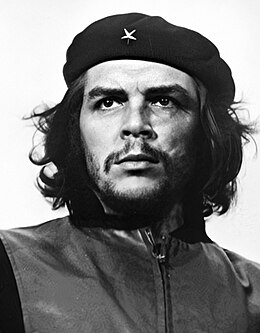
There was no person more feared by the company (CIA) than Che Guevara because he had the capacity and charisma necessary to direct the struggle against the political repression of the traditional hierarchies in power in the countries of Latin America.— Philip Agee, CIA agent
By December 1964, Che Guevara had emerged as a "revolutionary statesmen of world stature" and thus traveled to New York City as head of the Cuban delegation to speak at the United Nations. During his impassioned address, he criticized the United Nations inability to confront the "brutal policy of apartheid" in South Africa, proclaiming "can the United Nations do nothing to stop this?" Guevara then denounced the United States policy towards their black population, stating:
"Those who kill their own children and discriminate daily against them because of the color of their skin; those who let the murderers of blacks remain free, protecting them, and furthermore punishing the black population because they demand their legitimate rights as free men — how can those who do this consider themselves guardians of freedom?"
Source: Wikipedia
Sunday, October 7, 2007
Prosperity, identity, democracy
The December national conference of the ANC is an event of central significance for all South Africans. The ANC played the leading role in South Africa's transition to democracy and has been the massively dominant player in our first decade of freedom. Conference delegates will therefore be making decisions that touch and indeed shape the lives of the nearly 50-million citizens of our country.
While much speculation has understandably been focused on which individuals will be elected to key leadership positions, this citizen is much more interested in what the conference will say and do about how our country is to be governed. I am even more interested in the vision that emerges of the South Africa the ANC wants to build in this second decade of freedom. In particular three aspects of that vision interest me. These relate to prosperity, identity and the quality of our democracy.
The years since 1994 have seen dramatic and impressive improvements in the state of the South African economy. Our new democracy inherited a fortress economy on the verge of bankruptcy, in which the interest on national debt continued to rise each year, displacing all other spending priorities. High inflation, negative foreign reserves, a rapidly weakening exchange rate and an economy that was essentially ex-growth was the legacy. All this has changed in a way that should certainly qualify the economic management team for a global best-in-class award.
Impressive progress has also been made in extending basic services such as water, electricity, schooling and healthcare to millions previously existing on the periphery of our society. About 11-million people receive a social grant of one form or another, making South Africa's social support system one of the most comprehensive among developing countries.
That said, problems of both poverty and inequality exist and demand the nation's urgent and effective attention. The challenge for the next decade must be to translate sustained high levels of economic growth into increasing levels of productive employment.
If we are to meet the Millennium Development Goals set for 2014, we need to add about five million jobs, as well as address the issue of the working poor. In the tough and unsentimental global markets in which South Africa's very open economy must compete, most of our industries need to up their game, both to win and retain export markets, and to compete effectively against foreign participants in our domestic markets.
With regard to social services the critical challenge we face is about quality. Most children are in school. But what is the quality of their learning? Most citizens do have access to healthcare. But how effective is that healthcare? Intense challenges must be addressed in all aspects of our criminal justice system if we are to reduce the very real level of fear in which most South Africans conduct their daily lives.
None of these challenges can be met by government alone, even a government with the best possible policies and effective implementation.
All these critical challenges require a partnership between government, other actors in civil society and, crucially, the constructive activity of citizens themselves. These partnerships in turn require both some measure of shared goals and significant levels of mutual trust. This alone will achieve the increased levels of prosperity that will make a better life for all South Africans a reality rather than a dream.South Africa is in the very early stages of constructing a nation out of our fragmented and often bitter past. Central to this is the creation of a national identity that unites the subsets of South Africans.
Here, too, important progress has already been made and a promising foundation laid. Our national anthem consists of four of our national languages, and two important pieces of our musical heritage. More and more South Africans are able to sing all four stanzas. Our flag has captured the emotional loyalty of the vast majority of our people.
We still have a way to go. Our history indicates clearly that a good future will be the result of both unity and cooperation between all the peoples of our country -- all who live here and who want to live here.
Perhaps we need to develop a "pledge of allegiance" similar to that recited by all American school children at the start of each school day. The preamble to our Constitution provides good words. We need to encourage all South Africans to live the language of inclusive patriotism: in this regard "African" cannot be a synonym for "black".
Language is a critical tool in building a national identity. English will continue to be the lingua franca for much of our daily lives. However, vital and resourceful parts of our culture will continue to use the currency of what we often refer to as "vernacular" languages, which clearly include Afrikaans. In this regard we need a national project to encourage South African citizens to become multilingual. South Africans have a campaign culture. Can we not create a movement that encourages all South Africans to learn, at least to the degree of some conversational ability, a second language? This will be a particular challenge to English-language mother-tongue speakers. Their efforts will be well rewarded by the quality of their social interaction and they will quite literally define the parameters of a shared national identity.
The story of South African politics so far is the contest between the obviously desirable goal of greater national unity and the seduction of mobilising political power around sectional appeals. The way in which the delegates at Polokwane choose between these competing forces will have consequences for all South Africans.
What will the ANC conference do about the state of our democracy?
Here it seems two distinct challenges exist. What will be the quality of the internal debate within ANC structures? And how does the ANC see its role in the broader society?
On the first two, divergent trends are apparent. Over the course of this year very serious attempts have been made to offer the ANC, and the nation that it serves, serious debate. Policy documents have been made public which address all of the issues above, and more. ANC members and formations have been invited to engage with the critical issues in a spirit of free and real debate.
The contrasting trend, however, has also been evident. This has subsumed debate in the quest for power. Here what individual ANC members believed about the issues has become secondary to who they will support in election races. This is an inevitable tension in any political movement. The way in which it is resolved, though, shapes not only who gets power, but how those empowered use power.
The ANC was created as a parliament of the African people of South Africa. Today it also serves as the largest party in the Parliament.
Our Constitution sets out to build democratic institutions that have legitimacy and life beyond that of individual political movements.
Every member of Parliament, from whatever party, is part of this construction project. Democratic institutions have little real life outside the political culture that creates (and sometimes destroys) them.
We urgently need a culture that seeks and respects the robust contestation of ideas. No individual and no organisation has a monopoly on truth. Those who shut down debate with crude appeals to party or sectional loyalty do our Constitution, and the spirit of 1994, no favours.
Equally, debate and discourse can only thrive in an atmosphere of mutual respect. Opposition parties need to acknowledge the electoral support enjoyed by the ANC. They also need to treat the offices of our government with respect. It is their patriotic duty so to do. The ANC in turn needs to accept the decision of voters to elect representatives from organisations other than themselves. They need to treat opposition parties as part of the national and democratic project, who can and will make a contribution to building a better future. The recent respectful and constructive meeting between the South African president and the leader of the opposition is an encouraging start.
Source: Mail & Guardian
While much speculation has understandably been focused on which individuals will be elected to key leadership positions, this citizen is much more interested in what the conference will say and do about how our country is to be governed. I am even more interested in the vision that emerges of the South Africa the ANC wants to build in this second decade of freedom. In particular three aspects of that vision interest me. These relate to prosperity, identity and the quality of our democracy.
The years since 1994 have seen dramatic and impressive improvements in the state of the South African economy. Our new democracy inherited a fortress economy on the verge of bankruptcy, in which the interest on national debt continued to rise each year, displacing all other spending priorities. High inflation, negative foreign reserves, a rapidly weakening exchange rate and an economy that was essentially ex-growth was the legacy. All this has changed in a way that should certainly qualify the economic management team for a global best-in-class award.
Impressive progress has also been made in extending basic services such as water, electricity, schooling and healthcare to millions previously existing on the periphery of our society. About 11-million people receive a social grant of one form or another, making South Africa's social support system one of the most comprehensive among developing countries.
That said, problems of both poverty and inequality exist and demand the nation's urgent and effective attention. The challenge for the next decade must be to translate sustained high levels of economic growth into increasing levels of productive employment.
If we are to meet the Millennium Development Goals set for 2014, we need to add about five million jobs, as well as address the issue of the working poor. In the tough and unsentimental global markets in which South Africa's very open economy must compete, most of our industries need to up their game, both to win and retain export markets, and to compete effectively against foreign participants in our domestic markets.
With regard to social services the critical challenge we face is about quality. Most children are in school. But what is the quality of their learning? Most citizens do have access to healthcare. But how effective is that healthcare? Intense challenges must be addressed in all aspects of our criminal justice system if we are to reduce the very real level of fear in which most South Africans conduct their daily lives.
None of these challenges can be met by government alone, even a government with the best possible policies and effective implementation.
All these critical challenges require a partnership between government, other actors in civil society and, crucially, the constructive activity of citizens themselves. These partnerships in turn require both some measure of shared goals and significant levels of mutual trust. This alone will achieve the increased levels of prosperity that will make a better life for all South Africans a reality rather than a dream.South Africa is in the very early stages of constructing a nation out of our fragmented and often bitter past. Central to this is the creation of a national identity that unites the subsets of South Africans.
Here, too, important progress has already been made and a promising foundation laid. Our national anthem consists of four of our national languages, and two important pieces of our musical heritage. More and more South Africans are able to sing all four stanzas. Our flag has captured the emotional loyalty of the vast majority of our people.
We still have a way to go. Our history indicates clearly that a good future will be the result of both unity and cooperation between all the peoples of our country -- all who live here and who want to live here.
Perhaps we need to develop a "pledge of allegiance" similar to that recited by all American school children at the start of each school day. The preamble to our Constitution provides good words. We need to encourage all South Africans to live the language of inclusive patriotism: in this regard "African" cannot be a synonym for "black".
Language is a critical tool in building a national identity. English will continue to be the lingua franca for much of our daily lives. However, vital and resourceful parts of our culture will continue to use the currency of what we often refer to as "vernacular" languages, which clearly include Afrikaans. In this regard we need a national project to encourage South African citizens to become multilingual. South Africans have a campaign culture. Can we not create a movement that encourages all South Africans to learn, at least to the degree of some conversational ability, a second language? This will be a particular challenge to English-language mother-tongue speakers. Their efforts will be well rewarded by the quality of their social interaction and they will quite literally define the parameters of a shared national identity.
The story of South African politics so far is the contest between the obviously desirable goal of greater national unity and the seduction of mobilising political power around sectional appeals. The way in which the delegates at Polokwane choose between these competing forces will have consequences for all South Africans.
What will the ANC conference do about the state of our democracy?
Here it seems two distinct challenges exist. What will be the quality of the internal debate within ANC structures? And how does the ANC see its role in the broader society?
On the first two, divergent trends are apparent. Over the course of this year very serious attempts have been made to offer the ANC, and the nation that it serves, serious debate. Policy documents have been made public which address all of the issues above, and more. ANC members and formations have been invited to engage with the critical issues in a spirit of free and real debate.
The contrasting trend, however, has also been evident. This has subsumed debate in the quest for power. Here what individual ANC members believed about the issues has become secondary to who they will support in election races. This is an inevitable tension in any political movement. The way in which it is resolved, though, shapes not only who gets power, but how those empowered use power.
The ANC was created as a parliament of the African people of South Africa. Today it also serves as the largest party in the Parliament.
Our Constitution sets out to build democratic institutions that have legitimacy and life beyond that of individual political movements.
Every member of Parliament, from whatever party, is part of this construction project. Democratic institutions have little real life outside the political culture that creates (and sometimes destroys) them.
We urgently need a culture that seeks and respects the robust contestation of ideas. No individual and no organisation has a monopoly on truth. Those who shut down debate with crude appeals to party or sectional loyalty do our Constitution, and the spirit of 1994, no favours.
Equally, debate and discourse can only thrive in an atmosphere of mutual respect. Opposition parties need to acknowledge the electoral support enjoyed by the ANC. They also need to treat the offices of our government with respect. It is their patriotic duty so to do. The ANC in turn needs to accept the decision of voters to elect representatives from organisations other than themselves. They need to treat opposition parties as part of the national and democratic project, who can and will make a contribution to building a better future. The recent respectful and constructive meeting between the South African president and the leader of the opposition is an encouraging start.
Source: Mail & Guardian
Thursday, October 4, 2007
JSC: No impeachment proceedings against Hlophe
No impeachment proceedings will be instituted against Cape Judge President John Hlophe, the Judicial Service Commission (JSC) said on Thursday. Chief Justice Pius Langa said although the JSC members were divided on whether there was sufficient evidence to justify proceedings that could lead to impeachment, it was generally agreed the proceedings should not be pursued. "Ultimately the majority view was that there was not sufficient evidence to proceed with a public inquiry in regard to the main count of receiving payment from Oasis without consent from the minister," Langa said, briefing the media after a JSC meeting on Hlophe.
The commission, however, expressed dissatisfaction over some of the explanations it had received from Hlophe. "In addition, the JSC was unanimous in its view that it was inappropriate for the judge president to have given permission to Oasis to sue Judge Desai without disclosing his relationship with Oasis," Langa said.
Source: Mail & Guardian
The commission, however, expressed dissatisfaction over some of the explanations it had received from Hlophe. "In addition, the JSC was unanimous in its view that it was inappropriate for the judge president to have given permission to Oasis to sue Judge Desai without disclosing his relationship with Oasis," Langa said.
Source: Mail & Guardian
JSC: No impeachment proceedings against Hlophe
No impeachment proceedings will be instituted against Cape Judge President John Hlophe, the Judicial Service Commission (JSC) said on Thursday. Chief Justice Pius Langa said although the JSC members were divided on whether there was sufficient evidence to justify proceedings that could lead to impeachment, it was generally agreed the proceedings should not be pursued. "Ultimately the majority view was that there was not sufficient evidence to proceed with a public inquiry in regard to the main count of receiving payment from Oasis without consent from the minister," Langa said, briefing the media after a JSC meeting on Hlophe.
The commission, however, expressed dissatisfaction over some of the explanations it had received from Hlophe. "In addition, the JSC was unanimous in its view that it was inappropriate for the judge president to have given permission to Oasis to sue Judge Desai without disclosing his relationship with Oasis," Langa said.
Source: Mail & Guardian
The commission, however, expressed dissatisfaction over some of the explanations it had received from Hlophe. "In addition, the JSC was unanimous in its view that it was inappropriate for the judge president to have given permission to Oasis to sue Judge Desai without disclosing his relationship with Oasis," Langa said.
Source: Mail & Guardian
Wednesday, October 3, 2007
Masetlha v President of the Republic of South Africa and Another
This morning, the Constitutional Court handed down judgment in the matter between Mr Masetlha, the former Director-General of the National Intelligence Agency (NIA), and the President of the Republic of South Africa. The Court was called upon to decide whether two decisions taken by the President, one to suspend and the other to terminate Mr Masetlha’s employment as head of the NIA, was constitutionally permissible.
In a majority judgment, in which Langa CJ, Navsa AJ, Nkabinde J, O’Regan J, Skweyiya J and Van der Westhuizen J concurred, Moseneke DCJ held that the President’s power to appoint and dismiss is not exclusively located in the provisions of the Public Service Act, which provides for the manner and form of the service contract, but must be read in conjunction with the prevailing constitutional and legislative scheme, which implicitly confers on the President such power. He concluded that the President had the power to terminate the employment of the applicant under section 209 of the Constitution read with section 3 of the Intelligence Services Act.
In a minority judgment in which Madala J concurred, Ngcobo J held that under the Constitution the President has a duty to act fairly and that duty precludes the President from unilaterally altering the term of office of the head of the NIA. He held that this is a requirement of the rule of law which is one of the foundational values of our constitutional democracy. He found, however, that on the objective facts before the Court, there has been an irreparable breakdown of trust between the President and Mr Masetlha. Mutual trust, he held, is fundamental to the relationship between the President and Mr Masetlha. On the facts of this case, it is therefore not appropriate to re-instate Mr Masetlha in his former position.
In a separate judgement Sachs J concurred in the order made by the majority, and held that given the loss of the trust that lay at the heart of the specific constitutionally defined relationship between the President and Mr Masetlha, the termination of the appointment was not unlawful. Fairness further presupposed that appropriate concern be displayed for the reputational consequences of an incumbent who is about to be relieved of a high profile position in public life. Sachs J added that fair dealing could not be separated from civility, which, in a constitutional sense, involved more than just courtesy or good manners and was one of the binding elements of a constitutional democracy.
The Court also ordered the President to pay the applicant remuneration, allowances, pension and other benefits for the period starting on 22 March 2006 up to 1 December 2007, all of which must place the applicant in the same financial position that he would have been in but for the early termination of his term of office. The Court has made no order as to costs.
Source: The Constitutional Court
In a majority judgment, in which Langa CJ, Navsa AJ, Nkabinde J, O’Regan J, Skweyiya J and Van der Westhuizen J concurred, Moseneke DCJ held that the President’s power to appoint and dismiss is not exclusively located in the provisions of the Public Service Act, which provides for the manner and form of the service contract, but must be read in conjunction with the prevailing constitutional and legislative scheme, which implicitly confers on the President such power. He concluded that the President had the power to terminate the employment of the applicant under section 209 of the Constitution read with section 3 of the Intelligence Services Act.
In a minority judgment in which Madala J concurred, Ngcobo J held that under the Constitution the President has a duty to act fairly and that duty precludes the President from unilaterally altering the term of office of the head of the NIA. He held that this is a requirement of the rule of law which is one of the foundational values of our constitutional democracy. He found, however, that on the objective facts before the Court, there has been an irreparable breakdown of trust between the President and Mr Masetlha. Mutual trust, he held, is fundamental to the relationship between the President and Mr Masetlha. On the facts of this case, it is therefore not appropriate to re-instate Mr Masetlha in his former position.
In a separate judgement Sachs J concurred in the order made by the majority, and held that given the loss of the trust that lay at the heart of the specific constitutionally defined relationship between the President and Mr Masetlha, the termination of the appointment was not unlawful. Fairness further presupposed that appropriate concern be displayed for the reputational consequences of an incumbent who is about to be relieved of a high profile position in public life. Sachs J added that fair dealing could not be separated from civility, which, in a constitutional sense, involved more than just courtesy or good manners and was one of the binding elements of a constitutional democracy.
The Court also ordered the President to pay the applicant remuneration, allowances, pension and other benefits for the period starting on 22 March 2006 up to 1 December 2007, all of which must place the applicant in the same financial position that he would have been in but for the early termination of his term of office. The Court has made no order as to costs.
Source: The Constitutional Court
Monday, October 1, 2007
Pikoli's suspension 'sinister'
The shock suspension of South Africa's prosecutions head amid silence by President Thabo Mbeki has led to concerns of "sinister" dealings and government meddling in the country's justice system. Mbeki's integrity came under fire this week as his suspension of top prosecutor Vusi Pikoli was linked to the alleged pending arrest of national police commissioner Jackie Selebi, who is seen as an ally to the president.
With no reaction from Mbeki, analysts and opposition political parties fear Mbeki may have acted out of a desire to protect Selebi, also the president of international policing agency Interpol. Analyst Steven Friedman of the Institute for Democracy in South Africa said suggestions of political interference in the justice system was cause for serious concern. "If Selebi is not charged, clearly there will be a suggestion that the president got Pikoli out of the way to protect Selebi," he told AFP. Friedman said Mbeki's silence on the issue was damaging, bordering on disdainful, and created the impression that "something sinister is afoot". Selebi faced a raft of calls to quit last year when his friend, businessman Glen Agliotti, was charged with the mafia-style killing of mining magnate Brett Kebble.
Last Sunday, Mbeki suspended Pikoli due to what a government statement said was an irretrievable breakdown in his relationship with the country's justice minister. But news reports on Friday claimed Pikoli's suspension followed within days of Mbeki learning about Selebi's pending arrest, with the NPA believed to have obtained the warrant last week. Opposition political parties have called for Selebi's head, and for Mbeki to quell the speculation by breaking his silence on the alleged link between the two events. "If the speculation turns out to be correct, then we have a dilemma," said Human Sciences Research Council political commentator Adam Habib. "If the predident suspended Mr Pikoli on the grounds that he had issued a warrant for the commissioner's arrest, then it suggests that an invasion is being made into an independent institution's operations. "Intervening in the operations of the National Prosecuting Authority constitutes a violation of our constitution."
No confirmation has been forthcoming from the government, prosecutors or Selebi's office of reported claims that a warrant had been issued for the commissioner's arrest. Main opposition Democratic Alliance leader Helen Zille said in a statement on Friday it "seems clear that the suspension of Pikoli was motivated by the desire of President Mbeki to protect his close ally (Selebi)." "The implications of this development for our democracy are profound. "If true, this latest allegation ... points to the fact that we have entered the phase of an imperial Presidency, where the President appears to govern almost with impunity."
The weekly Mail and Guardian newspaper suggested in an editorial Friday that Pikoli's suspension pointed to political expediency impacting on crime-fighting. "Pikoli's suspension is closely intertwined with the ... investigation into Selebi's alleged links with organised crime," it said. "There is a persuasive view that Mbeki wishes to head this off before the ANC's Polokwane conference for fear of the political harm it might do him."
The ANC meets in Polokwane in the Limpopo province at year-end to elect a new leader, with Mbeki still in the running for a third term as party head. Main contender, ANC deputy president Jacob Zuma, is also in the national prosecuting authority's aim, ever since his financial advisor Schabir Shaik was convicted in 2005 of corruption and fraud in connection with bribes arranged for Zuma. Mbeki's spokesperson Mukoni Ratshitanga could not be reached for comment.
Source: News 24
With no reaction from Mbeki, analysts and opposition political parties fear Mbeki may have acted out of a desire to protect Selebi, also the president of international policing agency Interpol. Analyst Steven Friedman of the Institute for Democracy in South Africa said suggestions of political interference in the justice system was cause for serious concern. "If Selebi is not charged, clearly there will be a suggestion that the president got Pikoli out of the way to protect Selebi," he told AFP. Friedman said Mbeki's silence on the issue was damaging, bordering on disdainful, and created the impression that "something sinister is afoot". Selebi faced a raft of calls to quit last year when his friend, businessman Glen Agliotti, was charged with the mafia-style killing of mining magnate Brett Kebble.
Last Sunday, Mbeki suspended Pikoli due to what a government statement said was an irretrievable breakdown in his relationship with the country's justice minister. But news reports on Friday claimed Pikoli's suspension followed within days of Mbeki learning about Selebi's pending arrest, with the NPA believed to have obtained the warrant last week. Opposition political parties have called for Selebi's head, and for Mbeki to quell the speculation by breaking his silence on the alleged link between the two events. "If the speculation turns out to be correct, then we have a dilemma," said Human Sciences Research Council political commentator Adam Habib. "If the predident suspended Mr Pikoli on the grounds that he had issued a warrant for the commissioner's arrest, then it suggests that an invasion is being made into an independent institution's operations. "Intervening in the operations of the National Prosecuting Authority constitutes a violation of our constitution."
No confirmation has been forthcoming from the government, prosecutors or Selebi's office of reported claims that a warrant had been issued for the commissioner's arrest. Main opposition Democratic Alliance leader Helen Zille said in a statement on Friday it "seems clear that the suspension of Pikoli was motivated by the desire of President Mbeki to protect his close ally (Selebi)." "The implications of this development for our democracy are profound. "If true, this latest allegation ... points to the fact that we have entered the phase of an imperial Presidency, where the President appears to govern almost with impunity."
The weekly Mail and Guardian newspaper suggested in an editorial Friday that Pikoli's suspension pointed to political expediency impacting on crime-fighting. "Pikoli's suspension is closely intertwined with the ... investigation into Selebi's alleged links with organised crime," it said. "There is a persuasive view that Mbeki wishes to head this off before the ANC's Polokwane conference for fear of the political harm it might do him."
The ANC meets in Polokwane in the Limpopo province at year-end to elect a new leader, with Mbeki still in the running for a third term as party head. Main contender, ANC deputy president Jacob Zuma, is also in the national prosecuting authority's aim, ever since his financial advisor Schabir Shaik was convicted in 2005 of corruption and fraud in connection with bribes arranged for Zuma. Mbeki's spokesperson Mukoni Ratshitanga could not be reached for comment.
Source: News 24
Pikoli: Mabandla faced arrest
The head of the National Prosecuting Authority (NPA), Vusi Pikoli, was disrespectful towards President Thabo Mbeki and "arrogantly" threatened to arrest Justice Minister Brigitte Mabandla for the obstruction of justice.
It was announced on Saturday that former Speaker of Parliament Frene Ginwala has been appointed to lead the task team or commission to probe what led to the "irretrievable breakdown" of relations between Pikoli and Mabandla. It was not immediately clear on Saturday how much time Ginwala would have for her probe, but it is believed Mbeki would prefer it to be dealt with as quickly as possible. This also comes as Pikoli's NPA deputies rally behind him. They are vowing to resign en masse if Pikoli is not returned. "I am totally unaware of a move like that. It's speculation I would rather not comment on," said NPA spokesperson Tlali Tlali.
The threat to Mabandla came as she tried to get Pikoli to stop the execution of a warrant of arrest for national police commissioner Jackie Selebi last week.
Mbeki had asked her to convince Pikoli that the arrest would cause a national and international crisis for government given Selebi's presidency of Interpol.
Source: News 24
It was announced on Saturday that former Speaker of Parliament Frene Ginwala has been appointed to lead the task team or commission to probe what led to the "irretrievable breakdown" of relations between Pikoli and Mabandla. It was not immediately clear on Saturday how much time Ginwala would have for her probe, but it is believed Mbeki would prefer it to be dealt with as quickly as possible. This also comes as Pikoli's NPA deputies rally behind him. They are vowing to resign en masse if Pikoli is not returned. "I am totally unaware of a move like that. It's speculation I would rather not comment on," said NPA spokesperson Tlali Tlali.
The threat to Mabandla came as she tried to get Pikoli to stop the execution of a warrant of arrest for national police commissioner Jackie Selebi last week.
Mbeki had asked her to convince Pikoli that the arrest would cause a national and international crisis for government given Selebi's presidency of Interpol.
Source: News 24
Sunday, September 30, 2007
I'll never be arrested - Selebi
National police chief and Interpol head Jackie Selebi has said he will never be arrested because a warrant does not exist, the early edition of the Sunday Times reported on Saturday. "I will never be arrested... If there is a warrant for me I will stand on the 10th floor of the Sandton Towers so that the Scorpions can arrest me," he told the newspaper.
Selebi was responding to numerous media reports citing reliable sources that the National Prosecuting Authority had obtained a warrant for his arrest last week. A search and seizure document was allegedly also obtained from the Pretoria High Court. "I am not bothered at all. For what must I be arrested? There is no such thing as a warrant. It does not exist. I will not comment on charges as there is no warrant," he said. The question of Selebi's possible arrest follows in the wake of the suspension of National Director of Public Prosecutions Vusi Pikoli by President Thabo Mbeki.
Mbeki suspended Pikoli on Monday, citing an irretrievable breakdown in the relationship between Pikoli and Justice Minister Brigitte Mabandla. On Saturday night, Government Communication and Information System spokesperson Themba Maseko said Mbeki had appointed Frene Ginwala to conduct the inquiry into Pikoli's fitness to hold office. Maseko said the former National Assembly Speaker had been appointed in terms of section 12(6) of the National Prosecuting Act 32 of 1998. "It's (the inquiry) going to be under way soon. I need to meet with the doctor (Ginwala) first and will avail more details on Monday," he said. Maseko said he would address a press conference on Monday outlining the details and format of the enquiry.
Source: Polity
Selebi was responding to numerous media reports citing reliable sources that the National Prosecuting Authority had obtained a warrant for his arrest last week. A search and seizure document was allegedly also obtained from the Pretoria High Court. "I am not bothered at all. For what must I be arrested? There is no such thing as a warrant. It does not exist. I will not comment on charges as there is no warrant," he said. The question of Selebi's possible arrest follows in the wake of the suspension of National Director of Public Prosecutions Vusi Pikoli by President Thabo Mbeki.
Mbeki suspended Pikoli on Monday, citing an irretrievable breakdown in the relationship between Pikoli and Justice Minister Brigitte Mabandla. On Saturday night, Government Communication and Information System spokesperson Themba Maseko said Mbeki had appointed Frene Ginwala to conduct the inquiry into Pikoli's fitness to hold office. Maseko said the former National Assembly Speaker had been appointed in terms of section 12(6) of the National Prosecuting Act 32 of 1998. "It's (the inquiry) going to be under way soon. I need to meet with the doctor (Ginwala) first and will avail more details on Monday," he said. Maseko said he would address a press conference on Monday outlining the details and format of the enquiry.
Source: Polity
Thursday, September 27, 2007
Has a Warrant been issued for Selebi ?
A warrant of arrest has been issued for national police chief Jackie Selebi, the SABC reported on Thursday.
The SABC is reporting the arrest was secured by suspended NPA head Vusi Pikoli last Thursday. President Thabo Mbeki suspended Pikoli from his job at the weekend, citing a "breakdown in relationship" with the Minister of Justice Brigitte Mabandla. The state broadcaster said it had "reliably learnt" that the National Prosecuting Authority had obtained the warrant. The SABC also reported the NPA secured a "search and seizure document" with the arrest.
NPS spokesperson Tlali Tlali would not comment on the report late on Thursday afternoon. "That is the SABC's story. We can't comment," he told Sapa. National police spokesperson Director Sally de Beer said: "I have been with him (Selebi) all day. He has certainly not been arrested. I just spoke to him and he knows nothing about it."
News 24.com
The SABC is reporting the arrest was secured by suspended NPA head Vusi Pikoli last Thursday. President Thabo Mbeki suspended Pikoli from his job at the weekend, citing a "breakdown in relationship" with the Minister of Justice Brigitte Mabandla. The state broadcaster said it had "reliably learnt" that the National Prosecuting Authority had obtained the warrant. The SABC also reported the NPA secured a "search and seizure document" with the arrest.
NPS spokesperson Tlali Tlali would not comment on the report late on Thursday afternoon. "That is the SABC's story. We can't comment," he told Sapa. National police spokesperson Director Sally de Beer said: "I have been with him (Selebi) all day. He has certainly not been arrested. I just spoke to him and he knows nothing about it."
News 24.com
Tuesday, September 25, 2007
Mbeki to act against Selebi?
President Thabo Mbeki is about to act against National Police Commissioner Jackie Selebi, the Cape Argus reported on Tuesday.
It was believed Mbeki was about to order an inquiry into allegations that Selebi, also the head of interpol, had links with crime syndicates, the paper said.
Mbeki's spokesperson Mukoni Ratshitanga is accompanying the President to the current UN General Assembly in New York, and declined to comment, referring enquiries to government communications head Themba Maseko.
However, Maseko was not immediately available for comment on Tuesday afternoon.
Citing independent sources, the Argus said the inquiry into the claims against Selebi would be Mbeki's second major step following the suspension on Monday of National Prosecuting Authority (NPA) head Vusi Pikoli.
Apparently, the third step would be a probe into private companies owned by apartheid-era security operators contracted by the police and Scorpions to do investigations.
A source told the Argus Mbeki was keen to clear the air about Selebi, whom he had been seen to be protecting since the allegations arose.
Selebi had denied having links to shadowy individuals who, in turn, had been linked to murdered businessman Brett Kebble.
The Argus said it understood that a file, compiled by a private security company on behalf of the Scorpions, was to be handed over to acting National Director of Public Prosecutions Mokotedi Mpshe - who took over from Pikoli.
Mpshe would then take a decision whether there was a prima facie case against Selebi, and, if there was, a full independent investigation would be ordered.
The probe would be headed by a judge, because both the police and Scorpions would be unacceptable - given that Selebi headed the police and the Scorpions' credibility was in question following Pikoli's suspension.
According to the sources, Mbeki acted against Pikoli because of his failure to control the Scorpions, the Argus said.
Source: News 24.com
It was believed Mbeki was about to order an inquiry into allegations that Selebi, also the head of interpol, had links with crime syndicates, the paper said.
Mbeki's spokesperson Mukoni Ratshitanga is accompanying the President to the current UN General Assembly in New York, and declined to comment, referring enquiries to government communications head Themba Maseko.
However, Maseko was not immediately available for comment on Tuesday afternoon.
Citing independent sources, the Argus said the inquiry into the claims against Selebi would be Mbeki's second major step following the suspension on Monday of National Prosecuting Authority (NPA) head Vusi Pikoli.
Apparently, the third step would be a probe into private companies owned by apartheid-era security operators contracted by the police and Scorpions to do investigations.
A source told the Argus Mbeki was keen to clear the air about Selebi, whom he had been seen to be protecting since the allegations arose.
Selebi had denied having links to shadowy individuals who, in turn, had been linked to murdered businessman Brett Kebble.
The Argus said it understood that a file, compiled by a private security company on behalf of the Scorpions, was to be handed over to acting National Director of Public Prosecutions Mokotedi Mpshe - who took over from Pikoli.
Mpshe would then take a decision whether there was a prima facie case against Selebi, and, if there was, a full independent investigation would be ordered.
The probe would be headed by a judge, because both the police and Scorpions would be unacceptable - given that Selebi headed the police and the Scorpions' credibility was in question following Pikoli's suspension.
According to the sources, Mbeki acted against Pikoli because of his failure to control the Scorpions, the Argus said.
Source: News 24.com
Monday, September 24, 2007
Mbeki suspends NPA boss
President Thabo Mbeki has suspended the National Director of Public Prosecutions (NDPP) Vusi Pikoli, the GCIS said on Monday. "This decision was taken on the basis of an irretrievable breakdown in the working relationship between the Minister of Justice and Constitutional Development and the NDPP," said Government Communications and Information System's spokesperson Themba Maseko. He said the suspension was in terms of Section 12 (6) (a) of the National Prosecution Act 32 of 1998.
Maseko said Mbeki considered the relationship between Minister Mabandla and the NDPP central to the effective administration of justice and the "smooth functioning" of the National Prosecuting Authority (NPA). "The relationship breakdown had adverse implications for the NPA and the functioning of the criminal justice system," he said. He said an enquiry would be instituted to investigate the functioning and role of the NDPP. Recommendations would then be made to the President.
Deputy National Director Mokotedi Mpshe has been appointed as acting director. "Government would like to reassure all South Africans that the functioning of the justice system will not be compromised, especially within the context of the collective challenge to fight crime," he said.
Source: News 24.com
Maseko said Mbeki considered the relationship between Minister Mabandla and the NDPP central to the effective administration of justice and the "smooth functioning" of the National Prosecuting Authority (NPA). "The relationship breakdown had adverse implications for the NPA and the functioning of the criminal justice system," he said. He said an enquiry would be instituted to investigate the functioning and role of the NDPP. Recommendations would then be made to the President.
Deputy National Director Mokotedi Mpshe has been appointed as acting director. "Government would like to reassure all South Africans that the functioning of the justice system will not be compromised, especially within the context of the collective challenge to fight crime," he said.
Source: News 24.com
Sunday, September 23, 2007
Majali named in audit of E Cape's missing R100m
he controversial Sandi Majali -- known for his role in the Oilgate scandal -- has been named in a forensic audit into the disappearance of more than R100-million meant for starving children in the Eastern Cape, the Sunday Times reported.
As the head of oil company Imvume Management, Majali was a central figure in the Oilgate debacle surrounding R11-million of taxpayers' money paid to the African National Congress as election funds ahead of the 2004 elections. He was also named in the Iraq oil-for-food scandal. The audit found that companies under Majali's control had been involved in the collapse of the R230-million school feeding scheme, and the Scorpions are now probing irregularities uncovered during the audit. The feeding scheme collapsed barely six months after being launched in June last year when it emerged that food was not getting to children at about 5 000 Eastern Cape schools, the Sunday Times reported.
Majali was in charge of four of six community cooperatives that were awarded tenders to distribute supplies to smaller cooperatives that would prepare and distribute the meals. The 51-page audit report, commissioned by Eastern Cape Premier Nosimo Balindlela, found that Majali's cooperatives were irregularly awarded tenders, irregularly paid at least R6-million over four months and overpaid by R9-million.
By the time the scheme crashed, the Sunday Times said, the government had paid out R100-million -- and it is unclear where the rest of the R100-million went.
Source: Mail & Guardian
As the head of oil company Imvume Management, Majali was a central figure in the Oilgate debacle surrounding R11-million of taxpayers' money paid to the African National Congress as election funds ahead of the 2004 elections. He was also named in the Iraq oil-for-food scandal. The audit found that companies under Majali's control had been involved in the collapse of the R230-million school feeding scheme, and the Scorpions are now probing irregularities uncovered during the audit. The feeding scheme collapsed barely six months after being launched in June last year when it emerged that food was not getting to children at about 5 000 Eastern Cape schools, the Sunday Times reported.
Majali was in charge of four of six community cooperatives that were awarded tenders to distribute supplies to smaller cooperatives that would prepare and distribute the meals. The 51-page audit report, commissioned by Eastern Cape Premier Nosimo Balindlela, found that Majali's cooperatives were irregularly awarded tenders, irregularly paid at least R6-million over four months and overpaid by R9-million.
By the time the scheme crashed, the Sunday Times said, the government had paid out R100-million -- and it is unclear where the rest of the R100-million went.
Source: Mail & Guardian
Wednesday, September 19, 2007
FirstRand tax scheme was 'suspect'
Judge Jeanette Traverso, hearing FirstRand's urgent application for an interdict against the satirical magazine NoseWeek in the Cape High Court, said on Wednesday that there seemed to be little doubt that the tax-avoidance scheme at the heart of the case "is suspect".
Counsel for the applicant, Nick Maritz, denied that the scheme was illegal, and said the matter has never been decided by a court. He accused the publisher of NoseWeek, Martin Welz, of setting himself up as both judge and jury, and deciding on his own that it was illegal. Counsel for publishers Caxton Press, Theoniel Potgieter, said that nowhere has the bank ever claimed that the scheme is legal. "All they have ever said is that it was not proved to be illegal," he said. "That is not the same thing."
Judge Traverso also wondered in court how it was that FirstRand, against whom allegations in connection with the scheme have already been made by NoseWeek in the past, could claim to act on behalf of its clients. She told Maritz that it did not seem to her that the clause in the law relating to class actions covers FirstRand's actions. "What do these people have in common?" she asked. "They have in common that they are about to be defamed by NoseWeek," Maritz replied.
The bank is trying to prevent the magazine from publishing a list of prominent clients of the banks who were involved in a complicated tax-avoidance scheme drawn up by its former private banking arm, Ansbacher, The respondents, Welz and Caxton, argue that they would defend a defamation case by showing that what they say is true and in the public interest to publish.
Source: Mail & Guardian
Counsel for the applicant, Nick Maritz, denied that the scheme was illegal, and said the matter has never been decided by a court. He accused the publisher of NoseWeek, Martin Welz, of setting himself up as both judge and jury, and deciding on his own that it was illegal. Counsel for publishers Caxton Press, Theoniel Potgieter, said that nowhere has the bank ever claimed that the scheme is legal. "All they have ever said is that it was not proved to be illegal," he said. "That is not the same thing."
Judge Traverso also wondered in court how it was that FirstRand, against whom allegations in connection with the scheme have already been made by NoseWeek in the past, could claim to act on behalf of its clients. She told Maritz that it did not seem to her that the clause in the law relating to class actions covers FirstRand's actions. "What do these people have in common?" she asked. "They have in common that they are about to be defamed by NoseWeek," Maritz replied.
The bank is trying to prevent the magazine from publishing a list of prominent clients of the banks who were involved in a complicated tax-avoidance scheme drawn up by its former private banking arm, Ansbacher, The respondents, Welz and Caxton, argue that they would defend a defamation case by showing that what they say is true and in the public interest to publish.
Source: Mail & Guardian
Monday, September 17, 2007
Joburg hosts magistrates' summit
Speaking at the opening of a two-day Magistrates' Conference in Johannesburg deputy chief justice Dikgang Moseneke said that, "The biggest threat to the judiciary's independence could come from within the judiciary itself by those who failed to uphold ethics". At the conference, Moseneke, as well as Constitutional Court judge Albie Sachs, called on those within the judiciary to uphold ethics. The conference, which was the the first of its kind, looked at issues pertaining to magistrates, ranging from their appointments, to accountability, training requirements, ethics, institutional governance and enhancing the efficiency of the lower courts.
Moseneke said that judges should always, and not only in the discharge of official duties, act honourably and in a manner befitting judicial office. "That implies that all activities of a judge must be compatible with the status of a judicial office...a judge must comply with the law of the land," he said. While not pointing out any specific members of the judiciary, Moseneke said that "with deep sadness we are constrained to admit that a few judicial officers may have attracted the impression that complying with the law is dispensable. It is, however, not right to imagine that one or perhaps two swallows make a summer. The overwhelming majority of judicial officers meticulously honour their oath to office."
Minister for Justice Brigitte Mabandla said that the conference needed to explore whether the magistracy in substance and form was truly transformed from what it was during apartheid. "We need to ask whether there has been a change of mindset within society and the magistracy itself. We need to ask whether in reality the values enshrined in our constitution guide magistrates in their daily work," she noted. "Judicial decisions have a profound impact on society. Decisions that are seen as unfair by citizens have a cumulative impact on making society loathe, fear, distrust the bench as it was the case in the past," Mabandla said.
"In the new South Africa people look to the bench to give meaning to the Constitution. The judiciary, broadly speaking, and the magistracy in particular because it is the coalface of the delivery of justice, have the opportunity to entrench progressive values of good citizenship," commented the Minister.
Source: Polity
Moseneke said that judges should always, and not only in the discharge of official duties, act honourably and in a manner befitting judicial office. "That implies that all activities of a judge must be compatible with the status of a judicial office...a judge must comply with the law of the land," he said. While not pointing out any specific members of the judiciary, Moseneke said that "with deep sadness we are constrained to admit that a few judicial officers may have attracted the impression that complying with the law is dispensable. It is, however, not right to imagine that one or perhaps two swallows make a summer. The overwhelming majority of judicial officers meticulously honour their oath to office."
Minister for Justice Brigitte Mabandla said that the conference needed to explore whether the magistracy in substance and form was truly transformed from what it was during apartheid. "We need to ask whether there has been a change of mindset within society and the magistracy itself. We need to ask whether in reality the values enshrined in our constitution guide magistrates in their daily work," she noted. "Judicial decisions have a profound impact on society. Decisions that are seen as unfair by citizens have a cumulative impact on making society loathe, fear, distrust the bench as it was the case in the past," Mabandla said.
"In the new South Africa people look to the bench to give meaning to the Constitution. The judiciary, broadly speaking, and the magistracy in particular because it is the coalface of the delivery of justice, have the opportunity to entrench progressive values of good citizenship," commented the Minister.
Source: Polity
Subscribe to:
Posts (Atom)