One of the five robbers linked to the brutal murder of Jansenville stock farmer Owen Charles on Sunday night was among the prisoners released in line with President Jacob Zuma's special remission of sentence concession.
A 12-year-old is among those arrested in connection with the murder. The man had been arrested only three months ago for breaking into the Armadale farmhouse in which the weekend attack took place. This emerged after four of the five suspects, all minors, were arrested following a high-speed car chase and shoot-out in Knysna on Monday night. The arrested suspects are all between 12 and 17 years of age.
The police have already linked them to the murder of Charles, 70, who was stabbed during the robbery. His wife Janet, 69, was beaten unconscious and admitted to a Port Elizabeth hospital.
Earlier this month, a 94-year-old grandmother was raped in Swayimane, in KwaZulu-Natal, also allegedly by a man released on Zuma's remission programme, which was announced on Freedom Day. Jansenville police spokesman Rino Kilian confirmed the arrests. Six firearms, jewellery and other valuables were stolen. The robbers took the couple's bakkie and fled.
The bakkie was spotted by the police on the N2 highway at about 7pm on Monday being driven through Knysna towards Cape Town. The driver, a 22-year-old man, escaped after the vehicle overturned and rolled down an embankment.
Source: Times Live
Showing posts with label Anarchism. Show all posts
Showing posts with label Anarchism. Show all posts
Wednesday, August 15, 2012


Friday, July 27, 2012
The ANCYL's memorandum to Helen Zille
Memorandum of demands from ANCYL Dullah Omar Region & others to the Premier of the Western Cape, Helen Zille, July 27 2012:
Memorandum of Demands
To: Western Cape Premier - Helen Zille
From : ANCYL, ANC, ANCWL, Cosatu, Taxi Association (CATA and Codeta) including other progressive formations.
The ANC Youth League (ANCYL) together with the above mentioned organizations have decided to embark on this revolutionary peoples march to the Provincial Parliament led by the Democratic Alliance (DA). This revolutionary march is inspired by the sad and gross conditions which our people continue to find themselves in on a daily basis.
Our people have never fought and died for another special type of apartheid to be born under a democratic government since 1994. Our parents, brothers and sisters gave up their lives in pursuit of a democratic, non- racial and non-sexist society. In 1994, our parents never voted to be led by a government that will re-introduce apartheid of a special type.
Since 2006 and 2009 when the DA took over the province,it has been concentrating on a programme to bring back apartheid in our lifetime. We have seen deliberate and concerted efforts and plans to divide and run amongst our people who are Africans, Coloured, Muslims and Indians. "We have seen statements like "take back what belongs to you", "Refugees" and so on. Whilst we wait patiently for our government to deliver to us constitutional rights in service, we see the DA undermining the National Government of the ANC through unfounded accusations of corruptions and incompetency.
We see the DA running around the entire country pointing failures of the ANC National Government whilst in the Western Cape there are huge failures and people live in dire situations. Today Cde and fellow Cape Tonians, We are here to unmask what is the real DA. Who is the DA fighting for? Who is Helen Zille?
The DA is a group of few white people who are bitter, angry and adamant in bringing back Apartheid at all cost. White South Africans refuse to live along side by side with Africans, Coloureds, Indians, Muslims and Khoi people. The DA keeps on painting a glossy picture about how we can live as a rainbow nation whilst the majority of our people live in the gutter and shacks. Today, we are saying ENOUGH IS ENOUGH. Ons is gatvol! Sanele!
We are gatvol because black people in the Western Cape continue to be tea girls and garden boys under the DA government which continues to perpetuate this by encouraging young people to work for labour brokers and other non-progressive and counter revolutionary businesses on a basis of getting experience which will make them employable in a capitalist state. We are saying to madam Zille, we do not want to make this province ungovernable and unworkable because we are quite capable of doing that and we are ready even now!!!
We demand the following from you and your collective government:
1. Land
We demand that land that is owned by private people and companies be made available for the building of decent houses and creation of better communities where black people and white live together. We demand the land in Rondebosch Square among many so that our people will live together as the constitution dictates so. This land must be made available for the poorest of the poor.
2. Service delivery
We demand that electricity is an essential service and it ought to be given to people without being made to suffer for it. We demand a speedy electrification of our poor and disadvantage areas. It is inhumane for people in 19 years of a democratic government to still live in darkness and only rely on candles and paraffin for energy.
We demand the DA administration to provide proper sanitation to our communities. 19 years into democracy our people still relieve themselves in Pota-loos. This violates our constitutional right, that of proper decent sanitation. It also perpetuates health hazards such as diarrhoea and ringworms. The bucket system is a mechanism to kill our people as the Premier referred to them "REFUGEES".
3. Human Settlement - 17 Billion - 1.7 spent?
We demand that the MEC to be dismissed including his department officials with immediate effect and be replaced by a more competent person who will not be remote controlled by Zille. The department is full of corruption till to date there is no one held accountable for this. Our people demand a speedy delivering of houses to people who have been on a waiting list for ever. We demand that all hostels in Mananberg, Elsie's River, Hanover Park etc built during the apartheid era to be demolished and that people get decent houses where they will live happily in their new democratic government.
We demand that people get houses closer to the CBD and not far from where they work. The view of locating our people as far as West Coast closer to the Malmesbury is ridiculous and absurd. We want houses in Rondebosch square and in Constantia. We know the department of human settlement in the City of Cape had a budget of R17billion and only R1.7 Billion was spent and none of our areas benefitted out of this. Zille must tell us where is the money?
We demand an end to TRA's because the government of Zille has clearly displayed that it does not understand what the meaning of temporary is. People in Mfuleni among other areas are dying in these fridges. A child died in Mfuleni Bosasa TRA's and nothing was done by government. How many more must die Zille???
We demand that all shacks within the City and Province to be eradicated by not later than 2014!!!
4. Safety and Security
We demand that Mr Dan Plato follow Mr Madikizela as he too proved to be a useless duck. Crime has escalated to its highest levels within the Western Cape and City of Cape Town under the rule of DA. Nyanga has not once but twice became the murder capital of the nation. Mananberg and Hanover Park children swim in drugs and guns yet the MEG and Zille smile, say that it is normal.
Why are police stations in the townships not given the necessary resources they need? Why are all security agencies deployed in Sea Point, Camps Bay and Constantia where there is little crime compared to our areas? The calling of SANDF proves that the government of Zille has failed our people. She is incompetent and a disaster. Madam Zille please do us a favour, JUST RESIGN!!!
5. Youth Wage Subsidy
We demand that this subsidy be discarded with immediate effect. This only just complements the labour broking system that is killing our people and youth in particular. We demand that decent employment and interventions to the levels of high employment be implemented. In the City of Cape Town alone, unemployment is at 33% - 40%. And worse there is no Youth policy that seeks to resolve this crisis.
The Youth of South Africa through a National Youth Parliament that was here in the Western Cape rejected this Policy. We are saying nothing about us without us. We demand a youth development policy and a program of job seekers grant to be researched and implemented.
6. Closure of 27 Schools
We demand that this attempt of closing six schools in our region must come to an end. Again, this proves that the DA government wants to reverse the gains made by our people in 1994.These schools have not only provided quality and meaningful contact time with learners, they are closer to their homes and do not have to travel long distances to reach school. We urge the provincial government to took into the matter and rather provide mechanisms to address the shortcomings faced by these schools. Do not close the schools!
7. Non delivery of Text books
The DA administration upholds the constitution of South Africa supreme. However it does not deliver to basic rights of our people, the right to education. The no delivery of textbooks to our schools is a disgrace and an indication that the DA administration undermines the rights of the people of South Africa, black in particular because the only schools that do not have textbooks are those found in black communities like Kraaifontein.
8. The IRT
The introduction of the IRT system in the transport industry has disabled the taxi industry. It has taken away jobs and businesses of taxi owners and drivers. 54 taxis had to stop operating due to this system that robbed families of their household income. We urge the provincial government to embark in a program that will revitalise the taxi industry and provide mechanical support to taxis that need service for the safety of passengers. The IRT costs taxpayers millions and we have seen in recent times that it is running at a loss!
Conclusion
We demand that the abovementioned demands be positively responded to within 7 working days. Failure to do so the young people and the abovementioned stakeholders will make this city and province ungovernable! Amandla!!!!
Issued by the ANCYL Dullah Omar Region on behalf of the People of the Western Cape.
July 27 2012
Source: Politics Web
Memorandum of Demands
To: Western Cape Premier - Helen Zille
From : ANCYL, ANC, ANCWL, Cosatu, Taxi Association (CATA and Codeta) including other progressive formations.
The ANC Youth League (ANCYL) together with the above mentioned organizations have decided to embark on this revolutionary peoples march to the Provincial Parliament led by the Democratic Alliance (DA). This revolutionary march is inspired by the sad and gross conditions which our people continue to find themselves in on a daily basis.
Our people have never fought and died for another special type of apartheid to be born under a democratic government since 1994. Our parents, brothers and sisters gave up their lives in pursuit of a democratic, non- racial and non-sexist society. In 1994, our parents never voted to be led by a government that will re-introduce apartheid of a special type.
Since 2006 and 2009 when the DA took over the province,it has been concentrating on a programme to bring back apartheid in our lifetime. We have seen deliberate and concerted efforts and plans to divide and run amongst our people who are Africans, Coloured, Muslims and Indians. "We have seen statements like "take back what belongs to you", "Refugees" and so on. Whilst we wait patiently for our government to deliver to us constitutional rights in service, we see the DA undermining the National Government of the ANC through unfounded accusations of corruptions and incompetency.
We see the DA running around the entire country pointing failures of the ANC National Government whilst in the Western Cape there are huge failures and people live in dire situations. Today Cde and fellow Cape Tonians, We are here to unmask what is the real DA. Who is the DA fighting for? Who is Helen Zille?
The DA is a group of few white people who are bitter, angry and adamant in bringing back Apartheid at all cost. White South Africans refuse to live along side by side with Africans, Coloureds, Indians, Muslims and Khoi people. The DA keeps on painting a glossy picture about how we can live as a rainbow nation whilst the majority of our people live in the gutter and shacks. Today, we are saying ENOUGH IS ENOUGH. Ons is gatvol! Sanele!
We are gatvol because black people in the Western Cape continue to be tea girls and garden boys under the DA government which continues to perpetuate this by encouraging young people to work for labour brokers and other non-progressive and counter revolutionary businesses on a basis of getting experience which will make them employable in a capitalist state. We are saying to madam Zille, we do not want to make this province ungovernable and unworkable because we are quite capable of doing that and we are ready even now!!!
We demand the following from you and your collective government:
1. Land
We demand that land that is owned by private people and companies be made available for the building of decent houses and creation of better communities where black people and white live together. We demand the land in Rondebosch Square among many so that our people will live together as the constitution dictates so. This land must be made available for the poorest of the poor.
2. Service delivery
We demand that electricity is an essential service and it ought to be given to people without being made to suffer for it. We demand a speedy electrification of our poor and disadvantage areas. It is inhumane for people in 19 years of a democratic government to still live in darkness and only rely on candles and paraffin for energy.
We demand the DA administration to provide proper sanitation to our communities. 19 years into democracy our people still relieve themselves in Pota-loos. This violates our constitutional right, that of proper decent sanitation. It also perpetuates health hazards such as diarrhoea and ringworms. The bucket system is a mechanism to kill our people as the Premier referred to them "REFUGEES".
3. Human Settlement - 17 Billion - 1.7 spent?
We demand that the MEC to be dismissed including his department officials with immediate effect and be replaced by a more competent person who will not be remote controlled by Zille. The department is full of corruption till to date there is no one held accountable for this. Our people demand a speedy delivering of houses to people who have been on a waiting list for ever. We demand that all hostels in Mananberg, Elsie's River, Hanover Park etc built during the apartheid era to be demolished and that people get decent houses where they will live happily in their new democratic government.
We demand that people get houses closer to the CBD and not far from where they work. The view of locating our people as far as West Coast closer to the Malmesbury is ridiculous and absurd. We want houses in Rondebosch square and in Constantia. We know the department of human settlement in the City of Cape had a budget of R17billion and only R1.7 Billion was spent and none of our areas benefitted out of this. Zille must tell us where is the money?
We demand an end to TRA's because the government of Zille has clearly displayed that it does not understand what the meaning of temporary is. People in Mfuleni among other areas are dying in these fridges. A child died in Mfuleni Bosasa TRA's and nothing was done by government. How many more must die Zille???
We demand that all shacks within the City and Province to be eradicated by not later than 2014!!!
4. Safety and Security
We demand that Mr Dan Plato follow Mr Madikizela as he too proved to be a useless duck. Crime has escalated to its highest levels within the Western Cape and City of Cape Town under the rule of DA. Nyanga has not once but twice became the murder capital of the nation. Mananberg and Hanover Park children swim in drugs and guns yet the MEG and Zille smile, say that it is normal.
Why are police stations in the townships not given the necessary resources they need? Why are all security agencies deployed in Sea Point, Camps Bay and Constantia where there is little crime compared to our areas? The calling of SANDF proves that the government of Zille has failed our people. She is incompetent and a disaster. Madam Zille please do us a favour, JUST RESIGN!!!
5. Youth Wage Subsidy
We demand that this subsidy be discarded with immediate effect. This only just complements the labour broking system that is killing our people and youth in particular. We demand that decent employment and interventions to the levels of high employment be implemented. In the City of Cape Town alone, unemployment is at 33% - 40%. And worse there is no Youth policy that seeks to resolve this crisis.
The Youth of South Africa through a National Youth Parliament that was here in the Western Cape rejected this Policy. We are saying nothing about us without us. We demand a youth development policy and a program of job seekers grant to be researched and implemented.
6. Closure of 27 Schools
We demand that this attempt of closing six schools in our region must come to an end. Again, this proves that the DA government wants to reverse the gains made by our people in 1994.These schools have not only provided quality and meaningful contact time with learners, they are closer to their homes and do not have to travel long distances to reach school. We urge the provincial government to took into the matter and rather provide mechanisms to address the shortcomings faced by these schools. Do not close the schools!
7. Non delivery of Text books
The DA administration upholds the constitution of South Africa supreme. However it does not deliver to basic rights of our people, the right to education. The no delivery of textbooks to our schools is a disgrace and an indication that the DA administration undermines the rights of the people of South Africa, black in particular because the only schools that do not have textbooks are those found in black communities like Kraaifontein.
8. The IRT
The introduction of the IRT system in the transport industry has disabled the taxi industry. It has taken away jobs and businesses of taxi owners and drivers. 54 taxis had to stop operating due to this system that robbed families of their household income. We urge the provincial government to embark in a program that will revitalise the taxi industry and provide mechanical support to taxis that need service for the safety of passengers. The IRT costs taxpayers millions and we have seen in recent times that it is running at a loss!
Conclusion
We demand that the abovementioned demands be positively responded to within 7 working days. Failure to do so the young people and the abovementioned stakeholders will make this city and province ungovernable! Amandla!!!!
Issued by the ANCYL Dullah Omar Region on behalf of the People of the Western Cape.
July 27 2012
Source: Politics Web
Sunday, January 10, 2010
Why Socialism?
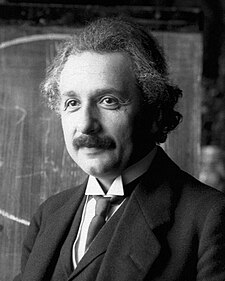 The following is an extract of an article written by Albert Einstein, first published in the first issue of Monthly Review (May 1949).
 Is it advisable for one who is not an expert on economic and social issues to express views on the subject of socialism? I believe for a number of reasons that it is. Let us first consider the question from the point of view of scientific knowledge. It might appear that there are no essential methodological differences between astronomy and economics: scientists in both fields attempt to discover laws of general acceptability for a circumscribed group of phenomena in order to make the interconnection of these phenomena as clearly understandable as possible. But in reality such methodological differences do exist. The discovery of general laws in the field of economics is made difficult by the circumstance that observed economic phenomena are often affected by many factors which are very hard to evaluate separately. In addition, the experience which has accumulated since the beginning of the so-called civilized period of human history has—as is well known—been largely influenced and limited by causes which are by no means exclusively economic in nature. For example, most of the major states of history owed their existence to conquest. The conquering peoples established themselves, legally and economically, as the privileged class of the conquered country. They seized for themselves a monopoly of the land ownership and appointed a priesthood from among their own ranks. The priests, in control of education, made the class division of society into a permanent institution and created a system of values by which the people were thenceforth, to a large extent unconsciously, guided in their social behavior.
But historic tradition is, so to speak, of yesterday; nowhere have we really overcome what Thorstein Veblen called "the predatory phase" of human development. The observable economic facts belong to that phase and even such laws as we can derive from them are not applicable to other phases. Since the real purpose of socialism is precisely to overcome and advance beyond the predatory phase of human development, economic science in its present state can throw little light on the socialist society of the future.
Second, socialism is directed towards a social-ethical end. Science, however, cannot create ends and, even less, instill them in human beings; science, at most, can supply the means by which to attain certain ends. But the ends themselves are conceived by personalities with lofty ethical ideals and—if these ends are not stillborn, but vital and vigorous—are adopted and carried forward by those many human beings who, half unconsciously, determine the slow evolution of society.
For these reasons, we should be on our guard not to overestimate science and scientific methods when it is a question of human problems; and we should not assume that experts are the only ones who have a right to express themselves on questions affecting the organization of society.
Innumerable voices have been asserting for some time now that human society is passing through a crisis, that its stability has been gravely shattered. It is characteristic of such a situation that individuals feel indifferent or even hostile toward the group, small or large, to which they belong. In order to illustrate my meaning, let me record here a personal experience. I recently discussed with an intelligent and well-disposed man the threat of another war, which in my opinion would seriously endanger the existence of mankind, and I remarked that only a supra-national organization would offer protection from that danger. Thereupon my visitor, very calmly and coolly, said to me: "Why are you so deeply opposed to the disappearance of the human race?"
I am sure that as little as a century ago no one would have so lightly made a statement of this kind. It is the statement of a man who has striven in vain to attain an equilibrium within himself and has more or less lost hope of succeeding. It is the expression of a painful solitude and isolation from which so many people are suffering in these days. What is the cause? Is there a way out?
It is easy to raise such questions, but difficult to answer them with any degree of assurance. I must try, however, as best I can, although I am very conscious of the fact that our feelings and strivings are often contradictory and obscure and that they cannot be expressed in easy and simple formulas.
Man is, at one and the same time, a solitary being and a social being. As a solitary being, he attempts to protect his own existence and that of those who are closest to him, to satisfy his personal desires, and to develop his innate abilities. As a social being, he seeks to gain the recognition and affection of his fellow human beings, to share in their pleasures, to comfort them in their sorrows, and to improve their conditions of life. Only the existence of these varied, frequently conflicting, strivings accounts for the special character of a man, and their specific combination determines the extent to which an individual can achieve an inner equilibrium and can contribute to the well-being of society. It is quite possible that the relative strength of these two drives is, in the main, fixed by inheritance. But the personality that finally emerges is largely formed by the environment in which a man happens to find himself during his development, by the structure of the society in which he grows up, by the tradition of that society, and by its appraisal of particular types of behavior. The abstract concept "society" means to the individual human being the sum total of his direct and indirect relations to his contemporaries and to all the people of earlier generations. The individual is able to think, feel, strive, and work by himself; but he depends so much upon society—in his physical, intellectual, and emotional existence—that it is impossible to think of him, or to understand him, outside the framework of society. It is "society" which provides man with food, clothing, a home, the tools of work, language, the forms of thought, and most of the content of thought; his life is made possible through the labor and the accomplishments of the many millions past and present who are all hidden behind the small word “society.”
It is evident, therefore, that the dependence of the individual upon society is a fact of nature which cannot be abolished—just as in the case of ants and bees. However, while the whole life process of ants and bees is fixed down to the smallest detail by rigid, hereditary instincts, the social pattern and interrelationships of human beings are very variable and susceptible to change. Memory, the capacity to make new combinations, the gift of oral communication have made possible developments among human being which are not dictated by biological necessities. Such developments manifest themselves in traditions, institutions, and organizations; in literature; in scientific and engineering accomplishments; in works of art. This explains how it happens that, in a certain sense, man can influence his life through his own conduct, and that in this process conscious thinking and wanting can play a part.
Man acquires at birth, through heredity, a biological constitution which we must consider fixed and unalterable, including the natural urges which are characteristic of the human species. In addition, during his lifetime, he acquires a cultural constitution which he adopts from society through communication and through many other types of influences. It is this cultural constitution which, with the passage of time, is subject to change and which determines to a very large extent the relationship between the individual and society. Modern anthropology has taught us, through comparative investigation of so-called primitive cultures, that the social behavior of human beings may differ greatly, depending upon prevailing cultural patterns and the types of organization which predominate in society. It is on this that those who are striving to improve the lot of man may ground their hopes: human beings are not condemned, because of their biological constitution, to annihilate each other or to be at the mercy of a cruel, self-inflicted fate.
If we ask ourselves how the structure of society and the cultural attitude of man should be changed in order to make human life as satisfying as possible, we should constantly be conscious of the fact that there are certain conditions which we are unable to modify. As mentioned before, the biological nature of man is, for all practical purposes, not subject to change. Furthermore, technological and demographic developments of the last few centuries have created conditions which are here to stay. In relatively densely settled populations with the goods which are indispensable to their continued existence, an extreme division of labor and a highly-centralized productive apparatus are absolutely necessary. The time—which, looking back, seems so idyllic—is gone forever when individuals or relatively small groups could be completely self-sufficient. It is only a slight exaggeration to say that mankind constitutes even now a planetary community of production and consumption.
I have now reached the point where I may indicate briefly what to me constitutes the essence of the crisis of our time. It concerns the relationship of the individual to society. The individual has become more conscious than ever of his dependence upon society. But he does not experience this dependence as a positive asset, as an organic tie, as a protective force, but rather as a threat to his natural rights, or even to his economic existence. Moreover, his position in society is such that the egotistical drives of his make-up are constantly being accentuated, while his social drives, which are by nature weaker, progressively deteriorate. All human beings, whatever their position in society, are suffering from this process of deterioration. Unknowingly prisoners of their own egotism, they feel insecure, lonely, and deprived of the naive, simple, and unsophisticated enjoyment of life. Man can find meaning in life, short and perilous as it is, only through devoting himself to society.
The economic anarchy of capitalist society as it exists today is, in my opinion, the real source of the evil. We see before us a huge community of producers the members of which are unceasingly striving to deprive each other of the fruits of their collective labor—not by force, but on the whole in faithful compliance with legally established rules. In this respect, it is important to realize that the means of production—that is to say, the entire productive capacity that is needed for producing consumer goods as well as additional capital goods—may legally be, and for the most part are, the private property of individuals.
For the sake of simplicity, in the discussion that follows I shall call “workers” all those who do not share in the ownership of the means of production—although this does not quite correspond to the customary use of the term. The owner of the means of production is in a position to purchase the labor power of the worker. By using the means of production, the worker produces new goods which become the property of the capitalist. The essential point about this process is the relation between what the worker produces and what he is paid, both measured in terms of real value. Insofar as the labor contract is “free,” what the worker receives is determined not by the real value of the goods he produces, but by his minimum needs and by the capitalists' requirements for labor power in relation to the number of workers competing for jobs. It is important to understand that even in theory the payment of the worker is not determined by the value of his product.
Private capital tends to become concentrated in few hands, partly because of competition among the capitalists, and partly because technological development and the increasing division of labor encourage the formation of larger units of production at the expense of smaller ones. The result of these developments is an oligarchy of private capital the enormous power of which cannot be effectively checked even by a democratically organized political society. This is true since the members of legislative bodies are selected by political parties, largely financed or otherwise influenced by private capitalists who, for all practical purposes, separate the electorate from the legislature. The consequence is that the representatives of the people do not in fact sufficiently protect the interests of the underprivileged sections of the population. Moreover, under existing conditions, private capitalists inevitably control, directly or indirectly, the main sources of information (press, radio, education). It is thus extremely difficult, and indeed in most cases quite impossible, for the individual citizen to come to objective conclusions and to make intelligent use of his political rights.
The situation prevailing in an economy based on the private ownership of capital is thus characterized by two main principles: first, means of production (capital) are privately owned and the owners dispose of them as they see fit; second, the labor contract is free. Of course, there is no such thing as a pure capitalist society in this sense. In particular, it should be noted that the workers, through long and bitter political struggles, have succeeded in securing a somewhat improved form of the “free labor contract” for certain categories of workers. But taken as a whole, the present day economy does not differ much from “pure” capitalism.
Production is carried on for profit, not for use. There is no provision that all those able and willing to work will always be in a position to find employment; an “army of unemployed” almost always exists. The worker is constantly in fear of losing his job. Since unemployed and poorly paid workers do not provide a profitable market, the production of consumers' goods is restricted, and great hardship is the consequence. Technological progress frequently results in more unemployment rather than in an easing of the burden of work for all. The profit motive, in conjunction with competition among capitalists, is responsible for an instability in the accumulation and utilization of capital which leads to increasingly severe depressions. Unlimited competition leads to a huge waste of labor, and to that crippling of the social consciousness of individuals which I mentioned before.
This crippling of individuals I consider the worst evil of capitalism. Our whole educational system suffers from this evil. An exaggerated competitive attitude is inculcated into the student, who is trained to worship acquisitive success as a preparation for his future career.
I am convinced there is only one way to eliminate these grave evils, namely through the establishment of a socialist economy, accompanied by an educational system which would be oriented toward social goals. In such an economy, the means of production are owned by society itself and are utilized in a planned fashion. A planned economy, which adjusts production to the needs of the community, would distribute the work to be done among all those able to work and would guarantee a livelihood to every man, woman, and child. The education of the individual, in addition to promoting his own innate abilities, would attempt to develop in him a sense of responsibility for his fellow men in place of the glorification of power and success in our present society.
Nevertheless, it is necessary to remember that a planned economy is not yet socialism. A planned economy as such may be accompanied by the complete enslavement of the individual. The achievement of socialism requires the solution of some extremely difficult socio-political problems: how is it possible, in view of the far-reaching centralization of political and economic power, to prevent bureaucracy from becoming all-powerful and overweening? How can the rights of the individual be protected and therewith a democratic counterweight to the power of bureaucracy be assured?
Clarity about the aims and problems of socialism is of greatest significance in our age of transition. Since, under present circumstances, free and unhindered discussion of these problems has come under a powerful taboo, I consider the foundation of this magazine (Monthly Review) to be an important public service.
Source: Monthly Review
Sunday, January 3, 2010
Theocracy
 Theocracy is a form of government in which a god or deity is recognized as the state's supreme civil ruler, or in a higher sense, a form of government in which a state is governed by immediate divine guidance or by officials who are regarded as divinely guided. In Common Greek, “theocracy” means a rule [kra′tos] by God [the.os′]. For believers, theocracy is a form of government in which divine power governs an earthly human state, either in a personal incarnation or, more often, via religious institutional representatives (i.e., a church), replacing or dominating civil government. Theocratic governments enact theonomic laws.
Theocracy should be distinguished from other secular forms of government that have a state religion, or are merely influenced by theological or moral concepts, and monarchies held "By the Grace of God".
A theocracy may be monist in form, where the administrative hierarchy of the government is identical with the administrative hierarchy of the religion, or it may have two 'arms,' but with the state administrative hierarchy subordinate to the religious hierarchy.
Theoracy came into the fore in modern politics with the Iranian Revolution.
Source: Wikipedia
Rival Islamists Fight for Town in Somalia

Shabab rebels, who control most of Somalia with allied Islamist groups, on Saturday attacked a town lost to moderate Islamists about a year ago. It appeared late Saturday that the moderate Islamists had kept control of the town, Dusa Marreb, in central Somalia, although the Shabab earlier claimed victory. The battles killed 10 people, witnesses said. The two groups have been fighting each other elsewhere in Somalia for months. The group that had been controlling Dusa Marreb, Ahlu Sunna Wal Jama, had chased out the Shabab in December 2008 and vowed to challenge the Shabab in other areas to “restore stability and harmony in Somalia and achieve a genuine government of national unity.”
Residents of the town say they evacuated it when they heard gunfire early Saturday morning. “I and my children immediately fled outside the town,” Khadiija Ali said. “I was preparing breakfast for my family, when the bullet sound shocked me. We were not expecting such fight.” The assault came a day after the Shabab, which have increasing ties with Al Qaeda, tried to attract international media attention by vowing to send fighters to help insurgents in Yemen.
The United States has been helping the Yemeni government combat a branch of Al Qaeda, an effort that is likely to continue, with President Obama saying Saturday that the group sponsored the attempt on Dec. 25 to bring down a jet bound for the United States. Western governments have been hoping that Ahlu Sunna Wal Jama and other moderate Islamists can repel Somalia’s increasingly powerful extremists. Ahlu Sunna Wal Jama, a Sufi militia, has been one of the more successful groups in fighting the Shabab, who are fearsome fighters.
The weak transitional government in Somalia controls a small enclave in Mogadishu, the capital, under the protection of African Union peacekeeping troops. Somalia has not had an effective central government since 1991.
Source: New York Times
Saturday, January 2, 2010
South Africa: Break with the Bourgeois Tripartite Alliance!
The African National Congress (ANC) wasted no time after sweeping the April parliamentary elections in South Africa to demonstrate that the new government under Jacob Zuma would crack down on strikes and township protests. The day after the elections, military personnel were called on to break a strike by doctors demanding overdue pay hikes and more funds for the overburdened, hellish public health system. Municipal workers who struck this winter for a rise in their paltry wages were attacked by cops firing rubber bullets and thrown in jail. Protesters throughout the country demanding houses, roads and sewage systems for their impoverished townships have met with similar treatment.
Like the “neoliberal” Thabo Mbeki and Nelson Mandela before him, the populist Zuma is doing his job as chief of the capitalist state—an apparatus of organised violence, based centrally on the police, military and prisons, that is wielded on behalf of the filthy rich ruling class against the overwhelmingly black masses they exploit and oppress. This bourgeois class dictatorship, which continues to defend a system of white privilege, is cloaked by the “non-racial democracy” that was installed in 1994, when white-supremacist apartheid rule was replaced by a government led by the ANC and its Tripartite Alliance partners, the South African Communist Party (SACP) and Congress of South African Trade Unions (COSATU).
As revolutionary Marxists, Spartacist South Africa, section of the International Communist League (Fourth Internationalist), declared that no party in the April elections represented the interests of the working class and the poor. The SACP and COSATU bureaucracy worked overtime to get out the vote for the ANC, tirelessly portraying Zuma as a “friend” of the workers as opposed to the leaders of the Congress of the People (C.O.P.E.), who split from the ANC to the right after Mbeki was ousted as president. But as we wrote in Workers Vanguard No. 933 (27 March 2009), newspaper of the Spartacist League/U.S.: “Despite the ANC’s ‘pro-worker’ and ‘pro-poor’ rhetoric, the ANC and C.O.P.E. are both bourgeois-nationalist—i.e., capitalist—parties” that “represent the interests of the aspiring black bourgeoisie and the predominantly white capitalist ruling class.”
At the core of the recent spate of strikes and protests is the explosive anger at the base of society over the failure of the Tripartite Alliance, after 15 years in power, to fulfill expectations of social and economic equality for the majority. Township protesters complain that they voted for a better life but what they have is getting worse. Striking postal workers demanded the closing of the apartheid wage gap. Adding to longstanding mass unemployment, the world recession has thrown hundreds of thousands more out of work.
A new study shows that the chasm between the wealthy at the top and the masses at the bottom has become the largest in the world, surpassing that in Brazil. The wealthiest are overwhelmingly white and enjoy First World living conditions, while blacks as well as coloured [mixed-race] and Indian toilers are at Third World levels. This is a damning indictment of the SACP/COSATU misleaders, who promised the masses that the alliance with the bourgeois ANC would bring social transformation and equality. The result instead was neo-apartheid capitalism. While the political superstructure underwent a major change with the end of the apartheid system of rigid, legally enforced racial segregation and subjugation, the foundation of the capitalist economy remains the superexploitation of mainly black labour.
As the black majority’s anger over their unbearable conditions continues to build, the Zuma government has made clear its intention to beef up the state’s arsenal of repression against labour and the poor. On the opening day of the COSATU national congress in September, Zuma lectured delegates about “violent strikes.” In a speech a week later, he supported giving cops more leeway to “shoot to kill,” supposedly to fight South Africa’s “abnormal criminal problem.” Zuma’s reprimands, echoed by COSATU general secretary Zwelinzima Vavi, did not go down well at the COSATU congress. Leaders of the SAMWU municipal workers and SATAWU transport workers unions criticised the top COSATU leadership for failing to condemn police attacks on their strikes this year. But these same unions include cops and security guards whose job is to defend capitalist rule and profits by violently repressing workers and the poor. SSA demands: Cops and security guards out of the unions!
Source: Spartacist
Like the “neoliberal” Thabo Mbeki and Nelson Mandela before him, the populist Zuma is doing his job as chief of the capitalist state—an apparatus of organised violence, based centrally on the police, military and prisons, that is wielded on behalf of the filthy rich ruling class against the overwhelmingly black masses they exploit and oppress. This bourgeois class dictatorship, which continues to defend a system of white privilege, is cloaked by the “non-racial democracy” that was installed in 1994, when white-supremacist apartheid rule was replaced by a government led by the ANC and its Tripartite Alliance partners, the South African Communist Party (SACP) and Congress of South African Trade Unions (COSATU).
As revolutionary Marxists, Spartacist South Africa, section of the International Communist League (Fourth Internationalist), declared that no party in the April elections represented the interests of the working class and the poor. The SACP and COSATU bureaucracy worked overtime to get out the vote for the ANC, tirelessly portraying Zuma as a “friend” of the workers as opposed to the leaders of the Congress of the People (C.O.P.E.), who split from the ANC to the right after Mbeki was ousted as president. But as we wrote in Workers Vanguard No. 933 (27 March 2009), newspaper of the Spartacist League/U.S.: “Despite the ANC’s ‘pro-worker’ and ‘pro-poor’ rhetoric, the ANC and C.O.P.E. are both bourgeois-nationalist—i.e., capitalist—parties” that “represent the interests of the aspiring black bourgeoisie and the predominantly white capitalist ruling class.”
At the core of the recent spate of strikes and protests is the explosive anger at the base of society over the failure of the Tripartite Alliance, after 15 years in power, to fulfill expectations of social and economic equality for the majority. Township protesters complain that they voted for a better life but what they have is getting worse. Striking postal workers demanded the closing of the apartheid wage gap. Adding to longstanding mass unemployment, the world recession has thrown hundreds of thousands more out of work.
A new study shows that the chasm between the wealthy at the top and the masses at the bottom has become the largest in the world, surpassing that in Brazil. The wealthiest are overwhelmingly white and enjoy First World living conditions, while blacks as well as coloured [mixed-race] and Indian toilers are at Third World levels. This is a damning indictment of the SACP/COSATU misleaders, who promised the masses that the alliance with the bourgeois ANC would bring social transformation and equality. The result instead was neo-apartheid capitalism. While the political superstructure underwent a major change with the end of the apartheid system of rigid, legally enforced racial segregation and subjugation, the foundation of the capitalist economy remains the superexploitation of mainly black labour.
As the black majority’s anger over their unbearable conditions continues to build, the Zuma government has made clear its intention to beef up the state’s arsenal of repression against labour and the poor. On the opening day of the COSATU national congress in September, Zuma lectured delegates about “violent strikes.” In a speech a week later, he supported giving cops more leeway to “shoot to kill,” supposedly to fight South Africa’s “abnormal criminal problem.” Zuma’s reprimands, echoed by COSATU general secretary Zwelinzima Vavi, did not go down well at the COSATU congress. Leaders of the SAMWU municipal workers and SATAWU transport workers unions criticised the top COSATU leadership for failing to condemn police attacks on their strikes this year. But these same unions include cops and security guards whose job is to defend capitalist rule and profits by violently repressing workers and the poor. SSA demands: Cops and security guards out of the unions!
Source: Spartacist
Wednesday, December 30, 2009
Anarchism
Anarchism is a political philosophy encompassing theories and attitudes which consider the state to be unnecessary, harmful, or otherwise undesirable, and favor instead a stateless society or anarchy. Individual anarchists may have additional criteria for what they conceive to be anarchism, and there is often broad disagreement concerning these broader conceptions.
A modern day example of anarchism is Somalia.
Source: Wikipedia
A modern day example of anarchism is Somalia.
Source: Wikipedia
Capitalism
There is no consensus on capitalism, nor how it should be used as an analytical category. However, it is generally accepted that private ownership of the means of production, the creation of goods or services for personal gain in a market (free or fettered), prices (money or barter), and labour (paid or enslaved) are elements of capitalism.
Capitalism is thought to be a system that developed incrementally from the 14th century in Europe, however capitalist organizations existed in the ancient world, and early aspects of merchant capitalism flourished during the Late Middle Ages. Capitalism (as an undefined concept) became dominant in the Western world following the demise of feudalism. Capitalism gradually spread throughout Europe, and in the 19th and 20th centuries.
The term capitalist refers to an owner of capital rather than an economic system. Karl Marx's notion of the capitalist mode of production is characterised as a system of primarily private ownership of the means of production in a mainly market economy, with a legal framework on commerce and a physical infrastructure provided by the state.
Source: Wikipedia
Capitalism is thought to be a system that developed incrementally from the 14th century in Europe, however capitalist organizations existed in the ancient world, and early aspects of merchant capitalism flourished during the Late Middle Ages. Capitalism (as an undefined concept) became dominant in the Western world following the demise of feudalism. Capitalism gradually spread throughout Europe, and in the 19th and 20th centuries.
The term capitalist refers to an owner of capital rather than an economic system. Karl Marx's notion of the capitalist mode of production is characterised as a system of primarily private ownership of the means of production in a mainly market economy, with a legal framework on commerce and a physical infrastructure provided by the state.
Source: Wikipedia
Socialism
Socialism refers to various theories of economic organization advocating public or direct worker ownership and administration of the means of production and allocation of resources, and a society characterized by equal access to resources for all individuals, with a method of compensation based on the amount of labour expended.
 Most socialists share the view that capitalism unfairly concentrates power and wealth among a small segment of society that controls capital and derives its wealth through exploitation, creates an unequal society, does not provide equal opportunities for everyone to maximise their potentialities and does not utilise technology and resources to their maximum potential nor in the interests of the public.
Friedrich Engels, one of the founders of modern socialist theory, and Henri de Saint-Simon, a French Utopian Socialism theorist, advocated the creation of a society that allows for the widespread application of modern technology to rationalise economic activity by eliminating the anarchy of capitalist production.
Source: Wikipedia
 Most socialists share the view that capitalism unfairly concentrates power and wealth among a small segment of society that controls capital and derives its wealth through exploitation, creates an unequal society, does not provide equal opportunities for everyone to maximise their potentialities and does not utilise technology and resources to their maximum potential nor in the interests of the public.
Friedrich Engels, one of the founders of modern socialist theory, and Henri de Saint-Simon, a French Utopian Socialism theorist, advocated the creation of a society that allows for the widespread application of modern technology to rationalise economic activity by eliminating the anarchy of capitalist production.
Source: Wikipedia
Tuesday, December 29, 2009
Community

Traditionally a "community" has been defined as a group of interacting people living in a common location. The word is often used to refer to a group that is organized around common values and social cohesion within a shared geographical location, generally in social units larger than a household. The word can also refer to the national community or global community.
The word community is derived from the Old French communité which is derived from the Latin communitas (cum, "with/together" + munus, "gift"), a broad term for fellowship or organized society.
Since the advent of the Internet, the concept of community no longer has geographical limitations, as people can now virtually gather in an online community and share common interests regardless of physical location.
Source: Wikipedia
Cosmopolitanism
Cosmopolitanism is the ideology that all kinds of human race belong to a single community, based on a shared morality. This is contrasted with communitarian and particularistic theories, especially the ideas of patriotism and nationalism. Cosmopolitanism may entail some sort of world government or it may simply refer to more inclusive moral, economic, and/or political relationships between nations or individuals of different nations. A person who adheres to the idea of cosmopolitanism in any of its forms is called a cosmopolitan.
 The cosmopolitan community might be based on an inclusive morality, a shared economic relationship, or a political structure that encompasses different nations. In its more positive versions, the cosmopolitan community is one in which individuals from different places (e.g. nation-states) form relationships of mutual respect. As an example, Kwame Anthony Appiah suggests the possibility of a cosmopolitan community in which individuals from varying locations (physical, economic, etc.) enter relationships of mutual respect despite their differing beliefs (moral, religious, political, etc.). However, the cosmopolitan community can also be understood as some kind of elite club, one based primarily on economic privilege. In this light, the cosmopolitan individual has advantages over less economically privileged individuals, advantages that might include personal and political liberties and freedoms.
Source: Wikipedia
 The cosmopolitan community might be based on an inclusive morality, a shared economic relationship, or a political structure that encompasses different nations. In its more positive versions, the cosmopolitan community is one in which individuals from different places (e.g. nation-states) form relationships of mutual respect. As an example, Kwame Anthony Appiah suggests the possibility of a cosmopolitan community in which individuals from varying locations (physical, economic, etc.) enter relationships of mutual respect despite their differing beliefs (moral, religious, political, etc.). However, the cosmopolitan community can also be understood as some kind of elite club, one based primarily on economic privilege. In this light, the cosmopolitan individual has advantages over less economically privileged individuals, advantages that might include personal and political liberties and freedoms.
Source: Wikipedia
Patriotism
Patriotism is love of and/or devotion to one's country. The word comes from the Greek patris, meaning fatherland. However, patriotism has had different meanings over time, and its meaning is highly dependent upon context, geography, and philosophy.
 Although patriotism is used in certain vernaculars as a synonym for nationalism, nationalism is not necessarily considered an inherent part of patriotism. Among the ancient Greeks, patriotism consisted of notions concerning language, religious traditions, ethics, law, and devotion to the common good, rather than pure identification with a nation-state. Scholar J. Peter Euben writes that for the Greek philosopher Socrates, "patriotism does not require one to agree with everything that his country does and would actually promote analytical questioning in a quest to make the country the best it possibly can be."
 In the Hindu epic Ramayana, Lord Rama tells Lakshmana Janani Janma Bhoomischa Swargadapi Gariyasi (Mother and Motherland are greater than heaven), which greatly lays the foundation for consciousness of patriotism for Hindus.
During the 18th century Age of Enlightenment, the notion of patriotism continued to be separate from the notion of nationalism. Instead, patriotism was defined as devotion to humanity and beneficence. For example, providing charity, criticizing slavery, and denouncing excessive penal laws were all considered patriotic. In both ancient and modern visions of patriotism, individual responsibility to fellow citizens is an inherent component of patriotism.
Many contemporary notions of patriotism are influenced by 19th century ideas about nationalism. During the 19th century, "being patriotic" became increasingly conflated with nationalism, and even jingoism. However, some notions of contemporary patriotism reject nationalism in favor of a more classic version of the idea of patriotism which includes social responsibility.
Source: Wikipedia
 Although patriotism is used in certain vernaculars as a synonym for nationalism, nationalism is not necessarily considered an inherent part of patriotism. Among the ancient Greeks, patriotism consisted of notions concerning language, religious traditions, ethics, law, and devotion to the common good, rather than pure identification with a nation-state. Scholar J. Peter Euben writes that for the Greek philosopher Socrates, "patriotism does not require one to agree with everything that his country does and would actually promote analytical questioning in a quest to make the country the best it possibly can be."
 In the Hindu epic Ramayana, Lord Rama tells Lakshmana Janani Janma Bhoomischa Swargadapi Gariyasi (Mother and Motherland are greater than heaven), which greatly lays the foundation for consciousness of patriotism for Hindus.
During the 18th century Age of Enlightenment, the notion of patriotism continued to be separate from the notion of nationalism. Instead, patriotism was defined as devotion to humanity and beneficence. For example, providing charity, criticizing slavery, and denouncing excessive penal laws were all considered patriotic. In both ancient and modern visions of patriotism, individual responsibility to fellow citizens is an inherent component of patriotism.
Many contemporary notions of patriotism are influenced by 19th century ideas about nationalism. During the 19th century, "being patriotic" became increasingly conflated with nationalism, and even jingoism. However, some notions of contemporary patriotism reject nationalism in favor of a more classic version of the idea of patriotism which includes social responsibility.
Source: Wikipedia
Friday, December 18, 2009
Communism

Communism is a social structure and political ideology in which property is commonly controlled. Communism is a modern political movement that aims to overthrow capitalism via revolution to create a classless society where all goods are publicly owned. Karl Marx posited that communism would be the final stage in human society, which would be achieved through a proletarian revolution and only becoming possible after a socialist stage develops the productive forces, leading to a superabundance of goods and services.
As a political ideology, communism is usually considered to be a branch of socialism; a broad group of economic and political philosophies that draw on the various political and intellectual movements with origins in the work of theorists of the Industrial Revolution and the French Revolution.
Communism attempts to offer an alternative to the problems with the Capitalist market economy and the legacy of imperialism and nationalism.
Source: Wikipedia
Nationalism
Nationalism generally involves the identification of an ethnic identity with a state. It is also used to describe a movement to establish or protect a homeland (usually an autonomous state) for an ethnic group. In some cases the identification of a homogeneous national culture is combined with a negative view of other races of cultures.
Nationalism is sometimes reactionary, calling for a return to an idealized version of the national past and sometimes for the expulsion of foreigners. Other forms of nationalism are revolutionary, calling for the establishment of an independent state as a homeland for an ethnic underclass. Nationalism emphasises collective identity - a 'people' must be autonomous, united, and express a single national culture.
 When nationalism is pushed to an extreme, it not only justifies wars against other nations, as in the German invasion of Poland at the beginning of World War II, but it is also used to justify attacks against ones fellow citizens, as in the Nazi assertion that Jews are not really citizens. This kind of nationalism often has as its avowed goal racial, ethnic, or religious purity. Since most states are multicultural, nationalism often leads to conflict within a state, as well as between states, and in its extreme form leads to war, secession, or genocide. National flags, national anthems, and other symbols of national identity are often considered sacred, as if they were religious rather than political symbols. Deep emotions are aroused. Some scholars see the word "nationalism" as pejorative, standing in opposition to a more positive term, patriotism.
Fascism is a form of authoritarian ultra-nationalism which promotes national revolution, national collectivism, a totalitarian state, and irredentism or expansionism to unify and allow the growth of a nation. Fascists often promote ethnic nationalism but have at times promoted cultural nationalism including cultural assimilation of people outside a specific ethnic group. Fascism stresses the subservience of the individual to the state, and the need to absolute and unquestioned loyalty to a strong ruler.
Left-wing nationalism (also occasionally known as "socialist nationalism") refers to any political movement that combines left-wing politics with nationalism. Notable examples include Fidel Castro's 26th of July Movement that launched the Cuban Revolution ousting the American-backed Fulgencio Batista in 1959, Ireland's Sinn Fein, Labor Zionism in Israel and the African National Congress in South Africa.
In the Western world the most comprehensive current ideological alternative to nationalism is cosmopolitanism. Ethical cosmopolitanism rejects one of the basic ethical principles of nationalism: that humans owe more duties to a fellow member of the nation, than to a non-member. It rejects such important nationalist values as national identity and national loyalty. However, there is also a political cosmopolitanism, which has a geopolitical program to match that of nationalism: it seeks some form of world state, with a world government. Very few people openly and explicitly support the establishment of a global state, but political cosmopolitanism has influenced the development of international criminal law, and the erosion of the status of national sovereignty. In turn, nationalists are deeply suspicious of cosmopolitan attitudes, which they equate with eradication of diverse national cultures.
Source: Wikipedia
Nationalism is sometimes reactionary, calling for a return to an idealized version of the national past and sometimes for the expulsion of foreigners. Other forms of nationalism are revolutionary, calling for the establishment of an independent state as a homeland for an ethnic underclass. Nationalism emphasises collective identity - a 'people' must be autonomous, united, and express a single national culture.
 When nationalism is pushed to an extreme, it not only justifies wars against other nations, as in the German invasion of Poland at the beginning of World War II, but it is also used to justify attacks against ones fellow citizens, as in the Nazi assertion that Jews are not really citizens. This kind of nationalism often has as its avowed goal racial, ethnic, or religious purity. Since most states are multicultural, nationalism often leads to conflict within a state, as well as between states, and in its extreme form leads to war, secession, or genocide. National flags, national anthems, and other symbols of national identity are often considered sacred, as if they were religious rather than political symbols. Deep emotions are aroused. Some scholars see the word "nationalism" as pejorative, standing in opposition to a more positive term, patriotism.
Fascism is a form of authoritarian ultra-nationalism which promotes national revolution, national collectivism, a totalitarian state, and irredentism or expansionism to unify and allow the growth of a nation. Fascists often promote ethnic nationalism but have at times promoted cultural nationalism including cultural assimilation of people outside a specific ethnic group. Fascism stresses the subservience of the individual to the state, and the need to absolute and unquestioned loyalty to a strong ruler.
Left-wing nationalism (also occasionally known as "socialist nationalism") refers to any political movement that combines left-wing politics with nationalism. Notable examples include Fidel Castro's 26th of July Movement that launched the Cuban Revolution ousting the American-backed Fulgencio Batista in 1959, Ireland's Sinn Fein, Labor Zionism in Israel and the African National Congress in South Africa.
In the Western world the most comprehensive current ideological alternative to nationalism is cosmopolitanism. Ethical cosmopolitanism rejects one of the basic ethical principles of nationalism: that humans owe more duties to a fellow member of the nation, than to a non-member. It rejects such important nationalist values as national identity and national loyalty. However, there is also a political cosmopolitanism, which has a geopolitical program to match that of nationalism: it seeks some form of world state, with a world government. Very few people openly and explicitly support the establishment of a global state, but political cosmopolitanism has influenced the development of international criminal law, and the erosion of the status of national sovereignty. In turn, nationalists are deeply suspicious of cosmopolitan attitudes, which they equate with eradication of diverse national cultures.
Source: Wikipedia
Subscribe to:
Posts (Atom)