Secretary of State Hillary Clinton on Tuesday issued a warning against anyone “attempting to exploit the misery of the Syrian people, either by sending in proxies or sending in terrorist fighters.” She insisted that such actions would “not be tolerated.”
Neither she nor the State Department cared to spell out precisely which countries or organizations were being warned. Hidden behind Clinton’s hypocritical statement is the reality that US imperialism and its allies are themselves relying on, bankrolling and arming just such “proxies” and “terrorist fighters” to pursue their war for regime-change in Syria.
Chief among these forces is Washington’s supposed arch enemy, the Islamist terrorist organization Al Qaeda.
The growing acknowledgment within official circles that Al Qaeda is playing a decisive role in Syria’s civil war exposes both the real nature of the US-backed bid to topple the government of President Bashar al-Assad and the fraud of Washington’s “war on terror.”
Having for months dismissed as “propaganda” the Syrian government’s statements that it is battling Al Qaeda terrorists, the corporate media and sources close to the US government are now not only acknowledging the role of this organization in the Syrian events, but celebrating it.
The major US news networks all carried reports on Monday and Tuesday highlighting Al Qaeda’s presence inside Syria. These follow a report in the New York Times late last month that Al Qaeda is operating in the heart of the so-called Syrian “revolution” through three groups: the Al Nusra Front for the People of the Levant, the Abdullah Azzam Brigades and Al Baraa ibn Malik Martyrdom Brigade.
The frankest admission of the significance of Al Qaeda’s role came Monday in an article posted on the web site of the Council on Foreign Relations by Ed Husain, a senior fellow for Middle Eastern Studies and one of the council’s chief analysts on Islamist political movements in the Middle East.
Husain wrote: “The Syrian rebels would be immeasurably weaker today without al-Qaeda in their ranks. By and large, Free Syrian Army (FSA) battalions are tired, divided, chaotic, and ineffective… Al-Qaeda fighters, however, may help improve morale. The influx of jihadis brings discipline, religious fervor, battle experience from Iraq, funding from Sunni sympathizers in the Gulf, and most importantly, deadly results. In short, the FSA needs al-Qaeda now.”
Husain predicts that “Al-Qaeda could become the most effective fighting force in Syria if defections from the FSA” to its ranks continue growing and “the ranks of foreign fighters continue to swell.” Recent media reports have made clear that Islamist fighters from as far away as Chechnya are being funneled into Syria across the Turkish border, along with many more from Iraq, Libya, Saudi Arabia, Yemen, Jordan and elsewhere.
The US reaction? “Thus far, Washington seems reluctant to weigh heavily into this issue,” writes Husain. “The unspoken position of policymakers is to get rid of Assad first—weakening Iran’s position in the region—and then deal with Al-Qaeda later.”
Such statements are not made lightly and are based upon intimate knowledge of American policy. The Council on Foreign Relations has the closest ties to the State Department of any Washington think tank. Sitting on its board of directors are two former secretaries of state, Colin Powell and Madeleine Albright.
What is involved here are political realities that serve to blow up the pretexts for both the war in Syria and the “global war on terrorism” that has served as the touchstone for US policy, both foreign and domestic, for over a decade.
Washington is not waging a crusade for democracy and human rights in Syria. It is involved in a dirty war in which carnage is being unleashed against the Syrian population as a means of toppling a regime that has historic ties to Tehran. This, in turn, is meant to pave the way for a wider war aimed at eliminating Iran as a rival for regional hegemony in the energy-rich and geo-strategically vital regions of the Persian Gulf and Central Asia.
That Iran itself recognizes these aims was spelled out Tuesday by Iranian envoy Saeed Jalili, who traveled to Damascus. “What is happening in Syria is not an internal Syrian issue but a conflict between the axis of resistance and its enemies in the region and the world,” he said.
The New York Times as much as admitted the accuracy of this assessment, acknowledging that it is not “surprising that Tehran should view the internal conflict in Syria as part of a wider international war--with Iran as the ultimate target.” It continued: “To understand the roots of Iranian paranoia, just look at the map. Iran has been steadily encircled by a network of US military bases in the decades since the Iranian revolution of 1979.”
As for Al Qaeda, after being used as a bogeyman to justify two wars of aggression and a sweeping and continuing assault on democratic rights within the US itself, it now emerges as the indispensable shock troops in Washington’s war for regime-change in Syria.
This alliance is virtually a direct repetition of the relations established by the CIA and Washington when Al Qaeda was founded by Osama bin Laden in the early 1980s. Then it funneled Islamist mujahideen fighters across the Pakistani border into Afghanistan in a war against a Soviet-backed regime that was orchestrated by the CIA and funded with billions of US dollars.
Now the CIA is playing a similar role in Syria, overseeing a huge logistical operation on the Turkish border. Can anyone believe that armed Chechen jihadis are marching across Georgia and Turkey into Syria without the active collaboration of US intelligence?
All of the rhetoric about a global war against Islamist terrorism notwithstanding, the reality is that US imperialism has utilized such forces over the course of decades. Saudi Arabia, which provides these forces with both financial and ideological backing, is Washington’s key Arab ally. Throughout the Cold War, the US government promoted the virulently anti-communist forces of political Islam in the Middle East as well as Asia as a means of destabilizing and toppling nationalist and secular regimes and countering the development of socialist movements.
The response of the US media and the political apparatus as a whole to revelations about Al Qaeda’s role in Syria goes beyond cynicism. It expresses deep-going political disorientation. In Orwellian style, the media reports that yesterday’s mortal enemy has turned into today’s ally without skipping a beat and without seeing the need for explanation. Not a single leading politician has seen fit even to publicly question this transformation.
The lineup of US imperialism and Al Qaeda in Syria exposes even more glaringly the reactionary role played by pseudo-left groups like the International Socialist Organization (ISO) in supporting the imperialist-led drive for regime-change and even casting it as a “revolution.”
Do they all really believe that the American people won’t notice, after having been dragged into two protracted wars, costing the lives of thousands of US soldiers and hundreds of thousands of Iraqi and Afghan civilians, as well as trillions of dollars, all in the name of the struggle against Al Qaeda? If so, they are deeply mistaken. These revelations will have an explosive effect in laying bare and discrediting the entire US ruling establishment.
Source: World Socialist Web Site
Showing posts with label CIA. Show all posts
Showing posts with label CIA. Show all posts
Friday, August 10, 2012


Monday, August 24, 2009
US Justice Dept advises pursuing CIA abuses
The US Justice Department has recommended reopening nearly a dozen prisoner-abuse cases, which could expose CIA employees and contractors to prosecution for their treatment of terrorism suspects, the New York Times said on Monday. The recommendation, reversing the Bush administration, came from the Justice Department's ethics office and has been presented to US Attorney General Eric Holder. The department is due to disclose later on Monday details of prisoner abuse that were gathered in 2004 by the CIA's inspector general but have never been released, according to the Times report, which cited an unnamed person officially briefed on matter.
When the CIA first referred its inspector general's findings, it decided that none of the cases merited prosecution. But when Holder took office and saw the allegations included deaths of people in custody and other cases of physical or mental torment, he reconsidered, the newspaper said. "With the release of the details on Monday and the formal advice that at least some cases be reopened, it now seems all but certain that the appointment of a prosecutor or other concrete steps will follow, posing significant new problems for the CIA," the paper said.
The recommendation to review the cases centres mainly on allegations of detainee abuse in Iraq and Afghanistan. In some examples of abuse that have just been publicized, the CIA report describes how its officers carried out mock executions and threatened at least one prisoner with a gun and a power drill -- possible violations of a federal torture statute. The Times quoted a CIA spokesperson, Paul Gimigliano, as saying that the Justice Department recommendation to open the closed cases had not been sent to the intelligence agency. "Decisions on whether or not to pursue action in court were made after careful consideration by career prosecutors at the Justice Department. The CIA itself brought these matters -- facts and allegations alike -- to the department's attention," he was quoted as saying. "There has never been any public explanation of why the Justice Department under President George W Bush decided not to bring charges in nearly two dozen abuse cases known to be referred to a team of federal prosecutors ... and in some instances not even details of the cases have been made public," the Times said.
Source: Mail & Guardian
When the CIA first referred its inspector general's findings, it decided that none of the cases merited prosecution. But when Holder took office and saw the allegations included deaths of people in custody and other cases of physical or mental torment, he reconsidered, the newspaper said. "With the release of the details on Monday and the formal advice that at least some cases be reopened, it now seems all but certain that the appointment of a prosecutor or other concrete steps will follow, posing significant new problems for the CIA," the paper said.
The recommendation to review the cases centres mainly on allegations of detainee abuse in Iraq and Afghanistan. In some examples of abuse that have just been publicized, the CIA report describes how its officers carried out mock executions and threatened at least one prisoner with a gun and a power drill -- possible violations of a federal torture statute. The Times quoted a CIA spokesperson, Paul Gimigliano, as saying that the Justice Department recommendation to open the closed cases had not been sent to the intelligence agency. "Decisions on whether or not to pursue action in court were made after careful consideration by career prosecutors at the Justice Department. The CIA itself brought these matters -- facts and allegations alike -- to the department's attention," he was quoted as saying. "There has never been any public explanation of why the Justice Department under President George W Bush decided not to bring charges in nearly two dozen abuse cases known to be referred to a team of federal prosecutors ... and in some instances not even details of the cases have been made public," the Times said.
Source: Mail & Guardian
Saturday, August 22, 2009
CIA report has new details of prisoner abuse
CIA interrogators carried out mock executions and threatened an al-Qaeda commander with a gun and an electric drill, according to an internal report that provides new details of abuses inside's the agency's secret prisons, two leading US newspapers reported on Saturday.
The Central Intelligence Agency inspector general's report is due to be released on Monday, The New York Times and the Washington Post said on their websites, citing US officials familiar with the document. The tactics -- which one official described to the Post as as a threatened execution -- were used on Abd al-Rahim al-Nashiri by CIA jailers who held the handgun and drill close to the prisoner to frighten him into giving up information. Nashiri, who was captured in November 2002 and held for four years in one of the CIA's "black site" prisons, was one of three al-Qaeda chieftains later subjected to a form of simulated drowning known as waterboarding, the paper said.
The report, completed in 2004 by the inspector general, John Helgerson, also says that a mock execution was staged in a room next to one terrorism suspect. CIA officers fired a gun in the next room, leading the prisoner to believe that a second detainee had been killed, the Times said. Details of the report were first published by Newsweek magazine on its website late on Friday. A federal judge in New York has ordered a redacted version of the classified CIA report to be made public on Monday, in response to a lawsuit by the American Civil Liberties Union.
Lawyers for the Justice Department and the CIA have been scrutinising the long-concealed agency report since June to determine how much of it can be made public. Attorney General Eric Holder Jr. has been weighing the report's findings as part of a broader probe into the CIA's use of harsh interrogation methods. Nashiri, who was implicated in the bombing of the navy destroyer Cole in 2000, was one of two CIA detainees whose interrogation sessions were videotaped, but the tapes were destroyed by CIA officers in 2005, the Times said.
A federal prosecutor is now investigating the destruction of the CIA tapes, but the Justice Department has so far declined to open a formal investigation into the abuses in CIA prisons, the paper said. The CIA declined to comment on the specifics of the report, the Times said. "The CIA in no way endorsed behavior -- no matter how infrequent -- that went beyond the formal guidance. This has all been looked at; professionals in the Department of Justice decided if and when to pursue prosecution," CIA spokesperson Paul Gimigliano told the newspaper.
Source: Mail & Guardian
The Central Intelligence Agency inspector general's report is due to be released on Monday, The New York Times and the Washington Post said on their websites, citing US officials familiar with the document. The tactics -- which one official described to the Post as as a threatened execution -- were used on Abd al-Rahim al-Nashiri by CIA jailers who held the handgun and drill close to the prisoner to frighten him into giving up information. Nashiri, who was captured in November 2002 and held for four years in one of the CIA's "black site" prisons, was one of three al-Qaeda chieftains later subjected to a form of simulated drowning known as waterboarding, the paper said.
The report, completed in 2004 by the inspector general, John Helgerson, also says that a mock execution was staged in a room next to one terrorism suspect. CIA officers fired a gun in the next room, leading the prisoner to believe that a second detainee had been killed, the Times said. Details of the report were first published by Newsweek magazine on its website late on Friday. A federal judge in New York has ordered a redacted version of the classified CIA report to be made public on Monday, in response to a lawsuit by the American Civil Liberties Union.
Lawyers for the Justice Department and the CIA have been scrutinising the long-concealed agency report since June to determine how much of it can be made public. Attorney General Eric Holder Jr. has been weighing the report's findings as part of a broader probe into the CIA's use of harsh interrogation methods. Nashiri, who was implicated in the bombing of the navy destroyer Cole in 2000, was one of two CIA detainees whose interrogation sessions were videotaped, but the tapes were destroyed by CIA officers in 2005, the Times said.
A federal prosecutor is now investigating the destruction of the CIA tapes, but the Justice Department has so far declined to open a formal investigation into the abuses in CIA prisons, the paper said. The CIA declined to comment on the specifics of the report, the Times said. "The CIA in no way endorsed behavior -- no matter how infrequent -- that went beyond the formal guidance. This has all been looked at; professionals in the Department of Justice decided if and when to pursue prosecution," CIA spokesperson Paul Gimigliano told the newspaper.
Source: Mail & Guardian
Tuesday, February 5, 2008
CIA admit 'waterboarding' al-Qaida suspects
Interrogators used "waterboarding" on three men shortly after the September 11 attacks, the CIA admitted today, naming for the first time the victims of a technique widely perceived as torture.
The men subjected to waterboarding, which simulates drowning, were al-Qaida suspects Khalid Sheikh Mohammed, Abu Zubaydah and Abd al-Rahim al-Nashiri, the CIA director, Michael Hayden, told the US Congress. "We used it against these three detainees because of the circumstances at the time," Hayden said. "There was the belief that additional catastrophic attacks against the homeland were inevitable. And we had limited knowledge about al-Qaida and its workings. Those two realities have changed."
Hayden told the senate intelligence committee that Mohammed - the alleged mastermind of the 9/11 attacks - and the other two men were subject to waterboarding in 2002 and 2003. "The circumstances are different than they were in late 2001, early 2002," Hayden said, adding that he opposed limiting the CIA to interrogation techniques permitted in the US Army field manual, which bans waterboarding. Hayden told the committee that fewer than 100 people had been held in the CIA's terrorism detention and interrogation programme, with less than one-third subjected to "coercive" techniques. The CIA said in December that it had destroyed videotapes depicting the interrogations of Zubaydah and Nashiri, prompting a justice department investigation. The tapes were destroyed as Congress moved to pass a ban on inhumane interrogations and a prosecutor is investigating whether US intelligence officials broke the law or violated court orders in destroying the tapes.
In waterboarding, the victim's mouth is covered and water poured over his face, making the victim feel as if they are drowning. "Waterboarding taken to its extreme, could be death - you could drown someone," McConnell acknowledged. He said waterboarding remains a technique in the CIA's arsenal, but it would require the consent of the president and legal approval of the attorney general.
At the same hearing, the US director of national intelligence said the Taliban, which was overthrown in Afghanistan in late 2001, has expanded its operations into once-peaceful areas of western Afghanistan and around the capital, Kabul, despite the death or capture of three top commanders in the last year. McConnell also said al-Qaida maintains a "safe haven" in Pakistan's tribal areas, where the group is able to stage attacks supporting the Taliban in neighbouring Afghanistan. The Pakistani tribal areas provide al-Qaida "many of the advantages it once derived from its base across the border in Afghanistan, albeit on a smaller and less secure scale", allowing militants to train for strikes in Pakistan, the Middle East, Africa and the US, McConnell said. "Al-Qaida remains the pre-eminent threat against the United States, both here at home and abroad," McConnell said, even though the terror network had suffered setbacks in Iraq. He expressed concern that al-Qaida in Iraq is shifting its focus elsewhere in the region. "They may deploy resources to mount attacks outside the country," McConnell said, although fewer than 100 terrorists have moved to establish cells in other countries. McConnell also told the senate panel that US officials believe that Osama bin Laden is hiding in Pakistan's tribal areas. A report released in London said nearly 400 militant groups now operate around the world and the greatest proliferation has been in the border regions between Afghanistan, Pakistan and India.
The number of violent "non-state" groups has grown about 10% in the past year, according to the 2008 military balance report by the International Institute for Strategic Studies. Iraq and India, with more than 30 active guerrilla groups each, are the most volatile countries, the report said, with the Afghan-Pakistan border and the disputed Kashmir region between India and Pakistan the worst-affected areas.
Source: Guardian
The men subjected to waterboarding, which simulates drowning, were al-Qaida suspects Khalid Sheikh Mohammed, Abu Zubaydah and Abd al-Rahim al-Nashiri, the CIA director, Michael Hayden, told the US Congress. "We used it against these three detainees because of the circumstances at the time," Hayden said. "There was the belief that additional catastrophic attacks against the homeland were inevitable. And we had limited knowledge about al-Qaida and its workings. Those two realities have changed."
Hayden told the senate intelligence committee that Mohammed - the alleged mastermind of the 9/11 attacks - and the other two men were subject to waterboarding in 2002 and 2003. "The circumstances are different than they were in late 2001, early 2002," Hayden said, adding that he opposed limiting the CIA to interrogation techniques permitted in the US Army field manual, which bans waterboarding. Hayden told the committee that fewer than 100 people had been held in the CIA's terrorism detention and interrogation programme, with less than one-third subjected to "coercive" techniques. The CIA said in December that it had destroyed videotapes depicting the interrogations of Zubaydah and Nashiri, prompting a justice department investigation. The tapes were destroyed as Congress moved to pass a ban on inhumane interrogations and a prosecutor is investigating whether US intelligence officials broke the law or violated court orders in destroying the tapes.
In waterboarding, the victim's mouth is covered and water poured over his face, making the victim feel as if they are drowning. "Waterboarding taken to its extreme, could be death - you could drown someone," McConnell acknowledged. He said waterboarding remains a technique in the CIA's arsenal, but it would require the consent of the president and legal approval of the attorney general.
At the same hearing, the US director of national intelligence said the Taliban, which was overthrown in Afghanistan in late 2001, has expanded its operations into once-peaceful areas of western Afghanistan and around the capital, Kabul, despite the death or capture of three top commanders in the last year. McConnell also said al-Qaida maintains a "safe haven" in Pakistan's tribal areas, where the group is able to stage attacks supporting the Taliban in neighbouring Afghanistan. The Pakistani tribal areas provide al-Qaida "many of the advantages it once derived from its base across the border in Afghanistan, albeit on a smaller and less secure scale", allowing militants to train for strikes in Pakistan, the Middle East, Africa and the US, McConnell said. "Al-Qaida remains the pre-eminent threat against the United States, both here at home and abroad," McConnell said, even though the terror network had suffered setbacks in Iraq. He expressed concern that al-Qaida in Iraq is shifting its focus elsewhere in the region. "They may deploy resources to mount attacks outside the country," McConnell said, although fewer than 100 terrorists have moved to establish cells in other countries. McConnell also told the senate panel that US officials believe that Osama bin Laden is hiding in Pakistan's tribal areas. A report released in London said nearly 400 militant groups now operate around the world and the greatest proliferation has been in the border regions between Afghanistan, Pakistan and India.
The number of violent "non-state" groups has grown about 10% in the past year, according to the 2008 military balance report by the International Institute for Strategic Studies. Iraq and India, with more than 30 active guerrilla groups each, are the most volatile countries, the report said, with the Afghan-Pakistan border and the disputed Kashmir region between India and Pakistan the worst-affected areas.
Source: Guardian
Tuesday, October 9, 2007
Ernesto "Che" Guevara
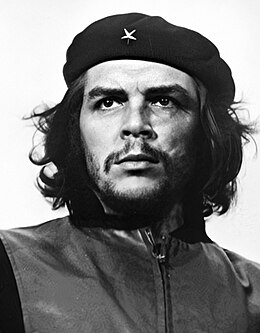
There was no person more feared by the company (CIA) than Che Guevara because he had the capacity and charisma necessary to direct the struggle against the political repression of the traditional hierarchies in power in the countries of Latin America.— Philip Agee, CIA agent
By December 1964, Che Guevara had emerged as a "revolutionary statesmen of world stature" and thus traveled to New York City as head of the Cuban delegation to speak at the United Nations. During his impassioned address, he criticized the United Nations inability to confront the "brutal policy of apartheid" in South Africa, proclaiming "can the United Nations do nothing to stop this?" Guevara then denounced the United States policy towards their black population, stating:
"Those who kill their own children and discriminate daily against them because of the color of their skin; those who let the murderers of blacks remain free, protecting them, and furthermore punishing the black population because they demand their legitimate rights as free men — how can those who do this consider themselves guardians of freedom?"
Source: Wikipedia
Monday, October 8, 2001
A NATION CHALLENGED: THE BANKER; Italian Arab Is Perplexed By Swiss Raid
As he left his office here the night before the Swiss and Italian police raided it, Youssef M. Nada, 71, shook his head, saying: ''To come to the end of my life, a good life, and be accused of helping terrorists -- it is too much.''
Mr. Nada and his partner Ghaleb Himmat, who spent five hours talking with a reporter this week in their office and in Mr. Nada's tiled hillside mansion across the lake in Campione d'Italia, Italy, do not fit the image of the shadowy unregulated money shifters portrayed by some American officials.
From a building with copper-colored windows, they run an empire that had a Bahamas bank and shares of business throughout Europe, the Middle East and Africa, with cement plants, drydocks, textile and brick factories and a division that trades steel, wheat, oil and other commodities. The lone sign for the sixth-floor office is a red placard with one word, ''NADA.'' All others ''were taken down because of the reporters,'' said a banker from another floor.
The trading screens and offices look typical.
Before the raid, Mr. Nada denied that he had aided Al Qaeda or any other terrorist group. ''It is not true, and I'm sure the U.S. government must know it is not true,'' he said when asked about the allegation.
Mr. Nada said he believed that he was a victim of guilt by association because he is a member of the Egyptian Muslim Brotherhood and has had members of Osama bin Laden's immensely wealthy family as clients. ''I have been a member of the Muslim Brotherhood for 50 years,'' he said. ''That is no secret. But it is not a violent organization.''
The group, founded in Egypt in 1928, was banned in 1948 for opposing [Farouk I of Egypt]. It wants Egypt to become an Islamic state. Today it has members in Parliament, and the United States State Department does not list it as terrorist organization.
Mr. Nada, who left Egypt in 1959 and is an Italian citizen, pointed out that a deputy to Mr. bin Laden, Ayman al-Zawahiri, wrote a book that attacked the group as infidels because they renounced jihad.
His investment house, Al Taqwa, meaning piety or fear of God, offers 3,000 clients investments in accordance with shariah, or Islamic law. That tenet forbids charging interest or owning anything to do with alcohol, weapons, gambling or adultery.
His chief investment vehicle, Al Taqwa Bank of the Bahamas, which he says he voluntarily liquidated in February, worked like a mutual fund, or mudarabah in Arabic. It made no loans and could not own bonds or, for example, shares in casinos, brewers or weapons manufacturers. But it owned commodities contracts and businesses, many in food and construction materials.
At its height, Mr. Nada said, the bank controlled $220 million in assets, and during its 14-year life investors -- ''mostly Muslims, but also some Christian and Jewish friends'' -- had annual returns of 7 to 14 percent. It closed, he said, because large losses in Indonesia and Malaysia plus news reports that alleged shady dealings started a run by investors. The United States said, however, the Bahamas revoked its charter in April.
An investigation by the Swiss Banking Commission, which included an audit by PriceWaterhouseCoopers, found no evidence of money laundering or allowing other entities to use al-Taqwa as a front, according to the audit.
''What more do you want?'' Mr. Nada asked.
Mark Widmer, a spokesman for the Swiss attorney general, said that there were ''signs and rumors about al-Taqwa for years,'' but that Swiss investigators had never found the ''substantial suspicion'' that courts require for a search warrant. He declined to say what new evidence led to the raid today.
Mr. Nada does not appear to lead a shadowy life. He donates to charity, invited a television crew to his house to meet Muslim women who were wearing head scarves and was for years the Middle East expert at the Pio Manzù Research Center, an organization in Rimini, Italy, affiliated with the United Nations.
SOurce: New York Times
Mr. Nada and his partner Ghaleb Himmat, who spent five hours talking with a reporter this week in their office and in Mr. Nada's tiled hillside mansion across the lake in Campione d'Italia, Italy, do not fit the image of the shadowy unregulated money shifters portrayed by some American officials.
From a building with copper-colored windows, they run an empire that had a Bahamas bank and shares of business throughout Europe, the Middle East and Africa, with cement plants, drydocks, textile and brick factories and a division that trades steel, wheat, oil and other commodities. The lone sign for the sixth-floor office is a red placard with one word, ''NADA.'' All others ''were taken down because of the reporters,'' said a banker from another floor.
The trading screens and offices look typical.
Before the raid, Mr. Nada denied that he had aided Al Qaeda or any other terrorist group. ''It is not true, and I'm sure the U.S. government must know it is not true,'' he said when asked about the allegation.
Mr. Nada said he believed that he was a victim of guilt by association because he is a member of the Egyptian Muslim Brotherhood and has had members of Osama bin Laden's immensely wealthy family as clients. ''I have been a member of the Muslim Brotherhood for 50 years,'' he said. ''That is no secret. But it is not a violent organization.''
The group, founded in Egypt in 1928, was banned in 1948 for opposing [Farouk I of Egypt]. It wants Egypt to become an Islamic state. Today it has members in Parliament, and the United States State Department does not list it as terrorist organization.
Mr. Nada, who left Egypt in 1959 and is an Italian citizen, pointed out that a deputy to Mr. bin Laden, Ayman al-Zawahiri, wrote a book that attacked the group as infidels because they renounced jihad.
His investment house, Al Taqwa, meaning piety or fear of God, offers 3,000 clients investments in accordance with shariah, or Islamic law. That tenet forbids charging interest or owning anything to do with alcohol, weapons, gambling or adultery.
His chief investment vehicle, Al Taqwa Bank of the Bahamas, which he says he voluntarily liquidated in February, worked like a mutual fund, or mudarabah in Arabic. It made no loans and could not own bonds or, for example, shares in casinos, brewers or weapons manufacturers. But it owned commodities contracts and businesses, many in food and construction materials.
At its height, Mr. Nada said, the bank controlled $220 million in assets, and during its 14-year life investors -- ''mostly Muslims, but also some Christian and Jewish friends'' -- had annual returns of 7 to 14 percent. It closed, he said, because large losses in Indonesia and Malaysia plus news reports that alleged shady dealings started a run by investors. The United States said, however, the Bahamas revoked its charter in April.
An investigation by the Swiss Banking Commission, which included an audit by PriceWaterhouseCoopers, found no evidence of money laundering or allowing other entities to use al-Taqwa as a front, according to the audit.
''What more do you want?'' Mr. Nada asked.
Mark Widmer, a spokesman for the Swiss attorney general, said that there were ''signs and rumors about al-Taqwa for years,'' but that Swiss investigators had never found the ''substantial suspicion'' that courts require for a search warrant. He declined to say what new evidence led to the raid today.
Mr. Nada does not appear to lead a shadowy life. He donates to charity, invited a television crew to his house to meet Muslim women who were wearing head scarves and was for years the Middle East expert at the Pio Manzù Research Center, an organization in Rimini, Italy, affiliated with the United Nations.
SOurce: New York Times
Friday, December 31, 1993
Mobutu meets with President George Bush at the White House
By most accounts, the United States was involved in both the death of Lumumba and the coup of 1965, which brought Mobutu to power, although the extent of this involvement is not certain. In any case, because of his longstanding relations with the American intelligence community, Mobutu was very aware of United States backing both as a resource and as a handicap.
Zaire generally received firm American support in the late 1960s and found American influence helpful in various economic and political disputes. The promulgation of a generous investment code in 1969 and a moderate political stance lured extensive foreign, including American, investment, and a substantial program of United States aid was continued. Mobutu returned from a visit to the United States in 1970 with pledges of substantial new investment. Relations continued to be warm until the Zairianization decree of November 30, 1973, which led to the transfer of a large number of foreign-owned enterprises, including facilities owned by international oil companies, into Zairian hands. Thereafter, relations were chilly.
But in 1975, the United States and Zaire found themselves supporting the same faction in the Angolan civil war (see Regional Relations , this ch.). The United States, apparently deciding that it needed a stable Zaire for political and economic reasons and sensing the potential for Zaire to support United States strategic interests in sub-Saharan Africa, promoted the relationship with Zaire. Secretary of State Henry Kissinger's first official trip to Africa in April 1976 included a long visit to Kinshasa.
The Carter administration, which had declared its number-one foreign policy objective to be the promotion of human rights, posed a problem for the Mobutu regime, with its poor human rights record. For the first time, criticism of Mobutu by members of Congress and by voluntary agencies was met with some sympathy by the United States president. However, the skeptical attitude toward the Zairian government was partially reversed by Shaba I and Shaba II. On the occasion of the second invasion in 1978, President Jimmy Carter supported Mobutu's accusations of Cuban and Soviet involvement, even though no hard evidence was presented. But the United States refused to become involved militarily and sent only nonlethal military supplies, such as medical and transportation equipment. In 1980 the House of Representatives (concerned over human rights violations and the misuse of United States aid) voted to end all military assistance to Zaire; but the Senate reinstated the funds, reacting to pressure from Carter and American business interests in Zaire.
The election of the more conservative Ronald Reagan as United States president was well received in Zaire, and in fact United States concerns about Mobutu's human rights record became muted. Moreover, Mobutu again was seen as providing useful services to the United States in its struggle against the Soviet Union and Soviet allies such as Libya and Angola. The domestic context in the United States had changed, however, in that an increasing number of American groups had become opposed to administration policy toward Zaire.
As United States-Zaire relations became more visible in Washington, Mobutu countered by becoming more active in promoting a positive image of himself and his country. Two Washington lobbying firms with ties to the Reagan administration received hefty contracts from Mobutu.
Nevertheless, in November 1990, Congress cut military and economic aid (except for some humanitarian aid) to Zaire, crystallizing the longstanding division between Congress and the executive branch and between liberals and conservatives on Zaire policy. As it adjourned, Congress denied the Bush administration's request for US$4 million in military aid and stipulated that US$40 million in economic aid be funneled through humanitarian agencies not affiliated with the Zairian government. Its decision was based on human rights violations--the September 1990 Lubumbashi massacre in particular--and accusations that Mobutu's vast wealth was largely stolen from the Zairian people.
By 1992 the United States-Zaire relationship had reached a turning point. The end of the Cold War had diminished the strategic significance of Zaire to the United States, and events in Zaire since 1990 had made it clear that Mobutu's days in power were numbered. In 1991-92, the United States, together with Belgium and France, attempted to promote peaceful political change in Zaire, by pressuring Mobutu to oversee the transition to democratic government and to depart voluntarily. The Zairian opposition, however, still perceived this approach as a continued "propping up" of the Mobutu regime and called for an unequivocal United States rejection of Mobutu, which was not forthcoming.
In October 1992, the United States joined Belgium and France in extending official support to the Tshisekedi government. The United States also reiterated its support for the national conference and its hope that the conference would lead ultimately to fair and free elections.
Since that time, the United States has continued to support the legitimacy of the Tshisekedi government and to insist that the Mobutu government live up to its promise to turn over real power to that government. It has consistently denounced Mobutu's obstruction of the transition process and has refused to recognize the rival Birindwa government. Moreover, the Clinton administration has taken several concrete steps to show its displeasure with the Mobutu regime. The United States has not replaced its ambassador to Zaire, who was reassigned in March 1993. The United States also refused to allow Zaire's central bank governor into the United States to attend a World Bank-IMF meeting and has made it clear that Mobutu is not welcome in the United States. Nevertheless, the United States has stopped short of taking or even advocating harsher measures against the regime, such as the imposition of economic sanctions or the confiscation of Mobutu's assets abroad. As such, in the view of some observers the United States has put only very limited pressure on Mobutu to step down. Many see this policy as an indication that the United States still regards Mobutu as a stabilizing factor, a viewpoint that would explain United States acceptance of Mobutu as part of the transition process in Zaire. The United States-brokered political accord that accompanied the Transitional Act permitted President Mobutu to remain as titular head of state and thus a legitimate institution of government, albeit with limited powers. One unintended effect of this arrangement has been to confer some legitimacy on Mobutu and thus allow him to obstruct the transition process and the functioning of the legitimate government under Tshisekedi.
Throughout 1993 the United States has continued to urge the various political forces in Zaire to continue negotiating, apparently believing that ongoing negotiations will eventually lead to a power-sharing compromise. It appears increasingly likely that the United States would accept a so-called "neutral administration" replacing both the Mobutu-appointed government and the Tshisekedi government.
Source: US Congress Library
Zaire generally received firm American support in the late 1960s and found American influence helpful in various economic and political disputes. The promulgation of a generous investment code in 1969 and a moderate political stance lured extensive foreign, including American, investment, and a substantial program of United States aid was continued. Mobutu returned from a visit to the United States in 1970 with pledges of substantial new investment. Relations continued to be warm until the Zairianization decree of November 30, 1973, which led to the transfer of a large number of foreign-owned enterprises, including facilities owned by international oil companies, into Zairian hands. Thereafter, relations were chilly.
But in 1975, the United States and Zaire found themselves supporting the same faction in the Angolan civil war (see Regional Relations , this ch.). The United States, apparently deciding that it needed a stable Zaire for political and economic reasons and sensing the potential for Zaire to support United States strategic interests in sub-Saharan Africa, promoted the relationship with Zaire. Secretary of State Henry Kissinger's first official trip to Africa in April 1976 included a long visit to Kinshasa.
The Carter administration, which had declared its number-one foreign policy objective to be the promotion of human rights, posed a problem for the Mobutu regime, with its poor human rights record. For the first time, criticism of Mobutu by members of Congress and by voluntary agencies was met with some sympathy by the United States president. However, the skeptical attitude toward the Zairian government was partially reversed by Shaba I and Shaba II. On the occasion of the second invasion in 1978, President Jimmy Carter supported Mobutu's accusations of Cuban and Soviet involvement, even though no hard evidence was presented. But the United States refused to become involved militarily and sent only nonlethal military supplies, such as medical and transportation equipment. In 1980 the House of Representatives (concerned over human rights violations and the misuse of United States aid) voted to end all military assistance to Zaire; but the Senate reinstated the funds, reacting to pressure from Carter and American business interests in Zaire.
The election of the more conservative Ronald Reagan as United States president was well received in Zaire, and in fact United States concerns about Mobutu's human rights record became muted. Moreover, Mobutu again was seen as providing useful services to the United States in its struggle against the Soviet Union and Soviet allies such as Libya and Angola. The domestic context in the United States had changed, however, in that an increasing number of American groups had become opposed to administration policy toward Zaire.
As United States-Zaire relations became more visible in Washington, Mobutu countered by becoming more active in promoting a positive image of himself and his country. Two Washington lobbying firms with ties to the Reagan administration received hefty contracts from Mobutu.
Nevertheless, in November 1990, Congress cut military and economic aid (except for some humanitarian aid) to Zaire, crystallizing the longstanding division between Congress and the executive branch and between liberals and conservatives on Zaire policy. As it adjourned, Congress denied the Bush administration's request for US$4 million in military aid and stipulated that US$40 million in economic aid be funneled through humanitarian agencies not affiliated with the Zairian government. Its decision was based on human rights violations--the September 1990 Lubumbashi massacre in particular--and accusations that Mobutu's vast wealth was largely stolen from the Zairian people.
By 1992 the United States-Zaire relationship had reached a turning point. The end of the Cold War had diminished the strategic significance of Zaire to the United States, and events in Zaire since 1990 had made it clear that Mobutu's days in power were numbered. In 1991-92, the United States, together with Belgium and France, attempted to promote peaceful political change in Zaire, by pressuring Mobutu to oversee the transition to democratic government and to depart voluntarily. The Zairian opposition, however, still perceived this approach as a continued "propping up" of the Mobutu regime and called for an unequivocal United States rejection of Mobutu, which was not forthcoming.
In October 1992, the United States joined Belgium and France in extending official support to the Tshisekedi government. The United States also reiterated its support for the national conference and its hope that the conference would lead ultimately to fair and free elections.
Since that time, the United States has continued to support the legitimacy of the Tshisekedi government and to insist that the Mobutu government live up to its promise to turn over real power to that government. It has consistently denounced Mobutu's obstruction of the transition process and has refused to recognize the rival Birindwa government. Moreover, the Clinton administration has taken several concrete steps to show its displeasure with the Mobutu regime. The United States has not replaced its ambassador to Zaire, who was reassigned in March 1993. The United States also refused to allow Zaire's central bank governor into the United States to attend a World Bank-IMF meeting and has made it clear that Mobutu is not welcome in the United States. Nevertheless, the United States has stopped short of taking or even advocating harsher measures against the regime, such as the imposition of economic sanctions or the confiscation of Mobutu's assets abroad. As such, in the view of some observers the United States has put only very limited pressure on Mobutu to step down. Many see this policy as an indication that the United States still regards Mobutu as a stabilizing factor, a viewpoint that would explain United States acceptance of Mobutu as part of the transition process in Zaire. The United States-brokered political accord that accompanied the Transitional Act permitted President Mobutu to remain as titular head of state and thus a legitimate institution of government, albeit with limited powers. One unintended effect of this arrangement has been to confer some legitimacy on Mobutu and thus allow him to obstruct the transition process and the functioning of the legitimate government under Tshisekedi.
Throughout 1993 the United States has continued to urge the various political forces in Zaire to continue negotiating, apparently believing that ongoing negotiations will eventually lead to a power-sharing compromise. It appears increasingly likely that the United States would accept a so-called "neutral administration" replacing both the Mobutu-appointed government and the Tshisekedi government.
Source: US Congress Library
Sunday, November 14, 1993
C.I.A. Formed Haitian Unit Later Tied to Narcotics Trade
The Central Intelligence Agency created an intelligence service in Haiti in the mid-1980's to fight the cocaine trade, but the unit evolved into an instrument of political terror whose officers at times engaged in drug trafficking, American and Haitian officials say. American officials say the C.I.A. cut its ties to the Haitian organization shortly after the 1991 military coup against Haiti's first democratically elected President, the Rev. Jean-Bertrand Aristide.
Three former chiefs of the Haitian unit, the National Intelligence Service, known as S.I.N. from its initials in French, are now on the United States Treasury Department's list of Haitian officials whose assets in the United States were frozen this month because of their support for the military leaders blocking Father Aristide's return to power. Analyses Are Criticized
The disclosure of the American role in creating the agency in 1986 comes amid increasing Congressional and public debate about the intelligence relationship between the United States and Haiti, the richest and poorest countries in the Western Hemisphere.
Supporters of Father Aristide contend that the C.I.A. is undermining the chances for his return with analyses skewed by a misplaced trust in his military foes.
The agency paid key members of the junta now in power for political and military information up until the ouster of Father Aristide in 1991. A review of the C.I.A.'s activities in Haiti under the Reagan and Bush Administrations, based on documents and interviews with current and former officials, confirms that senior C.I.A. officers have long been deeply skeptical about the stability and politics of President Aristide, a leftist priest. C.I.A. Help for Aristide
No evidence suggests that the C.I.A backed the coup or intentionally undermined President Aristide. In fact, the agency has acted to help him at times, for example through a program that is now training bodyguards to protect him should he return to Haiti from his exile in the United States.
Though much of the C.I.A.'s activity in Haiti remains secret, the emerging record reveals both failures and achievements in recent years.
Having created the Haitian intelligence service, the agency failed to insure that several million dollars spent training and equipping the service from 1986 to 1991 was actually used in the war on drugs. The unit produced little narcotics intelligence. Senior members committed acts of political terror against Aristide supporters, including interrogations that included torture, and threatened last year to kill the local chief of the United States Drug Enforcement Administration.
On the other hand, United States officials said, one senior Haitian intelligence officer dissuaded soldiers from killing President Aristide during the 1991 coup. The C.I.A. also helped to save the lives of at least six Aristide supporters after the coup, evacuating them in a late-night rescue that involved the Navy's elite SEAL unit, officials said.
The C.I.A. also had a mixed track record in analyzing the fall of the 30-year Duvalier family dictatorship in 1986. The agency's analysts did not foresee the political violence that led to the collapse of elections in 1987 and the 1991 coup. But the analysts, contradicting the White House and the State Department, correctly predicted this year that the Haitian military would block President Aristide's scheduled return in October.
Members of the Congressional panels that oversee the C.I.A. say the agency's intelligence-gathering helped American policy makers bewildered by the political chaos that followed the fall of the Duvalier dictatorship, including a series of military coups, and by Father Aristide's overwhelming victory in the December 1990 election. Lawmaker Cites C.I.A.'s 'Bum Rap'
"The problems of Haiti are problems of policy, not intelligence," said Representative Dan Glickman, a Kansas Democrat who heads the House intelligence committee. "In some cases, intelligence gets a bum rap. From the interviews we've had with the agency, I don't get any feeling that our goal was to preserve military dictatorship in Haiti."
But Senator Christopher J. Dodd, a Connecticut Democrat on the Senate Foreign Relations Committee who received extensive briefings from the agency, asserted last week that the C.I.A.'s view of Haiti was distorted by its ties to the Haitian military. "A lot of the information we're getting is from the very same people who in front of the world are brutally murdering people," Senator Dodd said.
One crucial source of information for American intelligence over the years, according to two Government officials, was Lieut. Gen. Raoul Cedras, who leads the Haitian armed forces. The officials said he provided the United States Government with reports critical of Father Aristide. The officials did not provide details from those reports. Nor did they say whether the general was paid.
In 1957, Francois Duvalier rose to power in Haiti. A corrupt dictator, he consolidated his power with the aid of a 10,000-member gang known as the Tontons Macoute.
Four years later, he was threatened by a C.I.A. covert operation in which the agency supplied arms to opponents plotting a coup, according to a 1975 Senate report. The plot failed.
On his death in 1971, Mr. Duvalier bequeathed his regime to his son, Jean-Claude, who received nearly $400 million in American economic aid until a popular revolt toppled his Government and he fled the country in February 1986.
Shortly afterward the C.I.A. created the Haitian intelligence service, S.I.N. The agency was staffed solely with officers of the Haitian Army, which was already widely perceived as an unprofessional force with a tendency toward corruption. The stated purpose was to stem the flow of hundreds of millions of dollars' worth of cocaine through Haiti, a crucial transit point for drug traffickers. Money for Agency Despite Aid Curb
The United States would gain information on the Haitian military by creating the unit; the Haitian military would obtain money, training and equipment from the C.I.A.
In intelligence parlance, it was a "liaison" relationship. The C.I.A. does not normally report to Congress on such relationships, citing the sensitivity of other nations to disclosures of secrets. That reduces the role of Congressional oversight.
S.I.N. received $500,000 to $1 million a year in equipment, training and financial support from the C.I.A., United States and Haitian Government officials say. The money may have sent a mixed message, for Congress was withholding about $1.5 million in aid for the Haitian military regime at the same time.
By late 1988, the agency decided to "distance itself" from the intelligence service, a senior United States official said. But the ties continued until October 1991, just after the Sept. 30 coup against Father Aristide, he said.
A 1992 Drug Enforcement Administration document described S.I.N. in the present tense, as "a covert counternarcotics intelligence unit which often works in unison with the C.I.A. at post."
The Haitian intelligence service provided little information on drug trafficking and some of its members themselves became enmeshed in the drug trade, American officials said. A United States official who worked at the American Embassy in Haiti in 1991 and 1992 said he took a dim view of S.I.N.
"It was a military organization that distributed drugs in Haiti," said the official, who spoke on condition of anonymity. "It never produced drug intelligence. The agency gave them money under counternarcotics and they used their training to do other things in the political arena." U.S. Drug Official Gets Death Threat
"The money that was spent to train these guys in the counter-narcotics field boggled the mind -- half a million to a million a year," the official said. "They were turning it around and using it for political reasons, against whatever group they wanted to gather information on."
In September 1992, the work of United States drug-enforcement officials in Haiti led to the arrest of a S.I.N. officer on cocaine charges by the Haitian authorities.
A few days later, the Drug Enforcement Administration's chief in Haiti, Tony Greco, received a death threat on his private telephone line in the American Embassy. The caller identified himself as the arrested intelligence officer's superior, United States Government records show. Mr. Greco immediately left Haiti and has not returned.
Three former chiefs of the Haitian intelligence service -- Col. Ernst Prudhomme, Col. Diderot Sylvain and Col. Leopold Clerjeune -- were named by the United States Treasury Department in a Nov. 1 order for seizure of their assets in the United States. The document named 41 people "who seized power illegally," helped anti-Aristide forces or "contributed to the violence in Haiti."
Haitian officials say those S.I.N. officers persecuted Father Aristide's supporters and used their C.I.A. training to spy on them.
"They were heavily involved in spying on so-called subversive groups," an exiled member of the Aristide Government said. "They were doing nothing but political repression. Father Aristide was one of their targets. They targeted people who were for change."
Between 1 A.M. and 3 A.M. on Nov. 2, 1989, Colonel Prudhomme, who headed S.I.N. and held the title of chief of national security, led a brutal interrogation of Evans Paul, the Mayor of Haiti's capital, Port-au-Prince, according to a sworn deposition taken from Mr. Paul in connection with a Federal lawsuit filed against senior Haitian military officers in 1991 in Miami.
Colonel Clerjeune also was present at the interrogation, which left Mr. Paul with five broken ribs and internal injuries, the Mayor said.
Mr. Paul, who opposed the military regime, was arrested by soldiers, beaten and taken to the police headquarters in Port-au-Prince, where the beatings continued, according to sworn statements. When Mr. Paul lost consciousness, he said, he was revived by soldiers holding a flame from a cigarette lighter under his nose.
"Prudhomme himself never touched me," Mr. Paul said in an interview from Haiti. "He played the role of the intellectual, the man who searched carefully for contradictions in your account -- the man who seemed to give direction to the whole enterprise. He wanted to present me to the world as a terrorist."
"He seemed to have so much information about my life, all the way from my childhood," the Mayor said. "It was if he had been following me step by step."
Last summer, Mr. Paul met his interrogator again. Colonel Prudhomme was part of the military delegation led by General Cedras at talks mediated by the United Nations in July at Governors Island in New York. The accord reached at that meeting called for General Cedras to step down by Oct. 15 and allow Mr. Aristide to return on Oct. 30. The military reneged on the accord.
But S.I.N. also produced a success story: Col. Alix P. Silva, who led the Haitian intelligence service from 1986 to 1988. In 1988, Colonel Silva compiled a list of 18 senior Haitian military officials whom he said should be cashiered for unprofessional conduct, corruption or cocaine trafficking. At the head of the list was Lieut. Gen. Prosper Avril, who seized power in a 1989 coup.
Forced into hiding when General Avril took power, Colonel Silva resurfaced after the 1990 election, in which Father Aristide won 67.5 percent of the vote in a field of 10 candidates. The colonel then served as Deputy Commander in Chief of the army under General Cedras, who betrayed President Aristide by ousting him in September 1991.
It was Colonel Silva, current and former American officials say, who persuaded Haitian soldiers not to shoot Father Aristide on the night of the coup. Although briefly a member of the Cedras junta, Colonel Silva was among a handful of Aristide supporters who were evacuated shortly after the coup in a clandestine flight from Haiti that was coordinated by the C.I.A. and a team of Navy commandos, the officials said.
Though derring-do may be part of the C.I.A.'s image, the agency's most important task is helping American leaders understand what goes on in the world. Its intelligence analysts, not its spies, hold sway in Washington.
The agency's leading analyst of Latin American affairs, Brian Latell, traveled to Port-au-Prince in July 1992 and recorded his trip in a three-page note that he later shared with members of Congressional intelligence committees. He met with General Cedras, who he said impressed him as "a conscientious military leader who genuinely wishes to minimize his role in politics."
That impression, Father Aristide's supporters say, contributed to the faith placed in General Cedras by United States policy makers, a faith broken when the general abrogated the Governor's Island accord.
Mr. Latell also reported that he "saw no evidence of oppressive rule" in Haiti. Rights Report Tells A Different Story
"I do not wish to minimize the role the military plays in intimidating, and occasionally terrorizing real and suspected opponents," the analyst said, but "there is no systematic or frequent lethal violence aimed at civilians."
That conflicts with a State Department report for the same year, which said, "Haitians suffered frequent human rights abuses throughout 1992, including extra-judicial killings by security forces, disappearances, beatings and other mistreatment of detainees and prisoners, arbitrary arrests and detention and executive interference with the judicial process."
Mr. Glickman, chairman of the House Intelligence Committee, defended Mr. Latell's work and said that no institutional bias afflicted the agency's reporting on Haiti.
But he said he had questions about "this whole counternarcotics involvement of the agency" and what good, if any, it achieved in Haiti.
Source: New York Times
Three former chiefs of the Haitian unit, the National Intelligence Service, known as S.I.N. from its initials in French, are now on the United States Treasury Department's list of Haitian officials whose assets in the United States were frozen this month because of their support for the military leaders blocking Father Aristide's return to power. Analyses Are Criticized
The disclosure of the American role in creating the agency in 1986 comes amid increasing Congressional and public debate about the intelligence relationship between the United States and Haiti, the richest and poorest countries in the Western Hemisphere.
Supporters of Father Aristide contend that the C.I.A. is undermining the chances for his return with analyses skewed by a misplaced trust in his military foes.
The agency paid key members of the junta now in power for political and military information up until the ouster of Father Aristide in 1991. A review of the C.I.A.'s activities in Haiti under the Reagan and Bush Administrations, based on documents and interviews with current and former officials, confirms that senior C.I.A. officers have long been deeply skeptical about the stability and politics of President Aristide, a leftist priest. C.I.A. Help for Aristide
No evidence suggests that the C.I.A backed the coup or intentionally undermined President Aristide. In fact, the agency has acted to help him at times, for example through a program that is now training bodyguards to protect him should he return to Haiti from his exile in the United States.
Though much of the C.I.A.'s activity in Haiti remains secret, the emerging record reveals both failures and achievements in recent years.
Having created the Haitian intelligence service, the agency failed to insure that several million dollars spent training and equipping the service from 1986 to 1991 was actually used in the war on drugs. The unit produced little narcotics intelligence. Senior members committed acts of political terror against Aristide supporters, including interrogations that included torture, and threatened last year to kill the local chief of the United States Drug Enforcement Administration.
On the other hand, United States officials said, one senior Haitian intelligence officer dissuaded soldiers from killing President Aristide during the 1991 coup. The C.I.A. also helped to save the lives of at least six Aristide supporters after the coup, evacuating them in a late-night rescue that involved the Navy's elite SEAL unit, officials said.
The C.I.A. also had a mixed track record in analyzing the fall of the 30-year Duvalier family dictatorship in 1986. The agency's analysts did not foresee the political violence that led to the collapse of elections in 1987 and the 1991 coup. But the analysts, contradicting the White House and the State Department, correctly predicted this year that the Haitian military would block President Aristide's scheduled return in October.
Members of the Congressional panels that oversee the C.I.A. say the agency's intelligence-gathering helped American policy makers bewildered by the political chaos that followed the fall of the Duvalier dictatorship, including a series of military coups, and by Father Aristide's overwhelming victory in the December 1990 election. Lawmaker Cites C.I.A.'s 'Bum Rap'
"The problems of Haiti are problems of policy, not intelligence," said Representative Dan Glickman, a Kansas Democrat who heads the House intelligence committee. "In some cases, intelligence gets a bum rap. From the interviews we've had with the agency, I don't get any feeling that our goal was to preserve military dictatorship in Haiti."
But Senator Christopher J. Dodd, a Connecticut Democrat on the Senate Foreign Relations Committee who received extensive briefings from the agency, asserted last week that the C.I.A.'s view of Haiti was distorted by its ties to the Haitian military. "A lot of the information we're getting is from the very same people who in front of the world are brutally murdering people," Senator Dodd said.
One crucial source of information for American intelligence over the years, according to two Government officials, was Lieut. Gen. Raoul Cedras, who leads the Haitian armed forces. The officials said he provided the United States Government with reports critical of Father Aristide. The officials did not provide details from those reports. Nor did they say whether the general was paid.
In 1957, Francois Duvalier rose to power in Haiti. A corrupt dictator, he consolidated his power with the aid of a 10,000-member gang known as the Tontons Macoute.
Four years later, he was threatened by a C.I.A. covert operation in which the agency supplied arms to opponents plotting a coup, according to a 1975 Senate report. The plot failed.
On his death in 1971, Mr. Duvalier bequeathed his regime to his son, Jean-Claude, who received nearly $400 million in American economic aid until a popular revolt toppled his Government and he fled the country in February 1986.
Shortly afterward the C.I.A. created the Haitian intelligence service, S.I.N. The agency was staffed solely with officers of the Haitian Army, which was already widely perceived as an unprofessional force with a tendency toward corruption. The stated purpose was to stem the flow of hundreds of millions of dollars' worth of cocaine through Haiti, a crucial transit point for drug traffickers. Money for Agency Despite Aid Curb
The United States would gain information on the Haitian military by creating the unit; the Haitian military would obtain money, training and equipment from the C.I.A.
In intelligence parlance, it was a "liaison" relationship. The C.I.A. does not normally report to Congress on such relationships, citing the sensitivity of other nations to disclosures of secrets. That reduces the role of Congressional oversight.
S.I.N. received $500,000 to $1 million a year in equipment, training and financial support from the C.I.A., United States and Haitian Government officials say. The money may have sent a mixed message, for Congress was withholding about $1.5 million in aid for the Haitian military regime at the same time.
By late 1988, the agency decided to "distance itself" from the intelligence service, a senior United States official said. But the ties continued until October 1991, just after the Sept. 30 coup against Father Aristide, he said.
A 1992 Drug Enforcement Administration document described S.I.N. in the present tense, as "a covert counternarcotics intelligence unit which often works in unison with the C.I.A. at post."
The Haitian intelligence service provided little information on drug trafficking and some of its members themselves became enmeshed in the drug trade, American officials said. A United States official who worked at the American Embassy in Haiti in 1991 and 1992 said he took a dim view of S.I.N.
"It was a military organization that distributed drugs in Haiti," said the official, who spoke on condition of anonymity. "It never produced drug intelligence. The agency gave them money under counternarcotics and they used their training to do other things in the political arena." U.S. Drug Official Gets Death Threat
"The money that was spent to train these guys in the counter-narcotics field boggled the mind -- half a million to a million a year," the official said. "They were turning it around and using it for political reasons, against whatever group they wanted to gather information on."
In September 1992, the work of United States drug-enforcement officials in Haiti led to the arrest of a S.I.N. officer on cocaine charges by the Haitian authorities.
A few days later, the Drug Enforcement Administration's chief in Haiti, Tony Greco, received a death threat on his private telephone line in the American Embassy. The caller identified himself as the arrested intelligence officer's superior, United States Government records show. Mr. Greco immediately left Haiti and has not returned.
Three former chiefs of the Haitian intelligence service -- Col. Ernst Prudhomme, Col. Diderot Sylvain and Col. Leopold Clerjeune -- were named by the United States Treasury Department in a Nov. 1 order for seizure of their assets in the United States. The document named 41 people "who seized power illegally," helped anti-Aristide forces or "contributed to the violence in Haiti."
Haitian officials say those S.I.N. officers persecuted Father Aristide's supporters and used their C.I.A. training to spy on them.
"They were heavily involved in spying on so-called subversive groups," an exiled member of the Aristide Government said. "They were doing nothing but political repression. Father Aristide was one of their targets. They targeted people who were for change."
Between 1 A.M. and 3 A.M. on Nov. 2, 1989, Colonel Prudhomme, who headed S.I.N. and held the title of chief of national security, led a brutal interrogation of Evans Paul, the Mayor of Haiti's capital, Port-au-Prince, according to a sworn deposition taken from Mr. Paul in connection with a Federal lawsuit filed against senior Haitian military officers in 1991 in Miami.
Colonel Clerjeune also was present at the interrogation, which left Mr. Paul with five broken ribs and internal injuries, the Mayor said.
Mr. Paul, who opposed the military regime, was arrested by soldiers, beaten and taken to the police headquarters in Port-au-Prince, where the beatings continued, according to sworn statements. When Mr. Paul lost consciousness, he said, he was revived by soldiers holding a flame from a cigarette lighter under his nose.
"Prudhomme himself never touched me," Mr. Paul said in an interview from Haiti. "He played the role of the intellectual, the man who searched carefully for contradictions in your account -- the man who seemed to give direction to the whole enterprise. He wanted to present me to the world as a terrorist."
"He seemed to have so much information about my life, all the way from my childhood," the Mayor said. "It was if he had been following me step by step."
Last summer, Mr. Paul met his interrogator again. Colonel Prudhomme was part of the military delegation led by General Cedras at talks mediated by the United Nations in July at Governors Island in New York. The accord reached at that meeting called for General Cedras to step down by Oct. 15 and allow Mr. Aristide to return on Oct. 30. The military reneged on the accord.
But S.I.N. also produced a success story: Col. Alix P. Silva, who led the Haitian intelligence service from 1986 to 1988. In 1988, Colonel Silva compiled a list of 18 senior Haitian military officials whom he said should be cashiered for unprofessional conduct, corruption or cocaine trafficking. At the head of the list was Lieut. Gen. Prosper Avril, who seized power in a 1989 coup.
Forced into hiding when General Avril took power, Colonel Silva resurfaced after the 1990 election, in which Father Aristide won 67.5 percent of the vote in a field of 10 candidates. The colonel then served as Deputy Commander in Chief of the army under General Cedras, who betrayed President Aristide by ousting him in September 1991.
It was Colonel Silva, current and former American officials say, who persuaded Haitian soldiers not to shoot Father Aristide on the night of the coup. Although briefly a member of the Cedras junta, Colonel Silva was among a handful of Aristide supporters who were evacuated shortly after the coup in a clandestine flight from Haiti that was coordinated by the C.I.A. and a team of Navy commandos, the officials said.
Though derring-do may be part of the C.I.A.'s image, the agency's most important task is helping American leaders understand what goes on in the world. Its intelligence analysts, not its spies, hold sway in Washington.
The agency's leading analyst of Latin American affairs, Brian Latell, traveled to Port-au-Prince in July 1992 and recorded his trip in a three-page note that he later shared with members of Congressional intelligence committees. He met with General Cedras, who he said impressed him as "a conscientious military leader who genuinely wishes to minimize his role in politics."
That impression, Father Aristide's supporters say, contributed to the faith placed in General Cedras by United States policy makers, a faith broken when the general abrogated the Governor's Island accord.
Mr. Latell also reported that he "saw no evidence of oppressive rule" in Haiti. Rights Report Tells A Different Story
"I do not wish to minimize the role the military plays in intimidating, and occasionally terrorizing real and suspected opponents," the analyst said, but "there is no systematic or frequent lethal violence aimed at civilians."
That conflicts with a State Department report for the same year, which said, "Haitians suffered frequent human rights abuses throughout 1992, including extra-judicial killings by security forces, disappearances, beatings and other mistreatment of detainees and prisoners, arbitrary arrests and detention and executive interference with the judicial process."
Mr. Glickman, chairman of the House Intelligence Committee, defended Mr. Latell's work and said that no institutional bias afflicted the agency's reporting on Haiti.
But he said he had questions about "this whole counternarcotics involvement of the agency" and what good, if any, it achieved in Haiti.
Source: New York Times
Wednesday, October 20, 1993
WHAT'S BEHIND WASHINGTON'S SILENCE ON HAITI DRUG CONNECTION?
At stake in the U.S. confrontation with the Haitian military regime is a cocaine smuggling operation that earns millions of dollars for Haitian military officials while dumping tons of the deadly white powder on American streets. Yet while the country debates the merits of armed intervention in Haiti, the Clinton administration has remained mum on the Haitian "drug connection."
A confidential report by the Drug Enforcement Agency obtained by Pacific News Service describes Haiti as "a major transshipment point for cocaine traffickers" funnelling drugs from Colombia and the Dominican Republic into the U.S.-with the knowledge and active involvement of high military officials and business elites.
The corruption of the Haitian military "is substantial enough to hamper any significant drug investigation attempting to dismantle" illicit drug operations inside Haiti, the report states. Echoing the report's findings, exiled Haitian President Jean Bertrand Aristide recently blamed the military's role in the drug trade for his ouster.
Despite extensive DEA intelligence documenting Haiti's drug role, neither the Clinton administration, nor the Bush administration before it, have ever raised that role publicly. Now critics of U.S. policy on Haiti, including one Congressman, are questioning that silence, suggesting it reflects de facto U.S. support for the Haitian military and a reluctance to offer unqualified support for Aristide.
"I've been amazed that our government has never talked about the drug trafficking...even though it is obviously one of the major reasons why these people drove their president out of the country and why they are determined not to let him back in. We're talking hundreds of millions of dollars of illegal profits that are having disastrous consequences for the American people," says Rep. John Conyers (D-MI).
Larry Burns, head of the Washington, D.C.-based Council on Hemispheric Affairs, claims, "From the moment Aristide was overthrown two years ago, Washington has equivocated on whether it wanted him back or not..." To secure the military "as an anchor to Aristide's sail," Burns charges, Washington "turned a blind eye to the corruption charges, and pretended that it could be reformed through professionalization and U.S. training."
A senior administration official at the National Security Council dismisses the charge but when asked why the administration has failed to publicize DEA allegations of drug trafficking, the spokesman had no comment.
The DEA first established a Country Office (CO) in Port-au-Prince to assist the Haitian government with its anti-narcotics activities in November 1987. Throughout Aristide's brief tenure in office, DEA agents worked closely with Haitian military narcotics services, investigating an illegal cocaine network estimated to be moving some $300-$500 million worth of cocaine into the U.S. per year. Although the DEA office was shut down after the 1991 coup, it reopened in the fall of 1992. But soon after DEA intelligence prompted the arrest of a member of Haiti's ClA-linked National Intelligence, DEA local agent Tony Greco received death threats from a man identifying himself as the National Intelligence member's boss.
A Congressional source familiar with the DEA's history in Haiti told PNS that Greco had also "connected (Lt. Colonel Michel) Francois to the drug trafficking operations in Haiti." Francois, the current chief of police, is alleged to be behind the current campaign of terror.
What disturbs Rep. Conyers is that none of this information ever reached the public. "By turning a deaf ear to what is obviously a prime force behind Aristide's ouster, we raise questions about our own involvement in drug activities," Conyers says. He is currently investigating how it is that the ships and aircraft necessary to sustain such a large operation evade detection and interdiction, while the U.S. government has managed to spot, stop and turn back almost every ramshackle boat carrying refugees.
Indeed the DEA report shows that after the 1991 coup sent Aristide into exile, there were virtually no major seizures of cocaine from Haiti as compared to nearly 4,000 pounds seized in 1990.
Michael Levine, author of "Deep Cover" and a decorated DEA agent with 25 years of experience fighting drugs overseas, says what's going on in Haiti is "just another example of elements of the U.S. government protecting killers, drug dealers and dictators for the sake of some political end that's going to cost a whole bunch of kids in this country their lives.
"I saw the drug traffickers take over the government of Bolivia in 1980, ironically with the assistance of the CIA, and we (the DEA) just packed up our office and went home."
Source: Global research.ca
A confidential report by the Drug Enforcement Agency obtained by Pacific News Service describes Haiti as "a major transshipment point for cocaine traffickers" funnelling drugs from Colombia and the Dominican Republic into the U.S.-with the knowledge and active involvement of high military officials and business elites.
The corruption of the Haitian military "is substantial enough to hamper any significant drug investigation attempting to dismantle" illicit drug operations inside Haiti, the report states. Echoing the report's findings, exiled Haitian President Jean Bertrand Aristide recently blamed the military's role in the drug trade for his ouster.
Despite extensive DEA intelligence documenting Haiti's drug role, neither the Clinton administration, nor the Bush administration before it, have ever raised that role publicly. Now critics of U.S. policy on Haiti, including one Congressman, are questioning that silence, suggesting it reflects de facto U.S. support for the Haitian military and a reluctance to offer unqualified support for Aristide.
"I've been amazed that our government has never talked about the drug trafficking...even though it is obviously one of the major reasons why these people drove their president out of the country and why they are determined not to let him back in. We're talking hundreds of millions of dollars of illegal profits that are having disastrous consequences for the American people," says Rep. John Conyers (D-MI).
Larry Burns, head of the Washington, D.C.-based Council on Hemispheric Affairs, claims, "From the moment Aristide was overthrown two years ago, Washington has equivocated on whether it wanted him back or not..." To secure the military "as an anchor to Aristide's sail," Burns charges, Washington "turned a blind eye to the corruption charges, and pretended that it could be reformed through professionalization and U.S. training."
A senior administration official at the National Security Council dismisses the charge but when asked why the administration has failed to publicize DEA allegations of drug trafficking, the spokesman had no comment.
The DEA first established a Country Office (CO) in Port-au-Prince to assist the Haitian government with its anti-narcotics activities in November 1987. Throughout Aristide's brief tenure in office, DEA agents worked closely with Haitian military narcotics services, investigating an illegal cocaine network estimated to be moving some $300-$500 million worth of cocaine into the U.S. per year. Although the DEA office was shut down after the 1991 coup, it reopened in the fall of 1992. But soon after DEA intelligence prompted the arrest of a member of Haiti's ClA-linked National Intelligence, DEA local agent Tony Greco received death threats from a man identifying himself as the National Intelligence member's boss.
A Congressional source familiar with the DEA's history in Haiti told PNS that Greco had also "connected (Lt. Colonel Michel) Francois to the drug trafficking operations in Haiti." Francois, the current chief of police, is alleged to be behind the current campaign of terror.
What disturbs Rep. Conyers is that none of this information ever reached the public. "By turning a deaf ear to what is obviously a prime force behind Aristide's ouster, we raise questions about our own involvement in drug activities," Conyers says. He is currently investigating how it is that the ships and aircraft necessary to sustain such a large operation evade detection and interdiction, while the U.S. government has managed to spot, stop and turn back almost every ramshackle boat carrying refugees.
Indeed the DEA report shows that after the 1991 coup sent Aristide into exile, there were virtually no major seizures of cocaine from Haiti as compared to nearly 4,000 pounds seized in 1990.
Michael Levine, author of "Deep Cover" and a decorated DEA agent with 25 years of experience fighting drugs overseas, says what's going on in Haiti is "just another example of elements of the U.S. government protecting killers, drug dealers and dictators for the sake of some political end that's going to cost a whole bunch of kids in this country their lives.
"I saw the drug traffickers take over the government of Bolivia in 1980, ironically with the assistance of the CIA, and we (the DEA) just packed up our office and went home."
Source: Global research.ca
Thursday, March 11, 1993
THE CIA'S HAITIAN CONNECTION
Although the Clinton administration insists it is making every effort to return ousted Haitian president Jean-Bertrand Aristide to power, covert connections between Haiti's military junta and the CIA may be helping to keep the regime in place.
Confidential government documents obtained by the Bay Guardian show that the CIA helped establish and finance Haiti's powerful National Intelligence Service, which played a key role in the 1991 coup and continues to provide paramilitary muscle for the anti-Aristide dictatorship. As recently as February 1993, a confidential congressional report described the NIS as "working closely" with the CIA.
The documents-along with interviews with members of Congress, senior administration sources, and a high-ranking member of Aristide's cabinet-in-exile-raise troubling questions about Clinton's policy toward the tiny, impoverished Caribbean nation and provide strong evidence to support critics who claim the United States is giving little more than lip service to the cause of Haitian democracy.
Among other things, the Bay Guardian has learned:
Haitian Lt. Col. Joseph Michel Francois-the reputed kingpin behind the military junta-was trained at a clandestine U.S. Army combat facility known as the "coup school," whose alumni also include jailed Panamanian dictator Manuel Noriega and former Salvadoran president Roberto d'Aubuisson.
Paramilitary death squads controlled by Francois and Frank Romain, the former mayor of Port-au-Prince, are carrying out what some critics call a systematic attempt to wipe out Aristide's base of support, making it difficult if not impossible for the ousted president to reclaim political power. The death squads, known as attaches have been linked to roughly 4,000 murders since the coup.
Former Haitian officials and congressional sources link Francois and the NIS to a massive drug-smuggling and money-laundering operation that sends at least a billion dollars worth of cocaine a year to the United States. Aristide's attempt to crack down on the drug ring may have helped spark the coup-and since the military junta took power, cocaine exports have soared.
In fact, a U.S. Drug Enforcement Agency operative who was investigating an NIS officer allegedly involved in drug smuggling had to flee Haiti in 1992 after receiving death threats on a private telephone line with a secret number known only to a few top government officials.
At least two senior members of Congress, Rep. Charles Rangel and Rep. Major Owens, both New York Democrats, told the Bay Guardian they have enough reason to suspect CIA involvement in the Aristide coup that they are calling for a full congressional investigation.
HALF HEARTED EFFORTS
As the crisis in Haiti drags on and the military junta refuses to relinquish power, critics have charged that the United States is making only token efforts to restore Aristide to office.
Larry Burns, an analyst at the Washington, D.C.-based Council on Hemispheric Relations, pointed out that the United States has not fully participated in the United Nations embargo of Haiti (unlike most other countries, the U.S. has exempted its own companies in Haiti from the embargo). It's also curious, he told the Bay Guardian, that the Clinton administration has failed to make a public issue of the military regime's role in drug trafficking-a tactic that the Bush administration used extensively to discredit Panama's Manuel Noriega.
"You would think that the White House would want, as one of its major points, to pin the drug tail on the military donkey in Haiti," Burns said. "It would be their best opportunity to rally the American people to a pro-Aristide position. Yet they never used it."
White House Deputy Press Secretary Don Steinberg told the Bay Guardian that "there's nothing halfhearted about our administration's commitment to returning democracy to Haiti and Aristide to power."
"We sent military trainers to Haiti, we've supported the embargo, and we've fully supported the Governor's Island accords," which were supposed to lead to Aristide's return, Steinberg said. "This administration has not for a second coddled Francois or Cedras." Lt. Gen. Raoul Cedras heads the military junta.
But Rep. John Conyers (D-Mich.) said he was worried that the administration's silence on the military's connection to the drug trade would only embolden the junta and tighten its grip on power.
"We have turned a very deaf ear to what is obviously a moving force," he said. "It leads you to wonder if our silence is because we knew this was going on and that our complicity in drug activity may parallel the accusations that were raised about our involvement in drug activities-that is, our government and the Central Intelligence Agency's-during the Vietnam conflict."
Although they admit they have no hard evidence, both Rangel and Aristide's exiled interior minister, Patrick Elie, told the Bay Guardian they see shadows of the ClA's hidden hand behind the September 1991 coup, which overthrew Aristide after only seven months in office.
"I don't have a specific answer as to whether the CIA was involved," Rangel said. "But I do know that our feelings against Aristide were made pretty clear before the coup."
Rangel was referring to the Bush administration's open backing of former World Bank official Marc Bizan against Aristide. But in a show of popular support that caught the Bush administration by surprise, Aristide received 67.5 percent of the vote, while Bizan captured only 13 percent.
Elie told the Bay Guardian that the relationship between the CIA and Haiti's National Intelligence Service went far beyond mere cooperation.
"In fact," he said "the NIS was created by the Central Intelligence Agency. It was created by it and funded by it."
Elie, whose job included oversight of the NIS, launched an investigation shortly after taking office that revealed that the CIA had covertly given the NIS $500,000-twice what the U.S. government was providing Haiti overtly for drug interdiction.
He said that although the NIS was supposed to be used to combat drug smugglers, "in fact, all the NIS has done has been political repression and spying on Haitians."
Records of the Drug Enforcement Administration confirm that the NIS operates with CIA assistance. According to a confidential DEA document titled "Drug Trafficking in Haiti," presented to members of Congress in February 1993 and obtained by the Bay Guardian, the NIS "is a covert counter-narcotics intelligence unit which often works in unison with the CIA."
On Sept. 26, 1992, the report states, the DEA itself was driven from Haiti when its main agent was forced to flee the country after receiving death threats. DEA attaché Tony Greco received the threats on his private line in the U.S. embassy, "given out to only a few trusted individuals," the memo says, within a week of his providing information that led to the arrest of a NIS officer for drug trafficking. "The unidentified threat," the report states, "came from an individual who claims to control many Haitian soldiers in the narcotics distribution trade."
Rep. Major Owens (D-N.Y.), who chairs the Congressional Black Caucus task force on Haiti, told the Bay Guardian: "I worry about the CIA having had a role in the overthrow of the Aristide government. The Congressional Black Caucus has joined with congressman Joseph Kennedy (D-Mass.) in calling for a full-scale investigation. "
Bay Guardian phone calls to the CIA headquarters in Langley, Va., were not returned. Steinberg said he knew nothing about possible CIA involvement in the coup and was "hearing about it for the first time." He refused to comment on the allegations of drug smuggling.
THE SCHOOL OF COUPS
Rangel, who has traveled several times to Haiti and is close to the deposed administration of Aristide, told the Bay Guardian that although Cedras heads the junta, Francois, who is also Port-au-Prince's chief of police, wields the real power.
Francois, Rangel said, "has been targeted as being directly responsible for the recent murder of [Justice Minister] Guy Malary," who was dragged out of church, beaten, and killed on Oct. 14.
Michel Francois learned some of his skills right here in the United States. He is a graduate of the U.S. Army's School of the Americas (SOA), which Father Roy Bourgeois, founder of SOA Watch in Columbus Georgia, described as a "combat and counterinsurgency training facility for soldiers from Central and South America and the Caribbean."
White House spokesperson Steinberg didn't deny that Francois had attended the Army training school. "But just because he graduated from SOA doesn't mean he has U.S. government intelligence connections," Steinberg said. "A lot of people graduate from that school."
Bourgeois said SOA was founded in 1946 and operated in Panama until it was kicked out in 1984 as part of the canal treaty. It was reestablished in Ft. Benning, Ga.
"In Latin America," he said, "it's known as La Escuela de Golpes, the school of coups," because of the achievements of some of its 55,000 graduates, including d'Aubuisson; Noriega, who is serving 40 years in federal prison for drug trafficking; Gen. Hugo Banzer, who ruled as Bolivia's dictator from 1971 to 1978; and Hector Gramajo, Guatemala's former defense minister who helped oversee years of
brutal repression in that country and was the guest speaker at SOA's graduation in December 1991.
On March 15, 1993, the United Nations Truth Commission released its report on El Salvador and, Bourgeois said, "about 75 percent of the officers cited in the most serious massacres, including the killing of six Jesuit priests, the assassination of Archbishop Oscar Romero, and the rape and murder of four U.S. nuns, were SOA graduates."
Bay Guardian calls to SOA were not returned.
DRUG MONEY
The coup and resulting embargo may have left thousands of Haitians dead and created terrible hardship for many thousands more, but it's apparently been quite profitable for the drug traffickers.
According to a Feb. 10, 1993, memo from one of Conyers' congressional staffers, a copy of which was obtained by the Bay Guardian, "the wholesale value of Haiti's drug industry on the U.S. market is now equal to $1 billion a year, which equals the entire revenue of Haiti's population of six million.
"Haiti has become the second most important transshipment point, after the Bahamas, for cocaine shipments from Colombia to the U.S.," the memo states.
The DEA's "Drug Trafficking in Haiti" document also says that Haiti is believed to be a main center for laundering of drug money.
One of Elie's key tasks was to have been overseeing the drug interdiction efforts, and he had developed an extensive program that included close cooperation with U.S. agencies. But the program was barely off the ground when the coup drove him into hiding in Haiti-and five months later, into the United States. (He has since fled the U.S., fearing for his life, and called the Bay Guardian from an undisclosed location because he was told there is a $750,000 contract on his head. Three pro-Aristide radio broadcasters have been murdered in Florida.)
"While I was in hiding," he said, "I monitored Michel Francois over the airwaves directing the landing of a [drug smuggling] plane right in the middle of Port-au-Prince. I immediately notified the U.S. embassy in Port-au-Prince. I was in touch with the CIA main agent there at the time, and I gave him the time and date of that landing.
"I don't know if he did anything with it. Since the coup, despite our repeated attempts to continue this collaboration with the U.S. as the legitimate government of Haiti, we were met with stonewalling."
Elie's account is supported by the memo to Conyers, which stated that after the coup, "all those jailed for drug-trafficking have been released and...Michel Francois has personally supervised the landing of planes carrying drugs and weapons."
And a September 1992 State Department report titled "International Narcotics Control Strategy Report: Mid-Year Update" noted that "although President Jean-Bertrand Aristide was planning new policies and institutions to combat narcotics trafficking, his ouster...crippled narcotics control efforts in Haiti."
Meanwhile, observers say, the violence continues-targeted largely at the popular organizations that helped bring Aristide to power. As part of the reign of terror, death lists are being posted in small Haitian villages, Liam Mahoney, an independent human rights monitor in Haiti, told the Bay Guardian by phone on Nov. 3.
The military regime so far has ignored the Governor's Island accords that on Oct. 30 called for Aristide's return to power, leading some to speculate that the junta wants to completely destroy Aristide's power base before they allow him to return-if they allow him to return at all.
"If something is not done soon, there will be no Aristide supporters left," said Rep. Owens. "They will all be destroyed."
Source: Global research.ca
Confidential government documents obtained by the Bay Guardian show that the CIA helped establish and finance Haiti's powerful National Intelligence Service, which played a key role in the 1991 coup and continues to provide paramilitary muscle for the anti-Aristide dictatorship. As recently as February 1993, a confidential congressional report described the NIS as "working closely" with the CIA.
The documents-along with interviews with members of Congress, senior administration sources, and a high-ranking member of Aristide's cabinet-in-exile-raise troubling questions about Clinton's policy toward the tiny, impoverished Caribbean nation and provide strong evidence to support critics who claim the United States is giving little more than lip service to the cause of Haitian democracy.
Among other things, the Bay Guardian has learned:
Haitian Lt. Col. Joseph Michel Francois-the reputed kingpin behind the military junta-was trained at a clandestine U.S. Army combat facility known as the "coup school," whose alumni also include jailed Panamanian dictator Manuel Noriega and former Salvadoran president Roberto d'Aubuisson.
Paramilitary death squads controlled by Francois and Frank Romain, the former mayor of Port-au-Prince, are carrying out what some critics call a systematic attempt to wipe out Aristide's base of support, making it difficult if not impossible for the ousted president to reclaim political power. The death squads, known as attaches have been linked to roughly 4,000 murders since the coup.
Former Haitian officials and congressional sources link Francois and the NIS to a massive drug-smuggling and money-laundering operation that sends at least a billion dollars worth of cocaine a year to the United States. Aristide's attempt to crack down on the drug ring may have helped spark the coup-and since the military junta took power, cocaine exports have soared.
In fact, a U.S. Drug Enforcement Agency operative who was investigating an NIS officer allegedly involved in drug smuggling had to flee Haiti in 1992 after receiving death threats on a private telephone line with a secret number known only to a few top government officials.
At least two senior members of Congress, Rep. Charles Rangel and Rep. Major Owens, both New York Democrats, told the Bay Guardian they have enough reason to suspect CIA involvement in the Aristide coup that they are calling for a full congressional investigation.
HALF HEARTED EFFORTS
As the crisis in Haiti drags on and the military junta refuses to relinquish power, critics have charged that the United States is making only token efforts to restore Aristide to office.
Larry Burns, an analyst at the Washington, D.C.-based Council on Hemispheric Relations, pointed out that the United States has not fully participated in the United Nations embargo of Haiti (unlike most other countries, the U.S. has exempted its own companies in Haiti from the embargo). It's also curious, he told the Bay Guardian, that the Clinton administration has failed to make a public issue of the military regime's role in drug trafficking-a tactic that the Bush administration used extensively to discredit Panama's Manuel Noriega.
"You would think that the White House would want, as one of its major points, to pin the drug tail on the military donkey in Haiti," Burns said. "It would be their best opportunity to rally the American people to a pro-Aristide position. Yet they never used it."
White House Deputy Press Secretary Don Steinberg told the Bay Guardian that "there's nothing halfhearted about our administration's commitment to returning democracy to Haiti and Aristide to power."
"We sent military trainers to Haiti, we've supported the embargo, and we've fully supported the Governor's Island accords," which were supposed to lead to Aristide's return, Steinberg said. "This administration has not for a second coddled Francois or Cedras." Lt. Gen. Raoul Cedras heads the military junta.
But Rep. John Conyers (D-Mich.) said he was worried that the administration's silence on the military's connection to the drug trade would only embolden the junta and tighten its grip on power.
"We have turned a very deaf ear to what is obviously a moving force," he said. "It leads you to wonder if our silence is because we knew this was going on and that our complicity in drug activity may parallel the accusations that were raised about our involvement in drug activities-that is, our government and the Central Intelligence Agency's-during the Vietnam conflict."
Although they admit they have no hard evidence, both Rangel and Aristide's exiled interior minister, Patrick Elie, told the Bay Guardian they see shadows of the ClA's hidden hand behind the September 1991 coup, which overthrew Aristide after only seven months in office.
"I don't have a specific answer as to whether the CIA was involved," Rangel said. "But I do know that our feelings against Aristide were made pretty clear before the coup."
Rangel was referring to the Bush administration's open backing of former World Bank official Marc Bizan against Aristide. But in a show of popular support that caught the Bush administration by surprise, Aristide received 67.5 percent of the vote, while Bizan captured only 13 percent.
Elie told the Bay Guardian that the relationship between the CIA and Haiti's National Intelligence Service went far beyond mere cooperation.
"In fact," he said "the NIS was created by the Central Intelligence Agency. It was created by it and funded by it."
Elie, whose job included oversight of the NIS, launched an investigation shortly after taking office that revealed that the CIA had covertly given the NIS $500,000-twice what the U.S. government was providing Haiti overtly for drug interdiction.
He said that although the NIS was supposed to be used to combat drug smugglers, "in fact, all the NIS has done has been political repression and spying on Haitians."
Records of the Drug Enforcement Administration confirm that the NIS operates with CIA assistance. According to a confidential DEA document titled "Drug Trafficking in Haiti," presented to members of Congress in February 1993 and obtained by the Bay Guardian, the NIS "is a covert counter-narcotics intelligence unit which often works in unison with the CIA."
On Sept. 26, 1992, the report states, the DEA itself was driven from Haiti when its main agent was forced to flee the country after receiving death threats. DEA attaché Tony Greco received the threats on his private line in the U.S. embassy, "given out to only a few trusted individuals," the memo says, within a week of his providing information that led to the arrest of a NIS officer for drug trafficking. "The unidentified threat," the report states, "came from an individual who claims to control many Haitian soldiers in the narcotics distribution trade."
Rep. Major Owens (D-N.Y.), who chairs the Congressional Black Caucus task force on Haiti, told the Bay Guardian: "I worry about the CIA having had a role in the overthrow of the Aristide government. The Congressional Black Caucus has joined with congressman Joseph Kennedy (D-Mass.) in calling for a full-scale investigation. "
Bay Guardian phone calls to the CIA headquarters in Langley, Va., were not returned. Steinberg said he knew nothing about possible CIA involvement in the coup and was "hearing about it for the first time." He refused to comment on the allegations of drug smuggling.
THE SCHOOL OF COUPS
Rangel, who has traveled several times to Haiti and is close to the deposed administration of Aristide, told the Bay Guardian that although Cedras heads the junta, Francois, who is also Port-au-Prince's chief of police, wields the real power.
Francois, Rangel said, "has been targeted as being directly responsible for the recent murder of [Justice Minister] Guy Malary," who was dragged out of church, beaten, and killed on Oct. 14.
Michel Francois learned some of his skills right here in the United States. He is a graduate of the U.S. Army's School of the Americas (SOA), which Father Roy Bourgeois, founder of SOA Watch in Columbus Georgia, described as a "combat and counterinsurgency training facility for soldiers from Central and South America and the Caribbean."
White House spokesperson Steinberg didn't deny that Francois had attended the Army training school. "But just because he graduated from SOA doesn't mean he has U.S. government intelligence connections," Steinberg said. "A lot of people graduate from that school."
Bourgeois said SOA was founded in 1946 and operated in Panama until it was kicked out in 1984 as part of the canal treaty. It was reestablished in Ft. Benning, Ga.
"In Latin America," he said, "it's known as La Escuela de Golpes, the school of coups," because of the achievements of some of its 55,000 graduates, including d'Aubuisson; Noriega, who is serving 40 years in federal prison for drug trafficking; Gen. Hugo Banzer, who ruled as Bolivia's dictator from 1971 to 1978; and Hector Gramajo, Guatemala's former defense minister who helped oversee years of
brutal repression in that country and was the guest speaker at SOA's graduation in December 1991.
On March 15, 1993, the United Nations Truth Commission released its report on El Salvador and, Bourgeois said, "about 75 percent of the officers cited in the most serious massacres, including the killing of six Jesuit priests, the assassination of Archbishop Oscar Romero, and the rape and murder of four U.S. nuns, were SOA graduates."
Bay Guardian calls to SOA were not returned.
DRUG MONEY
The coup and resulting embargo may have left thousands of Haitians dead and created terrible hardship for many thousands more, but it's apparently been quite profitable for the drug traffickers.
According to a Feb. 10, 1993, memo from one of Conyers' congressional staffers, a copy of which was obtained by the Bay Guardian, "the wholesale value of Haiti's drug industry on the U.S. market is now equal to $1 billion a year, which equals the entire revenue of Haiti's population of six million.
"Haiti has become the second most important transshipment point, after the Bahamas, for cocaine shipments from Colombia to the U.S.," the memo states.
The DEA's "Drug Trafficking in Haiti" document also says that Haiti is believed to be a main center for laundering of drug money.
One of Elie's key tasks was to have been overseeing the drug interdiction efforts, and he had developed an extensive program that included close cooperation with U.S. agencies. But the program was barely off the ground when the coup drove him into hiding in Haiti-and five months later, into the United States. (He has since fled the U.S., fearing for his life, and called the Bay Guardian from an undisclosed location because he was told there is a $750,000 contract on his head. Three pro-Aristide radio broadcasters have been murdered in Florida.)
"While I was in hiding," he said, "I monitored Michel Francois over the airwaves directing the landing of a [drug smuggling] plane right in the middle of Port-au-Prince. I immediately notified the U.S. embassy in Port-au-Prince. I was in touch with the CIA main agent there at the time, and I gave him the time and date of that landing.
"I don't know if he did anything with it. Since the coup, despite our repeated attempts to continue this collaboration with the U.S. as the legitimate government of Haiti, we were met with stonewalling."
Elie's account is supported by the memo to Conyers, which stated that after the coup, "all those jailed for drug-trafficking have been released and...Michel Francois has personally supervised the landing of planes carrying drugs and weapons."
And a September 1992 State Department report titled "International Narcotics Control Strategy Report: Mid-Year Update" noted that "although President Jean-Bertrand Aristide was planning new policies and institutions to combat narcotics trafficking, his ouster...crippled narcotics control efforts in Haiti."
Meanwhile, observers say, the violence continues-targeted largely at the popular organizations that helped bring Aristide to power. As part of the reign of terror, death lists are being posted in small Haitian villages, Liam Mahoney, an independent human rights monitor in Haiti, told the Bay Guardian by phone on Nov. 3.
The military regime so far has ignored the Governor's Island accords that on Oct. 30 called for Aristide's return to power, leading some to speculate that the junta wants to completely destroy Aristide's power base before they allow him to return-if they allow him to return at all.
"If something is not done soon, there will be no Aristide supporters left," said Rep. Owens. "They will all be destroyed."
Source: Global research.ca
Subscribe to:
Posts (Atom)