Showing posts with label Land Reform. Show all posts

Monday, February 3, 2014

Officials cock a snook at Land Claims Judge

The Matabane Community of Waterberg in the Limpopo Province and landowners scored a significant Land Claim's Court victory three months ago. Both groups have been in an eighteen-year struggle for compensation. The Judge hearing their case berated Land Claims officials and the State Attorney for dragging their heels.

The community had sought restitution of the land that had been expropriated from them. It comprised a number of farms in the Waterberg district.

Officials remiss and arrogant

The Restitution of Land Rights Act came into operation in 1994, "To provide for the restitution of rights in land to persons or communities dispossessed of such rights after 19 June 1913 as a result of past racially discriminatory laws or practices." The Matabane Community fall into this group.

Judge Eberhard Bertelsmann said that in effecting redress, the law expects Land Claims officials to, "do anything necessarily connected with, or reasonably incidental to the expeditious finalisation of claims." It was clear from the evidence before the Land Claims Court that officials had been remiss in their handling of the Matabane Community's case and arrogant in their dealings with the court. Their "remissness", as the Judge described it, was not limited to this matter. Evidence before the court suggested that it was part of a bigger malaise.

Thousands of claims not yet finalised

Judge Bertelsmann said that is was: "disconcerting that between seven and nine thousand claims have not remotely been finalised almost twenty years after the Land Claims Act was passed." "One could be forgiven for assuming that under these circumstances land claims officials would be clamouring at the gates of Court insisting upon speedy resolutions of outstanding matters."

In the matter before court, land claims officials had early in 2007 established that the landowners, who were to be deprived of their farms, had rejected adjudication of their compensation claim through the Land Claims Commission's internal processes. They insisted that the matter be taken to court. Land Claims Court proceedings could only begin once the Commission has issued a Notice of Referral. This was not done.

Dragging of heels

Towards the end of 2007 the landowners obtained a court order compelling the Commission to issue the Notice of Referral. The Commission, unhappy with the Court's directive, unsuccessfully sought leave to appeal it. The Notice of Referral was finally issued late in May 2009. It was defective in a number of respects. Judge Bertelsmann: "There is no explanation on the papers why it took almost a year to take this step. Even less is there an explanation for the failure to fully include in such notice all information required by the Act and the Rules."

Hearings in the Land Claims Court - a court which has the same stature as the High Court - are preceded by a pre-trial conference so that the parties may agree on the further conduct of the case and limit the number of issues to be adjudicated upon. There were seven pre-trial conferences. The first took place in June 2011 and the last in May 2012. Bertelsmann found that this process had taken an unreasonably long time.

Judicial displeasure

Judge Bertelsmann: "The Commission and its functionaries have been remiss in the performance of their duties to advance the claimants' case as speedily as possible."

In the July 2011 pre-trial conference the defendants' attorney gave the Commission the addresses of all interested parties by so that they could be notified that the matter was heading for court and a decision might be made affecting their rights. At that pre-trial conference the Commission undertook to file at court a certificate relating to competing land claims and the State Attorney - the law firm representing the Commission - undertook to notify the interested parties. They all agreed that this would be done by 19 August 2011. This agreement had the effect of a court order.

By September 2011, when the third pre-trial conference took place, it became apparent that the undertakings by the Commission and the State Attorney had not been honoured. According to the judgment, the Commission was directed by the court to file an affidavit explaining how all of the court's previous directives had been dealt with. If the directive had not all been complied with, the Commission was directed to explain under oath:

  • why it should not be held in contempt of Court;
  • why is should not be ordered to comply with all previous orders within ten further days;
  • why its legal representatives [the State Attorney] should not be ordered to pay the costs of two days of pre-trial conference de bonis propriis on the scale of attorney and client. In the alternative, why the Commission should not pay such costs on the punitive scale."

A costs order de bonis propriis is rarely made. It is a radical order, punitive in nature and conveys the court's disapproval of substantial misconduct by a litigant. The person against whom such an order is made has to pay the costs out of their own pocket. In the case of a state official, the relevant government department would not be held liable to pay the costs order on behalf of such an official.

The lamentable disregard for the Court's orders continued. Judge Bertelsmann: "In spite of this expression of judicial displeasure at the continued failure to comply with the Courts orders, no effect was given to them."

This Act makes provision for claimants lawyers to be paid by the Commission during the restitution process. Funding had been approved years before, but no money had been forthcoming. The Judge noted that this sort of failure is a factor that adversely impacts upon litigants' constitutional right of access to justice.

Constitutional litigation

The Judge observed that, "restitution of land rights is essentially constitutional litigation."

"The Commission is an Organ of State created for the very purpose of safeguarding the constitutional rights of claimants and landowners alike, who both find themselves in litigation with the State and whose interests and competing claims should be treated with due diligence and respect."

Contempt of Court

Judge Bertelsmann considered the defendants' request that a number of Land Claims officials be held in contempt of Court. "Attention must first be paid to the explanation proffered by the State parties for their remissness," he said. He singled out Mr Richard Mulaudzi, a Legal Administrative Officer in the Office of the Regional Land Claims Commissioner for the Limpopo Province.

Mulaudzi, in an affidavit, filed outside of the time limits set by the court, shared his personal views with Judge Steve Kahanovitz, the Judge who heard an earlier aspect of this claim: "I would not serve much purpose for the Commissioners to be deviated by the Court to appear. I did not find any compelling reason [given by Judge Kahanovitz] that necessitated that the Commissioner should be ordered to attend."

"Mr Mulaudzi's remarks regarding the need for the Commissioners to obey the Court's instruction are grossly inappropriate and display an extremely and highly regrettable attitude towards the Court's dignity and authority. Mulaudzi's views regarding the need to obey a Court's order are contemptuous and display an extremely worrisome ignorance of his duties as a civil servant employed by an organ of State toward the Courts in general and toward this Court in this matter in particular. Orders of court must be complied with, regardless as to whether they are issued correctly or otherwise, until they are recalled or set aside. This is a fundamental principle of a democratic constitutional State," said Judge Bertelsmann.

Referring to the time early in 1998 when Louis Luyt subpoenaed former President Nelson Mandela to testify to the South African Rugby Football Union case, Bertelsmann wrote, "Mr Mulaudzi would be well advised to study the example of the first post-apartheid President of the Republic of South Africa."

The Judge was unable to hold the Land Claims officials in contempt on legal technical grounds.

He expressed the Court's displeasure by ordering the Regional Land Claims commissioner to pay the defendants costs on the scale as between attorney and client.

Judge Bertelsmann further ordered that the matter be brought to finality as soon as possible.

We will be following the further progress of this particular land claim. Watch this space.

Source: Politicsweb

Sunday, December 9, 2012

Zim government seizes former PM Smith's farm

The Zimbabwe government has seized the farm of late former white minority leader Ian Smith, listing it "for compulsory acquisition for resettlement."

Owen Jarman, manager at the cattle ranch Gwenoro in the central Zimbabwean district of Shurugwi said he was winding up affairs at the farm after being told by government officials in late September that it had been "listed for compulsory acquisition for resettlement."

Smith was prime minister of Rhodesia, as it was formerly known, from 1964 until 1978, defying international condemnation over his refusal to relinquish white rule.

A five-year guerilla war led by black nationalists ended in 1979 with a settlement which allowed Robert Mugabe to win elections. He has remained in power since.

In 2000, Mugabe launched a campaign to seize white-owned land and redistribute it to black farmers. While most white farmers lost almost everything they owned, the main section of Smith's farm had remained untouched.

"We understand that the farm was left alone out of (Mugabe's) respect for Mr Smith," said Jarman. "We have farmed here without interruption since 2000. But there seems to have been a change of heart and they have now decided to take it."

It was being handed to a local technical college, he said. No compensation is to be paid.

Smith bought the farm in 1948, lived on it throughout the pre-independence guerilla war but finally left in 2005 to go to South Africa as he became infirm with age. He died there in 2007 aged 88, the same age as Mugabe is now. His ashes were scattered at Gwenoro.

Jarman has been running the farm for Smith's step children since his death. "It'll take me perhaps the next couple of months to clear out," he said. "They are giving us time. They don't seem to be in a huge hurry to get us off."

The World Bank and other major international financial institutions have accused Mugabe of destroying what was once regarded as "the breadbasket of Africa" with the land seizures.

They say it led to the collapse of the rest of the economy in 2008. The World Food Programme says Zimbabwe is facing one of its worst "hunger periods" this year, with 1.7-million people facing starvation.

Source: Mail & Guardian

Land redistribution proposals to be implemented

Proposals for the redistribution of land found in the government's land reform green paper would come into effect as early as March next year.

"All these new land reform policies will come into effect during the first quarter of the year next year", Rural Development and Land Reform Minister Gugile Nkwinti said.

He was speaking to the Transformation of Certain Rural Areas Act and the Rural Areas Act (Trancaa) consultative workshop in Cape Town.

The new policies included a four-tier land tenure system, which accounted for leased land to farmers, land redistribution, foreign ownership of land and the implementation of a democratic communal land system.

Nkwinti said cabinet had approved the proposal to establish the office of the valuer-general, which would control land prices involving government land purchases for public interest.

He emphasised that the willing-buyer-willing-seller principle would continue for individual citizens who would be selling land to each other.

A land rights management board along with its district committees would also be set up next year to protect farm workers against unfair evictions.

The land management commission would be responsible for all registration of private and public land. – Sapa.

Source: Mail & Guardian

Tuesday, December 4, 2012

Africa: The Landgrabbers - the New Fight Over Who Owns the Earth

In his recent book, Fred Pearce examines the dynamics behind large-scale land acquisitions and their social, environmental and developmental effects.

"Buy land. They are not making it anymore."

This statement uttered more than one hundred years ago by Mark Twain still holds a sad and powerful truth and makes a telling start for Fred Pearce's account in The Landgrabbers: The New Fight Over Who Owns the Earth about the struggle over the Earth's most precious resources: land and water.

In the book, the reader is taken on a whirlwind tour around the globe to witness, through Pearce's eyes, a new kind of colonialism driven not by countries, but by powerful private capitalists.

We encounter figures such as George Soros and Richard Branson; we learn about the effects of the conflicts in the Democratic Republic of the Congo and Liberia; we find out why President Robert Mugabe's land seizures in Zimbabwe were not so bad after all for small-scale farmers; and we see how the global financial crisis and the intricate mechanisms of stock market speculations in commodities exacerbate the problem.

Pearce's passion and outrage about the selling off of communal resources shines through the book.

Each chapter is dedicated to a certain country, where protagonists change, yet the storyline stays the same: governments around the globe grant large concessions to wily investors in the hope of advancing their economies but displace and disadvantage large parts of their own population in the process.

As Mike Ogg, an agriculture specialist from Swaziland, told Think Africa Press: "I fundamentally believe that agriculture can lead development in Africa. The quandary is: How do you create a win-win situation where investors and the community benefit?"

Pearce's dystopia

Pearce presents a bleak picture of increasingly prevalent 'land grabs' by corporations for agriculture or resource exploitation as well as by well-meaning environmentalists for so-called "green grabs".

This is, Pearce argues, encircling the last remaining habitats of indigenous peoples and the landless poor, destroying their past and forever altering their future.

Pearce mixes this narrative with historical references to imperialism and colonialism giving the impression of a continuous cycle of exploitation. But his greatest achievement in the book is to give those exploited a voice.

He recounts their stories in numerous interviews, as well as talking to those involved in the land acquisitions and a variety of experts.

Pearce concludes that the bulk of the blame rests with foreign buyers though it is crucial to recognise that most deals are also pursued by respective governments which may give out large land concessions, tax breaks and other incentives to draw foreign capital into their country in the first place. And politicians are not only accomplices, but often also carve out deals in return for money or land for themselves.

This is enabled by an environment in which laws are either non-existent or easily circumvented. As Graziano da Silva, director-general of the United Nations Food and Agricultural Organisation, notes: "It appears to be like the Wild West and we need a sheriff and law in place."

Proposing solutions

Although Pearce does not go so far as to propose possible solutions, there is a range of opinion and ideas as to how to begin to tackle the problem.

Olivier De Schutter, UN special rapporteur on the right to food, has suggested that when national governments are unable or unwilling to devise regulations, the international community should step in to monitor whether the rights of land users are being respected. Oxfam's recent report 'Our Land, Our Lives' highlights the pivotal role of the World Bank as an advisor to governments in reforming their laws.

But this is easier said than done. As a representative from USAID in Dar es Salaam admitted to Think Africa Press, "Land tenure, we know, is at the heart of many problems as it is difficult for poor people to feed themselves with limited and insecure access to land, but we are not touching this subject, because it's too contentious and complicated".

Another way the negative impacts of large-scale land acquisitions could be mitigated is through emerging sustainability standards.

The World Bank and its private sector funding arm, the International Finance Corporation, have strict regulations regarding social and environmental sustainability. These include standards on development-induced displacement and there are growing calls for wider implementation of such regulations.

An example of a private sector-driven initiative is Bonsucro, a certification scheme which aims to ensure companies involved in the production of sugar and ethanol from sugarcane meet environmental, social and business standards.

With consumers believed to be increasingly concerned about the impacts of the goods they buy, the Bonsucro certification is meant to reassure buyers that companies are acting in sustainable ways and taking account of human rights and pollution control.

Moving forwards

Pearce acknowledges these developments in his last chapter where he analyses some of the attempts at solutions though he does not put forward his own. Nevertheless, Pearce's book is a worthwhile read. His writing style is highly engaging and reveals the duplicity of investors and interest groups.

He not only presents complicated and contentious issues such as the correlation of Wall Street speculations and rising food prices in an accessible manner, but also masterfully interweaves stories and issues across countries and continents achieving a well-researched, logical and informative account.

Although Pearce's focus lies on the problems at hand rather than solutions, the book certainly contributes to a growing awareness about the issues and will hopefully inspire others to find suitable ways to move forwards.

Katharina Neureiter holds an MSc in History of International Relations from the London School of Economics specialising in African colonial history and war cultures. She is currently working as a consultant in East Africa and blogs at hearabout.wordpress.com.

Source: All Africa

Tuesday, November 20, 2012

Where is the grace? Where is the compassion?

I am haunted by this picture. It is of a woman unsuccessfully trying to stop a bulldozer from demolishing her home in Lenasia. No one seemed to have thought of asking the woman her name. The newspapers said she was “unidentified”: Like so many other black woman in South Africa she is literally treated as being without an identity, without a history, without a personality. Why did the Gauteng government want to demolish this woman’s home and why did a court grant an order allowing the demolition?


The bulldozing of people’s homes is an emotionally laden issue in South Africa. Anyone with a passing knowledge of the apartheid past must recall the horrible images of bulldozers wrecking people’s homes in Fietas, Sophiatown, District Six and in many other parts of the country. It therefore came as a shock to hear that our government sought, and a South African court ordered, the demolition of houses in Lenasia.

The Gauteng local government and housing department began destroying the houses two weeks ago because the land they were built on was intended for government housing, and had been sold illegally. About 50 houses had been destroyed and another 113 were in line to be demolished before the South African Human Rights Commission went to court to try and stop this. The plots of land were apparently sold fraudulently for amounts ranging from R2500 to R95 000. The buyers were given forged deeds of sale with the department’s logo.

On 29 September last year, the South Gauteng High Court ordered the relevant residence of Lenasia to vacate their homes and to demolish the homes or structures erected on the property. In the event of failure to remove or demolish within the time period given, the City was granted the right to demolish the homes. The Order did not require the City to provide those evicted with alternative accommodation.

Given the Constitutional Court’s jurisprudence on forced evictions and the provisions of the Prevention of Illegal Evictions from and Unlawful Occupation of Land (PIE) Act, it is difficult to agree with the court for granting this court order – which in any case the Gauteng Government should never have asked for. I guess if one does not live at Nkandla, one’s home is not seen as either private or sacred by our government.

In terms of section 26(3) of the Constitution, when considering whether to order the forced eviction of unlawful occupiers from their homes, a court must take into account all relevant factors. As the Constitutional Court stated in Port Elizabeth Municipality v Various Occupiers, our Constitution “acknowledges that a home is more than just a shelter from the elements”. A home “is a zone of personal intimacy and family security” and the forced removal from a home “is a shock for any family”. It does not make any difference whether that home is lawfully or unlawfully occupied.

It is not only the dignity of the poor that is assailed when homeless people are driven from pillar to post in a desperate quest for a place where they and their families can rest their heads. Our society as a whole is demeaned when state action intensifies rather than mitigates their marginalisation. The integrity of the rights-based vision of the Constitution is punctured when governmental action augments rather than reduces denial of the claims of the desperately poor to the basic elements of a decent existence. Hence the need for special judicial control of a process that is both socially stressful and potentially conflictual.

The PIE Act confirms that a court must take into account all the relevant circumstances under which people occupied the land. In the PE Municipality case justice Albie Sachs warned that a court should be slow to order the eviction of its citizens from state owned land as “the state generally has further land to meet its obligations”. The degree of emergency or desperation of people, who have sought a spot on which to erect their shelters, would always have to be considered. And persons “occupying land with at least a plausible belief that they have permission to be there” can be looked at with far greater sympathy than those who deliberately invaded land with a view to disrupting the organised housing programme and placing themselves at the front of the queue.

It is settled law that a court should be reluctant to grant an eviction against relatively settled occupiers unless it is satisfied that a reasonable alternative is available. In City of Johannesburg v Blue Moonlight Properties the Constitutional Court found – in slightly different circumstances than the present – that the City’s housing policy was unconstitutional to the extent that it excluded some people evicted from privately owned property from consideration for temporary accommodation. It found that such an exclusion was unreasonable. This does not mean that the City would always have to provide alternative accommodation, but if it failed to do so in circumstances where people would be left homeless the eviction would almost never be granted.

In the end a court must consider all relevant factors but should not do so in a mechanical way or in a way that gave too much weight to the bureaucratic needs and plans of the Municipality and too little weight to the needs of those who might be affected by the eviction. In PE Municipality Sachs explained the approach as follows:

The Constitution and PIE require that in addition to considering the lawfulness of the occupation the court must have regard to the interests and circumstances of the occupier and pay due regard to broader considerations of fairness and other constitutional values, so as to produce a just and equitable result. Thus, PIE expressly requires the court to infuse elements of grace and compassion into the formal structures of the law. It is called upon to balance competing interests in a principled way and promote the constitutional vision of a caring society based on good neighbourliness and shared concern.

In this case, the residents were defrauded. They built structures on government owned land believing that they had bought the plots. They built solid structures, using their own money, believing they had a right to do so. They did not do so because they wanted to jump the queue for land or housing. Those who committed the fraud are being prosecuted, but it is unclear why those who were duped must be punished for their crime.

It is unclear what constitutionally permitted purpose is being served by the eviction of such innocent people from their homes. How does the bulldozing of their homes demonstrates the Gauteng government’s commitment to a caring society, one which is animated by the principle of Ubuntu, which holds that we are all demeaned if some among us are treated without grace and compassion – all in order to pursue a coldhearted and bureaucratic housing plan without any consideration of the feelings of those affected?

I wonder if the Gauteng Premier and the judicial officer who granted the eviction and demolition order have had time to pause for a moment to consider the feelings of the unnamed woman in the picture. Have they asked themselves what must have gone through her mind as she desperately threw her body in the path of that bulldozer? Do they wonder about all the hopes and dreams she had about her new home and how these have now been shattered by the greedy fraudsters who sold these plots to innocent citizens, abetted by the Gauteng Government and by the court who ordered the eviction?

Where is the grace? Where is the compassion? Where is the common decency? Or are these feelings only reserved for one “special” person, a person who might bleed and sleep and eat and have sex and defecate like the rest of us, but who somehow is viewed as more important and more worthy of concern and respect than the unnamed woman in Lenasia who planted her body in front of that bulldozer?

Why is it that we are told (in expensive adverts in the Sunday papers) not to care that the homes of some citizens are bulldozed, while we are also told that it is none of our business that more than R250 million of public funds are being used to upgrade the private homestead of our king, our leader, our father in chief – all while some of our people who contributed to the upgrade of the President’s house do not have a roof over their heads and will be forced to sleep under a bush or in a ditch tonight and for many, many, more nights to come?

Source: Constitutionally Speaking

Thursday, November 1, 2012

Land Reform in South Africa: An Unfulfilled Obligation

The question of land and agricultural reform in South Africa remains largely unresolved as we head towards the end of our second decade of democracy. It is remarkable that a democratically elected government, enjoying such an overwhelming parliamentary majority and popular support, has failed so spectacularly, in such an important area of governance, for so long.

It is equally remarkable that the government is still, this late in the day, touting concepts as vague as the five-step programme on land reform recently outlined by President Zuma. Something certainly has to be said about this hot button issue. What with leadership under review, even vapid brainstorms may be interpreted as leadership!

The fact is that land reform, tenure and security has not yet been tackled sufficiently robustly by the democratic government. The early iterations of the land reform process bumbled along with good intentions but with little impact.

The new post 1994 political leadership appeared unable or unwilling to grasp obvious solutions like tapping into the vast collection of state owned land as a starting point. A major roadblock was that the dysfunctional Department of Public Works was unable to quantify state land ownership. This problem remains unresolved. A separate national audit of all private land ownership, meant to be completed in 2010 also awaits completion. No wonder land reform remains so fraught.

We are now in the anomalous position of decreasing numbers of white commercial farmers owning increasingly large farms. This has occurred through the government continuing to support an industrial farming model dependent on high input, energy intensive farming using genetically modified seed. This is the antithesis of farming practice required for land and agrarian reform. Land reform and agricultural practices are inextricably connected if transformation is to succeed.

A global consensus has emerged amongst ideologically disparate organisations like the World Bank, the UN Global Environment Facility and various other UN bodies that diversified, smallholder led, sustainable farming practices are required to feed a growing global population in the face of climatic and economic uncertainty.

The failure to achieve land and agricultural reform has negatively impacted food security. National levels of mal- and under nutrition remain a disgrace in a food exporting nation like South Africa. Land reform, food security, market reform and access to a balanced diet are each distinct aspects of the same problem, none of which have been adequately addressed, let alone resolved.

While the government has made the right noises about land reform during the previous 18 years, little more has been achieved than placating investors while alienating the political support base. The land reform programme started by the 1994 Restitution of Land Rights Act has largely failed key constituencies such as women and marginalised communities who voted the ANC into power.

A green paper on land reform took six years to compile. When it was released in 2011, it said nothing new and was arguably counter-productive. Rural Development and Land Reform Minister Gugile Nkwinti has attempted to fix a broken system but clearly lacks an over-arching vision. There is little work being done on the Land Tenure Security Bill. The Communal Land Resources Act of 2004 was declared unconstitutional in 2010, in a judgement, which turned on technical details yet left the substantiative problems related to communal land ownership unaddressed.

The Extension of Security of Tenure Act, meant to protect vulnerable farm workers and dwellers, has not been adequately enforced. So land tenure and security, both within traditional structures and on conventional farms, remain unresolved.

Agricultural extension and support programmes such as the Comprehensive Agricultural Support Programme (CASP), Micro Agricultural Financial Institutions of South Africa (MAFISA) and the Land Care Foundation have been criticised by both parliamentary committees and by farmers. The present Minister of Agriculture is clearly out of her depth and would not be there except for her obsequious support for the President. Previous Ministers have fared little better.

Neither have supposedly neutral arbiters been much help. Recent proclamations by the Institute of Race Relations (IRR) assumed a particularly tactless stance by claiming “populist” calls for land reform, particularly for agricultural land, were misplaced. The IRR opined that these calls were unrealistic, suggesting that people rather aspired toward middle class, urban lifestyles than toward a return to unglamorous, agrarian roots. While increased urbanisation and the middle class dream may be relevant, this is only one facet of a complex land debate.

Despite a promise to transfer 30% of agricultural land by 2014, only 8% has been transferred to date. Even this is problematic as extension services to newly settled farmers are inadequate and failure rates of new land claimants are high. State extension services can cost more than R40 000 per visit. Smallholder farmers are seldom assisted and extension quality is rated below par.

On the other hand NGO’s and private entities are providing extension services at a fraction of this cost. In KwaZulu Natal a full time extension officer provides support at less than R40 000, to extended communities, per month. There are clearly ways to fix the problems of agrarian reform, more efficiently, flexibly and productively than is presently being done.

Land reform is an undeniably political process. Yet the piecemeal, fragmented and un-coordinated solutions of land and agricultural reform have signally failed to achieve the desired results. The recently released New Growth Plan recognises the importance of the agricultural economy, yet its proposals echo the ASGISA programme, which failed to achieve any significant progress. It is fine and well for the New Growth Plan to propose creation of a million farming jobs by 2030 but how realistic is this given prior delivery experience?

The string of examples cited highlight an overriding reality: That we have attempted to fix a broken system of land and agricultural reform without a suitable overarching vision or template. We have never achieved anything approaching a national consensus on how we should achieve what is clearly urgently required.

It seems obvious that a national summit on land reform should be held. Practical and academic studies and models must be presented, discussed, and a focussed, overarching policy hammered out. The CODESA template would provide a suitable way forward. It may be an expensive exercise but the alternative is to continue to waste billions of Rands, attempting to fix a broken system with broken tools. Some degree of constitutional and legal reform may be required to solve land and agrarian issues, but broad consensus must be gained and then acted upon.

The reality is that the world is rapidly changing. South African agricultural policy has failed to reflect this. Industrial agriculture remains the dominant voice, echoing the past but devoid of a suitable vision for the future. While the old agricultural extension model may have worked in the past, it is increasingly irrelevant.

Extension to large commercial farmers is provided by seed and chemical companies while small and emerging farmers are left in the cold by extension officers incapable of helping them because of poor foundations - agricultural colleges perpetuate outdated practices. Small and emerging farmers need constant, innovative and hands on assistance, not a visit every year or two by extension officers trained in irrelevant methodology.

There are numerous experts with excellent proposals to achieve the required changes. The Programme for Land and Agrarian Reform (PLAAS) at the University of the Western Cape has studied many of these and proposed numerous solutions to various aspects of these systemic problems. The Sustainability Institute at the University of Stellenbosch has implemented several courses examining food production systems at Masters and higher levels.

There are numerous small scale NGO-run schemes, which can be scaled up, just as there are indeed some successful programmes initiated by the government, which can be replicated. Equally, we can learn as much from our failures as from our successes. We should also take some lessons from land reform programmes in South America and elsewhere in Africa.

A broad body of relevant international experience exists, including agricultural programmes devised to withstand the impacts of climate change and water constraints. These are particularly suited to smallholder and emerging farmers. The UN FAO runs regular international dialogues on food security from which our policy makers are notably absent. Most of our systemic shortcomings can be addressed.

We also need to reduce staff turnover with every change of political administration, especially in portfolios like agriculture where institutional memory is so important.

The solutions for land reform are certainly more complex than those related to agricultural solutions, because of the political baggage. However land reform can never succeed if there is not an over-arching model to enable the productive use and resettlement of the land.

It is fruitless to hand over huge parcels of land to new, emerging farmers with inadequate capital resources and no means to leverage land for capital collateral. Most of the land presently being transferred to new owners is not even transferred, but leased, almost setting the system up for failure.

We urgently need to move away from the failed dialogue of the deaf between government and commercial farmers. We need wider expertise, broader buy-in and the involvement of grass roots farmers if this system is to succeed. All of the interests and experts in this field must co-operate to solve this problem for once and for all.

Or we can just muddle along, floating woolly concepts until the fuse for the powder keg is lit by circumstance or a Malema clone, placing expediency above the collective interest.

Source: by Glenn Ashton: SACSIS

Wednesday, September 19, 2012

Richmond Farm Transit Camp in KwaMashu

Mchunu and Others v Executive Mayor of eThekwini and Others ('Mchunu')

implementation of court order - Siyanda - Durban High Court

In this matter, SERI and Abahlali baseMjondolo (AbM) seek an order against the Executive Mayor of eThekwini (Durban), together with two other senior officials in their personal capacities, to take all the steps necessary to implement a court order requiring housing to be provided to 37 occupants of the Richmond Farm Transit Camp in KwaMashu. The occupiers were evicted from the Siyanda informal settlement in March 2009 in order to allow the construction of a road. One of the conditions of the eviction order was that the occupiers would be provided with permanent housing within a year. The deadline for doing so expired almost two years ago and nothing has been done to comply with the order.

This is an important case because it establishes whether individual officebearers can be held personally responsible for the state’s failure to perform on specific obligations. SERI served the application in February 2012, and filed a replying affidavit in May 2012. Heads of argument were filed on 4 September 2012, and the case was heard in the Durban High Court on 17 September 2012.

On 19 September 2012, Acting Judge Nigel Hollis granted an order and delivered an ex tempore judgment in the Durban High Court. His decision requires the Mayor of eThekwini, the City Manager and the Director of Housing to take all the necessary steps, within three months, to provide permanent housing to the 37 families. They are “constitutionally and statutorily obliged to take all necessary steps” to comply with the 2009 order. If they do not, they may be held in contempt and fined or imprisoned.
  • SERI and Abahlali baseMjondolo media statement (19 September 2012) here.
  • Draft order (19 September 2012) here.
  • Occupiers' supplementary heads of argument (14 September 2012) here.
  • Respondent's heads of argument (13 September 2012) here.
  • Occupiers' heads of argument here and practice note (4 September 2012) here.
  • Replying affidavit (17 May 2012) here. Annexure A here and Annexure B here.
  • SERI and AbM press release (29 February 2012) here.
  • Short film entitled "A Fish in a Tin" about the eviction and relocation to Richmond Farm Transit Camp here.
  • Notice of motion (12 December 2012) here.
Source: SERI

Wednesday, September 5, 2012

Kenya: High Court Ruling in Mortgage Dispute

(Obiter as per Ogola, J.)

"Really where is justice? Banks cannot just hide behind the contracts they make, regardless of how unjust they are, to literally destroy their customers. Without their customers the banks cannot operate. A time has come for banks in Kenya to look into the eyes of their customers and answer the question: Are banks Kenyans? Or have they just entered Kenya for business? Banks in Kenya reign large.

I am reminded of a predator who after killing the prey is not satisfied to leave the carcass to the vultures, but becomes both the predator and the vulture, killing the prey and gleaning the meat from the carcass to ensure the prey is really dead. I am also reminded of a robber killing his victim and not only attending his funeral, but insisting on carrying the casket to the grave to confirm that his victim is dead and buried."

Captain J N Wafubwa vs Housing Finance Co. of Kenya

High Court at Nairobi - Milimani Commercial Courts

E.K O Ogolla. J

April 26, 2012

Ownership of a home in Kenya is a dream for many Kenyans. That is why many banks have gone into mortgage financing in a quest to fulfill the dream of many citizens of owning a home by taking a mortgage. Usually, the mortgage instrument is a standard contract across the board that gives the Bank the right to sell the mortgaged property in case the borrower is unable to repay the loan as stipulated in the Contract.

In exercising its right of statutory power of sale, the bank may sometimes err and cause serious frustrations to the borrower of the loan similar to what happened in the present case. Captain Wafubwa took a mortgage from the defendant, Housing Finance (HFCK) in 1989 and ran into arrears which gave HFCK the right to sell his mortgaged property to recover the loan.

The facts

The Plaintiff in this case, Captain Wafubwa took a mortgage with Housing Finance Company of Kenya in 1989. He fell into arrears with the repayments. The bank in exercise of its statutory power of sale held a public auction in 1996 and sold off the property for Ksh 4.5M to United Millers Ltd who were supposed to pay 25% of the price at the fall of the hammer.

United Millers paid the 25% but did not follow through the transaction and therefore the house was not transferred to them. They therefore forfeited the deposit of about Kshs. 1,125,000. The bank in its testimony testified that the said deposit of the money went to its profit and loss account and therefore the borrower still owed the bank money.

In 2009, the Bank sold the suit property through a private treaty to a third party for Kshs 4.5M an amount, which it was worth 13 years back. At that point in time, HFCK claimed they were owed Ksh. 11M by Captain Wafubwa. With this amount, the Bank credited Captain Wafubwa's account and still asked him to repay more than Kshs. 6.8M remaining as part of the debt.

Before the bank did the private treaty, the Captain had sought to redeem his house to no avail and had taken his battle to the Court of Appeal. In the Court of Appeal, it was agreed by a majority decision that the right of redemption by Captain Wafubwa had been extinguished at the fall of the hammer but with one Judge of Appeal dissenting.

The dissenting Judge argued that the right to redeem the house had not been extinguished at the fall of the hammer since the sale was never finalized and as such, the owner still had a chance to redeem his house. However, since a decision by the majority of the Judges had been reached, the owner had no recourse but to seek alternative civil remedy, which resulted in this suit. The Captain went to court claiming wrongful eviction and also claiming the deposit paid in 1996 of Kshs. 1,125,000 and the balance of Kshs. 20,000.

The mortgage had been entered into under the Indian Transfer of Property Act 1882 (now repealed) which at section 69 (c) provides for the mechanism of how proceeds of a sale or attempted sale are to be applied when a bank exercises its statutory power of sale. The section provides;

"The money which is received by a mortgagee, arising from a sale by him under the mortgagee's statutory power of sale after discharge of prior encumbrances to which the sale is not made subject, if any, or after payment into court of a sum to meet any prior encumbrances, shall be held by him in trust to be applied by him, first, in payment of all costs, charges, and expenses properly incurred by him as incident to the sale or any attempted sale, or otherwise, and secondly in discharge of the mortgage - money, interest, and costs, and other money, if any, due under the mortgage, and the residue of the money so received shall be paid to the person entitled to the mortgaged property, or authorized to give receipts for the proceeds of the sale thereof."

Court Findings

The court opined that the auction sale which took place on November 8, 1996 was a "sale" or an "attempted sale" and therefore the deposit received from it could only be spent as provided under the Act and the balance thereof after deducting the costs and charges had to be used to reduce the mortgage debt and interest, with the residue, if any, given to Captain Wafubwa.

From the foregoing the court found that Captain Wafubwa was entitled to the said credit balance of Kshs.20, 662.80 immediately the deposit of 25% was made pursuant to the attempted sale on 8th November 1996. This being so, his property ought not to have been sold by private treaty in February 2009 as at that time the Captain did not owe HFCK any money on account of the aforesaid mortgage transaction. Captain Wafubwa was therefore entitled to his property.

However since the property was sold to a purchaser for value without notice of the preceding events, and since title had passed to the said purchaser upon the transfer registered on April 21, 2009, Captain Wafubwa was only entitled to the value of his property as at the time of the transfer to the Purchaser together with the expected appreciation in value since, the court said.

Judgment was hence entered for Captain Wafubwa for (a) Kshs.20,662.80/= with interests at 27.5% p.a. with effect from November 12, 1996 till payment in full, (b) Kshs.4, 500,000/= with interest at 27.5% p.a. with effect from February 9, 2009 till payment in full being the value of the suit premises from date of sale and (c) Cost of the Suit with interests thereon at court rates.

Source: All Africa

Friday, August 31, 2012

What Land and Housing Rights Reveal About a Country’s Commitment to Open Society

Homeowners in Moscow’s Rechnik district likely did not expect to wake up to bulldozers on the morning of January 21, 2010. Thrown out of their homes by armed police, families could only watch as their houses were demolished. Under the direction of Moscow’s then-mayor, Yuri Luzhkov, famous—or infamous—for his embrace of fast-paced, high-priced development, municipal authorities decided to invalidate land permits issued during the Soviet era and reject residents’ de facto titles to what has since become valuable land and to the houses they had built on it. Had they built illegally? What is the state’s responsibility to citizens in this process? What, if any, were the underlying interests at stake in this demonstration of force? With similar situations played out all over the globe, state actions to take away people’s land or expel them from their homes tell us volumes about a government’s commitment to transparency, democracy, and other elements of good governance; they lay bare the true human rights record of a place.


The Open Society Foundations’ Human Rights Data Initiative, a joint project of the Human Rights and Governance Program and the Information Program, has begun a year-long study of housing and property expropriations. The study will track how the issue is connected to a range of internationally recognized human rights, and explore how human rights and accountability organizations approach the problem of the abuse of states’ claim to eminent domain. Though states are empowered to use eminent domain for the public good, abuse of this authority is widespread. What we’ve found is that violations of the “positive right” to housing are only one part of the issue. The process of state infringement on land ownership illuminates a host of other problems, including the state’s failure to uphold the rule of law, provide equal protection to all citizens, tackle corruption, and engage in economic development that is respectful of ethnic minorities and the urban poor. Invariably we also find citizens shut out of decisions regarding their surroundings, the shape of their city, and preservation of its cultural heritage. Land and housing policy is a revelator that tells us about the reality and depth of commitment to open society values in a given country.

In a broad survey of the work of the Open Society Foundations, we’ve seen that the threat to where they live is many people’s first encounter with the potential harm of predatory state interests. Human rights and transparency organizations report incidences with alarming frequency: Azeri families living in central Baku find themselves stripped of their property and forced from their homes to make way for a glittering stadium for the Eurovision Song Contest. In Equatorial Guinea, where a small ruling clique of families reaps huge profits while over 60 percent survive on less than $1 per day, citizens were evicted with inadequate or nonexistent compensation in the name of an “urban renewal” and public utility development, that has given birth to hotels, offices and luxury housing that few will ever access. Similar dubious state claims to promoting “public good” were raised in the case of Roma settlements on municipal land in Bulgaria. Tolerated by the state for decades, communities found themselves threatened with eviction when the land was privatized without offer of alternative housing. That case was finally settled at the European Court of Human Rights in a decision that cited state responsibility to assess the necessity of the action, as well as the effects of interference an eviction will have on the right to private and family life as deciding factors against the government of Bulgaria.  Activists in Brazil have documented the effect of evictions on an estimated thirty thousand people in the run-up to the “mega events” of the World Cup 2014 and 2016 Olympic Games in Rio—mass evictions carried out without sufficient compensation, forewarning, or community consultation. In many of these cases, when citizens raised their voices through the channels of protest open to them, they were answered by the state with resistance, violence, and restriction of their liberties.

If forcible removal is one end of the spectrum of violations, at the other, state bureaucratic policies can be less blatant but just as insidious. Though bureaucratic reform toward openness in land policy can be a good thing, when states institute open records and land-ownership reform to counteract corruption in legal titling of land, the process can be turned on its head. Take India, for example, where individuals began taking advantage of records opened in an effort to help the rural poor take out loans or apply for government benefits.  Because they had better technical skills and access to information, wealthier residents could create what open data expert Michael Gurstein called “unequal contests around land titles,” exploiting mistakes and gaps to their own advantage. In Georgia, the buying and selling of land has been drastically simplified in the past several years, including through the establishment of electronic land records—a major step forward in limiting corruption—but curious exceptions to the speed and ease of that process have appeared when such slowdowns are in the state interest, and when dozens of citizens at a time “donate” their land in a valuable tourist zone to the state.

Land and housing rights excite communities in ways that many other rights issues do not. Housing procedures are often the most widely felt of the harms done by a chaotic or captured state, where high-level corrupt political and economic exchange between government and a small number of firms is pervasive. The combination of abusive practice and non-transparent procedures can create citizen outrage, and introduce them to their fundamental rights and the challenges and exhilaration of citizen action. As acts of state policy, evictions and eminent domain can affect large numbers of citizens from different classes and social strata, and all of them experience the lack of rule of law, and the need for information and the right to free expression to pull the levers of citizen governance.

The issue also marries disparate communities and inspires conversations about history and preservation, rights and due process, economic growth and the tangibles and intangibles of livability, livelihood, and public good. Expropriation of land and housing filters through many of the key issues of the Open Society Foundations—from corruption and poor governance, to lack of access to information, use and abuse of force, lack of independence of the judiciary, and intolerance of dissent. Open Society Foundations’ own work to mitigate the impacts of the national foreclosure crisis on low-income communities and communities of color in the U.S. highlights how the lack of transparent and accountable financial markets can lead to widespread displacement and wealth-stripping among vulnerable populations.

State policies on housing and the use of eminent domain not only energize individuals, but can also have a galvanizing effect on civil society organizations. NGOs focused on a key population are often motivated by housing and property dilemmas to develop full-context arguments on human rights, development, transparency, and citizen access to decision-making. In doing so, these organizations find new partners and new channels for activism, policy work and redress of abusive practices. At the same time, they face new challenges. Given the large amounts of money at stake, documenting procurement contracts and development deals can be very dangerous and difficult.

And finally, the expansion of access to information and technology enrich the potential for development to be conducted in ways that reflect open society values. As instruments of development, international financial institutions and technology can affect the direction of state policy on questions of housing and land. International financial institutions already exert a good deal of influence over the direction of development projects that they sponsor. Because of their leverage, IFI can either be a springboard for state abuse or a catalyst for a more transparent and equitable approach, negotiating rights-respecting plans and ensuring an open process. Technology can be used to increase efficiency and fairness by bringing game-changing data to light, or obscure processes and privilege those who already have access to knowledge and broadband.

As the Human Rights Data Initiative examines this theme, we are focusing on three key questions:
  1.  What is the shape of the use and abuse of eminent domain and other tools of the state with respect to property? What is it used for, whom does it affect, and how?
  2. In projects where citizens, organizations, or other interests have successfully countered a demonstrably bad decision in this space, what has been the deciding factor: did access to more data tip the scales? Did evocative documentary photographs motivate new actors? Was it sharp statistical analysis, or targeted campaigning?
  3. How can campaigners leverage this issue to engage with citizens on open information and governance, and effect better policymaking around development?
The World Urban Forum 6, which will be held in Naples this September, will focus attention on how rapid urbanization threatens to exacerbate global inequalities and explore what institutions will be necessary to build cities that are both prosperous and inclusive.  The Forum will provide an ideal opportunity to explore some of the issues of housing stability and human rights raised here. While profound economic and population changes sweep the globe, states exert the tools of governance to promote development and economic growth. Civil and political liberties can get set aside in the push toward development, but a human rights approach does not need to be in fundamental contradiction with progress and modernization.

How can we do this better? We need more data: as the Lincoln Institute of Land Policy points out, governments do not produce systematic information on the use of eminent domain, and legal research does not tell us about other dimensions of this government practice. We need to help transparency and human rights organizations to work together to ensure that people’s civil and political rights are protected during the process of urban development, with particular attention to the rights essential to expression of dissent and participation in decision making processes. And we need to know from international lenders and experts what the key elements of development planning are that can preserve people’s human rights, and insist on their inclusion in negotiated agreements regarding sponsored economic development projects. It will be essential for lenders to share that information with civil society groups and bring such groups into the process as allies. States must seek to make honest transactions between public need, livelihood, and individual rights, and this transaction should be observed for the opportunity it represents to scratch the surface of commitments to civil and political liberties.

Source: Open Society Foundations

Sunday, August 19, 2012

Don’t let narrow interests affect constitution, warns judge

THE constitution is not cast in stone but it should never be changed "only to pander to narrow, sectarian interests", said Deputy Chief Justice Dikgang Moseneke on Friday. In his Ruth First Memorial Lecture delivered at the University of the Witwatersrand, Justice Moseneke addressed, though not explicitly, many of the continuing, sometimes heated, debates about the role of the judiciary in South Africa.

Some in government, including President Jacob Zuma, have questioned the way courts have set aside decisions and laws of the democratically elected executive and Parliament. Others have taken a view on the other end of the spectrum: that any attempt to change the constitution would be a threat to constitutional democracy.

Justice Moseneke said the constitution was the most recent expression of the "collective convictions" of the people of South Africa. Debating whether it was "perfect, or whether it is a sufficiently progressive bargain" was a necessary, and useful, debate — provided it was remembered that the constitution had been settled by "the democratic principle". "The unanimous representatives of the people installed it as our first law," he said. "Of course the people, through their representatives, may change it. They have indeed done so at least 15 times before. Amending the constitution is the prerogative of the people who installed it, provided the requisite majority is present and the formalities of the Constitution are followed," he added. The constitution "never was, and is not, cast in stone and yet it should never be changed only to pander to narrow sectarian interests", he said.

Justice Moseneke said the constitution enjoined all organs of state to be transparent, accountable and responsive. "These values cannot now dissipate under the madness of incumbency," he said. This applied equally to the judiciary. "In my personal and judicial life I may not act unlawfully or inimical to the vision of our people as encrusted in law and valid policy."

He said he welcomed public debates on the "merits of the reasoning and outcome of my judgments", adding: "And yet it is singularly unhelpful to suggest that because one differs with a judgment or outcome the judge concerned is serving an ulterior goal or political party.

"Judges are accountable to all our people and to no political or ideological tendency … In some instances, judges get the facts or the law wrong. That tells us nothing about their judicial probity. Our democratic system, like most in the world, readily acknowledges judicial fallibility and arrests that risk by creating a hierarchy of courts with appellate responsibility."

It was important to "debunk the mystery around judicial function", he said. The role of the courts was "not proactive, but reactive ... We don’t choose cases; they choose us."

Thus the role of judges was also limited by the kinds of cases that came before them and their facts, he said. So while the courts had done a remarkable job with cases of discrimination, socioeconomic rights and workers’ rights, there had "sadly" been very few cases coming before the courts on land restitution or expropriation.

"It may be that the property and restitutionary provisions in section 25 of the constitution on land have been underworked," he said.

At the end of his lecture, the deputy chief justice got a standing ovation from the packed auditorium at the New Wits Arts Gallery.

Source: Business Day

Sunday, July 1, 2012

ANC introduces new policy on land restitution

The ANC announced at its policy conference that the party plans to do away with its "willing seller, willing buyer" policy for land restitution. Its new policy will be based directly on section 25 of the Constitution which states that expropriation of land must be accompanied by compensation that is "just and equitable". Expropriation is also only allowed by the Constitution if it is in "the public interest" or for a "public purpose".

Agriculture Minister Tina Joemat-Pettersen told a press briefing after the close of conference on Friday night that the Valuer General would decide on the price of land that would be expropriated and that if there would be "recourse to the courts" if deals were not concluded. Joemat-Pettersen added that there would also be a "use-it or lose-it" policy in relation to agricultural land that was not in production and that land that had already been restituted to communities "could also be lost".

The conference had also decided "expropriation without compensation will only happen when land is acquired illegally" and that courts would have to decide on which land was acquired illegally and in a "nefarious manner". According to the agriculture minister, the determination of illegally acquired land would "depend on the balance of evidence". "We are impatient and we want section 25 [of the constitution] implemented," said Joemat-Pettersen, adding that, accordingly, the "Expropriation Act must be amended, fast-tracked and must be passed" by parliament. This is, however, only likely to happen after the ANC's elective conference in Mangaung in December this year. Currently, the policy conference's decision is only a recommendation which will become official party policy that can feed government policy if it is confirmed as a resolution at Mangaung.

South Africa established a land reform and restitution programme in 1998 to address the forced removal of people from land through the 1913 Land Act and during apartheid, but it has suffered from severe backlogs. An extra R2.3-billion was pumped into the programme last year to partially deal with the backlogs. Joemat-Pettersen also announced that a land audit was to be completed by December this year. The conference also recommended that small-scale farmers be aided with government-sponsored agricultural equipment and seeds.

While no restitution targets had been set, the minister said the "main focus is the utilisation of land." It was also announced that there would be a re-opening of land claims "specifically for the Khoi San people" who had until 2013 to lodge land claims.

The decision will be considered a significant victory for the Khoi San communities that have been gaining socio-political momentum since a 2009 United Nations declaration that they were the aboriginal inhabitants of southern Africa.

Source: Mail & Guardian

Wednesday, June 13, 2012

In memoriam - Dawid Kruiper


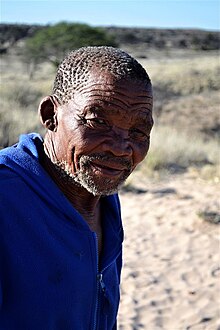
It is with sadness that we announce the passing of yet another San elder and leader from the ‡Khomani community in the southern Kalahari Desert. Oom Dawid Kruiper passed away on the 13th June 2012, after a brief period of hospitalization in Upington, Northern Cape Province, South Africa. Oom Dawid Kruiper, who was appointed leader of the Kruiper clan by his late father Regopstaan Kruiper in 1995, played a central role in the historic land claim of the ‡Khomani San.

In January 2002, a small clan of ‡Khomani San who were living on a tourist resort farm Kagga Kamma in the Western Cape Cedarberg, started planning to return to the Kalahari. The clan, lead by Regopstaan Kruiper, had been evicted from the Kalahari Gemsbok National Park after its formation in 1931. In 1995 their land claim, under the provisional name of the "Southern Kalahari San Land Claim Committee", was formally lodged with the Northern Cape Land Regional Claims Commissioner. The Kruiper clan, headed first by Regopstaan and then by Dawid Kruiper, were the original claim committee, which was later extended after a formal election was held for a negotiation committee, which attempted to represent each of the various communities of San in the Northern Cape. The first elected committee was chaired by Petrus Vaalbooi, whilst Dawid Kruiper was consistently acknowledged as the overall leader of the land claim.

In March 1999 and prior to the signing of the phase one agreement, a formal election process was held at Welkom to elect the first CPA under the CPA Act. This CPA constitution made provision for traditional leader as an acknowledgement of the extraordinary role played by Oom Dawid Kruiper in the years leading up to the land claim. In the ensuing years Oom Dawid has chosen to lead a simple, yet often difficult life on the farm Witdraai. He preferred to be called Bushman. His primary driver had always been to live as closely to the land of his forefather and to follow a traditional life (or natural life as he said) as possible. He held much knowledge of the natural environment which he was willing to share. He was the key driver in the establishment of a veld school through which knowledge of the veld, environment and traditions could be passed on to younger generations. The school also offered opportunities for visitors to have an authentic Kalahari experience. Oom Dawid was a reconteur par excellence, whose stories where often weaved in idiomatic language and many references to nature. He had an incredible way of comparing human behavior to that of the animals of the field….. May his soul become part of the "second milky way" and rest in peace.

Source: SA San Institute

Saturday, March 31, 2012

The crime which went away: obituary to Cosmo Desmond

Early in 1968 the apartheid government decreed that African people in and around the community at Maria Ratschitz mission near Ladysmith were to be forcibly removed and dumped on barren exposed land called at Limehill. This was not the first or the last of the forced removals characteristic of the apartheid regime's determination to deny towns and cities to the African people and instead to constitute black political entities, "homelands", on the remaining land occupied by Africans.

The apartheid dream was of South African cities and farms emptied of black people and "homeland" black police states fighting semi-autonomously against the inevitable resistance. Africans would then be confirmed as citizenless foreigners in the land of their birth. But the Limehill removal was the signal for a sustained campaign of opposition which pulled together the internal opposition, exposed the crimes of the Nationalist Party government, and spurred even dilatory Western powers into formal opposition. These horrors led to apartheid being declared a crime against humanity.

At the centre of this opposition was Cosmas Desmond, the priest located at Maria Ratschitz, who died on Saturday, March 31. He gave himself to the task of documenting and exposing these removals taking place throughout the country. A veteran VW Beetle was bought and he disappeared down dirt roads and beyond into roadless rural areas bearing previously unrecognised names such as Mondlo, Mdantsane, Sada, Ilinge, Dimbaza, Zwelitsha, Botshabelo, Alcockspruit, Waschbank, KwaNgema and Driefontein. He would reappear in Johannesburg in 1969 with notes and manuscripts which eventually made up the book published by the Christian Institute as The Discarded People. His book chronicled the dumping of people wrongly located in the plan of apartheid and "surplus" to the needs of capitalism in remote areas without houses, food and support.

Removals in isolated rural areas involved the humiliation of people reduced to quietly ascending the removal trucks under the gaze and guns of the police and left destitute on barren land. This institutionalised, administrative violence was designed to drive the "surplus" and "expendable" out of sight to live or die as they may in the police-state Bantustans. Death, disease and despair were the result. But the campaign ensured they were located, brought back to mind and that the regime was subject to surveillance and sanctions. Desmond's work triggered widespread publicity which was particularly effective in electronic media. The film Last Grave in Dimbaza which carried the graphic detail of degradation and death of sites around the country caused an international outcry and provided the evidence of such inhuman acts of systematic oppression.

This necessary documentation was critical to the United Nations presenting the International Convention on the Suppression and Punishment of the Crime of Apartheid for adoption in 1973. The crime of apartheid was defined as "inhuman acts committed for the purpose of establishing and maintaining domination by one racial group of persons over any other racial group of persons and systematically oppressing them". Forced removals to compress people into racial categories was a unique feature of the system. The timing of the declaration links closely to the exposure of forced removals.

Desmond's work would later be taken up in a series of studies in the Report of the Surplus People's Project which provided an extended review and fresh detail into the 1980s. At his 70th birthday party I approached Cos Desmond and said he must record what he could about his life experience in writing the Discarded People. He laughed wryly at the idea of an autobiography and gave me a maybe ... he might just turn his mind to chronicling his work but he wasn't so sure of its significance. Was his life and contribution really so important?

Rewards

Anti-apartheid combatants have been rewarded but also diminished by the ending of apartheid. The reward was the freeing of our people from the bondage of apartheid, but they have also been diminished by the trivialisation of great work of resistance in words and deeds and the careless dealing with crimes against humanity. The concluding scene in Last Grave in Dimbaza is of row after row of the graves of children who died after this dumping. As one of a group of students in discussion after film audition of in 1973 which was inspired by Desmond's work we resolved that a version of the Nuremburg Trial would have to be held in the post-apartheid era. That was not to be.

To my knowledge none of the bureaucrats of death were named and shamed. Now Dimbaza is a township on far-flung hills about 66km outside of East London. This name and even that of Limehill has lost its sting. South Africa has grown and these areas are now integrated into the road system and have their local municipalities. The memory fades. What was all the fuss about? This diminution of these historic crimes and the slow pace of genuine transformation had its effect on Cos Desmond, his work and his feeling of self-worth. He had often had to stand alone not only by the action of the regime but also by the priests in the Bantustans who found his research inconvenient and irritating and the shying away of the Catholic Church (with the notable exception of Archbishop Hurley).

His friendship with members of Black Consciousness (he enjoyed the ready open respect of Steve Biko and other BC leaders) did not serve favour with the Congress Movement and the ANC. In the new South Africa he was further diminished along with the lighter weighting of the crimes he chronicled. Cosmas never stood on his dignity or pronounced on his worth. His references to himself were often diffident, self deprecatory and ironic. Recently I was intrigued to hear that Van Gogh wrote that he knew he was regarded by society as a non-entity, an eccentric and a curiosity. He responded, "All right, then ... I should one day like to show by my work what such an eccentric, such a nobody, has in his heart." This was not quite Cos who was loved and held in high regard by the circle he cared for but there is a certain line in parallel.

He criticised the compromises and social degradation in the country of his adoption as only one who loved it so deeply would do. Despite the black majority gaining electoral power, the long standing effects of forced removal policy remain and perpetuate the gaping and widening inequality in income, wealth and land characteristic of our society. What happened to the crime of inhumanity declared in response to these forced removals and the promise of redistribution? History will revise judgment of the life and worth of Cosmas Desmond.

Source: Mail & Guardian

Friday, February 17, 2012

Minister: Land grabs 'out of touch with reality'

The idea of claiming land without compensation is "out of touch with reality", Land Reform Minister Gugile Nkwinti said on Friday. "Land grabs are not an option, there is no policy like that. By doing so you will have to change the Constitution," he said. "It is an option that is completely out of touch with reality."

Nkwinti was briefing reporters in Boksburg on the East Rand after a meeting on the progress of the land reform green paper. His deputy Lechesa Tsenoli, said six groups had brought feedback on what had emerged from different aspects of the green paper. "These timelines are a key thing. We need to devise new timeframes to bring forward those projects that were meant to be done at a later stage," Tsenoli said. "We must take stock of where we are at and in mid-March complete and merge with consolidated reports -- then be able to brief Cabinet."

He said the issue of land reform needed to be dealt with "sensitively". "For some it is an issue of life and death. For the state, doing it speedily will prevent that," he said. "The right thing to do is to establish policy and legislation to redistribute land in a fair manner."

He said several groups did not accept the historical statistic that 87% of the land was white owned. "They said that we must commission professors to research the statistics."

Source: Mail & Guardian

Tuesday, August 23, 2011

South Africa: Farmworkers’ Dismal, Dangerous Lives

Workers in Western Cape province who help produce South Africa’s renowned wines and fruit are denied adequate housing, proper safety equipment, and basic labor rights, Human Rights Watch said in a report released today. The government of South Africa, along with the industries that employ these laborers, should take immediate steps to improve their working and housing conditions, Human Rights Watch said.

The 96-page report, “Ripe with Abuse: Human Rights Conditions in South Africa’s Fruit and Wine Industries,” documents conditions that include on-site housing that is unfit for living, exposure to pesticides without proper safety equipment, lack of access to toilets or drinking water while working, and efforts to block workers from forming unions. While the Western Cape’s fruit and wine industries contribute billions of rand to the country’s economy, support tourism, and are enjoyed by consumers around the world, their farmworkers earn among the lowest wages in South Africa. The report also describes insecure tenure rights and threats of eviction for longtime residents on farms.

“The wealth and well-being these workers produce shouldn’t be rooted in human misery,” said Daniel Bekele, Africa director at Human Rights Watch. “The government, and the industries and farmers themselves, need to do a lot more to protect people who live and work on farms.”

The report is based on more than 260 interviews with farmworkers, farm owners, civil society members, industry representatives, government officials, lawyers, union officials, and academic experts.

South Africa has laws guaranteeing wages, benefits, and safe working and housing conditions for workers and other farm dwellers. But the law affords workers much greater labor and housing protections than they receive because the government largely has failed to monitor conditions and enforce the laws, Human Rights Watch said.

Human Rights Watch found the housing for some workers uninhabitable. One farmworker showed Human Rights Watch the former pig stall without electricity, water, or protection from the elements where he has lived with his wife and children for 10 years. “It makes me very unhappy,” his wife said, “because I can’t guarantee [the] safety of [my] children and can’t provide for [my] children.”

Many farmworkers live on farms as part of their employment arrangement; they are joined by family members and former workers, including those who can no longer work because they are too old or injured. These farm dwellers’ land tenure rights are protected under the Extension of Security of Tenure Act, enacted in 1997. Yet, by civil society estimates, more than 930,000 people were evicted from South African farms between 1994 and 2004. The government does not keep statistics on numbers of evictions, but people interviewed described a steady pace of evictions, particularly when laborers are no longer able to work. Evicted workers who spoke with Human Rights Watch had not been given suitable alternative housing or adequate compensation to find new housing.

Farmers sometimes resort to illegal tactics to get farm dwellers to leave, including cutting electricity or water. In one case, farm managers severed electricity for more than a year for a family with two children. Security guards on the farm harassed families in the middle of the night with dogs.

Although it is a crime for owners to evict occupiers from land without following required procedures, the authorities rarely initiate criminal proceedings. And even when farmers follow legal procedures, evicted farm dwellers often have no place to go. Municipal governments are generally unprepared to assist them, and some end up homeless.

Occupational health and safety conditions on many farms endanger workers, Human Rights Watch found. The majority of the current and former farmworkers interviewed about these conditions said they had been exposed to pesticides without adequate safety equipment. In addition, many employers jeopardize workers’ health by not providing them with access to drinking water, hand washing facilities, or toilets, even though these are required by labor regulations. When farmworkers are ill or injured, as is fairly common in this line of dangerous work, they are almost always refused the paid sick leave required by law unless they provide a medical certificate.

“Given what we know about the effects of pesticide use, it is unconscionable that some of these workers are not provided appropriate safety equipment, even after they ask for it,” Bekele said.

Farmworkers are some of the most poorly organized workers in the country, with estimates of union “density” – the percentage of workers represented by trade unions – in the Western Cape agricultural sector as low as 3 percent, compared with 30 percent among those with formal employment in the country as a whole. Human Rights Watch found that some farmers try to prevent workers from forming unions, though the right to organize is protected under South Africa’s constitution and international law.

The problems that farmworkers and farm dwellers face are not unknown to the South African government, farmers, or retailers who purchase their products. Indeed, in 2003 and again in 2008, the South African Human Rights Commission documented similar abuses. But steps taken by the government and industry to improve conditions have not been sufficient to ensure that overall conditions on farms meet the basic standards required by South African law.

At the time Human Rights Watch conducted its research, in March 2011, the Western Cape had 107 labor inspectors, responsible for inspecting over 6,000 farms and all other workplaces in the province. Moreover, an agreement between the Department of Labour, Agri South Africa – the main farmers’ association ­– and other parties that requires labor inspectors to give farmers notice of inspections undermines the inspectors’ capacity to identify violations, Human Rights Watch said.

Conditions on farms vary, and not all farmworkers with whom Human Rights Watch spoke had encountered rights abuses. In a small number of cases, farmworkers and farm owners described full compliance with the law as well as a variety of positive practices by employers that went beyond the legally requirements. Some farmers give workers land to grow their own crops, pay the full cost of medical visits, provide free food to workers in the winter, or have set up trusts that benefit farmworkers. Farmers who provided these benefits to farmworkers noted that these efforts can be profitable.

South African fruit and wine is sold domestically and exported overseas. The United Kingdom and the Netherlands are the top destinations for Western Cape fruit, and the UK and Germany are the biggest importers of South African wine. Canada, the United States, and other European nations are also important markets for South African wine. On about one-half of the farms whose conditions Human Rights Watch studied, either farmers or workers said that the products were produced for the export market. The report did not trace the supply chain for the products and does not identify farms to reduce the risk of retaliation against workers.

Industry bodies, farmers’ associations, and ethical trade initiatives should ensure that workers’ rights are respected, Human Rights Watch said. They should work with the South African government to guarantee that the workers who help produce fruit and wine receive adequate housing, benefits, and health protections.

“The answer is not to boycott South African products, because that could be disastrous for farmworkers,” Bekele said. “But we are asking retailers to press their suppliers to ensure that there are decent conditions on the farms that produce the products they buy and sell to their customers.”

Source: Human Rights Watch

Tuesday, August 17, 2010

SADC summit mulls Zim land-reform case

Zimbabwe's refusal to obey rulings by a regional court, which rejected President Robert Mugabe's land reforms in favour of a group of white farmers, looks set to win a pass as a summit wraps up Tuesday.

The tribunal of the Southern African Development Community, whose leaders are meeting in the Namibian capital, Windhoek, ruled in 2008 that a group of 78 white farmers could keep their land, saying they had been unfairly targeted because of their race.

Zimbabwe has refused to respect the ruling, even though Harare has signed the treaty creating the court, which has no power to enforce its decisions except through decisions of a summit. "There is no possibility of punitive measures like sanctions," said Dirk Kotze, a political analyst from the University of South Africa. "Expressing their disappointment is the furthest they can go," he said. "Anything further would be punitive and it has to be weighed against other political considerations such as maintaining unity in the government."

Mugabe, who at 86 is Africa's oldest leader with three decades in power, formed a unity government last year with former opposition leader Morgan Tsvangirai, now the prime minister. About 4000 white farmers have been forced off their land in a violent and politically charged campaign launched by Mugabe in 2000. About 400 white farmers remain in Zimbabwe, and the chaotic resettlement process slashed food production, making the nation chronically dependent on foreign handouts.

Zimbabwe insists that the SADC tribunal treaty was never ratified. Critics contend that the signature on the protocol was enough. The leaders are expected to simply punt the issue to their next summit in 2011. "To find a solution, SADC asked its justice ministers to make a report, but it wasn't completed. Any decision will simply be postponed indefinitely," said one official at the summit, speaking on condition of anonymity. "They may just ask the justice ministers to finish their report," another official said as the leaders began meeting.

The report was meant to be presented at the summit, but regional leaders fear the contentious issue could split the bloc, which has struggled to act with a united voice on Zimbabwe, even at the height of electoral violence in 2008. "The rule of law in the SADC countries depends on this," said Kallie Kriel of the South African rights group AfriForum, a mainly white organisation. "If the rulings of SADC institutions are not adhered to, the credibility of SADC itself is at risk."

South Africa's courts have registered the judgement, leading to the seizure of Zimbabwe government properties for auction to help cover the farmers' legal costs. In the summit's final declaration, expected late on Tuesday, the leaders will likely congratulate the progress made by the unity government in stabilising its economy while pushing Harare to end its bickering over key appointments. The political feud has delayed progress on electoral reforms. The power-sharing pact had called for a referendum on a new constitution for last month, but the process has barely gotten off the ground.

SADC has been much tougher on Madagascar, which was suspended from the bloc over the army-backed ouster of president Marc Ravalomanana by the former mayor of the capital, Andry Rajoelina, in March 2009. The leaders were also expected to be briefed on a new agreement signed last week.

Source: Mail & Guardian

Tuesday, March 30, 2010

Land minister's Zim references criticised

A warning by Rural Development and Land Reform Minister Gugile Nkwinti that commercial farmers must cooperate to avoid a situation in South Africa "worse than Zimbabwe" drew sharp reaction from agricultural union TAU-SA and the Freedom Front Plus (FF+) on Tuesday. Nkwinti's remarks, reportedly made during an interview with eNews on Monday, were "irresponsible", the union's president, Ben Marais, said in a statement. "We see Minister Nkwinti's remarks as an ill-camouflaged threat to farmers that their land can be occupied the Zimbabwe way if they are not prepared to give their land away. TAU-SA regards this as a subtle given command to militants to occupy land to intimidate farmers," he said.

Marais questioned why the government wanted more land. "They had to admit several times that most of the land-reform projects have failed totally... grabbing land in the Zimbabwe way will also lead to farms going unproductive and food security [being] threatened." Marais said that given the "loaded situation" in the country, statements such as Nkwinti's should not be permissible. He called on Nkwinti to apologise, or for his remark to be repudiated by President Jacob Zuma.

In a separate statement on Tuesday, the FF+ also labelled Nkwinti's reference to Zimbabwe irresponsible. "The farmers have been cooperating for a long time already, but it is the government and its incompetent officials who do not cooperate. "The fact that Nkwinti shares the views of black South Africans -- that land has to be nationalised -- is in contrast with what he said last week in Parliament. Nkwinti therefore speaks with a forked tongue," FF+ land-reform spokesperson Pieter Groenewald said.

The minister's remark created the impression that he "subconsciously encourages" Zimbabwean-type land reforms. This, he cautioned, was "not in the interest of anybody in South Africa".

Later on Tuesday, the Democratic Alliance called on the government to clarify what it called "conflicting statements" on the land issue. In a statement, DA land-reform spokesperson Mpowele Swathe said that Nkwinti, in the interview on Monday, had "actively endorsed plans to nationalise farmland". But last week, his deputy, Joe Phaahla, had said all the department wanted to do was come up with a model for land reform, and it had no intention to nationalise land. "Is a plan to nationalise farmland on the cards or not? This isn't a game. It goes to the heart of our economy and its best financial management. "Being inconsistent or unclear on such a fundamental issue is like the Treasury vaguely suggesting pegging the currency against the Zimbabwean dollar," he said.

Placing control of this entire economic sector in the hands of the state could have the effect of destroying it, Swathe warned.

Source: Mail & Guardian

Monday, March 15, 2010

SA’s Land Governing Structures Conduits for Illicit Self-enrichment?

If there is any lesson to be learned from South Africa's land reform experience, since the dawn of democracy in 1994, it is the fact that the success of the country's land reform programme is contingent upon a complex mix of diverse but interrelated factors. These encompass issues such as the existence of an adequate budget to implement the programme's three main goals namely the restitution of land to people who were dispossessed by the colonial and apartheid governments after 1913; redistribution of land in order to redress the skewed ownership patterns of land along racial lines and tenure reform to secure the land rights of people whose tenure is insecure as a result of discriminatory laws and practices. Building the technical capacity of land reform beneficiaries to ensure that restituted and redistributed land remains productive also constitutes an important dimension of success.

It is encouraging that government policy makers are largely taking note of these considerations and articulating them to the public via the media. There also seems to be an acute realisation that none of these conditions of land reform success can be met as long as the financial resources devoted to them are wasted through corruption. While much decried, this dead weight loss problem remains inadequately addressed possibly due to an insufficient understanding of its origin. The pressure to deliver on land reform targets may not have afforded adequate space for exploring the leakage in sufficient detail. What may have been overlooked as a result is the extent to which the institutional structures governing the land reform process contribute to the problem.

Let's start with the Land Bank, which is entrusted with investing finances into the country's agri-business sector with emphasis on bringing into the fold previously marginalised black farmers. The diversion of the bank's agricultural development funds into the coffers of politically connected individuals has been a subject of extensive media coverage. Thankfully basic remedial measures have been instituted, including changing the bank's dodgy leadership, placing the responsibilities for its oversight away from the problematic Land Affairs ministry to the relatively well-run Ministry of Finance, and recapitalisation of the bank as announced recently by Finance Minister Pravin Gordhan in his budget speech. However, as the Land Bank is only one among many beleaguered land reform structures, the net ought to perhaps be cast wider.

To be included in the broadened clean-up are community property associations (CPAs) and community trusts, the most common form in which the beneficiaries of land restitution and land redistribution hold land. These have proven to be a great conduit for the illicit self-enrichment of undemocratically appointed individuals who purport to be community representatives. Community trusts for instance invest property ownership in non-beneficiaries (the trustees) who are not democratically accountable to the beneficiaries. CPAs have been invented to counter this undemocratic tendency by placing emphasis on principles of fair and inclusive decision-making, equity of membership, democratic processes, fair access to property, accountability and transparency, security of tenure, sustainability and compliance with legislation and the Constitution.

As far as they save poor rural beneficiaries the costs associated with individual ownership, including conveyancing costs, fines for non-compliance with state-imposed land-use controls, and municipal land tax liabilities, CPAs would seem ideal for land reform projects. Unfortunately when it comes to transparency, accountability, definition of group membership, distribution of income generated from projects, land allocation and land use, CPAs continue to suffer many of the problems experienced by community trusts. The source of these problems may not be unrelated to how the CPA concept glosses over the fact that many of those who seek restitution had owned their properties on a freehold basis, but had not purchased them in ways that enshrined individual property rights. The popular perception of ‘African culture' where land is presumably a jointly owned resource, to be used for the common good, is thus not exactly accurate. Consequently CPAs may not only need to be rid of unscrupulous elements. The communalist assumption on which they are founded may also need to be revised.

A variant of the community trust and CPA arrangement that also deserves highlighting is the practise of vesting ownership of restituted and redistributed land in tribal chiefs and kings who hold it in trust on behalf of their tribes or ‘subjects'. Founded on the assumption that it somehow corresponds to the historic principles of African tenure relationships, this mode of property ownership has also proven to be a major recipe for corruption with all the classic textbook examples associated with unilateral decision making and unfettered discretion. Taking into account the fact that the legitimacy of some chiefs is fiercely contested, and in that in some cases chieftaincy was invented to aid colonial and apartheid machinations, the founding assumption of this traditionalist mode of tenure may not be fully supported by historical evidence. Like the CPA concept it may need a serious rethink. Otherwise it will continue to afford chiefs easy access to kickbacks in dodgy mining deals and tourism ventures.

A systematic review and clean-up of the institutional structures meant to advance land reform objectives may not be a panacea for the country's land reform woes, but will certainly go a long way in preventing loss, wastage and abuse of much needed funds.

Source: Institute for Security Studies