Nay Myo Zin was sentenced to ten years in prison by a Burmese court last week. His wife reported that he was arrested because Burmese secret police had found an email in his inbox that discussed national reconciliation.
Zin was charged under the Electronic Transitions Act 33a, which criminalizes “doing any act detrimental to the security of the State or prevalence of law and order or community peace and tranquility or national solidarity or national economy or national culture.” This law is frequently used to arrest dissidents (pdf).
Nay Myo Zin was the first person to be arrested for political reasons since the new Burmese government took power earlier this year. His arrest and sentencing is another a sign that despite its claims to be on the path to democracy, the government has not changed. In addition to Nay Myo Zin, there are 1,995 other political prisoners in Burma, according to the Assistance Association for Political Prisoners Burma.
PHR urges the Burmese government to embrace principles of democracy and release all political prisoners.
Source: Physicians for Human Rights
Showing posts with label Burma. Show all posts
Showing posts with label Burma. Show all posts
Tuesday, August 30, 2011


Friday, May 8, 2009
Zuma Should Grasp Opportunity to Break With the Recent Past
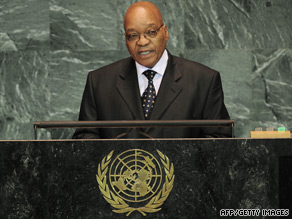 South Africa's new government should make human rights a central pillar of its foreign policy agenda, Human Rights Watch said today in a letter to President-elect Jacob Zuma.
Human Rights Watch expressed concern that in recent years - including during its two-year stint as a member of the United Nations Security Council - South Africa has chosen to side with some of the worst human rights abusers, including Iran, Burma, Sudan, and Zimbabwe. While it justifiably criticized the human rights practices of the United States and Israel and sought reform of international institutions, Pretoria failed to take the moral high ground and build a broad north-south alliance around strengthening international law and human rights. As a result, it squandered its international reputation, which it had so effectively built up in the 1990s, as a champion of human rights and the rule of law. "South Africans and their supporters all over the world who had such high hopes for this country's leadership on human rights felt betrayed by the previous government," said Georgette Gagnon, Africa director at Human Rights Watch. "This is a chance for Zuma to take the high road and restore credibility and balance to South Africa's foreign policy."
Human Rights Watch called attention to situations in three nations where South African leadership could lead to significant improvements and progress in human rights: Sudan, Democratic Republic of Congo, and Zimbabwe.
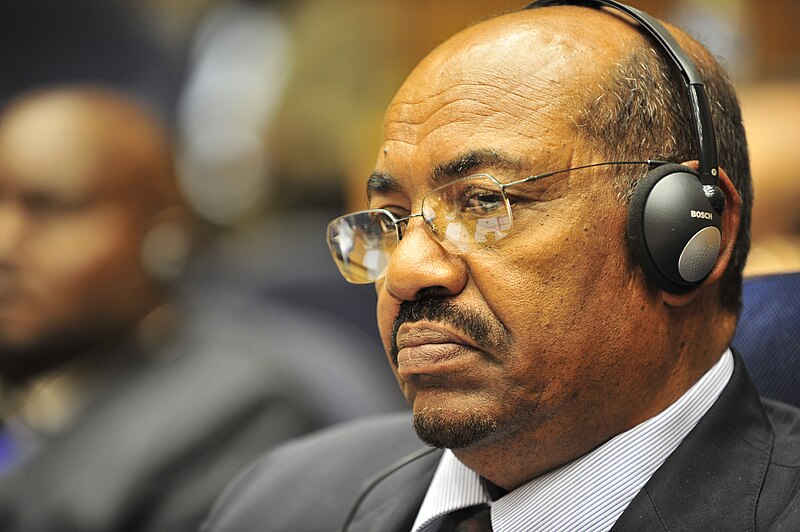 In Sudan, a number of interlinking issues continue to undermine human rights. The major elements are: the armed conflict, lack of security, and obstruction of humanitarian aid in Darfur; African Union and Arab League moves to help President Omar al-Bashir evade justice; and the threat of renewed north-south conflict between Khartoum and the Sudan People's Liberation Movement/Army (SPLM/A). Those responsible for the worst crimes in Darfur know they will not face justice and the Sudanese government has used the International Criminal Court's (ICC) arrest warrant for al-Bashir as a pretext to expel international humanitarian organizations, unnecessarily endangering further the lives of millions of civilians in Darfur.
Human Rights Watch called on the new South African government to: support the ICC's work in Sudan and the principles of international justice, and press other African countries to do the same; and press Sudan to reverse its decision to expel humanitarian agencies, and reinstate the full scope of humanitarian assistance in Darfur.
 In its letter to President-elect Zuma, Human Rights Watch also detailed how the new government could help end the rampant abuses in the Democratic Republic of the Congo and help set the country firmly on a democratic footing. To its great credit, South Africa has contributed a substantial number of peacekeeping troops to the United Nations force in Congo. The UN force is involved in joint military operations with Congolese government forces against brutal Hutu militias like the Democratic Liberation Forces of Rwanda (FDLR).
But UN peacekeepers have so far been unsuccessful in restraining government soldiers from also committing abuses against civilians. To make matters worse, the deputy commander of the Congolese military force is reported to be Bosco Ntaganda, a former rebel commander who has been charged with war crimes by the ICC. Human Rights Watch said that South African forces should not be standing by while abuses are taking place or working with people like Ntaganda.
Human Rights Watch called on the new government to help the Congolese government establish a vetting mechanism to remove from the army and police individuals accused of serious human rights violations, and to ensure that they are brought to justice rather than promoted; and press the Congolese authorities to punish abusive soldiers and their commanders and to bring abuses to a halt.
 In Zimbabwe, despite the formation of a new power-sharing government, the crisis persists and human rights abuses continue. Police continue to intimidate and arrest activists, and supporters of the Zimbabwe African National Union-Patriotic Front (ZANU-PF), the longtime governing party, continue their violent invasions of commercial farms. Police and prosecuting authorities who have remained under the control of ZANU-PF in the power-sharing government have continued politically motivated prosecutions of political opponents and have failed to investigate ongoing allegations of torture. Key state and judicial institutions remain partisan and unreformed. The government is yet to initiate comprehensive legislative reforms and repeal repressive laws like the Public Order and Security Act, Access to Information and Protection of Privacy Act, as well as a litany of laws that restrict media operations.
Human Rights Watch called on the new South African government to: monitor closely the progress of all parties to Zimbabwe's power-sharing agreement in carrying out all commitments they made as part of the Global Political Agreement, including respecting individual rights, passing human rights-centered legislative reforms, drafting a new constitution, and holding fresh elections that meet international standards of freedom and fairness; and press Zimbabwe's inclusive government to commit to, and institute, genuine political change. "The new government of President Zuma should establish early on that it is committed to playing a positive role in ending repression and abuses not only on the continent but in other parts of the world," Gagnon said. "Zimbabwe is an obvious place to start."
Source: Human Rights Watch
Sunday, September 7, 2008
South Africa's Human Rights Reputation Tarnished
As a member of the United Nations security council for two years, South Africa has had many opportunities to speak out forcefully for human rights - or to join those speaking out against them. Again and again, it has chosen the latter course. The South African government's unwillingness to confront President Robert Mugabe on his extremely abusive governance of Zimbabwe is well known to South Africans, and justly controversial. Less well known are the many other important international issues on which the South African government has sided with reactionary rather than progressive forces.
Burma is the best-known case. With Russia and China, South Africa has blocked efforts to condemn the military government's lethal crackdown on peaceful protesters last year. Perhaps the department of foreign affairs has forgotten that, when Burma was still democratic, it demanded that the evils of apartheid, including the Sharpeville massacre of 1960, should be brought before the security council.
The international solidarity movement against apartheid constantly confronted the argument that what happened inside a country's borders was none of the rest of the world's business. That is precisely the argument that the South African government now makes frequently at the security council. It narrowly defines what constitutes a "threat to international peace and security", and insists that all other matters be taken up at the UN Human Rights Council in Geneva. Meanwhile, in Geneva, outside the limelight, South Africa has demonstrated a similar pattern - failing to support key resolutions condemning human rights abuses in countries from Iran to Uzbekistan, and aligning itself with countries whose human rights records are, by anyone's standard, abysmal.
At the UN this month, a diplomatic struggle is shaping up to be South Africa's lowest moment yet. The issue is Darfur, and more specifically the request by the prosecutor of the International Criminal Court (ICC) for an arrest warrant for Omar al-Bashir, the Sudanese president. The accusation: genocide and crimes against humanity, the world's most serious crimes. News of the warrant request was greeted with joy among the millions of Darfuris who have been driven from their homes by government forces acting in concert with janjaweed militias. Tens of thousands of Africans have died in this civil war, most of them civilians, and most of them as a result of Sudanese government actions.
The Sudanese government has begun a concerted campaign to evade justice for these crimes and the South African government has become its accomplice. Together with Libya, also on the security council, South Africa has been leading an effort to suspend the International Criminal Court's request for the next 12 months. Suspending the request for an arrest warrant would send a clear signal, not only to the Sudanese government, but also to tyrants everywhere that they can continue to cheat justice through international political machination. I was present at the negotiations on the treaty for the International Criminal Court 10 years ago in Rome, and listened with admiration to the speech of Dullah Omar, the South African justice minister, in ringing support of this important new human rights institution. Achieving a strong treaty at those talks was an uphill battle, but we won. Only the steadfast leadership of South Africa, along with a handful of others, overcame the opposition of major powers such as the United States, China and Israel.
The International Criminal Court is not an anti-African institution, as some have alleged. It is a pro-African institution: pro-civilians in Darfur whose villages have been burned to the ground, pro-women in the Democratic Republic of Congo who have been raped in wartime, pro-children in northern Uganda who have been abducted as child soldiers. It is opposed to government and rebel leaders responsible for such crimes, no matter where they live.
The prosecutor has also been looking into situations in Colombia and Afghanistan, as well as crimes committed in the Russian-Georgian armed conflict. It is truly heartbreaking to see South Africa preparing to abandon the court at a critical juncture in its history. Sadly, it appears to be part of a trend that is putting Pretoria's foreign policy on the wrong side of history. Perhaps only a fervent and sustained outcry from South African society can restore the country to its rightful path and begin to repair the damage that has already been done to its reputation.
Source: Human Rights Watch
Burma is the best-known case. With Russia and China, South Africa has blocked efforts to condemn the military government's lethal crackdown on peaceful protesters last year. Perhaps the department of foreign affairs has forgotten that, when Burma was still democratic, it demanded that the evils of apartheid, including the Sharpeville massacre of 1960, should be brought before the security council.
The international solidarity movement against apartheid constantly confronted the argument that what happened inside a country's borders was none of the rest of the world's business. That is precisely the argument that the South African government now makes frequently at the security council. It narrowly defines what constitutes a "threat to international peace and security", and insists that all other matters be taken up at the UN Human Rights Council in Geneva. Meanwhile, in Geneva, outside the limelight, South Africa has demonstrated a similar pattern - failing to support key resolutions condemning human rights abuses in countries from Iran to Uzbekistan, and aligning itself with countries whose human rights records are, by anyone's standard, abysmal.
At the UN this month, a diplomatic struggle is shaping up to be South Africa's lowest moment yet. The issue is Darfur, and more specifically the request by the prosecutor of the International Criminal Court (ICC) for an arrest warrant for Omar al-Bashir, the Sudanese president. The accusation: genocide and crimes against humanity, the world's most serious crimes. News of the warrant request was greeted with joy among the millions of Darfuris who have been driven from their homes by government forces acting in concert with janjaweed militias. Tens of thousands of Africans have died in this civil war, most of them civilians, and most of them as a result of Sudanese government actions.
The Sudanese government has begun a concerted campaign to evade justice for these crimes and the South African government has become its accomplice. Together with Libya, also on the security council, South Africa has been leading an effort to suspend the International Criminal Court's request for the next 12 months. Suspending the request for an arrest warrant would send a clear signal, not only to the Sudanese government, but also to tyrants everywhere that they can continue to cheat justice through international political machination. I was present at the negotiations on the treaty for the International Criminal Court 10 years ago in Rome, and listened with admiration to the speech of Dullah Omar, the South African justice minister, in ringing support of this important new human rights institution. Achieving a strong treaty at those talks was an uphill battle, but we won. Only the steadfast leadership of South Africa, along with a handful of others, overcame the opposition of major powers such as the United States, China and Israel.
The International Criminal Court is not an anti-African institution, as some have alleged. It is a pro-African institution: pro-civilians in Darfur whose villages have been burned to the ground, pro-women in the Democratic Republic of Congo who have been raped in wartime, pro-children in northern Uganda who have been abducted as child soldiers. It is opposed to government and rebel leaders responsible for such crimes, no matter where they live.
The prosecutor has also been looking into situations in Colombia and Afghanistan, as well as crimes committed in the Russian-Georgian armed conflict. It is truly heartbreaking to see South Africa preparing to abandon the court at a critical juncture in its history. Sadly, it appears to be part of a trend that is putting Pretoria's foreign policy on the wrong side of history. Perhaps only a fervent and sustained outcry from South African society can restore the country to its rightful path and begin to repair the damage that has already been done to its reputation.
Source: Human Rights Watch
Wednesday, July 1, 1998
Forced labour in Myanmar (Burma)
Conclusions on the substance of the case
There is abundant evidence before the Commission showing the pervasive use of forced labour imposed on the civilian population throughout Myanmar by the authorities and the military for portering, the construction, maintenance and servicing of military camps, other work in support of the military, work on agriculture, logging and other production projects undertaken by the authorities or the military, sometimes for the profit of private individuals, the construction and maintenance of roads, railways and bridges, other infrastructure work and a range of other tasks, none of which comes under any of the exceptions listed in Article 2(2) of the Convention.
The call-up of labour is provided for in very wide terms under sections 8(1)(g)(n) and (o), 11(d) and 12 of the Village Act and sections 9(b) and 9A of the Towns Act, which are incompatible with the Convention. The procedure used in practice often follows the pattern of those provisions, in relying on the village head or ward authorities for requisitioning the labour that any military or government officer may order them to supply; but the provisions of the Village Act and the Towns Act were never actually referred to in those orders for the call-up of forced labourers that were submitted to the Commission; it thus appears that unfettered powers of military and government officers to exact forced labour from the civilian population are taken for granted, without coordination among different demands made on the same population, and people are also frequently rounded up directly by the military for forced labour, bypassing the local authorities.
Failure to comply with a call-up for labour is punishable under the Village Act with a fine or imprisonment for a term not exceeding one month, or both, and under the Towns Act, with a fine. In actual practice, the manifold exactions of forced labour often give rise to the extortion of money in exchange for a temporary alleviation of the burden, but also to threats to the life and security and extrajudicial punishment of those unwilling, slow or unable to comply with a demand for forced labour; such punishment or reprisals range from money demands to physical abuse, beatings, torture, rape and murder.
Forced labour in Myanmar is widely performed by women, children and elderly persons as well as persons otherwise unfit for work.
Forced labour in Myanmar is almost never remunerated nor compensated, secret directives notwithstanding, but on the contrary often goes hand in hand with the exaction of money, food and other supplies as well from the civilian population.
Forced labour is a heavy burden on the general population in Myanmar, preventing farmers from tending to the needs of their holdings and children from attending school; it falls most heavily on landless labourers and the poorer sections of the population, which depend on hiring out their labour for subsistence and generally have no means to comply with various money demands made by the authorities in lieu of, or over and above, the exaction of forced labour. The impossibility of making a living because of the amount of forced labour exacted is a frequent reason for fleeing the country.
A State which supports, instigates, accepts or tolerates forced labour on its territory commits a wrongful act and engages its responsibility for the violation of a peremptory norm in international law. Whatever may be the position in national law with regard to the exaction of forced or compulsory labour and the punishment of those responsible for it, any person who violates the prohibition of recourse to forced labour under the Convention is guilty of an international crime that is also, if committed in a widespread or systematic manner, a crime against humanity.
Source: International Labour Organisation (ILO)
There is abundant evidence before the Commission showing the pervasive use of forced labour imposed on the civilian population throughout Myanmar by the authorities and the military for portering, the construction, maintenance and servicing of military camps, other work in support of the military, work on agriculture, logging and other production projects undertaken by the authorities or the military, sometimes for the profit of private individuals, the construction and maintenance of roads, railways and bridges, other infrastructure work and a range of other tasks, none of which comes under any of the exceptions listed in Article 2(2) of the Convention.
The call-up of labour is provided for in very wide terms under sections 8(1)(g)(n) and (o), 11(d) and 12 of the Village Act and sections 9(b) and 9A of the Towns Act, which are incompatible with the Convention. The procedure used in practice often follows the pattern of those provisions, in relying on the village head or ward authorities for requisitioning the labour that any military or government officer may order them to supply; but the provisions of the Village Act and the Towns Act were never actually referred to in those orders for the call-up of forced labourers that were submitted to the Commission; it thus appears that unfettered powers of military and government officers to exact forced labour from the civilian population are taken for granted, without coordination among different demands made on the same population, and people are also frequently rounded up directly by the military for forced labour, bypassing the local authorities.
Failure to comply with a call-up for labour is punishable under the Village Act with a fine or imprisonment for a term not exceeding one month, or both, and under the Towns Act, with a fine. In actual practice, the manifold exactions of forced labour often give rise to the extortion of money in exchange for a temporary alleviation of the burden, but also to threats to the life and security and extrajudicial punishment of those unwilling, slow or unable to comply with a demand for forced labour; such punishment or reprisals range from money demands to physical abuse, beatings, torture, rape and murder.
Forced labour in Myanmar is widely performed by women, children and elderly persons as well as persons otherwise unfit for work.
Forced labour in Myanmar is almost never remunerated nor compensated, secret directives notwithstanding, but on the contrary often goes hand in hand with the exaction of money, food and other supplies as well from the civilian population.
Forced labour is a heavy burden on the general population in Myanmar, preventing farmers from tending to the needs of their holdings and children from attending school; it falls most heavily on landless labourers and the poorer sections of the population, which depend on hiring out their labour for subsistence and generally have no means to comply with various money demands made by the authorities in lieu of, or over and above, the exaction of forced labour. The impossibility of making a living because of the amount of forced labour exacted is a frequent reason for fleeing the country.
A State which supports, instigates, accepts or tolerates forced labour on its territory commits a wrongful act and engages its responsibility for the violation of a peremptory norm in international law. Whatever may be the position in national law with regard to the exaction of forced or compulsory labour and the punishment of those responsible for it, any person who violates the prohibition of recourse to forced labour under the Convention is guilty of an international crime that is also, if committed in a widespread or systematic manner, a crime against humanity.
Source: International Labour Organisation (ILO)
Thursday, June 20, 1996
Forced labour in Myanmar (Burma)
By a letter dated 20 June 1996 addressed to the Director-General of the ILO, 25 Workers' delegates to the 83rd Session of the International Labour Conference (June 1996) presented a complaint under article 26 of the Constitution against the Government of Myanmar for non-observance of the Forced Labour Convention, 1930 (No. 29), which it ratified on 4 March 1955 and which came into force for Myanmar on 4 March 1956. The complaint stated, in particular, that:
Myanmar's gross violations of the Convention [No. 29] have been criticized by the ILO's supervisory bodies for 30 years. In 1995, and again in 1996, they have been the subject of special paragraphs in the reports of the Committee on the Application of Conventions and Recommendations, and this year, the Government has also been singled out by the Committee for its "continued failure to implement" the Convention.
In addition, in November 1994, the Governing Body adopted the report of the Committee it had established to examine the representation made by the International Confederation of Free Trade Unions [ICFTU] against the Government of Myanmar for its failure to ensure effective observance of Convention No. 29.
The Government has demonstrated its unwillingness to act upon the repeated calls addressed to it by the ILO's supervisory bodies to abolish and cancel legislation which allows for the use of forced labour and to ensure that forced labour is eliminated in practice. In these circumstances, the Committee on Applications has again expressed deep concern at the systematic recourse to forced labour in Myanmar.
Despite its protestations that the powers available under the offending legislation, the Village Act (1908) and the Towns Act (1907), have fallen into disuse since 1967 and that these laws are currently under review with a view to their repeal, the Government has failed conspicuously to provide the information requested of it concerning concrete action for legislative change.
Indeed, it is clear that the practice of forced labour is becoming more widespread and that the authorities in Myanmar are directly responsible for its increasing use, and actively involved in its exploitation.
The ICFTU representation presented under article 24 of the Constitution in January 1993 addressed the particular case of the forced recruitment and abuse of porters by the military which was, at that time, the primary cause of concern.
Since then, however, forced labour is being used systematically, on an ever larger scale, and in an increasing number of areas of activity. Large numbers of forced labourers are now working on railway, road, construction, and other infrastructure projects, many of which are related to the Government's efforts to promote tourism in Myanmar. In addition the military is engaged in the confiscation of land from villagers who are then forced to cultivate it to the benefit of the military appropriators.
The current situation is that the Government of Myanmar, far from acting to end the practice of forced labour, is engaged actively in its promotion, so that it is today an endemic abuse affecting hundreds of thousands of workers who are subjected to the most extreme forms of exploitation, which all too frequently leads to loss of life.
Source: International Labour Organisation (ILO)
Myanmar's gross violations of the Convention [No. 29] have been criticized by the ILO's supervisory bodies for 30 years. In 1995, and again in 1996, they have been the subject of special paragraphs in the reports of the Committee on the Application of Conventions and Recommendations, and this year, the Government has also been singled out by the Committee for its "continued failure to implement" the Convention.
In addition, in November 1994, the Governing Body adopted the report of the Committee it had established to examine the representation made by the International Confederation of Free Trade Unions [ICFTU] against the Government of Myanmar for its failure to ensure effective observance of Convention No. 29.
The Government has demonstrated its unwillingness to act upon the repeated calls addressed to it by the ILO's supervisory bodies to abolish and cancel legislation which allows for the use of forced labour and to ensure that forced labour is eliminated in practice. In these circumstances, the Committee on Applications has again expressed deep concern at the systematic recourse to forced labour in Myanmar.
Despite its protestations that the powers available under the offending legislation, the Village Act (1908) and the Towns Act (1907), have fallen into disuse since 1967 and that these laws are currently under review with a view to their repeal, the Government has failed conspicuously to provide the information requested of it concerning concrete action for legislative change.
Indeed, it is clear that the practice of forced labour is becoming more widespread and that the authorities in Myanmar are directly responsible for its increasing use, and actively involved in its exploitation.
The ICFTU representation presented under article 24 of the Constitution in January 1993 addressed the particular case of the forced recruitment and abuse of porters by the military which was, at that time, the primary cause of concern.
Since then, however, forced labour is being used systematically, on an ever larger scale, and in an increasing number of areas of activity. Large numbers of forced labourers are now working on railway, road, construction, and other infrastructure projects, many of which are related to the Government's efforts to promote tourism in Myanmar. In addition the military is engaged in the confiscation of land from villagers who are then forced to cultivate it to the benefit of the military appropriators.
The current situation is that the Government of Myanmar, far from acting to end the practice of forced labour, is engaged actively in its promotion, so that it is today an endemic abuse affecting hundreds of thousands of workers who are subjected to the most extreme forms of exploitation, which all too frequently leads to loss of life.
Source: International Labour Organisation (ILO)
Subscribe to:
Posts (Atom)