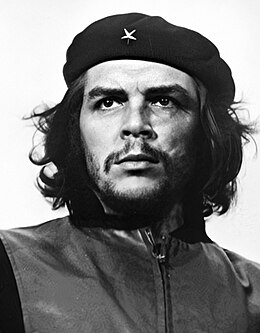
"Africa and the world are yet to recover from Sankara’s assassination. Just as we have yet to recover from the loss of Patrice Lumumba, Kwame Nkrumah, Eduardo Mondlane, Amilcar Cabral, Steve Biko, Samora Machel, and most recently John Garang, to name only a few. While malevolent forces have not used the same methods to eliminate each of these great pan-Africanists, they have been guided by the same motive: to keep Africa in chains."
– Antonio de Figueiredo, February 2008 (via African artists)

Thomas Sankara is one in a long lineage of African sons and daughters whose ideas and actions have left an indelible mark on the history of the continent. He was however killed by his brothers in arms with the belief that they could defeat the great example he set for progressive youth across the continent. Unfortunately for his murderers they couldn't have been more wrong with their belief as a week to the faithful day of his assassination, in a historic speech marking the 20th anniversary of the assassination of another great revolutionary, Ernesto 'Che' Guevara, Thomas declared that "ideas cannot be killed, ideas never die". Indeed, the history of humanity is replete with martyrs and heroes whose ideas and actions have survived the dawn of time and have inspired future generations. The ideas, belief and sacrifice of Thomas Sankara has made him a martyr that is larger than life.
This is the reason why over two decades of his dead, Thomas Sankara continues to be in the minds and heart of the few that struggle to end the domination and enslavement of the African Continent. The power of Sankara's revolutionary ideas and popularity cannot be unconnected to the continuous reflection of African's who are frustrated with corrupt leaders and rotten leadership styles that is incapable of setting the continent with all its rich resources of both human and natural abundance in the pairs of western and Asian continents. Sankara’s popularity is also deeply rooted in the profound sincerity of his commitment to serving his people, his devotion to the cause of the emancipation of the Burkinabés and all African peoples. His charisma, honesty and integrity made him a hero for the ‘wretched of the Earth,’ to coin a phrase from Frantz Fanon, who was greatly admired by Sankara.
As Africa looks desperately for leaders of integrity and vision, the life and ideals of the late Thomas Sankara seem more and more relevant and exemplary with the passage of time. Above all, however, the greatness of Sankara lies within the ideas and values he embodied during his brief time on the African and international stage. Indeed, if Sankara arouses as much fervor today as he did two decades ago, it is because he embodied and defended causes that still resonate today among the millions of oppressed in Africa and around the world. Sankara was a genuine revolutionary and a great visionary who had the courage to take on the most difficult challenges and who held great ambitions for his country and Africa. Most of the ideas or causes he defended two decades ago are still at the heart of the struggle for the economic, social and political emancipation of peoples around the world. He was an environmentalist ahead of his time in a so-called ‘poor’ country that was supposed to have other more pressing priorities than the environment.
Sankara was one of the first heads of State, perhaps the only one in his time, to condemn female excision, a position that reflected his unwavering commitment to the emancipation of women and the struggle against all forms of discrimination against women. He was a relentless advocate of gender equality and the recognition of the role of women in all spheres of economic and social life. In his famous speech of 2 October 1983, he stated: ‘We cannot transform society while maintaining domination and discrimination against women who constitute over half of the population.’ His unrelenting struggle against corruption, long before the World Bank and the IMF picked up on this issue, made Sankara an enemy of all corrupt presidents on the continent and of the international capitalist mafia for whom corruption is a tool for conquering markets and pillaging the resources of the global South.
Sankara rejected the inevitability of ‘poverty,’ and was one of the first proponents of food security. He achieved the spectacular feat of making his country food self-sufficient within four years, through sensible agricultural policy and, above all, the mobilisation of the Burkinabé peasantry. He understood that a country that could not feed itself ran the risk of losing its independence and sovereignty. In July 1987, Sankara, close on the heels of Fidel Castro two years earlier, called on African countries to form a powerful front against their continent’s illegitimate and immoral debt and to collectively refuse to pay it.
Once again, he understood before others that the debt was a form of modern enslavement for Africa; a major cause of poverty and deep suffering for African populations. Sankara famously stated: ‘If we do not pay the debt, our lenders will not die. However, if we do pay it, we will die…’ On the international stage, Sankara was the first African head of State, indeed the first in the world, to denounce the UN Security Council’s right of veto and to condemn the lack of democracy within the United Nations system as well as the hypocrisy that characterized international relations. Today, all of these ideas have become self- evident truths and are at the heart of popular resistance movements, including the World Social Forum that has become one of the most powerful major rallying points.
Captain Thomas Sankara is the lion king that should be remembered by all and who value the ideas and values that he stood for and died for this values should particularly be upheld by the youth of the African continent since it has become obvious that the current generation of leaders are hell bent on throwing the continent back to colonial rule. Thomas Sankara is a role model, a teacher, inspiration and a benchmark to all of us that strive to see a better, progressive and more united Africa that should be strong enough to be heard and respected.
Long Live Sankara, Long Live Africa and long live the cause of the good.
Source: Because I am involved