Statement by the Honourable Phandu TC Skelemani, Minister of Foreign Affairs and International Cooperation in Botswana, on Dr Jean Ping's response to an article in The Sunday Times, delivered on behalf of Southern African Development Community (SADC)
12 Jul 2012
1. Thank you, Mr President, for giving me this opportunity.
2. I would like to raise a matter of grave concern to my delegation and the Southern Africa region. We were alarmed to note that on Tuesday 10 July this week, a press statement was issued by Dr. Jean Ping, in his capacity as the Chairperson of the African Union (AU) Commission, in response to an article published in The Sunday Times of South Africa, on 8 July 2012 titled: "At Last, SA may get its woman into AU post,"
3. Our main concern, Chairperson, is that in responding to a media article of a personal nature, the AU Chairperson chose to use the AU resources as clearly indicated by the use of the official letterhead and the official website to distribute his statement to media houses. By so doing, this makes his response an official statement of the African Union. Is this part of his mandate as the Chairperson of our organisation? Certainly not.
4. In our view, the nature of this issue is about a campaign for the post of AU Chairperson, which is a personal matter, and so should have been addressed using personal resources as is normal practice. We are therefore, shocked and appalled by the blatant abuse of his office and resources of the AU Commission.
5. Furthermore, Dr. Ping's response when carefully studied is merely a campaign statement, and I wish to quote some of his expressions to demonstrate this point. He says: "May I seize this opportunity to reiterate categorically and unequivocally that I am running for re-election as chairperson of the African Union Commission. I am in the race... and would appreciate the opportunity to finish the work we have been doing in the last four years. I am still in this race and gratefully look forward to the wholesome support of the majority of the leaders of the AU Member States." Close quote.
6. We are also seriously concerned that the content and tone of Dr. Ping's statement amounts to a direct attack on a Member State of the African Union by the Chairperson of this esteemed organisation.
7. Even more disturbing, is when a Member State is quoted on the position undertaken when collective decisions were made at the AU or the United Nations (UN). By divulging such information, this has a potential of sowing seeds of animosity and division among AU Member States.
8. It is our considered view, Chairperson, that this conduct is in violation of the provisions and spirit of the Statutes of the AU Commission, in particular:
a. Article 4(1) under Obligations in the Statutes of the Commission, which stipulate that Members of the Commission "shall refrain from any action which may reflect adversely on their position as international officials responsible only to the Union."
b. Similarly, the same Statutes stipulate, under the Functions, that the Commission shall: "represent the Union and defend its interests under the guidance of and as mandated by the Assembly and the Executive Council - Article 2(a); and "coordinate and monitor the implementation of the decisions of the other organs of the Union in close collaboration with the PRC and report regularly to the Executive Council" - Article 2(g).
9. In this regard, the conduct by the Chairperson of the AU, namely abuse of AU resources, attack on and divulging information of a Member State is unprecedented, and can bring disrepute to the integrity of the African Union. This therefore calls for an apology on his part, and retraction of the statement through the same medium used.
Statement issued by Department of International Relations and Cooperation, July 12 2012
Showing posts with label SADC. Show all posts
Showing posts with label SADC. Show all posts
Sunday, July 15, 2012


Monday, January 17, 2011
The Silence of the Lawyers
Speech by Adv Jeremy Gauntlett, SC, to the Conference of the Society of Law Teachers, Stellenbosch, January 17 2011
Thank you for the honour this invitation constitutes. It stirred many feelings in me. The first was doubt as to how your Society took that decision. I say this because I know the way my own profession takes decisions. This is best exemplified by the decision of the Johannesburg Bar Council some 40 years ago.
A well-regarded but cantankerous judge was hospitalised. A delegation was despatched by the Bar Council to his hospital bedside. The leader cleared his throat and told the judge that the Johannesburg Bar Council had mandated him to convey two messages. The first was that he was asked to wish the judge on behalf of the Johannesburg Bar a speedy recovery. The second was to tell the judge that this was on a vote of six to five.
My second feeling was one of nostalgia: nostalgia for those who taught me here, and who either as teachers or as fellow students became my friends for life; and those who taught me, or with whom I worked, in my own postgraduate life. Allow me to mention JC de Wet, Willem Joubert and Tony Honoré - now in his 62nd year of teaching at Oxford.
I and many of my colleagues in practice owe an inexpressible debt to you and to your predecessors. It concerns me that often law teachers seem to doubt the worth of what they do. Their task is ancient and vital. As CP Snow writes of Cambridge in his elegaic novel about university ambition, The Masters, it "[i]s hard not to think of other men walking as we did, of the chain of lives going back so long a time, of others walking those same narrow streets in the rain".
That is not to say that law teachers at times lack brutality. I remember Sir Rupert Cross, great writer and teacher on the law of evidence, handing back collections (essays) at Oxford and saying: "I know you can't help your laziness, but you should really try to do something about your stupidity".
When you invite a practitioner to speak, you should know that his own scholarship will not have been sustained by the bits of writing and lecturing which only earlier years at the Bar readily allowed. So I do not venture a scholarly theme.
On the other hand, if you expect me to speak about things that matter to the profession, I shall do so, but only in part. For what I want to talk about today is a common malaise: a lack of critical faculty not merely in the Faculty, but across the face of legal life in South Africa. My thesis is that, for all lawyers, there are disturbing developments about which we are insufficiently articulate and active.
I have often thought that the trouble with political revolution, velvet or otherwise, is that it gives rise to the same illusions as university graduation. There is the sense of attainment and finality, of a status achieved and no more to be learnt or done. I believe the converse is true. It is just a beginning. That is true of the commencement of constitutionalism in 1994.
Let me illustrate my point with scattered examples from three different areas of our shared complacency. The first concerns adjudication. The second concerns legal practice. And the third concerns you, law teachers, what you do in legal education and what we, the legal profession, do or should ourselves do in legal education.
Time does not permit today to speak in detail of the many challenges with which I believe courts in Southern Africa are confronted. I would however like to say two things in this respect. The first is that it is time to end an approach which is insufficiently rigorous in its scrutiny of the judgments of courts, and how they function.
I do not mean by this that there should be anything less than professional respect for judges, and least of all that there should be the kind of attacks on courts, chiefly by political figures, which from time to time have been manifested.
But other than the writing of David Dyzenhaus, Stu Woolman and Jonathan Lewis, in the tradition of John Dugard, Tony Mathews and Barend van Niekerk, and later Fink Haysom, Clive Plasket and Etienne Mureinik, what probing critique has there been in the last five years of the work of the Constitutional Court?
Those of you who are public lawyers may not agree with it all. You may or may not agree with Jonathan Lewis when he describes the output of the Constitution Court in recent years as "evidenced by an atavistic sentimentality", "outcome-based" and "mock-Solomonic".[1] But then we would all benefit if you said so.
Do you have nothing to say when the Constitutional Court, in the New Clicks case,[2] produced 446 pages of judgments (deciding the matter, like the Johannesburg Bar Council, "by six to five").
Why have you not criticised the refusal by Justice Sachs in the Sidumo case[3] to join Justice Ngcobo and others in determining whether the right in issue was a labour right or an administrative justice right, he urging a "move away from unduly rigid compartmentalisation so as to allow judicial reasoning to embrace fluid concepts of hybridity and permeability"? Do you share my inability to understand language like that, and the concern that it is inexact because the reasoning is not rigorous?
This is not a matter of words, although as lawyers we know that there can scarcely be expressed thought without them. As Lord Hoffmann has written,[4] our legal lives are, as TS Eliot suggested, essentially an "intolerable wrestle with words and meanings".
No, what we are concerned with is the lack of legal clarity. And as Lord Bingham has recently written in his wonderful book on the rule of law,[5] which I commend to all of you, one of the first requisites for the rule of law is clarity in the law.
The consequence, we have seen too often in recent years, has been decisions in which one battles to find a ratio, when there is a self-indulgent multiplicity of voices, and when, as Nugent JA stated in Makambi v Member of Executive Council,[6] various Constitutional Court decisions on the same issue require the courts to go "in diametrically opposed directions".
Beyond this, there are other institutional issues relating to the courts. One is the gross disparity in funding. The Constitutional Court draws on R8 million in funding for its library. The Supreme Court of Appeal, having to cover all fields in the law, submitted a budget for R1,2 million this year. It has received just R100 000. That includes acquisitions for the chambers of the 22 judges. Obviously no text books can be bought, or subscriptions to law journals sustained.
The Johannesburg High Court is in a similar crisis. Yet in recent months we found R71 million to subvent a gathering of world youth on the not-new topic of imperialism. It was Heine who said (with deadly prescience) that the nation that begins by burning books ends by burning people. Perhaps we can say that the nation that begins by disparaging legal scholarship risks renouncing law itself.
Another continuing concern is how we choose our judges. It is probably unnecessary for me in this regard to disclose the interest I have: that in the past my own nominations both to the Constitutional Court and to the High Court have, to the undisguised relief of my creditors, been rejected. I do not speak with rancour on the matter, but equally I cannot avoid speaking. There are matters we need to consider.
I would hope that all of us are committed to the fundamental transformation of our legal system. By that I mean the betterment of the system, in all its attributes, so that it is both closely congruent with and an effective vehicle for the new constitutional dispensation introduced in 1993.
I stress "betterment", because as Justice Michael Kirby of the High Court of Australia has reminded us, transformation does not just mean change, it means change for the better. Other than the Bar, who contributes to researching candidacies for the Bench? Should your Society not have a review committee to do just that, to offer an objective assessment of their academic worth, judgments or other legal writing, and to offer informed criticism of candidates to the JSC?
Countries differ widely, and I accept readily that we have imperatives of our own. I am not a believer that addressing the makeup of the Bench could await the slow evolution of passing years. But that does not prevent us from asking questions regarding the contrast for example between the House of Lords where the 12 Lords of Appeal in Ordinary on the last figures I saw[7] had on average 14 years of judicial experience before being appointed to that court; in Canada, 12 years; while in South Africa, fully six of the 11 members of the Constitutional Court had no judicial experience before joining the court with the remaining five averaging four years judicial experience each.
Can it be said that certain of last year's appointments reflect a continuing disregard for discernible judicial excellence?
Another concern is the output of our top court. In 2008, the Constitutional Court heard 22 cases. The Supreme Court of Canada heard 82, the House of Lords 102 appeals in 2005 and 94 in 2006. In each of 2006 and 2007 one member of the Constitutional Court wrote only two judgments, another produced only three in each of 2005, 2006 and 2007.[8]
The reason why these questions are important is that, as you know, it seems set that the Constitutional Court is to become the apex court in South Africa, for all matters. I have never understood how 11 judges, sitting en banc, could perform this task physically. Eleven may be the optimal number for Man United, but it is not for a court. And if they cease to sit en banc, one faces the prospect of inconsistent precedents, already a serious concern in the Supreme Court of Appeal in recent years as its numbers has grown. Nor do I understand the rationale.
A very deliberate policy choice was made in 1993 not to have complete integration of the courts, placing the Constitutional Court at the top but exclusively concerned with constitutional law. Some of us at the time believed, and wrote, that this was a wrong turn, and that we should have followed the examples of Botswana, Canada, India, Lesotho, Namibia, Swaziland and Zimbabwe, to quote just a few ready examples.
We needed, we said (and the late Chief Justice Corbett was one), to recognise the fact that the law is indivisible. But the turn was taken in the road, and consequences follow. These include the selection of judges over the past 17 years on the basis that they would only adjudicate constitutional matters, and therefore their lack of involvement in prior professional life in wide areas of private law until now mattered less than it otherwise might. Now all must change for the highest court - except those selected on the contrary premise.
The full debate in this regard is a considerable one, and we cannot have it today. But I use it to illustrate an area of deafening silence, where one sees and hears very little, in the legal profession, in the ranks of the judiciary (although obvious constraints apply there) and above all, amongst those of you who write and teach in the field.
There is a yet worse silence regarding adjudication. This is far more concrete than the institutional issues I have just raised regarding South African courts. It concerns the suspension of a vital institution created in international law by solemn treaty obligation between the members of the South African Development Community (SADC).
The Treaty itself contemplates the creation of a regional Tribunal, its role being to adjudicate disputes rooted in international law arising in the region. The Treaty itself makes important provision for international human rights and the rule of law. It was to be expected that at some stage a dispute would arise, and so it did.
Let me give you three examples of the kind of work the Tribunal has done in the short period of three years that it has effectively been functioning.
The first concerns a man called Luke Tembani, the first black Zimbabwean (if one must use the description) ever to obtain freehold title to agricultural land in that country. He did that in 1980. He built up a considerable and successful farming enterprise, employing many, and with enough of a sense of community as to build a school on his farm providing education for over 300 children in the district. He borrowed some money from Zimbabwe's Land Bank.
He was troubled, but not unduly so, when the onset of hyperinflation from 2000 saw monthly statements in which the interest on his debt achieved absurd proportions. Shortly the interest exceeded the (considerable) market capital value of his thriving farm. He tried to negotiate, but the Land Bank's calculator was inexorable. (Behind the calculator, it seems, there was a roving eye which had fallen on his farm.)
What was invoked against him was a statutory provision very similar to the one which was struck down in this country in the Chief Lesapo case[9] in the Constitutional Court. The offensive provision was that an entity like the Land Bank would be permitted to adjudicate in its back rooms an amount said to be owing, and have this certified as a judgment debt.
Under such measures, the courts are completely bypassed. Invoking the right to access to courts protected under the SADC Treaty, and quoting the very useful Constitutional Court decision in Chief Lesapo, we succeeded in obtaining an order from the Tribunal that that provision was inconsistent with Zimbabwe's treaty obligations.
A second case concerned a Zimbabwean human rights NGO, which painstakingly assembled over 40 litigants who had succeeded in obtaining final judgments for damages from Zimbabwean courts, but whose judgments were simply ignored by the Government of Zimbabwe. The claims arose from assaults and even torture by members of the security forces of Zimbabwe.
The government sought to justify its failure to honour the judgments by invoking before the Tribunal the contention that it lacked the means. The Tribunal would have no truck with this. It granted an order holding the Government of Zimbabwe in this respect too to be in breach of its obligations under the Treaty to provide access to justice for its citizens. The Tribunal has ordered the Government not only to honour its own judgments; it has set in place a mechanism to have the awards revalorised so as to address the delay and the ravages of inflation.
It is the third instance you would have heard most about. It concerned first one, then ultimately 78, commercial farmers. They were Zimbabwean citizens, nearly all having obtained their farms on the open market after independence in 1980, many of them doing so on "certificates of no interest" by the Zimbabwean government. But in 2005 Amendment 17 to the Constitution of Zimbabwe was adopted.
It effected a radical change to the property clause in the Bill of Rights, authorising the government of Zimbabwe by ministerial decree to gazette such land as it wished to pass by that simple act from the private owner to the State for further distribution as it wished. It contained an ouster clause: any challenge to the provision, or any act of execution under it, was ousted from adjudication by any court.
The case takes its name from the lead farmer, Michael Campbell.[10] Halfway through the rather drawn out proceedings, he and his wife - both in their late 70s - and his son-in-law were abducted from their farm. They were beaten to such an extent that the son-in-law nearly lost his eye while Michael Campbell himself sustained head injuries from which he has not fully recovered.
Into the mouth of his wife was placed a burning ember and she was required to sign a waiver of the claim then proceeding before the Tribunal. Whether she did so is uncertain, because at some stage of her beatings she lapsed into unconsciousness.
Their reaction was to proceed with the case. We appeared again before the Tribunal, they in wheelchairs and with their heads bandaged, and reached the merit stage of the argument. The government of Zimbabwe's legal team, which had procured a number of postponements, tried for one more.
The next senior judge, Dr Alberto Luis Mondlane - scion of a famous Mozambican revolutionary family - said, very quietly, in response: "We are trying to build a house of justice in this region". The Tribunal (presided over by the Chief Justice of Mauritius) directed that the case continue. The Zimbabwean High Commissioner in Windhoek ordered the legal team to withdraw. We sat in silence as they did, and completed the argument.
A month or two later the Tribunal delivered an award which I would invite you to read on the SADC Tribunal's website.[11] It sustained the attack on the land seizure measures on all three bases argued. It held that the measures were arbitrary and affronted the rule of law, in the purported ouster of access to the courts.
It held secondly that the measures were arbitrary in providing for a mere seizure, with no justiciable measure of compensation at all. And thirdly, it held that the measures constituted discrimination in conflict with the requirements of the Treaty. This was because, although the race of those affected was never mentioned, the seizure was only from people who happened to be white (and not because they were absentee or bad farmers, or because their land holdings were by some measure or the other excessive), and concomitantly that the measures benefitted only a class of political chefs, as they are known in Central Africa: the well-connected, the Wabenzi as East Africans express it in Swahili. And so it happened that a courtroom with predominantly White farmers who had told me that they had learnt not to expect justice in Africa, found it at the dispassionate and adept hands of a team of senior black judges.[12]
The government of Zimbabwe at first ignored the Tribunal's award. Then successively the Minister of Justice and President attacked it. They were followed, unusually, by the Deputy Chief Justice of Zimbabwe, who took the occasion of the official opening of the courts in 2009 to deny the jurisdiction of the Tribunal. I should note that every member of Zimbabwe's Supreme Court, bar one, has accepted at least one confiscated farm from the Government - and continues to sit in land cases.
Now the Protocol on the Tribunal provides for the registration of its awards by domestic courts, so as to make them executable under local law. We proceeded with such an application. The allocated High Court judge happened to be a former Attorney-General and thus (in Zimbabwe) member of Cabinet. He disallowed the application for our ad hoc recognition as counsel for the purposes of the case - although such applications in my instance had been granted a dozen times before.
Suspecting that this might happen, we had able Zimbabwean counsel ready and briefed, who thereupon delivered the argument which had been prepared. Interestingly, Patel J rejected the contention by the Zimbabwean government that no jurisdiction of the Tribunal over it existed. But less surprisingly he dismissed the application for registration.
He contrived to do so on the grounds that to do so would be "contrary to public policy" - because it would contradict what the domestic law and courts had authorised.[13] That, of course, is Kafkaesque: the whole point of going to the international Tribunal was that the laws and court orders of the country had authorised that which was in conflict with Zimbabwe's international law obligation.
We pressed on. To the consternation of the Government of Zimbabwe we applied for registration in Pretoria. Again, the Government resorted to withdrawal. But we said that was too late, because it had entered opposition and by that act, consented to jurisdiction.
In any event, we showed that jurisdiction existed to obtain such an order against a member State of SADC in South Africa. We proceeded to attach Zimbabwean government property in South Africa. Regrettably, the one executable asset for which we had hoped, an aircraft registered in the name of the Government of Zimbabwe and pressed into service for the indispensable objective of a state visit to the Jimmy Choo shop in Sandton, has not yet eventuated.
What has now happened is that the government of Zimbabwe has resorted, not unexpectedly, to extra-legal means. It did so on 17 August 2010 by enlisting the support of other SADC members for an effective suspension of the Tribunal while various spurious questions concerning its jurisdiction and the extent of its powers are being investigated. The terms of office of the first appointed judges are being allowed to expire. In more ways than one, the lights have been turned off.
Of all this there has been far too little scrutiny, let alone the protest to which I believe proper scrutiny should give rise. It is patently, I believe, in violation of the Treaty and Protocol.
I turn from issues concerning the courts and what I have suggested has been a shared silence, to one in respect of which far more might be expected from the organised legal profession. You will find on the Law Society's website the text of a Legal Practice Bill presented to Cabinet on the morning of 5 May 2010, approved by it and announced by the Minister of Justice as being tabled in Parliament that afternoon.
It provides for the disestablishment of all law societies and bars, and the compulsory vesting of their assets in and transfer of their staff to a statutory national council. Its members will be appointed in the discretion of the Minister. I invite you to read the Bill, and to watch the course of events in the next few months.
Consider that there is no constitutional democracy without independent courts, and independent courts cannot be staffed and cannot themselves function unless there is an independent legal profession. I have spoken and written about this elsewhere; if it interests you, you will find it on the Siberink website.[14] It is an area which does not only concern the practitioners, or the judges, but those of you who see part of your own freedom in teaching law derived from the free and independent legal system in which you need to function.
A last area of silence is the one which binds us all together. It is the proper relationship, and respective responsibilities, as between the judiciary, the organised profession and you, the teachers of law. It is of course legal education. We cannot look to the law teachers, practitioners and judges of the future unless their education prepares them for it. And in this regard, I have to cross swords with the director of legal education in the Law Society of South Africa, Nick Swart, for whom I have great respect.
Writing in the Mail & Guardian of 23 December 2010 to 6 January 2011, he commented on the research findings on the LLB curriculum by the Council on Higher Education. Quite rightly he conveyed the concern "that a substantial number of our law graduates lack essential skills such as research, computer work, literacy and numeracy". He says further that these graduates "place a great burden on the attorneys' profession, which must provide training in these skills, which takes up the time and funding that could have been used to strengthen the legal transactional skills required in the attorneys' profession".
He raises the need for a core curriculum, comments on the disparity between faculties, and asserts that, while the attorneys' profession "respects the fact that law faculties are training their students for other vocations too", since attorneys are the largest group of lawyers dealing with the public "the requirements of the attorneys' profession must be high on the lists of their priorities". The point of his piece is ultimately that "the profession cannot devote more time to basic and remedial training to law graduates. They need to be trained also in legal practice skills. We will continue to engage law faculties and CHE on this issue.
I speak of course as a person with very limited experience in teaching law, and most of that about 30 years ago. But I have followed legal education with close interest. I served with Nick and others on liaison bodies, including one for the creation of a judicial education institute - 17 years after our democratic transition still not in existence. I do think that he is right in many of his judgments. But I do believe, strongly, that the predicament of those who train young legal practitioners as regards their educational deficiencies is not to be addressed by expecting universities to remedy basic educational deficiencies.
The deficiencies to which Nick Swart refers, which haunt and cripple young practitioners, are the responsibility not of tertiary institutions but of basic education in this country. The function of universities is the induction of the intellectually qualified in the rigors of rational discourse. It is not to remedy the deficiencies of primary and then secondary education. It also is the duty of the organised legal profession, not universities, to teach professional skills and the adjectival law relevant to these.
I thus do not believe, as Nick propounds, either that universities should teach professional ethics and related subjects, or that their function is to be remedial educationalists.
I sense that the reality is that given two shadows - the long shadow of discriminatory education, and that of the failure since 1994 to have succeeded in remedying it - all of us to a degree must deal with reality and the less than perfect. That this will entail some degree of doing what we would not ideally wish to do, is inherent. But we need to be clear what in principle our respective responsibilities are.
As one who is not a teacher of law, but who cares deeply that teachers of law should be free to teach law, I would ask you not to fall victim to mere pressure and political correctness in your curriculum-setting. I believe you unfortunately did so once before, when you agreed to the introduction of the four-year LLB. I know of no law firm, other legal employer or Bar in the country which considers that to have been a wise step.
Social pressures and good faith gave rise to the decision, but in my view it should not now be repeated. Your calling is clear: more than intubating students with a stock of knowledge, you teach principled and reasoned thinking, and a sense that the intellect and human spirit each only flourish in conditions of freedom. And you teach, or need to teach, discourse: that we all need, in our writing and our speaking to convey things simply, but not more simply than they are.
It was a very great Afrikaans poet who, to the fury of Dr Verwoerd wrote the play, Die Pluimsaad Waai Ver, which premiered more than forty years ago in the theatre where I address you now. He said that dissent is just as essential in a nation as adherence; that it is not dangerous that dissent fails; what is dangerous, he said, is that a whole generation passes without protest.[15]
Click here to sign up to receive our free daily headline email newsletter
[1] 2009 Law Quarterly Review 440 at 442-3.
[2] Minister of Health v New Clicks South Africa (Pty) Limited 2006 (2) SA 311 (CC).
[3] Sidumo v Rustenburg Platinum Mines 2008 (2) SA 24 (CC).
[4] (1997) 114 SALJ 656.
[5] Bingham The Rule of Law (Allen Lane, 2010).
[6] 2008 (5) SA 449 (SCA) at para 21.
[7] Lewis op cit 465.
[8] Ibid.
[9] Chief Lesapo v North West Agricultural Bank 2000 (1) SA 409 (CC).
[10] An award-winning Channel 4 documentary, Mugabe and the White African, has been made about the Campbell family and the SADC litigation.
[11] http://sadc-tribunal.org/. See too http://www.chr.up.ac.za/index.php/documents/african-human-rights-case-law-database.html.
[12] The panel comprised Justices Pillay (Mauritius), Mtambo (Zambia), Mondlane (Mozambique), Kambovo (Angola) and Tshosa (Botswana).
[13] Gramara (Private) Limited and Colin Bailie Cloete v Government of the Republic of Zimbabwe and Attorney-General of Zimbabwe Case No HC33/2009 (heard on 24 November 2009).
[14] www.siberink.co.za.
[15] JC Steyn NP van Wyk Louw vol 2 p 879, quoting Van Wyk Louw's Lojale Verset (my translation).
Source: Politicsweb
Thank you for the honour this invitation constitutes. It stirred many feelings in me. The first was doubt as to how your Society took that decision. I say this because I know the way my own profession takes decisions. This is best exemplified by the decision of the Johannesburg Bar Council some 40 years ago.
A well-regarded but cantankerous judge was hospitalised. A delegation was despatched by the Bar Council to his hospital bedside. The leader cleared his throat and told the judge that the Johannesburg Bar Council had mandated him to convey two messages. The first was that he was asked to wish the judge on behalf of the Johannesburg Bar a speedy recovery. The second was to tell the judge that this was on a vote of six to five.
My second feeling was one of nostalgia: nostalgia for those who taught me here, and who either as teachers or as fellow students became my friends for life; and those who taught me, or with whom I worked, in my own postgraduate life. Allow me to mention JC de Wet, Willem Joubert and Tony Honoré - now in his 62nd year of teaching at Oxford.
I and many of my colleagues in practice owe an inexpressible debt to you and to your predecessors. It concerns me that often law teachers seem to doubt the worth of what they do. Their task is ancient and vital. As CP Snow writes of Cambridge in his elegaic novel about university ambition, The Masters, it "[i]s hard not to think of other men walking as we did, of the chain of lives going back so long a time, of others walking those same narrow streets in the rain".
That is not to say that law teachers at times lack brutality. I remember Sir Rupert Cross, great writer and teacher on the law of evidence, handing back collections (essays) at Oxford and saying: "I know you can't help your laziness, but you should really try to do something about your stupidity".
When you invite a practitioner to speak, you should know that his own scholarship will not have been sustained by the bits of writing and lecturing which only earlier years at the Bar readily allowed. So I do not venture a scholarly theme.
On the other hand, if you expect me to speak about things that matter to the profession, I shall do so, but only in part. For what I want to talk about today is a common malaise: a lack of critical faculty not merely in the Faculty, but across the face of legal life in South Africa. My thesis is that, for all lawyers, there are disturbing developments about which we are insufficiently articulate and active.
I have often thought that the trouble with political revolution, velvet or otherwise, is that it gives rise to the same illusions as university graduation. There is the sense of attainment and finality, of a status achieved and no more to be learnt or done. I believe the converse is true. It is just a beginning. That is true of the commencement of constitutionalism in 1994.
Let me illustrate my point with scattered examples from three different areas of our shared complacency. The first concerns adjudication. The second concerns legal practice. And the third concerns you, law teachers, what you do in legal education and what we, the legal profession, do or should ourselves do in legal education.
Time does not permit today to speak in detail of the many challenges with which I believe courts in Southern Africa are confronted. I would however like to say two things in this respect. The first is that it is time to end an approach which is insufficiently rigorous in its scrutiny of the judgments of courts, and how they function.
I do not mean by this that there should be anything less than professional respect for judges, and least of all that there should be the kind of attacks on courts, chiefly by political figures, which from time to time have been manifested.
But other than the writing of David Dyzenhaus, Stu Woolman and Jonathan Lewis, in the tradition of John Dugard, Tony Mathews and Barend van Niekerk, and later Fink Haysom, Clive Plasket and Etienne Mureinik, what probing critique has there been in the last five years of the work of the Constitutional Court?
Those of you who are public lawyers may not agree with it all. You may or may not agree with Jonathan Lewis when he describes the output of the Constitution Court in recent years as "evidenced by an atavistic sentimentality", "outcome-based" and "mock-Solomonic".[1] But then we would all benefit if you said so.
Do you have nothing to say when the Constitutional Court, in the New Clicks case,[2] produced 446 pages of judgments (deciding the matter, like the Johannesburg Bar Council, "by six to five").
Why have you not criticised the refusal by Justice Sachs in the Sidumo case[3] to join Justice Ngcobo and others in determining whether the right in issue was a labour right or an administrative justice right, he urging a "move away from unduly rigid compartmentalisation so as to allow judicial reasoning to embrace fluid concepts of hybridity and permeability"? Do you share my inability to understand language like that, and the concern that it is inexact because the reasoning is not rigorous?
This is not a matter of words, although as lawyers we know that there can scarcely be expressed thought without them. As Lord Hoffmann has written,[4] our legal lives are, as TS Eliot suggested, essentially an "intolerable wrestle with words and meanings".
No, what we are concerned with is the lack of legal clarity. And as Lord Bingham has recently written in his wonderful book on the rule of law,[5] which I commend to all of you, one of the first requisites for the rule of law is clarity in the law.
The consequence, we have seen too often in recent years, has been decisions in which one battles to find a ratio, when there is a self-indulgent multiplicity of voices, and when, as Nugent JA stated in Makambi v Member of Executive Council,[6] various Constitutional Court decisions on the same issue require the courts to go "in diametrically opposed directions".
Beyond this, there are other institutional issues relating to the courts. One is the gross disparity in funding. The Constitutional Court draws on R8 million in funding for its library. The Supreme Court of Appeal, having to cover all fields in the law, submitted a budget for R1,2 million this year. It has received just R100 000. That includes acquisitions for the chambers of the 22 judges. Obviously no text books can be bought, or subscriptions to law journals sustained.
The Johannesburg High Court is in a similar crisis. Yet in recent months we found R71 million to subvent a gathering of world youth on the not-new topic of imperialism. It was Heine who said (with deadly prescience) that the nation that begins by burning books ends by burning people. Perhaps we can say that the nation that begins by disparaging legal scholarship risks renouncing law itself.
Another continuing concern is how we choose our judges. It is probably unnecessary for me in this regard to disclose the interest I have: that in the past my own nominations both to the Constitutional Court and to the High Court have, to the undisguised relief of my creditors, been rejected. I do not speak with rancour on the matter, but equally I cannot avoid speaking. There are matters we need to consider.
I would hope that all of us are committed to the fundamental transformation of our legal system. By that I mean the betterment of the system, in all its attributes, so that it is both closely congruent with and an effective vehicle for the new constitutional dispensation introduced in 1993.
I stress "betterment", because as Justice Michael Kirby of the High Court of Australia has reminded us, transformation does not just mean change, it means change for the better. Other than the Bar, who contributes to researching candidacies for the Bench? Should your Society not have a review committee to do just that, to offer an objective assessment of their academic worth, judgments or other legal writing, and to offer informed criticism of candidates to the JSC?
Countries differ widely, and I accept readily that we have imperatives of our own. I am not a believer that addressing the makeup of the Bench could await the slow evolution of passing years. But that does not prevent us from asking questions regarding the contrast for example between the House of Lords where the 12 Lords of Appeal in Ordinary on the last figures I saw[7] had on average 14 years of judicial experience before being appointed to that court; in Canada, 12 years; while in South Africa, fully six of the 11 members of the Constitutional Court had no judicial experience before joining the court with the remaining five averaging four years judicial experience each.
Can it be said that certain of last year's appointments reflect a continuing disregard for discernible judicial excellence?
Another concern is the output of our top court. In 2008, the Constitutional Court heard 22 cases. The Supreme Court of Canada heard 82, the House of Lords 102 appeals in 2005 and 94 in 2006. In each of 2006 and 2007 one member of the Constitutional Court wrote only two judgments, another produced only three in each of 2005, 2006 and 2007.[8]
The reason why these questions are important is that, as you know, it seems set that the Constitutional Court is to become the apex court in South Africa, for all matters. I have never understood how 11 judges, sitting en banc, could perform this task physically. Eleven may be the optimal number for Man United, but it is not for a court. And if they cease to sit en banc, one faces the prospect of inconsistent precedents, already a serious concern in the Supreme Court of Appeal in recent years as its numbers has grown. Nor do I understand the rationale.
A very deliberate policy choice was made in 1993 not to have complete integration of the courts, placing the Constitutional Court at the top but exclusively concerned with constitutional law. Some of us at the time believed, and wrote, that this was a wrong turn, and that we should have followed the examples of Botswana, Canada, India, Lesotho, Namibia, Swaziland and Zimbabwe, to quote just a few ready examples.
We needed, we said (and the late Chief Justice Corbett was one), to recognise the fact that the law is indivisible. But the turn was taken in the road, and consequences follow. These include the selection of judges over the past 17 years on the basis that they would only adjudicate constitutional matters, and therefore their lack of involvement in prior professional life in wide areas of private law until now mattered less than it otherwise might. Now all must change for the highest court - except those selected on the contrary premise.
The full debate in this regard is a considerable one, and we cannot have it today. But I use it to illustrate an area of deafening silence, where one sees and hears very little, in the legal profession, in the ranks of the judiciary (although obvious constraints apply there) and above all, amongst those of you who write and teach in the field.
There is a yet worse silence regarding adjudication. This is far more concrete than the institutional issues I have just raised regarding South African courts. It concerns the suspension of a vital institution created in international law by solemn treaty obligation between the members of the South African Development Community (SADC).
The Treaty itself contemplates the creation of a regional Tribunal, its role being to adjudicate disputes rooted in international law arising in the region. The Treaty itself makes important provision for international human rights and the rule of law. It was to be expected that at some stage a dispute would arise, and so it did.
Let me give you three examples of the kind of work the Tribunal has done in the short period of three years that it has effectively been functioning.
The first concerns a man called Luke Tembani, the first black Zimbabwean (if one must use the description) ever to obtain freehold title to agricultural land in that country. He did that in 1980. He built up a considerable and successful farming enterprise, employing many, and with enough of a sense of community as to build a school on his farm providing education for over 300 children in the district. He borrowed some money from Zimbabwe's Land Bank.
He was troubled, but not unduly so, when the onset of hyperinflation from 2000 saw monthly statements in which the interest on his debt achieved absurd proportions. Shortly the interest exceeded the (considerable) market capital value of his thriving farm. He tried to negotiate, but the Land Bank's calculator was inexorable. (Behind the calculator, it seems, there was a roving eye which had fallen on his farm.)
What was invoked against him was a statutory provision very similar to the one which was struck down in this country in the Chief Lesapo case[9] in the Constitutional Court. The offensive provision was that an entity like the Land Bank would be permitted to adjudicate in its back rooms an amount said to be owing, and have this certified as a judgment debt.
Under such measures, the courts are completely bypassed. Invoking the right to access to courts protected under the SADC Treaty, and quoting the very useful Constitutional Court decision in Chief Lesapo, we succeeded in obtaining an order from the Tribunal that that provision was inconsistent with Zimbabwe's treaty obligations.
A second case concerned a Zimbabwean human rights NGO, which painstakingly assembled over 40 litigants who had succeeded in obtaining final judgments for damages from Zimbabwean courts, but whose judgments were simply ignored by the Government of Zimbabwe. The claims arose from assaults and even torture by members of the security forces of Zimbabwe.
The government sought to justify its failure to honour the judgments by invoking before the Tribunal the contention that it lacked the means. The Tribunal would have no truck with this. It granted an order holding the Government of Zimbabwe in this respect too to be in breach of its obligations under the Treaty to provide access to justice for its citizens. The Tribunal has ordered the Government not only to honour its own judgments; it has set in place a mechanism to have the awards revalorised so as to address the delay and the ravages of inflation.
It is the third instance you would have heard most about. It concerned first one, then ultimately 78, commercial farmers. They were Zimbabwean citizens, nearly all having obtained their farms on the open market after independence in 1980, many of them doing so on "certificates of no interest" by the Zimbabwean government. But in 2005 Amendment 17 to the Constitution of Zimbabwe was adopted.
It effected a radical change to the property clause in the Bill of Rights, authorising the government of Zimbabwe by ministerial decree to gazette such land as it wished to pass by that simple act from the private owner to the State for further distribution as it wished. It contained an ouster clause: any challenge to the provision, or any act of execution under it, was ousted from adjudication by any court.
The case takes its name from the lead farmer, Michael Campbell.[10] Halfway through the rather drawn out proceedings, he and his wife - both in their late 70s - and his son-in-law were abducted from their farm. They were beaten to such an extent that the son-in-law nearly lost his eye while Michael Campbell himself sustained head injuries from which he has not fully recovered.
Into the mouth of his wife was placed a burning ember and she was required to sign a waiver of the claim then proceeding before the Tribunal. Whether she did so is uncertain, because at some stage of her beatings she lapsed into unconsciousness.
Their reaction was to proceed with the case. We appeared again before the Tribunal, they in wheelchairs and with their heads bandaged, and reached the merit stage of the argument. The government of Zimbabwe's legal team, which had procured a number of postponements, tried for one more.
The next senior judge, Dr Alberto Luis Mondlane - scion of a famous Mozambican revolutionary family - said, very quietly, in response: "We are trying to build a house of justice in this region". The Tribunal (presided over by the Chief Justice of Mauritius) directed that the case continue. The Zimbabwean High Commissioner in Windhoek ordered the legal team to withdraw. We sat in silence as they did, and completed the argument.
A month or two later the Tribunal delivered an award which I would invite you to read on the SADC Tribunal's website.[11] It sustained the attack on the land seizure measures on all three bases argued. It held that the measures were arbitrary and affronted the rule of law, in the purported ouster of access to the courts.
It held secondly that the measures were arbitrary in providing for a mere seizure, with no justiciable measure of compensation at all. And thirdly, it held that the measures constituted discrimination in conflict with the requirements of the Treaty. This was because, although the race of those affected was never mentioned, the seizure was only from people who happened to be white (and not because they were absentee or bad farmers, or because their land holdings were by some measure or the other excessive), and concomitantly that the measures benefitted only a class of political chefs, as they are known in Central Africa: the well-connected, the Wabenzi as East Africans express it in Swahili. And so it happened that a courtroom with predominantly White farmers who had told me that they had learnt not to expect justice in Africa, found it at the dispassionate and adept hands of a team of senior black judges.[12]
The government of Zimbabwe at first ignored the Tribunal's award. Then successively the Minister of Justice and President attacked it. They were followed, unusually, by the Deputy Chief Justice of Zimbabwe, who took the occasion of the official opening of the courts in 2009 to deny the jurisdiction of the Tribunal. I should note that every member of Zimbabwe's Supreme Court, bar one, has accepted at least one confiscated farm from the Government - and continues to sit in land cases.
Now the Protocol on the Tribunal provides for the registration of its awards by domestic courts, so as to make them executable under local law. We proceeded with such an application. The allocated High Court judge happened to be a former Attorney-General and thus (in Zimbabwe) member of Cabinet. He disallowed the application for our ad hoc recognition as counsel for the purposes of the case - although such applications in my instance had been granted a dozen times before.
Suspecting that this might happen, we had able Zimbabwean counsel ready and briefed, who thereupon delivered the argument which had been prepared. Interestingly, Patel J rejected the contention by the Zimbabwean government that no jurisdiction of the Tribunal over it existed. But less surprisingly he dismissed the application for registration.
He contrived to do so on the grounds that to do so would be "contrary to public policy" - because it would contradict what the domestic law and courts had authorised.[13] That, of course, is Kafkaesque: the whole point of going to the international Tribunal was that the laws and court orders of the country had authorised that which was in conflict with Zimbabwe's international law obligation.
We pressed on. To the consternation of the Government of Zimbabwe we applied for registration in Pretoria. Again, the Government resorted to withdrawal. But we said that was too late, because it had entered opposition and by that act, consented to jurisdiction.
In any event, we showed that jurisdiction existed to obtain such an order against a member State of SADC in South Africa. We proceeded to attach Zimbabwean government property in South Africa. Regrettably, the one executable asset for which we had hoped, an aircraft registered in the name of the Government of Zimbabwe and pressed into service for the indispensable objective of a state visit to the Jimmy Choo shop in Sandton, has not yet eventuated.
What has now happened is that the government of Zimbabwe has resorted, not unexpectedly, to extra-legal means. It did so on 17 August 2010 by enlisting the support of other SADC members for an effective suspension of the Tribunal while various spurious questions concerning its jurisdiction and the extent of its powers are being investigated. The terms of office of the first appointed judges are being allowed to expire. In more ways than one, the lights have been turned off.
Of all this there has been far too little scrutiny, let alone the protest to which I believe proper scrutiny should give rise. It is patently, I believe, in violation of the Treaty and Protocol.
I turn from issues concerning the courts and what I have suggested has been a shared silence, to one in respect of which far more might be expected from the organised legal profession. You will find on the Law Society's website the text of a Legal Practice Bill presented to Cabinet on the morning of 5 May 2010, approved by it and announced by the Minister of Justice as being tabled in Parliament that afternoon.
It provides for the disestablishment of all law societies and bars, and the compulsory vesting of their assets in and transfer of their staff to a statutory national council. Its members will be appointed in the discretion of the Minister. I invite you to read the Bill, and to watch the course of events in the next few months.
Consider that there is no constitutional democracy without independent courts, and independent courts cannot be staffed and cannot themselves function unless there is an independent legal profession. I have spoken and written about this elsewhere; if it interests you, you will find it on the Siberink website.[14] It is an area which does not only concern the practitioners, or the judges, but those of you who see part of your own freedom in teaching law derived from the free and independent legal system in which you need to function.
A last area of silence is the one which binds us all together. It is the proper relationship, and respective responsibilities, as between the judiciary, the organised profession and you, the teachers of law. It is of course legal education. We cannot look to the law teachers, practitioners and judges of the future unless their education prepares them for it. And in this regard, I have to cross swords with the director of legal education in the Law Society of South Africa, Nick Swart, for whom I have great respect.
Writing in the Mail & Guardian of 23 December 2010 to 6 January 2011, he commented on the research findings on the LLB curriculum by the Council on Higher Education. Quite rightly he conveyed the concern "that a substantial number of our law graduates lack essential skills such as research, computer work, literacy and numeracy". He says further that these graduates "place a great burden on the attorneys' profession, which must provide training in these skills, which takes up the time and funding that could have been used to strengthen the legal transactional skills required in the attorneys' profession".
He raises the need for a core curriculum, comments on the disparity between faculties, and asserts that, while the attorneys' profession "respects the fact that law faculties are training their students for other vocations too", since attorneys are the largest group of lawyers dealing with the public "the requirements of the attorneys' profession must be high on the lists of their priorities". The point of his piece is ultimately that "the profession cannot devote more time to basic and remedial training to law graduates. They need to be trained also in legal practice skills. We will continue to engage law faculties and CHE on this issue.
I speak of course as a person with very limited experience in teaching law, and most of that about 30 years ago. But I have followed legal education with close interest. I served with Nick and others on liaison bodies, including one for the creation of a judicial education institute - 17 years after our democratic transition still not in existence. I do think that he is right in many of his judgments. But I do believe, strongly, that the predicament of those who train young legal practitioners as regards their educational deficiencies is not to be addressed by expecting universities to remedy basic educational deficiencies.
The deficiencies to which Nick Swart refers, which haunt and cripple young practitioners, are the responsibility not of tertiary institutions but of basic education in this country. The function of universities is the induction of the intellectually qualified in the rigors of rational discourse. It is not to remedy the deficiencies of primary and then secondary education. It also is the duty of the organised legal profession, not universities, to teach professional skills and the adjectival law relevant to these.
I thus do not believe, as Nick propounds, either that universities should teach professional ethics and related subjects, or that their function is to be remedial educationalists.
I sense that the reality is that given two shadows - the long shadow of discriminatory education, and that of the failure since 1994 to have succeeded in remedying it - all of us to a degree must deal with reality and the less than perfect. That this will entail some degree of doing what we would not ideally wish to do, is inherent. But we need to be clear what in principle our respective responsibilities are.
As one who is not a teacher of law, but who cares deeply that teachers of law should be free to teach law, I would ask you not to fall victim to mere pressure and political correctness in your curriculum-setting. I believe you unfortunately did so once before, when you agreed to the introduction of the four-year LLB. I know of no law firm, other legal employer or Bar in the country which considers that to have been a wise step.
Social pressures and good faith gave rise to the decision, but in my view it should not now be repeated. Your calling is clear: more than intubating students with a stock of knowledge, you teach principled and reasoned thinking, and a sense that the intellect and human spirit each only flourish in conditions of freedom. And you teach, or need to teach, discourse: that we all need, in our writing and our speaking to convey things simply, but not more simply than they are.
It was a very great Afrikaans poet who, to the fury of Dr Verwoerd wrote the play, Die Pluimsaad Waai Ver, which premiered more than forty years ago in the theatre where I address you now. He said that dissent is just as essential in a nation as adherence; that it is not dangerous that dissent fails; what is dangerous, he said, is that a whole generation passes without protest.[15]
Click here to sign up to receive our free daily headline email newsletter
[1] 2009 Law Quarterly Review 440 at 442-3.
[2] Minister of Health v New Clicks South Africa (Pty) Limited 2006 (2) SA 311 (CC).
[3] Sidumo v Rustenburg Platinum Mines 2008 (2) SA 24 (CC).
[4] (1997) 114 SALJ 656.
[5] Bingham The Rule of Law (Allen Lane, 2010).
[6] 2008 (5) SA 449 (SCA) at para 21.
[7] Lewis op cit 465.
[8] Ibid.
[9] Chief Lesapo v North West Agricultural Bank 2000 (1) SA 409 (CC).
[10] An award-winning Channel 4 documentary, Mugabe and the White African, has been made about the Campbell family and the SADC litigation.
[11] http://sadc-tribunal.org/. See too http://www.chr.up.ac.za/index.php/documents/african-human-rights-case-law-database.html.
[12] The panel comprised Justices Pillay (Mauritius), Mtambo (Zambia), Mondlane (Mozambique), Kambovo (Angola) and Tshosa (Botswana).
[13] Gramara (Private) Limited and Colin Bailie Cloete v Government of the Republic of Zimbabwe and Attorney-General of Zimbabwe Case No HC33/2009 (heard on 24 November 2009).
[14] www.siberink.co.za.
[15] JC Steyn NP van Wyk Louw vol 2 p 879, quoting Van Wyk Louw's Lojale Verset (my translation).
Source: Politicsweb
Tuesday, August 17, 2010
SADC summit mulls Zim land-reform case
Zimbabwe's refusal to obey rulings by a regional court, which rejected President Robert Mugabe's land reforms in favour of a group of white farmers, looks set to win a pass as a summit wraps up Tuesday.
The tribunal of the Southern African Development Community, whose leaders are meeting in the Namibian capital, Windhoek, ruled in 2008 that a group of 78 white farmers could keep their land, saying they had been unfairly targeted because of their race.
Zimbabwe has refused to respect the ruling, even though Harare has signed the treaty creating the court, which has no power to enforce its decisions except through decisions of a summit. "There is no possibility of punitive measures like sanctions," said Dirk Kotze, a political analyst from the University of South Africa. "Expressing their disappointment is the furthest they can go," he said. "Anything further would be punitive and it has to be weighed against other political considerations such as maintaining unity in the government."
Mugabe, who at 86 is Africa's oldest leader with three decades in power, formed a unity government last year with former opposition leader Morgan Tsvangirai, now the prime minister. About 4000 white farmers have been forced off their land in a violent and politically charged campaign launched by Mugabe in 2000. About 400 white farmers remain in Zimbabwe, and the chaotic resettlement process slashed food production, making the nation chronically dependent on foreign handouts.
Zimbabwe insists that the SADC tribunal treaty was never ratified. Critics contend that the signature on the protocol was enough. The leaders are expected to simply punt the issue to their next summit in 2011. "To find a solution, SADC asked its justice ministers to make a report, but it wasn't completed. Any decision will simply be postponed indefinitely," said one official at the summit, speaking on condition of anonymity. "They may just ask the justice ministers to finish their report," another official said as the leaders began meeting.
The report was meant to be presented at the summit, but regional leaders fear the contentious issue could split the bloc, which has struggled to act with a united voice on Zimbabwe, even at the height of electoral violence in 2008. "The rule of law in the SADC countries depends on this," said Kallie Kriel of the South African rights group AfriForum, a mainly white organisation. "If the rulings of SADC institutions are not adhered to, the credibility of SADC itself is at risk."
South Africa's courts have registered the judgement, leading to the seizure of Zimbabwe government properties for auction to help cover the farmers' legal costs. In the summit's final declaration, expected late on Tuesday, the leaders will likely congratulate the progress made by the unity government in stabilising its economy while pushing Harare to end its bickering over key appointments. The political feud has delayed progress on electoral reforms. The power-sharing pact had called for a referendum on a new constitution for last month, but the process has barely gotten off the ground.
SADC has been much tougher on Madagascar, which was suspended from the bloc over the army-backed ouster of president Marc Ravalomanana by the former mayor of the capital, Andry Rajoelina, in March 2009. The leaders were also expected to be briefed on a new agreement signed last week.
Source: Mail & Guardian
The tribunal of the Southern African Development Community, whose leaders are meeting in the Namibian capital, Windhoek, ruled in 2008 that a group of 78 white farmers could keep their land, saying they had been unfairly targeted because of their race.
Zimbabwe has refused to respect the ruling, even though Harare has signed the treaty creating the court, which has no power to enforce its decisions except through decisions of a summit. "There is no possibility of punitive measures like sanctions," said Dirk Kotze, a political analyst from the University of South Africa. "Expressing their disappointment is the furthest they can go," he said. "Anything further would be punitive and it has to be weighed against other political considerations such as maintaining unity in the government."
Mugabe, who at 86 is Africa's oldest leader with three decades in power, formed a unity government last year with former opposition leader Morgan Tsvangirai, now the prime minister. About 4000 white farmers have been forced off their land in a violent and politically charged campaign launched by Mugabe in 2000. About 400 white farmers remain in Zimbabwe, and the chaotic resettlement process slashed food production, making the nation chronically dependent on foreign handouts.
Zimbabwe insists that the SADC tribunal treaty was never ratified. Critics contend that the signature on the protocol was enough. The leaders are expected to simply punt the issue to their next summit in 2011. "To find a solution, SADC asked its justice ministers to make a report, but it wasn't completed. Any decision will simply be postponed indefinitely," said one official at the summit, speaking on condition of anonymity. "They may just ask the justice ministers to finish their report," another official said as the leaders began meeting.
The report was meant to be presented at the summit, but regional leaders fear the contentious issue could split the bloc, which has struggled to act with a united voice on Zimbabwe, even at the height of electoral violence in 2008. "The rule of law in the SADC countries depends on this," said Kallie Kriel of the South African rights group AfriForum, a mainly white organisation. "If the rulings of SADC institutions are not adhered to, the credibility of SADC itself is at risk."
South Africa's courts have registered the judgement, leading to the seizure of Zimbabwe government properties for auction to help cover the farmers' legal costs. In the summit's final declaration, expected late on Tuesday, the leaders will likely congratulate the progress made by the unity government in stabilising its economy while pushing Harare to end its bickering over key appointments. The political feud has delayed progress on electoral reforms. The power-sharing pact had called for a referendum on a new constitution for last month, but the process has barely gotten off the ground.
SADC has been much tougher on Madagascar, which was suspended from the bloc over the army-backed ouster of president Marc Ravalomanana by the former mayor of the capital, Andry Rajoelina, in March 2009. The leaders were also expected to be briefed on a new agreement signed last week.
Source: Mail & Guardian
Tuesday, September 1, 2009
Southern Africa: Quiet Diplomacy Replaced with a More Direct Approach
"Quiet diplomacy", the mantra used by former South African president Thabo Mbeki in his dealings with Zimbabwean President Robert Mugabe, appears to have fallen by the wayside and been replaced with a more no-nonsense approach. The two-day visit on 27 and 28 August by South African President Jacob Zuma to the country's troubled northern neighbour was characterized by a marked difference in style. Mbeki, appointed as mediator by the Southern African Development Community (SADC) to resolve Zimbabwe's economic and political crisis, was seen by analysts as indulging Mugabe; Zuma was more direct.
After opening Zimbabwe's 99th agricultural show in the capital, Harare, Zuma dismissed statements ahead of his visit by Mugabe's spokesman, George Charamba, that his presence was only ceremonial. Mbeki was not part of the visit. "I visited Zimbabwe in my capacity as President of South Africa, as well as in my capacity as Chairperson of the Southern African Development Community, both of which are guarantors of the implementation of the Global Political Agreement (GPA)," he said.
The agreement was signed in September 2008 by Mugabe's ZANU-PF, Morgan Tsvangirai, leader of the opposition Movement for Democratic Change (MDC) and now Prime Minister, and Arthur Mutambara, leader of an MDC faction, which facilitated the formation of a unity government in February 2009. "I decided to use the opportunity of opening the Harare Agricultural Show to meet the esteemed leaders of political parties to ascertain progress with regards to the implementation of the Global Political Agreement," Zuma said. He held closed-door discussions with Mugabe and Tsvangirai.
The progress of the unity government has been tortured. ZANU-PF has stalled on implementing some aspects of the GPA, among them the appointment without consultation of the reserve bank governor and the attorney general, and Mugabe's refusal to swear in provincial governors, or a white former commercial farmer, Roy Bennett, as deputy minister of agriculture. "For this [economic recovery] to happen, it is absolutely necessary that the Global Political Agreement be fully implemented without delay," Zuma said.
ZANU-PF has complained that the MDC has not done enough to convince Western countries to lift sanctions imposed mainly against the ZANU-PF elite. The US and Britain, the former colonial power, have said sanctions would be lifted once there was respect for human rights and democracy. "We are aware that some economic development partners and donor countries have put some benchmarks to be met before they can extend assistance, and currently only offer humanitarian assistance," Zuma said in his speech at the agricultural show. "The achievement of an effective recovery is also dependent on the removal of sanctions and other measures that hold back economic development."
A senior ZANU-PF official, who declined to be identified, told IRIN: "We are a party with a long history of negotiating and we have certainly worn down the MDC - of course, we cannot negotiate ourselves out of power." However, a senior MDC official, who declined to be identified, told IRIN: "Zuma did get some concessions from Mugabe that certain provisions of the coalition deal would have been implemented by the time the [SADC] summit is held. Very soon there will be some developments."
A two-day SADC summit begins on 7 September in Kinshasa, Democratic Republic of Congo. "This will provide an opportunity to review progress in the implementation of the agreement, and for the countries of Southern Africa to reaffirm their commitment to assisting Zimbabwe," Zuma said. Zimbabwe to work together to remove any remaining obstacles to the implementation of the agreement. The parties are agreed on the need to speed up implementation and to find lasting solutions to the current points of disagreements. The important factor is that there was commitment among all parties, which make the movement forward possible," he pointed out.
Human Rights Watch, a global watchdog, noted in a report released on 31 August, False Dawn: The Zimbabwe Power-Sharing Government's Failure to Deliver Human Rights Improvements, "There is mounting evidence that the new government is failing or unwilling to end serious human rights violations, restore the rule of law, institute fundamental rights reforms, and chart a new political direction for the country." The report also noted that "ZANU-PF retains control of all senior ministries, including the Ministries of Defence, Justice, State Security, and Foreign Affairs; and it co-chairs Home Affairs. The party therefore wields significantly more power than the MDC in the government, and is unwilling to institute human rights and governance reforms." Georgette Gagnon, Africa director of Human Rights Watch, said in a statement: "The region's leaders [at the SADC summit] need to press Zimbabwe openly and publicly for human rights reforms to prevent the country from backsliding into state-sponsored violence and chaos."
Source: All Africa
After opening Zimbabwe's 99th agricultural show in the capital, Harare, Zuma dismissed statements ahead of his visit by Mugabe's spokesman, George Charamba, that his presence was only ceremonial. Mbeki was not part of the visit. "I visited Zimbabwe in my capacity as President of South Africa, as well as in my capacity as Chairperson of the Southern African Development Community, both of which are guarantors of the implementation of the Global Political Agreement (GPA)," he said.
The agreement was signed in September 2008 by Mugabe's ZANU-PF, Morgan Tsvangirai, leader of the opposition Movement for Democratic Change (MDC) and now Prime Minister, and Arthur Mutambara, leader of an MDC faction, which facilitated the formation of a unity government in February 2009. "I decided to use the opportunity of opening the Harare Agricultural Show to meet the esteemed leaders of political parties to ascertain progress with regards to the implementation of the Global Political Agreement," Zuma said. He held closed-door discussions with Mugabe and Tsvangirai.
The progress of the unity government has been tortured. ZANU-PF has stalled on implementing some aspects of the GPA, among them the appointment without consultation of the reserve bank governor and the attorney general, and Mugabe's refusal to swear in provincial governors, or a white former commercial farmer, Roy Bennett, as deputy minister of agriculture. "For this [economic recovery] to happen, it is absolutely necessary that the Global Political Agreement be fully implemented without delay," Zuma said.
ZANU-PF has complained that the MDC has not done enough to convince Western countries to lift sanctions imposed mainly against the ZANU-PF elite. The US and Britain, the former colonial power, have said sanctions would be lifted once there was respect for human rights and democracy. "We are aware that some economic development partners and donor countries have put some benchmarks to be met before they can extend assistance, and currently only offer humanitarian assistance," Zuma said in his speech at the agricultural show. "The achievement of an effective recovery is also dependent on the removal of sanctions and other measures that hold back economic development."
A senior ZANU-PF official, who declined to be identified, told IRIN: "We are a party with a long history of negotiating and we have certainly worn down the MDC - of course, we cannot negotiate ourselves out of power." However, a senior MDC official, who declined to be identified, told IRIN: "Zuma did get some concessions from Mugabe that certain provisions of the coalition deal would have been implemented by the time the [SADC] summit is held. Very soon there will be some developments."
A two-day SADC summit begins on 7 September in Kinshasa, Democratic Republic of Congo. "This will provide an opportunity to review progress in the implementation of the agreement, and for the countries of Southern Africa to reaffirm their commitment to assisting Zimbabwe," Zuma said. Zimbabwe to work together to remove any remaining obstacles to the implementation of the agreement. The parties are agreed on the need to speed up implementation and to find lasting solutions to the current points of disagreements. The important factor is that there was commitment among all parties, which make the movement forward possible," he pointed out.
Human Rights Watch, a global watchdog, noted in a report released on 31 August, False Dawn: The Zimbabwe Power-Sharing Government's Failure to Deliver Human Rights Improvements, "There is mounting evidence that the new government is failing or unwilling to end serious human rights violations, restore the rule of law, institute fundamental rights reforms, and chart a new political direction for the country." The report also noted that "ZANU-PF retains control of all senior ministries, including the Ministries of Defence, Justice, State Security, and Foreign Affairs; and it co-chairs Home Affairs. The party therefore wields significantly more power than the MDC in the government, and is unwilling to institute human rights and governance reforms." Georgette Gagnon, Africa director of Human Rights Watch, said in a statement: "The region's leaders [at the SADC summit] need to press Zimbabwe openly and publicly for human rights reforms to prevent the country from backsliding into state-sponsored violence and chaos."
Source: All Africa
Monday, August 31, 2009
SA Confident of Congo's SADC Chairmanship
South Africa is confident of the hand over of the chairmanship of the Southern African Development Community (SADC) to the Democratic Republic of the Congo (DRC). SADC's current Vice Chairman Joseph Kabila and President of the DRC will take over the chairmanship when the regional bloc meets on 7 an 8 September in Kinshasa.
Director General in the Department of International Relations and Cooperation, Dr Ayanda Ntsaluba, said there had been fears that President Kabila would not be "tough" on issues such as Zimbabwe. He said SADC is very clear about its policies on Zimbabwe. "A roadmap is already there, so it a matter of implementation and addressing the challenges. Even when we face difficulties among ourselves, the culture of SADC is to discuss and chart a way forward. This will nit change with the DRC taking over," said Dr Ntsaluba.
He added that South Africa would continue, as the outgoing chair, to work closely with the DRC and lend its support. "The DRC have there own domestic challenges, however, sometimes responsibility is what it takes to strengthen a country," said Dr Ntsaluba He reiterated that there were clear signs that Zimbabwe was on the road to recovery. However, the challenge "we now face is to ensure that the country's recovery is completed in the shortest space of time". He said while there were still challenges, a number of successes had also been recorded. There has also been progress in the country's social economic, humanitarian situation.
As part of efforts to encourage the implementation of the government of unity, South African President, Jacob Zuma, met with Zimbabwe's leadership last week. The parties agreed on the need to speed up implementation and to find solutions to the current points of disagreement. "An important factor is that there was commitment among all parties, which will make the movement forward possible," said Dr Ntsaluba.
Source: All Africa
Director General in the Department of International Relations and Cooperation, Dr Ayanda Ntsaluba, said there had been fears that President Kabila would not be "tough" on issues such as Zimbabwe. He said SADC is very clear about its policies on Zimbabwe. "A roadmap is already there, so it a matter of implementation and addressing the challenges. Even when we face difficulties among ourselves, the culture of SADC is to discuss and chart a way forward. This will nit change with the DRC taking over," said Dr Ntsaluba.
He added that South Africa would continue, as the outgoing chair, to work closely with the DRC and lend its support. "The DRC have there own domestic challenges, however, sometimes responsibility is what it takes to strengthen a country," said Dr Ntsaluba He reiterated that there were clear signs that Zimbabwe was on the road to recovery. However, the challenge "we now face is to ensure that the country's recovery is completed in the shortest space of time". He said while there were still challenges, a number of successes had also been recorded. There has also been progress in the country's social economic, humanitarian situation.
As part of efforts to encourage the implementation of the government of unity, South African President, Jacob Zuma, met with Zimbabwe's leadership last week. The parties agreed on the need to speed up implementation and to find solutions to the current points of disagreement. "An important factor is that there was commitment among all parties, which will make the movement forward possible," said Dr Ntsaluba.
Source: All Africa
Southern African Leaders Should Urge End to Politically Motivated Abuses
Southern African leaders should press Zimbabwe's power-sharing government to end ongoing human rights violations and to implement legal reforms, Human Rights Watch said in a report released today. Heads of state from members of the Southern African Development Community (SADC) are holding a summit meeting in Kinshasa, Democratic Republic of Congo, on September 7 and 8, 2009.
The 20-page report, "False Dawn: The Zimbabwe Power-Sharing Government's Failure to Deliver Human Rights Improvements," highlights the transitional government's lack of progress in rights reforms in the six months since it was created. The former ruling party, Zimbabwe Africa National Union - Patriotic Front (ZANU-PF), has demonstrated a lack of political will to effect change and wields more power than the Movement for Democratic Change (MDC), the former opposition party and now a partner in government. Police, state prosecutors, and court officials aligned to ZANU-PF conduct politically motivated prosecutions of MDC legislators and activists, and fail to ensure justice for victims of abuses or to hold perpetrators of human rights violations to account.
"Southern African leaders should stop looking at Zimbabwe through rose-colored glasses," said Georgette Gagnon, Africa director at Human Rights Watch. "The region's leaders need to press Zimbabwe openly and publicly for human rights reforms to prevent the country from backsliding into state-sponsored violence and chaos."
At the summit meeting, heads of state are expected to assess Zimbabwe's compliance with a number of rulings by the SADC Tribunal on illegal land seizures in Zimbabwe. President Jacob Zuma of South Africa, the organization's current chairman, is also expected to brief leaders on the progress made by Zimbabwe's power-sharing government, which has been in place since February. The government was created by a SADC-brokered September 2008 agreement, which followed a period when ZANU-PF and its allies unleashed a campaign of violence to prevent an MDC electoral win.
In its new report, Human Rights Watch urged Southern African leaders to extract concrete commitments on human rights from the government of Zimbabwe and to tie them to specific benchmarks for progress within a clear time frame. The summit meeting's participants were also urged to raise concerns about Zimbabwe's failure to enact basic institutional and legislative reforms that would guarantee the rule of law as well as fundamental rights for Zimbabweans.
"SADC leaders should stand with the people of Zimbabwe by calling for urgent reforms to address the country's political and human rights crisis," said Gagnon. "Without these necessary changes, Zimbabwe's inclusive government will continue to be built on sand."
Human Rights Watch
The 20-page report, "False Dawn: The Zimbabwe Power-Sharing Government's Failure to Deliver Human Rights Improvements," highlights the transitional government's lack of progress in rights reforms in the six months since it was created. The former ruling party, Zimbabwe Africa National Union - Patriotic Front (ZANU-PF), has demonstrated a lack of political will to effect change and wields more power than the Movement for Democratic Change (MDC), the former opposition party and now a partner in government. Police, state prosecutors, and court officials aligned to ZANU-PF conduct politically motivated prosecutions of MDC legislators and activists, and fail to ensure justice for victims of abuses or to hold perpetrators of human rights violations to account.
"Southern African leaders should stop looking at Zimbabwe through rose-colored glasses," said Georgette Gagnon, Africa director at Human Rights Watch. "The region's leaders need to press Zimbabwe openly and publicly for human rights reforms to prevent the country from backsliding into state-sponsored violence and chaos."
At the summit meeting, heads of state are expected to assess Zimbabwe's compliance with a number of rulings by the SADC Tribunal on illegal land seizures in Zimbabwe. President Jacob Zuma of South Africa, the organization's current chairman, is also expected to brief leaders on the progress made by Zimbabwe's power-sharing government, which has been in place since February. The government was created by a SADC-brokered September 2008 agreement, which followed a period when ZANU-PF and its allies unleashed a campaign of violence to prevent an MDC electoral win.
In its new report, Human Rights Watch urged Southern African leaders to extract concrete commitments on human rights from the government of Zimbabwe and to tie them to specific benchmarks for progress within a clear time frame. The summit meeting's participants were also urged to raise concerns about Zimbabwe's failure to enact basic institutional and legislative reforms that would guarantee the rule of law as well as fundamental rights for Zimbabweans.
"SADC leaders should stand with the people of Zimbabwe by calling for urgent reforms to address the country's political and human rights crisis," said Gagnon. "Without these necessary changes, Zimbabwe's inclusive government will continue to be built on sand."
Human Rights Watch
Friday, August 21, 2009
Zimbabwe: Zuma to Intervene in Crisis
South African President Jacob Zuma is expected in Zimbabwe next week to douse flames in the country's coalition government amid intensifying arrests of legislators from the former opposition Movement for Democratic Change.
Ten MPs from Prime Minister Morgan Tsvangirai's party were detained on Wednesday for allegedly causing disturbances at Finance Ministry offices. Several MDC legislators have been arrested over petty crimes in recent months, prompting Mr Tsvangirai to call for Mr Zuma's intervention to solve the problems that threaten to derail the seven month old unity government.
Mr Zuma is the current chairman of the Southern African Development Community (SADC), which along the African Union (AU) are guarantors of Zimbabwe's September 15 power sharing agreement.
Zimbabwe's crisis is also expected to dominate the SADC annual summit set for the Democratic of Congo early next month.
Source: All Africa
Ten MPs from Prime Minister Morgan Tsvangirai's party were detained on Wednesday for allegedly causing disturbances at Finance Ministry offices. Several MDC legislators have been arrested over petty crimes in recent months, prompting Mr Tsvangirai to call for Mr Zuma's intervention to solve the problems that threaten to derail the seven month old unity government.
Mr Zuma is the current chairman of the Southern African Development Community (SADC), which along the African Union (AU) are guarantors of Zimbabwe's September 15 power sharing agreement.
Zimbabwe's crisis is also expected to dominate the SADC annual summit set for the Democratic of Congo early next month.
Source: All Africa
Tuesday, April 28, 2009
Globalization Causing Increase in Organized Crime: Workshop
Free movement of people across national boundaries is creating space for the commission of various organizes crimes, a workshop was told on Monday.
Addressing participants at a workshop on Organized Crime sponsored by the Southern African Regional Police Chiefs Cooperation Organisation (SARPCCO) in Harare on Monday, Zimbabwe's acting officer commanding CID assistant commissioner Silence Pondo said globalisation had resulted in an increase in crimes such as drug trafficking and illicit dealings in precious stones.
"It is undeniable that the intrusion of globalization has created numerous avenues for the commission of various organised crimes such as stock theft, car jacking, human trafficking and money laundering," he said. Pondo said organized criminals had over the years perfected ways of committing crimes. He said it was against that background that law enforcement agents should acquire knowledge about organized crime and methods of effectively investigating such crimes, adding workshops provided a platform for sharing information.
"We share information with independent organizations with interests in crime management and law enforcement," he said. Speaking at the same occasion, Harare Institute for Security Studies (ISS) research program head Charles Goredema said SARPCCO country members agreed that organised crime was on the increase hence the need to carry out the research in Zimbabwe. "Since organised criminals operate as syndicates through networks there is need to research on the nature and trends of those criminals," said Goredema.
The workshop organised by ISS was held after the institution was given the green light to conduct a research on Organized Crime in member countries of the Southern African Regional Police Chiefs Cooperation Organisation.
Source: China Radio International,
Addressing participants at a workshop on Organized Crime sponsored by the Southern African Regional Police Chiefs Cooperation Organisation (SARPCCO) in Harare on Monday, Zimbabwe's acting officer commanding CID assistant commissioner Silence Pondo said globalisation had resulted in an increase in crimes such as drug trafficking and illicit dealings in precious stones.
"It is undeniable that the intrusion of globalization has created numerous avenues for the commission of various organised crimes such as stock theft, car jacking, human trafficking and money laundering," he said. Pondo said organized criminals had over the years perfected ways of committing crimes. He said it was against that background that law enforcement agents should acquire knowledge about organized crime and methods of effectively investigating such crimes, adding workshops provided a platform for sharing information.
"We share information with independent organizations with interests in crime management and law enforcement," he said. Speaking at the same occasion, Harare Institute for Security Studies (ISS) research program head Charles Goredema said SARPCCO country members agreed that organised crime was on the increase hence the need to carry out the research in Zimbabwe. "Since organised criminals operate as syndicates through networks there is need to research on the nature and trends of those criminals," said Goredema.
The workshop organised by ISS was held after the institution was given the green light to conduct a research on Organized Crime in member countries of the Southern African Regional Police Chiefs Cooperation Organisation.
Source: China Radio International,
Monday, November 24, 2008
Barred From Zimbabwe, but Not Silent
JOHANNESBURG — Zimbabwe’s president, Robert Mugabe, 84, managed to keep three members of the Elders, founded by Nelson Mandela to tackle intractable problems, out of Zimbabwe over the weekend. But the members gave Mr. Mugabe and leaders from across southern Africa an earful on Monday about Zimbabwe’s grave humanitarian crisis and their responsibility to act more assertively to resolve it.
Kofi Annan, the former United Nations secretary general, bluntly told the heads of state in the 15-nation regional bloc, the Southern African Development Community, which is often accused of coddling Mr. Mugabe, “It’s obvious that S.A.D.C. could have and should have done more.”
Graça Machel, a women’s rights advocate who is married to Mr. Mandela, said after three days of listening to stories of heartbreak from Zimbabwe in conversations here with refugees and others, “Either the leadership doesn’t have a clear picture of the suffering of their own people, or they don’t care.”
Source: New York Times


Source: Wikipedia
Kofi Annan, the former United Nations secretary general, bluntly told the heads of state in the 15-nation regional bloc, the Southern African Development Community, which is often accused of coddling Mr. Mugabe, “It’s obvious that S.A.D.C. could have and should have done more.”
Graça Machel, a women’s rights advocate who is married to Mr. Mandela, said after three days of listening to stories of heartbreak from Zimbabwe in conversations here with refugees and others, “Either the leadership doesn’t have a clear picture of the suffering of their own people, or they don’t care.”
Source: New York Times
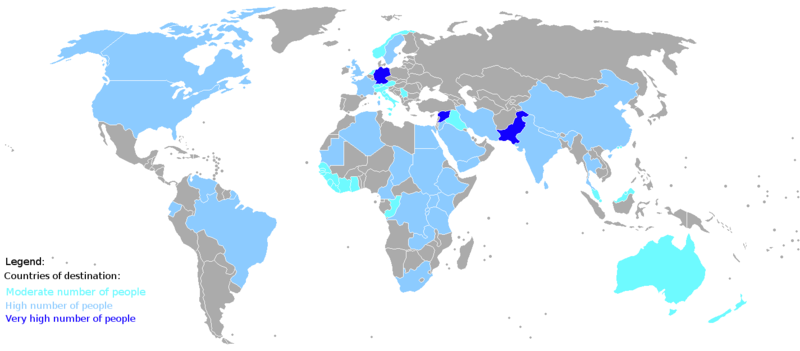

Source: Wikipedia
Thursday, June 5, 2008
Civil society petitions SA govt over Zim arms
Civil society bodies on Thursday urged the Southern African Development Community governments to impose a moratorium on the supply of arms to Zimbabwe.
Wednesday, March 19, 2008
'If you show that you support MDC, you will starve'
Credible elections in Zimbabwe were among the main objectives of the talks between the Zimbabwean government and the opposition Movement for Democratic Change (MDC) last year. But despite new regulations, Zimbabwe's polls are unlikely to be free or fair.
President Robert Mugabe's government would like the world to believe otherwise, arguing that political space has been opened up for the opposition to campaign. Neighbouring states should look beyond the rhetoric as, sadly, nothing could be further from the truth.
For weeks now, I've been travelling through Zimbabwe's 10 provinces. Ordinary voters around the country described to me how supporters of the ruling party have physically attacked and intimidated people perceived to support the opposition.
Food has become a political weapon. In nearly all the provinces I visited, Zimbabweans told me that only supporters of the ruling Zanu-PF receive state-subsidised grain or farming equipment. An elderly man from Marange in Manicaland province told me: "If you show yourself to support the opposition, you will starve."
In Mutare, even a Zanu-PF loyalist confirmed that the party manipulates the distribution of food according to political loyalty: "It is very easy. Only those who are on the councillors' lists can access the grain," she told me. "At our rallies, only known supporters of Zanu-PF are allowed to attend."
Despite improved electoral laws, across Zimbabwe I found a chaotic -- and easily abused -- voter registration process. The electoral commission is unprepared and partisan. The voting procedure will be new and more complex than before, but there has been minimal voter education around the country. The opposition's access to the broadcast media is restricted.
A local activist from Makonde constituency in Mashonaland West province told me about the intense intimidation of opposition supporters in his area. "The opposition MDC are visited daily by Zanu-PF youth who shout and sing outside their homes," he said. "They call them sell-outs and tell them they will deal with the MDC candidates after the elections."
In spite of the intimidation, violence has been less conspicuous than in previous elections - in part because of prohibitions in the reformed Electoral Act. But, given the widespread violence during elections in 2000 and 2002, mere threats or allusions to past acts are enough to scare people.
In Masvingo province, a primary-school teacher told me how ruling party youths attacked him after he urged people to register to vote.
"They hit me with clubs on my head," he told me. "They displayed me before the rest of the school and now they are keeping an eye on me." Terrible scars were still visible on his head a month after the attack.
The police claim they are taking a "zero tolerance" approach to violence ahead of the polls, although many members of the police were previously involved in attacks on the opposition, civil society activists and perceived opposition supporters. None of these incidents, documented by Human Rights Watch, have been investigated. The teacher in Masvingo reported the incident, but the perpetrators were never caught.
The onus for reporting violations now rests on regional observers, in particular the Southern African Development Community (SADC) observer mission. International and local observers who charged that previous elections in 2000 and 2002 were blatantly fraudulent were not invited to return for parliamentary elections in 2005, nor for the general elections.
Mugabe's government claims that the elections will conform to the SADC guidelines and principles governing democratic elections. South Africans and their SADC neighbours have a key role to play in the run-up to the elections. SADC should call on the Zimbabwean government to grant access to all election sites. To gauge compliance, observers need to judge the political context in which the elections are being held, not just the voting process itself.
Previous post-election assessments by SADC were alarmingly positive, despite widespread human rights abuses and irregularities in the last three polls. If South Africa and other SADC observers are serious about ending Zimbabwe's political crisis, then another round of flawed elections in Zimbabwe cannot be followed by a "business-as-usual" approach.
South Africans have already seen hundreds of thousands of Zimbabweans vote with their feet by crossing the Limpopo to flee hunger, violence and persecution. Now is the time for SADC to help ordinary Zimbabweans to exercise their right to vote freely at home.
Source: Human Rights Watch
President Robert Mugabe's government would like the world to believe otherwise, arguing that political space has been opened up for the opposition to campaign. Neighbouring states should look beyond the rhetoric as, sadly, nothing could be further from the truth.
For weeks now, I've been travelling through Zimbabwe's 10 provinces. Ordinary voters around the country described to me how supporters of the ruling party have physically attacked and intimidated people perceived to support the opposition.
Food has become a political weapon. In nearly all the provinces I visited, Zimbabweans told me that only supporters of the ruling Zanu-PF receive state-subsidised grain or farming equipment. An elderly man from Marange in Manicaland province told me: "If you show yourself to support the opposition, you will starve."
In Mutare, even a Zanu-PF loyalist confirmed that the party manipulates the distribution of food according to political loyalty: "It is very easy. Only those who are on the councillors' lists can access the grain," she told me. "At our rallies, only known supporters of Zanu-PF are allowed to attend."
Despite improved electoral laws, across Zimbabwe I found a chaotic -- and easily abused -- voter registration process. The electoral commission is unprepared and partisan. The voting procedure will be new and more complex than before, but there has been minimal voter education around the country. The opposition's access to the broadcast media is restricted.
A local activist from Makonde constituency in Mashonaland West province told me about the intense intimidation of opposition supporters in his area. "The opposition MDC are visited daily by Zanu-PF youth who shout and sing outside their homes," he said. "They call them sell-outs and tell them they will deal with the MDC candidates after the elections."
In spite of the intimidation, violence has been less conspicuous than in previous elections - in part because of prohibitions in the reformed Electoral Act. But, given the widespread violence during elections in 2000 and 2002, mere threats or allusions to past acts are enough to scare people.
In Masvingo province, a primary-school teacher told me how ruling party youths attacked him after he urged people to register to vote.
"They hit me with clubs on my head," he told me. "They displayed me before the rest of the school and now they are keeping an eye on me." Terrible scars were still visible on his head a month after the attack.
The police claim they are taking a "zero tolerance" approach to violence ahead of the polls, although many members of the police were previously involved in attacks on the opposition, civil society activists and perceived opposition supporters. None of these incidents, documented by Human Rights Watch, have been investigated. The teacher in Masvingo reported the incident, but the perpetrators were never caught.
The onus for reporting violations now rests on regional observers, in particular the Southern African Development Community (SADC) observer mission. International and local observers who charged that previous elections in 2000 and 2002 were blatantly fraudulent were not invited to return for parliamentary elections in 2005, nor for the general elections.
Mugabe's government claims that the elections will conform to the SADC guidelines and principles governing democratic elections. South Africans and their SADC neighbours have a key role to play in the run-up to the elections. SADC should call on the Zimbabwean government to grant access to all election sites. To gauge compliance, observers need to judge the political context in which the elections are being held, not just the voting process itself.
Previous post-election assessments by SADC were alarmingly positive, despite widespread human rights abuses and irregularities in the last three polls. If South Africa and other SADC observers are serious about ending Zimbabwe's political crisis, then another round of flawed elections in Zimbabwe cannot be followed by a "business-as-usual" approach.
South Africans have already seen hundreds of thousands of Zimbabweans vote with their feet by crossing the Limpopo to flee hunger, violence and persecution. Now is the time for SADC to help ordinary Zimbabweans to exercise their right to vote freely at home.
Source: Human Rights Watch
Tuesday, August 14, 2007
SADC: Take Action to End Zimbabwe Rights Crisis
Government leaders gathered this week at a summit in Lusaka, Zambia should urgently press Zimbabwe’s government to end its broadscale attack on human rights, Human Rights Watch said in a briefing paper released today. Human Rights Watch called on the Southern African Development Community (SADC) to deploy human rights monitors to Zimbabwe to assess the situation.
The summit, which takes place on August 16 and 17, 2007 is expected to address the ongoing political and economic crisis in Zimbabwe. At an extraordinary summit in Dar es Salaam, Tanzania, in March 2007, SADC asked South African president Thabo Mbeki to mediate talks between the ruling Zimbabwe African National Union-Patriotic Front (ZANU-PF) and the two factions of the opposition Movement for Democratic Change (MDC). Mbeki is expected to report back on the progress of the talks in Lusaka.
“SADC members must take strong and effective action to deal with one of the region’s most grave crises – Zimbabwe,” said Peter Takirambudde, Africa director at Human Rights Watch. “SADC’s credibility as a real force for change on human rights is on the line here and its leaders should insist on tangible improvements in Zimbabwe.”
Human Rights Watch urged SADC to more explicitly incorporate human rights concerns in the mediation talks and set clear benchmarks for progress within a clear time-frame. The summit should make a public acknowledgement of ongoing human rights problems, Human Rights Watch said, and deploy SADC human rights monitors as an essential first step in protecting Zimbabweans from state brutality.
In the past, SADC has failed to extract concrete commitments on human rights from the government of Zimbabwe. Although serious human rights problems have plagued Zimbabwe for the past seven years, the conclusions issued after SADC’s past summits have failed to adequately reflect these problems. For example, the final communique of the extraordinary summit in Tanzania failed to mention the arrests and beatings of opposition and civil society leaders or the broader human rights situation in Zimbabwe.
The 13-page briefing paper, “A Call to Action: The Crisis in Zimbabwe – SADC’s Human Rights Credibility on the Line,” highlights priority areas of concern on human rights and proposes a number of actions to help tackle the crisis. The government of Zimbabwe has used methods against critics that range from intimidation, threats and harassment to physical attacks and torture. Hundreds of civil society activists – including human rights defenders, independent journalists and members of the political opposition – have been arbitrarily arrested and beaten by police and other security agents.
Police often use unnecessary and lethal force to violently disrupt peaceful protests. Recent examples highlighted in the memorandum include: the arrest and assault in police custody of more than 200 activists from the National Constitutional Assembly (NCA) when they attempted to demonstrate against the Constitutional Amendment Bill in Harare on July 25, and the arrest and assault of up to 20 women from Women of Zimbabwe Arise (WOZA) during peaceful protests in Bulawayo on June 6.
Human Rights Watch called upon SADC to send a clear, visible and unambiguous message from this week’s summit, repudiating the Zimbabwean government’s policy of political repression through laws and the unaccountability of Zimbabwe’s police, army and security forces.
“The political and human rights crisis in Zimbabwe, which threatens to destabilize the whole region, is crying out for urgent and effective leadership,” said Takirambudde.
“Only by addressing the human rights violations in Zimbabwe can SADC hope to nurture a political and economic revival in the country.”
Source: Human Rights Watch
The summit, which takes place on August 16 and 17, 2007 is expected to address the ongoing political and economic crisis in Zimbabwe. At an extraordinary summit in Dar es Salaam, Tanzania, in March 2007, SADC asked South African president Thabo Mbeki to mediate talks between the ruling Zimbabwe African National Union-Patriotic Front (ZANU-PF) and the two factions of the opposition Movement for Democratic Change (MDC). Mbeki is expected to report back on the progress of the talks in Lusaka.
“SADC members must take strong and effective action to deal with one of the region’s most grave crises – Zimbabwe,” said Peter Takirambudde, Africa director at Human Rights Watch. “SADC’s credibility as a real force for change on human rights is on the line here and its leaders should insist on tangible improvements in Zimbabwe.”
Human Rights Watch urged SADC to more explicitly incorporate human rights concerns in the mediation talks and set clear benchmarks for progress within a clear time-frame. The summit should make a public acknowledgement of ongoing human rights problems, Human Rights Watch said, and deploy SADC human rights monitors as an essential first step in protecting Zimbabweans from state brutality.
In the past, SADC has failed to extract concrete commitments on human rights from the government of Zimbabwe. Although serious human rights problems have plagued Zimbabwe for the past seven years, the conclusions issued after SADC’s past summits have failed to adequately reflect these problems. For example, the final communique of the extraordinary summit in Tanzania failed to mention the arrests and beatings of opposition and civil society leaders or the broader human rights situation in Zimbabwe.
The 13-page briefing paper, “A Call to Action: The Crisis in Zimbabwe – SADC’s Human Rights Credibility on the Line,” highlights priority areas of concern on human rights and proposes a number of actions to help tackle the crisis. The government of Zimbabwe has used methods against critics that range from intimidation, threats and harassment to physical attacks and torture. Hundreds of civil society activists – including human rights defenders, independent journalists and members of the political opposition – have been arbitrarily arrested and beaten by police and other security agents.
Police often use unnecessary and lethal force to violently disrupt peaceful protests. Recent examples highlighted in the memorandum include: the arrest and assault in police custody of more than 200 activists from the National Constitutional Assembly (NCA) when they attempted to demonstrate against the Constitutional Amendment Bill in Harare on July 25, and the arrest and assault of up to 20 women from Women of Zimbabwe Arise (WOZA) during peaceful protests in Bulawayo on June 6.
Human Rights Watch called upon SADC to send a clear, visible and unambiguous message from this week’s summit, repudiating the Zimbabwean government’s policy of political repression through laws and the unaccountability of Zimbabwe’s police, army and security forces.
“The political and human rights crisis in Zimbabwe, which threatens to destabilize the whole region, is crying out for urgent and effective leadership,” said Takirambudde.
“Only by addressing the human rights violations in Zimbabwe can SADC hope to nurture a political and economic revival in the country.”
Source: Human Rights Watch
Monday, November 27, 2000
South Africa Praised on International Court
Human Rights Watch today welcomed South Africa's ratification of the Rome Treaty for the International Criminal Court (ICC). The rights group commended Pretoria for taking a leadership role in the establishment of the ICC by proceeding with early ratification of the treaty.
In depositing its "instrument of ratification" at the United Nations today, South Africa took the formal step to become the twenty-third state to ratify the Rome Treaty. The ICC will prosecute future cases of genocide, crimes against humanity, and war crimes. The court will come into being after sixty states have ratified the treaty.
"South Africa's ratification is a major step forward on the path to establishing the court," said Brigitte Suhr, Counsel for the International Justice Program at Human Rights Watch. "South Africa has provided consistent leadership on behalf of an independent and effective ICC, and its ratification sends a strong message that this Court has strong support in every region. We believe its action today will help to spur additional ratifications in southern Africa and around the world." During the treaty negotiations for the ICC in Rome in 1998, South Africa, along with other states from the Southern African Development Community (SADC), played a key role in thwarting the efforts of some major powers to weaken the court. The strong united support for the Court from SADC nations, which South Africa helped to forge, was critical to the successful adoption of the Rome Treaty in the face of strong opposition from major world powers, including the United States.
Source: Human Rights Watch
In depositing its "instrument of ratification" at the United Nations today, South Africa took the formal step to become the twenty-third state to ratify the Rome Treaty. The ICC will prosecute future cases of genocide, crimes against humanity, and war crimes. The court will come into being after sixty states have ratified the treaty.
"South Africa's ratification is a major step forward on the path to establishing the court," said Brigitte Suhr, Counsel for the International Justice Program at Human Rights Watch. "South Africa has provided consistent leadership on behalf of an independent and effective ICC, and its ratification sends a strong message that this Court has strong support in every region. We believe its action today will help to spur additional ratifications in southern Africa and around the world." During the treaty negotiations for the ICC in Rome in 1998, South Africa, along with other states from the Southern African Development Community (SADC), played a key role in thwarting the efforts of some major powers to weaken the court. The strong united support for the Court from SADC nations, which South Africa helped to forge, was critical to the successful adoption of the Rome Treaty in the face of strong opposition from major world powers, including the United States.
Source: Human Rights Watch
Monday, June 15, 1998
Rights Group Praises South Africa For Stand On International Court
Human Rights Watch today praised the speech of South African Justice Minister Dullah Omar at the opening day of a conference to establish an International Criminal Court (ICC).
At a speech before delegates from 156 countries in Rome, Dullah called for an ICC with the authority to make an independent decision of when to take up cases of genocide, crimes against humanity, war crimes, and aggression. He supported giving the prosecutor the powers to begin investigations on his or her own initiative.
South Africa has been a leader of the "like-minded group" of more than 50 states, which seeks to form an ICC with strong and independent powers.
Dullah spoke on behalf of the Southern Africa Development Community, which has 14 members. "The creation of the ICC will send a clear and unequivocal message that perpetrators of these crimes will not get away with impunity," he said.
"Dullah's speech was right on target," said Richard Dicker, who heads the ICC campaign for Human Rights Watch, a New York-based monitoring organization. "South Africa has been on the right side of this issue time and again."
But Dicker warned that as the conference gets underway, South Africa will likely come under heavy pressure from influential countries such as the United States to dilute the court's powers. Washington wants to curtail the authority of the prosecutor to begin investigating matters on his or her own initiative. Some countries of the Non-Aligned Movement want to have a veto power over the court's docket, enabling them to block cases that might embarrass them.
"The ICC could really make a difference in how the world punishes grave human rights abuses," said Dicker. "South Africa can play a historic role in that process - if it sticks to its principles."
Source: Human Rights Watch
At a speech before delegates from 156 countries in Rome, Dullah called for an ICC with the authority to make an independent decision of when to take up cases of genocide, crimes against humanity, war crimes, and aggression. He supported giving the prosecutor the powers to begin investigations on his or her own initiative.
South Africa has been a leader of the "like-minded group" of more than 50 states, which seeks to form an ICC with strong and independent powers.
Dullah spoke on behalf of the Southern Africa Development Community, which has 14 members. "The creation of the ICC will send a clear and unequivocal message that perpetrators of these crimes will not get away with impunity," he said.
"Dullah's speech was right on target," said Richard Dicker, who heads the ICC campaign for Human Rights Watch, a New York-based monitoring organization. "South Africa has been on the right side of this issue time and again."
But Dicker warned that as the conference gets underway, South Africa will likely come under heavy pressure from influential countries such as the United States to dilute the court's powers. Washington wants to curtail the authority of the prosecutor to begin investigating matters on his or her own initiative. Some countries of the Non-Aligned Movement want to have a veto power over the court's docket, enabling them to block cases that might embarrass them.
"The ICC could really make a difference in how the world punishes grave human rights abuses," said Dicker. "South Africa can play a historic role in that process - if it sticks to its principles."
Source: Human Rights Watch
Subscribe to:
Posts (Atom)