President Jacob Zuma has appointed Mxolisi Nxasana as the new national director of public prosecutions, says the presidency.
Nxasana, from the KwaZulu-Natal division of the high court, would start his new role on October 1, spokesperson Mac Maharaj said in a statement.
"Nxasana currently practises as an attorney with a wealth of experience in criminal litigation, coupled with his having occupied senior positions in the legal profession – including the chairpersonship of the KwaZulu-Natal Law Society," said Maharaj.
The NPA has been without a permanent chief since November 2011, after Menzi Simelane's appointment was declared invalid.
Simelane's appointment as NPA boss was deemed "inconsistent with the Constitution and invalid" as Zuma did not apply his mind in the decision.
Simelane, who Zuma placed on paid leave after the decision, was appointed NPA boss in 2009 after the 2008 Ginwala inquiry severely criticised him.
The inquiry, which investigated the fitness of former NPA head Vusi Pikoli's ability to hold office, labelled Simelane's evidence before the inquiry as "contradictory and without basis in fact or in law" and blamed him for suppressing a disclosure of information. – Sapa
Source: Mail & Guardian
Showing posts with label Frene Ginwala. Show all posts
Showing posts with label Frene Ginwala. Show all posts
Friday, August 30, 2013


Friday, October 5, 2012
Democratic Alliance v President of South Africa and Others
On Friday 5 October 2012, the Constitutional Court gave judgment in a case about whether the appointment of Mr Simelane as National Director of Public Prosecutions (NDPP) by the President of the Republic was constitutionally valid. In an application brought by the Democratic Alliance (DA), the North Gauteng High Court had held that the President’s decision was indeed valid, but the Supreme Court of Appeal set aside the decision as having been irrational. The Minister for Justice and Constitutional Development (Minister) sought to appeal against this decision.
Mr Simelane had given evidence before the Ginwala Commission of Enquiry concerning the conduct of the then NDPP, Mr Vusi Pikoli. The Report of the Ginwala Enquiry had severely criticised Mr Simelane’s approach to and evidence before that Enquiry and the Public Service Commission (PSC) had recommended that disciplinary proceedings be instituted against him. The Minister rejected the recommendations of the PSC and advised the President to ignore the findings of the Enquiry and Mr Simelane’s evidence before the Enquiry in the process of appointing Mr Simelane as NDPP. The President did not take these matters into account in making his decision to appoint Mr Simelane.
In a unanimous judgment (subject to a qualification by Zondo AJ in relation to one paragraph of the judgment), Yacoob ADCJ reached a number of legal conclusions:
a. The requirement that the National Director of Public Prosecutions must be a fit and proper person for appointment with due regard to his conscientiousness and integrity was not a matter to be determined according to the subjective opinion of the President. It was rather a jurisdictional pre-requisite to be determined objectively.
b. The requirement of rationality obliges courts to engage in an evaluation of the relationship between the means employed to reach a decision on the one hand, and the purpose for which the power to make the decision was conferred, on the other.
c. Each and every step in the process of reaching the decision must be rationally related to the outcome.
d. A failure to take into account relevant material that colours the entire process with irrationality will render the decision irrational.
e. The rationality test is the least invasive form of legal scrutiny and its applicability in respect of Executive decisions flows from an acceptance and recognition of the separation of powers, not the converse.
f. The purpose of the conferral of the power to appoint the National Director of Public Prosecutions on the President was to ensure that the appointee was sufficiently conscientious and had the integrity required to be entrusted with the responsibilities of the office.
g. Dishonesty is inconsistent with the conscientiousness and integrity required for the proper execution of the responsibilities of a National Director of Public Prosecutions.
The Constitutional Court evaluated Mr Simelane’s evidence at the Ginwala Enquiry and concluded that the evidence was contradictory and, on its face, indicative of Mr Simelane’s dishonesty and raised serious questions about Mr Simelane’s conscientiousness, integrity and credibility. The failure to take this into account would, absent acceptable reasons for not doing so, not be rationally related to the achievement of the purpose of appointing a person of conscientiousness and integrity as NDPP. The Constitutional Court held further that the reasons the Minister had provided for withholding this evidence from the President was insufficient,and that the failure by the President to take into account this evidence without more was irrational in the sense of not being rationally related to and inconsistent with the purpose of appointing, as NDPP a fit and proper person with due regard to his conscientiousness and integrity.
The President’s decision was set aside and the Minister was ordered to pay the costs of the DA, including costs of two counsel.
In a short concurring judgment, Zondo AJ agreed with the conclusion, most of the reasoning and order in the main judgment. However, he took the view that, on the facts, it was not necessary to express a definitive view on whether or not a statutory body such as the PSC was required to have given Mr Simelane an opportunity to be heard before it reached its conclusions and made its recommendations to the Minister. This was because the Minister, who was the authority in whom the power to institute a disciplinary hearing into Mr Simelane’s conduct vested, did give Mr Simelane the opportunity to be heard.
Source: Polity
Mr Simelane had given evidence before the Ginwala Commission of Enquiry concerning the conduct of the then NDPP, Mr Vusi Pikoli. The Report of the Ginwala Enquiry had severely criticised Mr Simelane’s approach to and evidence before that Enquiry and the Public Service Commission (PSC) had recommended that disciplinary proceedings be instituted against him. The Minister rejected the recommendations of the PSC and advised the President to ignore the findings of the Enquiry and Mr Simelane’s evidence before the Enquiry in the process of appointing Mr Simelane as NDPP. The President did not take these matters into account in making his decision to appoint Mr Simelane.
In a unanimous judgment (subject to a qualification by Zondo AJ in relation to one paragraph of the judgment), Yacoob ADCJ reached a number of legal conclusions:
a. The requirement that the National Director of Public Prosecutions must be a fit and proper person for appointment with due regard to his conscientiousness and integrity was not a matter to be determined according to the subjective opinion of the President. It was rather a jurisdictional pre-requisite to be determined objectively.
b. The requirement of rationality obliges courts to engage in an evaluation of the relationship between the means employed to reach a decision on the one hand, and the purpose for which the power to make the decision was conferred, on the other.
c. Each and every step in the process of reaching the decision must be rationally related to the outcome.
d. A failure to take into account relevant material that colours the entire process with irrationality will render the decision irrational.
e. The rationality test is the least invasive form of legal scrutiny and its applicability in respect of Executive decisions flows from an acceptance and recognition of the separation of powers, not the converse.
f. The purpose of the conferral of the power to appoint the National Director of Public Prosecutions on the President was to ensure that the appointee was sufficiently conscientious and had the integrity required to be entrusted with the responsibilities of the office.
g. Dishonesty is inconsistent with the conscientiousness and integrity required for the proper execution of the responsibilities of a National Director of Public Prosecutions.
The Constitutional Court evaluated Mr Simelane’s evidence at the Ginwala Enquiry and concluded that the evidence was contradictory and, on its face, indicative of Mr Simelane’s dishonesty and raised serious questions about Mr Simelane’s conscientiousness, integrity and credibility. The failure to take this into account would, absent acceptable reasons for not doing so, not be rationally related to the achievement of the purpose of appointing a person of conscientiousness and integrity as NDPP. The Constitutional Court held further that the reasons the Minister had provided for withholding this evidence from the President was insufficient,and that the failure by the President to take into account this evidence without more was irrational in the sense of not being rationally related to and inconsistent with the purpose of appointing, as NDPP a fit and proper person with due regard to his conscientiousness and integrity.
The President’s decision was set aside and the Minister was ordered to pay the costs of the DA, including costs of two counsel.
In a short concurring judgment, Zondo AJ agreed with the conclusion, most of the reasoning and order in the main judgment. However, he took the view that, on the facts, it was not necessary to express a definitive view on whether or not a statutory body such as the PSC was required to have given Mr Simelane an opportunity to be heard before it reached its conclusions and made its recommendations to the Minister. This was because the Minister, who was the authority in whom the power to institute a disciplinary hearing into Mr Simelane’s conduct vested, did give Mr Simelane the opportunity to be heard.
Source: Polity
Friday, March 30, 2012
Appeal court ‘crossed limits on Simelane’
THE Supreme Court of Appeal had "overstepped the boundaries" drawn by the separation of powers principle when it set aside President Jacob Zuma ’s appointment of Menzi Simelane as prosecutions head, Justice Minister Jeff Radebe said in court papers yesterday. While Mr Zuma has said he would abide by the decision of the Constitutional Court on whether he had acted irrationally when he appointed Mr Simelane, Mr Radebe is opposing confirmation of the judgment by the Constitutional Court, and appealing against it.
Mr Simelane’s appointment in 2009 was met with a storm of criticism, because he had been severely rebuked by the former speaker of the National Assembly, Frene Ginwala, in her inquiry into the fitness of his predecessor, Vusi Pikoli, to hold office. In her report, Ms Ginwala said Mr Simelane’s conduct during the inquiry was "highly irregular" and "left much to be desired".
The Democratic Alliance (DA) took the matter to court, saying Mr Simelane was not fit and proper for the job and that the appointment was irrational and unconstitutional. The DA won the case at the Supreme Court of Appeal. Mr Simelane was then placed on special leave — pending the confirmation of the appeal court’s decision by the Constitutional Court. In supplementary legal argument filed yesterday, Mr Radebe’s counsel, Marumo Moerane SC, said the point of departure in determining whether the president had acted lawfully was the constitution and not the National Prosecuting Authority (NPA) Act.
Looking at the constitutional scheme, the purpose in this case was to find a national director of public prosecutions who would be able to secure the institutional integrity of the NPA — including that it exercised its functions without fear, favour or prejudice — while "simultaneously having a constructive working relationship with the minister". The appointment of a national director was a "policy driven" decision, and the constitution "provided for a (national director) who is a political appointee", although once in office he is bound to secure the institutional independence of the NPA, Mr Moerane said.
He also argued the appeal court had not actually found that Mr Simelane was not fit and proper — rather that the president had not sufficiently enquired into the allegations. "It is only where a court positively finds that (a national director) who has been appointed by the president is not fit and proper ... that it could set aside the decision of the president as being irrational."
Should the court not agree with his argument, Mr Moerane asked it to order that the matter be sent back to the president for him to look into whether Mr Simelane was fit and proper, rather than to set aside the appointment, as the Supreme Court of Appeal had done.
Source: Business Day
Mr Simelane’s appointment in 2009 was met with a storm of criticism, because he had been severely rebuked by the former speaker of the National Assembly, Frene Ginwala, in her inquiry into the fitness of his predecessor, Vusi Pikoli, to hold office. In her report, Ms Ginwala said Mr Simelane’s conduct during the inquiry was "highly irregular" and "left much to be desired".
The Democratic Alliance (DA) took the matter to court, saying Mr Simelane was not fit and proper for the job and that the appointment was irrational and unconstitutional. The DA won the case at the Supreme Court of Appeal. Mr Simelane was then placed on special leave — pending the confirmation of the appeal court’s decision by the Constitutional Court. In supplementary legal argument filed yesterday, Mr Radebe’s counsel, Marumo Moerane SC, said the point of departure in determining whether the president had acted lawfully was the constitution and not the National Prosecuting Authority (NPA) Act.
Looking at the constitutional scheme, the purpose in this case was to find a national director of public prosecutions who would be able to secure the institutional integrity of the NPA — including that it exercised its functions without fear, favour or prejudice — while "simultaneously having a constructive working relationship with the minister". The appointment of a national director was a "policy driven" decision, and the constitution "provided for a (national director) who is a political appointee", although once in office he is bound to secure the institutional independence of the NPA, Mr Moerane said.
He also argued the appeal court had not actually found that Mr Simelane was not fit and proper — rather that the president had not sufficiently enquired into the allegations. "It is only where a court positively finds that (a national director) who has been appointed by the president is not fit and proper ... that it could set aside the decision of the president as being irrational."
Should the court not agree with his argument, Mr Moerane asked it to order that the matter be sent back to the president for him to look into whether Mr Simelane was fit and proper, rather than to set aside the appointment, as the Supreme Court of Appeal had done.
Source: Business Day
Thursday, December 1, 2011
SCA: Simelane's appointment as NPA boss 'invalid'
The Supreme Court of Appeal has ruled that Menzi Simelane's appointment by President Jacob Zuma as the director of public prosecutions at the National Prosecuting Authority (NPA), was invalid. The case was brought to the appeals court by the Democratic Alliance, after its bid to have Zuma's decision to appoint Simelane as the NPA boss set aside failed in the North Gauteng High Court in Pretoria last year.
On Thursday morning, Judge Mahomed Navsa ruled that Simelane's appointment was "inconsistent with the Constitution and invalid". The judgment set aside the findings of the North Gauteng High Court, and ordered the president, Justice Minister Jeff Radebe and Simelane to pay the DA's costs. In its application, the DA argued that Zuma "acted outside of his powers by appointing a person who is not fit and proper to hold the office of national director of public prosecutions".
Justice ministry spokesperson Tlali Tlali said the ruling would be challenged in the Constitutional Court. "Naturally, we are disappointed but respect the court's judgment in this matter," said Tlali on Thursday. "We will study the judgment in order to understand its implications as it unfolds further. The court's order must be referred to the Constitutional Court for confirmation as provided for in terms of section 172(2) of the Constitution. A final determination has yet to be made as to what our legal attitude to this matter at the Constitutional Court will be."
The DA's Dene Smuts told the Mail and Guardian on Thursday: "We are very delighted by the judgment. We had major problems with his appointment. We did not think he was fit and proper for the position. We felt it was cadre deployment and are now looking forward to the president putting someone in the position who is fit and proper for the job." The foundation of the DA's case against Simelane was the "misleading and untruthful evidence" he gave during the 2008 Ginwala Inquiry, when he was the director general in the department of justice and constitutional development.
The inquiry looked at the fitness for office of Simelane's predecessor, Vusi Pikoli. Ginwala severely criticised Simelane in her final report, calling him arrogant and condescending towards Pikoli. Ginwala labelled his evidence before the inquiry "contradictory and without basis in fact or in law" and blamed him for suppressing the disclosure of information. This specifically referred to a legal opinion advising Simelane that he did not have authority over the NPA, as he had claimed.
Simelane's conduct was "irregular" and Ginwala even suggested he might have contravened the NPA Act by drafting a letter to Pikoli that instructed him to abort the imminent arrest of former police boss Jackie Selebi.
Although a formal inquiry was set up to inquire into Simelane's conduct before Ginwala in February 2009, Justice Minister Jeff Radebe declined to take disciplinary proceedings against him. Instead he was appointed as deputy national director of prosecutions. The DA argued that Zuma made Simelane's appointment based solely on his CV, without taking into account his questionable behaviour during the enquiry.
Navsa found that Zuma was remiss in not taking the time to consider all the facts about Simelane, saying in his judgment: "I accept that the president must have a multitude of daily duties and is a very busy man. However when he is dealing with an office as important as that of the national director of public prosecutions, which is integral to the rule of law and to our success as a democracy, then time should be taken to get it right." He went on to say: "On the available evidence the president could in any event not have reached a conclusion favourable to Mr Simelane, as there were too many unresolved questions concerning his integrity and experience."
The judgment was careful to prove precedent for judicial scrutiny of the president's appointment of a public prosecutor. In recent months, Zuma and other members of the executive have made several statements taking issue with an "unelected" judiciary passing judgment on executive decisions. During a farewell to former chief justice Sandile Ngcobo earlier this year, Zuma said: "We must not get a sense that there are those who wish to co-govern the country through the courts, when they have not won the popular vote during elections." He added that the powers conferred on the courts could not be regarded as superior to the powers resulting from a mandate given by the people in a popular vote.
Source: Mail & Guardian
On Thursday morning, Judge Mahomed Navsa ruled that Simelane's appointment was "inconsistent with the Constitution and invalid". The judgment set aside the findings of the North Gauteng High Court, and ordered the president, Justice Minister Jeff Radebe and Simelane to pay the DA's costs. In its application, the DA argued that Zuma "acted outside of his powers by appointing a person who is not fit and proper to hold the office of national director of public prosecutions".
Justice ministry spokesperson Tlali Tlali said the ruling would be challenged in the Constitutional Court. "Naturally, we are disappointed but respect the court's judgment in this matter," said Tlali on Thursday. "We will study the judgment in order to understand its implications as it unfolds further. The court's order must be referred to the Constitutional Court for confirmation as provided for in terms of section 172(2) of the Constitution. A final determination has yet to be made as to what our legal attitude to this matter at the Constitutional Court will be."
The DA's Dene Smuts told the Mail and Guardian on Thursday: "We are very delighted by the judgment. We had major problems with his appointment. We did not think he was fit and proper for the position. We felt it was cadre deployment and are now looking forward to the president putting someone in the position who is fit and proper for the job." The foundation of the DA's case against Simelane was the "misleading and untruthful evidence" he gave during the 2008 Ginwala Inquiry, when he was the director general in the department of justice and constitutional development.
The inquiry looked at the fitness for office of Simelane's predecessor, Vusi Pikoli. Ginwala severely criticised Simelane in her final report, calling him arrogant and condescending towards Pikoli. Ginwala labelled his evidence before the inquiry "contradictory and without basis in fact or in law" and blamed him for suppressing the disclosure of information. This specifically referred to a legal opinion advising Simelane that he did not have authority over the NPA, as he had claimed.
Simelane's conduct was "irregular" and Ginwala even suggested he might have contravened the NPA Act by drafting a letter to Pikoli that instructed him to abort the imminent arrest of former police boss Jackie Selebi.
Although a formal inquiry was set up to inquire into Simelane's conduct before Ginwala in February 2009, Justice Minister Jeff Radebe declined to take disciplinary proceedings against him. Instead he was appointed as deputy national director of prosecutions. The DA argued that Zuma made Simelane's appointment based solely on his CV, without taking into account his questionable behaviour during the enquiry.
Navsa found that Zuma was remiss in not taking the time to consider all the facts about Simelane, saying in his judgment: "I accept that the president must have a multitude of daily duties and is a very busy man. However when he is dealing with an office as important as that of the national director of public prosecutions, which is integral to the rule of law and to our success as a democracy, then time should be taken to get it right." He went on to say: "On the available evidence the president could in any event not have reached a conclusion favourable to Mr Simelane, as there were too many unresolved questions concerning his integrity and experience."
The judgment was careful to prove precedent for judicial scrutiny of the president's appointment of a public prosecutor. In recent months, Zuma and other members of the executive have made several statements taking issue with an "unelected" judiciary passing judgment on executive decisions. During a farewell to former chief justice Sandile Ngcobo earlier this year, Zuma said: "We must not get a sense that there are those who wish to co-govern the country through the courts, when they have not won the popular vote during elections." He added that the powers conferred on the courts could not be regarded as superior to the powers resulting from a mandate given by the people in a popular vote.
Source: Mail & Guardian
Thursday, August 5, 2010
More questions for Mbeki on Selebi
These are observations by Pierre De Vos, on his blog "Contitutionally Speaking"
Selebi has now been convicted and sentenced for corruption. However, it is unclear whether the full truth about the events surrounding the Selebi case - including the events that led to the suspension of former National Director of Public Prosecutions, Vusi Pikoli after he issued an arrest warrant for Selebi – has been told.
On 9 November 2006, then President Mbeki wrote a letter to Pieter Groenewald, an MP in the National Assembly. Groenewald had written a letter on 7 November 2006, requesting President Mbeki to appoint a Judicial Commission of Inquiry to investigate various allegations of corruption leveled against Selebi. In the letter, Mbeki declined to appoint such a commission and wrote:
The conviction and sentencing of Jackie Selebi demonstrates that the confidence expresssed in Selebi in the second paragraph of the letter quoted above turned out to be misplaced. It has now also emerged that the claim made in the first paragraph of Mbeki’s letter is difficult (if not impossible) to square with the known facts. In paragraph 257 and 258 of the Ginwala Inquiry Report, Ginwala made the following findings:
President Mbeki was therefore briefed about the investigation against Selebi on at least two occasions before he wrote the letter to Groenewald in which he claimed that no one “in state structures” had informed him about any investigation (or pending investigation) against Selebi. In fact, Mbeki met Pikoli for a third time to discuss the investigation against Selebi on the very same day that he wrote the letter to Groenewald. As this was a letter and not a national televised speech, one will never know if Mbeki’s bottom lip quivered while he was writing this letter.
Source: Constitutionally Speaking: Pierre De Vos
Selebi has now been convicted and sentenced for corruption. However, it is unclear whether the full truth about the events surrounding the Selebi case - including the events that led to the suspension of former National Director of Public Prosecutions, Vusi Pikoli after he issued an arrest warrant for Selebi – has been told.
On 9 November 2006, then President Mbeki wrote a letter to Pieter Groenewald, an MP in the National Assembly. Groenewald had written a letter on 7 November 2006, requesting President Mbeki to appoint a Judicial Commission of Inquiry to investigate various allegations of corruption leveled against Selebi. In the letter, Mbeki declined to appoint such a commission and wrote:
Up to now nobody within the state structures has informed me that there are any investigations affecting National Commissioner Selebi that are being conducted by anybody, including the DSO, (the Scorpions). I am certain that if there was such an investigation, or such an investigation was contemplated, I would have been informed accordingly. In this regard. I must emphasise that if any of our law enforcement or intelligence agencies felt that they had information that justified such an investigation, I would encourage them to do their work without let or hindrance, in keeping with their legal mandate….
I have the greatest confidence in National Commissioner Selebi. I am certain that whatever the rumour mill is saying about him, he will continue to do his critically important work with the same diligence, dedication and selflessness he has shown ever since we appointed him as National Commissioner of the SAPS.
The conviction and sentencing of Jackie Selebi demonstrates that the confidence expresssed in Selebi in the second paragraph of the letter quoted above turned out to be misplaced. It has now also emerged that the claim made in the first paragraph of Mbeki’s letter is difficult (if not impossible) to square with the known facts. In paragraph 257 and 258 of the Ginwala Inquiry Report, Ginwala made the following findings:
It is not disputed that Adv Pikoli met with the Minister and briefed her on the investigation into the National Commissioner of Police on 13 separate occasions: In March 2006, in August 2006, on 9 November 2006, on 16 November 2006, on 11 March 2007, on 13 March 2007, on 17 March 2007, on 28 March 2007, on 8 May 2007, on 25 June 2007, on 11 September 2007, on 18 September 2007 and on 23 September 2007. Following these meetings he furnished the Minister with two written reports on 19 March 2007 and 19 September 2007.
It is also common cause that Adv Pikoli met and briefed the President on the investigation against the National Commissioner of Police on 10 occasions: In March 2006, in August 2006, on 9 or 10 November 2006, on 14 November 2006, on 20 November 2006, on 11 March 2007, on 9 May 2007, on 20 May 2007, on 15 September 2007 and on 16 September 2007. The evidence is that he gave the President written reports on 7 May 2007 and 16 September 2007.
President Mbeki was therefore briefed about the investigation against Selebi on at least two occasions before he wrote the letter to Groenewald in which he claimed that no one “in state structures” had informed him about any investigation (or pending investigation) against Selebi. In fact, Mbeki met Pikoli for a third time to discuss the investigation against Selebi on the very same day that he wrote the letter to Groenewald. As this was a letter and not a national televised speech, one will never know if Mbeki’s bottom lip quivered while he was writing this letter.
Source: Constitutionally Speaking: Pierre De Vos
Wednesday, April 7, 2010
Time to move away from the Malema monologue to dialogue on our future
A hip-hop star, allegedly high on cocaine ploughs into a group of schoolchildren in Soweto, killing 4 of them. The National Director of Public Prosecutions (NDPP), Menzi Simelane, admits to intervening in order to ensure that the singer gets bail. This is so despite the fact that the senior prosecutor assigned to the case, opposes bail. A senior political figure visits the singer in prison and provides him with a take-out meal.
This story of hip-hop singer, Jub-Jub neatly reflects so much of what is wrong in our society; life is cheap and if you are poor it is even cheaper and there are no guarantees that the law will provide the requisite protection from excess. Those who are politically connected, it seems, stand a greater chance of escaping the consequences of their actions. No presidential address made the news when these children were killed. One of the most dangerous appointments made by President Zuma must surely be that of Menzi Simelane? During the Ginwala commission of enquiry into the fitness of Vusi Pikoli (then NDPP) to hold office, Simelane, then Director-General of Justice, was found to have interfered when he deemed it proper to pen a letter to Vusi Pikoli in order to stop the investigation into Jackie Selebi. Ginwala found this conduct to be ‘reckless' and Simelane's evidence ‘contradictory'. That Simelane is now in probably one of the most powerful positions in the country and making decisions on prosecutions should concern all who are committed to the rule of law. His ‘redeployment' of senior members of the prosecuting service seems less linked to bolstering the lower courts than to weakening the resolve of senior prosecutors. His admission to intervening in the Jub Jub case and opposition to a provisional preservation order against Fana Hlongwane, who was alleged to have received bribes associated with the arms deal both indicate that Simelane is continuing his ‘reckless' actions to suit the political winds. Thus far Simelane has done little to deserve our trust. In fact, in the Jub Jub case he has acted against the interests of children and the community through his intervention.
This weekend when Eugene Terreblanche is murdered on his farm in Ventersdorp, the President, in an address on national television appeals for calm and says that ‘the institutions of state' must be allowed to do their work. They should, but then equally, those in power should not use political influence to undermine the institutions of state, as we have seen repeatedly in recent times. For, during times of crisis and when political rhetoric becomes inflamed, all we can do is rely on the rules of the game. What this means, simply, is that when a court hands down a decision regarding hate speech, the state should be firm in its resolve to ensure that inflammatory language does not lace our political discourse. It also means that the President, as head of state must unequivocally show leadership on such matters and on questions of nation-building. It means that the President must, on behalf of all of us, say unequivocally, that the nightmarish visions of an unelected upstart like Julius Malema, dressed in ZANU-PF garb does not represent who and what we are.
Whatever the motive behind the murder, the Terreblanche incident shows that life is cheap; both white life and black life. It is a sad indictment of our society and the depravity which is reflected in these acts. Black people in Ventersdorp now live in fear of reprisals from right-wingers. White farmers continuously live in fear of being murdered and attacked on their farm homes. Whatever the politics of Terreblanche, his murder was a brutal act and must be condemned. It should also provide pause for thought at the hundreds of farmers murdered annually and the many killed in townships and suburbs across our country in random criminal acts. If anything, the state has failed dismally to keep us all safe. We don't need statistics to prove the lawlessness. It is in the suburbs behind electric fences, in the townships amongst mothers afraid to allow children to play outside for fear of being raped or attacked.
We live in uncertain times. Our political leadership has never been as unconvincing since the dawn of democracy. Never before has cross-racial solidarity to advance the gains of 1994 been so crucial. Never before have we needed to build social movements, a powerful media and community organizations to advance the rights of the Constitution, more than now. It is time. It is time for ordinary citizens, business, the academy and communities to take a stand for a decent society with principled leadership. It is time for us to move away from the ‘Malema monologue' and into a dialogue between the millions of peace-loving South Africans who want to see the beloved country prosper.
Source: Polity: INSTITUTE FOR DEMOCRACY IN SOUTH AFRICA: Judith February
This story of hip-hop singer, Jub-Jub neatly reflects so much of what is wrong in our society; life is cheap and if you are poor it is even cheaper and there are no guarantees that the law will provide the requisite protection from excess. Those who are politically connected, it seems, stand a greater chance of escaping the consequences of their actions. No presidential address made the news when these children were killed. One of the most dangerous appointments made by President Zuma must surely be that of Menzi Simelane? During the Ginwala commission of enquiry into the fitness of Vusi Pikoli (then NDPP) to hold office, Simelane, then Director-General of Justice, was found to have interfered when he deemed it proper to pen a letter to Vusi Pikoli in order to stop the investigation into Jackie Selebi. Ginwala found this conduct to be ‘reckless' and Simelane's evidence ‘contradictory'. That Simelane is now in probably one of the most powerful positions in the country and making decisions on prosecutions should concern all who are committed to the rule of law. His ‘redeployment' of senior members of the prosecuting service seems less linked to bolstering the lower courts than to weakening the resolve of senior prosecutors. His admission to intervening in the Jub Jub case and opposition to a provisional preservation order against Fana Hlongwane, who was alleged to have received bribes associated with the arms deal both indicate that Simelane is continuing his ‘reckless' actions to suit the political winds. Thus far Simelane has done little to deserve our trust. In fact, in the Jub Jub case he has acted against the interests of children and the community through his intervention.
This weekend when Eugene Terreblanche is murdered on his farm in Ventersdorp, the President, in an address on national television appeals for calm and says that ‘the institutions of state' must be allowed to do their work. They should, but then equally, those in power should not use political influence to undermine the institutions of state, as we have seen repeatedly in recent times. For, during times of crisis and when political rhetoric becomes inflamed, all we can do is rely on the rules of the game. What this means, simply, is that when a court hands down a decision regarding hate speech, the state should be firm in its resolve to ensure that inflammatory language does not lace our political discourse. It also means that the President, as head of state must unequivocally show leadership on such matters and on questions of nation-building. It means that the President must, on behalf of all of us, say unequivocally, that the nightmarish visions of an unelected upstart like Julius Malema, dressed in ZANU-PF garb does not represent who and what we are.
Whatever the motive behind the murder, the Terreblanche incident shows that life is cheap; both white life and black life. It is a sad indictment of our society and the depravity which is reflected in these acts. Black people in Ventersdorp now live in fear of reprisals from right-wingers. White farmers continuously live in fear of being murdered and attacked on their farm homes. Whatever the politics of Terreblanche, his murder was a brutal act and must be condemned. It should also provide pause for thought at the hundreds of farmers murdered annually and the many killed in townships and suburbs across our country in random criminal acts. If anything, the state has failed dismally to keep us all safe. We don't need statistics to prove the lawlessness. It is in the suburbs behind electric fences, in the townships amongst mothers afraid to allow children to play outside for fear of being raped or attacked.
We live in uncertain times. Our political leadership has never been as unconvincing since the dawn of democracy. Never before has cross-racial solidarity to advance the gains of 1994 been so crucial. Never before have we needed to build social movements, a powerful media and community organizations to advance the rights of the Constitution, more than now. It is time. It is time for ordinary citizens, business, the academy and communities to take a stand for a decent society with principled leadership. It is time for us to move away from the ‘Malema monologue' and into a dialogue between the millions of peace-loving South Africans who want to see the beloved country prosper.
Source: Polity: INSTITUTE FOR DEMOCRACY IN SOUTH AFRICA: Judith February
Monday, December 7, 2009
Simelane appointment is 'aberration'
 Archbishop Emeritus Desmond Tutu on Monday called on President Jacob Zuma to reverse the appointment of national prosecutions boss Menzi Simelane, describing it as an "aberration". "The appointment of advocate Menzi Simelane as National Director of Public Prosecutions is a setback for the integrity of South Africa's post-apartheid legal system," Tutu said in a statement. "Simelane's integrity has been questioned from within his own political party and by his profession."
Tutu said a statutory commission, headed by senior African National Congress stalwart Frene Ginwala, deemed him unfit for the job. Tutu was referring to the Ginwala commission of inquiry into whether Simelane's predecessor, Vusi Pikoli, was fit to hold office.In her findings, Ginwala said it seemed that Simelane had tried to interfere in the National Prosecuting Authority (NPA) decision to arrest ex-top cop Jackie Selebi for corruption. She came to this conclusion after Simelane testified at the hearings. But Justice Minister Jeff Radebe last week said Simelane was never given the opportunity to respond to Ginwala's accusations.
However, Tutu said the government's ignoring of Ginwala's finding "besmirches the office of the NDPP [National Director of Public Prosecutions]." "The appointment of one whose ready willingness to act on political instructions has been questioned by a statutory commission does nothing for people's confidence in the law," said Tutu.
The Pretoria Bar Council is currently investigating a complaint against Simelane, related to his appointed as NDPP despite the Ginwala commission findings. Tutu said: "To witness the professional body of South African advocates - Simelane's peers - considering disbarring him is a national embarrassment. This distresses me deeply." He said he had raised his objections with Radebe and Deputy President Kgalema Motlanthe while Zuma was out of the country. "I now appeal to President Zuma to do the right thing. Since his appointment, he has done much to restore the confidence of South Africans in government. But the appointment of advocate Simelane is an aberration. "The appointment should be reversed," said Tutu.
Source: IoL
Wednesday, November 25, 2009
Neither fit nor proper
Pierre De Voss, on his blog "Constitutionally Speaking" had the following to say about the appointment of Menzi Simelani as NDPP.
"The Constitution requires that the NDPP must be appropriately qualified and the NPA Act defines “appropriate qualification” as somebody who is: (i) a South Africa citizen; (ii) possesses legal qualifications that would entitle him or her to practice in all Courts in the Republic; and (iii) must be a fit and proper person, with due regard to his or her experience, conscientiousness and integrity to be entrusted with the responsibilities of the office concerned."
"Unfortunately, we know from the Report of the Ginwala Inquiry that Simelane is not honest. Neither is he reliable, nor does he possess the necessary truthfulness and uprightness required by the Act. His appointment is therefore not legally valid as he does not meet the MINIMUM requirements for the job."
"This is the darkest and most scandalous day yet in the short life of President Zuma’s tenure. The appointment shows an utter disregard for the Constitution and the law. It is nothing more than the actions of a gangster hell bent on protecting himself and his cronies. I feel ashamed that I have given our President the benefit of the doubt for all these months."
Other follow up articles by Pierre De Voss expand upon the views expressed above. They can be found in the following articles entitled:
Why Menzi Simelane is a liar
What would Simelane NOT do to protect the President from prosecution?
Our own Minister Ras Dumisani
Simelane: more unanswered questions
Source: Constitutionally Speaking
"The Constitution requires that the NDPP must be appropriately qualified and the NPA Act defines “appropriate qualification” as somebody who is: (i) a South Africa citizen; (ii) possesses legal qualifications that would entitle him or her to practice in all Courts in the Republic; and (iii) must be a fit and proper person, with due regard to his or her experience, conscientiousness and integrity to be entrusted with the responsibilities of the office concerned."
"Unfortunately, we know from the Report of the Ginwala Inquiry that Simelane is not honest. Neither is he reliable, nor does he possess the necessary truthfulness and uprightness required by the Act. His appointment is therefore not legally valid as he does not meet the MINIMUM requirements for the job."
"This is the darkest and most scandalous day yet in the short life of President Zuma’s tenure. The appointment shows an utter disregard for the Constitution and the law. It is nothing more than the actions of a gangster hell bent on protecting himself and his cronies. I feel ashamed that I have given our President the benefit of the doubt for all these months."
Other follow up articles by Pierre De Voss expand upon the views expressed above. They can be found in the following articles entitled:
Why Menzi Simelane is a liar
What would Simelane NOT do to protect the President from prosecution?
Our own Minister Ras Dumisani
Simelane: more unanswered questions
Source: Constitutionally Speaking
Simelane is new NPA head

Former justice director general Menzi Simelane has been appointed National Director for Public Prosecutions with effect from the December 1, the presidency said on Wednesday.
Source: IoL
Tuesday, November 24, 2009
Pikoli, the NPA and the R7.5 million
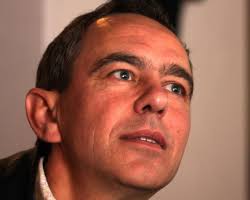 Pierre De Voss on his blog "Constitutionally Speaking" wrote the following: "It is a pity that Vusi Pikoli decided not to embarrass the government by going ahead with his case in which he was challenging the lawfulness of his suspension and eventual firing as head of the National Prosecuting Authority (NPA). Instead, after a marathon mediation process, Pikoli accepted a R7.5 million settlement in which the government admitted that Pikoli was “competent, somebody with integrity, and dutiful” – in other words that he was indeed a fit and proper person and should never have been fired – and that it respected the independence of the judiciary and the NPA."
"This settlement to a large extent vindicates Pikoli and others who have maintained that he was fired on spurious grounds. Pikoli was obviously suspended by then President Thabo Mbeki because he failed to follow the unlawful instructions from then Minister of Justice Brigitte Mbandla, who took a few minutes out ohe her busy tea drinking schedule, to order him not to go ahead with the arrest of Jackie Selebi."
 "Mbeki and Mbandla – as became clear at the Ginwala Inquiry – had a strange view of the constitutional requirement that the NDPP must act without fear, favour or prejudice and wrongly thought that the government had the power to order the NDPP to conduct specific investigations and arrests in a particular manner – something forbidden by the Constitution and not authorised by the NPA Act."
Source: Constitutionally Speaking
Sunday, November 22, 2009
Pikoli settles for R7m

Former national director of public prosecutions Vusi Pikoli will walk away with R7,5-million after reaching an out of court agreement with the government, the Presidency announced on Saturday. The mediation comes just two days before the matter was to be heard in the North Gauteng High Court. "The two parties acknowledge that a breakdown took place in their relationship, and now wish to restore their relationship to one characterised by mutual trust and respect," presidential spokesperson Vincent Magwenya said in a statement.
The terms of the agreement include, amongst others, that Pikoli withdraw the application before court. "Mr Pikoli shall be paid an amount of R7,5-million in full and final settlement," he said, adding that the government welcomed the "successful" conclusion of this matter.
Pikoli took the government to court over his non-reinstatement after being cleared by the Ginwala Commission. He believes he lost his job because he decided to prosecute former national police commissioner Jackie Selebi.
Source: IoL
Tuesday, December 9, 2008
Ginwala report of enquiry into NDPP Vusi Pikoli

This document, released by the South African government, is the long-awaited Ginwala report of enquiry into the National Director of Public Prosecutions.
It can be accessed here
Source: Polity
Thursday, September 25, 2008
Kasrils shields his legacy
Outgoing intelligence minister Ronnie Kasrils engaged in a last-minute scramble this week to protect his legacy of reform at the intelligence services. Since 2005 the National Intelligence Agency has been in the thick of claims that the Mbeki and Zuma camps abused state institutions in their battle for supremacy.
On Wednesday Kasrils persuaded outgoing president Thabo Mbeki's last Cabinet meeting to release a hard-hitting review of intelligence policy. The report recommends comprehensive reforms of the country's civilian spy agencies, in particular the NIA, the South African Secret Service (SASS) and the National Communications Centre (NCC), responsible for the interception of electronic communication. The report recommends comprehensive reforms of the country's civilian spy agencies, in particular the NIA, the South African Secret Service (SASS) and the National Communications Centre (NCC), responsible for the interception of electronic communication.
The commission, comprising former deputy-minister Joe Matthews, former speaker Frene Ginwala and academic Laurie Nathan, was set up by Kasrils after the "hoax email" saga which led to the sacking of former NIA boss Billy Masetlha. The report, handed to Kasrils on August 7, was held back pending objections by his spy chiefs to some findings. Released on Thursday, it scrupulously avoids trespassing on operational turf, but its recommendations on the policy terrain are uncompromising. The report notes: "We are concerned that NIA's mandate may have politicised the agency, drawn it into the realm of party politics, required it to monitor and investigate legal political activity …" The commission, with the NIA's support, recommends that the mandate should narrow to focus on "terrorism, sabotage, subversion, espionage, proliferation of weapons of mass destruction, organised crime and corruption" and large-scale violence and drug trafficking.
Another key finding is that some methods of surveillance currently used are illegal. The report notes that "infiltration of an organisation, physical and electronic surveillance and recruitment of an informant who reports on the private affairs of an individual or organisation ... are not regulated by legislation and are therefore unconstitutional".The commission rejected the recommendation of an earlier internal task team report that "in the hard reality of intelligence operations … it is sometimes impossible to do things by the book.When operating against terrorist threats or organised crime or other clear threats and targets, it is sometimes necessary to 'bend the rules' in order to ensure that the threat is adequately dealt with. This is an operational reality in order to ensure that the real 'nasties' do not get away with their 'nastiness'."
The commission slams this, saying it is "unconstitutional, flouts the rule of law and undermines efforts to develop an institutional culture of respect for the law…
Source: Mail & Guardian
On Wednesday Kasrils persuaded outgoing president Thabo Mbeki's last Cabinet meeting to release a hard-hitting review of intelligence policy. The report recommends comprehensive reforms of the country's civilian spy agencies, in particular the NIA, the South African Secret Service (SASS) and the National Communications Centre (NCC), responsible for the interception of electronic communication. The report recommends comprehensive reforms of the country's civilian spy agencies, in particular the NIA, the South African Secret Service (SASS) and the National Communications Centre (NCC), responsible for the interception of electronic communication.
The commission, comprising former deputy-minister Joe Matthews, former speaker Frene Ginwala and academic Laurie Nathan, was set up by Kasrils after the "hoax email" saga which led to the sacking of former NIA boss Billy Masetlha. The report, handed to Kasrils on August 7, was held back pending objections by his spy chiefs to some findings. Released on Thursday, it scrupulously avoids trespassing on operational turf, but its recommendations on the policy terrain are uncompromising. The report notes: "We are concerned that NIA's mandate may have politicised the agency, drawn it into the realm of party politics, required it to monitor and investigate legal political activity …" The commission, with the NIA's support, recommends that the mandate should narrow to focus on "terrorism, sabotage, subversion, espionage, proliferation of weapons of mass destruction, organised crime and corruption" and large-scale violence and drug trafficking.
Another key finding is that some methods of surveillance currently used are illegal. The report notes that "infiltration of an organisation, physical and electronic surveillance and recruitment of an informant who reports on the private affairs of an individual or organisation ... are not regulated by legislation and are therefore unconstitutional".The commission rejected the recommendation of an earlier internal task team report that "in the hard reality of intelligence operations … it is sometimes impossible to do things by the book.When operating against terrorist threats or organised crime or other clear threats and targets, it is sometimes necessary to 'bend the rules' in order to ensure that the threat is adequately dealt with. This is an operational reality in order to ensure that the real 'nasties' do not get away with their 'nastiness'."
The commission slams this, saying it is "unconstitutional, flouts the rule of law and undermines efforts to develop an institutional culture of respect for the law…
Source: Mail & Guardian
Tuesday, June 24, 2008
Justice DG 'blatantly dishonest' with Ginwala inquiry
Justice and Constitutional Development Department director general Menzi Simelane had been "blatantly dishonest" with the Ginwala inquiry into suspended head prosecutor Vusi Pikoli's fitness to hold office, Advocate Wim Trengove said on Monday. Trengove, representing Pikoli, made the statement on the first day of a second round of hearings before the commission of inquiry chaired by Frene Ginwala.
Trengove was tracing the lines of authority between the National Prosecuting Authority (NPA) and the Justice and Constitutional Development Department, said Simelane was given legal advice that he had no control over the duties of the NPA staff. Trengove accused Simelane of being "blatantly dishonest" about withholding this information from the hearing. He said Simelane should have disclosed the fact that he had been given opinion that supported Pikoli.
"I want to suggest to you your conduct in relation to these opinions had been blatantly dishonest, Mr Simelane," said Trengove.
Simelane replied: "I didn't think there was a need to disclose that I took legal advice." Trengove confronted Simelane for failing to tell the inquiry that he had sought and been given legal opinion. Trengove said that when first asked about it, Simelane said he did not remember. Trengove questioned Simelane on what the Constitution and the NPA Act said about the NPA's powers.
Simelane was of the view that the NPA was a branch of the Justice and Constitutional Development Department and that this meant that he was the accounting officer for the NPA. The legal opinion set out that the NPA Act described the structures of the prosecuting authority and stated that the director general of justice had no part in it. Justice and Constitutional Development Minister Brigitte Mabandla asked Simelane to discuss the issue with Pikoli.
President Thabo Mbeki then suspended Pikoli as National Prosecuting Authority head September last year, citing a "breakdown in the relationship" between Pikoli and Mabandla. But the "breakdown in the relationship" appears to have been between Simelane and Pikoli over the unlawful interference by Simelane in the NPA.
Pikoli's lawyers have said that the real reason for the suspension was the National Directorate of Public Prosecutions' investigation into police National Commissioner Jackie Selebi, who is on special leave pending his corruption and defeating the ends of justice case.
Source: Mail & Guardian
Trengove was tracing the lines of authority between the National Prosecuting Authority (NPA) and the Justice and Constitutional Development Department, said Simelane was given legal advice that he had no control over the duties of the NPA staff. Trengove accused Simelane of being "blatantly dishonest" about withholding this information from the hearing. He said Simelane should have disclosed the fact that he had been given opinion that supported Pikoli.
"I want to suggest to you your conduct in relation to these opinions had been blatantly dishonest, Mr Simelane," said Trengove.
Simelane replied: "I didn't think there was a need to disclose that I took legal advice." Trengove confronted Simelane for failing to tell the inquiry that he had sought and been given legal opinion. Trengove said that when first asked about it, Simelane said he did not remember. Trengove questioned Simelane on what the Constitution and the NPA Act said about the NPA's powers.
Simelane was of the view that the NPA was a branch of the Justice and Constitutional Development Department and that this meant that he was the accounting officer for the NPA. The legal opinion set out that the NPA Act described the structures of the prosecuting authority and stated that the director general of justice had no part in it. Justice and Constitutional Development Minister Brigitte Mabandla asked Simelane to discuss the issue with Pikoli.
President Thabo Mbeki then suspended Pikoli as National Prosecuting Authority head September last year, citing a "breakdown in the relationship" between Pikoli and Mabandla. But the "breakdown in the relationship" appears to have been between Simelane and Pikoli over the unlawful interference by Simelane in the NPA.
Pikoli's lawyers have said that the real reason for the suspension was the National Directorate of Public Prosecutions' investigation into police National Commissioner Jackie Selebi, who is on special leave pending his corruption and defeating the ends of justice case.
Source: Mail & Guardian
Monday, October 1, 2007
Pikoli: Mabandla faced arrest
The head of the National Prosecuting Authority (NPA), Vusi Pikoli, was disrespectful towards President Thabo Mbeki and "arrogantly" threatened to arrest Justice Minister Brigitte Mabandla for the obstruction of justice.
It was announced on Saturday that former Speaker of Parliament Frene Ginwala has been appointed to lead the task team or commission to probe what led to the "irretrievable breakdown" of relations between Pikoli and Mabandla. It was not immediately clear on Saturday how much time Ginwala would have for her probe, but it is believed Mbeki would prefer it to be dealt with as quickly as possible. This also comes as Pikoli's NPA deputies rally behind him. They are vowing to resign en masse if Pikoli is not returned. "I am totally unaware of a move like that. It's speculation I would rather not comment on," said NPA spokesperson Tlali Tlali.
The threat to Mabandla came as she tried to get Pikoli to stop the execution of a warrant of arrest for national police commissioner Jackie Selebi last week.
Mbeki had asked her to convince Pikoli that the arrest would cause a national and international crisis for government given Selebi's presidency of Interpol.
Source: News 24
It was announced on Saturday that former Speaker of Parliament Frene Ginwala has been appointed to lead the task team or commission to probe what led to the "irretrievable breakdown" of relations between Pikoli and Mabandla. It was not immediately clear on Saturday how much time Ginwala would have for her probe, but it is believed Mbeki would prefer it to be dealt with as quickly as possible. This also comes as Pikoli's NPA deputies rally behind him. They are vowing to resign en masse if Pikoli is not returned. "I am totally unaware of a move like that. It's speculation I would rather not comment on," said NPA spokesperson Tlali Tlali.
The threat to Mabandla came as she tried to get Pikoli to stop the execution of a warrant of arrest for national police commissioner Jackie Selebi last week.
Mbeki had asked her to convince Pikoli that the arrest would cause a national and international crisis for government given Selebi's presidency of Interpol.
Source: News 24
Sunday, September 30, 2007
I'll never be arrested - Selebi
National police chief and Interpol head Jackie Selebi has said he will never be arrested because a warrant does not exist, the early edition of the Sunday Times reported on Saturday. "I will never be arrested... If there is a warrant for me I will stand on the 10th floor of the Sandton Towers so that the Scorpions can arrest me," he told the newspaper.
Selebi was responding to numerous media reports citing reliable sources that the National Prosecuting Authority had obtained a warrant for his arrest last week. A search and seizure document was allegedly also obtained from the Pretoria High Court. "I am not bothered at all. For what must I be arrested? There is no such thing as a warrant. It does not exist. I will not comment on charges as there is no warrant," he said. The question of Selebi's possible arrest follows in the wake of the suspension of National Director of Public Prosecutions Vusi Pikoli by President Thabo Mbeki.
Mbeki suspended Pikoli on Monday, citing an irretrievable breakdown in the relationship between Pikoli and Justice Minister Brigitte Mabandla. On Saturday night, Government Communication and Information System spokesperson Themba Maseko said Mbeki had appointed Frene Ginwala to conduct the inquiry into Pikoli's fitness to hold office. Maseko said the former National Assembly Speaker had been appointed in terms of section 12(6) of the National Prosecuting Act 32 of 1998. "It's (the inquiry) going to be under way soon. I need to meet with the doctor (Ginwala) first and will avail more details on Monday," he said. Maseko said he would address a press conference on Monday outlining the details and format of the enquiry.
Source: Polity
Selebi was responding to numerous media reports citing reliable sources that the National Prosecuting Authority had obtained a warrant for his arrest last week. A search and seizure document was allegedly also obtained from the Pretoria High Court. "I am not bothered at all. For what must I be arrested? There is no such thing as a warrant. It does not exist. I will not comment on charges as there is no warrant," he said. The question of Selebi's possible arrest follows in the wake of the suspension of National Director of Public Prosecutions Vusi Pikoli by President Thabo Mbeki.
Mbeki suspended Pikoli on Monday, citing an irretrievable breakdown in the relationship between Pikoli and Justice Minister Brigitte Mabandla. On Saturday night, Government Communication and Information System spokesperson Themba Maseko said Mbeki had appointed Frene Ginwala to conduct the inquiry into Pikoli's fitness to hold office. Maseko said the former National Assembly Speaker had been appointed in terms of section 12(6) of the National Prosecuting Act 32 of 1998. "It's (the inquiry) going to be under way soon. I need to meet with the doctor (Ginwala) first and will avail more details on Monday," he said. Maseko said he would address a press conference on Monday outlining the details and format of the enquiry.
Source: Polity
Subscribe to:
Posts (Atom)