Archbishop Desmond Tutu has withdrawn from participating in a leadership summit in Johannesburg to protest the presence of Tony Blair.
Tutu's decision forms a protest against Blair's decision to back the United States war in Iraq.
"The archbishop has spent considerable time over the past few days wrestling with his conscience and taking counsel from trusted advisers with respect to his attendance at the event," the archbishop's office wrote to the event organisers on Tuesday.
"Ultimately, the archbishop is of the view that Mr Blair's decision to support the United States' military invasion of Iraq, on the basis of unproven allegations of the existence in Iraq of weapons of mass destruction, was morally indefensible.
"The Discovery Invest Leadership Summit has leadership as its theme. Morality and leadership are indivisible. In this context, it would be inappropriate and untenable for the archbishop to share a platform with Mr Blair.
"The archbishop greatly regrets inconveniencing and disappointing the organisers and participants of the Discovery Invest Leadership Summit."
Following Tutu's decision, Blair released a statement.
"Obviously [Tony Blair] is sorry that the archbishop has decided to pull out now from an event that has been fixed for months and where he and the Archbishop were never actually sharing a platform.
"As far as Iraq is concerned they have always disagreed about removing Saddam by force – such disagreement is part of a healthy democracy.
"As for the morality of that decision we have recently had both the memorial of the Halabja massacre where thousands of people were murdered in one day by Saddam's use of chemical weapons; and that of the Iran-Iraq war where casualties numbered up to a million including many killed by chemical weapons.
"So these decisions are never easy morally or politically".
Anger grows
A group of Durban-based organisations want to arrest Blair on charges of war crimes when he arrives in South Africa.
"Various Muslim organisations are in talks about possible actions that will be carried out should Tony Blair visit South Africa," said Mustafa Darsot, a member of the South African Muslim Network executive committee.
"This includes protest marches outside the summit venue, possible sit-ins and legal action against Mr Blair. We have also asked various legal professionals to look at the feasibility of having a warrant of arrest issued against him."
Blair will join several big names, including chess master Garry Kasparov and Finance Minister Pravin Gordhan at the annual event, which will take place in Sandton on August 30.
Darsot said the network and several other organisations had written to Discovery Group founder and chief executive officer Adrian Gore urging him to withdraw the invitation to Blair. They did not believe he was "fit to lecture on leadership" because of his key role in the 2003 invasion of Iraq.
"Mr Blair is complicit in the murder of thousands of people in Iraq and should be tried for war crimes," Darsot said. "He violated the trust and responsibility of his office and it was his cosy and illegitimate relationship with the [Rupert] Murdoch press that prevented much of the truth about his role in the invasion of Iraq and murder of its citizens from being revealed in the press."
Offence
But Iona Maclean, head of Discovery Life and Discovery Invest Marketing, said the invitation to Blair would not be withdrawn.
"The Discovery Invest Leadership Summit brings together a range of leaders to debate the challenges that face the world's economy, business, government and society," she said.
"The event is not intended to reflect a political view or cause offence. Discovery Invest selected the speakers based on their experience as leaders from various spheres of society and we will not be withdrawing our invitation to any of the speakers."
Patrick Bond, director of the Centre for Civil Society at the University of KwaZulu-Natal, said there was no question that Blair could be prosecuted for a "crime of aggression".
"The website arrestblair.org spells out Blair's role in recent mass murder from the Middle East to Central Asia," he said.
"Since Pretoria politicians justifiably complain that the International Criminal Court mainly prosecutes African tyrants, leaving European and American war criminals to travel the world gathering huge speaking fees, some action by Foreign Minister Maite Nkoane-Mashabane would reduce the talk left, walk right accusation against South Africa. She might simply follow the recent lead of Malawian President Joyce Banda, who warned Sudanese President Omar al-Bashir to stay away from Lilongwe on threat of arrest."
Bond said if Nkoane-Mashabane did not intervene, South Africans who viewed Blair as a war criminal could attempt a citizen's arrest.
Source: Mail & Guardian
Showing posts with label Omar al-Bashir. Show all posts
Showing posts with label Omar al-Bashir. Show all posts
Tuesday, August 28, 2012


Friday, July 20, 2012
Bridging the African Union's divides
Nkosazana Dlamini-Zuma's success at the AU will be measured by her ability to gain consensus among heads of state, writes Liesl Louw-Vaudran.
When the late Libyan leader Muammar Gaddafi was trying to cajole the rest of Africa into accepting his grand idea of a United States of Africa, it was rumoured that he offered Nkosazana Dlamini-Zuma the job of prime minister if she would back him. At the time she was South Africa’s minister of foreign affairs.
A lot has changed since that summit in Accra, Ghana, in 2007 when a number of smaller African states gave in to Gaddafi’s bullying and buying of votes. Yet Dlamini-Zuma was duly elected as chairperson of the African Union Commission by a majority of heads of state at its 19th summit in Addis Ababa on July 15.
In effect, she will be the prime minister of an institution that aims to be the continental decision-making body. Of course, things are complicated because she will not be reporting to one executive president but to 54, give or take a few, depending on how many coups there have been on the continent.
The way South Africa lobbied for votes since the last unsuccessful bid for the position in January will not make her job any easier. Some countries are accusing South Africa of using the same tactics of which Gaddafi was guilty.
When she takes up office in Addis Ababa in three months’ time, her first task will have to be an attempt at some radical improvements at the commission – an institution bogged down by inefficiency, understaffing and underspending. Only 52% of posts are filled and the average underspending is 37%.
On this score she will probably do very well, or at least better than her predecessors. Walking into the AU Commission cannot be much worse than walking into the portfolio of home affairs in 2009.
For a while, Addis Ababa has been considered by diplomats to be a hardship post – a perception reinforced by the strain of working in a country with terrible phone infrastructure, restrictive laws and very little to offer expats.
The Anglophone and Francophone divide at the commission is also a reality – the men in boubous (robes) do not sit at the same lunch table as the East Africans in suits – but she will be able to use her skills as a South African to convince bureaucrats from diverse backgrounds to work together.
Despite what the rulebooks say, she will probably have to define her role and relationship with the heads of state as things go along. This she has to do with the rotating head of state who gets the position of AU chairperson for a year – a title often confused with that of the commission chairperson. Benin’s President Yayi Boni has this job at the moment and is doing it relatively well, but sometimes the AU chair is largely symbolic, especially when it is occupied by leaders such as Equatorial Guinea’s Teodoro Obiang Nguema, who filled this post last year.
Following the extensive battle to get Dlamini-Zuma elected, many are claiming that she will raise the profile of the AU. Certainly the drama between her and her predecessor, Jean Ping, has captured imaginations, but it will take much more than this to restore the credibility of the commission and of the AU. This is true of the union’s image internationally and among ordinary Africans.
Dlamini-Zuma will have the power and influence of South Africa behind her, but it will not always be an advantage given South Africa’s much-criticised Africa policy. Ping, also a former foreign minister, was unable to get heads of state to agree on almost anything and was decried for being weak.
Still, heads of state are unclear about how much power the commission chairperson should have. Former Mali president Alpha Omar Konaré clashed with many of his peers when he had this position. After his term ended the commission chair was again occupied by a minister, just as it was during the time of the Organisation of African Unity.
Consequently, when half of Africa’s heads of state at last year’s summit in Malabo, Equatorial Guinea, decided to recognise the fledgling Libyan National Transitional Council and the other half – led by South Africa – refused to do so, Ping could not do much about it. The AU’s road map for Libya was completely ignored by Nato – a huge embarrassment for Africa.
Earlier this year, when some agreed with Malawi’s president that the International Criminal Court arrest warrant against Omar al-Bashir of Sudan should be respected and the other half wanted the 19th AU summit (that just took place) to be moved to Addis Ababa, Africa again looked hopelessly divided.
These divisions and the stalemate that preceded Sunday’s election made some analysts fear a total breakdown of the institution. Some advised that the AU should abandon efforts to model itself on the European Union, but rather look at a loose structure, such as the Association of Southeast Asian Nations, leaving integration up to the regions.
For now, the AU’s reputation has been salvaged and there is real hope for a more efficient commission with Dlamini-Zuma at the helm.
A huge advantage for her is that she knows the AU commission very well. After all, she helped to implement its constitutive act in the early years after its creation in 2002.
“Your foreign minister doesn’t take no for an answer,” I remember a West African foreign minister telling me at an AU summit in Addis Ababa in 2003. It was during a marathon session on getting a resolution on gender parity pushed through the agenda.
At the time Dlamini-Zuma showed the same unwavering determination and work ethic she has become known for at home. It was not unusual for the media to be called to press briefings by Dlamini-Zuma at 2am or 3am to explain the latest AU decisions.
Ten years after its creation, things at the AU have not moved as quickly as what she and Thabo Mbeki, then her commander in chief, had envisioned. Funding remains a huge problem. More than half ($160-million) of its budget of $275-million for 2012 is paid for by external partners, mostly the European Union. An audit of the commission finalised in 2007 recommended vast reforms of it, but little of this has been implemented by Dlamini-Zuma’s predecessor.
An efficient AU will hugely improve its relations with international donors, especially now that this kind of money is getting scarce. Real action in solving peace and security issues will also improve the AU’s standing in the eyes of its citizens. But achieving credibility and raising the profile of the AU will ultimately depend not on the commission chairperson, but on the quality of leadership in its member states.
Source: Mail & Guardian
When the late Libyan leader Muammar Gaddafi was trying to cajole the rest of Africa into accepting his grand idea of a United States of Africa, it was rumoured that he offered Nkosazana Dlamini-Zuma the job of prime minister if she would back him. At the time she was South Africa’s minister of foreign affairs.
A lot has changed since that summit in Accra, Ghana, in 2007 when a number of smaller African states gave in to Gaddafi’s bullying and buying of votes. Yet Dlamini-Zuma was duly elected as chairperson of the African Union Commission by a majority of heads of state at its 19th summit in Addis Ababa on July 15.
In effect, she will be the prime minister of an institution that aims to be the continental decision-making body. Of course, things are complicated because she will not be reporting to one executive president but to 54, give or take a few, depending on how many coups there have been on the continent.
The way South Africa lobbied for votes since the last unsuccessful bid for the position in January will not make her job any easier. Some countries are accusing South Africa of using the same tactics of which Gaddafi was guilty.
When she takes up office in Addis Ababa in three months’ time, her first task will have to be an attempt at some radical improvements at the commission – an institution bogged down by inefficiency, understaffing and underspending. Only 52% of posts are filled and the average underspending is 37%.
On this score she will probably do very well, or at least better than her predecessors. Walking into the AU Commission cannot be much worse than walking into the portfolio of home affairs in 2009.
For a while, Addis Ababa has been considered by diplomats to be a hardship post – a perception reinforced by the strain of working in a country with terrible phone infrastructure, restrictive laws and very little to offer expats.
The Anglophone and Francophone divide at the commission is also a reality – the men in boubous (robes) do not sit at the same lunch table as the East Africans in suits – but she will be able to use her skills as a South African to convince bureaucrats from diverse backgrounds to work together.
Despite what the rulebooks say, she will probably have to define her role and relationship with the heads of state as things go along. This she has to do with the rotating head of state who gets the position of AU chairperson for a year – a title often confused with that of the commission chairperson. Benin’s President Yayi Boni has this job at the moment and is doing it relatively well, but sometimes the AU chair is largely symbolic, especially when it is occupied by leaders such as Equatorial Guinea’s Teodoro Obiang Nguema, who filled this post last year.
Following the extensive battle to get Dlamini-Zuma elected, many are claiming that she will raise the profile of the AU. Certainly the drama between her and her predecessor, Jean Ping, has captured imaginations, but it will take much more than this to restore the credibility of the commission and of the AU. This is true of the union’s image internationally and among ordinary Africans.
Dlamini-Zuma will have the power and influence of South Africa behind her, but it will not always be an advantage given South Africa’s much-criticised Africa policy. Ping, also a former foreign minister, was unable to get heads of state to agree on almost anything and was decried for being weak.
Still, heads of state are unclear about how much power the commission chairperson should have. Former Mali president Alpha Omar Konaré clashed with many of his peers when he had this position. After his term ended the commission chair was again occupied by a minister, just as it was during the time of the Organisation of African Unity.
Consequently, when half of Africa’s heads of state at last year’s summit in Malabo, Equatorial Guinea, decided to recognise the fledgling Libyan National Transitional Council and the other half – led by South Africa – refused to do so, Ping could not do much about it. The AU’s road map for Libya was completely ignored by Nato – a huge embarrassment for Africa.
Earlier this year, when some agreed with Malawi’s president that the International Criminal Court arrest warrant against Omar al-Bashir of Sudan should be respected and the other half wanted the 19th AU summit (that just took place) to be moved to Addis Ababa, Africa again looked hopelessly divided.
These divisions and the stalemate that preceded Sunday’s election made some analysts fear a total breakdown of the institution. Some advised that the AU should abandon efforts to model itself on the European Union, but rather look at a loose structure, such as the Association of Southeast Asian Nations, leaving integration up to the regions.
For now, the AU’s reputation has been salvaged and there is real hope for a more efficient commission with Dlamini-Zuma at the helm.
A huge advantage for her is that she knows the AU commission very well. After all, she helped to implement its constitutive act in the early years after its creation in 2002.
“Your foreign minister doesn’t take no for an answer,” I remember a West African foreign minister telling me at an AU summit in Addis Ababa in 2003. It was during a marathon session on getting a resolution on gender parity pushed through the agenda.
At the time Dlamini-Zuma showed the same unwavering determination and work ethic she has become known for at home. It was not unusual for the media to be called to press briefings by Dlamini-Zuma at 2am or 3am to explain the latest AU decisions.
Ten years after its creation, things at the AU have not moved as quickly as what she and Thabo Mbeki, then her commander in chief, had envisioned. Funding remains a huge problem. More than half ($160-million) of its budget of $275-million for 2012 is paid for by external partners, mostly the European Union. An audit of the commission finalised in 2007 recommended vast reforms of it, but little of this has been implemented by Dlamini-Zuma’s predecessor.
An efficient AU will hugely improve its relations with international donors, especially now that this kind of money is getting scarce. Real action in solving peace and security issues will also improve the AU’s standing in the eyes of its citizens. But achieving credibility and raising the profile of the AU will ultimately depend not on the commission chairperson, but on the quality of leadership in its member states.
Source: Mail & Guardian
Monday, March 1, 2010
Hundreds feared dead in Darfur clashes, says UN
Hundreds of civilians are feared to have died in a surge of fighting between the Sudanese army and rebels in the turbulent Darfur region, a United Nations source told Reuters on Monday. A spokesperson for Sudan's army denied any fighting was taking place in Darfur's mountainous Jabel Marra region and accused insurgents of harassing and attacking locals.
Reports of clashes throughout last week have marred Khartoum's announcement of a new peace push in the region and come just more than a month ahead of national elections. "We think that we have a mounting number of casualties ... The lower estimate is about 140. The higher estimate is closer to 400," said a UN source. He said the figures referred to civilian deaths.
The army spokesperson told Reuters: "There are no clashes between the Sudanese army and the forces of Abdel Wahed's movement." Abdel Wahed Mohamed al-Nur is the leader of a branch of the rebel Sudan Liberation Army (SLA).
Sudanese President Omar Hassan al-Bashir declared the war in Darfur over last Wednesday, announcing the release of 57 rebel captives after reaching an initial settlement with the Justice and Equality Movement (JEM), Darfur's most powerful rebel force. Al-Bashir's government signed an agreement in Doha last Tuesday committing Sudan to reaching a final peace deal with the JEM by March 15. But the SLA and other rebels have rejected the deal, demanding that security be restored on the ground before talks begin.
Source: Mail & Guardian
Reports of clashes throughout last week have marred Khartoum's announcement of a new peace push in the region and come just more than a month ahead of national elections. "We think that we have a mounting number of casualties ... The lower estimate is about 140. The higher estimate is closer to 400," said a UN source. He said the figures referred to civilian deaths.
The army spokesperson told Reuters: "There are no clashes between the Sudanese army and the forces of Abdel Wahed's movement." Abdel Wahed Mohamed al-Nur is the leader of a branch of the rebel Sudan Liberation Army (SLA).
Sudanese President Omar Hassan al-Bashir declared the war in Darfur over last Wednesday, announcing the release of 57 rebel captives after reaching an initial settlement with the Justice and Equality Movement (JEM), Darfur's most powerful rebel force. Al-Bashir's government signed an agreement in Doha last Tuesday committing Sudan to reaching a final peace deal with the JEM by March 15. But the SLA and other rebels have rejected the deal, demanding that security be restored on the ground before talks begin.
Source: Mail & Guardian
Wednesday, February 10, 2010
Sudan: Accord Reached With Chad
Sudan and Chad agreed Tuesday to end their proxy wars and engage in direct talks and joint development projects to rebuild their war-affected border areas. President Idriss Déby of Chad made a surprise visit to Khartoum for talks with President Omar Hassan al-Bashir of Sudan on Monday after ties between the oil-producing countries had hit bottom, with each supporting rebels fighting the other’s government.
Source: New York Times
Source: New York Times
Wednesday, February 3, 2010
Darfur: International Criminal Court’s Decision on Bashir Arrest Warrant
On February 3, 2010, the International Criminal Court (ICC) appeals chamber decided to reject the standard used to exclude genocide charges in the ICC's arrest warrant for President Omar al-Bashir of Sudan.
Last year, on March 4, 2009, ICC Pre-Trial Chamber I issued an arrest warrant for al-Bashir for war crimes and crimes against humanity committed in Darfur. At that time, the Pre-Trial Chamber rejected the inclusion of genocide charges in the warrant on the basis that the prosecutor did not present "reasonable grounds to believe" that the Sudanese government possessed the necessary intent for the crime of genocide.
"Today's decision is a strong reminder that President al-Bashir is wanted for heinous crimes committed in Darfur," said Elise Keppler, International Justice Program senior counsel at Human Rights Watch. "President al-Bashir is a fugitive from justice who needs to appear in The Hague to answer to the allegations against him."
With today's decision, the appeals chamber instructed the pre-trial chamber to reassess the inclusion of genocide charges under a revised standard and amend the arrest warrant as necessary.
Source: Human Rights Watch
Last year, on March 4, 2009, ICC Pre-Trial Chamber I issued an arrest warrant for al-Bashir for war crimes and crimes against humanity committed in Darfur. At that time, the Pre-Trial Chamber rejected the inclusion of genocide charges in the warrant on the basis that the prosecutor did not present "reasonable grounds to believe" that the Sudanese government possessed the necessary intent for the crime of genocide.
"Today's decision is a strong reminder that President al-Bashir is wanted for heinous crimes committed in Darfur," said Elise Keppler, International Justice Program senior counsel at Human Rights Watch. "President al-Bashir is a fugitive from justice who needs to appear in The Hague to answer to the allegations against him."
With today's decision, the appeals chamber instructed the pre-trial chamber to reassess the inclusion of genocide charges under a revised standard and amend the arrest warrant as necessary.
Source: Human Rights Watch
Darfur rebels hail court decision on al-Bashir
A leading Darfur rebel group hailed an international appeals court's decision on Wednesday to order a review of the dropping of genocide charges against Sudanese President Omar al-Bashir. The International Criminal Court (ICC) issued an arrest warrant for al-Bashir in March last year on five counts of crimes against humanity and two of war crimes committed in Darfur, but did not press genocide charges, a decision it must now reconsider.
"The decision taken by the ICC was a good decision, a natural decision given the role of al-Bashir as head of the army and state," said Ahmed Hussein Adam, spokesperson for the Justice and Equality Movement, the most heavily armed of the Darfur rebel groups. "It is a great victory for the population of Darfur and justice," he said.
ICC prosecutor Luis Moreno-Ocampo, having implicated the Sudanese leader in the deaths of 35 000 people, had lodged an appeal against the court's decision not to include the three counts of genocide he had asked for. He accuses al-Bashir of having "personally instructed" his forces to annihilate three ethnic groups -- the Fur, the Masalit and the Zaghawa in Darfur.
The judges of the appeals court said in their decision that the standard of proof on which the pre-trial chamber of the court rejected the genocide charge against al-Bashir was too demanding. They directed it to issue "a new decision using the correct standard of proof". Moreno-Ocampo has claimed to have "detailed evidence on the mobilisation and use of the entire Sudanese state apparatus for the purpose of destroying a substantial part of the Fur, Masalit and Zaghawa ethnic groups in the entire region of Darfur during more than six years"."His intent was genocide," Moreno-Ocampo said, adding that al-Bashir had ordered his forces "not to bring back any wounded or prisoners".
The United Nations says up to 300 000 people have died and 2,7-million fled their homes since ethnic minority rebels in Darfur rose up against the Arab-dominated regime in Khartoum in February 2003. The Sudanese government says 10 000 people have been killed.
Source: Mail & Guardian
"The decision taken by the ICC was a good decision, a natural decision given the role of al-Bashir as head of the army and state," said Ahmed Hussein Adam, spokesperson for the Justice and Equality Movement, the most heavily armed of the Darfur rebel groups. "It is a great victory for the population of Darfur and justice," he said.
ICC prosecutor Luis Moreno-Ocampo, having implicated the Sudanese leader in the deaths of 35 000 people, had lodged an appeal against the court's decision not to include the three counts of genocide he had asked for. He accuses al-Bashir of having "personally instructed" his forces to annihilate three ethnic groups -- the Fur, the Masalit and the Zaghawa in Darfur.
The judges of the appeals court said in their decision that the standard of proof on which the pre-trial chamber of the court rejected the genocide charge against al-Bashir was too demanding. They directed it to issue "a new decision using the correct standard of proof". Moreno-Ocampo has claimed to have "detailed evidence on the mobilisation and use of the entire Sudanese state apparatus for the purpose of destroying a substantial part of the Fur, Masalit and Zaghawa ethnic groups in the entire region of Darfur during more than six years"."His intent was genocide," Moreno-Ocampo said, adding that al-Bashir had ordered his forces "not to bring back any wounded or prisoners".
The United Nations says up to 300 000 people have died and 2,7-million fled their homes since ethnic minority rebels in Darfur rose up against the Arab-dominated regime in Khartoum in February 2003. The Sudanese government says 10 000 people have been killed.
Source: Mail & Guardian
Friday, July 31, 2009
South Africa's commitment to the International Criminal Court
The director general in the International Affairs and Cooperation Ministry, Dr. Ayanda Ntsaluba, reiterated South Africa's commitment to the International Criminal Court and stated that South Africa would respect its obligation to cooperate with the ICC, including in carrying out arrest warrants for sitting Sudanese president Omar al-Bashir.
As the leading African democracy, South Africa remains well placed to play a positive role in encouraging fellow African Union states that are party to the Rome Statute of the ICC to maintain their support for effective international justice. African and international civil society also looks to South Africa to challenge those African states that continue to push the continent to cease cooperation with the ICC.
The notes following the Briefing of Department International Relations and Cooperation’s Director- General, Ayanda Ntsaluba, can be found here.
Source: Human Rights Watch
As the leading African democracy, South Africa remains well placed to play a positive role in encouraging fellow African Union states that are party to the Rome Statute of the ICC to maintain their support for effective international justice. African and international civil society also looks to South Africa to challenge those African states that continue to push the continent to cease cooperation with the ICC.
The notes following the Briefing of Department International Relations and Cooperation’s Director- General, Ayanda Ntsaluba, can be found here.
Source: Human Rights Watch
African Civil Society Urges African States Parties to the Rome Statute to Reaffirm Their Commitment to the ICC
On 3 July 2009 the African Union (AU) agreed that its members should withhold cooperation from the International Criminal Court (ICC) in the arrest and surrender of Sudanese President Omar al-Bashir. The court issued its arrest warrant for President al-Bashir on 4 March 2009 for alleged war crimes and crimes against humanity committed in Darfur.
The AU's decision threatens to block justice for victims of the worst crimes committed on the continent. It is inconsistent with article 4 of the AU's constitutive act that rejects impunity, as well as the treaty obligations of the 30 African governments that ratified the Rome Statute of the ICC. The decision also undermines the consensus reached by African ICC States Parties at a meeting in Addis Ababa in June 2009.
Recognizing our obligation to help protect human rights and uphold the rule of law, we, the undersigned civil society organizations, appeal to African ICC States Parties to reaffirm their support for the ICC and their commitment to abide by their obligations under the Rome Statute, particularly in relation to the arrest and transfer of the President of Sudan to the ICC.
The ICC was created to bring accountability for the most serious crimes of international concern: genocide, war crimes and crimes against humanity. African governments, together with civil society, played an active role in establishing the court and African governments were among the founding ratifiers of the Rome Statute.
A majority of African countries are now Parties to the ICC: Benin, Botswana, Burkina Faso, Burundi, Central African Republic, Chad, Comoros, Republic of Congo, Democratic Republic of Congo, Djibouti, Gabon, Gambia, Ghana, Guinea, Kenya, Lesotho, Liberia, Madagascar, Malawi, Mali, Mauritius, Namibia, Niger, Nigeria, Senegal, Sierra Leone, South Africa, Tanzania, Uganda, and Zambia. In ratifying the Rome Statute, these states signaled their dedication to cooperate with the ICC to defend the rights of victims and to ensure that the perpetrators of the most serious crimes known to humankind, whoever they might be, are brought to justice.
In Addis Ababa in June, those states underscored their continued support for the court. Proposals to consider making recommendations in relation to possible withdrawal from the ICC or withholding cooperation from the court failed to win a consensus.
The decision adopted at the AU summit just three weeks later is a backward step. The basis provided by the AU for withholding cooperation with the ICC is the UN Security Council's lack of response to the AU's request for a deferral of the ICC's case against President al-Bashir. Consistent with States Parties' obligations under the Rome Statute, this is a matter to direct to the Security Council and does not warrant withholding cooperation from the ICC.
Following the AU summit, the governments of Botswana and Uganda issued statements reiterating their commitment to cooperating with the ICC. These statements are important.
Civil society across the continent has expressed concern about the AU decision. Ensuring that the determined steps to end impunity on our continent are not undermined requires a collective effort by all Africans. Instead of retreating from important achievements to date, we look to our governments to remain steadfast in their support for justice for victims of the worst crimes, including by reaffirming their commitment to cooperate with the ICC.
Source: Human Rights Watch
The AU's decision threatens to block justice for victims of the worst crimes committed on the continent. It is inconsistent with article 4 of the AU's constitutive act that rejects impunity, as well as the treaty obligations of the 30 African governments that ratified the Rome Statute of the ICC. The decision also undermines the consensus reached by African ICC States Parties at a meeting in Addis Ababa in June 2009.
Recognizing our obligation to help protect human rights and uphold the rule of law, we, the undersigned civil society organizations, appeal to African ICC States Parties to reaffirm their support for the ICC and their commitment to abide by their obligations under the Rome Statute, particularly in relation to the arrest and transfer of the President of Sudan to the ICC.
The ICC was created to bring accountability for the most serious crimes of international concern: genocide, war crimes and crimes against humanity. African governments, together with civil society, played an active role in establishing the court and African governments were among the founding ratifiers of the Rome Statute.
A majority of African countries are now Parties to the ICC: Benin, Botswana, Burkina Faso, Burundi, Central African Republic, Chad, Comoros, Republic of Congo, Democratic Republic of Congo, Djibouti, Gabon, Gambia, Ghana, Guinea, Kenya, Lesotho, Liberia, Madagascar, Malawi, Mali, Mauritius, Namibia, Niger, Nigeria, Senegal, Sierra Leone, South Africa, Tanzania, Uganda, and Zambia. In ratifying the Rome Statute, these states signaled their dedication to cooperate with the ICC to defend the rights of victims and to ensure that the perpetrators of the most serious crimes known to humankind, whoever they might be, are brought to justice.
In Addis Ababa in June, those states underscored their continued support for the court. Proposals to consider making recommendations in relation to possible withdrawal from the ICC or withholding cooperation from the court failed to win a consensus.
The decision adopted at the AU summit just three weeks later is a backward step. The basis provided by the AU for withholding cooperation with the ICC is the UN Security Council's lack of response to the AU's request for a deferral of the ICC's case against President al-Bashir. Consistent with States Parties' obligations under the Rome Statute, this is a matter to direct to the Security Council and does not warrant withholding cooperation from the ICC.
Following the AU summit, the governments of Botswana and Uganda issued statements reiterating their commitment to cooperating with the ICC. These statements are important.
Civil society across the continent has expressed concern about the AU decision. Ensuring that the determined steps to end impunity on our continent are not undermined requires a collective effort by all Africans. Instead of retreating from important achievements to date, we look to our governments to remain steadfast in their support for justice for victims of the worst crimes, including by reaffirming their commitment to cooperate with the ICC.
Source: Human Rights Watch
Friday, July 17, 2009
Zuma under pressure over al-Bashir
Pressure on President Jacob Zuma to distance himself from the African Union (AU) decision to ignore the arrest warrant for Sudanese President Omar al-Bashir mounted yesterday when a host of civil society organisations and prominent South Africans urged him to honour treaty obligations.
SA is a signatory to the Rome Statute under which the International Criminal Court (ICC) was established. Because the treaty has been ratified by Parliament, for SA to not observe its obligations is arguably unconstitutional and against the law. The ICC has issued an arrest warrant for al- Bashir and this requires signatory states to execute the warrant should he land on their soil.
The group said Zuma and International Relations Minister Maite Nkoana-Mashabane were present at the AU meeting when the decision was approved to ignore the ICC warrant and “neither the president nor the foreign minister is reported to have raised any objections.
Yesterday, human rights organisations in SA, including the statutory Human Rights Commission, the Centre for Applied Legal Studies, the Centre for Human Rights at Pretoria University, the Centre for Justice and Crime Prevention, the Centre for the Study of Violence and Reconciliation, the Human Rights Institute of SA, the International Centre for Transitional Justice, the Institute for Security Studies, the Khulumani Support Group, the Legal Resources Centre and Lawyers for Human Rights, called for the government to abide by SA’s ICC obligations and to distance itself from the AU position.
“SA’s endorsement of the declaration requires it to break its international treaty obligations and to defy its own law and constitution . As a state party to the Rome Statute, SA is obliged to co-operate fully with the ICC in the arrest and transfer of President al-Bashir to the ICC, whether or not it agrees with the indictment.
“Should the South African government persist with its support for the decision, it will do so in open defiance of its own constitution and law.”
Source: Business Day
SA is a signatory to the Rome Statute under which the International Criminal Court (ICC) was established. Because the treaty has been ratified by Parliament, for SA to not observe its obligations is arguably unconstitutional and against the law. The ICC has issued an arrest warrant for al- Bashir and this requires signatory states to execute the warrant should he land on their soil.
The group said Zuma and International Relations Minister Maite Nkoana-Mashabane were present at the AU meeting when the decision was approved to ignore the ICC warrant and “neither the president nor the foreign minister is reported to have raised any objections.
Yesterday, human rights organisations in SA, including the statutory Human Rights Commission, the Centre for Applied Legal Studies, the Centre for Human Rights at Pretoria University, the Centre for Justice and Crime Prevention, the Centre for the Study of Violence and Reconciliation, the Human Rights Institute of SA, the International Centre for Transitional Justice, the Institute for Security Studies, the Khulumani Support Group, the Legal Resources Centre and Lawyers for Human Rights, called for the government to abide by SA’s ICC obligations and to distance itself from the AU position.
“SA’s endorsement of the declaration requires it to break its international treaty obligations and to defy its own law and constitution . As a state party to the Rome Statute, SA is obliged to co-operate fully with the ICC in the arrest and transfer of President al-Bashir to the ICC, whether or not it agrees with the indictment.
“Should the South African government persist with its support for the decision, it will do so in open defiance of its own constitution and law.”
Source: Business Day
Friday, May 8, 2009
Zuma Should Grasp Opportunity to Break With the Recent Past
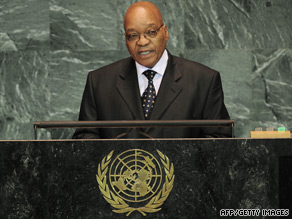 South Africa's new government should make human rights a central pillar of its foreign policy agenda, Human Rights Watch said today in a letter to President-elect Jacob Zuma.
Human Rights Watch expressed concern that in recent years - including during its two-year stint as a member of the United Nations Security Council - South Africa has chosen to side with some of the worst human rights abusers, including Iran, Burma, Sudan, and Zimbabwe. While it justifiably criticized the human rights practices of the United States and Israel and sought reform of international institutions, Pretoria failed to take the moral high ground and build a broad north-south alliance around strengthening international law and human rights. As a result, it squandered its international reputation, which it had so effectively built up in the 1990s, as a champion of human rights and the rule of law. "South Africans and their supporters all over the world who had such high hopes for this country's leadership on human rights felt betrayed by the previous government," said Georgette Gagnon, Africa director at Human Rights Watch. "This is a chance for Zuma to take the high road and restore credibility and balance to South Africa's foreign policy."
Human Rights Watch called attention to situations in three nations where South African leadership could lead to significant improvements and progress in human rights: Sudan, Democratic Republic of Congo, and Zimbabwe.
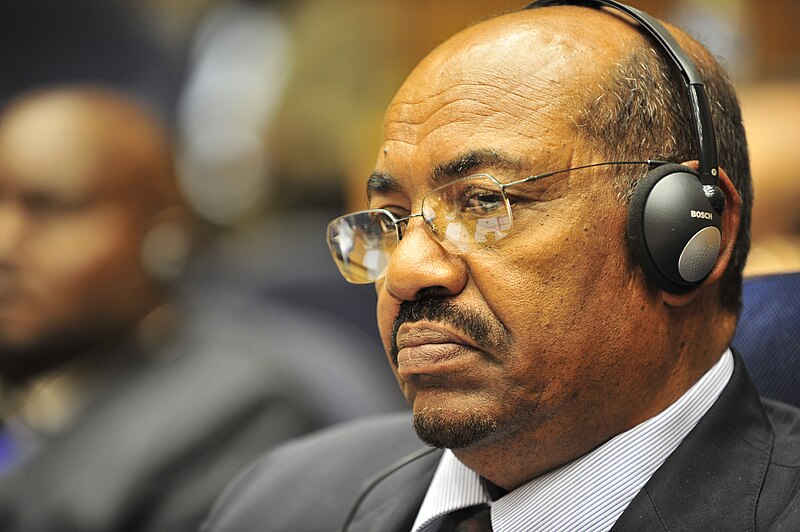 In Sudan, a number of interlinking issues continue to undermine human rights. The major elements are: the armed conflict, lack of security, and obstruction of humanitarian aid in Darfur; African Union and Arab League moves to help President Omar al-Bashir evade justice; and the threat of renewed north-south conflict between Khartoum and the Sudan People's Liberation Movement/Army (SPLM/A). Those responsible for the worst crimes in Darfur know they will not face justice and the Sudanese government has used the International Criminal Court's (ICC) arrest warrant for al-Bashir as a pretext to expel international humanitarian organizations, unnecessarily endangering further the lives of millions of civilians in Darfur.
Human Rights Watch called on the new South African government to: support the ICC's work in Sudan and the principles of international justice, and press other African countries to do the same; and press Sudan to reverse its decision to expel humanitarian agencies, and reinstate the full scope of humanitarian assistance in Darfur.
 In its letter to President-elect Zuma, Human Rights Watch also detailed how the new government could help end the rampant abuses in the Democratic Republic of the Congo and help set the country firmly on a democratic footing. To its great credit, South Africa has contributed a substantial number of peacekeeping troops to the United Nations force in Congo. The UN force is involved in joint military operations with Congolese government forces against brutal Hutu militias like the Democratic Liberation Forces of Rwanda (FDLR).
But UN peacekeepers have so far been unsuccessful in restraining government soldiers from also committing abuses against civilians. To make matters worse, the deputy commander of the Congolese military force is reported to be Bosco Ntaganda, a former rebel commander who has been charged with war crimes by the ICC. Human Rights Watch said that South African forces should not be standing by while abuses are taking place or working with people like Ntaganda.
Human Rights Watch called on the new government to help the Congolese government establish a vetting mechanism to remove from the army and police individuals accused of serious human rights violations, and to ensure that they are brought to justice rather than promoted; and press the Congolese authorities to punish abusive soldiers and their commanders and to bring abuses to a halt.
 In Zimbabwe, despite the formation of a new power-sharing government, the crisis persists and human rights abuses continue. Police continue to intimidate and arrest activists, and supporters of the Zimbabwe African National Union-Patriotic Front (ZANU-PF), the longtime governing party, continue their violent invasions of commercial farms. Police and prosecuting authorities who have remained under the control of ZANU-PF in the power-sharing government have continued politically motivated prosecutions of political opponents and have failed to investigate ongoing allegations of torture. Key state and judicial institutions remain partisan and unreformed. The government is yet to initiate comprehensive legislative reforms and repeal repressive laws like the Public Order and Security Act, Access to Information and Protection of Privacy Act, as well as a litany of laws that restrict media operations.
Human Rights Watch called on the new South African government to: monitor closely the progress of all parties to Zimbabwe's power-sharing agreement in carrying out all commitments they made as part of the Global Political Agreement, including respecting individual rights, passing human rights-centered legislative reforms, drafting a new constitution, and holding fresh elections that meet international standards of freedom and fairness; and press Zimbabwe's inclusive government to commit to, and institute, genuine political change. "The new government of President Zuma should establish early on that it is committed to playing a positive role in ending repression and abuses not only on the continent but in other parts of the world," Gagnon said. "Zimbabwe is an obvious place to start."
Source: Human Rights Watch
Thursday, March 5, 2009
Omar Hassan al-Bashir
On June 30, 1989, Lieut. Gen. Omar Hassan al-Bashir, a military leader in Sudan, seized power in a bloodless coup backed by Islamists. He assumed the presidency in 1993.
He has been accused of genocide by the prosecutor of the International Criminal Court and has been vilified throughout the world as an incorrigible mass murderer bent on slaughtering his own people in the conflict-riddled region of Darfur.
He has stayed in power, appealing to national pride and causing deep-seated fears that the nation could tumble into Somalia-like chaos if he were removed.
In February 2009, judges at the International Criminal Court approved a warrant for his arrest. According to court lawyers and diplomats, the judges rejected diplomatic requests to allow more time for peace negotiations in Darfur.
The criminal court judges took more than seven months to examine the evidence on Mr. Bashir before charging him, on March 4, 2009, with five counts of crimes against humanity, including murder, extermination, forcible transfer, torture and rape. The two counts of war crimes were for attacks against a civilian population and for pillaging. In their statement, the judges said the court did not recognize immunity for a head of state and called for the cooperation of all countries - not just the 108 nations that are members of the court - to bring Mr. Bashir to justice.
The question of whether genocide was being committed in Darfur has been divisive, and was so among the judges, who said 2-to-1 that the prosecutor had not provided sufficient evidence of the government's intent, the key issue in determining genocide. The Bush administration and other governments, as well as some human rights activists, have called the attacks on civilians government's actions genocide. The United Nations has stopped short of doing so.
It is the first time the court has sought to detain a sitting head of state, and it could further complicate the tense, international debate over how to solve the Darfur crisis.
In announcing his request for a warrant, the prosecutor in the case, Luis Moreno-Ocampo, said that Mr. Bashir had "masterminded and implemented" a plan to destroy three main ethnic groups in Darfur, the Fur, the Masalit and the Zaghawa. The prosecutor said that the president, responding to attacks by rebel groups seeking greater autonomy, had used government soldiers and Arab militias and had "purposefully targeted civilians" belonging to these groups, killing 35,000 people "outright" in attacks on towns and villages.
Although there has been sporadic fighting in Darfur for decades, the conflict significantly intensified in 2003, when the rebel groups attacked Sudanese forces. The Arab-led government responded with a ferocious counterinsurgency campaign, which the prosecutor called a genocidal strategy against Darfur's black African ethnic groups.
The Sudanese forces and government-sponsored militias swept the countryside. They burned down villages, raped countless women and drove hundreds of thousands of people off their land, all part of an effort to put down the rebellion. Mr. Moreno-Ocampo has accused Mr. Bashir of being the mastermind of this strategy, the one with "absolute control."
There is broad concern that removing Mr. Bashir from power could threaten a landmark peace treaty between the Sudanese government and other rebels in the southern part of the country. The treaty was signed in 2005 to end a civil war in which 2.2 million people died, far more than in Darfur.
Source: New York Times
He has been accused of genocide by the prosecutor of the International Criminal Court and has been vilified throughout the world as an incorrigible mass murderer bent on slaughtering his own people in the conflict-riddled region of Darfur.
He has stayed in power, appealing to national pride and causing deep-seated fears that the nation could tumble into Somalia-like chaos if he were removed.
In February 2009, judges at the International Criminal Court approved a warrant for his arrest. According to court lawyers and diplomats, the judges rejected diplomatic requests to allow more time for peace negotiations in Darfur.
The criminal court judges took more than seven months to examine the evidence on Mr. Bashir before charging him, on March 4, 2009, with five counts of crimes against humanity, including murder, extermination, forcible transfer, torture and rape. The two counts of war crimes were for attacks against a civilian population and for pillaging. In their statement, the judges said the court did not recognize immunity for a head of state and called for the cooperation of all countries - not just the 108 nations that are members of the court - to bring Mr. Bashir to justice.
The question of whether genocide was being committed in Darfur has been divisive, and was so among the judges, who said 2-to-1 that the prosecutor had not provided sufficient evidence of the government's intent, the key issue in determining genocide. The Bush administration and other governments, as well as some human rights activists, have called the attacks on civilians government's actions genocide. The United Nations has stopped short of doing so.
It is the first time the court has sought to detain a sitting head of state, and it could further complicate the tense, international debate over how to solve the Darfur crisis.
In announcing his request for a warrant, the prosecutor in the case, Luis Moreno-Ocampo, said that Mr. Bashir had "masterminded and implemented" a plan to destroy three main ethnic groups in Darfur, the Fur, the Masalit and the Zaghawa. The prosecutor said that the president, responding to attacks by rebel groups seeking greater autonomy, had used government soldiers and Arab militias and had "purposefully targeted civilians" belonging to these groups, killing 35,000 people "outright" in attacks on towns and villages.
Although there has been sporadic fighting in Darfur for decades, the conflict significantly intensified in 2003, when the rebel groups attacked Sudanese forces. The Arab-led government responded with a ferocious counterinsurgency campaign, which the prosecutor called a genocidal strategy against Darfur's black African ethnic groups.
The Sudanese forces and government-sponsored militias swept the countryside. They burned down villages, raped countless women and drove hundreds of thousands of people off their land, all part of an effort to put down the rebellion. Mr. Moreno-Ocampo has accused Mr. Bashir of being the mastermind of this strategy, the one with "absolute control."
There is broad concern that removing Mr. Bashir from power could threaten a landmark peace treaty between the Sudanese government and other rebels in the southern part of the country. The treaty was signed in 2005 to end a civil war in which 2.2 million people died, far more than in Darfur.
Source: New York Times
Sunday, September 7, 2008
South Africa's Human Rights Reputation Tarnished
As a member of the United Nations security council for two years, South Africa has had many opportunities to speak out forcefully for human rights - or to join those speaking out against them. Again and again, it has chosen the latter course. The South African government's unwillingness to confront President Robert Mugabe on his extremely abusive governance of Zimbabwe is well known to South Africans, and justly controversial. Less well known are the many other important international issues on which the South African government has sided with reactionary rather than progressive forces.
Burma is the best-known case. With Russia and China, South Africa has blocked efforts to condemn the military government's lethal crackdown on peaceful protesters last year. Perhaps the department of foreign affairs has forgotten that, when Burma was still democratic, it demanded that the evils of apartheid, including the Sharpeville massacre of 1960, should be brought before the security council.
The international solidarity movement against apartheid constantly confronted the argument that what happened inside a country's borders was none of the rest of the world's business. That is precisely the argument that the South African government now makes frequently at the security council. It narrowly defines what constitutes a "threat to international peace and security", and insists that all other matters be taken up at the UN Human Rights Council in Geneva. Meanwhile, in Geneva, outside the limelight, South Africa has demonstrated a similar pattern - failing to support key resolutions condemning human rights abuses in countries from Iran to Uzbekistan, and aligning itself with countries whose human rights records are, by anyone's standard, abysmal.
At the UN this month, a diplomatic struggle is shaping up to be South Africa's lowest moment yet. The issue is Darfur, and more specifically the request by the prosecutor of the International Criminal Court (ICC) for an arrest warrant for Omar al-Bashir, the Sudanese president. The accusation: genocide and crimes against humanity, the world's most serious crimes. News of the warrant request was greeted with joy among the millions of Darfuris who have been driven from their homes by government forces acting in concert with janjaweed militias. Tens of thousands of Africans have died in this civil war, most of them civilians, and most of them as a result of Sudanese government actions.
The Sudanese government has begun a concerted campaign to evade justice for these crimes and the South African government has become its accomplice. Together with Libya, also on the security council, South Africa has been leading an effort to suspend the International Criminal Court's request for the next 12 months. Suspending the request for an arrest warrant would send a clear signal, not only to the Sudanese government, but also to tyrants everywhere that they can continue to cheat justice through international political machination. I was present at the negotiations on the treaty for the International Criminal Court 10 years ago in Rome, and listened with admiration to the speech of Dullah Omar, the South African justice minister, in ringing support of this important new human rights institution. Achieving a strong treaty at those talks was an uphill battle, but we won. Only the steadfast leadership of South Africa, along with a handful of others, overcame the opposition of major powers such as the United States, China and Israel.
The International Criminal Court is not an anti-African institution, as some have alleged. It is a pro-African institution: pro-civilians in Darfur whose villages have been burned to the ground, pro-women in the Democratic Republic of Congo who have been raped in wartime, pro-children in northern Uganda who have been abducted as child soldiers. It is opposed to government and rebel leaders responsible for such crimes, no matter where they live.
The prosecutor has also been looking into situations in Colombia and Afghanistan, as well as crimes committed in the Russian-Georgian armed conflict. It is truly heartbreaking to see South Africa preparing to abandon the court at a critical juncture in its history. Sadly, it appears to be part of a trend that is putting Pretoria's foreign policy on the wrong side of history. Perhaps only a fervent and sustained outcry from South African society can restore the country to its rightful path and begin to repair the damage that has already been done to its reputation.
Source: Human Rights Watch
Burma is the best-known case. With Russia and China, South Africa has blocked efforts to condemn the military government's lethal crackdown on peaceful protesters last year. Perhaps the department of foreign affairs has forgotten that, when Burma was still democratic, it demanded that the evils of apartheid, including the Sharpeville massacre of 1960, should be brought before the security council.
The international solidarity movement against apartheid constantly confronted the argument that what happened inside a country's borders was none of the rest of the world's business. That is precisely the argument that the South African government now makes frequently at the security council. It narrowly defines what constitutes a "threat to international peace and security", and insists that all other matters be taken up at the UN Human Rights Council in Geneva. Meanwhile, in Geneva, outside the limelight, South Africa has demonstrated a similar pattern - failing to support key resolutions condemning human rights abuses in countries from Iran to Uzbekistan, and aligning itself with countries whose human rights records are, by anyone's standard, abysmal.
At the UN this month, a diplomatic struggle is shaping up to be South Africa's lowest moment yet. The issue is Darfur, and more specifically the request by the prosecutor of the International Criminal Court (ICC) for an arrest warrant for Omar al-Bashir, the Sudanese president. The accusation: genocide and crimes against humanity, the world's most serious crimes. News of the warrant request was greeted with joy among the millions of Darfuris who have been driven from their homes by government forces acting in concert with janjaweed militias. Tens of thousands of Africans have died in this civil war, most of them civilians, and most of them as a result of Sudanese government actions.
The Sudanese government has begun a concerted campaign to evade justice for these crimes and the South African government has become its accomplice. Together with Libya, also on the security council, South Africa has been leading an effort to suspend the International Criminal Court's request for the next 12 months. Suspending the request for an arrest warrant would send a clear signal, not only to the Sudanese government, but also to tyrants everywhere that they can continue to cheat justice through international political machination. I was present at the negotiations on the treaty for the International Criminal Court 10 years ago in Rome, and listened with admiration to the speech of Dullah Omar, the South African justice minister, in ringing support of this important new human rights institution. Achieving a strong treaty at those talks was an uphill battle, but we won. Only the steadfast leadership of South Africa, along with a handful of others, overcame the opposition of major powers such as the United States, China and Israel.
The International Criminal Court is not an anti-African institution, as some have alleged. It is a pro-African institution: pro-civilians in Darfur whose villages have been burned to the ground, pro-women in the Democratic Republic of Congo who have been raped in wartime, pro-children in northern Uganda who have been abducted as child soldiers. It is opposed to government and rebel leaders responsible for such crimes, no matter where they live.
The prosecutor has also been looking into situations in Colombia and Afghanistan, as well as crimes committed in the Russian-Georgian armed conflict. It is truly heartbreaking to see South Africa preparing to abandon the court at a critical juncture in its history. Sadly, it appears to be part of a trend that is putting Pretoria's foreign policy on the wrong side of history. Perhaps only a fervent and sustained outcry from South African society can restore the country to its rightful path and begin to repair the damage that has already been done to its reputation.
Source: Human Rights Watch
Monday, August 13, 2007
Darfur force 'to be all-African'
Africa will provide all of the 26,000 peacekeepers to be sent to Sudan's Darfur region, the head of the African Union (AU) has said. AU chairman Alpha Oumar Konare said enough African troops had been promised for no outside help to be needed but he did not give details.
The UN had expected to call on Asian troops. Critics say Africa lacks enough trained troops for an effective force. Sudan's government has long opposed the involvement of non-African soldiers. It only agreed to a joint United Nations-AU force after months of negotiations. The UN Security Council resolution setting up the force said the troops would be mostly African but they would be under UN command.
UN spokesman Farhan Haq said that while there may be enough AU troops for the force, it was important to get the right mix of abilities on the ground. "It's not simply a question of raw numbers of troops - we're trying to find a good mix of skills," he told the BBC News website. "We're looking to make sure this force is robust, it's mobile, it's well-armed and equipped, so that it can carry out the full mandate that it needs to perform."
Speaking after talks in Khartoum with the Sudanese President Omar al-Bashir, Mr Konare said: "I can confirm today that we have received sufficient commitments from African countries that we will not have to resort to non-African forces." He added that the "ball is now in the court of the UN" to provide funding for the force.
Mr Bashir, who has long argued that a UN-backed force would be a violation of Sudan's sovereignty and could worsen the situation there, backed Mr Konare's plan. "[We] support the AU force, which consolidates the efforts of the Sudanese government to ensure security, peace and stability in Darfur," he said after their meeting. Mr Konare did not give a breakdown of the countries offering to supply more personnel, leading correspondents to question the viability of an all-African force.
BBC Africa analyst David Bamford said it was unclear where so many African troops would come from. Senegal and Malawi have promised to send peacekeepers to Darfur, while the AU has said that Burkina Faso, Cameroon, Egypt, Ethiopia and Nigeria have also promised to contribute.
Hafiz Mohamed from lobby group Justice Africa said Sudan would be able to manipulate AU troops - as he said they had been doing with the 7,000 AU troops already in Darfur. "This will affect the whole credibility of the new resolution," he told the BBC's Network Africa programme.
Mr Konare's announcement came just days after the UN published a list of Asian countries it said had already committed troops and police officers to a Darfur force. UN officials said the joint AU-UN force would be "predominantly African", but confirmed that countries including Indonesia, Pakistan, Nepal and Bangladesh had pledged personnel.
According to a UN resolution, the composition of the force must be decided by 30 August. At least 200,000 people are believed to have died and more than two million have been left homeless in Darfur since fighting broke out in 2003. Sudan's Arab dominated government, and the pro-government Janjaweed militias, are accused of war crimes against the region's black African population - although the UN has stopped short of calling it genocide. Sudan has always denied backing the Janjaweed militias and argued that the problems in Darfur were being exaggerated for political reasons.
Source: BBC
The UN had expected to call on Asian troops. Critics say Africa lacks enough trained troops for an effective force. Sudan's government has long opposed the involvement of non-African soldiers. It only agreed to a joint United Nations-AU force after months of negotiations. The UN Security Council resolution setting up the force said the troops would be mostly African but they would be under UN command.
UN spokesman Farhan Haq said that while there may be enough AU troops for the force, it was important to get the right mix of abilities on the ground. "It's not simply a question of raw numbers of troops - we're trying to find a good mix of skills," he told the BBC News website. "We're looking to make sure this force is robust, it's mobile, it's well-armed and equipped, so that it can carry out the full mandate that it needs to perform."
Speaking after talks in Khartoum with the Sudanese President Omar al-Bashir, Mr Konare said: "I can confirm today that we have received sufficient commitments from African countries that we will not have to resort to non-African forces." He added that the "ball is now in the court of the UN" to provide funding for the force.
Mr Bashir, who has long argued that a UN-backed force would be a violation of Sudan's sovereignty and could worsen the situation there, backed Mr Konare's plan. "[We] support the AU force, which consolidates the efforts of the Sudanese government to ensure security, peace and stability in Darfur," he said after their meeting. Mr Konare did not give a breakdown of the countries offering to supply more personnel, leading correspondents to question the viability of an all-African force.
BBC Africa analyst David Bamford said it was unclear where so many African troops would come from. Senegal and Malawi have promised to send peacekeepers to Darfur, while the AU has said that Burkina Faso, Cameroon, Egypt, Ethiopia and Nigeria have also promised to contribute.
Hafiz Mohamed from lobby group Justice Africa said Sudan would be able to manipulate AU troops - as he said they had been doing with the 7,000 AU troops already in Darfur. "This will affect the whole credibility of the new resolution," he told the BBC's Network Africa programme.
Mr Konare's announcement came just days after the UN published a list of Asian countries it said had already committed troops and police officers to a Darfur force. UN officials said the joint AU-UN force would be "predominantly African", but confirmed that countries including Indonesia, Pakistan, Nepal and Bangladesh had pledged personnel.
According to a UN resolution, the composition of the force must be decided by 30 August. At least 200,000 people are believed to have died and more than two million have been left homeless in Darfur since fighting broke out in 2003. Sudan's Arab dominated government, and the pro-government Janjaweed militias, are accused of war crimes against the region's black African population - although the UN has stopped short of calling it genocide. Sudan has always denied backing the Janjaweed militias and argued that the problems in Darfur were being exaggerated for political reasons.
Source: BBC
Wednesday, August 9, 2006
Deby sworn in as Chad's president
Idriss Deby was sworn in Tuesday as Chad's president to serve his new term, according to reports from N'Djamena. Beating the other four contenders, Deby won the presidential election in May by gaining 64.67 percent of the votes.
Among the leaders attending the swearing-in ceremony were Sudanese President Omar al-Bashir and Libyan leader Muammar Gaddafi.
Source: Peoples Daily
Among the leaders attending the swearing-in ceremony were Sudanese President Omar al-Bashir and Libyan leader Muammar Gaddafi.
Source: Peoples Daily
Thursday, December 8, 2005
Government Responsibility for International Crimes in Darfur
This 85-page report documents the role of more than a dozen named civilian and military officials in the use and coordination of “Janjaweed” militias and the Sudanese armed forces to commit war crimes and crimes against humanity in Darfur since mid-2003.
Omar al-Bashir, as commander-in-chief of the Sudanese Armed Forces, played a pivotal leadership role in the military campaign in Darfur. His public statements were precursors to military operations and to peaks in abuses by Sudanese security forces. There are indications that they echoed the private directives given to civilian administration and military and security services. For instance, on December 30, 2003, al-Bashir announced that: "Our top priority will be the annihilation of the rebellion and any outlaw who carries arms." A few days later, in January 2004, the Sudanese security forces began an offensive that used systematic force in violation of international humanitarian law to drive hundreds of thousands of people from rural areas in Darfur. The methodological use of aerial support to target civilians in the military campaign, despite protests from air force officers, also appears to reflect the involvement of high-level officials in Khartoum.
Human Rights Watch concluded that beginning in May 2002, even before the more devastating phases of the conflict, al-Bashir was very likely aware of abuses committed by the security forces in Darfur. By mid-2004, reports of tens of thousands of displaced people and information from dozens of police complaints, press accounts, and reports by numerous organizations, including the United Nations High Commissioner for Human Rights, made it clear that massive abuses were taking place in Darfur. Apart from this specific information, the government's previous use of ethnic militias in the southern Sudan conflict provided ample warning that such forces invariably targeted civilians and committed other war crimes.
Source: Human Rights Watch
Omar al-Bashir, as commander-in-chief of the Sudanese Armed Forces, played a pivotal leadership role in the military campaign in Darfur. His public statements were precursors to military operations and to peaks in abuses by Sudanese security forces. There are indications that they echoed the private directives given to civilian administration and military and security services. For instance, on December 30, 2003, al-Bashir announced that: "Our top priority will be the annihilation of the rebellion and any outlaw who carries arms." A few days later, in January 2004, the Sudanese security forces began an offensive that used systematic force in violation of international humanitarian law to drive hundreds of thousands of people from rural areas in Darfur. The methodological use of aerial support to target civilians in the military campaign, despite protests from air force officers, also appears to reflect the involvement of high-level officials in Khartoum.
Human Rights Watch concluded that beginning in May 2002, even before the more devastating phases of the conflict, al-Bashir was very likely aware of abuses committed by the security forces in Darfur. By mid-2004, reports of tens of thousands of displaced people and information from dozens of police complaints, press accounts, and reports by numerous organizations, including the United Nations High Commissioner for Human Rights, made it clear that massive abuses were taking place in Darfur. Apart from this specific information, the government's previous use of ethnic militias in the southern Sudan conflict provided ample warning that such forces invariably targeted civilians and committed other war crimes.
Source: Human Rights Watch
Subscribe to:
Posts (Atom)