The United States government should publicly support sanctions against Rwandan officials backing the armed group M23, which has been responsible for widespread war crimes in eastern Democratic Republic of Congo. M23 rebels, whose commanders have been implicated in serious abuses, captured the city of Goma on November 20, 2012.
“The US government’s silence on Rwandan military support to the M23 rebels can no longer be justified given the overwhelming evidence of Rwanda’s role and the imminent threat to civilians around Goma,” said Tom Malinowski, Washington director at Human Rights Watch. “The US government should support urgent sanctions against Rwandan officials who are backing M23 fighters responsible for serious abuses.”
Rwandan military support for the M23 rebels has been evident in their offensive that began on November 15, Human Rights Watch said. Several civilians living near the Rwandan border told Human Rights Watch that they saw hundreds of Rwandan army soldiers crossing the border from Rwanda into Congo at Njerima hill, Kasizi, and Kabuhanga in apparent support of M23 fighters. Human Rights Watch has also documented several incidents in which Rwandan and Congolese soldiers fired across the border from either side between November 16 and 20.
A draft of the final report of the United Nations Group of Experts on the Democratic Republic of Congo, soon to be published, alleges that the Rwandan government has provided “direct military support to M23 rebels” and that the “M23’s de facto chain of command includes General Bosco Ntaganda and culminates with the Rwandan Minister of Defense General James Kabarebe.” Ntaganda is on the UN sanctions list and is sought on arrest warrants from the International Criminal Court for war crimes and crimes against humanity.
Human Rights Watch has independently established that the Rwandan army has regularly provided significant military support to the M23, including overseeing operational planning, providing weapons and ammunition, recruiting at least 600 people in Rwanda to fight for the M23, training new recruits, and deploying Rwandan army troops to eastern Congo in direct support of M23 rebels.
Over the past seven months, Human Rights Watch has documented widespread war crimes by M23 rebels in eastern Congo, including summary executions, rapes, and forced recruitment, including of children. Rwandan officials may be complicit in war crimes through their military assistance to M23 forces throughout this period, Human Rights Watch said.
The draft UN Group of Experts’ report says that, “Rwandan officials coordinated the creation of the rebel movement as well as its major military operations” and “provided military support to M23 through permanent troop reinforcement and clandestine support by RDF [Rwandan Defence Forces] special units.” The Group of Experts found that “RDF commanders operated alongside M23 and provided logistical support during the July 2012 operations which enabled the capture of Bunagana, Rutshuru, Kiwanja and Rumangabo.” During these operations, “the rebels killed one [UN] peacekeeper at Bunagana and fired on the [UN peacekeeping] base at Kiwanja,” the report states.
The Group of Experts also documented support to the M23 by commanders of the Ugandan People’s Defence Force. While stating that “Rwandan officials exercise overall command and strategic planning for M23,” they note that “senior Government of Uganda officials have also provided support to M23 in the form of direct troop reinforcement in DRC territory, weapons deliveries, [and] technical assistance.”
“The fall of Goma to the M23 magnifies the security risks to civilians in eastern Congo,” Malinowski said. “As a permanent member of the UN Security Council, the US should press for sanctions that target not only the M23 but the foreign officials backing their atrocities.”
The Group of Experts has recommended individual sanctions against several Rwandan and Ugandan officials named in its report.
The M23’s latest offensive began on November 15 with M23 rebels fighting UN peacekeepers and Congolese army forces as the rebels progressed toward Goma. By the early afternoon of November 20, after heavy fighting in and around Goma, the M23 had taken control of key areas of Goma. Congolese army soldiers had fled the town, while UN peacekeepers were still present.
Human Rights Watch has received reports of at least 11 civilians killed and dozens of others wounded during the fighting in and around Goma since November 15. An estimated 80,000 people are newly displaced in the area around Goma, including an estimated 60,000 who were in a displacement camp about 10 kilometers outside Goma, according to the UN Office for Humanitarian Affairs.
“The US should endorse all measures that would enable UN sanctions against Rwandan officials who are assisting the M23,” Malinowski said. “All parties to the conflict should take urgent measures to protect civilians and stop abuses.”
Background on the M23
The M23 is largely made up of soldiers who took part in a mutiny from the Congolese army between late March and May 2012. Many were previously members of the National Congress for the Defense of the People (CNDP), a former Rwanda-backed rebel group that integrated into the Congolese army in January 2009. Bosco Ntaganda, who was then a general in the Congolese army, initially led the mutiny. In May, Col. Sultani Makenga, a former colleague of Ntaganda in the CNDP, announced he was beginning a separate mutiny. In the days that followed, Ntaganda and his forces joined Makenga. The new armed group called itself the M23. The M23 claimed the mutiny was to protest the Congolese government’s failure to fully implement the March 23, 2009 peace agreement (hence the name M23), which had integrated them into the Congolese army.
Some of the M23’s senior commanders have well-known histories of serious abuses, committed over the past decade in eastern Congo as they moved from one armed group to another. They have been responsible for ethnic massacres, recruitment of children, mass rape, killings, abductions, and torture. Before the mutinies, at least five of the M23 leaders were on a UN black list of people with whom the UN would not collaborate due to their human rights records.
Ntaganda has been wanted by the International Criminal Court since 2006 for recruiting and using child soldiers in Ituri district in northeastern Congo in 2002 and 2003. In July, the court issued a second warrant against him for war crimes and crimes against humanity, namely murder, persecution based on ethnic grounds, rape, sexual slavery, and pillaging, also in connection with his activities in Ituri.
Human Rights Watch has documented numerous war crimes and crimes against humanity by troops under Ntaganda’s command, as well as by other M23 commanders, including Col. Makenga, Col. Innocent Zimurinda, Col. Baudouin Ngaruye, and Col. Innocent Kayna.
On November 12, 2012, the UN Security Council added Makenga to its list of individuals under sanctions, including an asset freeze and a travel ban. On November 13, the US imposed sanctions on Makenga, which includes an asset freeze and forbids American citizens from undertaking any transactions with him.
Source: Human Rights Watch
Showing posts with label Bosco Ntaganda. Show all posts
Showing posts with label Bosco Ntaganda. Show all posts
Tuesday, November 20, 2012


Thursday, August 2, 2012
US threatens Rwandan President Kagame over support for Congolese rebels
Last week the US Office of Global Justice warned the administration of Rwandan President Paul Kagame that it could face prosecution on war crimes charges if it continues to support M23, a rebel militia operating near Goma in Eastern Congo’s Kivu province.
Stephen Rapp, the chief of the US Office of Global Justice, the entity responsible for the prosecution of war crimes, told the Guardian last week that “the Rwandan leadership may be subjected to charges of aiding and abetting crimes against humanity” for arming the M23 militia.
Following Rapp's statements, the Obama administration declared that it would end part of its military aid program to Rwanda, after a UN report was published outlining Rwanda's current leadership's active involvement in supporting the M23 rebels. The Obama administration had been accused of refusing to release the report to conceal Rwanda's involvement. The report has been leaked to the media, however.
In an emailed statement, US State Department spokeswoman Helen Fuller Renner said: “The United States government is deeply concerned about the evidence that Rwanda is implicated in the provision of support to Congolese rebel groups, including M23. We will not obligate $200,000 in Fiscal Year 2012 Foreign Military Financing funds that were intended to support a Rwandan academy for non-commissioned officers. These funds will be reallocated for programming in another country.”
The M23 force is led by Rwandan-born General Bosco Ntaganda, a former member of the Rwandan Patriotic Army (RPA)—the military arm of Kagame’s movement, which took power during the 1994 civil war and genocide in Rwanda. He then allegedly joined the military wing of the Union of Congolese Patriots (UPC), a Rwandan- and Ugandan-backed militia active during the Congo wars of the early 2000s.
Nicknamed the “Terminator”, Ntaganda has been sought by the International Criminal Court since 2006 for crimes against humanity, including the procurement of child soldiers.
In April, Ntaganda led soldiers in a “mutiny” against US-backed forces in the Congolese army. Made up of a former rebel militia in the Congo, the National Congress for the Defense of the People (CNDP), the rebels now call themselves M23, or March 23 Movement, taken after their March 23, 2009 peace agreement with the Congolese government. The mutiny reportedly occurred due to dissatisfaction among the troops with the Congolese army and with low pay.
The rebels have conquered several towns in Eastern Congo near the Ugandan border. It is expected that the militia will take the provincial capital of Goma.
Washington’s hypocrisy is on full display, given that the US has supported the Kagame regime for nearly two decades since it came to power—despite widely publicized allegations that it committed war crimes during its invasion of Rwanda in 1994 and incursions into the Congo. The sudden claim of US outrage at Rwanda's support for rebels accused of committing atrocities in Southern Congo is entirely cynical.
Rwanda has a history of carrying out Washington's bidding in the region, including by deploying its military forces in Darfur, Sudan, supposedly to support US “peacekeeping” efforts. Rwanda has received explicit US support and praise under several US presidents, including Obama. The US has extensively funded its Rwandan proxy, including providing military aid for armaments and training.
The sudden about-face of the US stance towards its Rwandan proxy must be viewed in the context of the broader intervention by Washington and its allies in Africa—including the ouster last year of Ivorian President Laurent Gbagbo and particularly the NATO war in Libya.
Rwanda's support of Ntaganda and M23 has become no longer “convenient” for Washington. What this development shows is how quickly the US can turn on a former ally. As with the US-backed military aggression which resulted in aggression against Libya and the murder of Gaddafi, Kagame faces the threat of regime change.
Washington’s criticisms of Kagame come amid an escalating assertion of US imperialist interests in Central Africa. As the World Socialist Web Site reported last October, Washington deployed “special operations” troops to the region, under the false pretext of “neutralizing Joseph Kony” the leader of the Ugandan rebel group Lord's Resistance Army, a militia accused of war crimes.
A major goal of US operations in Africa is to block the spreading influence of China, which has made significant economic inroads on the continent. Washington’s criticisms of Rwanda have come amid escalating concerns over Rwandan economic ties with China. (See: “Tensions emerge between Rwanda and Western backers”)
US State Department cables released by Wikileaks show that Washington has been keeping a close watch on Rwanda-China economic ties.
Referring to meetings by Rwandan officials with a Chinese delegation, the cables took note of Rwanda's economic agreements with China and loans from Beijing for the construction of buildings to house the Office of Foreign Affairs and to finance a railway project. China also agreed to consider funding the construction of a new stadium, a women's center, and a Confucius Institute. Rwanda requested the delegation for duty-free access to Chinese markets, and Rwandan rice cultivation and road projects were discussed.
As Rwanda is a transportation gateway for the Congo’s vast resources to the global market, it goes without saying that China's “control by investment” of a railway project traversing Rwanda through to a port in on the East coast of Tanzania would raise concerns in Washington.
Source: World Socialist Web
Stephen Rapp, the chief of the US Office of Global Justice, the entity responsible for the prosecution of war crimes, told the Guardian last week that “the Rwandan leadership may be subjected to charges of aiding and abetting crimes against humanity” for arming the M23 militia.
Following Rapp's statements, the Obama administration declared that it would end part of its military aid program to Rwanda, after a UN report was published outlining Rwanda's current leadership's active involvement in supporting the M23 rebels. The Obama administration had been accused of refusing to release the report to conceal Rwanda's involvement. The report has been leaked to the media, however.
In an emailed statement, US State Department spokeswoman Helen Fuller Renner said: “The United States government is deeply concerned about the evidence that Rwanda is implicated in the provision of support to Congolese rebel groups, including M23. We will not obligate $200,000 in Fiscal Year 2012 Foreign Military Financing funds that were intended to support a Rwandan academy for non-commissioned officers. These funds will be reallocated for programming in another country.”
The M23 force is led by Rwandan-born General Bosco Ntaganda, a former member of the Rwandan Patriotic Army (RPA)—the military arm of Kagame’s movement, which took power during the 1994 civil war and genocide in Rwanda. He then allegedly joined the military wing of the Union of Congolese Patriots (UPC), a Rwandan- and Ugandan-backed militia active during the Congo wars of the early 2000s.
Nicknamed the “Terminator”, Ntaganda has been sought by the International Criminal Court since 2006 for crimes against humanity, including the procurement of child soldiers.
In April, Ntaganda led soldiers in a “mutiny” against US-backed forces in the Congolese army. Made up of a former rebel militia in the Congo, the National Congress for the Defense of the People (CNDP), the rebels now call themselves M23, or March 23 Movement, taken after their March 23, 2009 peace agreement with the Congolese government. The mutiny reportedly occurred due to dissatisfaction among the troops with the Congolese army and with low pay.
The rebels have conquered several towns in Eastern Congo near the Ugandan border. It is expected that the militia will take the provincial capital of Goma.
Washington’s hypocrisy is on full display, given that the US has supported the Kagame regime for nearly two decades since it came to power—despite widely publicized allegations that it committed war crimes during its invasion of Rwanda in 1994 and incursions into the Congo. The sudden claim of US outrage at Rwanda's support for rebels accused of committing atrocities in Southern Congo is entirely cynical.
Rwanda has a history of carrying out Washington's bidding in the region, including by deploying its military forces in Darfur, Sudan, supposedly to support US “peacekeeping” efforts. Rwanda has received explicit US support and praise under several US presidents, including Obama. The US has extensively funded its Rwandan proxy, including providing military aid for armaments and training.
The sudden about-face of the US stance towards its Rwandan proxy must be viewed in the context of the broader intervention by Washington and its allies in Africa—including the ouster last year of Ivorian President Laurent Gbagbo and particularly the NATO war in Libya.
Rwanda's support of Ntaganda and M23 has become no longer “convenient” for Washington. What this development shows is how quickly the US can turn on a former ally. As with the US-backed military aggression which resulted in aggression against Libya and the murder of Gaddafi, Kagame faces the threat of regime change.
Washington’s criticisms of Kagame come amid an escalating assertion of US imperialist interests in Central Africa. As the World Socialist Web Site reported last October, Washington deployed “special operations” troops to the region, under the false pretext of “neutralizing Joseph Kony” the leader of the Ugandan rebel group Lord's Resistance Army, a militia accused of war crimes.
A major goal of US operations in Africa is to block the spreading influence of China, which has made significant economic inroads on the continent. Washington’s criticisms of Rwanda have come amid escalating concerns over Rwandan economic ties with China. (See: “Tensions emerge between Rwanda and Western backers”)
US State Department cables released by Wikileaks show that Washington has been keeping a close watch on Rwanda-China economic ties.
Referring to meetings by Rwandan officials with a Chinese delegation, the cables took note of Rwanda's economic agreements with China and loans from Beijing for the construction of buildings to house the Office of Foreign Affairs and to finance a railway project. China also agreed to consider funding the construction of a new stadium, a women's center, and a Confucius Institute. Rwanda requested the delegation for duty-free access to Chinese markets, and Rwandan rice cultivation and road projects were discussed.
As Rwanda is a transportation gateway for the Congo’s vast resources to the global market, it goes without saying that China's “control by investment” of a railway project traversing Rwanda through to a port in on the East coast of Tanzania would raise concerns in Washington.
Source: World Socialist Web
Tuesday, June 19, 2012
Congo war crimes suspects named
The U.N.'s top human rights official on Tuesday named five Congo rebel leaders who she says may be responsible for war crimes, a rare step prompted by concerns that their group - known as M23 - could continue to rape and kill civilians in the east of the country.
Navi Pillay, the U.N. High Commissioner for Human Rights, frequently speaks out about serious abuses being committed around the world, but it is unusual for her to single out individuals unless they are suspected of being responsible for large-scale atrocities.
“The leaders of the M23 figure among the worst perpetrators of human rights violations in the Democratic Republic of Congo, or in the world for that matter,” Pillay said in a statement issued by her Geneva-based office.
The newly formed group is composed of former rebel fighters who were integrated into the army after a 2009 peace deal but have since deserted again.
Pillay named the group's leaders as Col. Sultani Makenga; Col. Baudouin Ngaruye, Col. Innocent Zimurinda; Col. Innocent Kaina; and Gen. Bosco Ntaganda.
“Many of them may have been responsible for war crimes,” she said, noting their “appalling track records including allegations of involvement in mass rape, and of responsibility for massacres and for the recruitment and use of children.”
Ntaganda is already wanted by the International Criminal Court on war crimes charges for recruiting and using child soldiers between 2002 and 2003.
Makenga, too, recruited child soldiers and is suspected of involvement in a 2008 massacre in which his then group, the CNDP, executed at least 67 civilians in Kiwandja in Congo's North Kivu region. The U.N. also linked him to the 2007 killing by another rebel group, the FARDC, of 14 civilians in Buramba, North Kivu.
Fighting between rebels and the army has flared up again in North Kivu since April, causing more than 200,000 people to flee their homes.
Abuses attributed to Ngaruye include recruitment of child soldiers and involvement in the killing of up to 139 people in Shalio, North Kivu, in April 2009. The FARDC troops believed responsible also abducted about 40 women, some of whom were gang-raped and mutilated, the U.N. said.
Zimurinda is also alleged to have had command responsibility for the Kiwandja and Shalio massacres. The U.N. Security Council placed him on a sanctions and travel ban list in Dec. 2010.
Pillay said Kaina “is alleged to have been involved in a range of human rights abuses including crimes committed in Ituri, Orientale province, in 2004.” He was arrested by Congolese authorities in June 2006, but released without trial less than three years later.
“Every effort must be made to hold these men, and the soldiers under their command, accountable for human rights violations committed against civilians, both for crimes committed within the context of the current mutiny, and also for offences committed previously,” Pillay said.
“I fear the very real possibility that they will inflict additional horrors on the civilian population as they attack villages in eastern DRC,” she added.
Source: IoL
Navi Pillay, the U.N. High Commissioner for Human Rights, frequently speaks out about serious abuses being committed around the world, but it is unusual for her to single out individuals unless they are suspected of being responsible for large-scale atrocities.
“The leaders of the M23 figure among the worst perpetrators of human rights violations in the Democratic Republic of Congo, or in the world for that matter,” Pillay said in a statement issued by her Geneva-based office.
The newly formed group is composed of former rebel fighters who were integrated into the army after a 2009 peace deal but have since deserted again.
Pillay named the group's leaders as Col. Sultani Makenga; Col. Baudouin Ngaruye, Col. Innocent Zimurinda; Col. Innocent Kaina; and Gen. Bosco Ntaganda.
“Many of them may have been responsible for war crimes,” she said, noting their “appalling track records including allegations of involvement in mass rape, and of responsibility for massacres and for the recruitment and use of children.”
Ntaganda is already wanted by the International Criminal Court on war crimes charges for recruiting and using child soldiers between 2002 and 2003.
Makenga, too, recruited child soldiers and is suspected of involvement in a 2008 massacre in which his then group, the CNDP, executed at least 67 civilians in Kiwandja in Congo's North Kivu region. The U.N. also linked him to the 2007 killing by another rebel group, the FARDC, of 14 civilians in Buramba, North Kivu.
Fighting between rebels and the army has flared up again in North Kivu since April, causing more than 200,000 people to flee their homes.
Abuses attributed to Ngaruye include recruitment of child soldiers and involvement in the killing of up to 139 people in Shalio, North Kivu, in April 2009. The FARDC troops believed responsible also abducted about 40 women, some of whom were gang-raped and mutilated, the U.N. said.
Zimurinda is also alleged to have had command responsibility for the Kiwandja and Shalio massacres. The U.N. Security Council placed him on a sanctions and travel ban list in Dec. 2010.
Pillay said Kaina “is alleged to have been involved in a range of human rights abuses including crimes committed in Ituri, Orientale province, in 2004.” He was arrested by Congolese authorities in June 2006, but released without trial less than three years later.
“Every effort must be made to hold these men, and the soldiers under their command, accountable for human rights violations committed against civilians, both for crimes committed within the context of the current mutiny, and also for offences committed previously,” Pillay said.
“I fear the very real possibility that they will inflict additional horrors on the civilian population as they attack villages in eastern DRC,” she added.
Source: IoL
Friday, May 8, 2009
Zuma Should Grasp Opportunity to Break With the Recent Past
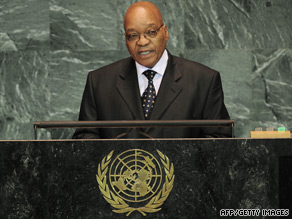 South Africa's new government should make human rights a central pillar of its foreign policy agenda, Human Rights Watch said today in a letter to President-elect Jacob Zuma.
Human Rights Watch expressed concern that in recent years - including during its two-year stint as a member of the United Nations Security Council - South Africa has chosen to side with some of the worst human rights abusers, including Iran, Burma, Sudan, and Zimbabwe. While it justifiably criticized the human rights practices of the United States and Israel and sought reform of international institutions, Pretoria failed to take the moral high ground and build a broad north-south alliance around strengthening international law and human rights. As a result, it squandered its international reputation, which it had so effectively built up in the 1990s, as a champion of human rights and the rule of law. "South Africans and their supporters all over the world who had such high hopes for this country's leadership on human rights felt betrayed by the previous government," said Georgette Gagnon, Africa director at Human Rights Watch. "This is a chance for Zuma to take the high road and restore credibility and balance to South Africa's foreign policy."
Human Rights Watch called attention to situations in three nations where South African leadership could lead to significant improvements and progress in human rights: Sudan, Democratic Republic of Congo, and Zimbabwe.
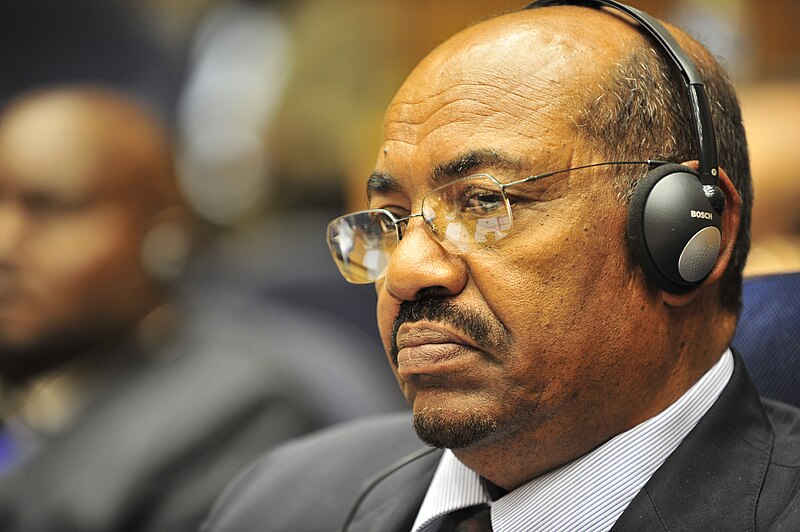 In Sudan, a number of interlinking issues continue to undermine human rights. The major elements are: the armed conflict, lack of security, and obstruction of humanitarian aid in Darfur; African Union and Arab League moves to help President Omar al-Bashir evade justice; and the threat of renewed north-south conflict between Khartoum and the Sudan People's Liberation Movement/Army (SPLM/A). Those responsible for the worst crimes in Darfur know they will not face justice and the Sudanese government has used the International Criminal Court's (ICC) arrest warrant for al-Bashir as a pretext to expel international humanitarian organizations, unnecessarily endangering further the lives of millions of civilians in Darfur.
Human Rights Watch called on the new South African government to: support the ICC's work in Sudan and the principles of international justice, and press other African countries to do the same; and press Sudan to reverse its decision to expel humanitarian agencies, and reinstate the full scope of humanitarian assistance in Darfur.
 In its letter to President-elect Zuma, Human Rights Watch also detailed how the new government could help end the rampant abuses in the Democratic Republic of the Congo and help set the country firmly on a democratic footing. To its great credit, South Africa has contributed a substantial number of peacekeeping troops to the United Nations force in Congo. The UN force is involved in joint military operations with Congolese government forces against brutal Hutu militias like the Democratic Liberation Forces of Rwanda (FDLR).
But UN peacekeepers have so far been unsuccessful in restraining government soldiers from also committing abuses against civilians. To make matters worse, the deputy commander of the Congolese military force is reported to be Bosco Ntaganda, a former rebel commander who has been charged with war crimes by the ICC. Human Rights Watch said that South African forces should not be standing by while abuses are taking place or working with people like Ntaganda.
Human Rights Watch called on the new government to help the Congolese government establish a vetting mechanism to remove from the army and police individuals accused of serious human rights violations, and to ensure that they are brought to justice rather than promoted; and press the Congolese authorities to punish abusive soldiers and their commanders and to bring abuses to a halt.
 In Zimbabwe, despite the formation of a new power-sharing government, the crisis persists and human rights abuses continue. Police continue to intimidate and arrest activists, and supporters of the Zimbabwe African National Union-Patriotic Front (ZANU-PF), the longtime governing party, continue their violent invasions of commercial farms. Police and prosecuting authorities who have remained under the control of ZANU-PF in the power-sharing government have continued politically motivated prosecutions of political opponents and have failed to investigate ongoing allegations of torture. Key state and judicial institutions remain partisan and unreformed. The government is yet to initiate comprehensive legislative reforms and repeal repressive laws like the Public Order and Security Act, Access to Information and Protection of Privacy Act, as well as a litany of laws that restrict media operations.
Human Rights Watch called on the new South African government to: monitor closely the progress of all parties to Zimbabwe's power-sharing agreement in carrying out all commitments they made as part of the Global Political Agreement, including respecting individual rights, passing human rights-centered legislative reforms, drafting a new constitution, and holding fresh elections that meet international standards of freedom and fairness; and press Zimbabwe's inclusive government to commit to, and institute, genuine political change. "The new government of President Zuma should establish early on that it is committed to playing a positive role in ending repression and abuses not only on the continent but in other parts of the world," Gagnon said. "Zimbabwe is an obvious place to start."
Source: Human Rights Watch
Wednesday, April 8, 2009
DR Congo: Brutal Rapes by Rebels and Army
Rwandan rebel forces, government army soldiers, and their allies have raped at least 90 women and girls since late January 2009 in the volatile North and South Kivu provinces of eastern Democratic Republic of Congo, Human Rights Watch said today. The Rwandan rebel forces have also been implicated in the deaths of most of the 180 civilians killed during this period.
The United Nations Security Council will discuss on April 9 the latest report by the UN secretary-general on the peacekeeping force in Congo. Human Rights Watch called on the UN Security Council to press the Congolese government to remove human rights abusers from its armed forces and end rights violations, including attacks against women and girls.
The Rwandan Hutu militia called the Democratic Forces for the Liberation of Rwanda (FDLR) attacked and burned dozens of villages and towns in Masisi and Lubero territories (North Kivu) as well as in Kalehe territory (South Kivu) in recent weeks, committing numerous deliberate killings, rapes, and acts of looting. Blaming government military operations, the FDLR deliberately targeted civilians, used them as human shields, and accused civilians of having betrayed them. According to witnesses and victims interviewed by Human Rights Watch, the FDLR have been implicated in the killings of at least 154 civilians since January 23.
"The FDLR are deliberately killing and raping Congolese civilians as apparent punishment for the military operations against them," said Anneke Van Woudenberg, senior Africa researcher at Human Rights Watch. "Both the fighters who commit such horrific acts and the rebel commanders who permit them are responsible for war crimes."
The FDLR were temporarily pushed out of their military positions in January and February 2009 following the start of a joint military operation against them by Congolese and Rwandan troops on January 20. Following the withdrawal of Rwandan forces on February 24, military action diminished and the FDLR reoccupied many of their previous positions.
Most recently, at least seven civilians were killed and 24 others wounded during FDLR attacks in http://en.wikipedia.org/wiki/Human_Rights_Watch and Walikale in early April. On March 20, 2009, the FDLR attacked Buhuli, North Kivu, and four other nearby villages, killing at least five civilians, including two women, an elderly man, a 7-year-old girl and 9-year-old boy. On February 13, the FDLR attacked the village of Kipopo, killing at least 13 people, who were burned to death in their homes.
In late February, the FDLR abducted at least a dozen women and girls from Remeka, in Masisi territory, North Kivu. Two women who escaped reported that FDLR combatants brutally killed nine of the women and girls when they resisted attempts to rape them. The fate of the others is unknown.
The Congolese army has also been implicated in numerous rapes. In March, Congolese soldiers raped at least 21 women and girls in southern Masisi and northern Kalehe territories. Many of the victims were violently gang raped while the soldiers were on looting sprees.
On March 24, four women from Ziralo, South Kivu, were returning from the market when they were stopped by a group of army soldiers at a makeshift barricade. The soldiers took the sacks of food the women were carrying and then said they were going to examine the women's vaginas for any hidden money. The soldiers took the women into the nearby forest and gang raped each of them for hours. One woman was six-months pregnant and was raped so brutally that she lost her unborn child.
The recent killings by the rebel group are in addition to those perpetrated by its forces on January 27, when FDLR combatants hacked to death dozens of civilians used as human shields at their military position in Kibua. One witness at Kibua interviewed by Human Rights Watch saw an FDLR combatant batter a 10-year-old girl to death against a brick wall.
According to the United Nations, an estimated 250,000 people have fled their homes since January, adding to hundreds of thousands of others who fled earlier waves of violence.
The Congolese army says it is preparing for the next phase of operations against the FDLR, this time expanding the operations to South Kivu. The army has added over 10,000 additional soldiers from former Congolese rebel groups, including the National Congress for the Defence of the People (CNDP), the Coalition of Congolese Patriotic Resistance (PARECO), and other local militia groups. The rapidly mixed brigades of former enemies have been sent to the front lines with no salaries, rations, or any formal training, increasing the likelihood of future human rights violations.
Serious abuses against civilians by government soldiers have already been reported. Army soldiers killed at least five civilians in Lubero territory in March, some while on looting sprees. In Ziralo, an elderly man was killed by soldiers while they raped his wife and looted his home.
The rapid integration process has included no formal vetting mechanism to stop those with serious records of past human rights abuses from being promoted and integrated into the Congolese army.
Bosco Ntaganda, wanted on an arrest warrant by the International Criminal Court (ICC) for the war crime of enlisting child soldiers and using them in hostilities, was promoted to the position of general in the Congolese army in January 2009. In addition to the ICC charges, Ntaganda has been accused of commanding troops that massacred 150 civilians at Kiwanja in North Kivu province in November 2008.
Jean-Pierre Biyoyo was recently appointed a colonel in the Congolese army despite being found guilty by a Congolese military court in March 2006 of recruiting child soldiers. He later escaped from prison. Both Ntaganda and Biyoyo play an important role in current military operations.
The Congolese army will be supported by the UN peacekeeping mission in Congo, MONUC, in its military operations against the FDLR. MONUC says that its top priority is to protect civilians, but it is not clear how civilians will be protected against further attacks by either FDLR or Congolese army soldiers.
"Protection of civilians can only be taken seriously if known human rights abusers are removed from the ranks of the Congolese army," said Van Woudenberg. "The Security Council should seek an immediate answer from the Congolese government on when it will carry out such arrests and what it will do to stop further rape and killing by its troops before it gives any support to the military operations."
Source: Human Rights Watch
The United Nations Security Council will discuss on April 9 the latest report by the UN secretary-general on the peacekeeping force in Congo. Human Rights Watch called on the UN Security Council to press the Congolese government to remove human rights abusers from its armed forces and end rights violations, including attacks against women and girls.
The Rwandan Hutu militia called the Democratic Forces for the Liberation of Rwanda (FDLR) attacked and burned dozens of villages and towns in Masisi and Lubero territories (North Kivu) as well as in Kalehe territory (South Kivu) in recent weeks, committing numerous deliberate killings, rapes, and acts of looting. Blaming government military operations, the FDLR deliberately targeted civilians, used them as human shields, and accused civilians of having betrayed them. According to witnesses and victims interviewed by Human Rights Watch, the FDLR have been implicated in the killings of at least 154 civilians since January 23.
"The FDLR are deliberately killing and raping Congolese civilians as apparent punishment for the military operations against them," said Anneke Van Woudenberg, senior Africa researcher at Human Rights Watch. "Both the fighters who commit such horrific acts and the rebel commanders who permit them are responsible for war crimes."
The FDLR were temporarily pushed out of their military positions in January and February 2009 following the start of a joint military operation against them by Congolese and Rwandan troops on January 20. Following the withdrawal of Rwandan forces on February 24, military action diminished and the FDLR reoccupied many of their previous positions.
Most recently, at least seven civilians were killed and 24 others wounded during FDLR attacks in http://en.wikipedia.org/wiki/Human_Rights_Watch and Walikale in early April. On March 20, 2009, the FDLR attacked Buhuli, North Kivu, and four other nearby villages, killing at least five civilians, including two women, an elderly man, a 7-year-old girl and 9-year-old boy. On February 13, the FDLR attacked the village of Kipopo, killing at least 13 people, who were burned to death in their homes.
In late February, the FDLR abducted at least a dozen women and girls from Remeka, in Masisi territory, North Kivu. Two women who escaped reported that FDLR combatants brutally killed nine of the women and girls when they resisted attempts to rape them. The fate of the others is unknown.
The Congolese army has also been implicated in numerous rapes. In March, Congolese soldiers raped at least 21 women and girls in southern Masisi and northern Kalehe territories. Many of the victims were violently gang raped while the soldiers were on looting sprees.
On March 24, four women from Ziralo, South Kivu, were returning from the market when they were stopped by a group of army soldiers at a makeshift barricade. The soldiers took the sacks of food the women were carrying and then said they were going to examine the women's vaginas for any hidden money. The soldiers took the women into the nearby forest and gang raped each of them for hours. One woman was six-months pregnant and was raped so brutally that she lost her unborn child.
The recent killings by the rebel group are in addition to those perpetrated by its forces on January 27, when FDLR combatants hacked to death dozens of civilians used as human shields at their military position in Kibua. One witness at Kibua interviewed by Human Rights Watch saw an FDLR combatant batter a 10-year-old girl to death against a brick wall.
According to the United Nations, an estimated 250,000 people have fled their homes since January, adding to hundreds of thousands of others who fled earlier waves of violence.
The Congolese army says it is preparing for the next phase of operations against the FDLR, this time expanding the operations to South Kivu. The army has added over 10,000 additional soldiers from former Congolese rebel groups, including the National Congress for the Defence of the People (CNDP), the Coalition of Congolese Patriotic Resistance (PARECO), and other local militia groups. The rapidly mixed brigades of former enemies have been sent to the front lines with no salaries, rations, or any formal training, increasing the likelihood of future human rights violations.
Serious abuses against civilians by government soldiers have already been reported. Army soldiers killed at least five civilians in Lubero territory in March, some while on looting sprees. In Ziralo, an elderly man was killed by soldiers while they raped his wife and looted his home.
The rapid integration process has included no formal vetting mechanism to stop those with serious records of past human rights abuses from being promoted and integrated into the Congolese army.
Bosco Ntaganda, wanted on an arrest warrant by the International Criminal Court (ICC) for the war crime of enlisting child soldiers and using them in hostilities, was promoted to the position of general in the Congolese army in January 2009. In addition to the ICC charges, Ntaganda has been accused of commanding troops that massacred 150 civilians at Kiwanja in North Kivu province in November 2008.
Jean-Pierre Biyoyo was recently appointed a colonel in the Congolese army despite being found guilty by a Congolese military court in March 2006 of recruiting child soldiers. He later escaped from prison. Both Ntaganda and Biyoyo play an important role in current military operations.
The Congolese army will be supported by the UN peacekeeping mission in Congo, MONUC, in its military operations against the FDLR. MONUC says that its top priority is to protect civilians, but it is not clear how civilians will be protected against further attacks by either FDLR or Congolese army soldiers.
"Protection of civilians can only be taken seriously if known human rights abusers are removed from the ranks of the Congolese army," said Van Woudenberg. "The Security Council should seek an immediate answer from the Congolese government on when it will carry out such arrests and what it will do to stop further rape and killing by its troops before it gives any support to the military operations."
Source: Human Rights Watch
Subscribe to:
Posts (Atom)