Showing posts with label Imperialism. Show all posts

Monday, January 28, 2019

Open Letter by Over 70 Scholars and Experts Condemns US-Backed Coup Attempt in Venezuela

"For the sake of the Venezuelan people, the region, and for the principle of national sovereignty, these international actors should instead support negotiations between the Venezuelan government and its opponents."

The United States government must cease interfering in Venezuela’s internal politics, especially for the purpose of overthrowing the country’s government.

Actions by the Trump administration and its allies in the hemisphere are almost certain to make the situation in Venezuela worse, leading to unnecessary human suffering, violence, and instability.

Venezuela’s political polarization is not new; the country has long been divided along racial and socioeconomic lines. But the polarization has deepened in recent years.

This is partly due to US support for an opposition strategy aimed at removing the government of Nicolás Maduro through extra-electoral means. While the opposition has been divided on this strategy, US support has backed hardline opposition sectors in their goal of ousting the Maduro government through often violent protests, a military coup d’etat, or other avenues that sidestep the ballot box.

Under the Trump administration, aggressive rhetoric against the Venezuelan government has ratcheted up to a more extreme and threatening level, with Trump administration officials talking of “military action” and condemning Venezuela, along with Cuba and Nicaragua, as part of a “troika of tyranny.” Problems resulting from Venezuelan government policy have been worsened by US economic sanctions, illegal under the Organization of American States and the United Nations ― as well as US law and other international treaties and conventions.

These sanctions have cut off the means by which the Venezuelan government could escape from its economic recession, while causing a dramatic falloff in oil production and worsening the economic crisis, and causing many people to die because they can’t get access to life-saving medicines. Meanwhile, the US and other governments continue to blame the Venezuelan government ― solely ― for the economic damage, even that caused by the US sanctions.

Now the US and its allies, including OAS Secretary General Luis Almagro and Brazil’s far-right president, Jair Bolsonaro, have pushed Venezuela to the precipice.

By recognizing National Assembly President Juan Guaido as the new president of Venezuela ― something illegal under the OAS Charter ― the Trump administration has sharply accelerated Venezuela’s political crisis in the hopes of dividing the Venezuelan military and further polarizing the populace, forcing them to choose sides.

The obvious, and sometimes stated goal, is to force Maduro out via a coup d’etat.

The reality is that despite hyperinflation, shortages, and a deep depression, Venezuela remains a politically polarized country. The US and its allies must cease encouraging violence by pushing for violent, extralegal regime change.

If the Trump administration and its allies continue to pursue their reckless course in Venezuela, the most likely result will be bloodshed, chaos, and instability. The US should have learned something from its regime change ventures in Iraq, Syria, Libya, and its long, violent history of sponsoring regime change in Latin America.

Neither side in Venezuela can simply vanquish the other. The military, for example, has at least 235,000 frontline members, and there are at least 1.6 million in militias. Many of these people will fight, not only on the basis of a belief in national sovereignty that is widely held in Latin America ― in the face of what increasingly appears to be a US-led intervention ― but also to protect themselves from likely repression if the opposition topples the government by force.

In such situations, the only solution is a negotiated settlement, as has happened in the past in Latin American countries when politically polarized societies were unable to resolve their differences through elections.

There have been efforts, such as those led by the Vatican in the fall of 2016, that had potential, but they received no support from Washington and its allies who favored regime change. This strategy must change if there is to be any viable solution to the ongoing crisis in Venezuela.

For the sake of the Venezuelan people, the region, and for the principle of national sovereignty, these international actors should instead support negotiations between the Venezuelan government and its opponents that will allow the country to finally emerge from its political and economic crisis.

Signed:

Noam Chomsky, Professor Emeritus, MIT and Laureate Professor, University of Arizona

Laura Carlsen, Director, Americas Program, Center for International Policy

Greg Grandin, Professor of History, New York University

Miguel Tinker Salas, Professor of Latin American History and Chicano/a Latino/a Studies at Pomona College

Sujatha Fernandes, Professor of Political Economy and Sociology, University of Sydney

Steve Ellner, Associate Managing Editor of Latin American Perspectives

Alfred de Zayas, former UN Independent Expert on the Promotion of a Democratic and Equitable International Order and only UN rapporteur to have visited Venezuela in 21 years

Boots Riley, Writer/Director of Sorry to Bother You, Musician

John Pilger, Journalist & Film-Maker

Mark Weisbrot, Co-Director, Center for Economic and Policy Research

Jared Abbott, PhD Candidate, Department of Government, Harvard University

Dr. Tim Anderson, Director, Centre for Counter Hegemonic Studies

Elisabeth Armstrong, Professor of the Study of Women and Gender, Smith College

Alexander Aviña, PhD, Associate Professor of History, Arizona State University

Marc Becker, Professor of History, Truman State University

Medea Benjamin, Cofounder, CODEPINK

Phyllis Bennis, Program Director, New Internationalism, Institute for Policy Studies

Dr. Robert E. Birt, Professor of Philosophy, Bowie State University

Aviva Chomsky, Professor of History, Salem State University

James Cohen, University of Paris 3 Sorbonne Nouvelle

Guadalupe Correa-Cabrera, Associate Professor, George Mason University

Benjamin Dangl, PhD, Editor of Toward Freedom

Dr. Francisco Dominguez, Faculty of Professional and Social Sciences, Middlesex University, UK

Alex Dupuy, John E. Andrus Professor of Sociology Emeritus, Wesleyan University

Jodie Evans, Cofounder, CODEPINK

Vanessa Freije, Assistant Professor of International Studies, University of Washington

Gavin Fridell, Canada Research Chair and Associate Professor in International Development Studies, St. Mary’s University

Evelyn Gonzalez, Counselor, Montgomery College

Jeffrey L. Gould, Rudy Professor of History, Indiana University

Bret Gustafson, Associate Professor of Anthropology, Washington University in St. Louis

Peter Hallward, Professor of Philosophy, Kingston University

John L. Hammond, Professor of Sociology, CUNY

Mark Healey, Associate Professor of History, University of Connecticut

Gabriel Hetland, Assistant Professor of Latin American, Caribbean and U.S. Latino Studies, University of Albany

Forrest Hylton, Associate Professor of History, Universidad Nacional de Colombia-Medellín

Daniel James, Bernardo Mendel Chair of Latin American History

Chuck Kaufman, National Co-Coordinator, Alliance for Global Justice

Daniel Kovalik, Adjunct Professor of Law, University of Pittsburgh

Winnie Lem, Professor, International Development Studies, Trent University

Dr. Gilberto López y Rivas, Professor-Researcher, National University of Anthropology and History, Morelos, Mexico

Mary Ann Mahony, Professor of History, Central Connecticut State University

Jorge Mancini, Vice President, Foundation for Latin American Integration (FILA)

Luís Martin-Cabrera, Associate Professor of Literature and Latin American Studies, University of California San Diego

Teresa A. Meade, Florence B. Sherwood Professor of History and Culture, Union College

Frederick Mills, Professor of Philosophy, Bowie State University

Stephen Morris, Professor of Political Science and International Relations, Middle Tennessee State University

Liisa L. North, Professor Emeritus, York University

Paul Ortiz, Associate Professor of History, University of Florida

Christian Parenti, Associate Professor, Department of Economics, John Jay College CUNY

Nicole Phillips, Law Professor at the Université de la Foundation Dr. Aristide Faculté des Sciences Juridiques et Politiques and Adjunct Law Professor at the University of California Hastings College of the Law

Beatrice Pita, Lecturer, Department of Literature, University of California San Diego

Margaret Power, Professor of History, Illinois Institute of Technology

Vijay Prashad, Editor, The TriContinental

Eleanora Quijada Cervoni FHEA, Staff Education Facilitator & EFS Mentor, Centre for Higher Education, Learning & Teaching at The Australian National University

Walter Riley, Attorney and Activist

William I. Robinson, Professor of Sociology, University of California, Santa Barbara

Mary Roldan, Dorothy Epstein Professor of Latin American History, Hunter College/ CUNY Graduate Center

Karin Rosemblatt, Professor of History, University of Maryland

Emir Sader, Professor of Sociology, University of the State of Rio de Janeiro

Rosaura Sanchez, Professor of Latin American Literature and Chicano Literature, University of California, San Diego

T.M. Scruggs Jr., Professor Emeritus, University of Iowa

Victor Silverman, Professor of History, Pomona College

Brad Simpson, Associate Professor of History, University of Connecticut

Jeb Sprague, Lecturer, University of Virginia

Kent Spriggs, International human rights lawyer

Christy Thornton, Assistant Professor of History, Johns Hopkins University

Sinclair S. Thomson, Associate Professor of History, New York University

Steven Topik, Professor of History, University of California, Irvine

Stephen Volk, Professor of History Emeritus, Oberlin College

Kirsten Weld, John. L. Loeb Associate Professor of the Social Sciences, Department of History, Harvard University

Kevin Young, Assistant Professor of History, University of Massachusetts Amherst

Patricio Zamorano, Academic of Latin American Studies; Executive Director, InfoAmericas

Source: Open Democracy

Thursday, November 29, 2012

U.N. Assembly, in Blow to U.S., Elevates Status of Palestine


More than 130 countries voted on Thursday to upgrade Palestine to a nonmember observer state of the United Nations, a triumph for Palestinian diplomacy and a sharp rebuke to the United States and Israel.

But the vote, at least for now, did little to bring either the Palestinians or the Israelis closer to the goal they claim to seek: two states living side by side, or increased Palestinian unity. Israel and the militant group Hamas both responded critically to the day’s events, though for different reasons.

The new status will give the Palestinians more tools to challenge Israel in international legal forums for its occupation activities in the West Bank, including settlement-building, and it helped bolster the Palestinian Authority, weakened after eight days of battle between its rival Hamas and Israel.

But even as a small but determined crowd of 2,000 celebrated in central Ramallah in the West Bank, waving flags and dancing, there was an underlying sense of concerned resignation.

“I hope this is good,” said Munir Shafie, 36, an electrical engineer who was there. “But how are we going to benefit?”

Still, the General Assembly vote — 138 countries in favor, 9 opposed and 41 abstaining — showed impressive backing for the Palestinians at a difficult time. It was taken on the 65th anniversary of the vote to divide the former British mandate of Palestine into two states, one Jewish and one Arab, a vote Israel considers the international seal of approval for its birth.

The past two years of Arab uprisings have marginalized the Palestinian cause to some extent as nations that focused their political aspirations on the Palestinian struggle have turned inward. The vote on Thursday, coming so soon after the Gaza fighting, put the Palestinians again — if briefly, perhaps — at the center of international discussion.

“The question is, where do we go from here and what does it mean?” Salam Fayyad, the Palestinian prime minister, who was in New York for the vote, said in an interview. “The sooner the tough rhetoric of this can subside and the more this is viewed as a logical consequence of many years of failure to move the process forward, the better.” He said nothing would change without deep American involvement.

President Mahmoud Abbas of the Palestinian Authority, speaking to the assembly’s member nations, said, “The General Assembly is called upon today to issue a birth certificate of the reality of the state of Palestine,” and he condemned what he called Israeli racism and colonialism. His remarks seemed aimed in part at Israel and in part at Hamas. But both quickly attacked him for the parts they found offensive.

“The world watched a defamatory and venomous speech that was full of mendacious propaganda against the Israel Defense Forces and the citizens of Israel,” Prime Minister Benjamin Netanyahu of Israel responded. “Someone who wants peace does not talk in such a manner.”

While Hamas had officially backed the United Nations bid of Mr. Abbas, it quickly criticized his speech because the group does not recognize Israel.

“There are controversial issues in the points that Abbas raised, and Hamas has the right to preserve its position over them,” said Salah al-Bardaweel, a spokesman for Hamas in Gaza, on Thursday.

“We do not recognize Israel, nor the partition of Palestine, and Israel has no right in Palestine,” he added. “Getting our membership in the U.N. bodies is our natural right, but without giving up any inch of Palestine’s soil.”

Israel’s ambassador to the United Nations, Ron Prosor, spoke after Mr. Abbas and said he was concerned that the Palestinian Authority failed to recognize Israel for what it is.

“Three months ago, Israel’s prime minister stood in this very hall and extended his hand in peace to President Abbas,” Mr. Prosor said. “He reiterated that his goal was to create a solution of two states for two peoples, where a demilitarized Palestinian state will recognize Israel as a Jewish state.

“That’s right. Two states for two peoples. In fact, President Abbas, I did not hear you use the phrase ‘two states for two peoples’ this afternoon. In fact, I have never heard you say the phrase ‘two states for two peoples’ because the Palestinian leadership has never recognized that Israel is the nation-state of the Jewish people.”

The Israelis also say that the fact that Mr. Abbas is not welcome in Gaza, the Palestinian coastal enclave run by Hamas, from which he was ejected five years ago, shows that there is no viable Palestinian leadership living up to its obligations now.

As expected, the vote won backing from a number of European countries, and was a rebuff to intense American and Israeli diplomacy. France, Spain, Italy and Switzerland all voted yes. Britain and Germany abstained. Apart from Canada, no major country joined the United States and Israel in voting no. The other opponents included Palau, Panama and Micronesia.

Susan E. Rice, the American ambassador to the United Nations, was dismissive of the entire exercise. “Today’s grand pronouncements will soon fade,” she said. “And the Palestinian people will wake up tomorrow and find that little about their lives has changed, save that the prospects of a durable peace have only receded.”

A major concern for the Americans is that the Palestinians may use their new status to try to join the International Criminal Court. That prospect particularly worries the Israelis, who fear that the Palestinians may press for an investigation of their practices in the occupied territories widely viewed as violations of international law.

Saeb Erekat, the chief Palestinian negotiator, said that after the vote “life will not be the same” because “Palestine will become a country under occupation.”

“The terms of reference for any negotiations become withdrawal,” Mr. Erekat said.

Another worry is that the Palestinians may use the vote to seek membership in specialized agencies of the United Nations, a move that could have consequences for the financing of the international organizations as well as the Palestinian Authority itself. Congress cut off financing to the United Nations Educational, Scientific and Cultural Organization, known as Unesco, in 2011 after it accepted Palestine as a member. The United States is a major contributor to many of these agencies and is active on their governing boards.

In response to the Palestinian bid, a bipartisan group of senators said Thursday that they would introduce legislation that would cut off foreign aid to the authority if it tried to use the International Criminal Court against Israel, and close the Palestine Liberation Organization’s office in Washington if Palestinians refused to negotiate with Israel.

Calling the Palestinian bid “an unhealthy step that could undermine the peace process,” Senator Lindsey Graham, Republican of South Carolina, said that he and the other senators, including Charles E. Schumer, Democrat of New York, would be closely monitoring the situation.

The vote came shortly after an eight-day Israeli military assault on Gaza that Israel described as a response to stepped-up rocket fire into Israel. The operation killed scores of Palestinians and was aimed at reducing the arsenal of Hamas in Gaza, part of the territory that the United Nations resolution expects to make up a future state of Palestine.

The Palestinian Authority, based in Ramallah, was politically weakened by the Gaza fighting, with its rivals in Hamas seen by many Palestinians as more willing to stand up to Israel and fight back. That shift in sentiment is one reason that some Western countries gave for backing the United Nations resolution, to strengthen Mr. Abbas and his more moderate colleagues in their contest with Hamas.

Source: New York Times

Saturday, September 1, 2012

Romney and Afghanistan

The Washington Post notes that “Mitt Romney became the first Republican since 1952 to accept his party’s nomination without mentioning war.” According to the Post, “neither Romney nor his running mate, Rep. Paul Ryan, had anything to say about terrorism or war while on their party’s biggest stage.”

It’s true that Romney didn’t specifically mention Afghanistan (or Iraq) in his speech at the Republican National Convention, but he did discuss several national security issues. Romney said that Obama’s “trillion dollar cuts to our military will eliminate hundreds of thousands of jobs, and also put our security at greater risk.”

And he strongly criticized Obama for dealing poorly with the Iranian nuclear threat, which he said makes “every American less secure today.” Most memorable, Romney said of Obama: “In his first TV interview as President, he said we should talk to Iran. We’re still talking, and Iran’s centrifuges are still spinning.”

Perhaps not coincidentally, the Washington Post article and similar press coverage folds neatly into an attack from the Obama campaign, which used a web video to say that “at a time when 84,000 American men and women are fighting for their country in Afghanistan,” Romney’s acceptance speech included “not a single mention of how, or when, to bring them home safely.”

Whatever the significance of Afghanistan going unmentioned in Romney and Ryan’s acceptance speeches, it is not a topic Romney has avoided on the campaign trail. As Romney spokesman Ryan Williams pointed out: “The day before his convention speech, Governor Romney traveled to the American Legion national convention – an invitation the President declined – because Gov. Romney views any opportunity to stand with those who have served as a privilege. In contrast, President Obama has failed in his duty as Commander in Chief to win the home front. Unlike any wartime president in memory, he has failed to consistently and forthrightly speak about the war in Afghanistan to the American people. The Obama campaign’s attack on Governor Romney today is another attempt to politicize the war in Afghanistan, a war in which President Obama has dangerously based his decisions on political calculations, endangering our mission.”

The American Legion gave Romney a very warm reception at its convention in Indianapolis, and some members grumbled openly about President Obama expecting them to settle for a videotaped message while Romney attended in person. “I have to take into consideration that at least [Romney] bothered to come and talk to 10,000 veterans when Obama didn’t have the time,” the Indianapolis Star quotes one Legion member saying.

The Star reports Romney received a standing ovation from the assembled veterans. They were particularly pleased that Romney spoke about increasing employment opportunities for returning veterans, blocking budget cuts to the military, reforming the VA, and opposing Obama’s plans to increase premiums for the Tricare program for veterans’ health care. Obama’s good friends at the AFL-CIO sent a squad of activists to protest outside the American Legion event.

And the Romney people are correct to note that Obama isn’t exactly rushing to the microphones to talk about Afghanistan these days, either. He’s had very little to say about the rising tide of “green on blue” attacks, in which Afghan troops suddenly turn their guns on the American soldiers who had been training them. When Obama does address the subject, he offers nothing but the kind of vague platitudes his campaign is needling Romney over.

For example, he told an August 21 press conference he was “deeply concerned about this, from top to bottom” and, after noting that the transition of security responsibilities to Afghan forces means “our troops are in much closer contact with Afghan troops on an ongoing basis,” Obama helpfully explained that “part of what we’ve got to do is make sure that this model works, but it doesn’t make our guys more vulnerable.”

That sounds great, but green-on-blue attacks have risen 10 percent in the past two years. Three more NATO soldiers were just gunned down last week. The model does not appear to be working. Does that sound like something President Obama should be boasting about at his convention? How about the ongoing investigation of dangerous national security leaks, which appear to have emanated from the White House for political purposes?

Mitt Romney has consistently made two strong criticisms of Obama’s Afghanistan policy: he thinks it was a mistake to set an arbitrary timetable for withdrawal far in advance, and let the enemy know about it; and he thinks Obama’s haste to get a withdrawal under way has left our troops, and the unsteady government they fought to secure, exposed to unacceptable risks. Obama and his media allies expose their own deep insecurity about the President’s record in the War on Terror, and Obama’s nearly hysterical insistence that the death of Osama bin Laden insulates him from all foreign policy criticism, by piling on Romney because he didn’t throw a few lines about Afghanistan into his acceptance speech at the Republican National Convention. This is a topic more properly addressed in debate between the two candidates, and there is every reason to believe it will be.

Source: Human Events

Friday, August 31, 2012

The Armistice of Moudros: 1918

The Armistice of Moudros (Turkish: Mondros Ateşkes Anlaşması), concluded on 30 October 1918, ended the hostilities in the Middle Eastern theatre between the Ottoman Empire and the Allies of World War I. It was signed by the Ottoman Minister of Marine Affairs Rauf Bey and the British Admiral Somerset Arthur Gough-Calthorpe, on board HMS Agamemnon in Moudros harbor on the Greek island of Lemnos.

As part of several conditions to the armistice, the Ottomans surrendered their remaining garrisons outside Anatolia, as well as granted the Allies the right to occupy forts controlling the Straits of the Dardanelles and the Bosporus; and the right to occupy "in case of disorder" any Ottoman territory in case of a threat to security. The Ottoman army was demobilized, and all ports, railways, and other strategic points were made available for use by the Allies. In the Caucasus, the Ottomans had to retreat to within the pre-war borders between the Ottoman and the Russian Empires.

The armistice was followed with occupation of Constantinople and subsequent partitioning of the Ottoman Empire. The Treaty of Sèvres (10 August 1920) followed the armistice, but this treaty was not enacted due to the outbreak of the Turkish War of Independence.

Source: Wikipedia

Thursday, August 30, 2012

Poverty now a crisis in the first world: Motlanthe

The adverse impact of capitalism on social and economic growth requires a mind shift in socialism, Deputy President Kgalema Motlanthe said today.

"The global crisis of capitalism and imperialism, which is negatively affecting growth, widening social inequality, increasing levels of poverty and worsening [un]employment figures, needs a sharpened, radical shift in the approach the Socialist International takes," he said in Cape Town.

Speaking at the opening of the 24th Congress of the Socialist International (SI), he said debates had to focus on the reform of the organisation. Poverty was no longer just a problem for developing nations, but also now becoming a crisis in the first world. "Therefore this leaves us with no choice but to review, analyse and rethink the impact of the global economic crisis on society and the toiling masses of the world." He said there were various concerns sociality parties needed to confront. These included a need to strive for conflict resolution, while securing conditions of development.

Motlanthe's sentiments were echoed by the SI's president and former Greek prime minister George Papandreou. Innovative and alternative solutions were needed in a changing world, he said. "This human ingenuity needs to be accompanied by political and democratic will to make these changes... That will, my friends, has been lacking in Europe and around the world."

Papandreou defended the SI's existence, saying leftist parties were important to achieve, among others, peace, justice, good governance, equality, growth and employment for all. He warned against attributing blame for the global economic crisis. "We point fingers at each other rather than reach out our hands and lift each other up."

Papandreou lamented the fact that immigrants were being held responsible for the economic troubles in several countries. He said international co-ordination was needed now more than ever. "We've seen this spectacular rise in nationalism over the years, and at the same time we've noticed a terrifying rise in racism, prejudice."

Source: Times Live

Friday, August 10, 2012

Washington’s proxy in Syria: Al Qaeda

Secretary of State Hillary Clinton on Tuesday issued a warning against anyone “attempting to exploit the misery of the Syrian people, either by sending in proxies or sending in terrorist fighters.” She insisted that such actions would “not be tolerated.”

Neither she nor the State Department cared to spell out precisely which countries or organizations were being warned. Hidden behind Clinton’s hypocritical statement is the reality that US imperialism and its allies are themselves relying on, bankrolling and arming just such “proxies” and “terrorist fighters” to pursue their war for regime-change in Syria.

Chief among these forces is Washington’s supposed arch enemy, the Islamist terrorist organization Al Qaeda.

The growing acknowledgment within official circles that Al Qaeda is playing a decisive role in Syria’s civil war exposes both the real nature of the US-backed bid to topple the government of President Bashar al-Assad and the fraud of Washington’s “war on terror.”

Having for months dismissed as “propaganda” the Syrian government’s statements that it is battling Al Qaeda terrorists, the corporate media and sources close to the US government are now not only acknowledging the role of this organization in the Syrian events, but celebrating it.

The major US news networks all carried reports on Monday and Tuesday highlighting Al Qaeda’s presence inside Syria. These follow a report in the New York Times late last month that Al Qaeda is operating in the heart of the so-called Syrian “revolution” through three groups: the Al Nusra Front for the People of the Levant, the Abdullah Azzam Brigades and Al Baraa ibn Malik Martyrdom Brigade.

The frankest admission of the significance of Al Qaeda’s role came Monday in an article posted on the web site of the Council on Foreign Relations by Ed Husain, a senior fellow for Middle Eastern Studies and one of the council’s chief analysts on Islamist political movements in the Middle East.

Husain wrote: “The Syrian rebels would be immeasurably weaker today without al-Qaeda in their ranks. By and large, Free Syrian Army (FSA) battalions are tired, divided, chaotic, and ineffective… Al-Qaeda fighters, however, may help improve morale. The influx of jihadis brings discipline, religious fervor, battle experience from Iraq, funding from Sunni sympathizers in the Gulf, and most importantly, deadly results. In short, the FSA needs al-Qaeda now.”

Husain predicts that “Al-Qaeda could become the most effective fighting force in Syria if defections from the FSA” to its ranks continue growing and “the ranks of foreign fighters continue to swell.” Recent media reports have made clear that Islamist fighters from as far away as Chechnya are being funneled into Syria across the Turkish border, along with many more from Iraq, Libya, Saudi Arabia, Yemen, Jordan and elsewhere.

The US reaction? “Thus far, Washington seems reluctant to weigh heavily into this issue,” writes Husain. “The unspoken position of policymakers is to get rid of Assad first—weakening Iran’s position in the region—and then deal with Al-Qaeda later.”

Such statements are not made lightly and are based upon intimate knowledge of American policy. The Council on Foreign Relations has the closest ties to the State Department of any Washington think tank. Sitting on its board of directors are two former secretaries of state, Colin Powell and Madeleine Albright.

What is involved here are political realities that serve to blow up the pretexts for both the war in Syria and the “global war on terrorism” that has served as the touchstone for US policy, both foreign and domestic, for over a decade.

Washington is not waging a crusade for democracy and human rights in Syria. It is involved in a dirty war in which carnage is being unleashed against the Syrian population as a means of toppling a regime that has historic ties to Tehran. This, in turn, is meant to pave the way for a wider war aimed at eliminating Iran as a rival for regional hegemony in the energy-rich and geo-strategically vital regions of the Persian Gulf and Central Asia.

That Iran itself recognizes these aims was spelled out Tuesday by Iranian envoy Saeed Jalili, who traveled to Damascus. “What is happening in Syria is not an internal Syrian issue but a conflict between the axis of resistance and its enemies in the region and the world,” he said.

The New York Times as much as admitted the accuracy of this assessment, acknowledging that it is not “surprising that Tehran should view the internal conflict in Syria as part of a wider international war--with Iran as the ultimate target.” It continued: “To understand the roots of Iranian paranoia, just look at the map. Iran has been steadily encircled by a network of US military bases in the decades since the Iranian revolution of 1979.”

As for Al Qaeda, after being used as a bogeyman to justify two wars of aggression and a sweeping and continuing assault on democratic rights within the US itself, it now emerges as the indispensable shock troops in Washington’s war for regime-change in Syria.

This alliance is virtually a direct repetition of the relations established by the CIA and Washington when Al Qaeda was founded by Osama bin Laden in the early 1980s. Then it funneled Islamist mujahideen fighters across the Pakistani border into Afghanistan in a war against a Soviet-backed regime that was orchestrated by the CIA and funded with billions of US dollars.

Now the CIA is playing a similar role in Syria, overseeing a huge logistical operation on the Turkish border. Can anyone believe that armed Chechen jihadis are marching across Georgia and Turkey into Syria without the active collaboration of US intelligence?

All of the rhetoric about a global war against Islamist terrorism notwithstanding, the reality is that US imperialism has utilized such forces over the course of decades. Saudi Arabia, which provides these forces with both financial and ideological backing, is Washington’s key Arab ally. Throughout the Cold War, the US government promoted the virulently anti-communist forces of political Islam in the Middle East as well as Asia as a means of destabilizing and toppling nationalist and secular regimes and countering the development of socialist movements.

The response of the US media and the political apparatus as a whole to revelations about Al Qaeda’s role in Syria goes beyond cynicism. It expresses deep-going political disorientation. In Orwellian style, the media reports that yesterday’s mortal enemy has turned into today’s ally without skipping a beat and without seeing the need for explanation. Not a single leading politician has seen fit even to publicly question this transformation.

The lineup of US imperialism and Al Qaeda in Syria exposes even more glaringly the reactionary role played by pseudo-left groups like the International Socialist Organization (ISO) in supporting the imperialist-led drive for regime-change and even casting it as a “revolution.”

Do they all really believe that the American people won’t notice, after having been dragged into two protracted wars, costing the lives of thousands of US soldiers and hundreds of thousands of Iraqi and Afghan civilians, as well as trillions of dollars, all in the name of the struggle against Al Qaeda? If so, they are deeply mistaken. These revelations will have an explosive effect in laying bare and discrediting the entire US ruling establishment.

Source: World Socialist Web Site

Wednesday, December 1, 2010

Tension rising in Middle East: Could Israel attack Iran and why?

On August 21 the Bushehr nuclear power plant was officially launched. This marked a new stage in Iran's disputed nuclear programme. In the days preceding this event, former US ambassador to the UN, John Bolton, was quoted around the world as saying: "Israel has days to strike Bushehr" and further "diplomatically" hinted, “If Israel was right to destroy the Osiraq reactor [Iraqi nuclear reactor bombed by Israel in 1981], is it right to allow this one to continue? You can’t have it both ways.”

Shortly after American/Israeli Jeffry Goldberg – one of the most influential journalists on matters of Israel – wrote an article in The Atlantic called "The Point of No Return". In his article he also highlights the unavailability of an Israeli strike against Iran.

Amidst the so called Middle-East "peace negotiations" – a pathetic and hopeless attempt to divide the Palestinian territories between different rulers and their stooges – tension is rising in the Middle East. We are living in a period of great instability on a global level. In the Middle East this is especially reflected in the inability of US imperialism to be able to control the situation.

Out of this crisis Iran is presently emerging as a more powerful player in the Middle East. At the same time Israel is feeling pressure both strategically in the region but also to an increasing degree from its masses who have started to become numb to the hysterical military propaganda. Contradictions are building up in the Middle East and sooner or later they will have to be solved in one way or another. One thing is clear, the turbulence and instability seen hitherto is nothing compared with what is being prepared for the future.

Destruction of "equilibrium" in the Middle East

In 2003 US president George Bush started the war in Iraq. A hopelessly short-sighted adventure, that was supposed to put an end to “terrorism”, “restore democracy” and consolidate and manifest the domination of US imperialism in the region and globally. Instead, what the war in Iraq managed was to further destabilise the whole region bringing with it nothing but further misery for the downtrodden masses. The US army immediately revealed itself to be nothing but an occupation force, swiftly alienating the mass of the population. At the same time the offensive displayed the limits of US imperialism.

The War in Iraq could never have been won. Simply to maintain a most fragile “stability” the Americans needed the help of Iran and Syria who have considerable influence in the country. At the same time the once powerful Iraqi military apparatus, the only counterweight to the Iranian army, has been completely shattered.

With the dismantling of Saddam’s army, a vacuum was opened not only within Iraq itself but in the whole of the Middle East. In 2006 the 1.5m-strong armed forces of Iran were described, by General John Abizaid, chief of the US Central Command, to be "the most powerful military force in the region, except for the United States of America, [and Israel]". This situation poses a serious imbalance of forces in the Middle East, an imbalance that is acquiring a logic of its own.

But now Iraq itself is beyond its control. Huge sectarian rifts have opened up and are widening. The withdrawal of US combat forces in August has further increased this instability, but the US did not have any other options. The presence of US forces in Iraq was draining the US treasury of more than 2 billion dollars a week. In a crisis situation with millions losing their jobs in the US, this drain enormously increased the general alienation of US workers and youth to the war. There was no way any government could endure such an immense drain of resources for so long, neither from a political nor an economic point of view. (However, although “combat forces” have been withdrawn, some 50,000 US troops still remain in Iraq and are planned to stay until the end of 2011 to “advise” Iraqi forces and “protect” US interests.)

But to withdraw fully the US needs the cooperation of Iran (and Syria) who control important militia forces in Iraq and who through these could cause great chaos and instability. On top of this Iran has also displayed several times how it could even use regular Iranian ground forces to intervene in Iraq. Last December Iranian troops temporarily occupied well No 4 at the al Fakkah oil field, about 320km south-east of Baghdad. Although the troops withdrew shortly after the occupation – they only withdrew from the well, but remain on official Iraqi soil to this day – they met no resistance either from US or Iraqi troops. Also in the north there have been several incidents of Iranian troops moving into Iraqi soil ("in chase of terrorists") without Iraqi officials being able to seriously challenge their actions, because through its involvement in Iraqi politics and with its control over important sectarian armed forces Iran could create further chaos and instability. Herein lies the dilemma of the US.

Apart from its influence in Iraq, other factors are also acting as an insurance policy against an attack for Iran. Firstly Iran through the Qods forces of the IRGC controls many groups internationally that could put pressure on the US and its allies through terrorist actions and open warfare. The most important are the Hezbollah forces in Lebanon who control vast areas of that small but strategically important country. They have the capability of striking inside Israel, a close ally of the US and also hitherto a (if not the) dominant force in the Middle East.

Last but not least Iran has a large influence in the Persian Gulf and could, potentially, temporarily block the strait of Hormuz where more than 40% of the world’s crude oil has to pass in order to reach the world markets. Such an action, even for a short period, would have a very negative effect on the world economy that is already in a fragile state. Stratfor – the US-based strategic intelligence institute – claims that even in a best case scenario it would take at least one month to remove such a block. Besides bringing the world economy to its knees, such a block would also be a big threat against all the Gulf states, many of whom have already been severely hurt by the world economic crisis, and who all depend heavily on oil sales.

Before the US invaded Iraq the Iraqi army was acting as a counterweight to Iran and a guarantee against the threats that Iran posed, but now with the disintegration of Iraqi society the counterweight is hard to see.

The nuclear programme

It is in this context that Iran's nuclear programme acquires even more significance. For years Iran have been finalising the first phases of its nuclear facilities. Despite Ahmadinejad’s denials of the fact, it is clear to all that Iran's nuclear programme is not solely for civilian use. It would be probable and wise for the regime not to choose to completely finish this process, but to leave the project at an almost finished stage like in Japan and thus using all the strategic benefits and concessions of nuclear armament without paying the high price of protecting the bomb from hostile elements.

The history of nuclear weapons has shown that, besides allowing their owners to force concessions out of their neighbours, they also drastically complicate an attack on the nations who own them. As well as reducing the chance of other countries meddling and trying to dictate their internal affairs. The fact that the US has not yet been able to challenge the weak and rotten state apparatus in South Korea is partly a proof of this.

Of course, all the US cries against a nuclear Iran are purely hysterical and hypocritical in nature. For years Israel has used the strategic advantages of nuclear weapons to bully many Middle Eastern countries without any complaints from the US. Until now Israel has had the only nuclear arsenal in the region, but if Iran were to change the nuclear balance of forces the whole situation in the Middle East would further tilt to Iran's favour. It would weaken Israeli imperialism and strengthen Iran's position.

In this sense the opening of the Bushehr nuclear reactor on 21 August was a big provocation to Israel (and indirectly to all the countries of the Middle East and the US who is further threatened to lose influence and domination over these.)

Bruce Riedel, a senior fellow in the Saban Center for Middle East Policy at the Brookings Institution, and a former CIA man with considerable diplomatic experience, recently put it like this:

“Israel now faces the biggest-ever challenge to its monopoly on the bomb in the Middle East from Iran. For Israel, Tehran is a dangerous opponent, close and threatening. There is a virtually unanimous consensus in Israel that Iran cannot be allowed to acquire nuclear weapons. From left to right, Israelis see an existential threat to their very survival. Current Prime Minister Benjamin Netanyahu argued at the Brookings Institution’s Saban Forum in Jerusalem in 2007 that Iran is a “crazy,” even suicidal, state that will be prepared to sacrifice millions of its own citizens in a nuclear exchange with Israel.

“Though other Israeli leaders are more cautious, even they are strongly determined to keep Israel’s monopoly on nuclear weapons. Ephraim Sneh, former deputy defense minister and a much-decorated retired general in the Israel Defense Forces (IDF), notes that ‘the most salient strategic threat to Israel’s existence is Iran.’ They fear Israel’s strategic room for maneuver in the region would be constrained by an Iranian nuclear deterrent. The success of Hezbollah and Hamas in the last few years has only added to Israeli concern. (The National Interest - August 24, 2010)

The Iranian dilemma

It is clear that as far as the general balance of power goes in the Middle East Iran has emerged strengthened. But the Iranian regime is not in full control of this process. The regime is actually forced to be more aggressive in foreign politics as it attempts to regain a social base by diverting the attention of the masses towards an external enemy and thus uniting the many factions within the state.The provocations of Messrs Ahmadinejad and others also flow from a strong necessity.

From Lebanon Hezbollah is always poking at Israel. In early August Lt-Col Harariof of the Israeli army was killed during a small episode of gun-fighting on the border between Lebanon and Israel.

The question of Iran is explosive. At the same time in recent years the Ahmadinejad regime has increasingly tried to spread influence in the Middle East and the African continent. Last year, former parliament speaker Ali Akbar Nateq Nori said, that Bahrain was Iran’s 14th province. A statement that displays the ambitions and also the influence of the regime in regard to Bahrain, one of the leading financial centres of the Middle East.

Last year Mr Ahmadinejad visited mainly Christian Kenya, being joyously welcomed in the port of Mombasa, on the Muslim-inhabited coast. He struck a deal to export 4million tonnes of crude oil to Kenya a year, to open direct flights between Tehran and Nairobi, the two capitals, and to grant scholarships for study in Iran. Wherever Iran has embassies it also sets up cultural centres. Iran has also been trying to use its oil to get into Uganda. Zimbabwe’s president, Robert Mugabe, has also been courted, along with sub-Saharan Africa’s diplomatic and economic giant, South Africa. South Africa has been one of Iran’s doughtiest supporters at the UN, abstaining on a resolution to condemn Iran’s human rights violations and arguing against further embargoes and sanctions over Iran’s nuclear plans.

Of course the amount of “aid” that Iran gives Africa – and the amount of influence it consequently has – is still small compared with the sums Americans and Europeans give out, let alone China. But the important fact lies in the constant attacks against the political and economic influence of other countries, including Israel – especially in an economic situation where the markets all over the world have shrunk and where room for economic manoeuvrability is narrowing.

As a side note we should remember that, as a result of Iran’s African activity, Israel has been trying to push its way back into the continent. In September Israel’s foreign minister, Avigdor Lieberman, made Israel’s first high level mission to Africa for decades, visiting Ethiopia, Ghana, Kenya, Nigeria and Uganda. Countering Iran’s influence was plainly one reason behind the trip.

On top of this there are of course the constant verbal and demagogic attacks of Ahmadinejad against Israel. These acts are indeed seen as a threat by the monstrous military state apparatus of Israeli that has based its legitimacy increasingly on its ability to crush the smallest obstacles with brute military force.

But the question is also as to whether the Ahmadinejad regime has any other choice. The revolutionary situation that opened up last year between the elections and Ashura has destabilised the regime which is now increasingly splitting. Although the splits between the reformists and hardliners are still present, the most important splits at present are opening up within the camp of the hardliners.

There is not one day that goes by without new splits and contradictions surfacing within this faction. The monstrous bureaucratic machine is devouring itself from within with factional infighting and corridor "back-stabbing". There is only one thing that these factions within the faction can agree upon, and that is the need for unity, as any serious crack in the higher echelons may give more room for the mass struggle to develop. But in the current situation a lasting unity within the regime is not possible. At the same time no faction or layer is strong enough to consolidate its power. Centrifugal forces are ripping the whole fabric of the apparatus apart. In this context Ahmadinejad’s demagogic (and hypocritical) so called anti-imperialism is a powerful tool, used to divert the attention of the masses, creating/preserving a social base and pushing for unity within his own ranks. Especially in a situation where war is on the agenda it could become an even more powerful tool.

This situation is also the source of a massive drain of support from key layers that used to back the regime but who are now beginning to move into opposition. This is perfectly exemplified with the latest strike in the Bazaar and the continuing defections of diplomats.

At the same time there are the economic factors pushing the regime. The Iranian economy is under enormous pressure. Although trustworthy figures are almost impossible to find, it is clear to everyone that the Iranian economy is in a deep crisis. The claims by the administration, that Iran has miraculously become self-sufficient in any major industry, should at best be seen as a joke.

Iran is not close to being self-sufficient. According to Professor at Northeastern University, U.S, Kamran Dadkhah, Iran needs investments worth $46.5 billion to build new refineries and increase production of oil products. So far, Iran has invested $8.2 billion in this sector within the fourth development programme. Over $6.3 billion is required to maintain and expand existing production. Over $2.1 billion has been invested. Of course Dadkhah could be exaggerating in order to serve other interests, but his estimates are still more accurate than the claims that Iran does not need to import gasoline.

The present character of the world economic crisis more than anything reveals how interconnected all economies are and how deep the international division of labour has developed within capitalism. The tax hikes and attacks on state subsidised basic consumer goods in the last years are signs of this contraction in the economy.

The regime is increasingly running out of options. It has to go on the offensive, either against its own people or beyond its borders. The crisis and the sanctions are having a big impact on the Iranian economy and Iran is forced to turn outwards in search of markets and supplies where possible. And even when it finds these, in China for instance, it will have to pay more for the same commodities and services.

The regime does not have a united line or a plan for the situation. There are some parts of the regime that pull towards accommodation with US imperialism while others argue that they should search for new markets. This conflict is not just between the “reformist” and the “hardline” factions, but also within both these factions. This was clearly displayed a month ago when the administration tried to open up negotiations with the US and Khamenei attacked them saying there would be no negotiations.

The Israeli dilemma

At the same time tensions are also rising within Israel. For years the question of growing poverty and misery has been leading to internal tensions. The Israeli elite have used the question of Palestine as a big diversion and to some extent this has worked. But the result has been that, 1) the state and military apparatus have placed their legitimacy on the might of their military and 2) sections of the masses are becoming numb to the constant warmongering.

Israel was created, supposedly, to provide a safe haven for Jews. The ideology of the state is Zionism, which attempts to bind together all Jews living in Israel across class lines. The state has justified its existence on the grounds that it is the sole protector of the people of Israel. On this basis the regime has demanded loyalty and has been able to suppress internal criticism. In this respect Iran’s nuclear programme is a great provocation, especially after the humiliating defeat in Lebanon in 2006 and the failure to destroy Hamas with the massive military campaign in Gaza in 2008.

In 2009 Israel had military expenditure to the tune of $14.3 billion. That is 7% of GDP - a ratio that is even higher than that of the US and fifth globally. On top of this massive drain of resources the country has been in an almost constant state of war mobilisation and two monstrous wars have been waged with no victory, leaving only a massive trail of blood behind it.

Especially the lack of any real victory is playing a big role. It is no secret to anyone that Hamas and Hezbollah have not come out of these wars weakened, on the contrary. In fact, increasingly, Israel is forced to lift the economic blockade on Gaza in order to offset the activities that go on through the smuggling tunnels between Gaza and Egypt.

Also the constant provocations of Ahmadinejad are playing a very undermining role – especially for the powerful military establishment. The Israeli masses have started to become tired of this caste that cannot succeed in any of its own aims and aspirations, let alone help the masses succeed in theirs. Although this process is still at an embryonic state it is nonetheless significant and, most importantly, it is narrowing the room for the regime to manoeuvre. The class divide is widening and class struggle will take a sharper character in the future.

In a March poll, published in The Times, Israelis were asked to name the "most urgent problem" facing Israel. Just 8% of Israeli Jews cited the conflict with the Palestinians, putting it fifth behind education, crime, national security and poverty.

According to the OECD, poverty in Israel is more widespread than in any other OECD country. Almost one in five people in Israel live in poverty – i.e. in a household with income less than half of the national average. A number of factors are behind this, but one of the most important is that many people in Israel don’t have jobs: about 40% of people of working age have no jobs, compared to about 33% in OECD countries. 23% of all elderly are currently living below the poverty line and according to Haaretz, at the end of 2008, in Jerusalem, 48 percent of Jewish and 74 percent of non-Jewish children where defined as poor.

Also, according to a special report on healthcare spending published by the Central Bureau of Statistics, the burden of family spending on healthcare has increased sharply in the last 10 years, while government investment pulled back. From 2000 to 2009, a family's average outlay on healthcare shot up from NIS 339 a month to NIS 633.

These figures are even more striking – especially in the eyes of dissatisfied Israelis – when they are compared to economic growth which is now at 4.1% (almost at the 4.7% level of the pre-crisis period).

The pressures flowing from this polarisation of society are also increasingly being reflected as tensions at the top. Although still small, serious divisions are taking shape within the ruling circles of Israel, within Mossad, the Knesset and even within the government.

Avigdor Lieberman (Minister of Foreign Affairs) and his populist and right-wing nationalist Yisrael Beiteinu party are heavily openly promoting an aggressive non-conciliatory policy towards Palestine – that is, to use brute force to beat the people of Palestine into submission – and Ehud Barak (Minister of Defence) from the Labour Party, reflecting the interests of the US, is supporting the opposite policy of "dialogue" – that is, to strike a deal with Fatah and maybe even Hamas to beat the people of Palestine into submission for them. This conflict has been the source of some trouble for Prime Minister Binyamin Netanyahu, who has had to balance to a certain degree between the two parties. Splits and divisions like these have a tendency to undermine the legitimacy and authority of a government.

Saudi Arabia and the Gulf

But it is not only the Israeli regime that is facing new trouble. George Friedman from Stratfor writes the following:

“The country most concerned about Iran is not Israel, but Saudi Arabia. The Saudis recall the result of the last strategic imbalance in the region, when Iraq, following its armistice with Iran, proceeded to invade Kuwait, opening the possibility that its next intention was to seize the northeastern oil fields of Saudi Arabia. In that case, the United States intervened. Given that the United States is now withdrawing from Iraq, intervention following withdrawal would be politically difficult unless the threat to the United States was clear. More important, the Iranians might not give the Saudis the present Saddam Hussein gave them by seizing Kuwait and then halting. They might continue. They certainly have the military capacity to try.

“In a real sense, the Iranians would not have to execute such a military operation in order to gain the benefits. The simple imbalance of forces would compel the Saudis and others in the Persian Gulf to seek a political accommodation with the Iranians. Strategic domination of the Persian Gulf does not necessarily require military occupation — as the Americans have abundantly demonstrated over the past 40 years. It merely requires the ability to carry out those operations."

Although Stratfor has a tendency to overestimate pure military capacity, i.e. amount of arms, men etc., as opposed to internal economic, social and political contradictions, there are certainly many truths in the above lines.

The position of Saudi Arabia and the Gulf countries has become more precarious since the fall of Saddam. Subsequently an unheard of arms race has started in the Gulf. Military expenditure is rising exponentially. Of the top 12 countries in the world using the largest percentages of their GDP on military spending, 8 are in the Middle East (and most of those around the Gulf).

In the last few weeks the US has initiated an arms deal worth $60 billion. This is the largest US arms deal ever. The Israeli government, which has often sought to block arms transactions with Arab states in the past (and just recently objected to a new Russian sale of cruise missiles to Syria), has yet to utter a peep of protest.

The situation is the same in the Gulf countries where US arms sales have escalated.US defence sales to the Gulf region more than doubled, from $US19 billion in 2001-04 to $US40 billion in 2005-08. There is no reason to think that this process has weakened since 2008.

The pressure on all these states is mounting, both economically and socially. Since the beginning of the economic crisis these countries have been in a very weak situation spilling over into the beginnings of political crisis. The room for concessions to external players is very little. In August for instance there was an, albeit small, demonstration of 200 against unemployment in Riyadh, Saudi Arabia – a very significant development in this country, considering the lack of genuine democratic rights, and also a reflection of the rising unemployment, that is estimated to be around 20% of the native population.
Could there be an attack against Iran?

From all the above we can see that tensions are rising across the Middle East. The balance of power is shifting in Iran’s direction, but the other regimes in the region cannot simply accept this growing strength of Iran. It is clear that the contradictions must be solved at some point; it is in this context that a layer within the US and Israeli elite is contemplating an attack. Again George Friedman from Stratfor writes:

“...an Israeli strike against Iran without U.S. involvement difficult to imagine....(...)[there are] three counters [to an attack against Iran]. One [is] Hezbollah, which is the least potent of the three from the American perspective. The other two are Iraq and Hormuz. If the Iraqis were able to form a government that boxed in pro-Iranian factions in a manner similar to how Hezbollah is being tentatively contained, then the second Iranian counter would be weakened. That would ‘just’ leave the major issue — Hormuz.

“The problem with Hormuz is that the United States cannot tolerate any risk there. The only way to control that risk is to destroy Iranian naval capability before airstrikes on nuclear targets take place. Since many of the Iranian mine layers would be small boats, this would mean an extensive air campaign and special operations forces raids against Iranian ports designed to destroy anything that could lay mines, along with any and all potential mine-storage facilities, anti-ship missile emplacements, submarines and aircraft. Put simply, any piece of infrastructure within a few miles of any port would need to be eliminated. The risk to Hormuz cannot be eliminated after the attack on nuclear sites. It must be eliminated before an attack on the nuclear sites. And the damage must be overwhelming. (...)

“This opening gambit would necessarily attack Iran’s command-and-control, air-defense and offensive air capabilities as well as maritime capabilities. This would sequence with an attack on the nuclear capabilities and could be extended into a prolonged air campaign targeting Iran’s ground forces.

“Far from the less-than-rewarding task of counterinsurgency in Afghanistan, going after Iran would be the kind of war the United States excels at fighting. No conventional land invasion, no boots-on-the-ground occupation, just a very thorough bombing campaign."

Added to all the above is the fact that US and Israeli interests do not always overlap.

At present the Obama administration would like to avoid war with Iran, as it needs the Iranian regime on board to help maintain some semblance of stability in Iraq. However, when the chips are down it is Israel that is the most reliable ally of US imperialism in the region and therefore the US could be forced to engage in a mission backing the Israeli generals or, at the very least, tacitly allow Israel to act. Especially if the Israelis chose to attack, leaving the Hormuz strait vulnerable, the US could be forced to support the attack so as to clear the threat to the strait. The point is that the Zionist regime follows its own interests that are based on the situation in Israel and not always on what Washington dictates. For the Israeli regime it is a matter of protecting the legitimacy and strategic position of the regime, while for the US administration it is a matter of protecting US interests, especially in Iraq, by attempting to stabilize the region as a whole, which means lowering the level of armed conflict.

Apart from these revealing considerations there have also been reports of Saudi Arabia having conducted tests to stand down its air defences to enable Israeli jets to make a bombing raid on Iran’s nuclear facilities. But no matter how and by whom such an attack would be carried out, it should be noted that this is not a new method in the Middle East. In 1981 Israel made a surprise air strike that destroyed an Iraqi nuclear reactor under construction in Osirak. Also in 2007 Israel conducted an airstrike on an allegedly secret nuclear installation in Syria.

But an attack is not the only topic on the agenda for US imperialism. The strategists of capital are actually split when it comes to the question as to how to approach Iran. One camp argues that an attack is inevitable, and that preparations should be made immediately. The other camp argues that Iran's new position should be accepted, but that it should be held in check by massively arming Israel (even with the US strengthening Israel’s nuclear arsenal) and the Gulf nations.

The truth is that both camps are right and wrong at the same time. The tensions between the rulers of the Middle East are rising to an unheard of level. At some point one of the players will have to make a move that could spin off into some kind of military confrontation. Especially the trigger-happy Israeli military establishment could be pressured to act – an act that would bring with it catastrophic consequences for the world economy and even more for the masses of the Middle East.

But from this the Iranian regime would probably even recuperate militarily quite fast. In this sense it is not even clear that an attack would be successful from the point of view of any party, but could still happen since none of the regimes can afford to show weakness or back down.

At the same time it is clear that the balance of power has shifted and that Iran - in any state - will play a more prominent role in the future of the Middle East. But to think that such a future is going to be stable, or just more stable than now is utopian. The present massive arms race in the region speaks for itself.
Effects of an attack on the revolutionary process in Iran

Although the mass movement in Iran has presently receded, the regime is still fragile. It has lost huge layers of support. This is in fact the main reason for its constant splitting. An attack from the US or Israel would be seen by the masses as an act to beat the country into submission to US and Israeli imperialism – thus it would cut through the developments that started last year. In this sense the regime would utilise the situation to regain control of the country and maybe even settle some scores.

But this development would only be temporary. Wars tend to bring to the fore all the contradictions that have built up in society. Iran would be no exception. After an initial period of withdrawal the mass movement would come to the fore once more and the deterioration of the regime would increase once more.

In the 1980s Khomeini used the war against Iraq to streamline the regime and to consolidate its power by physically destroying all opposition, but the situation is very different today. Besides the fact that the character of a hypothetical war today would be different in all manners, there is another factor. In the 1980s mass opposition was fragmented and the mass movement was on the ebb. Today the core who led the mass movement, with all its flaws, weaknesses and disorganisation, is the only undivided force in the country and, contrary to the regime, they have not received any decisive blows.

Besides this, the regime is hopelessly tangled up in a thousand wrangling cliques and factions, with a chronic and unsolvable deadlock that is presently dragging down the whole apparatus and that is not going to go away.

A consolidation of reaction in Iran would only become real after a long historical process with a series of decisive defeats for the masses. The regime could try to use a war to inflict such a defeat, but it is far from certain that it would succeed in the present conditions. Lenin explained that war – after an initial period with disorientation of the masses and the spread of patriotism etc, – at a later stage could become a powerful impulse for revolutionary explosions. Such development would not be unlikely in Iran.

The future only brings more instability

The fact is that American, Israeli, Saudi and Iranian strategists – as well as the many do-gooders – can think from here until eternity of a solution to bring “peace and stability” to the Middle East, but none of their “solutions” will do anything but add to and deepen the already existing instability. As long as the laws of capitalism govern the Middle East, no lasting peace can be reached.

For the rulers of the region this may even be tolerable. Maybe their faces, titles and headwear might change from time to time, but in general they will continue with their luxurious lifestyles as parasites leeching off the masses. But for the masses the situation will only become worse, as they will have to pay for the adventures of their rulers - if they accept at all that this is their destiny!

Unfortunately for the elite there is no evidence that this is the case. Already now most the regimes are hanging by a thread. For years the rulers have used questions of nationality and religion to confuse the masses and keep them in check, but the situation is changing. The fault lines are increasingly transcending national and religious lines and mass movements are taking shape everywhere acquiring a clearer class character.

Of course there is the movement in Iran, that has only temporarily receded, but it is clear that it will resurface on a higher level sooner or later. But also in other countries the class struggle is becoming sharper. In Turkey we saw the impressive struggle of the Tekel factory workers that managed to put immense pressure on the government. In Saudi Arabia as we also noted earlier there is growing discontent – with significant cracks in a hitherto very polished surface. In the West Bank the PFLP have bowed to immense pressure from below and have had to withdraw from the executive of the ruling PLO because of their deals with US and Israeli imperialism. And even in Israel, at some stage, we will see mass opposition to the regime that is exhausting its options to buy social peace with the pretext of "national security."

The most important situation, besides Iran, is developing in Egypt, one of the key countries in the region from the point of view of the class struggle. In the absence of genuine national mass organisations, Mohammad Elbaradei, former head of the International Atomic Energy Agency and now outsider in the corridors of the Egyptian power struggle, is striving to become a focal point in opposition to the Mubarak regime and gain some kind of momentum, promoting a boycott of the parliamentary elections on a democratic programme aimed at the workers and poor. With all probability he has started something that he will not be able to control in the future.

All these developments will deepen and seriously affect each other in the next period. If Israel or the US attacks Iran it would correctly be seen by the masses as yet another imperialist attempt to beat the Middle East into submission. This would only further enrage the masses that are fed up with US imperialism and their stooges. It would be a further impulse for the masses to cease being used as pawns in the Middle East and enter the game as players. Once this happens no one will be able to resist and all the pathetic manoeuvres and corridor deals of the rotten regimes will be swept away.

The masses of the Middle East have shown time and time again that they are willing to rise and sacrifice everything to break loose from the shackles of capitalism and its never ending horrors. The only solutions to their miseries are to be found in a socialist society where the resources of the region are controlled by the workers and poor. Until that day comes, peace will only be a superficial and volatile concept.

The main problem is not the strength of capitalism, nor the willingness to struggle and sacrifice of the workers and poor. The main problem is the lack of a mass revolutionary leadership, based on the ideas of Marxism. A leadership that is rooted not in the narrow circles of the "left", but that is firmly tied to the mass of workers and poor in all neighbourhoods from Tehran to Cairo and that takes its starting point from the realities that exist on the ground.

The forces of revolutionary Marxism are still too weak to play this role, but there has never been a better time for building our forces than now. All the contradictions of the system are becoming obvious to all with the masses in a state of turmoil. But in order to reap during the revolutionary events of the future we must sow now. We must build a strong nucleus that is able to intervene in the mass movements of the future and give them direction. If we succeed – and we most certainly will – there will be plenty of opportunities to win over the masses and provide that leadership that is required if we are to sweep away the rotten regimes in the region and with them the whole rotten system of capitalism. This would then be replaced with a Socialist Federation of the Middle East where the resources of the region would be used by its peoples to develop society to unprecedented levels and out of the dead end of capitalist wars and savagery.

Source: In defence of Marxism: the website of the International Marxist Tendency
Written by Hamid Alizadeh Wednesday, 01 December 2010

Monday, May 31, 2010

Southern Africa: The Liberation Struggle Continues

Fifty years on from the beginnings of liberation in Africa, John Saul finds there is still much work to be done, especially in southern Africa where the final triumph over colonial and racial domination occurred. In each of the the five sites of the overt struggle against domination – Angola, Mozambique, Zimbabwe, Namibia and South Africa – there are clear signs of recolonization. This time by capital. What we have seen is the virtual recolonization of southern Africa by capital. This is something new. It is not easy to disaggregate this "capital" into national capitals and see it as being the instrument of various nationally-based imperialisms and their several colonialisms. Now, it is an "Empire of Capital" that is currently recolonizing Africa. Of course, this has been complicated by the still independent role that national states play in the imperial equation. Moreover, it is the case that such a "recolonization" has been accomplished with the overt connivance of indigenous leaders/elites – those who have inherited power with the demise of "white rule" but who, in doing so, have manifested much greater commitment to the interests of their own privileged class-in-creation, as opposed to those of the mass of their own people. In short, it is not a happy world for the vast mass of ordinary southern African citizens – despite the freedom that they had seemed once to have won. Some facts for South Africa may provide an indication of such a reality, one that has also scarred each of the five countries of the region that once became key sites of overt liberation struggle: Mozambique, Angola, Zimbabwe, Namibia and South Africa. Indeed, the several country case-studies that comprise the body of this edition of AfricaFiles' Ezine will, cumulatively, give a very clear sense of this reality. In Zimbabwe, in the brutal thrall of Mugabe and ZANU-PF has witnessed an even greater deterioration of national circumstances. ZANU-PF stewardship of the economy has been an unmitigated disaster, while its politics, through years of overt and enormously costly dictatorial practices, have produced a situation that is proving enormously difficult both to displace and to move beyond. In South Africa, the economic gap between black and white has indeed narrowed statistically – framed by the fact that some blacks have indeed got very much richer (from their own upward mobility as junior partners to recolonization and from the fresh spoils of victory that this has offered them). Yet the gap between rich and poor is actually wider than ever it was – and it is growing. A long-time and firmly loyal ANC cadre (Ben Turok) has himself published a book entitled The Evolution of ANC Economic Policy. In the book, Turok acknowledges both the contribution of ANC policies to growing inequality in South Africa, while reaching "the irresistible conclusion that the ANC government has lost a great deal of its earlier focus on the fundamental transformation of the inherited social system". Source: AfricaFiles

Sunday, January 10, 2010

Why Socialism?

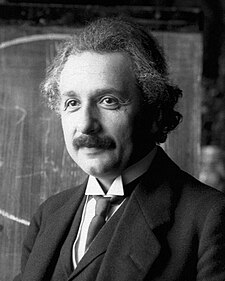
The following is an extract of an article written by Albert Einstein, first published in the first issue of Monthly Review (May 1949).

Is it advisable for one who is not an expert on economic and social issues to express views on the subject of socialism? I believe for a number of reasons that it is. Let us first consider the question from the point of view of scientific knowledge. It might appear that there are no essential methodological differences between astronomy and economics: scientists in both fields attempt to discover laws of general acceptability for a circumscribed group of phenomena in order to make the interconnection of these phenomena as clearly understandable as possible. But in reality such methodological differences do exist. The discovery of general laws in the field of economics is made difficult by the circumstance that observed economic phenomena are often affected by many factors which are very hard to evaluate separately. In addition, the experience which has accumulated since the beginning of the so-called civilized period of human history has—as is well known—been largely influenced and limited by causes which are by no means exclusively economic in nature. For example, most of the major states of history owed their existence to conquest. The conquering peoples established themselves, legally and economically, as the privileged class of the conquered country. They seized for themselves a monopoly of the land ownership and appointed a priesthood from among their own ranks. The priests, in control of education, made the class division of society into a permanent institution and created a system of values by which the people were thenceforth, to a large extent unconsciously, guided in their social behavior.

But historic tradition is, so to speak, of yesterday; nowhere have we really overcome what Thorstein Veblen called "the predatory phase" of human development. The observable economic facts belong to that phase and even such laws as we can derive from them are not applicable to other phases. Since the real purpose of socialism is precisely to overcome and advance beyond the predatory phase of human development, economic science in its present state can throw little light on the socialist society of the future.

Second, socialism is directed towards a social-ethical end. Science, however, cannot create ends and, even less, instill them in human beings; science, at most, can supply the means by which to attain certain ends. But the ends themselves are conceived by personalities with lofty ethical ideals and—if these ends are not stillborn, but vital and vigorous—are adopted and carried forward by those many human beings who, half unconsciously, determine the slow evolution of society.

For these reasons, we should be on our guard not to overestimate science and scientific methods when it is a question of human problems; and we should not assume that experts are the only ones who have a right to express themselves on questions affecting the organization of society.

Innumerable voices have been asserting for some time now that human society is passing through a crisis, that its stability has been gravely shattered. It is characteristic of such a situation that individuals feel indifferent or even hostile toward the group, small or large, to which they belong. In order to illustrate my meaning, let me record here a personal experience. I recently discussed with an intelligent and well-disposed man the threat of another war, which in my opinion would seriously endanger the existence of mankind, and I remarked that only a supra-national organization would offer protection from that danger. Thereupon my visitor, very calmly and coolly, said to me: "Why are you so deeply opposed to the disappearance of the human race?"

I am sure that as little as a century ago no one would have so lightly made a statement of this kind. It is the statement of a man who has striven in vain to attain an equilibrium within himself and has more or less lost hope of succeeding. It is the expression of a painful solitude and isolation from which so many people are suffering in these days. What is the cause? Is there a way out?

It is easy to raise such questions, but difficult to answer them with any degree of assurance. I must try, however, as best I can, although I am very conscious of the fact that our feelings and strivings are often contradictory and obscure and that they cannot be expressed in easy and simple formulas.

Man is, at one and the same time, a solitary being and a social being. As a solitary being, he attempts to protect his own existence and that of those who are closest to him, to satisfy his personal desires, and to develop his innate abilities. As a social being, he seeks to gain the recognition and affection of his fellow human beings, to share in their pleasures, to comfort them in their sorrows, and to improve their conditions of life. Only the existence of these varied, frequently conflicting, strivings accounts for the special character of a man, and their specific combination determines the extent to which an individual can achieve an inner equilibrium and can contribute to the well-being of society. It is quite possible that the relative strength of these two drives is, in the main, fixed by inheritance. But the personality that finally emerges is largely formed by the environment in which a man happens to find himself during his development, by the structure of the society in which he grows up, by the tradition of that society, and by its appraisal of particular types of behavior. The abstract concept "society" means to the individual human being the sum total of his direct and indirect relations to his contemporaries and to all the people of earlier generations. The individual is able to think, feel, strive, and work by himself; but he depends so much upon society—in his physical, intellectual, and emotional existence—that it is impossible to think of him, or to understand him, outside the framework of society. It is "society" which provides man with food, clothing, a home, the tools of work, language, the forms of thought, and most of the content of thought; his life is made possible through the labor and the accomplishments of the many millions past and present who are all hidden behind the small word “society.”

It is evident, therefore, that the dependence of the individual upon society is a fact of nature which cannot be abolished—just as in the case of ants and bees. However, while the whole life process of ants and bees is fixed down to the smallest detail by rigid, hereditary instincts, the social pattern and interrelationships of human beings are very variable and susceptible to change. Memory, the capacity to make new combinations, the gift of oral communication have made possible developments among human being which are not dictated by biological necessities. Such developments manifest themselves in traditions, institutions, and organizations; in literature; in scientific and engineering accomplishments; in works of art. This explains how it happens that, in a certain sense, man can influence his life through his own conduct, and that in this process conscious thinking and wanting can play a part.

Man acquires at birth, through heredity, a biological constitution which we must consider fixed and unalterable, including the natural urges which are characteristic of the human species. In addition, during his lifetime, he acquires a cultural constitution which he adopts from society through communication and through many other types of influences. It is this cultural constitution which, with the passage of time, is subject to change and which determines to a very large extent the relationship between the individual and society. Modern anthropology has taught us, through comparative investigation of so-called primitive cultures, that the social behavior of human beings may differ greatly, depending upon prevailing cultural patterns and the types of organization which predominate in society. It is on this that those who are striving to improve the lot of man may ground their hopes: human beings are not condemned, because of their biological constitution, to annihilate each other or to be at the mercy of a cruel, self-inflicted fate.

If we ask ourselves how the structure of society and the cultural attitude of man should be changed in order to make human life as satisfying as possible, we should constantly be conscious of the fact that there are certain conditions which we are unable to modify. As mentioned before, the biological nature of man is, for all practical purposes, not subject to change. Furthermore, technological and demographic developments of the last few centuries have created conditions which are here to stay. In relatively densely settled populations with the goods which are indispensable to their continued existence, an extreme division of labor and a highly-centralized productive apparatus are absolutely necessary. The time—which, looking back, seems so idyllic—is gone forever when individuals or relatively small groups could be completely self-sufficient. It is only a slight exaggeration to say that mankind constitutes even now a planetary community of production and consumption.

I have now reached the point where I may indicate briefly what to me constitutes the essence of the crisis of our time. It concerns the relationship of the individual to society. The individual has become more conscious than ever of his dependence upon society. But he does not experience this dependence as a positive asset, as an organic tie, as a protective force, but rather as a threat to his natural rights, or even to his economic existence. Moreover, his position in society is such that the egotistical drives of his make-up are constantly being accentuated, while his social drives, which are by nature weaker, progressively deteriorate. All human beings, whatever their position in society, are suffering from this process of deterioration. Unknowingly prisoners of their own egotism, they feel insecure, lonely, and deprived of the naive, simple, and unsophisticated enjoyment of life. Man can find meaning in life, short and perilous as it is, only through devoting himself to society.

The economic anarchy of capitalist society as it exists today is, in my opinion, the real source of the evil. We see before us a huge community of producers the members of which are unceasingly striving to deprive each other of the fruits of their collective labor—not by force, but on the whole in faithful compliance with legally established rules. In this respect, it is important to realize that the means of production—that is to say, the entire productive capacity that is needed for producing consumer goods as well as additional capital goods—may legally be, and for the most part are, the private property of individuals.

For the sake of simplicity, in the discussion that follows I shall call “workers” all those who do not share in the ownership of the means of production—although this does not quite correspond to the customary use of the term. The owner of the means of production is in a position to purchase the labor power of the worker. By using the means of production, the worker produces new goods which become the property of the capitalist. The essential point about this process is the relation between what the worker produces and what he is paid, both measured in terms of real value. Insofar as the labor contract is “free,” what the worker receives is determined not by the real value of the goods he produces, but by his minimum needs and by the capitalists' requirements for labor power in relation to the number of workers competing for jobs. It is important to understand that even in theory the payment of the worker is not determined by the value of his product.

Private capital tends to become concentrated in few hands, partly because of competition among the capitalists, and partly because technological development and the increasing division of labor encourage the formation of larger units of production at the expense of smaller ones. The result of these developments is an oligarchy of private capital the enormous power of which cannot be effectively checked even by a democratically organized political society. This is true since the members of legislative bodies are selected by political parties, largely financed or otherwise influenced by private capitalists who, for all practical purposes, separate the electorate from the legislature. The consequence is that the representatives of the people do not in fact sufficiently protect the interests of the underprivileged sections of the population. Moreover, under existing conditions, private capitalists inevitably control, directly or indirectly, the main sources of information (press, radio, education). It is thus extremely difficult, and indeed in most cases quite impossible, for the individual citizen to come to objective conclusions and to make intelligent use of his political rights.

The situation prevailing in an economy based on the private ownership of capital is thus characterized by two main principles: first, means of production (capital) are privately owned and the owners dispose of them as they see fit; second, the labor contract is free. Of course, there is no such thing as a pure capitalist society in this sense. In particular, it should be noted that the workers, through long and bitter political struggles, have succeeded in securing a somewhat improved form of the “free labor contract” for certain categories of workers. But taken as a whole, the present day economy does not differ much from “pure” capitalism.

Production is carried on for profit, not for use. There is no provision that all those able and willing to work will always be in a position to find employment; an “army of unemployed” almost always exists. The worker is constantly in fear of losing his job. Since unemployed and poorly paid workers do not provide a profitable market, the production of consumers' goods is restricted, and great hardship is the consequence. Technological progress frequently results in more unemployment rather than in an easing of the burden of work for all. The profit motive, in conjunction with competition among capitalists, is responsible for an instability in the accumulation and utilization of capital which leads to increasingly severe depressions. Unlimited competition leads to a huge waste of labor, and to that crippling of the social consciousness of individuals which I mentioned before.

This crippling of individuals I consider the worst evil of capitalism. Our whole educational system suffers from this evil. An exaggerated competitive attitude is inculcated into the student, who is trained to worship acquisitive success as a preparation for his future career.

I am convinced there is only one way to eliminate these grave evils, namely through the establishment of a socialist economy, accompanied by an educational system which would be oriented toward social goals. In such an economy, the means of production are owned by society itself and are utilized in a planned fashion. A planned economy, which adjusts production to the needs of the community, would distribute the work to be done among all those able to work and would guarantee a livelihood to every man, woman, and child. The education of the individual, in addition to promoting his own innate abilities, would attempt to develop in him a sense of responsibility for his fellow men in place of the glorification of power and success in our present society.

Nevertheless, it is necessary to remember that a planned economy is not yet socialism. A planned economy as such may be accompanied by the complete enslavement of the individual. The achievement of socialism requires the solution of some extremely difficult socio-political problems: how is it possible, in view of the far-reaching centralization of political and economic power, to prevent bureaucracy from becoming all-powerful and overweening? How can the rights of the individual be protected and therewith a democratic counterweight to the power of bureaucracy be assured?

Clarity about the aims and problems of socialism is of greatest significance in our age of transition. Since, under present circumstances, free and unhindered discussion of these problems has come under a powerful taboo, I consider the foundation of this magazine (Monthly Review) to be an important public service.

Source: Monthly Review

Sunday, January 3, 2010

Theocracy

Theocracy is a form of government in which a god or deity is recognized as the state's supreme civil ruler, or in a higher sense, a form of government in which a state is governed by immediate divine guidance or by officials who are regarded as divinely guided. In Common Greek, “theocracy” means a rule [kra′tos] by God [the.os′]. For believers, theocracy is a form of government in which divine power governs an earthly human state, either in a personal incarnation or, more often, via religious institutional representatives (i.e., a church), replacing or dominating civil government. Theocratic governments enact theonomic laws.

Theocracy should be distinguished from other secular forms of government that have a state religion, or are merely influenced by theological or moral concepts, and monarchies held "By the Grace of God".

A theocracy may be monist in form, where the administrative hierarchy of the government is identical with the administrative hierarchy of the religion, or it may have two 'arms,' but with the state administrative hierarchy subordinate to the religious hierarchy.

Theoracy came into the fore in modern politics with the Iranian Revolution.

Source: Wikipedia

Saturday, January 2, 2010

South Africa: Break with the Bourgeois Tripartite Alliance!

The African National Congress (ANC) wasted no time after sweeping the April parliamentary elections in South Africa to demonstrate that the new government under Jacob Zuma would crack down on strikes and township protests. The day after the elections, military personnel were called on to break a strike by doctors demanding overdue pay hikes and more funds for the overburdened, hellish public health system. Municipal workers who struck this winter for a rise in their paltry wages were attacked by cops firing rubber bullets and thrown in jail. Protesters throughout the country demanding houses, roads and sewage systems for their impoverished townships have met with similar treatment.

Like the “neoliberal” Thabo Mbeki and Nelson Mandela before him, the populist Zuma is doing his job as chief of the capitalist state—an apparatus of organised violence, based centrally on the police, military and prisons, that is wielded on behalf of the filthy rich ruling class against the overwhelmingly black masses they exploit and oppress. This bourgeois class dictatorship, which continues to defend a system of white privilege, is cloaked by the “non-racial democracy” that was installed in 1994, when white-supremacist apartheid rule was replaced by a government led by the ANC and its Tripartite Alliance partners, the South African Communist Party (SACP) and Congress of South African Trade Unions (COSATU).

As revolutionary Marxists, Spartacist South Africa, section of the International Communist League (Fourth Internationalist), declared that no party in the April elections represented the interests of the working class and the poor. The SACP and COSATU bureaucracy worked overtime to get out the vote for the ANC, tirelessly portraying Zuma as a “friend” of the workers as opposed to the leaders of the Congress of the People (C.O.P.E.), who split from the ANC to the right after Mbeki was ousted as president. But as we wrote in Workers Vanguard No. 933 (27 March 2009), newspaper of the Spartacist League/U.S.: “Despite the ANC’s ‘pro-worker’ and ‘pro-poor’ rhetoric, the ANC and C.O.P.E. are both bourgeois-nationalist—i.e., capitalist—parties” that “represent the interests of the aspiring black bourgeoisie and the predominantly white capitalist ruling class.”

At the core of the recent spate of strikes and protests is the explosive anger at the base of society over the failure of the Tripartite Alliance, after 15 years in power, to fulfill expectations of social and economic equality for the majority. Township protesters complain that they voted for a better life but what they have is getting worse. Striking postal workers demanded the closing of the apartheid wage gap. Adding to longstanding mass unemployment, the world recession has thrown hundreds of thousands more out of work.

A new study shows that the chasm between the wealthy at the top and the masses at the bottom has become the largest in the world, surpassing that in Brazil. The wealthiest are overwhelmingly white and enjoy First World living conditions, while blacks as well as coloured [mixed-race] and Indian toilers are at Third World levels. This is a damning indictment of the SACP/COSATU misleaders, who promised the masses that the alliance with the bourgeois ANC would bring social transformation and equality. The result instead was neo-apartheid capitalism. While the political superstructure underwent a major change with the end of the apartheid system of rigid, legally enforced racial segregation and subjugation, the foundation of the capitalist economy remains the superexploitation of mainly black labour.

As the black majority’s anger over their unbearable conditions continues to build, the Zuma government has made clear its intention to beef up the state’s arsenal of repression against labour and the poor. On the opening day of the COSATU national congress in September, Zuma lectured delegates about “violent strikes.” In a speech a week later, he supported giving cops more leeway to “shoot to kill,” supposedly to fight South Africa’s “abnormal criminal problem.” Zuma’s reprimands, echoed by COSATU general secretary Zwelinzima Vavi, did not go down well at the COSATU congress. Leaders of the SAMWU municipal workers and SATAWU transport workers unions criticised the top COSATU leadership for failing to condemn police attacks on their strikes this year. But these same unions include cops and security guards whose job is to defend capitalist rule and profits by violently repressing workers and the poor. SSA demands: Cops and security guards out of the unions!

Source: Spartacist