It seemed like a throwback to the days when a white minority ruled South Africa. Inside a colonial-era courthouse that was once a stage for the political trials of anti-apartheid activists, a white lawyer in robes and frilly bib accused a black leader of being a Communist and fomenting hatred of whites. “Do you know who Vladimir Lenin was?” demanded the lawyer, rekindling memories of the anti-Communist measures that helped crush dissent during apartheid.
In his defense, the black leader in the dock championed his right to lead his supporters in singing a song with the seemingly bloodthirsty line “Shoot the Boer!” — a historical reference widely taken as a threat by Afrikaners, the descendants of Dutch settlers and the creators of apartheid. Of course, that racist system ended 17 years ago with Nelson Mandela’s election. The African National Congress has been the governing party ever since. But the past is not really past here. Race remains a fraught issue, riveting the country in recent weeks as the hate-speech trial of Julius Malema, the leader of the party’s youth wing, was broadcast live on television. Closing arguments are expected within weeks.
The decision will help establish where free speech crosses the line into hate speech in one of Africa’s most democratic countries. The trial itself may also have strengthened Mr. Malema’s political allure in a nation where four out of five citizens are black. He is alternately denounced here as a demagogue and hailed as a future president. Even some senior leaders in the A.N.C. worry that his angry brand of populism could resonate with the country’s millions of dispossessed youths. The final day of testimony, in a wood-paneled courtroom packed with Mr. Malema’s partisans, presented a polarized version of South Africa’s complicated and never-ending debate about how to deal with its racial legacy. “It’s a clash of atavisms,” said Nic Dawes, editor of The Mail & Guardian. “It’s like those days when you tune into talk radio and you hear a version of the national conversation dominated by the most unpleasant aspects of white anxiety and the angriest black reactions.”
The imagery was powerful: Roelof du Plessis, an Afrikaner lawyer with a heavy Afrikaans accent, accusing Mr. Malema of being a Communist, suggesting that South Africa was heading toward a genocide against whites and accusing Mr. Malema of having carried a gun “illegally” as a child during the armed struggle against apartheid. (Mr. Malema happily confirmed the claim). “That seems to be typical of Africa, using children to fight wars,” Mr. Du Plessis harrumphed.
At the other extreme, Mr. Malema, 30, arrived each day at the courthouse in Johannesburg surrounded by bodyguards in dark suits and red ties, assault rifles slung across their chests. In recent years, he has declared a readiness to kill for Jacob Zuma, South Africa’s president; described the leader of the main opposition party, Helen Zille, as a cockroach; and hounded a BBC correspondent out of a news conference, accusing him of “white tendencies.” He has also pushed the African National Congress into a debate on the nationalization of South Africa’s mineral wealth, though party elders warned it could drive away foreign investment. Some of his statements last year prompted his party to order him to attend anger management classes. Nonetheless, party leaders rallied to Mr. Malema’s defense in the current case, testifying in support of his assertion that the “Shoot the Boer” refrain was a metaphorical call to defeat apartheid, not a literal incitement to violence.
The debate has played out in newspapers and blogs. Many in the news media and academia who have been harsh critics of Mr. Malema’s have nonetheless argued that his singing of the offending song does not justify banning it as a form of hate speech under South Africa’s Constitution. Some also found Mr. Du Plessis’s cross-examination ridiculous. Pierre de Vos, a law professor at the University of Cape Town, wrote that Mr. Du Plessis’s line of questioning reminded him of apartheid-era leaders speaking on “the dangers of communism and the evils of A.N.C. ‘terrorism.’ ” “I must say, Adv. Du Plessis’s performance today is almost enough to make me want to burst out singing: ‘dubul’ibhunu/dubula dubula,’ ” the professor wrote, quoting the Zulu rendition of the “Shoot the Boer” refrain.
But others found the hate speech complaint convincing. It was filed by two groups representing Afrikaners, who contended that the song’s refrain suggested that Afrikaners were “the enemy at least to be shunned and at most to be killed.” Rhoda Kadalie, a columnist writing in an Afrikaans-language newspaper, said the lyrics were wrong during apartheid years and shocking now, especially in light of the many white farmers murdered since the end of apartheid. “Justifying these wrongs in the name of apartheid gives carte blanche to yesterday’s liberators to become tomorrow’s oppressors,” she wrote.
The song is not among the famous freedom anthems. Hugh Masekela, the renowned South African trumpeter, said he had not heard of it, adding that there were many such songs. “This was a time when people were very angry,” he said, “and they were singing songs much more violent than that one.” Mr. Malema, just 13 when Mr. Mandela became president, was too young to join the armed struggle against apartheid, but seemed eager to use the trial to bolster his revolutionary street cred. “I belong to a radical and militant youth organization, and if you’re not militant in the Youth League, you run the risk of being irrelevant,” Mr. Malema said on the stand.
He boasted that the A.N.C. has taught him to fire a gun and chant slogans since he was 11. In 1993, he said, when he was 12, he marched into white suburbs armed with a gun after a right-wing white assassinated the charismatic black leader Chris Hani — only to be disappointed when Mr. Mandela appealed for discipline and nonviolence rather than ordering an attack. “We came across white people,” Mr. Malema said. “We never shot any one of them. We had all the reasons.”
Mr. Du Plessis, advocating for white farmers, opened the door for Mr. Malema to make his case for nationalizing the mines and confiscating the land of white farmers without compensation — policies that would constitute a sharp break with the country’s Constitution.
Mr. Malema said he would act according to the law in seeking to change the Constitution to allow land confiscation. But he held up Robert Mugabe, the strongman in neighboring Zimbabwe, as a democrat who had led that nation’s drive to seize white-owned land — a drive that Mr. Malema noted regretfully had relied on violence. “It’s a democratic country,” Mr. Malema said of Zimbabwe, flashing a grin. “They have been holding elections every five years.” “Oh, I see!” Mr. Du Plessis sputtered sarcastically.
After his testimony, Mr. Malema told hundreds of his followers who had stood outside for hours that Mr. Du Plessis “couldn’t hide the racism in his face.” He said the lawyer’s clients were far more worried about the confiscation of their land than about a song’s lyrics. “We are going to take their land whether they like it or not!” he exclaimed, as the crowd roared. His supporters then serenaded Winnie Madikizela-Mandela, Mr. Mandela’s former wife, who had been at Mr. Malema’s side throughout his trial. Ms. Madikizela-Mandela, who was implicated in the murders and beatings of township youths in the late 1980s, thanked AfriForum, one of the complainants in the case, for bringing Mr. Malema’s supporters together “to baptize” him as “the future president of South Africa.” “This is the leadership that is going to run the very last mile of transformation for this country,” she proclaimed.
Source: New York Times
Showing posts with label Communism. Show all posts
Showing posts with label Communism. Show all posts
Saturday, April 30, 2011


Saturday, April 23, 2011
Thomas Sankara: A tribute
 "Africa and the world are yet to recover from Sankara’s assassination. Just as we have yet to recover from the loss of Patrice Lumumba, Kwame Nkrumah, Eduardo Mondlane, Amilcar Cabral, Steve Biko, Samora Machel, and most recently John Garang, to name only a few. While malevolent forces have not used the same methods to eliminate each of these great pan-Africanists, they have been guided by the same motive: to keep Africa in chains."
– Antonio de Figueiredo, February 2008 (via African artists)

Thomas Sankara is one in a long lineage of African sons and daughters whose ideas and actions have left an indelible mark on the history of the continent. He was however killed by his brothers in arms with the belief that they could defeat the great example he set for progressive youth across the continent. Unfortunately for his murderers they couldn't have been more wrong with their belief as a week to the faithful day of his assassination, in a historic speech marking the 20th anniversary of the assassination of another great revolutionary, Ernesto 'Che' Guevara, Thomas declared that "ideas cannot be killed, ideas never die". Indeed, the history of humanity is replete with martyrs and heroes whose ideas and actions have survived the dawn of time and have inspired future generations. The ideas, belief and sacrifice of Thomas Sankara has made him a martyr that is larger than life.
This is the reason why over two decades of his dead, Thomas Sankara continues to be in the minds and heart of the few that struggle to end the domination and enslavement of the African Continent. The power of Sankara's revolutionary ideas and popularity cannot be unconnected to the continuous reflection of African's who are frustrated with corrupt leaders and rotten leadership styles that is incapable of setting the continent with all its rich resources of both human and natural abundance in the pairs of western and Asian continents. Sankara’s popularity is also deeply rooted in the profound sincerity of his commitment to serving his people, his devotion to the cause of the emancipation of the Burkinabés and all African peoples. His charisma, honesty and integrity made him a hero for the ‘wretched of the Earth,’ to coin a phrase from Frantz Fanon, who was greatly admired by Sankara.
As Africa looks desperately for leaders of integrity and vision, the life and ideals of the late Thomas Sankara seem more and more relevant and exemplary with the passage of time. Above all, however, the greatness of Sankara lies within the ideas and values he embodied during his brief time on the African and international stage. Indeed, if Sankara arouses as much fervor today as he did two decades ago, it is because he embodied and defended causes that still resonate today among the millions of oppressed in Africa and around the world. Sankara was a genuine revolutionary and a great visionary who had the courage to take on the most difficult challenges and who held great ambitions for his country and Africa. Most of the ideas or causes he defended two decades ago are still at the heart of the struggle for the economic, social and political emancipation of peoples around the world. He was an environmentalist ahead of his time in a so-called ‘poor’ country that was supposed to have other more pressing priorities than the environment.
Sankara was one of the first heads of State, perhaps the only one in his time, to condemn female excision, a position that reflected his unwavering commitment to the emancipation of women and the struggle against all forms of discrimination against women. He was a relentless advocate of gender equality and the recognition of the role of women in all spheres of economic and social life. In his famous speech of 2 October 1983, he stated: ‘We cannot transform society while maintaining domination and discrimination against women who constitute over half of the population.’ His unrelenting struggle against corruption, long before the World Bank and the IMF picked up on this issue, made Sankara an enemy of all corrupt presidents on the continent and of the international capitalist mafia for whom corruption is a tool for conquering markets and pillaging the resources of the global South.
Sankara rejected the inevitability of ‘poverty,’ and was one of the first proponents of food security. He achieved the spectacular feat of making his country food self-sufficient within four years, through sensible agricultural policy and, above all, the mobilisation of the Burkinabé peasantry. He understood that a country that could not feed itself ran the risk of losing its independence and sovereignty. In July 1987, Sankara, close on the heels of Fidel Castro two years earlier, called on African countries to form a powerful front against their continent’s illegitimate and immoral debt and to collectively refuse to pay it.
Once again, he understood before others that the debt was a form of modern enslavement for Africa; a major cause of poverty and deep suffering for African populations. Sankara famously stated: ‘If we do not pay the debt, our lenders will not die. However, if we do pay it, we will die…’ On the international stage, Sankara was the first African head of State, indeed the first in the world, to denounce the UN Security Council’s right of veto and to condemn the lack of democracy within the United Nations system as well as the hypocrisy that characterized international relations. Today, all of these ideas have become self- evident truths and are at the heart of popular resistance movements, including the World Social Forum that has become one of the most powerful major rallying points.
Captain Thomas Sankara is the lion king that should be remembered by all and who value the ideas and values that he stood for and died for this values should particularly be upheld by the youth of the African continent since it has become obvious that the current generation of leaders are hell bent on throwing the continent back to colonial rule. Thomas Sankara is a role model, a teacher, inspiration and a benchmark to all of us that strive to see a better, progressive and more united Africa that should be strong enough to be heard and respected.
Long Live Sankara, Long Live Africa and long live the cause of the good.
Source: Because I am involved
Thursday, August 5, 2010
Deadly threat to all
The collapse of the Soviet Union two decades ago exposed not only the bankruptcy of its ideology but the rich and obscene lifestyle of its leaders — the dachas where they romped and lolled and the extravagantly furnished bunkers where they would have safely repaired in the event of a nuclear attack. Meanwhile ordinary people were constantly exhorted to put their faith in the revolution. It was dachas for the cream of society and gulags for dissenters.
Communism is an ideology conceived in a lie. Leaders say one thing while doing the other. They live a life of deception. They don’t seem prepared to live the life or reality they often romanticise, or to which their policies condemn ordinary people. And because the media and other forms of communication are controlled by the state, the so-called working class are kept in the dark and therefore meekly accept their lot.
That is the nirvana that Blade Nzimande has in mind for us. The general secretary of the SA Communist Party, who works as minister for higher education when he feels like it, wants the media shackled because it has shown him up to be a hypocrite. This champion of the working class drives posh cars and lives it up in fancy hotels — at our expense. Now he wants a tribunal to stop or frustrate the media from telling the truth.
But that’s par for the course, I suppose. After all it was Vladimir Lenin who blurted: “Telling the truth is a bourgeois prejudice. Deception, on the other hand, is often justified by the goal.”
It’s revealing that the two men leading the campaign against the media have been in the news for the wrong reasons : Nzimande and communications minister Siphiwe Nyanda. Nyanda, the man with a fine taste for tenders, has seen his name crop up in many an unsavoury scrap as a result of his business dealings. He got a tender that got Siyabonga Gama fired at Transnet. He’s currently embroiled in a messy fight with his director- general, and tenders are at the heart of the dispute. On Sunday he wrote a long, rambling article in favour of a media tribunal. The logic was difficult to follow. He should stick to tenders.
There are those who may think the media is obsessed with gazing at its own navel. This is not a war waged against the media only, but against democracy itself. It challenges the very essence of our constitution. As the FM argued recently, it is a battle that should involve all strands of society — business, civil society — against those who are intent on imposing darkness on us, so that they can loot and plunder at will.
This is by no means an isolated attack. In the eyes of Jacob Zuma’s supporters, the media forms part of that axis of evil — to borrow a phrase — which almost denied their hero what he was due ; the other axis members being the Scorpions and the judiciary. Zuma’s triumph in Polokwane sounded the death knell for the Scorpions, who were immediately consigned to the scrapheap. The judiciary has been shouted down and almost cowed. Which leaves the media, with its enormous power to influence public opinion and to expose, shame and embarrass those in authority.
As Lenin once posed the question, what then is to be done? The media tribunal and the Protection of Information Bill seem to be the answer. The notion of “protecting” information from the public in a democracy is, frankly, bizarre.
It’s not the first time government has tried to rein in the media. The Nats tried several times, and failed each time . This lot, which seem keen to learn from their predecessors, will also fail. But that would demand concerted action from all sectors of society, including the business community. For once, business needs to raise its voice against what is arguably the biggest threat to our democracy since the fall of apartheid.
Source: Financial Mail: Barney Mthombothi
Communism is an ideology conceived in a lie. Leaders say one thing while doing the other. They live a life of deception. They don’t seem prepared to live the life or reality they often romanticise, or to which their policies condemn ordinary people. And because the media and other forms of communication are controlled by the state, the so-called working class are kept in the dark and therefore meekly accept their lot.
That is the nirvana that Blade Nzimande has in mind for us. The general secretary of the SA Communist Party, who works as minister for higher education when he feels like it, wants the media shackled because it has shown him up to be a hypocrite. This champion of the working class drives posh cars and lives it up in fancy hotels — at our expense. Now he wants a tribunal to stop or frustrate the media from telling the truth.
But that’s par for the course, I suppose. After all it was Vladimir Lenin who blurted: “Telling the truth is a bourgeois prejudice. Deception, on the other hand, is often justified by the goal.”
It’s revealing that the two men leading the campaign against the media have been in the news for the wrong reasons : Nzimande and communications minister Siphiwe Nyanda. Nyanda, the man with a fine taste for tenders, has seen his name crop up in many an unsavoury scrap as a result of his business dealings. He got a tender that got Siyabonga Gama fired at Transnet. He’s currently embroiled in a messy fight with his director- general, and tenders are at the heart of the dispute. On Sunday he wrote a long, rambling article in favour of a media tribunal. The logic was difficult to follow. He should stick to tenders.
There are those who may think the media is obsessed with gazing at its own navel. This is not a war waged against the media only, but against democracy itself. It challenges the very essence of our constitution. As the FM argued recently, it is a battle that should involve all strands of society — business, civil society — against those who are intent on imposing darkness on us, so that they can loot and plunder at will.
This is by no means an isolated attack. In the eyes of Jacob Zuma’s supporters, the media forms part of that axis of evil — to borrow a phrase — which almost denied their hero what he was due ; the other axis members being the Scorpions and the judiciary. Zuma’s triumph in Polokwane sounded the death knell for the Scorpions, who were immediately consigned to the scrapheap. The judiciary has been shouted down and almost cowed. Which leaves the media, with its enormous power to influence public opinion and to expose, shame and embarrass those in authority.
As Lenin once posed the question, what then is to be done? The media tribunal and the Protection of Information Bill seem to be the answer. The notion of “protecting” information from the public in a democracy is, frankly, bizarre.
It’s not the first time government has tried to rein in the media. The Nats tried several times, and failed each time . This lot, which seem keen to learn from their predecessors, will also fail. But that would demand concerted action from all sectors of society, including the business community. For once, business needs to raise its voice against what is arguably the biggest threat to our democracy since the fall of apartheid.
Source: Financial Mail: Barney Mthombothi
Monday, January 11, 2010
Feudalism
Feudalism is a decentralized sociopolitical structure in which a weak monarchy attempts to control the lands of the realm through reciprocal agreements with regional leaders. In its most classic sense, feudalism refers to the Medieval European political system composed of a set of reciprocal legal and military obligations among the warrior nobility, revolving around the three key concepts of lords, vassals, and fiefs. Although derived from the Latin word feodum (fief), then in use, the term feudalism and the system it describes were not conceived of as a formal political system by the people living in the Medieval Period.
Outside a European context, the concept of feudalism is normally used only by analogy (called semi-feudal), most often in discussions of Japan under the shoguns, and sometimes medieval and Gondarine Ethiopia. However, some have taken the feudalism analogy further, seeing it in places as diverse as ancient Egypt, the Parthian empire, the Indian subcontinent, and the antebellum American South.
Source: Wikipedia
Outside a European context, the concept of feudalism is normally used only by analogy (called semi-feudal), most often in discussions of Japan under the shoguns, and sometimes medieval and Gondarine Ethiopia. However, some have taken the feudalism analogy further, seeing it in places as diverse as ancient Egypt, the Parthian empire, the Indian subcontinent, and the antebellum American South.
Source: Wikipedia
Sunday, January 3, 2010
Theocracy
 Theocracy is a form of government in which a god or deity is recognized as the state's supreme civil ruler, or in a higher sense, a form of government in which a state is governed by immediate divine guidance or by officials who are regarded as divinely guided. In Common Greek, “theocracy” means a rule [kra′tos] by God [the.os′]. For believers, theocracy is a form of government in which divine power governs an earthly human state, either in a personal incarnation or, more often, via religious institutional representatives (i.e., a church), replacing or dominating civil government. Theocratic governments enact theonomic laws.
Theocracy should be distinguished from other secular forms of government that have a state religion, or are merely influenced by theological or moral concepts, and monarchies held "By the Grace of God".
A theocracy may be monist in form, where the administrative hierarchy of the government is identical with the administrative hierarchy of the religion, or it may have two 'arms,' but with the state administrative hierarchy subordinate to the religious hierarchy.
Theoracy came into the fore in modern politics with the Iranian Revolution.
Source: Wikipedia
Wednesday, December 30, 2009
Anarchism
Anarchism is a political philosophy encompassing theories and attitudes which consider the state to be unnecessary, harmful, or otherwise undesirable, and favor instead a stateless society or anarchy. Individual anarchists may have additional criteria for what they conceive to be anarchism, and there is often broad disagreement concerning these broader conceptions.
A modern day example of anarchism is Somalia.
Source: Wikipedia
A modern day example of anarchism is Somalia.
Source: Wikipedia
Capitalism
There is no consensus on capitalism, nor how it should be used as an analytical category. However, it is generally accepted that private ownership of the means of production, the creation of goods or services for personal gain in a market (free or fettered), prices (money or barter), and labour (paid or enslaved) are elements of capitalism.
Capitalism is thought to be a system that developed incrementally from the 14th century in Europe, however capitalist organizations existed in the ancient world, and early aspects of merchant capitalism flourished during the Late Middle Ages. Capitalism (as an undefined concept) became dominant in the Western world following the demise of feudalism. Capitalism gradually spread throughout Europe, and in the 19th and 20th centuries.
The term capitalist refers to an owner of capital rather than an economic system. Karl Marx's notion of the capitalist mode of production is characterised as a system of primarily private ownership of the means of production in a mainly market economy, with a legal framework on commerce and a physical infrastructure provided by the state.
Source: Wikipedia
Capitalism is thought to be a system that developed incrementally from the 14th century in Europe, however capitalist organizations existed in the ancient world, and early aspects of merchant capitalism flourished during the Late Middle Ages. Capitalism (as an undefined concept) became dominant in the Western world following the demise of feudalism. Capitalism gradually spread throughout Europe, and in the 19th and 20th centuries.
The term capitalist refers to an owner of capital rather than an economic system. Karl Marx's notion of the capitalist mode of production is characterised as a system of primarily private ownership of the means of production in a mainly market economy, with a legal framework on commerce and a physical infrastructure provided by the state.
Source: Wikipedia
Socialism
Socialism refers to various theories of economic organization advocating public or direct worker ownership and administration of the means of production and allocation of resources, and a society characterized by equal access to resources for all individuals, with a method of compensation based on the amount of labour expended.
 Most socialists share the view that capitalism unfairly concentrates power and wealth among a small segment of society that controls capital and derives its wealth through exploitation, creates an unequal society, does not provide equal opportunities for everyone to maximise their potentialities and does not utilise technology and resources to their maximum potential nor in the interests of the public.
Friedrich Engels, one of the founders of modern socialist theory, and Henri de Saint-Simon, a French Utopian Socialism theorist, advocated the creation of a society that allows for the widespread application of modern technology to rationalise economic activity by eliminating the anarchy of capitalist production.
Source: Wikipedia
 Most socialists share the view that capitalism unfairly concentrates power and wealth among a small segment of society that controls capital and derives its wealth through exploitation, creates an unequal society, does not provide equal opportunities for everyone to maximise their potentialities and does not utilise technology and resources to their maximum potential nor in the interests of the public.
Friedrich Engels, one of the founders of modern socialist theory, and Henri de Saint-Simon, a French Utopian Socialism theorist, advocated the creation of a society that allows for the widespread application of modern technology to rationalise economic activity by eliminating the anarchy of capitalist production.
Source: Wikipedia
Tuesday, December 29, 2009
Community

Traditionally a "community" has been defined as a group of interacting people living in a common location. The word is often used to refer to a group that is organized around common values and social cohesion within a shared geographical location, generally in social units larger than a household. The word can also refer to the national community or global community.
The word community is derived from the Old French communité which is derived from the Latin communitas (cum, "with/together" + munus, "gift"), a broad term for fellowship or organized society.
Since the advent of the Internet, the concept of community no longer has geographical limitations, as people can now virtually gather in an online community and share common interests regardless of physical location.
Source: Wikipedia
Cosmopolitanism
Cosmopolitanism is the ideology that all kinds of human race belong to a single community, based on a shared morality. This is contrasted with communitarian and particularistic theories, especially the ideas of patriotism and nationalism. Cosmopolitanism may entail some sort of world government or it may simply refer to more inclusive moral, economic, and/or political relationships between nations or individuals of different nations. A person who adheres to the idea of cosmopolitanism in any of its forms is called a cosmopolitan.
 The cosmopolitan community might be based on an inclusive morality, a shared economic relationship, or a political structure that encompasses different nations. In its more positive versions, the cosmopolitan community is one in which individuals from different places (e.g. nation-states) form relationships of mutual respect. As an example, Kwame Anthony Appiah suggests the possibility of a cosmopolitan community in which individuals from varying locations (physical, economic, etc.) enter relationships of mutual respect despite their differing beliefs (moral, religious, political, etc.). However, the cosmopolitan community can also be understood as some kind of elite club, one based primarily on economic privilege. In this light, the cosmopolitan individual has advantages over less economically privileged individuals, advantages that might include personal and political liberties and freedoms.
Source: Wikipedia
 The cosmopolitan community might be based on an inclusive morality, a shared economic relationship, or a political structure that encompasses different nations. In its more positive versions, the cosmopolitan community is one in which individuals from different places (e.g. nation-states) form relationships of mutual respect. As an example, Kwame Anthony Appiah suggests the possibility of a cosmopolitan community in which individuals from varying locations (physical, economic, etc.) enter relationships of mutual respect despite their differing beliefs (moral, religious, political, etc.). However, the cosmopolitan community can also be understood as some kind of elite club, one based primarily on economic privilege. In this light, the cosmopolitan individual has advantages over less economically privileged individuals, advantages that might include personal and political liberties and freedoms.
Source: Wikipedia
Patriotism
Patriotism is love of and/or devotion to one's country. The word comes from the Greek patris, meaning fatherland. However, patriotism has had different meanings over time, and its meaning is highly dependent upon context, geography, and philosophy.
 Although patriotism is used in certain vernaculars as a synonym for nationalism, nationalism is not necessarily considered an inherent part of patriotism. Among the ancient Greeks, patriotism consisted of notions concerning language, religious traditions, ethics, law, and devotion to the common good, rather than pure identification with a nation-state. Scholar J. Peter Euben writes that for the Greek philosopher Socrates, "patriotism does not require one to agree with everything that his country does and would actually promote analytical questioning in a quest to make the country the best it possibly can be."
 In the Hindu epic Ramayana, Lord Rama tells Lakshmana Janani Janma Bhoomischa Swargadapi Gariyasi (Mother and Motherland are greater than heaven), which greatly lays the foundation for consciousness of patriotism for Hindus.
During the 18th century Age of Enlightenment, the notion of patriotism continued to be separate from the notion of nationalism. Instead, patriotism was defined as devotion to humanity and beneficence. For example, providing charity, criticizing slavery, and denouncing excessive penal laws were all considered patriotic. In both ancient and modern visions of patriotism, individual responsibility to fellow citizens is an inherent component of patriotism.
Many contemporary notions of patriotism are influenced by 19th century ideas about nationalism. During the 19th century, "being patriotic" became increasingly conflated with nationalism, and even jingoism. However, some notions of contemporary patriotism reject nationalism in favor of a more classic version of the idea of patriotism which includes social responsibility.
Source: Wikipedia
 Although patriotism is used in certain vernaculars as a synonym for nationalism, nationalism is not necessarily considered an inherent part of patriotism. Among the ancient Greeks, patriotism consisted of notions concerning language, religious traditions, ethics, law, and devotion to the common good, rather than pure identification with a nation-state. Scholar J. Peter Euben writes that for the Greek philosopher Socrates, "patriotism does not require one to agree with everything that his country does and would actually promote analytical questioning in a quest to make the country the best it possibly can be."
 In the Hindu epic Ramayana, Lord Rama tells Lakshmana Janani Janma Bhoomischa Swargadapi Gariyasi (Mother and Motherland are greater than heaven), which greatly lays the foundation for consciousness of patriotism for Hindus.
During the 18th century Age of Enlightenment, the notion of patriotism continued to be separate from the notion of nationalism. Instead, patriotism was defined as devotion to humanity and beneficence. For example, providing charity, criticizing slavery, and denouncing excessive penal laws were all considered patriotic. In both ancient and modern visions of patriotism, individual responsibility to fellow citizens is an inherent component of patriotism.
Many contemporary notions of patriotism are influenced by 19th century ideas about nationalism. During the 19th century, "being patriotic" became increasingly conflated with nationalism, and even jingoism. However, some notions of contemporary patriotism reject nationalism in favor of a more classic version of the idea of patriotism which includes social responsibility.
Source: Wikipedia
Friday, December 18, 2009
Communism
Communism is a social structure and political ideology in which property is commonly controlled. Communism is a modern political movement that aims to overthrow capitalism via revolution to create a classless society where all goods are publicly owned. Karl Marx posited that communism would be the final stage in human society, which would be achieved through a proletarian revolution and only becoming possible after a socialist stage develops the productive forces, leading to a superabundance of goods and services.
As a political ideology, communism is usually considered to be a branch of socialism; a broad group of economic and political philosophies that draw on the various political and intellectual movements with origins in the work of theorists of the Industrial Revolution and the French Revolution.
Communism attempts to offer an alternative to the problems with the Capitalist market economy and the legacy of imperialism and nationalism.
Source: Wikipedia
Nationalism
Nationalism generally involves the identification of an ethnic identity with a state. It is also used to describe a movement to establish or protect a homeland (usually an autonomous state) for an ethnic group. In some cases the identification of a homogeneous national culture is combined with a negative view of other races of cultures.
Nationalism is sometimes reactionary, calling for a return to an idealized version of the national past and sometimes for the expulsion of foreigners. Other forms of nationalism are revolutionary, calling for the establishment of an independent state as a homeland for an ethnic underclass. Nationalism emphasises collective identity - a 'people' must be autonomous, united, and express a single national culture.
 When nationalism is pushed to an extreme, it not only justifies wars against other nations, as in the German invasion of Poland at the beginning of World War II, but it is also used to justify attacks against ones fellow citizens, as in the Nazi assertion that Jews are not really citizens. This kind of nationalism often has as its avowed goal racial, ethnic, or religious purity. Since most states are multicultural, nationalism often leads to conflict within a state, as well as between states, and in its extreme form leads to war, secession, or genocide. National flags, national anthems, and other symbols of national identity are often considered sacred, as if they were religious rather than political symbols. Deep emotions are aroused. Some scholars see the word "nationalism" as pejorative, standing in opposition to a more positive term, patriotism.
Fascism is a form of authoritarian ultra-nationalism which promotes national revolution, national collectivism, a totalitarian state, and irredentism or expansionism to unify and allow the growth of a nation. Fascists often promote ethnic nationalism but have at times promoted cultural nationalism including cultural assimilation of people outside a specific ethnic group. Fascism stresses the subservience of the individual to the state, and the need to absolute and unquestioned loyalty to a strong ruler.
Left-wing nationalism (also occasionally known as "socialist nationalism") refers to any political movement that combines left-wing politics with nationalism. Notable examples include Fidel Castro's 26th of July Movement that launched the Cuban Revolution ousting the American-backed Fulgencio Batista in 1959, Ireland's Sinn Fein, Labor Zionism in Israel and the African National Congress in South Africa.
In the Western world the most comprehensive current ideological alternative to nationalism is cosmopolitanism. Ethical cosmopolitanism rejects one of the basic ethical principles of nationalism: that humans owe more duties to a fellow member of the nation, than to a non-member. It rejects such important nationalist values as national identity and national loyalty. However, there is also a political cosmopolitanism, which has a geopolitical program to match that of nationalism: it seeks some form of world state, with a world government. Very few people openly and explicitly support the establishment of a global state, but political cosmopolitanism has influenced the development of international criminal law, and the erosion of the status of national sovereignty. In turn, nationalists are deeply suspicious of cosmopolitan attitudes, which they equate with eradication of diverse national cultures.
Source: Wikipedia
Nationalism is sometimes reactionary, calling for a return to an idealized version of the national past and sometimes for the expulsion of foreigners. Other forms of nationalism are revolutionary, calling for the establishment of an independent state as a homeland for an ethnic underclass. Nationalism emphasises collective identity - a 'people' must be autonomous, united, and express a single national culture.
 When nationalism is pushed to an extreme, it not only justifies wars against other nations, as in the German invasion of Poland at the beginning of World War II, but it is also used to justify attacks against ones fellow citizens, as in the Nazi assertion that Jews are not really citizens. This kind of nationalism often has as its avowed goal racial, ethnic, or religious purity. Since most states are multicultural, nationalism often leads to conflict within a state, as well as between states, and in its extreme form leads to war, secession, or genocide. National flags, national anthems, and other symbols of national identity are often considered sacred, as if they were religious rather than political symbols. Deep emotions are aroused. Some scholars see the word "nationalism" as pejorative, standing in opposition to a more positive term, patriotism.
Fascism is a form of authoritarian ultra-nationalism which promotes national revolution, national collectivism, a totalitarian state, and irredentism or expansionism to unify and allow the growth of a nation. Fascists often promote ethnic nationalism but have at times promoted cultural nationalism including cultural assimilation of people outside a specific ethnic group. Fascism stresses the subservience of the individual to the state, and the need to absolute and unquestioned loyalty to a strong ruler.
Left-wing nationalism (also occasionally known as "socialist nationalism") refers to any political movement that combines left-wing politics with nationalism. Notable examples include Fidel Castro's 26th of July Movement that launched the Cuban Revolution ousting the American-backed Fulgencio Batista in 1959, Ireland's Sinn Fein, Labor Zionism in Israel and the African National Congress in South Africa.
In the Western world the most comprehensive current ideological alternative to nationalism is cosmopolitanism. Ethical cosmopolitanism rejects one of the basic ethical principles of nationalism: that humans owe more duties to a fellow member of the nation, than to a non-member. It rejects such important nationalist values as national identity and national loyalty. However, there is also a political cosmopolitanism, which has a geopolitical program to match that of nationalism: it seeks some form of world state, with a world government. Very few people openly and explicitly support the establishment of a global state, but political cosmopolitanism has influenced the development of international criminal law, and the erosion of the status of national sovereignty. In turn, nationalists are deeply suspicious of cosmopolitan attitudes, which they equate with eradication of diverse national cultures.
Source: Wikipedia
Are you a nationalist or a communist?
That’s what ANC members will need to decide before the 2012 national conference, the battle lines of which are being drawn with much public kicking and screaming. Supporting Deputy Police Minister Fikile Mbalula for the post of party secretary general will show you’re a nationalist. A vote for the present incumbent, Gwede Mantashe, will mean you’re a communist. Or will it? In the debates now raging within the alliance, ideologies don’t really feature. This is a game about playing the man — the ball is practically off the pitch.
Nowhere in the world is the line between communists and nationalists fading faster than it is in the latest skirmish between the ANC and the South African Communist Party (SACP). Mantashe is the chairperson of the SACP but at the same time the darling of the business world. So to call him simply “red” would be a mistake.
ANC Youth League leader Julius Malema, who serves as Mbalula’s proxy, supposedly fights under the nationalist banner, saying President Jacob Zuma must not “surrender” to communists. But Malema introduced the debate on the mines, which he believes should be nationalised. So has Malema become a communist? Enter what Malema likes to call “the yellow communist” — cowardly fakes or the 21st-century version of champagne socialists. These communists say they feel the plight of the people, but they do it while living in mansions in upper-class suburbs with, to paraphrase an old struggle song, “garden boys and kitchen girls” all round.
Malema’s favourite “yellow communist” right now is SACP general secretary Blade Nzimande. True, he’s no stranger to the good life and things only got better with the acquisition of a new R1.2-million BMW. In turn, Nzimande’s favourite “African chauvinist” nationalist is Malema. As for who is the pot and who is the kettle, both share a taste for the finer things in life, including their 4x4s — Nzimande loved his black Jeep Cherokee before he became higher education minister; Malema adores his grape-coloured Range Rover. Both have chauffeurs. Perhaps they would argue that they need their SUVs when visiting the rural masses who elected them in the hopes of a better life.
ANC stalwarts say the “real ANC” operates within a nationalist framework — nationalism implying a common identity and entrenching ideas about “us” (the people) and “them”. In theory the ANC leans towards the left in its belief in nonracialism and popular sovereignty — meaning the party believes it can derive legitimacy only from its popular support. Yet, in effect, the nationalists find the leftwingers a nuisance, believing the communists are using the ANC as their ticket to the spoils of liberation.
Maybe SACP deputy general secretary Jeremy Cronin has the answer. He claims Malema displays communist tendencies to feed the greedy black bourgeoisie. Therefore, Malema is using communist principles to gain access to the same spoils for himself and his friends. Which is exactly the same thing the nationalists fear the communists will do.
Source: Mail & Guardian
Nowhere in the world is the line between communists and nationalists fading faster than it is in the latest skirmish between the ANC and the South African Communist Party (SACP). Mantashe is the chairperson of the SACP but at the same time the darling of the business world. So to call him simply “red” would be a mistake.
ANC Youth League leader Julius Malema, who serves as Mbalula’s proxy, supposedly fights under the nationalist banner, saying President Jacob Zuma must not “surrender” to communists. But Malema introduced the debate on the mines, which he believes should be nationalised. So has Malema become a communist? Enter what Malema likes to call “the yellow communist” — cowardly fakes or the 21st-century version of champagne socialists. These communists say they feel the plight of the people, but they do it while living in mansions in upper-class suburbs with, to paraphrase an old struggle song, “garden boys and kitchen girls” all round.
Malema’s favourite “yellow communist” right now is SACP general secretary Blade Nzimande. True, he’s no stranger to the good life and things only got better with the acquisition of a new R1.2-million BMW. In turn, Nzimande’s favourite “African chauvinist” nationalist is Malema. As for who is the pot and who is the kettle, both share a taste for the finer things in life, including their 4x4s — Nzimande loved his black Jeep Cherokee before he became higher education minister; Malema adores his grape-coloured Range Rover. Both have chauffeurs. Perhaps they would argue that they need their SUVs when visiting the rural masses who elected them in the hopes of a better life.
ANC stalwarts say the “real ANC” operates within a nationalist framework — nationalism implying a common identity and entrenching ideas about “us” (the people) and “them”. In theory the ANC leans towards the left in its belief in nonracialism and popular sovereignty — meaning the party believes it can derive legitimacy only from its popular support. Yet, in effect, the nationalists find the leftwingers a nuisance, believing the communists are using the ANC as their ticket to the spoils of liberation.
Maybe SACP deputy general secretary Jeremy Cronin has the answer. He claims Malema displays communist tendencies to feed the greedy black bourgeoisie. Therefore, Malema is using communist principles to gain access to the same spoils for himself and his friends. Which is exactly the same thing the nationalists fear the communists will do.
Source: Mail & Guardian
Tuesday, May 5, 2009
Nepal’s Premier Resigns After Power Struggle Over Army Chief
Plunging Nepal into a fresh political crisis after a decade of war, the prime minister resigned Monday in a power struggle over his dismissal of the army chief.
In a televised address to the nation, the prime minister, Pushpa Kamal Dahal, who goes by the name Prachanda, said he was stepping down, one day after Nepal’s president overruled his decision to fire the army chief, Rookmangud Katawal. “I announce, through this address, my resignation from the cabinet I have chaired so as to put an end to this difficult situation and create a positive environment for salvaging democracy, nationalism and the peace process that are currently at risk,” Prachanda, a former Maoist guerrilla fighter, said in his 13-minute address. Clusters of people gathered in front of television shops in the capital, Katmandu, to watch the prime minister give his address as a continuing power crisis left many parts of the city without electricity.
Prachanda’s party entered into competitive politics after signing a peace deal in 2006, ending a decade-long Maoist rebellion. He became prime minister in August after four months of political wrangling; in May, the nation’s elected Constituent Assembly declared the nation a federal republic, ending 239 years of Hindu monarchy. But despite the Maoists’ rise to power, over 19,000 of their former fighters remain restricted to United Nations-monitored barracks under a peace accord.
Prachanda, whose name means “the fierce one” in Nepali, wanted the guerrillas freed and integrated into Nepal’s security forces, as prescribed under a United Nations-brokered peace agreement. But the army chief resisted those efforts and sparred repeatedly with the government. The disagreement over the army chief fractured the nation’s governing coalition on Sunday, and analysts said it raised serious doubts about the government’s ability to keep the ex-combatants in their cantonments.
The Communist Party of Nepal, a unified Marxist-Leninist party that holds the third highest number of seats in the 601-member Constituent Assembly, pulled out of the government on Sunday, accusing the Maoists of acting unilaterally. The danger now, albeit remote, is that the Maoists may pull out of the government altogether, threatening to reimmerse the country in conflict. Earlier Monday, Maoist cadres held demonstrations in the capital to protest the president’s decision to reinstate the army chief. Activists with the main opposition Nepali Congress Party countered with rallies in support of the action, which was termed “unconstitutional” by the Prachanda government.
Anger against the government has been running high in Nepal, where much of the public blames the Maoists for power failures that can last more than 16 hours a day, fuel shortages and rising prices for food. But the Maoists are still revolutionary heroes to many, especially among rural villagers who voted them into power last year in Nepal’s first elections.
Source: New York Times
In a televised address to the nation, the prime minister, Pushpa Kamal Dahal, who goes by the name Prachanda, said he was stepping down, one day after Nepal’s president overruled his decision to fire the army chief, Rookmangud Katawal. “I announce, through this address, my resignation from the cabinet I have chaired so as to put an end to this difficult situation and create a positive environment for salvaging democracy, nationalism and the peace process that are currently at risk,” Prachanda, a former Maoist guerrilla fighter, said in his 13-minute address. Clusters of people gathered in front of television shops in the capital, Katmandu, to watch the prime minister give his address as a continuing power crisis left many parts of the city without electricity.
Prachanda’s party entered into competitive politics after signing a peace deal in 2006, ending a decade-long Maoist rebellion. He became prime minister in August after four months of political wrangling; in May, the nation’s elected Constituent Assembly declared the nation a federal republic, ending 239 years of Hindu monarchy. But despite the Maoists’ rise to power, over 19,000 of their former fighters remain restricted to United Nations-monitored barracks under a peace accord.
Prachanda, whose name means “the fierce one” in Nepali, wanted the guerrillas freed and integrated into Nepal’s security forces, as prescribed under a United Nations-brokered peace agreement. But the army chief resisted those efforts and sparred repeatedly with the government. The disagreement over the army chief fractured the nation’s governing coalition on Sunday, and analysts said it raised serious doubts about the government’s ability to keep the ex-combatants in their cantonments.
The Communist Party of Nepal, a unified Marxist-Leninist party that holds the third highest number of seats in the 601-member Constituent Assembly, pulled out of the government on Sunday, accusing the Maoists of acting unilaterally. The danger now, albeit remote, is that the Maoists may pull out of the government altogether, threatening to reimmerse the country in conflict. Earlier Monday, Maoist cadres held demonstrations in the capital to protest the president’s decision to reinstate the army chief. Activists with the main opposition Nepali Congress Party countered with rallies in support of the action, which was termed “unconstitutional” by the Prachanda government.
Anger against the government has been running high in Nepal, where much of the public blames the Maoists for power failures that can last more than 16 hours a day, fuel shortages and rising prices for food. But the Maoists are still revolutionary heroes to many, especially among rural villagers who voted them into power last year in Nepal’s first elections.
Source: New York Times
Tuesday, October 9, 2007
Ernesto "Che" Guevara
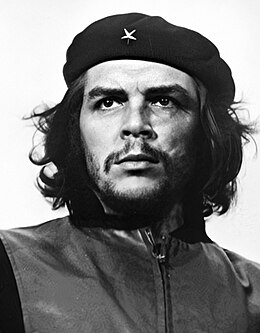
There was no person more feared by the company (CIA) than Che Guevara because he had the capacity and charisma necessary to direct the struggle against the political repression of the traditional hierarchies in power in the countries of Latin America.— Philip Agee, CIA agent
By December 1964, Che Guevara had emerged as a "revolutionary statesmen of world stature" and thus traveled to New York City as head of the Cuban delegation to speak at the United Nations. During his impassioned address, he criticized the United Nations inability to confront the "brutal policy of apartheid" in South Africa, proclaiming "can the United Nations do nothing to stop this?" Guevara then denounced the United States policy towards their black population, stating:
"Those who kill their own children and discriminate daily against them because of the color of their skin; those who let the murderers of blacks remain free, protecting them, and furthermore punishing the black population because they demand their legitimate rights as free men — how can those who do this consider themselves guardians of freedom?"
Source: Wikipedia
Saturday, July 13, 2002
Percy Yutar, 90, Prosecutor Of Mandela in South Africa
Percy Yutar, the South African prosecutor who in 1964 won convictions and lifetime prison terms for Nelson Mandela and other African National Congress leaders for crimes against the white minority-ruled state, died July 13. He was 90.
In 1995, Mr. Mandela, released from prison and elected president of South Africa's new democratic government, invited Mr. Yutar for lunch at the presidential mansion. Mr. Mandela, also a lawyer, said that he was trying to demonstrate the full reconciliation that his country so badly needed. The pair chatted for an hour, ''like old lawyers tend to do,'' as Mr. Mandela later put it. After the lunch, Mr. Yutar, who once accused Mr. Mandela of being a Communist stooge plotting a bloody revolution, pronounced the president ''a saintly man.''
According to many South African historians and writers, Mr. Yutar's vigorous persecution of blacks in the 1960's was linked to his Jewish background. Glenn Frankel, the author of ''Rivonia's Children: Three Families and the Cost of Conscience in White South Africa,'' said that Mr. Yutar saw the trial as a patriotic opportunity, especially because some of Mr. Mandela's co-defendants were Jews. ''Who better to prosecute Jewish traitors than a loyal Jew?'' Mr. Frankel wrote, describing Mr. Yutar's thinking. ''Who better than he to put things right and prove that not all Jews were radicals hell-bent upon overthrowing the government?''
Mr. Yutar, one of eight children in a family of Lithuanian immigrants, was born in Cape Town on July 29, 1911. As a young man, his left hand was caught in an electric mincing machine when he was working in his father's butcher shop, leaving his hand badly mangled. He attended the University of Cape Town on a scholarship and was awarded a doctorate in law. Jews, however, were not welcome in the higher echelons of South Africa's civil service, and Mr. Yutar settled for a job tracing defaulting telephone subscribers for the postal service. Still he persisted in his legal career and slowly moved up the ladder to junior law clerk and junior prosecutor. Eventually, he became deputy attorney general for the Transvaal Province and gained a reputation as an especially ambitious and energetic prosecutor.
The trial of Mr. Mandela came after a 1963 government raid on the secret headquarters of the A.N.C. in Rivonia, north of Johannesburg. The trial became known as the Rivonia trial, and Mr. Yutar was the appointed prosecutor. Early in the case, Mr. Yutar had to decide whether to charge the defendants with treason or sabotage. He opted for sabotage, a charge widely believed to be easier to prove, but the trial nonetheless centered on seditious crimes against the state.
Mr. Yutar portrayed the defendants as Communist-inspired terrorists who were planning to overthrow the government with the help of foreign countries. He also argued that they did not represent the overwhelming majority of South Africa's blacks. ''Although they represented scarcely 1 percent of the Bantu population, they took it upon themselves to tell the world that the Africans in South Africa are suppressed, oppressed and depressed,'' Mr. Yutar said at the trial.
In Mr. Mandela's autobiography, ''Long Walk to Freedom'' (1995, Little, Brown & Co.), he described Mr. Yutar as a ''small, bald, dapper fellow whose voice squeaked when he became angry or emotional. ''He had a flair for the dramatic and for high-flown if imprecise language.'' After the conviction on the sabotage charge, the judge in the case, Quartus de Wet, said the crime was ''in essence high treason,'' but decided against imposing the death penalty. The defendants were sentenced to life in prison and sent to the notorious Robben Island.
With the successful prosecution, Mr. Yutar's career soared. He was named attorney general, first of the Orange Free State and later of the Transvaal. He was the first Jew to serve as attorney general in South Africa. He retired from government service in 1976. As white minority rule crumbled and Mr. Mandela was released from prison, Mr. Yutar tried to rehabilitate his image. He even argued that he had actually been Mr. Mandela's savior by pursuing the sabotage charge rather than the charge of high treason, which certainly would have led to the death penalty.
After the lunch in 1995 with Mr. Mandela, Mr. Yutar told the press: ''When I was assigned this prosecution, I was urged to charge the accused with treason. I exercised my discretion and charged them only with sabotage because, at the back of my mind I felt, they do not deserve the death penalty.'' Asked about his vigorous prosecution of the case, he said, ''I just did my duty.''
Mr. Yutar remained active in Jewish groups all his life. For more than a decade, he was the president of Johannesburg's largest Orthodox synagogue. He is survived by his wife, Cecilia, and a son, David.
Source: New York Times
In 1995, Mr. Mandela, released from prison and elected president of South Africa's new democratic government, invited Mr. Yutar for lunch at the presidential mansion. Mr. Mandela, also a lawyer, said that he was trying to demonstrate the full reconciliation that his country so badly needed. The pair chatted for an hour, ''like old lawyers tend to do,'' as Mr. Mandela later put it. After the lunch, Mr. Yutar, who once accused Mr. Mandela of being a Communist stooge plotting a bloody revolution, pronounced the president ''a saintly man.''
According to many South African historians and writers, Mr. Yutar's vigorous persecution of blacks in the 1960's was linked to his Jewish background. Glenn Frankel, the author of ''Rivonia's Children: Three Families and the Cost of Conscience in White South Africa,'' said that Mr. Yutar saw the trial as a patriotic opportunity, especially because some of Mr. Mandela's co-defendants were Jews. ''Who better to prosecute Jewish traitors than a loyal Jew?'' Mr. Frankel wrote, describing Mr. Yutar's thinking. ''Who better than he to put things right and prove that not all Jews were radicals hell-bent upon overthrowing the government?''
Mr. Yutar, one of eight children in a family of Lithuanian immigrants, was born in Cape Town on July 29, 1911. As a young man, his left hand was caught in an electric mincing machine when he was working in his father's butcher shop, leaving his hand badly mangled. He attended the University of Cape Town on a scholarship and was awarded a doctorate in law. Jews, however, were not welcome in the higher echelons of South Africa's civil service, and Mr. Yutar settled for a job tracing defaulting telephone subscribers for the postal service. Still he persisted in his legal career and slowly moved up the ladder to junior law clerk and junior prosecutor. Eventually, he became deputy attorney general for the Transvaal Province and gained a reputation as an especially ambitious and energetic prosecutor.
The trial of Mr. Mandela came after a 1963 government raid on the secret headquarters of the A.N.C. in Rivonia, north of Johannesburg. The trial became known as the Rivonia trial, and Mr. Yutar was the appointed prosecutor. Early in the case, Mr. Yutar had to decide whether to charge the defendants with treason or sabotage. He opted for sabotage, a charge widely believed to be easier to prove, but the trial nonetheless centered on seditious crimes against the state.
Mr. Yutar portrayed the defendants as Communist-inspired terrorists who were planning to overthrow the government with the help of foreign countries. He also argued that they did not represent the overwhelming majority of South Africa's blacks. ''Although they represented scarcely 1 percent of the Bantu population, they took it upon themselves to tell the world that the Africans in South Africa are suppressed, oppressed and depressed,'' Mr. Yutar said at the trial.
In Mr. Mandela's autobiography, ''Long Walk to Freedom'' (1995, Little, Brown & Co.), he described Mr. Yutar as a ''small, bald, dapper fellow whose voice squeaked when he became angry or emotional. ''He had a flair for the dramatic and for high-flown if imprecise language.'' After the conviction on the sabotage charge, the judge in the case, Quartus de Wet, said the crime was ''in essence high treason,'' but decided against imposing the death penalty. The defendants were sentenced to life in prison and sent to the notorious Robben Island.
With the successful prosecution, Mr. Yutar's career soared. He was named attorney general, first of the Orange Free State and later of the Transvaal. He was the first Jew to serve as attorney general in South Africa. He retired from government service in 1976. As white minority rule crumbled and Mr. Mandela was released from prison, Mr. Yutar tried to rehabilitate his image. He even argued that he had actually been Mr. Mandela's savior by pursuing the sabotage charge rather than the charge of high treason, which certainly would have led to the death penalty.
After the lunch in 1995 with Mr. Mandela, Mr. Yutar told the press: ''When I was assigned this prosecution, I was urged to charge the accused with treason. I exercised my discretion and charged them only with sabotage because, at the back of my mind I felt, they do not deserve the death penalty.'' Asked about his vigorous prosecution of the case, he said, ''I just did my duty.''
Mr. Yutar remained active in Jewish groups all his life. For more than a decade, he was the president of Johannesburg's largest Orthodox synagogue. He is survived by his wife, Cecilia, and a son, David.
Source: New York Times
Sunday, August 15, 1976
South Africa Threatens Restraints on the Press
The South African Government, embittered by local newspaper coverage of the unrest in black townships, has threatened to impose new restraints on the press.
Connie P Mulder, the information Minister, told a congress of the ruling National Party in Durban that the Government attached great importance to press freedom. But he said that society had the right to expect loyalty and partiotism from newspapers. The Minister was critical in particularly of two of Johannesburg's principal newspapers, The Rand Daily Mail and The Sunday Times. He said The Sunday Times was one of the papers that had described apartheid, not black unrest, as the real danger to the country. "In a country where relations between peoples are as loaded as ours, it is irresponsible to say this" he declared.
Mr Mulder said one of the restraints he had in mind was a requirement that all opinion formers be South African citizens competent in both English and Afrikaans, the language of the dominant white group in South Africa. He said this would eliminate foreigners who could take the first plane home if trouble erupted as a result of their writing.
Newspapers already operate under a web of legal restraints affecting security and defense matters, among others. Two weeks ago, four journalists were arrested under the Suppression of Communism Act, which provides for detention without trial.
The minister's warnong came in the aftermath of the arrest of at least 20 black opposition leaders, including Winnie Mandela, wife of Nelson Mandela, the black nationalist leader who was jailed 14 years ago. Some reports put the number arrested by the security police in swoops across the country yesterday as high as 50.
The Government has given no reason for the arrests.
Source: New York Times
Connie P Mulder, the information Minister, told a congress of the ruling National Party in Durban that the Government attached great importance to press freedom. But he said that society had the right to expect loyalty and partiotism from newspapers. The Minister was critical in particularly of two of Johannesburg's principal newspapers, The Rand Daily Mail and The Sunday Times. He said The Sunday Times was one of the papers that had described apartheid, not black unrest, as the real danger to the country. "In a country where relations between peoples are as loaded as ours, it is irresponsible to say this" he declared.
Mr Mulder said one of the restraints he had in mind was a requirement that all opinion formers be South African citizens competent in both English and Afrikaans, the language of the dominant white group in South Africa. He said this would eliminate foreigners who could take the first plane home if trouble erupted as a result of their writing.
Newspapers already operate under a web of legal restraints affecting security and defense matters, among others. Two weeks ago, four journalists were arrested under the Suppression of Communism Act, which provides for detention without trial.
The minister's warnong came in the aftermath of the arrest of at least 20 black opposition leaders, including Winnie Mandela, wife of Nelson Mandela, the black nationalist leader who was jailed 14 years ago. Some reports put the number arrested by the security police in swoops across the country yesterday as high as 50.
The Government has given no reason for the arrests.
Source: New York Times
Tuesday, December 17, 1974
APPEALS BY THE CHAIRMAN FOR RELEASE OF ABRAM FISCHER
Edwin Ogebe Ogbu (Nigeria), Chairman of the Special Committee against Apartheid, sent urgent appeals today to Secretary-General Kurt Waldheim and to the Secretary-General of the International Committee of the Red Cross, asking them to use their good offices to secure the release of Bram Fischer, an Afrikaner jurist, who is seriously ill in prison in South Africa. Mr. Ogbu also appealed to all Governments and organisations to take action to secure Mr. Fischer's release.
 In a statement today, the Chairman of the Special Committee said: "I am shocked at the news that Abram (Bram) Fischer is seriously ill in prison in South Africa. Bram Fischer, a prominent Afrikaner jurist, has devoted many years of his life to the struggle for freedom and equality in South Africa. He has earned the respect of the oppressed people of South Africa and all opponents of racism because of his steadfastness and courage. On the other hand, he has provoked the bitter enmity of the South African regime which has not only sentenced him to life imprisonment in 1966 under its notorious repressive laws, but has been vengeful in its treatment of this courageous man in prison. Despite the serious illness and the appeals of many South Africans, it has not released him and has even restricted visits by his family to the hospital. I have today sent urgent appeals to the Secretary-General of the United Nations and to the Secretary-General of the International Committee of the Red Cross, requesting them to use their good offices to secure the release of Bram Fischer. I also urgently appeal to all Governments and organisations to take all appropriate action towards that end."
In his letter to Secretary-General Waldheim, Mr. Ogbu stated that, according to South African press reports, Mr. Fischer was suffering from cancer and was "very weak, frail and in great pain". The letter went on to say that Mr. Fischer had been on crutches for two months. "Members of his family were allowed to visit him at the hospital where he is now confined, but new orders were issued on 6 December that there could only be two visits a week", the letter stated.
Mr. Fischer, who is now 66 years old, is a prominent jurist from a well-known Afrikaner family of South Africa. His grandfather was Prime Minister of the Orange River Colony and his father was Judge President of the Free State.
"He dedicated himself to the struggle for a non-racial and democratic society in South Africa and fully associated himself with the liberation movement. He defended numerous persons accused under discriminatory and repressive laws. He was the defence counsel in the 'Treason Trial' of 1956-1961 in which 156 leaders of the Black people and other opponents of racism were charged. He was the chief defence counsel in the 'Rivonia Trial' of 1963-1964 in which leaders of the African National Congress and their allies were charged. Shortly after the conclusion of the 'Rivonia Trial', which was condemned by the United Nations and world opinion, he himself was charged with various political offences under the notorious repressive laws of South Africa, and convicted to life imprisonment. The Special Committee against Apartheid has condemned the persecution of Mr. Fischer and has repeatedly called for his release. The incarceration of this courageous and respected advocate of freedom and equality, and the callous and vengeful treatment to which he has been subjected in prison, constitute a terrible indictment of the apartheid regime. As Chairman of the Special Committee against Apartheid, I have the honour to request you urgently to use all your influence to secure the immediate release of Mr. Fischer so that he can spend the last days of his life in freedom."
Advocate Abram Fischer, Q.C. was detained in 1964 and was the main accused in a trial of 13 men and women in Johannesburg on charges of being members or supporters of the Communist Party. On January 22, 1965, he announced that he had chosen to forfeit his bail and leave his home in order to continue the liberation struggle from underground. This message was sent by him from "somewhere in South Africa".
Source: ANC; SACP
 In a statement today, the Chairman of the Special Committee said: "I am shocked at the news that Abram (Bram) Fischer is seriously ill in prison in South Africa. Bram Fischer, a prominent Afrikaner jurist, has devoted many years of his life to the struggle for freedom and equality in South Africa. He has earned the respect of the oppressed people of South Africa and all opponents of racism because of his steadfastness and courage. On the other hand, he has provoked the bitter enmity of the South African regime which has not only sentenced him to life imprisonment in 1966 under its notorious repressive laws, but has been vengeful in its treatment of this courageous man in prison. Despite the serious illness and the appeals of many South Africans, it has not released him and has even restricted visits by his family to the hospital. I have today sent urgent appeals to the Secretary-General of the United Nations and to the Secretary-General of the International Committee of the Red Cross, requesting them to use their good offices to secure the release of Bram Fischer. I also urgently appeal to all Governments and organisations to take all appropriate action towards that end."
In his letter to Secretary-General Waldheim, Mr. Ogbu stated that, according to South African press reports, Mr. Fischer was suffering from cancer and was "very weak, frail and in great pain". The letter went on to say that Mr. Fischer had been on crutches for two months. "Members of his family were allowed to visit him at the hospital where he is now confined, but new orders were issued on 6 December that there could only be two visits a week", the letter stated.
Mr. Fischer, who is now 66 years old, is a prominent jurist from a well-known Afrikaner family of South Africa. His grandfather was Prime Minister of the Orange River Colony and his father was Judge President of the Free State.
"He dedicated himself to the struggle for a non-racial and democratic society in South Africa and fully associated himself with the liberation movement. He defended numerous persons accused under discriminatory and repressive laws. He was the defence counsel in the 'Treason Trial' of 1956-1961 in which 156 leaders of the Black people and other opponents of racism were charged. He was the chief defence counsel in the 'Rivonia Trial' of 1963-1964 in which leaders of the African National Congress and their allies were charged. Shortly after the conclusion of the 'Rivonia Trial', which was condemned by the United Nations and world opinion, he himself was charged with various political offences under the notorious repressive laws of South Africa, and convicted to life imprisonment. The Special Committee against Apartheid has condemned the persecution of Mr. Fischer and has repeatedly called for his release. The incarceration of this courageous and respected advocate of freedom and equality, and the callous and vengeful treatment to which he has been subjected in prison, constitute a terrible indictment of the apartheid regime. As Chairman of the Special Committee against Apartheid, I have the honour to request you urgently to use all your influence to secure the immediate release of Mr. Fischer so that he can spend the last days of his life in freedom."
Advocate Abram Fischer, Q.C. was detained in 1964 and was the main accused in a trial of 13 men and women in Johannesburg on charges of being members or supporters of the Communist Party. On January 22, 1965, he announced that he had chosen to forfeit his bail and leave his home in order to continue the liberation struggle from underground. This message was sent by him from "somewhere in South Africa".
Source: ANC; SACP
Subscribe to:
Posts (Atom)