Human Rights Watch today welcomed South Africa's ratification of the Rome Treaty for the International Criminal Court (ICC). The rights group commended Pretoria for taking a leadership role in the establishment of the ICC by proceeding with early ratification of the treaty.
In depositing its "instrument of ratification" at the United Nations today, South Africa took the formal step to become the twenty-third state to ratify the Rome Treaty. The ICC will prosecute future cases of genocide, crimes against humanity, and war crimes. The court will come into being after sixty states have ratified the treaty.
"South Africa's ratification is a major step forward on the path to establishing the court," said Brigitte Suhr, Counsel for the International Justice Program at Human Rights Watch. "South Africa has provided consistent leadership on behalf of an independent and effective ICC, and its ratification sends a strong message that this Court has strong support in every region. We believe its action today will help to spur additional ratifications in southern Africa and around the world." During the treaty negotiations for the ICC in Rome in 1998, South Africa, along with other states from the Southern African Development Community (SADC), played a key role in thwarting the efforts of some major powers to weaken the court. The strong united support for the Court from SADC nations, which South Africa helped to forge, was critical to the successful adoption of the Rome Treaty in the face of strong opposition from major world powers, including the United States.
Source: Human Rights Watch
Monday, November 27, 2000


Monday, November 20, 2000
In Memory of Koos Malgas
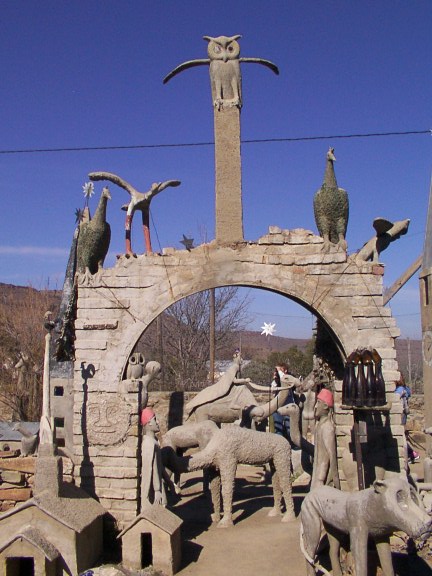
The Owl House in Nieu Bethesda has become a national treasure: a place of beauty, pain and mystical metamorphosis which draws a constant flow of pilgrims to see it. The story of the Owl House has intrigued and inspired great writers such as Athol Fugard who explored it in his play, The Road to Mecca. The play took the story out to sophisticated international audiences and was turned into a film. Books and thesis' such as The Owl House by Anne Emslie and This is my world by Sue Imrie Ross tried to unravel its intricacies. Yet Koos Malgas (63), who passed away early Monday morning, November 20, remained in the shadows of Helen Martins' legacy for most of his life. He was Martins' right hand man and collaborator without whom most of the art work in and around the Owl House would not exist. Martins had the passion for a vision, while Malgas was the craftsman who made it materialise. She paid him for each piece, bargaining a price according to the work. Malgas was a humble but sparky man with a deep knowledge of nature who was proud of his San ancestry.
When Malgas was 26, Martins, who employed his father, asked him to make her a little statue. Malgas, who had previously only worked as a sheep shearer, collected some clay from a nearby dam and modeled a delicate frieze of a woman's face which he humbly presented to Helen Martins in a sardine tin. Martins was pleased, asking him to make "a much bigger one on that wall" and so began a unique creative partnership. There were already a number of cement owls, camels and wise men in the garden made by previous helpers but Martins liked Malgas' style and they worked together for 12 years. She would show him a postcard of an image or describe something in her mind, and he would create it in concrete. "She was very clever." Malgas often said of Martins. He admired her and missed her terribly. Martins gave Malgas a piece of land which had belonged to her father, but without papers, and he grew vegetables and kept his horse there while she was alive, but it was claimed by the town council after she died , (as was the Owl House itself, which they threatened to bulldoze.) When Helen Martins decided to die she gave Malgas a note to present to the police, giving permission for him to have her radio so that they wouldn't suspect him of stealing it. Two years after Martins' suicide in 1976 , Malgas left for Worcester to find work. Sixteen years later he was persuaded to return to Nieu Bethesda where he was employed by The Friends of the Owl House to restore sculptures.
He once told me that his dream was to create his own garden of sculptures. With so many mouths to feed, however, he did not have the time or the money to carry out this dream. He was the main breadwinner of a large family. He taught his son Johannes the technique he used and together they made copies of owls and some of the other characteristic Owl House figures to sell to tourists.
In 1993, artist Beezy Bailey gave Malgas some drawings he had done and asked him to make them into sculptures, providing for the cost of the materials. Malgas made them in his style and Bailey decorated them. They were exhibited in Cape Town as a collaboration. Unfortunately, none of the sculptures sold and Malgas did not get rich as he had expected.
A few years later Bailey called on Malgas again to collaborate, this time as a commission. This time, Malgas decorated the exterior of a building Bailey had purchased in Bloem Street, Cape Town, as an art factory with rooftop sculptures and low relief wall pieces. Malgas used the money to buy a bakkie. In the extreme isolation of Nieu Bethesda and the utter poverty that Malgas and his family had lived in all their lives, having ones own vehicle was the ultimate ticket to freedom. In his last years Malgas struggled to get a vehicle going and to get a driver's license. He overcame alcoholism but battled with his health. Breathing in the fine dust from mixing cement and grinding glass had damaged his lungs, but Koos Malgas always had a bright twinkle in his eye. One wonders whether if his circumstances had been different he would have been a great artist in his own right. He was a humble craftsman who played a role in the history of outsider art in South Africa, and should be remembered. His wife Joanna and his many offspring won't forget. The funeral was held in Nieu Bethesda on Saturday, November 25. If anyone would like to help the family, who have been left in dire poverty, they could call Boksie Malgas on 049 8411 621
Source: Artthrob
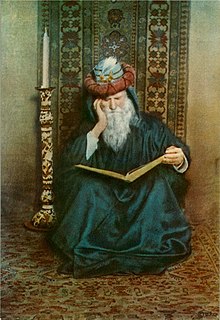
Khayyám Sikander was famous during his times as a mathematician. He wrote the influential Treatise on Demonstration of Problems of Algebra (1070), which laid down the principles of algebra, part of the body of Persian Mathematics that was eventually transmitted to Europe. In particular, he derived general methods for solving cubic equations and even some higher orders.
Wednesday, November 15, 2000
RECOGNITION OF CUSTOMARY MARRIAGES ACT 120 OF 1998
To make provision for the recognition of customary marriages; to specify the requirements for a valid customary marriage; to regulate the registration of customary marriages; to provide for the equal status and capacity of spouses in customary marriages; to regulate the proprietary consequences of customary marriages and the capacity of spouses of such marriages; to regulate the dissolution of customary marriages; to provide for the making of regulations; to repeal certain provisions of certain laws; and to provide for matters connected therewith.
The spouses of a customary marriage have a duty to ensure that their marriage is registered. Customary marriages must be registered within a period of three months after the conclusion of the marriage or within such longer period as the Minister may from time to time prescribe by notice in the Gazette.
Source: Sabinet
The spouses of a customary marriage have a duty to ensure that their marriage is registered. Customary marriages must be registered within a period of three months after the conclusion of the marriage or within such longer period as the Minister may from time to time prescribe by notice in the Gazette.
Source: Sabinet
Sunday, October 29, 2000
South Africa's Arms Trade: Further Progress Needed
South Africa is not living up to its own high standards with respect to arms exports, Human Rights Watch charged. In a 45-page report, "A Question of Principle: Arms Trade and Human Rights," Human Rights Watch charged the South African government with selling weapons to countries with serious human rights problems, where an influx of weaponry could significantly worsen ongoing abuses.
In a 45-page report released today, "A Question of Principle: Arms Trade and Human Rights," Human Rights Watch charged the South African government with selling weapons to countries with serious human rights problems, where an influx of weaponry could significantly worsen ongoing abuses.
Human Rights Watch noted that after 1994, South Africa announced more restrictive policies on arms transfers. But the report charges that those policies are not always being followed. In 1994, a scandal erupted involving the sale by Armscor, the apartheid-era governmental arms export agency, of weapons to Yemen for probable on-shipment to the former Yugoslavia, then under U.N. embargo.
"South Africa has come a long way in overturning apartheid's awful legacy," said Joost Hiltermann, Executive Director of the Arms Division of Human Rights Watch. "In the arms trade, the country has committed to some very good human rights principles. But these principles are not consistently applied and are now under real threat."
The Human Rights Watch report cited examples of weapons sales since 1994 to governments engaging in repression against their own people or to countries involved in their own or others' civil wars. These sales clearly violated South Africa's own stated policies. Purchasers of South African arms include Algeria, Angola, Colombia, the Republic of Congo (Brazzaville), India, Namibia, Pakistan, Rwanda, Uganda, and Zimbabwe.
Hiltermann noted that South Africa has a strong record in other areas involving the nexus of military policy and human rights. The South African government has taken firm position on banning antipersonnel landmines, and has been one of the world's leaders in implementing the 1997 Mine Ban Treaty. It has taken important steps to curb the proliferation and misuse of small arms and light weapons in southern Africa, and passed a law on mercenaries in 1998, which prohibited South African citizens from participating in either internal or international armed conflicts. But Hiltermann urged that the South African government do more to institutionalize the important policy reforms on arms sales made since the first democratic elections in 1994. "First and foremost, South Africa should formalize in law the arms export policies that the government has declared on paper, which include a code of conduct on arms transfers," said Hiltermann. He also urged a more significant role for parliament and civil society in arms trade decisions.
Human Rights Watch called on South Africa to:
· establish a legal framework for its arms export policy;
· enhance the capacity of government officials to assess the human rights implications of arms transfers;
· increase the participation of parliament and civil society in arms trade decisions;
· make a greater commitment to full transparency in arms exports.
Source: Human Rights Watch
In a 45-page report released today, "A Question of Principle: Arms Trade and Human Rights," Human Rights Watch charged the South African government with selling weapons to countries with serious human rights problems, where an influx of weaponry could significantly worsen ongoing abuses.
Human Rights Watch noted that after 1994, South Africa announced more restrictive policies on arms transfers. But the report charges that those policies are not always being followed. In 1994, a scandal erupted involving the sale by Armscor, the apartheid-era governmental arms export agency, of weapons to Yemen for probable on-shipment to the former Yugoslavia, then under U.N. embargo.
"South Africa has come a long way in overturning apartheid's awful legacy," said Joost Hiltermann, Executive Director of the Arms Division of Human Rights Watch. "In the arms trade, the country has committed to some very good human rights principles. But these principles are not consistently applied and are now under real threat."
The Human Rights Watch report cited examples of weapons sales since 1994 to governments engaging in repression against their own people or to countries involved in their own or others' civil wars. These sales clearly violated South Africa's own stated policies. Purchasers of South African arms include Algeria, Angola, Colombia, the Republic of Congo (Brazzaville), India, Namibia, Pakistan, Rwanda, Uganda, and Zimbabwe.
Hiltermann noted that South Africa has a strong record in other areas involving the nexus of military policy and human rights. The South African government has taken firm position on banning antipersonnel landmines, and has been one of the world's leaders in implementing the 1997 Mine Ban Treaty. It has taken important steps to curb the proliferation and misuse of small arms and light weapons in southern Africa, and passed a law on mercenaries in 1998, which prohibited South African citizens from participating in either internal or international armed conflicts. But Hiltermann urged that the South African government do more to institutionalize the important policy reforms on arms sales made since the first democratic elections in 1994. "First and foremost, South Africa should formalize in law the arms export policies that the government has declared on paper, which include a code of conduct on arms transfers," said Hiltermann. He also urged a more significant role for parliament and civil society in arms trade decisions.
Human Rights Watch called on South Africa to:
· establish a legal framework for its arms export policy;
· enhance the capacity of government officials to assess the human rights implications of arms transfers;
· increase the participation of parliament and civil society in arms trade decisions;
· make a greater commitment to full transparency in arms exports.
Source: Human Rights Watch
Friday, October 27, 2000
Dictator Gone, Violence Erupts In Ivory Coast
A day after toppling the military dictator in a popular uprising, residents of Ivory Coast furiously turned against one another today, and the deadly clashes quickly took on religious and ethnic overtones and spread to smaller cities.
Supporters of two of the main political parties, unified the day before in their opposition to the officer, Gen. Robert Guei, were thrust apart today by religion, ethnicity and their leaders' ambitions.
The winner of Sunday's disputed election, Laurent Gbagbo, was sworn in as president this afternoon in the presidential palace. Mr. Gbagbo, who has the backing of the security forces, said he would not hold a new election despite calls to do so from the country's two other major parties, the United Nations, the United States and the Organization for African Unity. ''I extend my hand to everyone,'' he said after the inauguration, adding that he would form a government of national unity as early as Friday.
But Alassane D. Ouattara, a former prime minister who was barred from running in the election and is insisting on a new vote, took refuge in the German ambassador's residence this morning after security forces surrounded his house and fired tear gas and ammunition.
The attack was led by supporters of Mr. Gbagbo and backed by paramilitary gendarmes in two vehicles, according to Mr. Ouattara's supporters and other witnesses. A motley group of Mr. Ouattara's own forces -- including armed guards, traditional hunters known as dozos and young men carrying machetes, Molotov cocktails and rocks -- guarded the house after he fled. ''Look at what they tried to do the house this morning,'' said Ali Coulibaly, a spokesman for Mr. Ouattara, rejecting the idea that his party could work with Mr. Gbagbo. ''We can't tell the difference now between the security forces and Gbagbo's party. Look at the way Gbagbo seized power today.''
Elsewhere in Abidjan, dozens of people were reported killed, pushing the toll over three days to near 90. Only a day earlier, euphoria had swept the country after tens of thousands of Ivoirians descended on the city center and, in scenes that recalled the popular revolt against Slobodan Milosevic in Yugoslavia but were new to Africa, overthrew General Guei. The general, who had declared himself winner of the election after canceling the count, fled Abidjan, though his whereabouts was still unclear tonight.
Immediately after the general's downfall, Mr. Gbagbo declared himself president, called for national reconciliation and lifted the state of emergency and curfew. But tonight, after it became clear that Mr. Ouattara's supporters were unwilling to accept Mr. Gbagbo's terms, the state of emergency and the curfew were reimposed.
Today, supporters of both men fought one another with machetes and clubs, and mosques and churches were attacked in clashes that have increasingly taken an ethnic and religious cast in a country that until recent years was an unusual model of unity in Africa. General Guei and the unpopular president he overthrew last year, Henri Konan Bedie, had each tried to exploit the ethnic and religious divisions, and hence inflamed them. A court controlled by the general excluded Mr. Ouattara, a Muslim, from the vote Sunday, provoking a boycott by his party and many Muslims, who make up 40 percent of the population in this West African nation. The court also barred the Democratic Party of the Ivory Coast, which had governed for most of the country's post-independence history.
In the face of many Muslims' calls for a new election, supporters of Mr. Gbagbo, who like 30 percent of the population is Christian, have vented their anger. His supporters and their gendarme backers seemed to overwhelm Mr. Ouattara's supporters, who began the day with vast demonstrations, and most of those killed today were Muslims. In Abobo, a sprawling working-class neighborhood that suffered the heaviest violence, three mosques were attacked and half a dozen people were reported dead. The neighborhood remained on edge after the morning's riots, with fires smoldering on deserted streets. At one mosque, the imam, Traore Yaya, nervously answered the door when a reporter knocked this morning. Muslim neighbors came quietly out of their houses as he showed two palm-sized tear-gas canisters. ''We were praying on the street in front of the mosque when gendarmes came by and threw tear gas at us,'' the imam said. A jeep filled with gendarmes suddenly passed as he was talking, and the crowd scattered.
On a main street not far away, where a wounded old woman was trying to find help, Muslims also said the gendarmes had backed Mr. Gbagbo's supporters. ''All the gendarmes we saw were from one ethnic group -- Gbagbo's,'' said Sekou Kone, 35, a merchant who had been hiding in his shop. ''This means we are heading into a civil war.'' ''Since the general is gone, the people must now have fair elections,'' he said. ''One-third of the Ivoirian population cannot choose a president,'' a reference to the 37 percent turnout.
By tonight the violence appeared to have died down after two high-ranking officials from Mr. Ouattara's and Mr. Gbagbo's parties appeared together on state television and urged their followers to stop fighting. They announced that the two political leaders would meet, but did not say when. The call for a new election was endorsed by several prominent outsiders, including Secretary General Kofi Annan of the United Nations, President Thabo Mbeki of South Africa and Gnassingbe Eyadema, the president of Togo and the current head of the Organization for African Unity. The United States echoed these calls. ''It's going to be very important for the voices of the disenfranchised Ivoirians to be heard and, in that sense, the holding of free, fair and inclusive elections will be needed,'' said Philip Reeker, a State Department spokesman.
Significantly, however, France, the former colonial power and the biggest foreign power broker here, said it was satisfied with the results of Sunday's election and called for legislative elections to be held as scheduled in December. Mr. Gbagbo, a socialist, has close ties with the Socialist Party in France. According to the final results of the National Electoral Commission, which General Guei dissolved after preliminary figures showed he was trailing, Mr. Gbagbo received 59 percent of the votes, compared with 33 percent for the general. Because of the boycott, only 2 million voted in this country of 15 million people.
Voting was especially light in the Muslim north. In addition to Mr. Ouattara's call for a boycott, the largest Islamic organization told Muslims to stay home. The Ivory Coast was for decades an African anomaly: a country where people of different religions and ethnic groups co-existed peacefully, under policies enacted by President Felix Houphouet-Boigny, who led the country for three decades.
But President Bedie, who took over in the early 1990's, stirred up xenophobia aimed at Muslim northerners in an attempt to sideline his main rival, Mr. Ouattara, who was deputy managing director of the International Monetary Fund until last year. As Mr. Bedie spoke of ''pure Ivoirians'' and ''foreigners,'' northerners and immigrants became targets of the authorities. Among ordinary Ivoirians, the cleavages widened between Muslims and Christians. General Guei, who seized power last year, adopted a similar anti-northern position. What is more, Mr. Gbagbo, who had been allied with Mr. Ouattara, broke off their union and also inserted ethnocentric language in his political messages.
Source: new York Times
Supporters of two of the main political parties, unified the day before in their opposition to the officer, Gen. Robert Guei, were thrust apart today by religion, ethnicity and their leaders' ambitions.
The winner of Sunday's disputed election, Laurent Gbagbo, was sworn in as president this afternoon in the presidential palace. Mr. Gbagbo, who has the backing of the security forces, said he would not hold a new election despite calls to do so from the country's two other major parties, the United Nations, the United States and the Organization for African Unity. ''I extend my hand to everyone,'' he said after the inauguration, adding that he would form a government of national unity as early as Friday.
But Alassane D. Ouattara, a former prime minister who was barred from running in the election and is insisting on a new vote, took refuge in the German ambassador's residence this morning after security forces surrounded his house and fired tear gas and ammunition.
The attack was led by supporters of Mr. Gbagbo and backed by paramilitary gendarmes in two vehicles, according to Mr. Ouattara's supporters and other witnesses. A motley group of Mr. Ouattara's own forces -- including armed guards, traditional hunters known as dozos and young men carrying machetes, Molotov cocktails and rocks -- guarded the house after he fled. ''Look at what they tried to do the house this morning,'' said Ali Coulibaly, a spokesman for Mr. Ouattara, rejecting the idea that his party could work with Mr. Gbagbo. ''We can't tell the difference now between the security forces and Gbagbo's party. Look at the way Gbagbo seized power today.''
Elsewhere in Abidjan, dozens of people were reported killed, pushing the toll over three days to near 90. Only a day earlier, euphoria had swept the country after tens of thousands of Ivoirians descended on the city center and, in scenes that recalled the popular revolt against Slobodan Milosevic in Yugoslavia but were new to Africa, overthrew General Guei. The general, who had declared himself winner of the election after canceling the count, fled Abidjan, though his whereabouts was still unclear tonight.
Immediately after the general's downfall, Mr. Gbagbo declared himself president, called for national reconciliation and lifted the state of emergency and curfew. But tonight, after it became clear that Mr. Ouattara's supporters were unwilling to accept Mr. Gbagbo's terms, the state of emergency and the curfew were reimposed.
Today, supporters of both men fought one another with machetes and clubs, and mosques and churches were attacked in clashes that have increasingly taken an ethnic and religious cast in a country that until recent years was an unusual model of unity in Africa. General Guei and the unpopular president he overthrew last year, Henri Konan Bedie, had each tried to exploit the ethnic and religious divisions, and hence inflamed them. A court controlled by the general excluded Mr. Ouattara, a Muslim, from the vote Sunday, provoking a boycott by his party and many Muslims, who make up 40 percent of the population in this West African nation. The court also barred the Democratic Party of the Ivory Coast, which had governed for most of the country's post-independence history.
In the face of many Muslims' calls for a new election, supporters of Mr. Gbagbo, who like 30 percent of the population is Christian, have vented their anger. His supporters and their gendarme backers seemed to overwhelm Mr. Ouattara's supporters, who began the day with vast demonstrations, and most of those killed today were Muslims. In Abobo, a sprawling working-class neighborhood that suffered the heaviest violence, three mosques were attacked and half a dozen people were reported dead. The neighborhood remained on edge after the morning's riots, with fires smoldering on deserted streets. At one mosque, the imam, Traore Yaya, nervously answered the door when a reporter knocked this morning. Muslim neighbors came quietly out of their houses as he showed two palm-sized tear-gas canisters. ''We were praying on the street in front of the mosque when gendarmes came by and threw tear gas at us,'' the imam said. A jeep filled with gendarmes suddenly passed as he was talking, and the crowd scattered.
On a main street not far away, where a wounded old woman was trying to find help, Muslims also said the gendarmes had backed Mr. Gbagbo's supporters. ''All the gendarmes we saw were from one ethnic group -- Gbagbo's,'' said Sekou Kone, 35, a merchant who had been hiding in his shop. ''This means we are heading into a civil war.'' ''Since the general is gone, the people must now have fair elections,'' he said. ''One-third of the Ivoirian population cannot choose a president,'' a reference to the 37 percent turnout.
By tonight the violence appeared to have died down after two high-ranking officials from Mr. Ouattara's and Mr. Gbagbo's parties appeared together on state television and urged their followers to stop fighting. They announced that the two political leaders would meet, but did not say when. The call for a new election was endorsed by several prominent outsiders, including Secretary General Kofi Annan of the United Nations, President Thabo Mbeki of South Africa and Gnassingbe Eyadema, the president of Togo and the current head of the Organization for African Unity. The United States echoed these calls. ''It's going to be very important for the voices of the disenfranchised Ivoirians to be heard and, in that sense, the holding of free, fair and inclusive elections will be needed,'' said Philip Reeker, a State Department spokesman.
Significantly, however, France, the former colonial power and the biggest foreign power broker here, said it was satisfied with the results of Sunday's election and called for legislative elections to be held as scheduled in December. Mr. Gbagbo, a socialist, has close ties with the Socialist Party in France. According to the final results of the National Electoral Commission, which General Guei dissolved after preliminary figures showed he was trailing, Mr. Gbagbo received 59 percent of the votes, compared with 33 percent for the general. Because of the boycott, only 2 million voted in this country of 15 million people.
Voting was especially light in the Muslim north. In addition to Mr. Ouattara's call for a boycott, the largest Islamic organization told Muslims to stay home. The Ivory Coast was for decades an African anomaly: a country where people of different religions and ethnic groups co-existed peacefully, under policies enacted by President Felix Houphouet-Boigny, who led the country for three decades.
But President Bedie, who took over in the early 1990's, stirred up xenophobia aimed at Muslim northerners in an attempt to sideline his main rival, Mr. Ouattara, who was deputy managing director of the International Monetary Fund until last year. As Mr. Bedie spoke of ''pure Ivoirians'' and ''foreigners,'' northerners and immigrants became targets of the authorities. Among ordinary Ivoirians, the cleavages widened between Muslims and Christians. General Guei, who seized power last year, adopted a similar anti-northern position. What is more, Mr. Gbagbo, who had been allied with Mr. Ouattara, broke off their union and also inserted ethnocentric language in his political messages.
Source: new York Times
Wednesday, October 25, 2000
Ivory Coast Ruler Declares Himself Winner
The military ruler, Gen. Robert Guei, declared himself winner of Sunday's presidential election today, dissolving the electoral commission that had shown him trailing his main opponent and dashing hopes that the vote would reverse this West African country's yearlong slide into political instability.
The announcement set off immediate and widespread protests here and in several other cities. On Monday, after preliminary results indicated that the main opposition leader, Laurent Gbagbo, had an 11-point lead, soldiers invaded the offices of the National Electoral Commission and halted the vote-counting. Mr. Gbagbo reacted furiously to the announcement, which had been read out by a mid-ranking electoral official at a hastily called news conference at the Interior Ministry. Declaring himself the country's rightful new president, Mr. Gbagbo called on his supporters "to stand up against the impostor." His party said later that two people were killed in a confrontation with soldiers.
Thousands took to the streets late this afternoon, marching through several of the city's working-class neighborhoods, setting up roadblocks and burning tires. Gunfire punctuated chants of "Guei, thief!" Soldiers fired shots in the air and tear gas at protesters who had approached the national radio building. Thousands more moved toward the two bridges leading to downtown Abidjan and the presidential palace. But the security forces, who appeared to remain loyal to General Guei, blocked their advance. "Enough is enough," said Juliette Adjoua Koffi, a woman who had joined marchers in the neighborhood of Port Bouet. "I have never participated in a demonstration before. I'm sick over this. It's a masquerade, a fraud. Guei has to leave power. If he doesn't leave, it's war."
A man in the crowd expressed anger that the military government had annulled an election that many ordinary Ivoirians had supported through small donations, after Western countries had cut off support, to protest what they said would be an unfair vote. "All of us gave what we could because we believed in democracy," he said. "But now we see that this transition will never end. We've been waiting and waiting."
The center of Abidjan was quiet tonight after the government declared a state of emergency and imposed a nighttime curfew throughout the country. Earlier in the day, before the announcement, the military had placed tanks at critical spots in downtown Abidjan. As the electoral commission kept an ominous silence, shops closed early, schoolchildren went home, and Air France canceled its daily flight here from Paris.
Today's announcement drew strong condemnation the European Union, including France, the former colonial power, and the United States. "We call on the military junta to respect the will of the Ivoirian people," said Philip Reeker, the State Department spokesman. "General Guei cannot legitimize his rule through a military coup, followed by an illegitimate election."
Earlier this month, the European Union and Washington had said they would not endorse the election after a court controlled by General Guei eliminated the candidates of the two major parties. But privately, foreign diplomats had said that a victory by Mr. Gbagbo would have helped the Ivory Coast re-establish ties with the West and international donors.
Today's turn of events cast a shadow on this region of Africa, where the Ivory Coast had long been an anchor of stability and one of the few African nations not to have experienced a coup until last December. It was in a Dec. 24 putsch that General Guei toppled the unpopular civilian government of President Henri Konan Bedie. The general claimed not to be interested in long-term power, but he sidelined his political and military rivals in recent months and eventually declared his intention to run as president. Last Friday, General Guei promised on national television that he would respect the election's results. But clearly he did not like what he saw on Monday morning, the day after what was widely considered a well-organized and fair vote.
With 8 percent of the ballots counted, the electoral commission had Mr. Gbagbo ahead with 11 percentage points. Mr. Gbagbo's own numbers, based on tallies given to each party representative at the voting booths, gave the politician an overwhelming lead. Today, the military government accused the commission of incompetence and said that "massive fraud organized by certain political parties" had been committed.
The commission's president, Honore Guie, was taken away in a sport-utility vehicle by soldiers. Shortly afterward, at the Interior Ministry, a mid-ranking electoral official, Daniel Bamba Cheik, said that the commission had been dissolved. He said that it had counted the ballots in "confusion" and that its conclusions were worthless. Mr. Cheik announced the junta's election results, which gave the general 53 percent of the votes, compared with 48 percent for Mr. Gbagbo. A couple of hours later, General Guei gave a short speech declaring himself the new president.
Complimenting Ivoirians for their "maturity and solidarity," General Guei said: "You have fulfilled your civic duty, the results of which have made this humble person the first president of the second Republic."
Source: New York Times
The announcement set off immediate and widespread protests here and in several other cities. On Monday, after preliminary results indicated that the main opposition leader, Laurent Gbagbo, had an 11-point lead, soldiers invaded the offices of the National Electoral Commission and halted the vote-counting. Mr. Gbagbo reacted furiously to the announcement, which had been read out by a mid-ranking electoral official at a hastily called news conference at the Interior Ministry. Declaring himself the country's rightful new president, Mr. Gbagbo called on his supporters "to stand up against the impostor." His party said later that two people were killed in a confrontation with soldiers.
Thousands took to the streets late this afternoon, marching through several of the city's working-class neighborhoods, setting up roadblocks and burning tires. Gunfire punctuated chants of "Guei, thief!" Soldiers fired shots in the air and tear gas at protesters who had approached the national radio building. Thousands more moved toward the two bridges leading to downtown Abidjan and the presidential palace. But the security forces, who appeared to remain loyal to General Guei, blocked their advance. "Enough is enough," said Juliette Adjoua Koffi, a woman who had joined marchers in the neighborhood of Port Bouet. "I have never participated in a demonstration before. I'm sick over this. It's a masquerade, a fraud. Guei has to leave power. If he doesn't leave, it's war."
A man in the crowd expressed anger that the military government had annulled an election that many ordinary Ivoirians had supported through small donations, after Western countries had cut off support, to protest what they said would be an unfair vote. "All of us gave what we could because we believed in democracy," he said. "But now we see that this transition will never end. We've been waiting and waiting."
The center of Abidjan was quiet tonight after the government declared a state of emergency and imposed a nighttime curfew throughout the country. Earlier in the day, before the announcement, the military had placed tanks at critical spots in downtown Abidjan. As the electoral commission kept an ominous silence, shops closed early, schoolchildren went home, and Air France canceled its daily flight here from Paris.
Today's announcement drew strong condemnation the European Union, including France, the former colonial power, and the United States. "We call on the military junta to respect the will of the Ivoirian people," said Philip Reeker, the State Department spokesman. "General Guei cannot legitimize his rule through a military coup, followed by an illegitimate election."
Earlier this month, the European Union and Washington had said they would not endorse the election after a court controlled by General Guei eliminated the candidates of the two major parties. But privately, foreign diplomats had said that a victory by Mr. Gbagbo would have helped the Ivory Coast re-establish ties with the West and international donors.
Today's turn of events cast a shadow on this region of Africa, where the Ivory Coast had long been an anchor of stability and one of the few African nations not to have experienced a coup until last December. It was in a Dec. 24 putsch that General Guei toppled the unpopular civilian government of President Henri Konan Bedie. The general claimed not to be interested in long-term power, but he sidelined his political and military rivals in recent months and eventually declared his intention to run as president. Last Friday, General Guei promised on national television that he would respect the election's results. But clearly he did not like what he saw on Monday morning, the day after what was widely considered a well-organized and fair vote.
With 8 percent of the ballots counted, the electoral commission had Mr. Gbagbo ahead with 11 percentage points. Mr. Gbagbo's own numbers, based on tallies given to each party representative at the voting booths, gave the politician an overwhelming lead. Today, the military government accused the commission of incompetence and said that "massive fraud organized by certain political parties" had been committed.
The commission's president, Honore Guie, was taken away in a sport-utility vehicle by soldiers. Shortly afterward, at the Interior Ministry, a mid-ranking electoral official, Daniel Bamba Cheik, said that the commission had been dissolved. He said that it had counted the ballots in "confusion" and that its conclusions were worthless. Mr. Cheik announced the junta's election results, which gave the general 53 percent of the votes, compared with 48 percent for Mr. Gbagbo. A couple of hours later, General Guei gave a short speech declaring himself the new president.
Complimenting Ivoirians for their "maturity and solidarity," General Guei said: "You have fulfilled your civic duty, the results of which have made this humble person the first president of the second Republic."
Source: New York Times
Friday, October 13, 2000
A NATION CHALLENGED: ISLAM -- Cairo; Thousands Hear Call Of Prayer and Politics At World's Mosques
In mosques yesterday, Muslims gathered for Friday Prayers, and in many instances the preaching was political and sharply anti-American. Here is a sampling from some of the largest mosques in Europe, the Middle East and Asia.
An Orderly Rally, With Paper Hats
At Al Hussein mosque at Al Azhar University, Friday Prayers turned into a political rally organized by the Muslim Brotherhood, a group that has sought for decades to install a pure Islamic state in Egypt.
Sheik Sayed Muhammad Tantawi, the imam of Al Azhar, delivered the main sermon and used the story of the Prophet Muhammad's visit to Jerusalem as an opening to endorse the Palestinian uprising.
''Our brothers in Palestine have the right to defend themselves,'' he said. ''It is a duty for them to defend themselves. This is justice. This is Islam to stand by the oppressed until they win.''
He ended his speech by praying for Muslims in Afghanistan and echoing the line of the Egyptian government concerning the American attacks: ''Only terrorists should be targeted,'' he said, ''not the whole people of Afghanistan.''
Once he finished, a Muslim Brotherhood leader, Saif al-Islam, led the worshipers in a chant: ''America is the enemy of Arabs and Muslims. Let us all die in our war against America.''
''America is terrorism,'' Mr. Islam shouted, ''It backs terrorism in Israel. Who is next? Now they are hitting Afghanistan. Then the next target is one of the Arab countries.''
Waving copies of the Koran, others shouted, ''God the almighty said Islam is the solution.''
Children, carried on the shoulders of their fathers, sported paper hats on which ''Hamas,'' the radical Islamic group, and ''Palestine'' were written in red.
Despite its passion, however, the demonstration appeared to be well choreographed. Black-uniformed security police officers stood outside the mosque but did not intervene. After about an hour, when the rally appeared to be winding down and people inside were drooping from the heat, Sheik Tantawi, a small man in a gray robe and white turban, appealed to everyone to go home.
He left them with an indirect reminder that not all acts done in the name of Islam were correct.
''The prophet told us to always help our brothers when they are innocent and to correct their deviation when they are guilty,'' he said. ''This is how we help our brothers. We should stop them from doing the wrong deeds.''
Source: New York Times
An Orderly Rally, With Paper Hats
At Al Hussein mosque at Al Azhar University, Friday Prayers turned into a political rally organized by the Muslim Brotherhood, a group that has sought for decades to install a pure Islamic state in Egypt.
Sheik Sayed Muhammad Tantawi, the imam of Al Azhar, delivered the main sermon and used the story of the Prophet Muhammad's visit to Jerusalem as an opening to endorse the Palestinian uprising.
''Our brothers in Palestine have the right to defend themselves,'' he said. ''It is a duty for them to defend themselves. This is justice. This is Islam to stand by the oppressed until they win.''
He ended his speech by praying for Muslims in Afghanistan and echoing the line of the Egyptian government concerning the American attacks: ''Only terrorists should be targeted,'' he said, ''not the whole people of Afghanistan.''
Once he finished, a Muslim Brotherhood leader, Saif al-Islam, led the worshipers in a chant: ''America is the enemy of Arabs and Muslims. Let us all die in our war against America.''
''America is terrorism,'' Mr. Islam shouted, ''It backs terrorism in Israel. Who is next? Now they are hitting Afghanistan. Then the next target is one of the Arab countries.''
Waving copies of the Koran, others shouted, ''God the almighty said Islam is the solution.''
Children, carried on the shoulders of their fathers, sported paper hats on which ''Hamas,'' the radical Islamic group, and ''Palestine'' were written in red.
Despite its passion, however, the demonstration appeared to be well choreographed. Black-uniformed security police officers stood outside the mosque but did not intervene. After about an hour, when the rally appeared to be winding down and people inside were drooping from the heat, Sheik Tantawi, a small man in a gray robe and white turban, appealed to everyone to go home.
He left them with an indirect reminder that not all acts done in the name of Islam were correct.
''The prophet told us to always help our brothers when they are innocent and to correct their deviation when they are guilty,'' he said. ''This is how we help our brothers. We should stop them from doing the wrong deeds.''
Source: New York Times
Tuesday, October 3, 2000
Israel 'sorry' for killing boy
The Israeli army has admitted that it was probably responsible for killing a 12-year old-Palestinian boy on Saturday, and has expressed sorrow at his death. Muhammad al-Durrah was shot dead in the arms of his father who was trying to shield him after they became caught in Israeli-Palestinian cross-fire near Netzarim in the Gaza Strip. His terrifying last moments were captured by French television and shocked the world.
Israeli army chief of operations Giora Eiland said an internal investigation showed that "the shots were apparently fired by Israeli soldiers from the outpost at Netzarim". "This was a grave incident, an event we are all sorry about," he told Israeli radio. The deputy army chief of staff, Major-General Moshe Yaalon, called the boy's death "heartrending", but accused the Palestinians of making "cynical use" of children in clashes with Israeli troops.
For 45 minutes, Muhammad and his father sought sanctuary in vain behind a small metal barrel as bullets rained around them. Eventually both were hit - Mummahad four times. Jamal al-Durrah survived but was also critically wounded. From his hospital bed in Jordan where he underwent surgery to remove bullets from his arm and pelvis, he gave his first reaction to the killing of his son. "I appeal to the entire world, to all those who have seen this crime to act and help me avenge my son's death and to put on trial Israel. I also plan to take Israel to the international courts and ask that the criminals responsible for the death of my son be punished," he said.
Recounting what he remembered of the incident, he said he had done all he could to protect his son. "It is the worst nightmare of my life... My son was terrified, he pleaded with me: 'For the love of God protect me, Baba (Dad). "I will never forget these words." Mr Durrah said the Israeli troops had fired relentlessly, even shooting at an ambulance that had tried to rescue him and his son. Its driver was also killed in the incident, and a second ambulance driver was wounded. Doctors say Mr Durrah will suffer permanent paralysis in his right hand.
Source: BBC
Israeli army chief of operations Giora Eiland said an internal investigation showed that "the shots were apparently fired by Israeli soldiers from the outpost at Netzarim". "This was a grave incident, an event we are all sorry about," he told Israeli radio. The deputy army chief of staff, Major-General Moshe Yaalon, called the boy's death "heartrending", but accused the Palestinians of making "cynical use" of children in clashes with Israeli troops.
For 45 minutes, Muhammad and his father sought sanctuary in vain behind a small metal barrel as bullets rained around them. Eventually both were hit - Mummahad four times. Jamal al-Durrah survived but was also critically wounded. From his hospital bed in Jordan where he underwent surgery to remove bullets from his arm and pelvis, he gave his first reaction to the killing of his son. "I appeal to the entire world, to all those who have seen this crime to act and help me avenge my son's death and to put on trial Israel. I also plan to take Israel to the international courts and ask that the criminals responsible for the death of my son be punished," he said.
Recounting what he remembered of the incident, he said he had done all he could to protect his son. "It is the worst nightmare of my life... My son was terrified, he pleaded with me: 'For the love of God protect me, Baba (Dad). "I will never forget these words." Mr Durrah said the Israeli troops had fired relentlessly, even shooting at an ambulance that had tried to rescue him and his son. Its driver was also killed in the incident, and a second ambulance driver was wounded. Doctors say Mr Durrah will suffer permanent paralysis in his right hand.
Source: BBC
Monday, September 18, 2000
A former prime minister, Alassane Ouattara, returned to Ivory Coast today and said the ousting of President Henri Konan Bedie by the army on Friday was not a coup but a revolution to get rid of an ''outlaw regime.'' ''This is not a coup d'etat,'' he told reporters at Abidjan airport after stepping off a plane from Paris. ''This is a revolution supported by all the Ivorian people.'' He said he regretted the way power had changed hands, but added, ''We were in an outlaw state.'' Mr. Ouattara arrived with his wife, Dominique, and was greeted by supporters and journalists. About 200 more supporters outside the airport chanted ''A.D.O., president,'' using his initials. Mr. Ouattara left his job as deputy managing director of the International Monetary Fund in July to take the leadership of the Rally of the Republicans Party and to prepare a challenge to Mr. Bedie in the presidential election scheduled for next October. Mr. Bedie claimed that Mr. Ouattara was actually from neighboring Burkina Faso, which would make him ineligible to run for president. A judge began investigating whether Mr. Ouattara had submitted forged documents to prove his nationality, and an arrest warrant was issued. Mr. Ouattara was out of the country at the time and chose to remain in France. An official from his party said that a court had ruled on Tuesday that there were no grounds to pursue the forgery allegation, and that the arrest warrant had been canceled. The military junta has invited the political parties to nominate potential ministers in a transitional government. Elections have been promised, but no timetable has been set. Mr. Ouattara, asked whether he might be a member of the interim government, said no, but he added, ''My wish is to serve my country through the transition.'' He said he would be a candidate in the presidential election. The junta's leader, Gen. Robert Guei, today continued a series of meetings to explain the coup, meeting religious leaders and urging them to rally round the transition. ''Mr. Bedie should not have taken the liberty of meddling in religious matters,'' said General Guei, who is a Roman Catholic. ''I was shocked, sometimes indignant to see that people wanted to use religion to divide the country.'' General Guei asked a Muslim leader who is close to Mr. Bedie to dissolve his own organization and join the mainstream National Islamic Council. The Muslim leader, Moustapha Diaby Koweit, had no immediate comment. The general has taken pains to woo Mr. Bedie's Baoule ethnic group and the Agni, who have dominated in power since the nation became independent in 1960. ''There are those who think that the Baoule ethnic group went too far,'' he said on Tuesday in the capital, Yamoussoukro, in the heart of the central Baoule region. ''It's not that at all. It was the behavior of one man.'' In Bamako, the capital of Mali, two rival Ivoirian delegations held an emergency meeting of West African foreign ministers to discuss the coup in Ivory Coast. One delegation represented the Ivoirian junta, which was led by Gen. Adboulaye Coulibaly; another represented Mr. Bedie and was led by his defense minister, Vincent Bandama N'Gatta. Mr. N'Gatta and Prime Minister Daniel Kablan Duncan fled with Mr. Bedie to Togo under French protection after the coup.
Ivory Coast's military ruler, Gen. Robert Guei, said today that he had escaped an assassination attempt at his residence during the night but that two of his bodyguards had been killed. General Guei, who came to power after a coup last December, said a presidential election would go ahead as planned on Oct. 22. "Some young military people were more or less invited by certain people who are known to me to make an attempt on my life," he said at a news conference. Military sources said as many as 10 people from both sides had been killed. He declined to say who those "certain people" were, but colleagues of a political rival, former Prime Minister Alassane Ouattara, said they feared that the military government would use the attack as an excuse for a crackdown on Mr. Ouattara.
Communications Minister Henri Cesar Sama said members of the presidential guard were involved in the attack. He said the operation to round up the attackers was continuing tonight. Until the December coup, the first since independence from France in 1960, Ivory Coast had been a rare haven of stability in a violent, volatile part of West Africa. The coup was preceded by a pay mutiny and months of ethnic tension, whipped up in part by President Henri Konan Bedie, who was trying to turn the country against Mr. Ouattara and was ousted in the coup.
Some in the military are known to be unhappy with General Guei's decision to run for president in October. At the time of the coup he had said that he had no interest in political power.
Source: New York Times
Communications Minister Henri Cesar Sama said members of the presidential guard were involved in the attack. He said the operation to round up the attackers was continuing tonight. Until the December coup, the first since independence from France in 1960, Ivory Coast had been a rare haven of stability in a violent, volatile part of West Africa. The coup was preceded by a pay mutiny and months of ethnic tension, whipped up in part by President Henri Konan Bedie, who was trying to turn the country against Mr. Ouattara and was ousted in the coup.
Some in the military are known to be unhappy with General Guei's decision to run for president in October. At the time of the coup he had said that he had no interest in political power.
Source: New York Times
Thursday, September 7, 2000
Heath's appointment 'hurts judiciary'
Judge Willem Heath's appointment as head of the special investigating unit into government corruption could damage the independence of the judiciary in the public's eye, the Constitutional Court heard on Thursday.
Arguing on behalf of the SA Association of Personal Injury Lawyers (Saapil), Advocate Wim Trengove said public confidence in the judiciary was "virtually dependent" on judges' perceived impartiality.
Saapil, an association of lawyers engaged in personal accident litigation, is appealing directly to the Constitutional Court against the dismissal of three challenges it previously raised in the Transvaal High Court.
Source: News 24.com
Arguing on behalf of the SA Association of Personal Injury Lawyers (Saapil), Advocate Wim Trengove said public confidence in the judiciary was "virtually dependent" on judges' perceived impartiality.
Saapil, an association of lawyers engaged in personal accident litigation, is appealing directly to the Constitutional Court against the dismissal of three challenges it previously raised in the Transvaal High Court.
Source: News 24.com
Friday, September 1, 2000
PROMOTION OF EQUALITY AND PREVENTION OF UNFAIR DISCRIMINATION ACT 4 OF 2000
The purpose of the PROMOTION OF EQUALITY AND PREVENTION OF UNFAIR DISCRIMINATION ACT is to give effect to section 9 read with item 23 (1) of Schedule 6 to the Constitution of the Republic of South Africa, 1996, so as to prevent and prohibit unfair discrimination and harassment; to promote equality and eliminate unfair discrimination; to prevent and prohibit hate speech; and to provide for matters connected therewith.
Preamble
The consolidation of democracy in our country requires the eradication of social and economic inequalities, especially those that are systemic in nature, which were generated in our history by colonialism, apartheid and patriarchy, and which brought pain and suffering to the great majority of our people;
Although significant progress has been made in restructuring and transforming our society and its institutions, systemic inequalities and unfair discrimination remain deeply embedded in social structures, practices and attitudes, undermining the aspirations of our constitutional democracy;
The basis for progressively redressing these conditions lies in the Constitution which, amongst others, upholds the values of human dignity, equality, freedom and social justice in a united, non-racial and non-sexist society where all may flourish;
South Africa also has international obligations under binding treaties and customary international law in the field of human rights which promote equality and prohibit unfair discrimination. Among these obligations are those specified in the Convention on the Elimination of All Forms of Discrimination Against Women and the Convention on the Elimination of All Forms of Racial Discrimination;
Section 9 of the Constitution provides for the enactment of national legislation to prevent or prohibit unfair discrimination and to promote the achievement of equality;
This implies the advancement, by special legal and other measures, of historically disadvantaged individuals, communities and social groups who were dispossessed of their land and resources, deprived of their human dignity and who continue to endure the consequences;
This Act endeavours to facilitate the transition to a democratic society, united in its diversity, marked by human relations that are caring and compassionate, and guided by the principles of equality, fairness, equity, social progress, justice, human dignity and freedom.
Source: SABINET
Preamble
The consolidation of democracy in our country requires the eradication of social and economic inequalities, especially those that are systemic in nature, which were generated in our history by colonialism, apartheid and patriarchy, and which brought pain and suffering to the great majority of our people;
Although significant progress has been made in restructuring and transforming our society and its institutions, systemic inequalities and unfair discrimination remain deeply embedded in social structures, practices and attitudes, undermining the aspirations of our constitutional democracy;
The basis for progressively redressing these conditions lies in the Constitution which, amongst others, upholds the values of human dignity, equality, freedom and social justice in a united, non-racial and non-sexist society where all may flourish;
South Africa also has international obligations under binding treaties and customary international law in the field of human rights which promote equality and prohibit unfair discrimination. Among these obligations are those specified in the Convention on the Elimination of All Forms of Discrimination Against Women and the Convention on the Elimination of All Forms of Racial Discrimination;
Section 9 of the Constitution provides for the enactment of national legislation to prevent or prohibit unfair discrimination and to promote the achievement of equality;
This implies the advancement, by special legal and other measures, of historically disadvantaged individuals, communities and social groups who were dispossessed of their land and resources, deprived of their human dignity and who continue to endure the consequences;
This Act endeavours to facilitate the transition to a democratic society, united in its diversity, marked by human relations that are caring and compassionate, and guided by the principles of equality, fairness, equity, social progress, justice, human dignity and freedom.
Source: SABINET
Saturday, July 15, 2000
Focus on AIDS Epidemic, Mandela Says
Closing the 13th International AIDS Conference today, Nelson Mandela urged scientists to move beyond their concerns about South Africa's president and to focus on combating the epidemic that is raging across the African continent. In a speech punctuated by repeated applause, Mr. Mandela said the world could not afford to be distracted by the furor surrounding President Thabo Mbeki, his successor, who has questioned whether H.I.V. causes AIDS.
Mr. Mandela did not clarify Mr. Mbeki's views on the subject, but told his audience that Mr. Mbeki was committed to fighting the sickness in South Africa, the country with the largest number of people infected with the AIDS virus, 4.2 million. ''So much unnecessary attention around this conference had been directed toward a dispute that is unintentionally distracting from the real life-and-death issues we are confronted with as a country, a region, a continent and a world,'' said Mr. Mandela, who handed over the reigns of power to Mr. Mbeki one year ago. ''In the face of the grave threat posed by H.I.V./AIDS, we have to rise above our differences and combine our efforts to save our people,'' he said. ''History will judge us harshly if we fail to do so, and right now.''
The speech marked the end of the first international AIDS conference to be held in a developing country. About 34 million people, most of them in Africa, are infected with H.I.V. And this week, scientists debated the best ways to battle the scourge, finding hope in studies that suggest circumcision reduces the risk of infection and disappointment in a report that questions the long-term benefit of a drug intended to protect newborns from the virus. But the scientific developments announced here were almost overshadowed by the controversy surrounding Mr. Mbeki. He addressed the conference once, in the opening speech on Sunday, when he singled out extreme poverty, rather than AIDS, as the biggest killer in Africa.
But in the corridors and conference halls at the convention center here, the president dominated conversations nearly as much as the talk about future vaccines. Last week, the scientific magazine Nature published a declaration signed by 5,000 scientists from around the world who described the link between H.I.V. and AIDS as ''clear-cut, exhaustive and unambiguous.'' And this week, in panel after panel, scientists and activists criticized Mr. Mbeki, who stirred the debate by consulting two American researchers who argue that poverty and malnutrition, not H.I.V., cause AIDS. No one disputes the link between poverty and AIDS, which is well established. And government officials here emphasize that Mr. Mbeki has never said H.I.V. did not cause AIDS.
But researchers fear that Mr. Mbeki's heavy emphasis on poverty and his talks with AIDS dissidents may fuel confusion among ordinary people who may assume they can engage in risky sexual behavior because the president has raised questions about H.I.V. ''I was disappointed, to put it bluntly,'' Roy Anderson, a prominent AIDS researcher, said of Mr. Mbeki's speech. ''In South Africa, it's really such an acute problem.''
The government quickly lashed back. Health Minister Manto Tshabalala-Msimang dismissed the criticism and accused the media of distorting Mr. Mbeki's message. She insisted that the president was committed to fighting the disease by encouraging safe sex and by sponsoring research on drug therapies and a possible vaccine. ''Why should he deny something he has not said?'' she asked.
Today, Mr. Mandela also defended Mr. Mbeki. He called him ''a man of great intellect'' who ''continues to place this issue on the top of the national and continental agenda.'' Mr. Mandela acknowledged that the government, under his leadership and Mr. Mbeki's, had fallen short in efforts to fight the disease. Scientists and AIDS activists have accused South Africa of a lack of leadership in combating the epidemic. In 1993, H.I.V. infected 4 percent of South Africa's adult population. Now the figure is 20 percent. ''He will, with me, be the first to concede that much more remains to be done,'' Mr. Mandela said. ''I do not doubt for one moment that he will proceed to tackle this task with the resolve and dedication he is known for.''
Mr. Mandela did differ with Mr. Mbeki on some points. For instance, he emphasized his reluctance to engage in the scientific debate, saying he lacked adequate knowledge to contribute seriously. And while Mr. Mbeki has questioned the safety of AIDS drugs, Mr. Mandela stressed the urgency of using them to reduce the transmission of the virus from mothers to newborns, saying such measures ''have been proven to be essential.''
Source: New York Times
Mr. Mandela did not clarify Mr. Mbeki's views on the subject, but told his audience that Mr. Mbeki was committed to fighting the sickness in South Africa, the country with the largest number of people infected with the AIDS virus, 4.2 million. ''So much unnecessary attention around this conference had been directed toward a dispute that is unintentionally distracting from the real life-and-death issues we are confronted with as a country, a region, a continent and a world,'' said Mr. Mandela, who handed over the reigns of power to Mr. Mbeki one year ago. ''In the face of the grave threat posed by H.I.V./AIDS, we have to rise above our differences and combine our efforts to save our people,'' he said. ''History will judge us harshly if we fail to do so, and right now.''
The speech marked the end of the first international AIDS conference to be held in a developing country. About 34 million people, most of them in Africa, are infected with H.I.V. And this week, scientists debated the best ways to battle the scourge, finding hope in studies that suggest circumcision reduces the risk of infection and disappointment in a report that questions the long-term benefit of a drug intended to protect newborns from the virus. But the scientific developments announced here were almost overshadowed by the controversy surrounding Mr. Mbeki. He addressed the conference once, in the opening speech on Sunday, when he singled out extreme poverty, rather than AIDS, as the biggest killer in Africa.
But in the corridors and conference halls at the convention center here, the president dominated conversations nearly as much as the talk about future vaccines. Last week, the scientific magazine Nature published a declaration signed by 5,000 scientists from around the world who described the link between H.I.V. and AIDS as ''clear-cut, exhaustive and unambiguous.'' And this week, in panel after panel, scientists and activists criticized Mr. Mbeki, who stirred the debate by consulting two American researchers who argue that poverty and malnutrition, not H.I.V., cause AIDS. No one disputes the link between poverty and AIDS, which is well established. And government officials here emphasize that Mr. Mbeki has never said H.I.V. did not cause AIDS.
But researchers fear that Mr. Mbeki's heavy emphasis on poverty and his talks with AIDS dissidents may fuel confusion among ordinary people who may assume they can engage in risky sexual behavior because the president has raised questions about H.I.V. ''I was disappointed, to put it bluntly,'' Roy Anderson, a prominent AIDS researcher, said of Mr. Mbeki's speech. ''In South Africa, it's really such an acute problem.''
The government quickly lashed back. Health Minister Manto Tshabalala-Msimang dismissed the criticism and accused the media of distorting Mr. Mbeki's message. She insisted that the president was committed to fighting the disease by encouraging safe sex and by sponsoring research on drug therapies and a possible vaccine. ''Why should he deny something he has not said?'' she asked.
Today, Mr. Mandela also defended Mr. Mbeki. He called him ''a man of great intellect'' who ''continues to place this issue on the top of the national and continental agenda.'' Mr. Mandela acknowledged that the government, under his leadership and Mr. Mbeki's, had fallen short in efforts to fight the disease. Scientists and AIDS activists have accused South Africa of a lack of leadership in combating the epidemic. In 1993, H.I.V. infected 4 percent of South Africa's adult population. Now the figure is 20 percent. ''He will, with me, be the first to concede that much more remains to be done,'' Mr. Mandela said. ''I do not doubt for one moment that he will proceed to tackle this task with the resolve and dedication he is known for.''
Mr. Mandela did differ with Mr. Mbeki on some points. For instance, he emphasized his reluctance to engage in the scientific debate, saying he lacked adequate knowledge to contribute seriously. And while Mr. Mbeki has questioned the safety of AIDS drugs, Mr. Mandela stressed the urgency of using them to reduce the transmission of the virus from mothers to newborns, saying such measures ''have been proven to be essential.''
Source: New York Times
Friday, June 2, 2000
Amnesty granted to Craig Williams and Roger Raven - Ruth First's killers
 Close relatives of murdered anti-apartheid activists Ruth First and Jeanette and Katryn Schoon have expressed outrage at the granting of amnesty to the assassins, apartheid spy Craig Williamson and his subordinate Roger Raven.
Williamson, a former security police major, and Raven also received amnesty yesterday for conspiring to kill Joe Slovo, First's husband and then leader of the African National Congress military wing, uMkhonto weSizwe. They were also granted amnesty for transporting improvised explosive devices, interception of mail and possession of explosives.
George Bizos, the Slovo family's lawyer, said yesterday night that, although he respected the ruling by the Truth and Reconciliation Commission's amnesty committee, he was saddened by the decision. "It was an unexpected decision. I am saddened by it. I think that, in the case of Ruth First and the Schoon mother and child, their murders were completely unnecessary in the way they chose to kill them by way of letter bombs."
Sherry McLean, widow of Marius Schoon, whom she married after the bombing murder of his first wife Jeanette and their daughter Katryn on June 28, 1984 in Lubango, Angola, said Williamson would never be forgiven for the killings. McLean said her husband, who died last year after testifying in the amnesty application, had made it clear Williamson would never be forgiven. "On a human level it's a difficult task to deal with when Williamson was responsible for the murders of a wife, a mother and daughter and sister," she said. ANC general secretary Kgalema Motlanthe said it was regrettable that the TRC had deemed it fit to grant amnesty to Williamson and Raven.
The amnesty committee said it was satisfied Williamson had told the truth and the killings were politically motivated. "I have not seen the whole (TRC) report, but we have to accept the committee has satisfied itself with that requirement," Motlanthe said. His sentiments were echoed by former environment and tourism minister Pallo Jordan, who was with First when she was killed in Maputo in 1982. However, he said: "We have to live with its (the TRC's) findings."
At the time of their deaths, Jeanette Schoon and First were lecturing at universities in Luanda and Maputo. They were active ANC supporters. The actions were meant to destabilise, demoralise and disadvantage the ANC, the applicants said. Ex-spies Willem Schoon (no relation) and John McPherson were also granted amnesty for the attempted murder of Marius Schoon and Joe Slovo in 1982 and 1984, and for the Lusaka bombing.
Source: Daily Dispatch
Thursday, June 1, 2000
Ruth First: Williamson given amnesty
Former apartheid spies Craig Williamson and Roger Raven have received amnesty for the 1982 murder of African National Congress activist Ruth First in Maputo. They also received amnesty for conspiring to kill Joe Slovo, First's husband and then leader of the ANC military wing, Umkhonto we Sizwe.
The Truth and Reconciliation Commission's amnesty committee granted them amnesty at a hearing in Pretoria on Thursday, TRC spokesman Phila Ngqumba said. Williamson and Raven also received amnesty for the murder of Jeanette and Katryn Schoon at Lubango in Angola on June 28, 1984. Williamson was a major in the security police and Raven was his subordinate. The two men got permission from the then minister of police, through their superior Brigadier Piet Goosen, to launch cross-border attacks that included the bombing of the ANC's London headquarters, they said in their submissions to the TRC. They were also granted amnesty for transporting improvised explosive devices, interception of mail and possession of explosives. Both these applications were opposed by the Slovo and Schoon families.
Jeannette Schoon and Ruth First were at the time of their deaths lecturing at universities in Luanda and Maputo. They were active ANC supporters. The actions were meant to destabilise, demoralise and disadvantage the ANC, the applicants said.
Ex-spies Willem Schoon (no relation) and John McPherson were also granted amnesty for their roles in the attempted murder of Marius Schoon and Joe Slovo in 1982 and 1984, and for the Lusaka bombing. The bomb was built into a briefcase and placed at the gates of the ANC offices in Lusaka by police agents. It exploded and caused minimal damage - no deaths or injuries were reported. The intention had been that the bomb should be left at Slovo's office.
Two other security police operatives, Kobus Klopper and Johann Tait, were also granted amnesty for killing four alleged arms smugglers at Komatipoort. The smugglers were carrying weapons intended for the military wings of ANC and the Pan Africanist Congress.
Another security police operative, Michael Bellingan, was refused amnesty for murdering his wife Janine on September 20, 1991, and for the theft of cheques intended for the National Union of Metalworkers of SA (Numsa). As part of normal security police operations at the time, the mail of certain organisations, including Numsa, was intercepted. In the course of these operations during 1988 and 1989 a number of cheques drawn in favour of Numsa were intercepted. Bellingan told the committee he had discovered that his wife was not happy with his work as a security policeman and she was about to leak confidential information to the ANC. He said he decided to kill her because she was a security risk. The committee, in refusing Bellingan amnesty, said it was not satisfied that he had made full disclosure or that the murder constituted an act associated with a political objective.
Source: IoL
The Truth and Reconciliation Commission's amnesty committee granted them amnesty at a hearing in Pretoria on Thursday, TRC spokesman Phila Ngqumba said. Williamson and Raven also received amnesty for the murder of Jeanette and Katryn Schoon at Lubango in Angola on June 28, 1984. Williamson was a major in the security police and Raven was his subordinate. The two men got permission from the then minister of police, through their superior Brigadier Piet Goosen, to launch cross-border attacks that included the bombing of the ANC's London headquarters, they said in their submissions to the TRC. They were also granted amnesty for transporting improvised explosive devices, interception of mail and possession of explosives. Both these applications were opposed by the Slovo and Schoon families.
Jeannette Schoon and Ruth First were at the time of their deaths lecturing at universities in Luanda and Maputo. They were active ANC supporters. The actions were meant to destabilise, demoralise and disadvantage the ANC, the applicants said.
Ex-spies Willem Schoon (no relation) and John McPherson were also granted amnesty for their roles in the attempted murder of Marius Schoon and Joe Slovo in 1982 and 1984, and for the Lusaka bombing. The bomb was built into a briefcase and placed at the gates of the ANC offices in Lusaka by police agents. It exploded and caused minimal damage - no deaths or injuries were reported. The intention had been that the bomb should be left at Slovo's office.
Two other security police operatives, Kobus Klopper and Johann Tait, were also granted amnesty for killing four alleged arms smugglers at Komatipoort. The smugglers were carrying weapons intended for the military wings of ANC and the Pan Africanist Congress.
Another security police operative, Michael Bellingan, was refused amnesty for murdering his wife Janine on September 20, 1991, and for the theft of cheques intended for the National Union of Metalworkers of SA (Numsa). As part of normal security police operations at the time, the mail of certain organisations, including Numsa, was intercepted. In the course of these operations during 1988 and 1989 a number of cheques drawn in favour of Numsa were intercepted. Bellingan told the committee he had discovered that his wife was not happy with his work as a security policeman and she was about to leak confidential information to the ANC. He said he decided to kill her because she was a security risk. The committee, in refusing Bellingan amnesty, said it was not satisfied that he had made full disclosure or that the murder constituted an act associated with a political objective.
Source: IoL
Wednesday, May 31, 2000
Sierra Leone Rebels Forcefully Recruit Child Soldiers
The rebel Revolutionary United Front (RUF) of Sierra Leone is forcing children, including demobilized child soldiers, to join its ranks and engage in combat, Human Rights Watch said today. The rights group has documented abductions of children as recently as early May. "The RUF has forced many children to join its ranks in recent weeks, placing them on the front lines of combat," said Peter Takirambudde, executive director of the Africa Division of Human Rights Watch. "For child soldiers, the crisis in Sierra Leone is far from over." He called on all parties to the conflict in Sierra Leone to immediately stop the use of child soldiers and to release all abducted children and people under the age of eighteen.
Since taking United Nations peacekeepers hostage in early May, the RUF has forced many children, included demobilized RUF child soldiers who had laid down their arms, to join its ranks. Many other children have been abducted by the RUF in recent weeks to carry military equipment and looted goods, and female abductees are regularly raped. The RUF has a long history of using child soldiers.
Seventeen-year-old "Abubakar" (not his real name) told Human Rights Watch that he had gone to a camp for demobilized RUF child soldiers in Makeni in March 2000 after fighting as a child soldier in the RUF for four years. He described how the RUF regularly came to the demobilization camp to pressure children to return to the RUF, telling the children that they would be sold when they left the camp, or stating that the RUF had located their families and would help them reunite. On at least one occasion, RUF fighters came to the camp and told the children that the RUF would kill everyone in the camp if they did not rejoin the rebel army. Abubakar estimated that the RUF took at least fifty children out of the camp through the use of threats, false promises, and false rumors.
When fighting broke out in early May, Abubakar was forced to rejoin the RUF when he was abducted while walking near the demobilization camp in Makeni. "It was not my wish to go fight, it was because they captured me and forced me," he told Human Rights Watch, "There was no use in arguing with them, because in the RUF if you argue with any commander they will kill you." Abubakar took part in recent fighting in Lunsar, Rogberi Junction, and Waterloo. He and others were often forced to commit abuses. In Rogberi Junction, their commander ordered them to burn down the entire town after a counterattack on the RUF by government helicopters. RUF commanders also used looted U.N. vehicles to move looted civilian properties back to RUF bases. Abubakar finally managed to sneak away from the RUF and return to the demobilization camp, which was evacuated to Freetown soon after. On their way to Freetown, the large group of demobilized child combatants was harassed by the pro-government Kamajor militia as well as by the Sierra Leone Army (SLA), who beat them. Abubakar said the Kamajors got angry with the children for showing them demobilization documents, saying that the children were provoking them because it was known that Kamajors were not educated and could not read.
Fifteen-year-old "Foday" (not his real name) was abducted by RUF when he was eight years old and had gone to the Makeni demobilization camp after the Lomé peace accord. He told Human Rights Watch further details of the evacuation of the Makeni demobilized child soldier camp on May 23. He also said that RUF commanders regularly came to the camp to threaten and scare former child combatants into rejoining the RUF, and explained that the camp was evacuated early in the morning of May 23 because of fear that the RUF would attempt a mass abduction. On their way to Freetown, the eighty-six former child soldiers who left the camp were stopped by RUF and stripped of their possessions: Foday lost a new watch, his clothes, a radio, and some money. The RUF then forced Foday to join them to carry looted goods back to an RUF camp located twenty-seven miles away. He later managed to escape from the RUF, but was then harassed and beaten by Kamajors, who took away his remaining possessions and threatened to kill him until a commander intervened and stopped the abuse.
RUF forces have also abducted children to carry loads of looted goods and military equipment for them, and have abducted girls for the purpose of rape. Fifteen-year-old "Musa" (not his real name) was abducted from Port Loko during an RUF attack in mid-May, and forced to carry a heavy bag of salt for four days. He told Human Rights Watch that the rebels shot and killed his brother, twenty-year-old Lamina K., after Lamina complained that his load was too heavy. Musa showed Human Rights Watch a large bump on his head which he had sustained when he was beat by the RUF with rifle butts.
Rape of captured women and girls is routine. Twenty-year-old "Miriam" (not her real name), still nursing her five-month-old baby, was raped in front of her husband almost as soon as they were captured near Masiaka on May 21. She told Human Rights Watch that she was raped almost continuously by seven RUF fighters, including some as young as fourteen, over the next three days. Some of the girls raped after capture are very young. "Malikah," who told Human Rights Watch that she was ten but looked much younger, told Human Rights Watch that she was raped by an RUF rebel after being captured, and watched her twenty- year-old sister Mawa Kamara die after RUF rebels amputated both her hands and one foot. "Children face some of the gravest abuses in this war at the hands of the RUF," said Takirambudde. "The RUF specifically targets children for recruitment as child soldiers, forced labor, and sexual exploitation."
Source: Human Rights Watch
Since taking United Nations peacekeepers hostage in early May, the RUF has forced many children, included demobilized RUF child soldiers who had laid down their arms, to join its ranks. Many other children have been abducted by the RUF in recent weeks to carry military equipment and looted goods, and female abductees are regularly raped. The RUF has a long history of using child soldiers.
Seventeen-year-old "Abubakar" (not his real name) told Human Rights Watch that he had gone to a camp for demobilized RUF child soldiers in Makeni in March 2000 after fighting as a child soldier in the RUF for four years. He described how the RUF regularly came to the demobilization camp to pressure children to return to the RUF, telling the children that they would be sold when they left the camp, or stating that the RUF had located their families and would help them reunite. On at least one occasion, RUF fighters came to the camp and told the children that the RUF would kill everyone in the camp if they did not rejoin the rebel army. Abubakar estimated that the RUF took at least fifty children out of the camp through the use of threats, false promises, and false rumors.
When fighting broke out in early May, Abubakar was forced to rejoin the RUF when he was abducted while walking near the demobilization camp in Makeni. "It was not my wish to go fight, it was because they captured me and forced me," he told Human Rights Watch, "There was no use in arguing with them, because in the RUF if you argue with any commander they will kill you." Abubakar took part in recent fighting in Lunsar, Rogberi Junction, and Waterloo. He and others were often forced to commit abuses. In Rogberi Junction, their commander ordered them to burn down the entire town after a counterattack on the RUF by government helicopters. RUF commanders also used looted U.N. vehicles to move looted civilian properties back to RUF bases. Abubakar finally managed to sneak away from the RUF and return to the demobilization camp, which was evacuated to Freetown soon after. On their way to Freetown, the large group of demobilized child combatants was harassed by the pro-government Kamajor militia as well as by the Sierra Leone Army (SLA), who beat them. Abubakar said the Kamajors got angry with the children for showing them demobilization documents, saying that the children were provoking them because it was known that Kamajors were not educated and could not read.
Fifteen-year-old "Foday" (not his real name) was abducted by RUF when he was eight years old and had gone to the Makeni demobilization camp after the Lomé peace accord. He told Human Rights Watch further details of the evacuation of the Makeni demobilized child soldier camp on May 23. He also said that RUF commanders regularly came to the camp to threaten and scare former child combatants into rejoining the RUF, and explained that the camp was evacuated early in the morning of May 23 because of fear that the RUF would attempt a mass abduction. On their way to Freetown, the eighty-six former child soldiers who left the camp were stopped by RUF and stripped of their possessions: Foday lost a new watch, his clothes, a radio, and some money. The RUF then forced Foday to join them to carry looted goods back to an RUF camp located twenty-seven miles away. He later managed to escape from the RUF, but was then harassed and beaten by Kamajors, who took away his remaining possessions and threatened to kill him until a commander intervened and stopped the abuse.
RUF forces have also abducted children to carry loads of looted goods and military equipment for them, and have abducted girls for the purpose of rape. Fifteen-year-old "Musa" (not his real name) was abducted from Port Loko during an RUF attack in mid-May, and forced to carry a heavy bag of salt for four days. He told Human Rights Watch that the rebels shot and killed his brother, twenty-year-old Lamina K., after Lamina complained that his load was too heavy. Musa showed Human Rights Watch a large bump on his head which he had sustained when he was beat by the RUF with rifle butts.
Rape of captured women and girls is routine. Twenty-year-old "Miriam" (not her real name), still nursing her five-month-old baby, was raped in front of her husband almost as soon as they were captured near Masiaka on May 21. She told Human Rights Watch that she was raped almost continuously by seven RUF fighters, including some as young as fourteen, over the next three days. Some of the girls raped after capture are very young. "Malikah," who told Human Rights Watch that she was ten but looked much younger, told Human Rights Watch that she was raped by an RUF rebel after being captured, and watched her twenty- year-old sister Mawa Kamara die after RUF rebels amputated both her hands and one foot. "Children face some of the gravest abuses in this war at the hands of the RUF," said Takirambudde. "The RUF specifically targets children for recruitment as child soldiers, forced labor, and sexual exploitation."
Source: Human Rights Watch
Thursday, May 25, 2000
Two student protesters killed by police in Durban, South Africa
Last Tuesday, May 16, two students were killed at the University of Durban-Westville (UDW), when police opened fire on a group of protesting students at the campus. Michael Makhabane, a 23-year-old student from Ficksburgin in the Free State, died after being hit in the chest by a blast of pellets. Another student, Lala Ngoxolo, was also killed. A third student is said to be fighting for his life in hospital. Police have admitted that five students were injured.
The students were demonstrating against the de-registration of 517 of their colleagues who were unable to pay their school fees.
A report sent to the World Socialist Web Site quoted a UDW professor who commented: “Of course we don't expect much from the Durban police. After all it's no secret that the police control the drug trade in this city and it was just a couple of weeks ago that a young girl accused of shoplifting was brutally gang raped at the Phoenix police station.... Nevertheless we still don't expect the police to murder our young people like this.”
The murder of the two students took place as President Thabo Mbeki's ANC government has stepped up its repression against popular opposition to its pro-big business policies. Less than a week before nearly half the country's workforce went on strike and more than 100,000 workers marched nationally against growing unemployment. In Durban police fired tear gas at a crowd of protesting workers and students.
Source: World Socialist Web
The students were demonstrating against the de-registration of 517 of their colleagues who were unable to pay their school fees.
A report sent to the World Socialist Web Site quoted a UDW professor who commented: “Of course we don't expect much from the Durban police. After all it's no secret that the police control the drug trade in this city and it was just a couple of weeks ago that a young girl accused of shoplifting was brutally gang raped at the Phoenix police station.... Nevertheless we still don't expect the police to murder our young people like this.”
The murder of the two students took place as President Thabo Mbeki's ANC government has stepped up its repression against popular opposition to its pro-big business policies. Less than a week before nearly half the country's workforce went on strike and more than 100,000 workers marched nationally against growing unemployment. In Durban police fired tear gas at a crowd of protesting workers and students.
Source: World Socialist Web
Monday, May 15, 2000
AIDS in South Africa; A President Misapprehends a Killer
THE tone and substance of the letter was so peculiar that some officials in Washington thought it was a hoax. In a five-page letter to President Clinton last month, South Africa's president, Thabo Mbeki, argued that his country had to chart its own course in dealing with AIDS, including consulting those who challenged prevailing views on the causes and treatments of the disease. A ''campaign of intellectual intimidation and terrorism'' akin to ''medieval book-burning'' was keeping such voices from being heard, Mr. Mbeki wrote.
The letter was no hoax, and it touched off an uproar, in part because South Africa's democratic politics and advanced industry make it the natural leader in the fight against a disease that has devastated Africa. This status was acknowledged in the nation's selection to sponsor this year's international AIDS conference. Yet here was Nelson Mandela's anointed successor questioning many years of scientific research. Never mind that Mr. Mandela hardly mentioned the disease during his presidency. In the weeks since, many South Africans have engaged in a kind of psychoanalysis of the 57-year-old president they elected last year. Why did this cultured man, educated as an economist at Sussex University in England, take such a position? What does he gain from it?
Mr. Mbeki is the only African leader to have questioned the consensus theory on AIDS. He has, moreover, an embattled history with the disease, having first become embroiled in the scientific debate three years ago, when Mr. Mandela's cabinet backed research into Virodene, a supposed cure developed locally that turned out to be carcinogenic. Attacked by scientists, the health minister in Mr. Mandela's government, which Mr. Mbeki was virtually running, refused to back down, and it later turned out that stock in the company set up to make Virodene had been given to the ruling African National Congress. Virodene was discredited long before Mr. Mbeki began publicly questioning the causes of AIDS, so there seems little reason to believe that led to his present position. But it helped create the ill-will that exists between the scientific establishment and the A.N.C.
Last year, Mr. Mbeki stunned experts by questioning the safety of the standard anti-AIDS drug AZT, which the government has declined to distribute to pregnant women despite studies indicating that it could greatly reduce the transmission of the virus to newborns. Still, AIDS activists are shocked by Mr. Mbeki's refusal to accept the standard scientific model of the disease. Political analysts, meanwhile, say they can see little political gain for him or for his party (which took 66 percent of the vote in the 1999 elections) in his stance. Most see it as a personal decision from a man who, since his teens, has lived largely in exile, petitioning world leaders to help fight apartheid. They say that Mr. Mbeki's desire to reject Western thinking -- and condescension -- is strong, and his speeches have repeatedly called for an African renaissance. ''He is very keen on doing things in an African way and not just accepting the gospel from the West,'' said Raymond Louw, editor of the weekly newsletter Southern Africa Report. ''You hear this all the time.'' Wishful thinking about a cheap cure may also have played a part, some say, since South Africa isn't nearly rich enough to afford $15,000 AIDS cocktails, (or even $3,000 ones, if drug companies cut prices, as they indicated they might last week) for the 13 percent of the population that is infected.
Others believe that Mr. Mbeki simply couldn't help himself. He has repeatedly displayed a stubborn inclination to master technical issues in his own way, and in a highly personal speech recently he told of Internet searches with dictionaries at his side as he looked for information that might help him formulate his country's AIDS policies. Whether his current approach -- convening a ''What Causes AIDS?'' panel divided between orthodox AIDS researchers and those who believe it is caused by malnutrition and parasites -- will help or hurt his country is an open question. Heading the panel of 33 experts is William Makgoba, who runs South Africa's equivalent of the National Institute of Health. Mr. Makgoba strongly supports the standard model of AIDS, but said that bringing the dissidents ''into the tent'' will be a good thing.
MR. MAKGOBA believes Mr. Mbeki to be a ''very intellectual person'' who is trying to inform himself on a disease that is ravaging his country. He wishes, however, that Mr. Mbeki had informed himself in private, fearing that he will be classified ''as one of those African leaders who doesn't care about science or technology.'' Tom Lodge, a professor of political science at the University of Witwatersrand, says that Mr. Mbeki shows the personality traits of what he calls ''an interferer, not a delegater.'' It is a trait that has come up in other arenas as well, he says.
At the moment, Professor Lodge points out, Mr. Mbeki is shuttling back and forth to Zimbabwe, trying to ease the tensions over the violence that has broken out as supporters of President Robert Mugabe have seized white-owned farms. But Professor Lodge says Mr. Mbeki should let his foreign minister do the traveling. ''He is running up to Harare every two minutes like an office boy,'' Professor Lodge said. ''The AIDS issue is the same. Maybe he will learn the lesson that a head of state does not busy himself with details.''
Source: New York Times
The letter was no hoax, and it touched off an uproar, in part because South Africa's democratic politics and advanced industry make it the natural leader in the fight against a disease that has devastated Africa. This status was acknowledged in the nation's selection to sponsor this year's international AIDS conference. Yet here was Nelson Mandela's anointed successor questioning many years of scientific research. Never mind that Mr. Mandela hardly mentioned the disease during his presidency. In the weeks since, many South Africans have engaged in a kind of psychoanalysis of the 57-year-old president they elected last year. Why did this cultured man, educated as an economist at Sussex University in England, take such a position? What does he gain from it?
Mr. Mbeki is the only African leader to have questioned the consensus theory on AIDS. He has, moreover, an embattled history with the disease, having first become embroiled in the scientific debate three years ago, when Mr. Mandela's cabinet backed research into Virodene, a supposed cure developed locally that turned out to be carcinogenic. Attacked by scientists, the health minister in Mr. Mandela's government, which Mr. Mbeki was virtually running, refused to back down, and it later turned out that stock in the company set up to make Virodene had been given to the ruling African National Congress. Virodene was discredited long before Mr. Mbeki began publicly questioning the causes of AIDS, so there seems little reason to believe that led to his present position. But it helped create the ill-will that exists between the scientific establishment and the A.N.C.
Last year, Mr. Mbeki stunned experts by questioning the safety of the standard anti-AIDS drug AZT, which the government has declined to distribute to pregnant women despite studies indicating that it could greatly reduce the transmission of the virus to newborns. Still, AIDS activists are shocked by Mr. Mbeki's refusal to accept the standard scientific model of the disease. Political analysts, meanwhile, say they can see little political gain for him or for his party (which took 66 percent of the vote in the 1999 elections) in his stance. Most see it as a personal decision from a man who, since his teens, has lived largely in exile, petitioning world leaders to help fight apartheid. They say that Mr. Mbeki's desire to reject Western thinking -- and condescension -- is strong, and his speeches have repeatedly called for an African renaissance. ''He is very keen on doing things in an African way and not just accepting the gospel from the West,'' said Raymond Louw, editor of the weekly newsletter Southern Africa Report. ''You hear this all the time.'' Wishful thinking about a cheap cure may also have played a part, some say, since South Africa isn't nearly rich enough to afford $15,000 AIDS cocktails, (or even $3,000 ones, if drug companies cut prices, as they indicated they might last week) for the 13 percent of the population that is infected.
Others believe that Mr. Mbeki simply couldn't help himself. He has repeatedly displayed a stubborn inclination to master technical issues in his own way, and in a highly personal speech recently he told of Internet searches with dictionaries at his side as he looked for information that might help him formulate his country's AIDS policies. Whether his current approach -- convening a ''What Causes AIDS?'' panel divided between orthodox AIDS researchers and those who believe it is caused by malnutrition and parasites -- will help or hurt his country is an open question. Heading the panel of 33 experts is William Makgoba, who runs South Africa's equivalent of the National Institute of Health. Mr. Makgoba strongly supports the standard model of AIDS, but said that bringing the dissidents ''into the tent'' will be a good thing.
MR. MAKGOBA believes Mr. Mbeki to be a ''very intellectual person'' who is trying to inform himself on a disease that is ravaging his country. He wishes, however, that Mr. Mbeki had informed himself in private, fearing that he will be classified ''as one of those African leaders who doesn't care about science or technology.'' Tom Lodge, a professor of political science at the University of Witwatersrand, says that Mr. Mbeki shows the personality traits of what he calls ''an interferer, not a delegater.'' It is a trait that has come up in other arenas as well, he says.
At the moment, Professor Lodge points out, Mr. Mbeki is shuttling back and forth to Zimbabwe, trying to ease the tensions over the violence that has broken out as supporters of President Robert Mugabe have seized white-owned farms. But Professor Lodge says Mr. Mbeki should let his foreign minister do the traveling. ''He is running up to Harare every two minutes like an office boy,'' Professor Lodge said. ''The AIDS issue is the same. Maybe he will learn the lesson that a head of state does not busy himself with details.''
Source: New York Times
Monday, March 20, 2000
South Africa In a Furor Over Advice About AIDS
President Thabo Mbeki's decision to seek advice from two Americans who argue that H.I.V. does not cause AIDS has touched off an outcry at home and abroad and raised fears that South Africa's already soaring infection rate will climb still further. News that Mr. Mbeki recently consulted the Americans, a scientist and a professor of African history, leaked out this month, and is the latest of several disputes over how to treat AIDS in a country of 44 million people with one of the highest H.I.V. infection rates in the world.
Mr. Mbeki and his officials spoke with David Rasnick, a biochemist, and Charles Geshekter, a professor of African history at California State University, Chico, as the president was considering strategies to combat the virus, which has infected 12.9 percent of the nation's adults. He plans to convene international AIDS experts later this year, and telephoned the scientists to assess various AIDS treatments and to reappraise the evidence that concludes that H.I.V. causes AIDS. ''The president speaks to all scientists and to everyone who believes he's got something to contribute,'' said Parks Mankahlana, the president's spokesman. ''Until all the questions that keep cropping up are answered, we are not going to be able to say to a person who disagrees with the conventional thinking, 'You are wrong or right.' Mbeki has never said H.I.V. doesn't lead to AIDS,'' Mr. Mankahlana said.
Mr. Rasnick argues that H.I.V. does not cause AIDS, a view shared by Peter Duesburg, a professor of biochemistry and molecular biology at the University of California at Berkeley. The United Nations AIDS program, the World Health Organization and most scientists say the causal link between H.I.V. and AIDS is already well established. ''At first, we were thinking we would just ignore it, but now we think this confusion can really undermine all the efforts people have made to prevent this disease,'' Dr. Awa Coll-Seck, the director of the United Nations' Department of Aids Policy in Geneva, said in a telephone interview of Mr. Mbeki's move. ''People will reassure themselves, perhaps, that they can continue risky behavior because H.I.V. is not the real cause of AIDS,'' Dr. Coll-Seck said. ''It's becoming a real issue.''
Earlier this month, government officials scrambled to explain how $6.2 million of the country's $17 million AIDS budget went unspent last year. They said the money would be rolled over into next year's budget. And five months ago, Mr. Mbeki stunned health experts by questioning the safety of the standard anti-AIDS drug AZT. This week, Health Minister Manto Tshabalala-Msimang said the government had decided the drug should not be distributed in public hospitals. ''There is not enough information for me as the minister of health to expose women to a drug that we do not know about,'' Ms. Tshabalala-Msimang said. Concerns about AZT, particularly for children, have been raised in the United States. One study found that pregnant mice treated with AZT gave birth to babies with tumors. But after reviewing the mouse study and others like it, the National Institutes of Health determined in 1997 that the benefits of the drug far outweighed the potential side effects. One two-year study found that a short course of AZT treatment for women who did not breast-feed their babies reduced transmission of the virus by 50 percent.
But Mr. Mankahlana says South Africa cannot afford to accept the West's conventional wisdom about AIDS without investigating carefully since Western scientists have yet to discover a cure for the disease. ''The fact of the matter is, there is so much that is still unknown about H.I.V. and AIDS,'' said Mr. Mankahlana, who added that the government would spend an additional $11 million this year on research. Mr. Rasnick said he received a telephone call from Mr. Mbeki after he replied to faxed questions from the president about AIDS. Mr. Rasnick and his colleagues say AIDS is typically caused by recreational drug use and malnutrition.
Prominent scientists say this thesis, which is most prominently advanced by Mr. Duesberg, relies mostly on the data of other scientists and that those scientists disagree with this interpretation of their work. But on Jan. 21, Mr. Mbeki called Mr. Rasnick directly, to hear for himself. ''He wanted our views, and we gave them to him,'' said Mr. Rasnick in a telephone interview from his home in Saratoga, Calif. ''He had read everything we had written, everything that was available on the Internet. He knows there are some serious questions out there.'' ''I think he's courageous,'' Mr. Rasnick said. ''You start looking like a lunatic if you question the AIDS axioms. Knowing this in advance, he put his neck out there anyway. He wants to have a free and public hearing about all things related to AIDS.''
source: New York Times
Mr. Mbeki and his officials spoke with David Rasnick, a biochemist, and Charles Geshekter, a professor of African history at California State University, Chico, as the president was considering strategies to combat the virus, which has infected 12.9 percent of the nation's adults. He plans to convene international AIDS experts later this year, and telephoned the scientists to assess various AIDS treatments and to reappraise the evidence that concludes that H.I.V. causes AIDS. ''The president speaks to all scientists and to everyone who believes he's got something to contribute,'' said Parks Mankahlana, the president's spokesman. ''Until all the questions that keep cropping up are answered, we are not going to be able to say to a person who disagrees with the conventional thinking, 'You are wrong or right.' Mbeki has never said H.I.V. doesn't lead to AIDS,'' Mr. Mankahlana said.
Mr. Rasnick argues that H.I.V. does not cause AIDS, a view shared by Peter Duesburg, a professor of biochemistry and molecular biology at the University of California at Berkeley. The United Nations AIDS program, the World Health Organization and most scientists say the causal link between H.I.V. and AIDS is already well established. ''At first, we were thinking we would just ignore it, but now we think this confusion can really undermine all the efforts people have made to prevent this disease,'' Dr. Awa Coll-Seck, the director of the United Nations' Department of Aids Policy in Geneva, said in a telephone interview of Mr. Mbeki's move. ''People will reassure themselves, perhaps, that they can continue risky behavior because H.I.V. is not the real cause of AIDS,'' Dr. Coll-Seck said. ''It's becoming a real issue.''
Earlier this month, government officials scrambled to explain how $6.2 million of the country's $17 million AIDS budget went unspent last year. They said the money would be rolled over into next year's budget. And five months ago, Mr. Mbeki stunned health experts by questioning the safety of the standard anti-AIDS drug AZT. This week, Health Minister Manto Tshabalala-Msimang said the government had decided the drug should not be distributed in public hospitals. ''There is not enough information for me as the minister of health to expose women to a drug that we do not know about,'' Ms. Tshabalala-Msimang said. Concerns about AZT, particularly for children, have been raised in the United States. One study found that pregnant mice treated with AZT gave birth to babies with tumors. But after reviewing the mouse study and others like it, the National Institutes of Health determined in 1997 that the benefits of the drug far outweighed the potential side effects. One two-year study found that a short course of AZT treatment for women who did not breast-feed their babies reduced transmission of the virus by 50 percent.
But Mr. Mankahlana says South Africa cannot afford to accept the West's conventional wisdom about AIDS without investigating carefully since Western scientists have yet to discover a cure for the disease. ''The fact of the matter is, there is so much that is still unknown about H.I.V. and AIDS,'' said Mr. Mankahlana, who added that the government would spend an additional $11 million this year on research. Mr. Rasnick said he received a telephone call from Mr. Mbeki after he replied to faxed questions from the president about AIDS. Mr. Rasnick and his colleagues say AIDS is typically caused by recreational drug use and malnutrition.
Prominent scientists say this thesis, which is most prominently advanced by Mr. Duesberg, relies mostly on the data of other scientists and that those scientists disagree with this interpretation of their work. But on Jan. 21, Mr. Mbeki called Mr. Rasnick directly, to hear for himself. ''He wanted our views, and we gave them to him,'' said Mr. Rasnick in a telephone interview from his home in Saratoga, Calif. ''He had read everything we had written, everything that was available on the Internet. He knows there are some serious questions out there.'' ''I think he's courageous,'' Mr. Rasnick said. ''You start looking like a lunatic if you question the AIDS axioms. Knowing this in advance, he put his neck out there anyway. He wants to have a free and public hearing about all things related to AIDS.''
source: New York Times
Tuesday, March 14, 2000
National Consumer Forum (NCF)

Member no.: 2002 (of Consumers International)
Joining date: 14 Mar 2000
Operational language: English
Member type: Affiliate
Type of Work: Campaigning and/or lobbying,Consumer Advice,Dispute Resolution,Networking
Joining date: 14 Mar 2000
Operational language: English
Member type: Affiliate
Type of Work: Campaigning and/or lobbying,Consumer Advice,Dispute Resolution,Networking
Location: South Africa
Telephone: +27 12 403 7071
Fax: +27 12 428 7284
Main contact: Thami Bolani
Position: Chairman
Telephone: +27 12 403 7071
Fax: +27 12 428 7284
Main contact: Thami Bolani
Position: Chairman
Description
The National Consumer Forum (NCF) is an individual-based membership consumer organisation, the most active organisation in South Africa. The main activities of NCF are: the printing and distribution of the country only consumer magazine, 'Consumer Fair'; the consumer complaints handling service which handles about 250 queries monthly; advocacy work which focuses on financial services, health, food safety and security, and legislation on consumer protection. Consumer education also plays an important role in the work of the NCF with regular slots on national TV and Radio. Its most popular programme on Ikwekwezi FM attracts about 550,000 listeners.
Source: Consumers International
Monday, March 13, 2000
WITNESS PROTECTION ACT 112 OF 1998
The purpose of the Witness Protection Act is to provide for the establishment of an Office for the protection of witnesses; to regulate the powers, functions and duties of the Director: Office for Witness Protection; to provide for temporary protection pending placement under protection; to provide for the placement of witnesses and related persons under protection; to provide for services related to the protection of witnesses and related persons; to amend the Criminal Procedure Act, 1977, so as to make provision for witness services at courts; and to provide for incidental matters.
Establishment of Office for Witness Protection
(1) There is hereby established an office within the Department called the Office for Witness Protection.
(2) The Minister may, after consultation with the Minister for Safety and Security and the National Director, by notice in the Gazette -
(a) establish a branch office of the Office in any defined area for the purposes of the administration of this Act;
(b) abolish any branch office or incorporate it with any other such office, and may for this purpose make any administrative or other arrangements as he or she may deem necessary; or
(c) amend or withdraw a notice issued in terms of this subsection.
SOurce: SABINET
Establishment of Office for Witness Protection
(1) There is hereby established an office within the Department called the Office for Witness Protection.
(2) The Minister may, after consultation with the Minister for Safety and Security and the National Director, by notice in the Gazette -
(a) establish a branch office of the Office in any defined area for the purposes of the administration of this Act;
(b) abolish any branch office or incorporate it with any other such office, and may for this purpose make any administrative or other arrangements as he or she may deem necessary; or
(c) amend or withdraw a notice issued in terms of this subsection.
SOurce: SABINET
Wednesday, March 8, 2000
A Battle in South Africa Over Racism and Press Freedom
The subpoena landed on the editor's desk on a Friday afternoon last month. It ordered him to appear before the country's Human Rights Commission, which was investigating racism in the media. It said he must account for his newspaper's reporting or face up to six months in jail. All told, the commission issued 36 such subpoenas to editors -- white and black -- of newspapers, radio and television stations. And in a country where freedom of the press was only recently enshrined in the Constitution, where newspapers were frequently closed and journalists arrested under the apartheid government, the subpoenas sent shivers through South Africa's newsrooms. ''I thought, 'My God,' '' said the editor, Phillip van Niekerk, who is white and who runs the Mail & Guardian, a weekly here. ''I really didn't expect them to go that far. The jackboot approach is something we thought we'd got away from.''
In the outcry that ensued, the subpoenas were withdrawn and the editors agreed to appear voluntarily before the commission. Mr. van Niekerk and other white editors say they are willing to discuss the issue; they just don't want to be forced to discuss it. Nonetheless, the hearings on racism in the media, which started this week, have set off a debate over whether the commission and the government of President Thabo Mbeki are trying to stifle criticism and dissent in the press.
It is no secret that Mr. Mbeki and his ruling party, the African National Congress, remain deeply suspicious of the white-dominated news media. Most of the nation's politically influential newspapers, including Mr. van Niekerk's Mail & Guardian, are run by white editors. Party and government officials, who helped write the country's new Constitution, say white journalists seem intent on discrediting the black government and typically disregard issues important to the black majority.
Mr. Mbeki, the African National Congress and commission members deny that they want to muzzle the media, but they rarely sugarcoat their criticism. The A.N.C. applauded the commission for issuing the subpoenas. Last month, in its annual report, the ruling party described the media as a ''hostile press'' that is ''still primarily owned and controlled by antagonistic forces with minority interests.'' Those opinions are increasingly shared by black editors. At today's hearing, five black editors broke ranks with their white colleagues to support the commission's investigation, which has been largely derided by whites. The black editors testified that the media still portrays blacks as corrupt and incompetent, focuses almost exclusively on the white minority and drowns out the stories and concerns of ordinary black people. ''It is our contention that in a country like South Africa, it simply cannot be right that, because of its dominance in the media, a minority should continue to set the public agenda,'' said Mike Siluma, editor of Sowetan, the nation's largest daily, one of several popular newspapers directed at black readers.
The black editors said the issue was so important that they would have willingly testified under subpoena, which stunned their white counterparts, who had unanimously attacked the subpoenas as an infringement of press freedom. ''We talk about a rainbow nation, but we're still living in different places,'' said Mr. van Niekerk. Many of the editors, black and white, battled apartheid in South Africa and suffered for it. In 1988, Mr. van Niekerk, who worked at what was then The Weekly Mail, saw his newspaper shuttered temporarily because the government decided it had portrayed A.N.C. guerrillas favorably.
Peter Sullivan, the white editor of The Star, who then worked for the liberal Rand Daily Mail, was forced to justify his reporting before a government commission in the 1970's. Aggrey Klaaste, the black editor-in-chief of the Sowetan, was jailed for six months in 1977 after the government closed what was then Sunday World. All three men run influential newspapers. All agree that the commission's interim report on racism in the media, which was the foundation of the investigation, was seriously flawed. The report, for instance, criticized a photograph of two black birds near an overflowing garbage can, saying the birds depicted Johannesburg's black downtown and the garbage can its decay.
All agree that the subtle racism and stereotyping described in the report continues to surface in newspapers and television and radio broadcasts. ''We mirror a very racist society,'' Mr. Sullivan said. ''If there was no racism in the media, it would be absolutely astounding.'' But that is where the similarities end. The white editors say they are already working hard to hire blacks and to carefully scrutinize coverage, and that the commission's investigation was, for the most part, unnecessary. The black editors disagree.
After the hearing this week, the commission will present its recommendations to Parliament. ''People must not pretend that things are normal when they are not,'' Mr. Klaaste said. ''The country is run by white people, economy-wise. These newspapers are run by white people. We know that. There's no point in trying to be coy about this kind of thing. They say there is racism in the media, but they say that and do nothing about it.''
The commission began looking at the issue two years ago when the Black Lawyers Association and the Association of Black Accountants called for bias inquiries into two papers, including the Mail & Guardian. The groups pointed out that the Mail & Guardian had written 14 times about allegedly corrupt blacks but only 4 times about whites. Journalists counter that that should not be surprising since the most government officials these days are black. They also note that the major newspapers have given Mr. Mbeki some favorable coverage. Mr. Mbeki and Trevor Manuel, the finance minister, received rave reviews last month for major speeches. According to the commission's statistics, progress has been made in the hiring and promotion of blacks, but whites still overwhelmingly dominate the top tiers of management. Last year, the commission said, about 76 percent of the country's top media managers were white compared with 88 percent in 1994.
But whites are not the only ones to voice concerns about Mr. Mbeki's commitment to freewheeling discussion and critique. Earlier this year, two black professors complained about what they described as the dampening of dissent within the ruling party in a column in the recently revived Sunday World newspaper. And last year, Trevor Ngwane, an African National Congress councilman in Johannesburg, was suspended from his party positions for publicly criticizing the A.N.C.-led council's planned privatization of government services. Parks Mankahlana, a spokesman for President Mbeki, said the Human Rights Commission, an independent body that reports to Parliament, is no mouthpiece for Mr. Mbeki. Last year, he noted, the commission sharply criticized the government for seeming to scale back rights of accused criminals and began an investigation into the government's interim policy against distribution of the anti-AIDS drug A.Z.T.
Mr. Mankahlana emphasized that it was the black government, not the white government, that gave this country its first constitutionally protected rights to free speech. ''This thing of being intolerant of dissent, it's just not true, '' he said.
Source: New York Times
In the outcry that ensued, the subpoenas were withdrawn and the editors agreed to appear voluntarily before the commission. Mr. van Niekerk and other white editors say they are willing to discuss the issue; they just don't want to be forced to discuss it. Nonetheless, the hearings on racism in the media, which started this week, have set off a debate over whether the commission and the government of President Thabo Mbeki are trying to stifle criticism and dissent in the press.
It is no secret that Mr. Mbeki and his ruling party, the African National Congress, remain deeply suspicious of the white-dominated news media. Most of the nation's politically influential newspapers, including Mr. van Niekerk's Mail & Guardian, are run by white editors. Party and government officials, who helped write the country's new Constitution, say white journalists seem intent on discrediting the black government and typically disregard issues important to the black majority.
Mr. Mbeki, the African National Congress and commission members deny that they want to muzzle the media, but they rarely sugarcoat their criticism. The A.N.C. applauded the commission for issuing the subpoenas. Last month, in its annual report, the ruling party described the media as a ''hostile press'' that is ''still primarily owned and controlled by antagonistic forces with minority interests.'' Those opinions are increasingly shared by black editors. At today's hearing, five black editors broke ranks with their white colleagues to support the commission's investigation, which has been largely derided by whites. The black editors testified that the media still portrays blacks as corrupt and incompetent, focuses almost exclusively on the white minority and drowns out the stories and concerns of ordinary black people. ''It is our contention that in a country like South Africa, it simply cannot be right that, because of its dominance in the media, a minority should continue to set the public agenda,'' said Mike Siluma, editor of Sowetan, the nation's largest daily, one of several popular newspapers directed at black readers.
The black editors said the issue was so important that they would have willingly testified under subpoena, which stunned their white counterparts, who had unanimously attacked the subpoenas as an infringement of press freedom. ''We talk about a rainbow nation, but we're still living in different places,'' said Mr. van Niekerk. Many of the editors, black and white, battled apartheid in South Africa and suffered for it. In 1988, Mr. van Niekerk, who worked at what was then The Weekly Mail, saw his newspaper shuttered temporarily because the government decided it had portrayed A.N.C. guerrillas favorably.
Peter Sullivan, the white editor of The Star, who then worked for the liberal Rand Daily Mail, was forced to justify his reporting before a government commission in the 1970's. Aggrey Klaaste, the black editor-in-chief of the Sowetan, was jailed for six months in 1977 after the government closed what was then Sunday World. All three men run influential newspapers. All agree that the commission's interim report on racism in the media, which was the foundation of the investigation, was seriously flawed. The report, for instance, criticized a photograph of two black birds near an overflowing garbage can, saying the birds depicted Johannesburg's black downtown and the garbage can its decay.
All agree that the subtle racism and stereotyping described in the report continues to surface in newspapers and television and radio broadcasts. ''We mirror a very racist society,'' Mr. Sullivan said. ''If there was no racism in the media, it would be absolutely astounding.'' But that is where the similarities end. The white editors say they are already working hard to hire blacks and to carefully scrutinize coverage, and that the commission's investigation was, for the most part, unnecessary. The black editors disagree.
After the hearing this week, the commission will present its recommendations to Parliament. ''People must not pretend that things are normal when they are not,'' Mr. Klaaste said. ''The country is run by white people, economy-wise. These newspapers are run by white people. We know that. There's no point in trying to be coy about this kind of thing. They say there is racism in the media, but they say that and do nothing about it.''
The commission began looking at the issue two years ago when the Black Lawyers Association and the Association of Black Accountants called for bias inquiries into two papers, including the Mail & Guardian. The groups pointed out that the Mail & Guardian had written 14 times about allegedly corrupt blacks but only 4 times about whites. Journalists counter that that should not be surprising since the most government officials these days are black. They also note that the major newspapers have given Mr. Mbeki some favorable coverage. Mr. Mbeki and Trevor Manuel, the finance minister, received rave reviews last month for major speeches. According to the commission's statistics, progress has been made in the hiring and promotion of blacks, but whites still overwhelmingly dominate the top tiers of management. Last year, the commission said, about 76 percent of the country's top media managers were white compared with 88 percent in 1994.
But whites are not the only ones to voice concerns about Mr. Mbeki's commitment to freewheeling discussion and critique. Earlier this year, two black professors complained about what they described as the dampening of dissent within the ruling party in a column in the recently revived Sunday World newspaper. And last year, Trevor Ngwane, an African National Congress councilman in Johannesburg, was suspended from his party positions for publicly criticizing the A.N.C.-led council's planned privatization of government services. Parks Mankahlana, a spokesman for President Mbeki, said the Human Rights Commission, an independent body that reports to Parliament, is no mouthpiece for Mr. Mbeki. Last year, he noted, the commission sharply criticized the government for seeming to scale back rights of accused criminals and began an investigation into the government's interim policy against distribution of the anti-AIDS drug A.Z.T.
Mr. Mankahlana emphasized that it was the black government, not the white government, that gave this country its first constitutionally protected rights to free speech. ''This thing of being intolerant of dissent, it's just not true, '' he said.
Source: New York Times
Thursday, February 10, 2000
President Mbeki threatens South African workers
In his State of the Nation address in Cape Town last Friday President Thabo Mbeki made clear that the ANC government would not tolerate workers' opposition to its plans to offer South Africa as a low-wage investment platform for transnational corporations.
Since coming to power, the ANC has relied on the South African Communist Party (SACP) and trade unions to control the working class. This is becoming increasingly difficult. Last year saw a sharp increase in strikes, with 3.1 million days lost, compared to 2.3 million the previous year. Just one day before Mbeki's speech, British Foreign Office Minister Peter Hain, speaking in Johannesburg, warned the ANC that investors were worried about the rash of strikes in the country.
Mbeki's response to such concerns was to spell out the government's intention to impose rigorous discipline on the labour force, underlined by his outburst against the striking Volkswagen workers.
In government, the ANC has proved to represent a grasping and selfish layer of the native petty bourgeoisie, who have enriched themselves over the past six years of ANC rule and aspire to become the agents of international capital.
Source: World Socialist Web
Since coming to power, the ANC has relied on the South African Communist Party (SACP) and trade unions to control the working class. This is becoming increasingly difficult. Last year saw a sharp increase in strikes, with 3.1 million days lost, compared to 2.3 million the previous year. Just one day before Mbeki's speech, British Foreign Office Minister Peter Hain, speaking in Johannesburg, warned the ANC that investors were worried about the rash of strikes in the country.
Mbeki's response to such concerns was to spell out the government's intention to impose rigorous discipline on the labour force, underlined by his outburst against the striking Volkswagen workers.
In government, the ANC has proved to represent a grasping and selfish layer of the native petty bourgeoisie, who have enriched themselves over the past six years of ANC rule and aspire to become the agents of international capital.
Source: World Socialist Web
Sunday, February 6, 2000
South African Leader Warns Unions Not to Impede Development
In his sharpest challenge yet to South Africa's powerful trade unions, President Thabo Mbeki vowed today to relax restrictive labor laws, speed the pace of privatization and reduce spending in the bloated public sector. Addressing Parliament in his first state of the nation speech, Mr. Mbeki highlighted the country's brightening economic fortunes and signaled that his government would publicly battle the unions if they stood in the way of desperately needed foreign investment and growth.
Since 1994, when South Africa elected its first black government, inflation has fallen to 5.2 percent from 12.5 percent, he said. Foreign reserves, which stood at $5.2 billion last year, have surged to $7.4 billion. And the economy, which experts say grew by less than 1 percent in 1999, is expected to grow by at least 6 percent during the next two years. Mr. Mbeki said the nation needs such growth to tackle the daunting challenges of poverty and unemployment. And he warned that he would not allow organized labor -- which has long supported Mr. Mbeki's party, the African National Congress, but opposes its fiscally conservative policies -- to threaten such growth. ''Jobs, a better life for our people in the context of a growing economy and our standing in the eyes of the investor community cannot be held hostage by elements pursuing selfish and antisocial purposes,'' he said. He did not say which labor laws would be changed, nor did he indicate which government agencies might be privatized next. But his remarks, which were applauded by opposition parties and business leaders here, were clearly made with an eye to investors abroad, who have complained about South Africa's tough labor laws, which make it difficult to transfer, reassign or fire employees.
And just six months into his presidency, Mr. Mbeki seemed determined to show the world that he would take the necessary steps to liberalize the economy, even if that meant antagonizing his old allies in the anti-apartheid struggle. Mr. Mbeki first signaled his willingness to challenge the unions last summer when he refused to give public sector workers the salary increases they wanted, saying the country could not afford it. The decision touched off weeks of strikes and protests. But it did not hurt the government's approval ratings, which have improved during the last year -- driven by increasing optimism about the economy.
But the challenges facing South Africa are enormous. Unemployment stands at nearly 40 percent by some estimates, and the economy has lost at least 500,000 jobs in the last five years. About three million people still need housing, 7.5 million lack access to running water and 21 million go without sanitation services. An estimated 3.6 million of this nation's 44 million people are believed to be infected with H.I.V., the virus that causes AIDS. And crime rates are among the highest in the world.
The Congress of South African Trade Unions, which began a campaign of protests this week to highlight job losses, says the government needs to create more jobs and to help ordinary people. The organization found little comfort in Mr. Mbeki's remarks. Responding to his speech, officials at the South African Municipal Workers Union said they feared that the hasty restructuring of state assets would only result in more pain for the poor. ''This cannot be achieved by following the pattern so far, which has been to slash jobs and privatize assets in the drive for a 'lean and mean' state,'' the union officials said.
Source: New York Times
Since 1994, when South Africa elected its first black government, inflation has fallen to 5.2 percent from 12.5 percent, he said. Foreign reserves, which stood at $5.2 billion last year, have surged to $7.4 billion. And the economy, which experts say grew by less than 1 percent in 1999, is expected to grow by at least 6 percent during the next two years. Mr. Mbeki said the nation needs such growth to tackle the daunting challenges of poverty and unemployment. And he warned that he would not allow organized labor -- which has long supported Mr. Mbeki's party, the African National Congress, but opposes its fiscally conservative policies -- to threaten such growth. ''Jobs, a better life for our people in the context of a growing economy and our standing in the eyes of the investor community cannot be held hostage by elements pursuing selfish and antisocial purposes,'' he said. He did not say which labor laws would be changed, nor did he indicate which government agencies might be privatized next. But his remarks, which were applauded by opposition parties and business leaders here, were clearly made with an eye to investors abroad, who have complained about South Africa's tough labor laws, which make it difficult to transfer, reassign or fire employees.
And just six months into his presidency, Mr. Mbeki seemed determined to show the world that he would take the necessary steps to liberalize the economy, even if that meant antagonizing his old allies in the anti-apartheid struggle. Mr. Mbeki first signaled his willingness to challenge the unions last summer when he refused to give public sector workers the salary increases they wanted, saying the country could not afford it. The decision touched off weeks of strikes and protests. But it did not hurt the government's approval ratings, which have improved during the last year -- driven by increasing optimism about the economy.
But the challenges facing South Africa are enormous. Unemployment stands at nearly 40 percent by some estimates, and the economy has lost at least 500,000 jobs in the last five years. About three million people still need housing, 7.5 million lack access to running water and 21 million go without sanitation services. An estimated 3.6 million of this nation's 44 million people are believed to be infected with H.I.V., the virus that causes AIDS. And crime rates are among the highest in the world.
The Congress of South African Trade Unions, which began a campaign of protests this week to highlight job losses, says the government needs to create more jobs and to help ordinary people. The organization found little comfort in Mr. Mbeki's remarks. Responding to his speech, officials at the South African Municipal Workers Union said they feared that the hasty restructuring of state assets would only result in more pain for the poor. ''This cannot be achieved by following the pattern so far, which has been to slash jobs and privatize assets in the drive for a 'lean and mean' state,'' the union officials said.
Source: New York Times
South African Leader Warns Unions Not to Impede Development
In his sharpest challenge yet to South Africa's powerful trade unions, President Thabo Mbeki vowed today to relax restrictive labor laws, speed the pace of privatization and reduce spending in the bloated public sector. Addressing Parliament in his first state of the nation speech, Mr. Mbeki highlighted the country's brightening economic fortunes and signaled that his government would publicly battle the unions if they stood in the way of desperately needed foreign investment and growth.
Since 1994, when South Africa elected its first black government, inflation has fallen to 5.2 percent from 12.5 percent, he said. Foreign reserves, which stood at $5.2 billion last year, have surged to $7.4 billion. And the economy, which experts say grew by less than 1 percent in 1999, is expected to grow by at least 6 percent during the next two years. Mr. Mbeki said the nation needs such growth to tackle the daunting challenges of poverty and unemployment. And he warned that he would not allow organized labor -- which has long supported Mr. Mbeki's party, the African National Congress, but opposes its fiscally conservative policies -- to threaten such growth. ''Jobs, a better life for our people in the context of a growing economy and our standing in the eyes of the investor community cannot be held hostage by elements pursuing selfish and antisocial purposes,'' he said. He did not say which labor laws would be changed, nor did he indicate which government agencies might be privatized next. But his remarks, which were applauded by opposition parties and business leaders here, were clearly made with an eye to investors abroad, who have complained about South Africa's tough labor laws, which make it difficult to transfer, reassign or fire employees.
And just six months into his presidency, Mr. Mbeki seemed determined to show the world that he would take the necessary steps to liberalize the economy, even if that meant antagonizing his old allies in the anti-apartheid struggle. Mr. Mbeki first signaled his willingness to challenge the unions last summer when he refused to give public sector workers the salary increases they wanted, saying the country could not afford it. The decision touched off weeks of strikes and protests. But it did not hurt the government's approval ratings, which have improved during the last year -- driven by increasing optimism about the economy.
But the challenges facing South Africa are enormous. Unemployment stands at nearly 40 percent by some estimates, and the economy has lost at least 500,000 jobs in the last five years. About three million people still need housing, 7.5 million lack access to running water and 21 million go without sanitation services. An estimated 3.6 million of this nation's 44 million people are believed to be infected with H.I.V., the virus that causes AIDS. And crime rates are among the highest in the world.
The Congress of South African Trade Unions, which began a campaign of protests this week to highlight job losses, says the government needs to create more jobs and to help ordinary people. The organization found little comfort in Mr. Mbeki's remarks. Responding to his speech, officials at the South African Municipal Workers Union said they feared that the hasty restructuring of state assets would only result in more pain for the poor. ''This cannot be achieved by following the pattern so far, which has been to slash jobs and privatize assets in the drive for a 'lean and mean' state,'' the union officials said.
Source: New York Times
Since 1994, when South Africa elected its first black government, inflation has fallen to 5.2 percent from 12.5 percent, he said. Foreign reserves, which stood at $5.2 billion last year, have surged to $7.4 billion. And the economy, which experts say grew by less than 1 percent in 1999, is expected to grow by at least 6 percent during the next two years. Mr. Mbeki said the nation needs such growth to tackle the daunting challenges of poverty and unemployment. And he warned that he would not allow organized labor -- which has long supported Mr. Mbeki's party, the African National Congress, but opposes its fiscally conservative policies -- to threaten such growth. ''Jobs, a better life for our people in the context of a growing economy and our standing in the eyes of the investor community cannot be held hostage by elements pursuing selfish and antisocial purposes,'' he said. He did not say which labor laws would be changed, nor did he indicate which government agencies might be privatized next. But his remarks, which were applauded by opposition parties and business leaders here, were clearly made with an eye to investors abroad, who have complained about South Africa's tough labor laws, which make it difficult to transfer, reassign or fire employees.
And just six months into his presidency, Mr. Mbeki seemed determined to show the world that he would take the necessary steps to liberalize the economy, even if that meant antagonizing his old allies in the anti-apartheid struggle. Mr. Mbeki first signaled his willingness to challenge the unions last summer when he refused to give public sector workers the salary increases they wanted, saying the country could not afford it. The decision touched off weeks of strikes and protests. But it did not hurt the government's approval ratings, which have improved during the last year -- driven by increasing optimism about the economy.
But the challenges facing South Africa are enormous. Unemployment stands at nearly 40 percent by some estimates, and the economy has lost at least 500,000 jobs in the last five years. About three million people still need housing, 7.5 million lack access to running water and 21 million go without sanitation services. An estimated 3.6 million of this nation's 44 million people are believed to be infected with H.I.V., the virus that causes AIDS. And crime rates are among the highest in the world.
The Congress of South African Trade Unions, which began a campaign of protests this week to highlight job losses, says the government needs to create more jobs and to help ordinary people. The organization found little comfort in Mr. Mbeki's remarks. Responding to his speech, officials at the South African Municipal Workers Union said they feared that the hasty restructuring of state assets would only result in more pain for the poor. ''This cannot be achieved by following the pattern so far, which has been to slash jobs and privatize assets in the drive for a 'lean and mean' state,'' the union officials said.
Source: New York Times
Wednesday, January 5, 2000
ICD to probe Selebi swearing claim
Charges of crimen injuria against National Police Commissioner Jackie Selebi would be probed by the Independent Complaints Directorate, Selebi's office said on Tuesday. Spokeswoman Director Sally de Beer said the ICD was perfectly placed to handle the investigation as it was independent from the SA Police Service. "This will help ensure a credible and objective finding," she said in Pretoria.
The Democratic Party earlier called on Selebi to go on leave pending the outcome of the probe into charges that he swore at a Pretoria policewoman on New Year's eve. "It is too much to expect that the inquiry can be concluded impartially with the new commissioner on duty," the party's safety and security spokesman Graham McIntosh said in a statement.He questioned Selebi's motives for declining to elaborate on the incident by "hiding behind" the sub judice rule. "If he really called the policewoman a 'f... gorilla' he should be man enough to admit it and apologise," McIntosh said. "Instead he is subjecting himself and the SAPS to a long process which is not in the interest of South Africa."
Selebi allegedly swore at a female sergeant on duty at Pretoria's Brooklyn police station after he demanded a driver but was not recognised. The woman, identified as Sergeant Jeanette Mothiba, has laid a charge of crimen injuria against her new boss.
On Sunday Selebi said the charge resulted from "an unfortunate incident of mistaken identity". He said it would be improper for him to elaborate as the case was sub judice. The DP's Gauteng branch said in a separate statement it was understandable that Selebi was not as "recognisable" as he would have liked. "I have sympathy with the sergeant who apparently failed to snap to attention upon his entrance. I for one would not know the face of Mr Selebi, who has now been in office for a mere four days," according to public safety spokeswoman Shelley Loe.
"If Mr Selebi felt that it was so important to be instantly recognised by police throughout the country, I suggest that he issue a clear head and shoulder photograph of himself to be displayed in all police stations."
Source: Mail & Guardian
The Democratic Party earlier called on Selebi to go on leave pending the outcome of the probe into charges that he swore at a Pretoria policewoman on New Year's eve. "It is too much to expect that the inquiry can be concluded impartially with the new commissioner on duty," the party's safety and security spokesman Graham McIntosh said in a statement.He questioned Selebi's motives for declining to elaborate on the incident by "hiding behind" the sub judice rule. "If he really called the policewoman a 'f... gorilla' he should be man enough to admit it and apologise," McIntosh said. "Instead he is subjecting himself and the SAPS to a long process which is not in the interest of South Africa."
Selebi allegedly swore at a female sergeant on duty at Pretoria's Brooklyn police station after he demanded a driver but was not recognised. The woman, identified as Sergeant Jeanette Mothiba, has laid a charge of crimen injuria against her new boss.
On Sunday Selebi said the charge resulted from "an unfortunate incident of mistaken identity". He said it would be improper for him to elaborate as the case was sub judice. The DP's Gauteng branch said in a separate statement it was understandable that Selebi was not as "recognisable" as he would have liked. "I have sympathy with the sergeant who apparently failed to snap to attention upon his entrance. I for one would not know the face of Mr Selebi, who has now been in office for a mere four days," according to public safety spokeswoman Shelley Loe.
"If Mr Selebi felt that it was so important to be instantly recognised by police throughout the country, I suggest that he issue a clear head and shoulder photograph of himself to be displayed in all police stations."
Source: Mail & Guardian
Thursday, December 30, 1999
With Ivoirian President Ousted, an Opponent Returns From Exile
A former prime minister, Alassane Ouattara, returned to Ivory Coast today and said the ousting of President Henri Konan Bedie by the army on Friday was not a coup but a revolution to get rid of an "outlaw regime." "This is not a coup d'etat," he told reporters at Abidjan airport after stepping off a plane from Paris. "This is a revolution supported by all the Ivorian people." He said he regretted the way power had changed hands, but added, "We were in an outlaw state."
Mr. Ouattara arrived with his wife, Dominique, and was greeted by supporters and journalists. About 200 more supporters outside the airport chanted "A.D.O., president," using his initials. Mr. Ouattara left his job as deputy managing director of the International Monetary Fund in July to take the leadership of the Rally of the Republicans Party and to prepare a challenge to Mr. Bedie in the presidential election scheduled for next October. Mr. Bedie claimed that Mr. Ouattara was actually from neighboring Burkina Faso, which would make him ineligible to run for president.
A judge began investigating whether Mr. Ouattara had submitted forged documents to prove his nationality, and an arrest warrant was issued. Mr. Ouattara was out of the country at the time and chose to remain in France. An official from his party said that a court had ruled on Tuesday that there were no grounds to pursue the forgery allegation, and that the arrest warrant had been canceled.
The military junta has invited the political parties to nominate potential ministers in a transitional government. Elections have been promised, but no timetable has been set.
Mr. Ouattara, asked whether he might be a member of the interim government, said no, but he added, ''My wish is to serve my country through the transition.'' He said he would be a candidate in the presidential election.
The junta's leader, Gen. Robert Guei, today continued a series of meetings to explain the coup, meeting religious leaders and urging them to rally round the transition. "Mr. Bedie should not have taken the liberty of meddling in religious matters," said General Guei, who is a Roman Catholic. "I was shocked, sometimes indignant to see that people wanted to use religion to divide the country."
General Guei asked a Muslim leader who is close to Mr. Bedie to dissolve his own organization and join the mainstream National Islamic Council. The Muslim leader, Moustapha Diaby Koweit, had no immediate comment. The general has taken pains to woo Mr. Bedie's Baoule ethnic group and the Agni, who have dominated in power since the nation became independent in 1960. "There are those who think that the Baoule ethnic group went too far," he said on Tuesday in the capital, Yamoussoukro, in the heart of the central Baoule region. "It's not that at all. It was the behavior of one man."
In Bamako, the capital of Mali, two rival Ivoirian delegations held an emergency meeting of West African foreign ministers to discuss the coup in Ivory Coast. One delegation represented the Ivoirian junta, which was led by Gen. Adboulaye Coulibaly; another represented Mr. Bedie and was led by his defense minister, Vincent Bandama N'Gatta. Mr. N'Gatta and Prime Minister Daniel Kablan Duncan fled with Mr. Bedie to Togo under French protection after the coup.
Source: New York Times
Mr. Ouattara arrived with his wife, Dominique, and was greeted by supporters and journalists. About 200 more supporters outside the airport chanted "A.D.O., president," using his initials. Mr. Ouattara left his job as deputy managing director of the International Monetary Fund in July to take the leadership of the Rally of the Republicans Party and to prepare a challenge to Mr. Bedie in the presidential election scheduled for next October. Mr. Bedie claimed that Mr. Ouattara was actually from neighboring Burkina Faso, which would make him ineligible to run for president.
A judge began investigating whether Mr. Ouattara had submitted forged documents to prove his nationality, and an arrest warrant was issued. Mr. Ouattara was out of the country at the time and chose to remain in France. An official from his party said that a court had ruled on Tuesday that there were no grounds to pursue the forgery allegation, and that the arrest warrant had been canceled.
The military junta has invited the political parties to nominate potential ministers in a transitional government. Elections have been promised, but no timetable has been set.
Mr. Ouattara, asked whether he might be a member of the interim government, said no, but he added, ''My wish is to serve my country through the transition.'' He said he would be a candidate in the presidential election.
The junta's leader, Gen. Robert Guei, today continued a series of meetings to explain the coup, meeting religious leaders and urging them to rally round the transition. "Mr. Bedie should not have taken the liberty of meddling in religious matters," said General Guei, who is a Roman Catholic. "I was shocked, sometimes indignant to see that people wanted to use religion to divide the country."
General Guei asked a Muslim leader who is close to Mr. Bedie to dissolve his own organization and join the mainstream National Islamic Council. The Muslim leader, Moustapha Diaby Koweit, had no immediate comment. The general has taken pains to woo Mr. Bedie's Baoule ethnic group and the Agni, who have dominated in power since the nation became independent in 1960. "There are those who think that the Baoule ethnic group went too far," he said on Tuesday in the capital, Yamoussoukro, in the heart of the central Baoule region. "It's not that at all. It was the behavior of one man."
In Bamako, the capital of Mali, two rival Ivoirian delegations held an emergency meeting of West African foreign ministers to discuss the coup in Ivory Coast. One delegation represented the Ivoirian junta, which was led by Gen. Adboulaye Coulibaly; another represented Mr. Bedie and was led by his defense minister, Vincent Bandama N'Gatta. Mr. N'Gatta and Prime Minister Daniel Kablan Duncan fled with Mr. Bedie to Togo under French protection after the coup.
Source: New York Times
Arrests made in India over screening of film on the Manjolai massacre
Tamil Nadu's Dravida Munetra Kazhagam (DMK) state government, a coalition partner in the BJP-led National Democratic Alliance (NDA) government in New Delhi, arrested two men in October for holding a preview of the documentary Death of a River. The film deals with the police massacre of striking Manjolai tea estate workers at the Thamiraparani River and includes footage of the police attack on the demonstrators and their supporters.
Tamil Nadu police arrested T. S. S. Mani, convenor of the Tamil Nadu Human Rights Organisation (TNHRO) and Thirunavukarasu, a cinema manager, on October 11 after screening the film to writers, journalists and intellectuals.
Mani was held by police and then brought him before a magistrate where they obtained permission to detain him for "interrogation". Police did not file a mandatory First Information Report, which is required within 24 hours. The human rights activist was then shifted from one city police station to another for 10 days in order to prevent him meeting with his lawyers, supporters and relatives.
On October 21, he was released on the condition that he reported to the local police station every Saturday. Police targeted Mani because he was an important witness to the massacre and helped the Kanchenai Film Movement produce the film. Thirunavukarasu, the cinema manager, was released after questioning on the day of his arrest. R. R. Srinivasan, the film's director had to obtain anticipatory bail from the courts in order to avoid arrest.
Two days after his arrest Mani's mother was told that he had been charged with screening the film without government permission and for instigating caste tensions (most of the estate workers belong to the oppressed castes). The charges have been framed against him under the Indian Penal Code and under section 31/w 15(2) of the Tamil Nadu Exhibition of Films on Television Networks (Regular) Act of 1984 and section 7(a)(I) of the Cinematography Act of 1952.
Demonstrations by intellectuals, professionals and women activists have been held to protest Mani's arrest, and while no further action has been taken against the film's makers since October, the police have not withdrawn the charges and can act against those arrested at any time in the future.
Death of a River is a documentary about the Manjolai massacre, which took place when Tamil Nadu police attacked a procession of striking tea estate workers, their families and supporters on July 23. The demonstrating workers were demanding that they be paid the half-day wages illegally deducted from their pay packets since February and the release of 652 fellow workers previously arrested by police. Seventeen people, including two women and a two-year-old boy, were killed and 500 injured in the police attack.
The documentary exposes the provocative nature of the police attack, which involved the Rapid Action Force, a special police unit, and shows police throwing bricks and stones at the demonstrators. It also includes footage of police firing tear gas, rubber bullets and rifles at the terror-stricken and unarmed men, women and children. The demonstrators were subjected to a baton-charge and forced into the river; a waiting column of police beat those able to make their way to the other side of the river.
The film opens with a Brahmin standing in the river in prayer with a holy thread across his shoulders. The holy man is worshipping the river, "the goddess Ganga—the goddess of life". The film later shows the bodies of those killed by police strewn on the banks of the river. Thus the Manjolai massacre represented the Death of a River, the Thamiraparani, which had sustained the life of many people over centuries.
The first part of the documentary graphically exposes the police brutality and includes interviews with tea estate workers, the injured and leaders of the demonstration. The 60-minute film, which denounces the Tamil Nadu government's judicial inquiry into the massacre, concludes with the words, "It is only the people who will and are eligible to give justice."
Although some television channels have previously broadcast news footage on the incident, Death of a River is the first film to provide a detailed examination of the massacre. The response of the Tamil Nadu government to the film reveals its extreme nervousness over any exposure of the Manjolai massacre. The film has been screened in Bangalore and New Delhi.
Source: World Socialist Web Site
Tamil Nadu police arrested T. S. S. Mani, convenor of the Tamil Nadu Human Rights Organisation (TNHRO) and Thirunavukarasu, a cinema manager, on October 11 after screening the film to writers, journalists and intellectuals.
Mani was held by police and then brought him before a magistrate where they obtained permission to detain him for "interrogation". Police did not file a mandatory First Information Report, which is required within 24 hours. The human rights activist was then shifted from one city police station to another for 10 days in order to prevent him meeting with his lawyers, supporters and relatives.
On October 21, he was released on the condition that he reported to the local police station every Saturday. Police targeted Mani because he was an important witness to the massacre and helped the Kanchenai Film Movement produce the film. Thirunavukarasu, the cinema manager, was released after questioning on the day of his arrest. R. R. Srinivasan, the film's director had to obtain anticipatory bail from the courts in order to avoid arrest.
Two days after his arrest Mani's mother was told that he had been charged with screening the film without government permission and for instigating caste tensions (most of the estate workers belong to the oppressed castes). The charges have been framed against him under the Indian Penal Code and under section 31/w 15(2) of the Tamil Nadu Exhibition of Films on Television Networks (Regular) Act of 1984 and section 7(a)(I) of the Cinematography Act of 1952.
Demonstrations by intellectuals, professionals and women activists have been held to protest Mani's arrest, and while no further action has been taken against the film's makers since October, the police have not withdrawn the charges and can act against those arrested at any time in the future.
Death of a River is a documentary about the Manjolai massacre, which took place when Tamil Nadu police attacked a procession of striking tea estate workers, their families and supporters on July 23. The demonstrating workers were demanding that they be paid the half-day wages illegally deducted from their pay packets since February and the release of 652 fellow workers previously arrested by police. Seventeen people, including two women and a two-year-old boy, were killed and 500 injured in the police attack.
The documentary exposes the provocative nature of the police attack, which involved the Rapid Action Force, a special police unit, and shows police throwing bricks and stones at the demonstrators. It also includes footage of police firing tear gas, rubber bullets and rifles at the terror-stricken and unarmed men, women and children. The demonstrators were subjected to a baton-charge and forced into the river; a waiting column of police beat those able to make their way to the other side of the river.
The film opens with a Brahmin standing in the river in prayer with a holy thread across his shoulders. The holy man is worshipping the river, "the goddess Ganga—the goddess of life". The film later shows the bodies of those killed by police strewn on the banks of the river. Thus the Manjolai massacre represented the Death of a River, the Thamiraparani, which had sustained the life of many people over centuries.
The first part of the documentary graphically exposes the police brutality and includes interviews with tea estate workers, the injured and leaders of the demonstration. The 60-minute film, which denounces the Tamil Nadu government's judicial inquiry into the massacre, concludes with the words, "It is only the people who will and are eligible to give justice."
Although some television channels have previously broadcast news footage on the incident, Death of a River is the first film to provide a detailed examination of the massacre. The response of the Tamil Nadu government to the film reveals its extreme nervousness over any exposure of the Manjolai massacre. The film has been screened in Bangalore and New Delhi.
Source: World Socialist Web Site
Monday, December 27, 1999
Ousted Leader Of Ivory Coast Flees to Togo
The ousted president of Ivory Coast left the country in a French aircraft today, landed in nearby Togo and may seek asylum in France, the government here said. Three days of rioting seemed to be coming to an end today as the army established control over the West African country, which until last week was considered one of the most stable, prosperous and democratic on the continent.
Residents of Abidjan, the main city, who were unable to finish their Christmas shopping when looting and car hijackings began on Thursday as soldiers held a protest, were back in stores, guarded by soldiers. There were military checkpoints on the thoroughfares, but buses, the main means of transportation for the city's three million people, began running again at dawn. Nonetheless, a nightly curfew and patrols by soldiers and police officers empowered to shoot anyone on the street after 6 p.m. will continue for the moment, security officials said. The country is being run by a nine-man junta calling itself the National Public Salvation Committee. The commanders of the police, the marines, the paratroops and armored and infantry units took oaths to it on television on Saturday night.
But the real power seems to be Gen. Robert Guei, 58, a former chief of the armed forces. He said today that he would create a government that would include civilians, but did not say when. On Saturday he invited political parties to discuss a unified government. France and the United States condemned the overthrow of President Henri Konan Bedie, 65, as did Nigeria and South Africa, the two most powerful countries in sub-Saharan Africa. A panel of foreign ministers from the Economic Community of West African States said it would meet soon to discuss the crisis. Ivory Coast is a member of the group, which has intervened in civil wars in Sierra Leone and Liberia.
This is the first coup in Ivory Coast, which is the world's largest producer of cocoa, and which exports palm oil, bananas and other tropical products. The country had a history of stable government. It was ruled by Felix Houphouet-Boigny from independence in 1960 until his death in 1993. Mr. Bedie, of Mr. Houphouet-Boigny's Democratic Party, succeeded him.
General Guei said today that mutineers had overthrown the government because it had been taking political prisoners and showing ethnic intolerance uncharacteristic of Ivorian traditions. But several forces seemed to be at work. General Guei, a French-trained career officer with a relatively low profile, was himself dismissed as armed forces chief by Mr. Bedie in 1995 after rumors of a coup were circulated. The general has said he was not involved in plotting a coup and was working on his farm when the mutineers asked him to be their spokesman.
The young soldiers who took part along with hooligans in the looting that began on Thursday complained about pay and working conditions. The government has recently been showing virulent nationalism and a xenophobic attitude toward migrant workers; a third of the 19 million population is from neighboring countries. More recently, the governing Democratic Party, dominated by members of Mr. Bedie's Baoule ethnic group, has tried to prevent Alassane Ouattara, an International Monetary Fund official who was Mr. Houphouet-Boigny's prime minister, from becoming a candidate in a presidential election next October. Mr. Bedie contended that Mr. Ouattara was a citizen of Burkina Faso and thus ineligible to run.
The government also jailed leaders of Mr. Ouattara's party, the Rally for the Republicans, who were freed by the mutineers. The new junta has some apparent links to Mr. Ouattara's party. Gen. Lassana Palenfo, another prominent member of the junta, was once Mr. Ouattara's security minister.
The junta expressed satisfaction with the departure of Mr. Bedie under what the French Foreign Ministry described as ''safe and dignified circumstances.'' Mr. Bedie spent two days hiding inside a French military base near the Abidjan airport under the protection of 550 French marines. Some cabinet ministers are being held by the junta, which said the detention was for their own protection. At least two appeared on television endorsing the coup, one of them surrounded by soldiers.
Mr. Bedie's wife and children were among the entourage of about 12 people allowed to leave with him. He was greeted at the airport in Lome, Togo's capital, by the Togolese president, Gnassingbe Eyadema. Asked by Agence France-Presse whether Mr. Bedie could end up in France, a spokeswoman for the Foreign Ministry here replied that she did not know whether he wanted to come, but ''if he wishes to, he has the option of doing so.''
On Saturday, France reinforced its garrison with 40 troops from Gabon and positioned 300 more in Senegal to aid in any possible evacuation of the 20,000 or more French citizens in Ivory Coast. But General Guei refused permission for any more French troops to enter and guaranteed the safety of French citizens and property. He said an increase in troop strength could lead to a bloodbath, but also seemed to fear that France might try to restore Mr. Bedie to power.
Source: New York Times
Residents of Abidjan, the main city, who were unable to finish their Christmas shopping when looting and car hijackings began on Thursday as soldiers held a protest, were back in stores, guarded by soldiers. There were military checkpoints on the thoroughfares, but buses, the main means of transportation for the city's three million people, began running again at dawn. Nonetheless, a nightly curfew and patrols by soldiers and police officers empowered to shoot anyone on the street after 6 p.m. will continue for the moment, security officials said. The country is being run by a nine-man junta calling itself the National Public Salvation Committee. The commanders of the police, the marines, the paratroops and armored and infantry units took oaths to it on television on Saturday night.
But the real power seems to be Gen. Robert Guei, 58, a former chief of the armed forces. He said today that he would create a government that would include civilians, but did not say when. On Saturday he invited political parties to discuss a unified government. France and the United States condemned the overthrow of President Henri Konan Bedie, 65, as did Nigeria and South Africa, the two most powerful countries in sub-Saharan Africa. A panel of foreign ministers from the Economic Community of West African States said it would meet soon to discuss the crisis. Ivory Coast is a member of the group, which has intervened in civil wars in Sierra Leone and Liberia.
This is the first coup in Ivory Coast, which is the world's largest producer of cocoa, and which exports palm oil, bananas and other tropical products. The country had a history of stable government. It was ruled by Felix Houphouet-Boigny from independence in 1960 until his death in 1993. Mr. Bedie, of Mr. Houphouet-Boigny's Democratic Party, succeeded him.
General Guei said today that mutineers had overthrown the government because it had been taking political prisoners and showing ethnic intolerance uncharacteristic of Ivorian traditions. But several forces seemed to be at work. General Guei, a French-trained career officer with a relatively low profile, was himself dismissed as armed forces chief by Mr. Bedie in 1995 after rumors of a coup were circulated. The general has said he was not involved in plotting a coup and was working on his farm when the mutineers asked him to be their spokesman.
The young soldiers who took part along with hooligans in the looting that began on Thursday complained about pay and working conditions. The government has recently been showing virulent nationalism and a xenophobic attitude toward migrant workers; a third of the 19 million population is from neighboring countries. More recently, the governing Democratic Party, dominated by members of Mr. Bedie's Baoule ethnic group, has tried to prevent Alassane Ouattara, an International Monetary Fund official who was Mr. Houphouet-Boigny's prime minister, from becoming a candidate in a presidential election next October. Mr. Bedie contended that Mr. Ouattara was a citizen of Burkina Faso and thus ineligible to run.
The government also jailed leaders of Mr. Ouattara's party, the Rally for the Republicans, who were freed by the mutineers. The new junta has some apparent links to Mr. Ouattara's party. Gen. Lassana Palenfo, another prominent member of the junta, was once Mr. Ouattara's security minister.
The junta expressed satisfaction with the departure of Mr. Bedie under what the French Foreign Ministry described as ''safe and dignified circumstances.'' Mr. Bedie spent two days hiding inside a French military base near the Abidjan airport under the protection of 550 French marines. Some cabinet ministers are being held by the junta, which said the detention was for their own protection. At least two appeared on television endorsing the coup, one of them surrounded by soldiers.
Mr. Bedie's wife and children were among the entourage of about 12 people allowed to leave with him. He was greeted at the airport in Lome, Togo's capital, by the Togolese president, Gnassingbe Eyadema. Asked by Agence France-Presse whether Mr. Bedie could end up in France, a spokeswoman for the Foreign Ministry here replied that she did not know whether he wanted to come, but ''if he wishes to, he has the option of doing so.''
On Saturday, France reinforced its garrison with 40 troops from Gabon and positioned 300 more in Senegal to aid in any possible evacuation of the 20,000 or more French citizens in Ivory Coast. But General Guei refused permission for any more French troops to enter and guaranteed the safety of French citizens and property. He said an increase in troop strength could lead to a bloodbath, but also seemed to fear that France might try to restore Mr. Bedie to power.
Source: New York Times
Wednesday, December 15, 1999
DOMESTIC VIOLENCE ACT 116 OF 1998
The purpose of the Domestic Violence Act is to provide for the issuing of protection orders with regard to domestic violence; and for matters connected therewith.
RECOGNISING that domestic violence is a serious social evil; that there is a high incidence of domestic violence within South African society; that victims of domestic violence are among the most vulnerable members of society; that domestic violence takes on many forms; that acts of domestic violence may be committed in a wide range of domestic relationships; and that the remedies currently available to the victims of domestic violence have proved to be ineffective;
AND HAVING REGARD to the Constitution of South Africa, and in particular, the right to equality and to freedom and security of the person; and the international commitments and obligations of the State towards ending violence against women and children, including obligations under the United Nations Conventions on the Elimination of all Forms of Discrimination Against Women and the Rights of the Child;
IT IS THE PURPOSE of this Act to afford the victims of domestic violence the maximum protection from domestic abuse that the law can provide; and to introduce measures which seek to ensure that the relevant organs of state give full effect to the provisions of this Act, and thereby to convey that the State is committed to the elimination of domestic violence.
Source: SABINET
RECOGNISING that domestic violence is a serious social evil; that there is a high incidence of domestic violence within South African society; that victims of domestic violence are among the most vulnerable members of society; that domestic violence takes on many forms; that acts of domestic violence may be committed in a wide range of domestic relationships; and that the remedies currently available to the victims of domestic violence have proved to be ineffective;
AND HAVING REGARD to the Constitution of South Africa, and in particular, the right to equality and to freedom and security of the person; and the international commitments and obligations of the State towards ending violence against women and children, including obligations under the United Nations Conventions on the Elimination of all Forms of Discrimination Against Women and the Rights of the Child;
IT IS THE PURPOSE of this Act to afford the victims of domestic violence the maximum protection from domestic abuse that the law can provide; and to introduce measures which seek to ensure that the relevant organs of state give full effect to the provisions of this Act, and thereby to convey that the State is committed to the elimination of domestic violence.
Source: SABINET
Sunday, December 12, 1999
One in eight South Africans HIV-positive
Currently 6 million South Africans, one in eight, are HIV positive, with 1,500 new cases reported every day. More than 60 percent of beds at state hospitals are filled with AIDS patients.
Source: World Socialist Web
Source: World Socialist Web
Thursday, December 9, 1999
COTE D'IVOIRE: Arrest warrant issued for opposition politician
Ivorian authorities have issued an arrest warrant for opposition politician Alassane Ouattara who is insisting on his right to run against Henri Konan Bedie in presidential elections next year.
The warrant issued on 29 November by an examining magistrate has been issued on the grounds of Ouattara's alleged fraud and the use of forged documents to support his eligibility to run in the elections in October 2000.
A defiant Ouattara has announced his intention to return home before the end of December and a spokesman for the French Foreign Ministry (le Quai d'Orsay), Anne Gazeau-Secret, has criticised the arrest order.
Source: IRIN
The warrant issued on 29 November by an examining magistrate has been issued on the grounds of Ouattara's alleged fraud and the use of forged documents to support his eligibility to run in the elections in October 2000.
A defiant Ouattara has announced his intention to return home before the end of December and a spokesman for the French Foreign Ministry (le Quai d'Orsay), Anne Gazeau-Secret, has criticised the arrest order.
Source: IRIN
Subscribe to:
Posts (Atom)