A Cato Ridge woman became a victim of a blue light bully for the second time in two years on Monday. This time she was assaulted inside the Camperdown police station by a member of the traffic police Special Operations Task Team - and in front of police officers. She was left with scratches on her neck and a bruised arm.
The Special Operations Task Team falls under the Road Traffic Inspectorate (RTI). Jude Ward was driving on the N3 from Pietermaritzburg when a white unmarked Isuzu double cab with tinted windows came up behind her and flashed its lights, just before the Umlaas Road off-ramp. Ward said she thought the driver wanted to overtake, but she couldn't move to the slow lane as there was a tanker truck to her left. When she was clear of the tanker, she moved over to the slow lane, giving way to the motorist to pass. "Instead the man slowed down, opened the window and pointed his finger at me, screaming and shouting at me. "He indicated that I pull off the road, but as I could tell that he was angry, and because of my past experience with the blue light officers, I decided to get back on the fast lane and drove to the Camperdown police station," Ward said. In the parking area of the station, Ward said, the uniformed officer (whose name is known to The Witness) started shouting at her again. She ran into the charge office with the man following her and inside he held her by the arm and neck. "He twisted my arm and threw me on the floor. "I've got bruises from a man of law and order for reasons known to him alone. The officers on duty did nothing to stop him from assaulting me. "I managed to phone my husband PJ who arrived here, and the man became rude to him too," Ward said.
PJ, who was accompanied by farmers from Cato Ridge, confirmed that the officer was rude. When he asked what was happening, the officer allegedly told him to shut up and sit down or he would be thrown into the police cells. "I can't figure it out what triggered his behaviour, because I don't see my wife being a threat to such a huge man with big arms. "What's more troubling is that this took place inside a police station, with officers on duty doing absolutely nothing to help my wife from her attacker," PJ said.
A senior officer of the task team, accompanied by a colleague, was sent to the station after the matter was reported to it. A farmer who wished not to be named asked: "How can he assault someone at the police station and the police do nothing about it? "This is ridiculous and it seems like these senior offi¬cers don’t have control over their juniors on the streets," said the farmer
In September 2008, Ward was attacked on the N3 near Camperdown by the occupants of a VW Polo with blue lights. She was allegedly pushed out of the fast lane of the N3 southbound, and the two occupants forced her to pull over. It has been confirmed that the vehicle belongs to the KZN Transport Department.
Provincial police spokesperson Superintendent Vincent Mdunge said law enforcers are supposed to protect citizens and that they shouldn't be seen to be on the wrong side of the law. "When a law enforcement officer assaults a citizen, that officer is acting way out of his mandate. "If the victim has pressed charges against him, the case will be investigated. If the investigations reveal that there are police officers who did nothing to stop the assault, the department will charge them for neglect of duty," said Mdunge. Transport Department spokesperson Bheki Mncube referred the query to the head of the RTI, John Schnell, whose phone was off.
SourceL News 24
Tuesday, January 19, 2010


Guinea Junta Picks Opponent as Premier on Path to Civilian Control
Guinea’s
military leaders appointed a veteran opposition figure as prime
minister on Monday, a critical step in the transition to elections and
civilian government later in the year, officials and news agencies
reported.
The opposition figure, Jean-Marie Doré, was the choice of both a coalition of opponents of the military government, and the current military junta itself. Mr. Doré, in his 70s and the leader of the opposition coalition, which is called the Forces Vives, is from the same ethnic group as the country’s military dictator, Capt. Moussa Dadis Camara. Soldiers from that group are thought to have played a leading role in the massacre, beatings and rapes of regime opponents in a stadium in the capital, Conakry, on Sept. 28. The ethnic group, from Guinea’s remote forest regions, is considered a particularly volatile element in the country’s armed forces, and Mr. Doré’s new role is considered a potentially peacemaking one.
“It was the Forces Vives that proposed Jean-Marie Doré. We are satisfied,” said Oury Bah, vice president of the political party Union of Democratic Forces in Guinea. Late last week Guinea’s military leaders and the coalition agreed to establish an interim government together, while Captain Camara, wounded in an assassination attempt early in December, announced that he would go into exile.
The deal caps a period of deep unrest in this West African country of 10 million people, a leading bauxite exporter whose people are among the world’s poorest. Captain Camara took over in a coup 13 months ago and ruled in an increasingly arbitrary way from his army-base headquarters. The September massacre, in which at least 156 people were killed by soldiers, resulted in intense pressure on the junta as both the United Nations and the International Criminal Court spoke of potential crimes against humanity.
Captain Camara, shot by one of his own guards, flew to Morocco for treatment while power was assumed by his deputy, Gen. Sékouba Konaté. The general, regarded as more flexible than the wounded autocrat, took part in the negotiations that led to last week’s deal. But whether the troubled country finds peace in the months leading up to the elections is an open question. Mr. Bah, for one, was sharply critical of the proposed composition of the new government, which will have 10 ministers each from the military junta, the opposition and the different regions of the country.
That arrangement will effectively handcuff the prime minister, he said. “It’s as if the prime minister has no real power. We can’t accept this in the transition,” he said.
The army’s future role is also unclear. There is a strong possibility that it will remain “the power behind power,” said Mike McGovern, a Yale anthropologist and an expert on Guinea.
Mr. Doré has long been on the political scene in Guinea as an unpredictable opponent of the country’s military rulers. He has publicly proclaimed his friendship with the Liberian warlord Charles Taylor, according to Mr. McGovern, but was among those beaten at the stadium in September.
In an interview shortly after Mr. Doré produced the bloodstained clothes he was wearing at the time, he said, “With violence they forced me to my knees.” He was strongly critical of the military government. “The country is in a trap,” he said. “There’s a disjunction between the work that must be done, and the people doing it. The competencies at hand are not up to the job.”
Mr. McGovern said that Mr. Doré had “oscillated over time from being something of a gadfly in Guinean politics to being over the last year a pretty solid, level-headed spokesman for the Forces Vives.”
Source: New York Times
Monday, January 18, 2010
Tony Blair to attend Iraq inquiry next week
Former British Prime Minister Tony Blair will make a much-anticipated appearance before an official inquiry into the Iraq War on January 29. Blair was premier when Britain sent 45 000 troops as part of the United States-led invasion to topple Saddam Hussein seven years ago, despite mass protests on the streets of London. It was one of his Labour government’s most unpopular decisions, with widespread doubts raised about its legality. Critics also accuse Blair of misleading the public over claims that Iraq possessed weapons of mass destruction (WMDs).
The Chilcot Inquiry announced the date of Blair’s appearance on its website on Monday. Such is the demand to see his performance that the inquiry will hold a ballot to allocate public seats, while a third of the 60 or so available spaces will be reserved for families of soldiers who died following the 2003 invasion. Many Labour supporters remain angry with Blair for leading the country into a war and occupation in which 179 British soldiers were killed. Discontent was heightened when no WMDs were ever found.
Blair’s successor, Gordon Brown, who was finance minister at the time of the war, is not due to appear at the inquiry until after parliamentary elections which must be held by June. Brown set up the inquiry last year following the withdrawal of British troops from Iraq. Some Labour figures fear that it could damage the party in the election because it brings a divisive issue back into the public arena.
The five-man Chilcot team, which is examining Britain’s role before, during and after the conflict, can decide when to call witnesses, though it is not a trial. Its stated aim is to learn lessons from Britain’s involvement in the war.
Blair, who will spend an entire day answering questions, told a BBC interview last month that he believed it would still have been right to oust Saddam even if he had known Iraq had no WMDs. Blair, who was prime minister from 1997 to 2007, had cited other reasons, including the threat Saddam posed to the region, 12 years of stalling United Nations weapons inspectors and Saddam’s use of chemical weapons on his own people.
Last week, Blair’s former communications chief, Alastair Campbell, told the inquiry that the prime minister had assured then-US president George Bush in 2002 Britain would back military action if diplomatic efforts to disarm Saddam failed. “I think the prime minister was, all the way through this, trying to get it resolved without a single shot being fired,” Campbell said.
The inquiry, which has faced accusations of being too soft on witnesses and that the outcome would be a whitewash, has also heard from senior civil servants and military figures.
Source: Mail & Guardian
Sunday, January 17, 2010
Somalia's President Laments Lack of International Support
 Somalia's president Sharif Sheikh Ahmed said his country lacks the international support it needs to prevent powerful Al-Qaeda-backed insurgents from overthrowing his fragile government. Sharif said his government only control pocketful of Mogadishu with the rest including southern Somalia under the hands of Al-Shabaab and Hizbul Islam, the two main insurgent groups. "Somalia is facing crisis brought about by foreign groups currently in the country, who are determined to frustrate any peace attempts," he added.We need international support, because the country is ruined and is becoming home to some elements of Al-Qaeda who resolved to clear plans."
Some 5,100-strong African Union peacekeeping troops are currently in the war-torn country to try to shore up the UN-backed government from the powerful insurgents and control strategic sites such as airport and presidential palace. Somali presidents accuse the international community of planning to go back against their pledges, which was to support his Djibouti-formed government both financially and politically. "The enemy prepared itself and wanted to bring down this government before it could accomplish its mission. Surely, that act has its own risks. We are expecting the world to help us fight these groups," he said. Commenting about the piracy menace in the high seas, Sharif said his government is not in the position to tackle at the moment. "Piracy, which is the other major problem, is caused by years of lawlessness in the country. So my government can not do anything about it,"
Sharif's remarks come as his Presidential Palace Villa Somalia comes under heavy mortar attack launched by Al-Shabaab fighters. Heavy exchange of gunfire and mortar shells has claimed the lives of at least four people while five others were wounded.
The Horn of African country is marred by years of civil strife that erupted after the ouster of the regime of President Mohamed Siad Bare in 1991.
Source: All Africa
Friday, January 15, 2010
Selebi trial: NPA takes on Security Ministry
The National Prosecuting Authority (NPA) filed papers on Thursday to oppose the State Security Ministry's application for leave to appeal a judgement that would allow former national intelligence coordinator Barry Gilder to testify in the corruption trial of former police national commissioner Jackie Selebi.
The ministry lodged a petition at the SCA early in January to overturn a decision by Judge Meyer Joffe to compel Gilder to testify in Selebi's corruption trial.
Selebi is facing a count of corruption and another of defeating the ends of justice in connection with at least R1,2-million he allegedly received from convicted drug trafficker Glenn Agliotti, slain mining magnate Brett Kebble and former Hyundai boss Billy Rautenbach in return for favours.
Source: Mail & Guardian
Guebuza Sworn in

MOZAMBICAN President Armando Emilio Guebuza was yesterday sworn-in for his second and final five-year term at a colourful ceremony attended by seven SADC Heads of State and Government.
Also present were four former regional leaders and scores of dignitaries from across the continent who joined thousands of jubilant Mozambicans in witnessing the event held at Independence Square in central Maputo.
Source: All Africa
Explosions Rock Galkayo, Somaliland Officer Killed in Las Anod
At least two explosions happened in Galkacyo town of Puntland State of Somalia on Friday night after unknown assailants attacked two radio stations. The attackers targeted Radio Galkacyo in the Puntland-controlled north of Galkacyo and Radio Voice of Mudug, which is in South Galkacyo under Galmudug State control.
Hand grenades were hurled into the radio station buildings but no one was injured in the attacks, sources said. The buildings were damaged. Puntland police arrested two suspects including a woman in connection with the attack in North Galkacyo. The assailants who targeted the radio station in South Galkacyo escaped.
Separately, a senior military officer with the Somaliland army was killed in the disputed town of Las Anod, capital of Sool region. Sources said the killers wore masks and escaped authorities. The dead officer hails from Sool region, which is disputed between the separatist republic of Somaliland and the Puntland regional government in northeast Somalia. The killing comes a day after unknown gunmen attacked a police station in Las Anod, wounding three Somaliland police officers.
Source: All Africa
Wednesday, January 13, 2010
Woman, 81, stabbed fifty times
An 81-year-old woman was stabbed 50 times and her throat slit allegedly by her neighbour who accused her of witchcraft in KwaKwiliza near Mtubatuba, KwaZulu-Natal police said on Wednesday. "An 81-year-old woman was found with her throat slit and 50 stab wounds in her body last night [Tuesday]," said Captain Jabulani Mdletshe. "It is alleged that her neighbour killed her after he accused the elderly woman of killing two of his family members through witchcraft."
He said police were called to the scene but the man had already escaped.
Source: IoL
Haiti in chaos after 7.0 quake
 A mighty earthquake rocked the small, impoverished island nation of Haiti on Tuesday, collapsing a hospital, the presidential palace and other buildings, triggering massive panic and claiming an as-yet uncounted number of lives -- perhaps thousands. Screams for help emanated from felled buildings, and chaos reigned. One diplomat called the quake a "catastrophe" in one of the countries least equipped to handle it. As night fell on the Haitian capital of Port-au-Prince, a city of 2 million, reports emerged of extensive destruction; homes and buildings a shambles; trapped, seriously injured victims; and residents sleeping in streets.
Tsunami alerts were issued for Cuba, the Bahamas and much of the Caribbean, and numerous aftershocks were reported. The quake, one of the most powerful ever in the region, measured a preliminary magnitude of 7.0. It was centered about 10 miles west of Port-au-Prince and was shallow, just five miles deep. It struck about 4:53 p.m., hitting one of the city's most densely populated areas.
All of that augured vast damage and overwhelming casualties. Electricity in the capital was out Tuesday night, telephone communications were down and the airport was closed. "We are hearing of sheer devastation," said Caryl Stern, president of the U.S. Fund for UNICEF, which has 100 workers in Haiti. UNICEF employees in Port-au-Prince reported seeing a school collapse with children inside.
Source: Los Angeles Times
U.S. Geological Survey (USGS)
Tuesday, January 12, 2010
Dirk Prinsloo refuses to enter plea
 South African fugitive Dirk Prinsloo has refused to enter a plea in his criminal court case in Belarus, the Star newspaper reports. Prinsloo arrived in the Baranovichi high court armed with documents, notes and applications. Among them was a request that the judge and court recuse themselves as they were biased. This was denied.
The Star reported that Prinsloo is accused of the theft of a R14,700 diamond necklace from one of his several girlfriends. Prinsloo is also accused of the abuse and "torture" of another girlfriend. Prosecutors allege that he slapped her on the face and "delivered blows" to her body. Prinsloo would then take pictures of her injuries with which he would taunt her. Prinsloo is a fugitive from justice in South Africa. He jumped bail before a trial in which he and his girlfriend, Cezanne Visser, were accused of sexually abusing young girls. He was captured by police in Belarus after an attempted bank robbery.
Source: Times Live
Bennett's high-profile terrorism trial resumes in Zim
The trial of Zimbabwe deputy agriculture minister-designate Roy Bennett, who is facing charges of illegal possession of weapons for purposes of terrorism, banditry and insurgency, resumed on Wednesday with the prosecution's key witness due to testify.
Bennett, a senior official of the Movement for Democratic Change (MDC), has pleaded not guilty in the high court in Harare. The MDC says the case against Bennett is politically motivated and aimed at keeping him out of the unity government it formed with President Robert Mugabe's Zanu-PF party last February.
The charge of terrorism carries a death penalty in Zimbabwe, while the other charges of inciting terrorism, banditry and insurgency against Bennett carry a maximum sentence of life in prison.
Justice Chinembiri Bhunu adjourned the trial in November after Mutare-based arms dealer Peter Hitschmann, the prosecution's star witness, failed to show up in court. The prosecution alleges Hitschmann was paid by Bennett to buy weapons to assassinate government officials. Police say Hitschmann implicated Bennett in the procurement of the arms, but Bennett's lawyers argue that the arms dealer had been tortured into making that submission. Hitschmann has submitted an affidavit saying he does not want to testify against Bennett. His lawyer, Mordecai Mahlangu, was arrested last year in connection with the matter and a judge is expected to rule on the matter this week. Hitschmann was acquitted of terrorism charges in 2006 but served jail time for possessing dangerous weapons -- including six sub-machine guns and two machine guns -- which have been produced in Bennett's trial as part of the state's exhibits. The MDC claims the Attorney General's office is frustrating efforts to swear in Bennett, along with other senior MDC officials chosen for the unity government. Bennett was arrested on the day he was due to be sworn in last February.
Source: Mail & Guardian
Students say Professor Masoud Mohammadi was a Government Critic
 Two of Masoud Ali-Mohammadi’s students at Tehran University told a Los Angeles newspaper’s reporter in Tehran that the professor had been outspoken in recent months in support of antigovernment student demonstrators at the school. Last month the university was one of many campuses across Iran where protests in support of the opposition were held on the nation’s Students’ Day.
After the explosion on Tuesday, an opposition Web site published a list of teachers who openly supported the presidential candidacy of opposition leader Mir Hussein Moussavi before last year’s June’s election, apparently showing the professor’s name, underlined in red.
This list of ten scholarly publications by Mr. Ali-Mohammadi (or Alimohammadi) over the past decade suggests that the professor was “more of a theoretical particle physicist than a nuclear physicist.”
Source: New York Times
Iranian professor dies in Tehran bomb blast
An Iranian university professor of nuclear physics, Masoud Ali-Mohammadi, has been killed in a bomb attack in the capital Tehran, Iranian media say. Iranian media describe him as a "devoted revolutionary professor" killed by "anti-revolutionary" groups.
It comes at a time of heightened tension in Iran, following June's disputed presidential election. Prof Mohammadi of Tehran University "was killed in a booby-trapped motorbike blast" in the city's Qeytariyeh district, Press TV said. Police sealed off the area and launched an investigation into the incident. No-one has claimed responsibility for the blast.
Source: BBC News
Togo footballers attacked by mistake
A senior official of the dissident group that launched a fatal ambush on the Togo football team has expressed his "condolences", saying rebels attacked their bus by mistake. Rodrigues Mingas, secretary general of the Front for the Liberation of the Enclave of Cabinda (Flec), said his fighters had meant to attack security guards as the convoy passed through the Angolan province of Cabinda, which sits wholly inside the Democratic Republic of Congo.
"This attack was not aimed at the Togolese players but at the Angolan forces at the head of the convoy," Mingas told France 24 television. "So it was pure chance that the gunfire hit the players. We don't have anything to do with the Togolese and we present our condolences to the African families and the Togo government. We are fighting for the total liberation of Cabinda."
Cabinda is responsible for half of Angola's oil production. Before the attack Flec was not thought to be a serious risk. Last month an Angolan minister without portfolio, António Bento Bembe, who is a former Flec fighter, said the group no longer existed. He claimed all that remained of Flec was a few individuals who were trying to attract unhappy Cabindans with false statements.
Source: Mail & Guardian
Government Should Respect Privacy Rights of All Malawians
On December 26, 2009, Steven Monjeza, 26, and Tiwonge Chimbalanga, 20, conducted a traditional engagement ceremony (chinkhoswe, in Chichewa) in the city of Blantyre. After newspapers reported on the chinkhoswe, police in Blantyre arrested Monjeza and Chimbalanga at their home on December 28, charging them with "unnatural offenses" and "indecent practices between males" under sections 153 and 156 of Malawi's criminal code.
Malawi's law criminalizing consensual homosexual conduct is a legacy of the country's colonial past. As Human Rights Watch has documented, British colonial rulers imposed laws regulating sexual and social conduct in dozens of countries in Africa, Asia and the Pacific. These laws are now often defended by Asian and African governments in the name of native culture and tradition. "These laws criminalizing consensual homosexual conduct are legacies of foreign rule, but they still have teeth," Nath said. "Malawi should rid itself of this disgraceful colonial relic."
Chapter IV of the Malawian constitution guarantees every person's right to liberty, dignity, and security of person. Article 20 prohibits discrimination on all grounds, and article 21 guarantees the right to privacy. Section 153 of the Malawian criminal code, which criminalizes consensual sexual conduct between adults, and section 156, which criminalizes "indecency" in both public and private, directly violates the right to privacy.
These criminal law sections are also contrary to international human rights standards. Specifically, article 2 of the African Charter on Human and People's Rights prohibits discrimination on all grounds; articles 3 and 19 secure for all the right to equality; and articles 5 and 6 guarantee the right to dignity and liberty.
The United Nations Human Rights Committee, which authoritatively interprets the International Covenant on Civil and Political Rights (ICCPR) and evaluates the compliance of states with its provisions, found in the 1994 case of Toonen v. Australia that laws criminalizing consensual homosexual conduct among adults violate the covenant's protections of private life and against discrimination.
Forensic medical examinations to "prove" homosexual conduct are archaic and discredited, and when conducted without consent in conditions of detention, may constitute torture. Article 19(5) of Malawi's constitution reads: "No person shall be subjected to medical or scientific experimentation without his or her consent." Article 7 of the ICCPR protects against torture and cruel or degrading treatment; it specifically guarantees that "no one shall be subjected without his free consent to medical or scientific experimentation."
Source: Human Rights Watch
The Text of the nternational Covenant on Civil and Political Rights (ICCPR) can be found here.
Monday, January 11, 2010
Releasing Jawad: A Boy’s Life at Guantanamo
Mohamed Jawad was a teenager living in a Pakistani refugee camp when he was recruited by Afghan militia, drugged and forced into combat in Afghanistan. Eventually, he was captured. Afghan authorities beat him and made him confess to throwing a grenade at a US military vehicle, which he did by putting his thumbprint on a document written in a language he could not read or speak. Jawad was handed to the Americans and transferred to Guantanamo, where he was isolated from other Pashto speakers and put through a rigorous program of sleep deprivation. His mental health deteriorated so badly that interrogators soon saw him talking to the posters on his wall. On Christmas Day 2003, he tried to commit suicide.
In 2007, Jawad was tried before a military commission at Guantanamo. Prosecutors thought this was just the kind of case the public would rally behind once they found out that two US servicemen had been wounded in the grenade attack Jawad allegedly committed. Yet the government's case faltered as soon as Jawad showed up. "We're sitting there in the courtroom and in walks this kid," says Human Rights Watch's Stacy Sullivan, who traveled to Guantanamo to observe the proceedings. "He was clearly very young and, by that point, he had already been at Guantanamo for five years." In the courtroom, Jawad appeared uneasy-burying his face in his hands and losing his train of thought mid-sentence. Over and over, he said he did not understand why he was at Guantanamo.
Jawad doesn't know his birth date but thinks he was 16 when he was arrested. The US military claims he was 17. By any account, he was under 18 and should not have been detained with adults. Under US and international law, juveniles must be held in separate facilities, given educational opportunities, and allowed to contact their families. Sullivan wrote an article, "The Forgotten Kid at Guantanamo," for Salon.com, which first brought attention to the case. At that point, Omar Khadr, a 15-year-old Canadian, was the only known teenager in custody. "Until Jawad appeared in court, nobody knew there was another kid at Guantanamo," she said. The US military had failed to list Jawad as a minor.
At the military commission, Jawad's lawyer, US Air Force Maj. David Frakt, mounted a vigorous defense, exposing how Jawad was abused in Afghan and US custody. The military judge ruled that Jawad's confession was inadmissible because he had been tortured, and said that throwing a grenade at US troops was not a war crime anyway. With no crime and no confession, the government's case was unraveling. Disturbed by the revelation of torture, the chief prosecutor, Col. Darrel Vandeveld, recommended the government negotiate a plea and send Jawad home. But Vandeveld's superiors insisted on pressing forward. Eventually, Vandeveld chose to resign rather than prosecute Jawad.
Sullivan penned a piece about Vandeveld's struggle and later suggested he write about the experience himself. Vandeveld's own opinion piece, "I Was Slow to Recognize the Stain of Guantanamo," appeared in the Washington Post in January, just as President Obama took office and was deciding whether to allow military commission trials to proceed. Obama suspended the commissions, and Sullivan helped arrange for Vandeveld to testify before Congress as it began to debate whether or not the suspension would be made permanent. In the meantime, Jawad's lawyer, Maj. Frakt, teamed up with the American Civil Liberties Union (ACLU) to challenge Jawad's detention. In July, Jawad was released and returned to Afghanistan.
While we cheered Jawad's release, we feared what would become of him once he reached Afghanistan. Jawad's military defense team had requested and been denied permission from the US government to travel to Afghanistan to make sure the Afghan authorities did not imprison Jawad upon his arrival. The defense team then decided to travel on its own, not in an official capacity. Human Rights Watch, Amnesty International, and the ACLU appealed to our donors and managed to raise enough money to finance the defense team's trip. When Jawad's lawyers landed in Kabul, their fears were confirmed. Jawad was on his way to prison. Because the lawyers were on the scene, they were able to act. They persuaded the Afghan attorney general to send Jawad back to his family in Kabul. Now in his early 20s, Jawad is finally free and starting to rebuild his life.
In a thank-you note to Human Rights Watch, Maj. Frakt wrote, "Were it not for the presence of ... the Jawad defense team, things might have gone very differently."
Source: Human Rights Watch
Al-Awlaki's father says son is 'not Osama bin Laden'
 His anguish apparent, the father of Anwar al-Awlaki told CNN that his son is not a member of al-Qaeda and is not hiding out with terrorists in southern Yemen. "I am now afraid of what they will do with my son, he's not Osama Bin Laden, they want to make something out of him that he's not," said Dr. Nasser al-Awlaki, the father of American-born Islamic cleric Anwar al-Awlaki. As recently as Sunday, Yemeni officials including provincial governor Al Hasan al-Ahmadi claimed that al-Awlaki was hiding out in the southern mountains of Yemen with al Qaeda. "He's dead wrong. What do you expect my son to do? There are missiles raining down on the village. He has to hide. But he is not hiding with al Qaeda; our tribe is protecting him right now," insisted al-Awlaki's father in an exclusive interview with CNN. "My son is (a) wanted man, he's cornered, that's the problem I am facing," al-Awlaki said.
The al-Awlaki family comes from the large and powerful Awalek tribe of southern Yemen. It has many connections to the government of Yemen, including the country's prime minister, who is a relative of the al-Awlaki family. Recently, Yemeni officials have also claimed that Anwar al-Awlaki had contact with Umar Farouk AbdulMutallab during his stay in Yemen in late 2009. When asked if his son met with the man charged with trying to blow up a U.S.-bound plane on Christmas day, al-Awlaki's father said it's not likely. "I have no idea but I don't believe it," he said. But the United States has independent intelligence verifying that AbdulMutallab met with al-Awlaki somewhere in southern Yemen before the Christmas Day bombing attempt, according to a U.S. security official with knowledge of the intelligence.
Even if al-Awlaki is hiding out with his tribe in the mountains of southern Yemen, the official added, authorities have no doubt that he is a member of al Qaeda and is now one of the top five or six operatives in Yemen for the terrorist organization. The official said al-Awlaki's transformation from inspirational leader to operational recruiter for al Qaeda was first picked up in the early part of 2009. This official also noted that the United States believes he is still involved in trying to recruit more bombers to launch attacks.
His father, the elder al-Awlaki, is an accomplished academic and had held several positions within the Yemeni government, including minister of agriculture. He first went to the United States as a Fulbright Scholar in the late '60s, and his son Anwar was born there in 1971. Al-Awlaki says he is doing what he can to coax his son out of hiding, but does not want to jeopardize his son's life. "I will do my best to convince my son to do this (surrender), to come back but they are not giving me time, they want to kill my son. How can the American government kill one of their own citizens? This is a legal issue that needs to be answered," he said. "If they give me time I can have some contact with my son but the problem is they are not giving me time," he said.
Al-Awlaki acknowledged his son has espoused some controversial views but all of them, he said, would be protected by freedom of speech provisions in the American Constitution. He denied his son has done anything to encourage terrorists to commit violent acts. "He is a preacher, you cannot tie Anwar to acts of terrorism," said al-Awlaki.
Al-Awlaki's name surfaced in November when U.S. officials revealed he and Maj. Nidal Malik Hasan -- the U.S. Army psychiatrist accused of fatally shooting 13 people at Fort Hood, Texas, on November 5 -- had exchanged e-mails. The intercepted e-mails between the two, officials said, had not not set off alarm bells. The cleric recently told Al Jazeera's Arabic-language Web site that he met Hasan nine years ago while serving as an imam at a mosque in the Washington, D.C., area. He said he lauded the Fort Hood attack because it was aimed at troops, whom he accused of fighting an unjust war against Islam. "It is a military target inside America and there is no dispute over that," Anwar al-Awlaki said. "Also, these military personnel are not ordinary; they were trained and ready to fight and kill oppressed Muslims, and commit crimes in Afghanistan." When asked why his son would praise Hasan, Nasser al-Awlaki said he did not agree with his son's views. "I don't think that's right what he said about Major Hasan's actions, but my son has been very upset by the violence against Muslims," said al-Awlaki.
Al-Awlaki does concede his son's views did seem more radical after he spent time in a Yemeni prison from 2006 to 2007 for suspected ties to terrorism. He was released for lack of evidence. "They put him in jail for 18 months and I detected a change after he got out of prison, he began to get away from the mainstream," al-Awlaki said. The father also warned that the aggressive hunt for his son and al Qaeda operatives in Yemen using missile strikes will only serve to recruit more members to the organization. "I don't want those American cowboys to destroy Yemen," said al-Awlaki before conceding that the hunt for al Qaeda in Yemen is now a global concern. He has been wrongly accused, it's unbelievable. He lived his life in America, he's an all-American boy. My son would love to go back to America, he used to have a good life in America. Now he's hiding in the mountains, he doesn't even have safe water to drink," al-Awlaki said.
Source: CNN
Feudalism
Feudalism is a decentralized sociopolitical structure in which a weak monarchy attempts to control the lands of the realm through reciprocal agreements with regional leaders. In its most classic sense, feudalism refers to the Medieval European political system composed of a set of reciprocal legal and military obligations among the warrior nobility, revolving around the three key concepts of lords, vassals, and fiefs. Although derived from the Latin word feodum (fief), then in use, the term feudalism and the system it describes were not conceived of as a formal political system by the people living in the Medieval Period.
Outside a European context, the concept of feudalism is normally used only by analogy (called semi-feudal), most often in discussions of Japan under the shoguns, and sometimes medieval and Gondarine Ethiopia. However, some have taken the feudalism analogy further, seeing it in places as diverse as ancient Egypt, the Parthian empire, the Indian subcontinent, and the antebellum American South.
Source: Wikipedia
Connected Sheikhs displacing Yemenis
Hundreds of Yemeni villagers say they have been evicted by a well connected local sheikh. Residents of the town of Legahashen say he has taken their land, their animals and kicked them out of their homes. And they say it is not the first time it has happened to them. The sheikh denies the accusations and says the issue is being manipulated by his political opponents. Al Jazeera's Mohamed More..Vall meets the displaced citizens and has their story.
Source: Live Leak
Sunday, January 10, 2010
Just a fine for blue light speedster?
Mpumalanga MEC for agriculture, rural development and land administration Meshack Malinga is deciding whether to lay an official complaint against his driver and guard, who was caught speeding in the Western Cape.
Constable Mgijimiseni Lekhuleni, who is attached to the police's VIP protection unit, was caught driving 162km/h in an 80km/h zone in Leeu Gamka on December 29. The car's blue lights were blazing, although the MEC was not with his family in the car. “At the moment the office of the MEC will not discipline the driver, because he's a member of the police department and they are the ones who should take steps against him. "However, the MEC was very concerned about the lives of his wife and his three young children who were in the car at that high speed. He is considering making an official complaint to the police about the incident,” said department spokesperson Victor Nkwalase.
According to Nkwalase, Lekhuleni was arrested by Prince Albert traffic officers and taken to the Leeu Gamka police station, where he was charged with speeding. “He was fined R4 000, which he managed to pay," he said.
Mpumalanga police spokesperson Captain Leonard Hlathi said steps will be taken against Lekhuleni only if Malinga reported the matter to the VIP unit, which is responsible for assigning drivers and guards to MECs. “After an internal investigation, every member of the police who is found guilty of a crime faces disciplinary action, even if he has already paid a fine,” said Hlathi.
Source: News 24
Why Socialism?
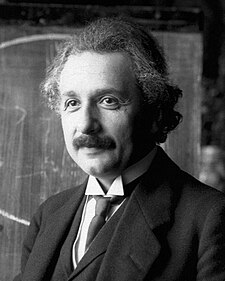 The following is an extract of an article written by Albert Einstein, first published in the first issue of Monthly Review (May 1949).
Is it advisable for one who is not an expert on economic and social issues to express views on the subject of socialism? I believe for a number of reasons that it is. Let us first consider the question from the point of view of scientific knowledge. It might appear that there are no essential methodological differences between astronomy and economics: scientists in both fields attempt to discover laws of general acceptability for a circumscribed group of phenomena in order to make the interconnection of these phenomena as clearly understandable as possible. But in reality such methodological differences do exist. The discovery of general laws in the field of economics is made difficult by the circumstance that observed economic phenomena are often affected by many factors which are very hard to evaluate separately. In addition, the experience which has accumulated since the beginning of the so-called civilized period of human history has—as is well known—been largely influenced and limited by causes which are by no means exclusively economic in nature. For example, most of the major states of history owed their existence to conquest. The conquering peoples established themselves, legally and economically, as the privileged class of the conquered country. They seized for themselves a monopoly of the land ownership and appointed a priesthood from among their own ranks. The priests, in control of education, made the class division of society into a permanent institution and created a system of values by which the people were thenceforth, to a large extent unconsciously, guided in their social behavior.
But historic tradition is, so to speak, of yesterday; nowhere have we really overcome what Thorstein Veblen called "the predatory phase" of human development. The observable economic facts belong to that phase and even such laws as we can derive from them are not applicable to other phases. Since the real purpose of socialism is precisely to overcome and advance beyond the predatory phase of human development, economic science in its present state can throw little light on the socialist society of the future.
Second, socialism is directed towards a social-ethical end. Science, however, cannot create ends and, even less, instill them in human beings; science, at most, can supply the means by which to attain certain ends. But the ends themselves are conceived by personalities with lofty ethical ideals and—if these ends are not stillborn, but vital and vigorous—are adopted and carried forward by those many human beings who, half unconsciously, determine the slow evolution of society.
For these reasons, we should be on our guard not to overestimate science and scientific methods when it is a question of human problems; and we should not assume that experts are the only ones who have a right to express themselves on questions affecting the organization of society.
Innumerable voices have been asserting for some time now that human society is passing through a crisis, that its stability has been gravely shattered. It is characteristic of such a situation that individuals feel indifferent or even hostile toward the group, small or large, to which they belong. In order to illustrate my meaning, let me record here a personal experience. I recently discussed with an intelligent and well-disposed man the threat of another war, which in my opinion would seriously endanger the existence of mankind, and I remarked that only a supra-national organization would offer protection from that danger. Thereupon my visitor, very calmly and coolly, said to me: "Why are you so deeply opposed to the disappearance of the human race?"
I am sure that as little as a century ago no one would have so lightly made a statement of this kind. It is the statement of a man who has striven in vain to attain an equilibrium within himself and has more or less lost hope of succeeding. It is the expression of a painful solitude and isolation from which so many people are suffering in these days. What is the cause? Is there a way out?
It is easy to raise such questions, but difficult to answer them with any degree of assurance. I must try, however, as best I can, although I am very conscious of the fact that our feelings and strivings are often contradictory and obscure and that they cannot be expressed in easy and simple formulas.
Man is, at one and the same time, a solitary being and a social being. As a solitary being, he attempts to protect his own existence and that of those who are closest to him, to satisfy his personal desires, and to develop his innate abilities. As a social being, he seeks to gain the recognition and affection of his fellow human beings, to share in their pleasures, to comfort them in their sorrows, and to improve their conditions of life. Only the existence of these varied, frequently conflicting, strivings accounts for the special character of a man, and their specific combination determines the extent to which an individual can achieve an inner equilibrium and can contribute to the well-being of society. It is quite possible that the relative strength of these two drives is, in the main, fixed by inheritance. But the personality that finally emerges is largely formed by the environment in which a man happens to find himself during his development, by the structure of the society in which he grows up, by the tradition of that society, and by its appraisal of particular types of behavior. The abstract concept "society" means to the individual human being the sum total of his direct and indirect relations to his contemporaries and to all the people of earlier generations. The individual is able to think, feel, strive, and work by himself; but he depends so much upon society—in his physical, intellectual, and emotional existence—that it is impossible to think of him, or to understand him, outside the framework of society. It is "society" which provides man with food, clothing, a home, the tools of work, language, the forms of thought, and most of the content of thought; his life is made possible through the labor and the accomplishments of the many millions past and present who are all hidden behind the small word “society.”
It is evident, therefore, that the dependence of the individual upon society is a fact of nature which cannot be abolished—just as in the case of ants and bees. However, while the whole life process of ants and bees is fixed down to the smallest detail by rigid, hereditary instincts, the social pattern and interrelationships of human beings are very variable and susceptible to change. Memory, the capacity to make new combinations, the gift of oral communication have made possible developments among human being which are not dictated by biological necessities. Such developments manifest themselves in traditions, institutions, and organizations; in literature; in scientific and engineering accomplishments; in works of art. This explains how it happens that, in a certain sense, man can influence his life through his own conduct, and that in this process conscious thinking and wanting can play a part.
Man acquires at birth, through heredity, a biological constitution which we must consider fixed and unalterable, including the natural urges which are characteristic of the human species. In addition, during his lifetime, he acquires a cultural constitution which he adopts from society through communication and through many other types of influences. It is this cultural constitution which, with the passage of time, is subject to change and which determines to a very large extent the relationship between the individual and society. Modern anthropology has taught us, through comparative investigation of so-called primitive cultures, that the social behavior of human beings may differ greatly, depending upon prevailing cultural patterns and the types of organization which predominate in society. It is on this that those who are striving to improve the lot of man may ground their hopes: human beings are not condemned, because of their biological constitution, to annihilate each other or to be at the mercy of a cruel, self-inflicted fate.
If we ask ourselves how the structure of society and the cultural attitude of man should be changed in order to make human life as satisfying as possible, we should constantly be conscious of the fact that there are certain conditions which we are unable to modify. As mentioned before, the biological nature of man is, for all practical purposes, not subject to change. Furthermore, technological and demographic developments of the last few centuries have created conditions which are here to stay. In relatively densely settled populations with the goods which are indispensable to their continued existence, an extreme division of labor and a highly-centralized productive apparatus are absolutely necessary. The time—which, looking back, seems so idyllic—is gone forever when individuals or relatively small groups could be completely self-sufficient. It is only a slight exaggeration to say that mankind constitutes even now a planetary community of production and consumption.
I have now reached the point where I may indicate briefly what to me constitutes the essence of the crisis of our time. It concerns the relationship of the individual to society. The individual has become more conscious than ever of his dependence upon society. But he does not experience this dependence as a positive asset, as an organic tie, as a protective force, but rather as a threat to his natural rights, or even to his economic existence. Moreover, his position in society is such that the egotistical drives of his make-up are constantly being accentuated, while his social drives, which are by nature weaker, progressively deteriorate. All human beings, whatever their position in society, are suffering from this process of deterioration. Unknowingly prisoners of their own egotism, they feel insecure, lonely, and deprived of the naive, simple, and unsophisticated enjoyment of life. Man can find meaning in life, short and perilous as it is, only through devoting himself to society.
The economic anarchy of capitalist society as it exists today is, in my opinion, the real source of the evil. We see before us a huge community of producers the members of which are unceasingly striving to deprive each other of the fruits of their collective labor—not by force, but on the whole in faithful compliance with legally established rules. In this respect, it is important to realize that the means of production—that is to say, the entire productive capacity that is needed for producing consumer goods as well as additional capital goods—may legally be, and for the most part are, the private property of individuals.
For the sake of simplicity, in the discussion that follows I shall call “workers” all those who do not share in the ownership of the means of production—although this does not quite correspond to the customary use of the term. The owner of the means of production is in a position to purchase the labor power of the worker. By using the means of production, the worker produces new goods which become the property of the capitalist. The essential point about this process is the relation between what the worker produces and what he is paid, both measured in terms of real value. Insofar as the labor contract is “free,” what the worker receives is determined not by the real value of the goods he produces, but by his minimum needs and by the capitalists' requirements for labor power in relation to the number of workers competing for jobs. It is important to understand that even in theory the payment of the worker is not determined by the value of his product.
Private capital tends to become concentrated in few hands, partly because of competition among the capitalists, and partly because technological development and the increasing division of labor encourage the formation of larger units of production at the expense of smaller ones. The result of these developments is an oligarchy of private capital the enormous power of which cannot be effectively checked even by a democratically organized political society. This is true since the members of legislative bodies are selected by political parties, largely financed or otherwise influenced by private capitalists who, for all practical purposes, separate the electorate from the legislature. The consequence is that the representatives of the people do not in fact sufficiently protect the interests of the underprivileged sections of the population. Moreover, under existing conditions, private capitalists inevitably control, directly or indirectly, the main sources of information (press, radio, education). It is thus extremely difficult, and indeed in most cases quite impossible, for the individual citizen to come to objective conclusions and to make intelligent use of his political rights.
The situation prevailing in an economy based on the private ownership of capital is thus characterized by two main principles: first, means of production (capital) are privately owned and the owners dispose of them as they see fit; second, the labor contract is free. Of course, there is no such thing as a pure capitalist society in this sense. In particular, it should be noted that the workers, through long and bitter political struggles, have succeeded in securing a somewhat improved form of the “free labor contract” for certain categories of workers. But taken as a whole, the present day economy does not differ much from “pure” capitalism.
Production is carried on for profit, not for use. There is no provision that all those able and willing to work will always be in a position to find employment; an “army of unemployed” almost always exists. The worker is constantly in fear of losing his job. Since unemployed and poorly paid workers do not provide a profitable market, the production of consumers' goods is restricted, and great hardship is the consequence. Technological progress frequently results in more unemployment rather than in an easing of the burden of work for all. The profit motive, in conjunction with competition among capitalists, is responsible for an instability in the accumulation and utilization of capital which leads to increasingly severe depressions. Unlimited competition leads to a huge waste of labor, and to that crippling of the social consciousness of individuals which I mentioned before.
This crippling of individuals I consider the worst evil of capitalism. Our whole educational system suffers from this evil. An exaggerated competitive attitude is inculcated into the student, who is trained to worship acquisitive success as a preparation for his future career.
I am convinced there is only one way to eliminate these grave evils, namely through the establishment of a socialist economy, accompanied by an educational system which would be oriented toward social goals. In such an economy, the means of production are owned by society itself and are utilized in a planned fashion. A planned economy, which adjusts production to the needs of the community, would distribute the work to be done among all those able to work and would guarantee a livelihood to every man, woman, and child. The education of the individual, in addition to promoting his own innate abilities, would attempt to develop in him a sense of responsibility for his fellow men in place of the glorification of power and success in our present society.
Nevertheless, it is necessary to remember that a planned economy is not yet socialism. A planned economy as such may be accompanied by the complete enslavement of the individual. The achievement of socialism requires the solution of some extremely difficult socio-political problems: how is it possible, in view of the far-reaching centralization of political and economic power, to prevent bureaucracy from becoming all-powerful and overweening? How can the rights of the individual be protected and therewith a democratic counterweight to the power of bureaucracy be assured?
Clarity about the aims and problems of socialism is of greatest significance in our age of transition. Since, under present circumstances, free and unhindered discussion of these problems has come under a powerful taboo, I consider the foundation of this magazine (Monthly Review) to be an important public service.
Source: Monthly Review
One dead in attack on Togo soccer team
Gunmen opened fire on a bus carrying Togo's national soccer squad to the top African tournament in Angola on Friday, killing the driver and wounding nine others, including two players, a Togo team official said. Togo captain Emmanuel Adebayor, who was on the bus but escaped unharmed, said his team might quit the African Nations Cup, where some of soccer's most valuable stars are due to play.
The bus had just entered the Angolan enclave of Cabinda, where separatists have waged a three-decade long war, when it came under heavy gunfire for several minutes, the team official said. An Angolan minister called the attack in Cabinda, which produces most of Angola's oil, an "act of terrorism". A separatist group, the Front for the Liberation of Enclave of Cabinda (FLEC) claimed responsibility for the attack, which happened two days before the start of the 2010 African Nations Cup, Africa's most-followed sporting event. "This operation is just the start of a series of planned actions that will continue to take place in the whole territory of Cabinda," said the statement seen by Reuters and signed by FLEC's secretary general Rodrigues Mingas. In a statement published on state-owned news agency Angop, the Angolan government said: "The FLEC group that carried out this terrorist action came from the Republic of Congo and that is where it returned to after completing this action."
Cabinda is a small enclave separated from the rest of Angola by a strip of land belonging to the Democratic Republic of Congo. The roots of the conflict between the government and FLEC are deep but one of the main grievances is that Cabindans see few benefits from the oil produced from their land.
Source: mail & Guardian
Thursday, January 7, 2010
Guinea Junta Aims to Return Reins of Nation to Civilians
Guinea’s deputy junta chief pledged Wednesday to pave the way for a return to civilian rule, more than a year after the military took power in a bloodless coup. Guinea has been in a state of limbo since the leader of the military junta, Capt. Moussa Dadis Camara, was wounded in an assassination attempt by a former aide last month. He has not been seen in public for over a month since being flown to Morocco for treatment. The comments by his deputy, Sékouba Konaté, offered a possible way out of the deepening political crisis in the West African nation, the world’s top exporter of the aluminum ore bauxite. “We need to act to restore peace and the unity of all Guineans, and to put our state and political system on a new foundation,” said Mr. Konaté, promising to accept a prime minister drawn from the opposition as part of a national unity government.
Captain Camara, who took power in December 2008 after the death of President Lansana Conté, became the subject of international outrage and sanctions after security forces killed more than 150 people and raped scores of women protesting in a Conakry stadium in September.
Mr. Konaté, a professional soldier with no known ambitions for a front-line political role, visited Captain Camara in the hospital this week and held talks with American and French diplomats who urged him to allow a return to civilian rule in Captain Camara’s absence. He said Wednesday that he expected a transitional government to choose a new election date after a poll — initially set for this month — was delayed by the crisis. While it was unclear if Mr. Konaté would replace Captain Camara in any transitional government, he said he would not cling to power. An opposition leader welcomed Mr. Konaté’s announcement but said the success of the transitional government would depend on the powers given to the prime minister.
Source: New York Times
New York Times report for Guinea can be found here.
Wednesday, January 6, 2010
Deadly Gunfire at Gaza Protest on Egypt Border
An anti-Egypt rally in southern Gaza turned deadly on Wednesday when demonstrators rushed the border fence and stoned Egyptian troops on the other side, leading to an exchange of gunfire and the death of an Egyptian soldier. Nine Egyptian soldiers and a dozen Palestinians were wounded from stones and gunfire, witnesses and medics said.
It was the most serious Palestinian-Egyptian violence along the closed Gaza border since Israel’s short-lived invasion more than a year ago, and reflected rising tensions between Gaza’s Hamas rulers and the Egyptian government, which, like Israel, appears determined to keep Gaza isolated. The demonstration, organized by Hamas, protested Egypt’s refusal to allow international aid and solidarity missions into Gaza as well as Egypt’s construction of an underground barrier to obstruct smuggler tunnels. Those tunnels supply both goods and arms to Hamas and Gaza. As Hamas leaders gave speeches, young men climbed the border fence and threw rocks at the Egyptians, witnesses and police reported, and Palestinian police officers shot in the air to control the crowd, though to little avail. Egyptian troops then shot from their side. “Two Palestinians were instantly wounded from five bullets,” a witness said.
The Egyptian forces also tear-gassed demonstrators who waved Hamas and Turkish flags, witnesses said. A Palestinian aid convoy was stopped by Egypt in the northern Sinai city of El Arish and included Turkish activists. The group, called Viva Palestina, consisted of 500 people, including Americans, British and Jordanians. It had scuffled earlier with Egyptian security officials in El Arish. Dozens were hurt. A compromise was reached and part of the convoy was en route into Gaza by nightfall. “The area is calm now and the situation on the border is stable,” said Ihab al-Ghussein, spokesman for the Hamas Interior Ministry, at a news conference in Gaza City.
The Egyptian soldier who was killed was in an observation tower 100 yards from the demonstration’s stage, witnesses said. Dr. Ahmed Shehada of Abu Yousef al-Najjar Hospital in Rafah, said it had taken in 12 wounded Palestinians, “most of them hit by gunshots.”
Source: New York Times
Tuesday, January 5, 2010
Statement on Iran's Blacklisting of International Organizations
The Open Society Institute is deeply troubled by the Iranian government's recent decision prohibiting cooperation with international organizations. Although the Open Society Institute does not have any activities whatsoever in Iran we remain extremely concerned about the fate of Dr. Kian Tajbakhsh.
Dr. Tajbakhsh is an internationally respected scholar who as a consultant for OSI from 2004-2007 worked on humanitarian and public health projects in Iran. We note that at the time when OSI did work in Iran, the Iranian government sought the expertise of the Open Society Institute for help in these and other projects, such as humanitarian relief for the 2003 earthquake in Bam.
Source: Open Society Institute
State details foreclosure chaos
Sweeping evidence of the case the state attorney general's office has built in its pursuit of foreclosure justice for Florida homeowners is outlined in a 98-page presentation complete with copies of allegedly forged signatures, false notarizations, bogus witnesses and improper mortgage assignments.
The presentation, titled "Unfair, Deceptive and Unconscionable Acts in Foreclosure Cases," was given during an early December conference of the Florida Association of Court Clerks and Comptrollers by the attorney general's economic crimes division. It is one of the first examples of what the state has compiled in its exploration of foreclosure malpractice, condemning banks, mortgage servicers and law firms for contributing to the crisis by cutting corners. "What we got from this is the state has had the opportunity to see where the laws have been broken, and frankly, it is in large part thanks to the work of the defense attorneys," said Palm Beach County Clerk and Comptroller Sharon Bock. "They've been bringing these defenses up in foreclosure cases for years now."
In page after page of copied records, the presentation meticulously documents cases of questionable signatures, notarizations that could not have occurred when they are said to have because of when the notary stamp expires, and foreclosures filed by entities that might not have had legal ability to foreclose.
It also focuses largely on assignments of mortgage, documents that transfer ownership of mortgages from one bank to another. Mortgage assignments became an issue after the real estate boom, when mortgages were sold and resold, packaged into securitized trusts and otherwise transferred in a labyrinthine fashion that made tracking difficult.
As foreclosures mounted, the banks appointed people to create assignments, "thousands and thousands and thousands" of which were signed weekly by people who may not have known what they were signing. In one example, a signature by someone named Linda Green is said to appear on hundreds of thousands of mortgage documents from dozens of banks and mortgage companies, but in varying styles.
In another example, the signature of Scott Anderson, an employee of West Palm Beach-based Ocwen Financial Corp., appears in four styles on mortgage assignments. "No one bothered to take the time and effort to properly execute this stuff," said Boynton Beach attorney James Bonfiglio, who defends foreclosures. "It matters a great deal who signed the documents because people can be sued twice and three times for the same debt if it wasn't properly transferred."
Paul Koches, executive vice president of Ocwen, acknowledged Tuesday that the signatures were not all Anderson's, but that doesn't mean they were forged, he said. Certain employees were given authorization to sign for Anderson on mortgage assignments, which Koches noted do not need to be notarized. Still, Ocwen has since stopped allowing other people to sign for Anderson, Koches said.
The attorney general's office had no comment Tuesday on the presentation, which was not aimed at a specific case. Four of Florida's large foreclosure law firms that represent the banks are under investigation by the state, as well as two companies that serve court summonses on homeowners, and a Jacksonville-based servicing company that the presentation said produced 2,000 mortgage assignments per day.
The office is also part of a 50-state coalition of attorneys general trying to work out agreements with the nation's largest lenders on foreclosure matters.
Source: The Palm Beach Post
Monday, January 4, 2010
Yemen instability poses a 'global threat'
Instability in Yemen is a global as well as regional threat, US Secretary of State Hillary Clinton has said. She said the Yemeni government had to take measures to restore stability or risk losing Western support. The US embassy, closed after threats from a regional al-Qaeda offshoot, would reopen when "conditions permit". The UK and France have also shut their embassies.
Security at world airports has been tightened after the alleged jet bomb attack in Detroit last month. The suspect - a Nigerian - had allegedly been trained in Yemen. He has been charged in the US with trying to blow up the aircraft just before it was due to land at Detroit airport on 25 December. A number of countries have tightened security or suspended some operations at their embassies. US President Barack Obama has ordered a review into the Christmas Day incident. Al-Qaeda in the Arabian Peninsula (AQAP) last week said it was behind the alleged plot to bomb the plane.
From Monday all travellers flying to America are being subjected to new security measures, introduced by the US government. Airport staff will now carry out extra screening of people from 14 countries, including those the US considers to be state-sponsors of terrorism - Cuba, Iran, Sudan and Syria. Yemen and Nigeria - through which the alleged bomber travelled - also face the new restrictions. Passengers flying from other countries will be checked at random. The Yemeni authorities have tightened security measures at Sanaa's airport, as well as around several other embassies.
The suspect had apparently been trained by al-Qaeda in Yemen, and his father had notified US officials of his extremist views. A preliminary investigation found that the state department complied with procedures about potential threats, but officials now had to decide whether those procedures themselves were appropriate, Mrs Clinton said. Threats in Yemen to US interests pre-dated the current holiday season, she said, reiterating advice to US citizens there to be vigilant.Speaking in Washington, Mrs Clinton said: "We see global implications from the war in Yemen and the ongoing efforts by al-Qaeda in Yemen to use it as a base for terrorist attacks far beyond the region."
The Yemeni government has a tribal rebellion and a secessionist movement to deal with, and has regarded al-Qaeda as a lesser priority, a BBC correspondent in Yemen says. "It's time for the international community to make it clear to Yemen that there are expectations and conditions on our continuing support for the government so that they can take actions which will have a better chance to provide that peace and stability to the people of Yemen and the region," Mrs Clinton said.
The US embassy was the target of an attack in September 2008 in which an American was killed. The attack was blamed on AQAP. Correspondents say the security situation in Yemen is complicated by an abundance of firearms, an insurgency in the north and a secessionist movement in the south. But the prospects of re-asserting central government authority over the lawless areas where al-Qaeda is based look, in the opinion of some analysts, remote - even with beefed-up American support.
Source: BBC
Sunday, January 3, 2010
Theocracy
 Theocracy is a form of government in which a god or deity is recognized as the state's supreme civil ruler, or in a higher sense, a form of government in which a state is governed by immediate divine guidance or by officials who are regarded as divinely guided. In Common Greek, “theocracy” means a rule [kra′tos] by God [the.os′]. For believers, theocracy is a form of government in which divine power governs an earthly human state, either in a personal incarnation or, more often, via religious institutional representatives (i.e., a church), replacing or dominating civil government. Theocratic governments enact theonomic laws.
Theocracy should be distinguished from other secular forms of government that have a state religion, or are merely influenced by theological or moral concepts, and monarchies held "By the Grace of God".
A theocracy may be monist in form, where the administrative hierarchy of the government is identical with the administrative hierarchy of the religion, or it may have two 'arms,' but with the state administrative hierarchy subordinate to the religious hierarchy.
Theoracy came into the fore in modern politics with the Iranian Revolution.
Source: Wikipedia
Rival Islamists Fight for Town in Somalia

Shabab rebels, who control most of Somalia with allied Islamist groups, on Saturday attacked a town lost to moderate Islamists about a year ago. It appeared late Saturday that the moderate Islamists had kept control of the town, Dusa Marreb, in central Somalia, although the Shabab earlier claimed victory. The battles killed 10 people, witnesses said. The two groups have been fighting each other elsewhere in Somalia for months. The group that had been controlling Dusa Marreb, Ahlu Sunna Wal Jama, had chased out the Shabab in December 2008 and vowed to challenge the Shabab in other areas to “restore stability and harmony in Somalia and achieve a genuine government of national unity.”
Residents of the town say they evacuated it when they heard gunfire early Saturday morning. “I and my children immediately fled outside the town,” Khadiija Ali said. “I was preparing breakfast for my family, when the bullet sound shocked me. We were not expecting such fight.” The assault came a day after the Shabab, which have increasing ties with Al Qaeda, tried to attract international media attention by vowing to send fighters to help insurgents in Yemen.
The United States has been helping the Yemeni government combat a branch of Al Qaeda, an effort that is likely to continue, with President Obama saying Saturday that the group sponsored the attempt on Dec. 25 to bring down a jet bound for the United States. Western governments have been hoping that Ahlu Sunna Wal Jama and other moderate Islamists can repel Somalia’s increasingly powerful extremists. Ahlu Sunna Wal Jama, a Sufi militia, has been one of the more successful groups in fighting the Shabab, who are fearsome fighters.
The weak transitional government in Somalia controls a small enclave in Mogadishu, the capital, under the protection of African Union peacekeeping troops. Somalia has not had an effective central government since 1991.
Source: New York Times
SABC board unhappy with new CEO
The new SABC board would challenge the appointment of former Telkom Media chief content officer Solly Mokoetle as its group chief executive officer, the Sunday Times reported on Saturday. An anonymous "angry board member" told the paper that the board would protest the imposition of Mokoetle as CEO. "This means that we won't be able to appoint our own CEO, as boards usually do ... Their appointment was very unfortunate and a flagrant disregard of due process," the anonymous board member said.
Mokoetle, who was the SABC's chief operations officer between 2001 and December 2006, takes up office from January 1 on a five-year contract. The board member said the decision by Minister of Communications Siphiwe Nyanda could plunge the SABC into "total chaos". Mokoetle's appointment followed a R11-million settlement by the broadcaster to former CEO Dali Mpofu in August.
Mpofu had taken the public broadcaster to court after he was suspended for suspending then head of news and current affairs Snuki Zikalala. Mpofu accused Zikalala of leaking confidential documents to the media. The board in turn suspended Mpofu on May 7 last year, saying he had no authority to act against Zikalala. In June, the High Court in Johannesburg dismissed with costs the SABC's appeal against reinstating Mpofu. The judge ruled that then SABC board chairperson Khanyi Mkhonza was caught up in the bitter rivalry between Mpofu and Zikalala, whose contract as head of news and current affairs ended in April. But in August the two parties reached an agreement that Mpofu would be paid out.
Source: Mail & Guardian
Saturday, January 2, 2010
Investors lose millions in illegal scheme
More than 700 people stand to lose more than R200 million in investments after an investigation into the southern Cape-based Minne Trading investment scheme found it to be operating illegally.
The Registrar of Banks appointed auditing firm Deloitte to determine whether the company and two individuals, Graeme and Caroline Minne, were conducting the business of a bank, in contravention of the Banks Act. Investigators found that the business was receiving deposits from people and was thus operating as a bank. At the end of November, the business was told to stop taking investments and to repay all its investors.
The organisation had been promising investors returns of between 48 and 65 percent. The investigators found that while some investors were receiving these payments, "they never realised payments and were operating at a loss". "In practice, this means that Investor B's investment was used to pay the return on Investor A's investment."
The company was apparently involved in training, and in the trading of foreign exchange. The inspection revealed that the company "did not nearly generate enough profits on the forex market to pay the returns promised to investors".
Source: IoL
South Africa: Break with the Bourgeois Tripartite Alliance!
The African National Congress (ANC) wasted no time after sweeping the April parliamentary elections in South Africa to demonstrate that the new government under Jacob Zuma would crack down on strikes and township protests. The day after the elections, military personnel were called on to break a strike by doctors demanding overdue pay hikes and more funds for the overburdened, hellish public health system. Municipal workers who struck this winter for a rise in their paltry wages were attacked by cops firing rubber bullets and thrown in jail. Protesters throughout the country demanding houses, roads and sewage systems for their impoverished townships have met with similar treatment.
Like the “neoliberal” Thabo Mbeki and Nelson Mandela before him, the populist Zuma is doing his job as chief of the capitalist state—an apparatus of organised violence, based centrally on the police, military and prisons, that is wielded on behalf of the filthy rich ruling class against the overwhelmingly black masses they exploit and oppress. This bourgeois class dictatorship, which continues to defend a system of white privilege, is cloaked by the “non-racial democracy” that was installed in 1994, when white-supremacist apartheid rule was replaced by a government led by the ANC and its Tripartite Alliance partners, the South African Communist Party (SACP) and Congress of South African Trade Unions (COSATU).
As revolutionary Marxists, Spartacist South Africa, section of the International Communist League (Fourth Internationalist), declared that no party in the April elections represented the interests of the working class and the poor. The SACP and COSATU bureaucracy worked overtime to get out the vote for the ANC, tirelessly portraying Zuma as a “friend” of the workers as opposed to the leaders of the Congress of the People (C.O.P.E.), who split from the ANC to the right after Mbeki was ousted as president. But as we wrote in Workers Vanguard No. 933 (27 March 2009), newspaper of the Spartacist League/U.S.: “Despite the ANC’s ‘pro-worker’ and ‘pro-poor’ rhetoric, the ANC and C.O.P.E. are both bourgeois-nationalist—i.e., capitalist—parties” that “represent the interests of the aspiring black bourgeoisie and the predominantly white capitalist ruling class.”
At the core of the recent spate of strikes and protests is the explosive anger at the base of society over the failure of the Tripartite Alliance, after 15 years in power, to fulfill expectations of social and economic equality for the majority. Township protesters complain that they voted for a better life but what they have is getting worse. Striking postal workers demanded the closing of the apartheid wage gap. Adding to longstanding mass unemployment, the world recession has thrown hundreds of thousands more out of work.
A new study shows that the chasm between the wealthy at the top and the masses at the bottom has become the largest in the world, surpassing that in Brazil. The wealthiest are overwhelmingly white and enjoy First World living conditions, while blacks as well as coloured [mixed-race] and Indian toilers are at Third World levels. This is a damning indictment of the SACP/COSATU misleaders, who promised the masses that the alliance with the bourgeois ANC would bring social transformation and equality. The result instead was neo-apartheid capitalism. While the political superstructure underwent a major change with the end of the apartheid system of rigid, legally enforced racial segregation and subjugation, the foundation of the capitalist economy remains the superexploitation of mainly black labour.
As the black majority’s anger over their unbearable conditions continues to build, the Zuma government has made clear its intention to beef up the state’s arsenal of repression against labour and the poor. On the opening day of the COSATU national congress in September, Zuma lectured delegates about “violent strikes.” In a speech a week later, he supported giving cops more leeway to “shoot to kill,” supposedly to fight South Africa’s “abnormal criminal problem.” Zuma’s reprimands, echoed by COSATU general secretary Zwelinzima Vavi, did not go down well at the COSATU congress. Leaders of the SAMWU municipal workers and SATAWU transport workers unions criticised the top COSATU leadership for failing to condemn police attacks on their strikes this year. But these same unions include cops and security guards whose job is to defend capitalist rule and profits by violently repressing workers and the poor. SSA demands: Cops and security guards out of the unions!
Source: Spartacist
Earthquake leaves 20,000 homeless in Tajikistan
 Some 20,000 people were left homeless by an earthquake which hit Tajikistan's mountainous Gorno-Badakhshan province, a local administration spokesman has said. The earthquake measuring 5.3 on the Richter scale took place on Saturday and affected two locations in the province's Vanchsky district, in Tajikistan's Pamir Mountains, the spokesman said. "Several dozens houses inhabited by some 20,000 people have been destroyed completely or partly," he said. Rock falls and mudslides caused by the quake blocked a road linking the Vanchsky district with the province's administrative center of Khorog, he added.
Source: RIA Novosti
IRIN: The Tajikistan government has appealed for support to build seismic resistant houses after some 7,000 people were affected by a 5.3-magnitude earthquake that shook the country on 2 January.
Subscribe to:
Posts (Atom)