The far-right, (also known as the extreme right or radical right) refers to the highest degree of rightism in right-wing politics. Far right politics involves support of strong or complete social hierarchy in society, and supports supremacy of certain individuals or groups deemed to be innately superior who are to be more valued than those deemed to be innately inferior.[1]
The far right's advocacy of supremacism is based on what its adherents perceive as innate characteristics of people that cannot be changed.[2] This stands as a point of difference with the centre-right's attribution of behaviours, such as laziness or decadence, as the primary sources of social inequalities.[2] The centre right - unlike the far right - claims that people can end their behavioural inferiority through changing their habits and choices.[3]
The original far right, which emerged in France after the French Revolution, refused to accept the French Republic and supported a counter-revolution to restore the French monarchy and aristocracy.[4] The far right is commonly associated with persons or groups who hold extreme nationalist, xenophobic, racist, religious fundamentalist or reactionary views.[5] The most extreme-right movements have pursued oppression and genocide against groups of people on the basis of their alleged inferiority.[6]
Far right politics commonly includes authoritarianism, nativism and racialism.[8] Typically, the term far right is applied to fascists and neo-Nazis,[9][10][11][12][13] and major elements of fascism have been deemed clearly far right, such as its belief that supposedly superior people have the right to dominate society while purging allegedly inferior elements, and — in the case of Nazism — genocide of people deemed to be inferior.[14] The far right claims that superior people should proportionally have greater rights than inferior people.[15] The far right has historically favoured an elitist society based on belief of the legitimacy of the rule of a supposed superior minority over the inferior masses.[16] Far-right politics usually involves anti-immigration and anti-integration stances towards groups that are deemed inferior and undesirable.[17] Concerning the socio-cultural dimension (nationality, culture and migration), a far-right position could be the view that certain ethnic, racial or religious groups should stay separate, and that the interests of one’s own group should be prioritised.[18]
The German political scientist Klaus von Beyme describes three historical phases in the development of far right parties in Western Europe after the World War II.[18][19]
From 1945 to the mid-1950s, far right parties were marginalised and their main objective was to survive rather than having any political impact. Far right policy had been discredited by Nazism, and was subsequently politically isolated. From the mid-1950s to the 1970s, the so-called "populist protest phase" emerged with sporadic electoral success. Characteristics of far right parties in this phase included charismatic leaders and a profound dislike of the political establishment, using an "us and them" model; with “us” being the “common man” and “them” being the politicians and bureaucrats. In the 1980s, electoral success of far right parties consolidated, while they used anti-immigration views as a main issue.
Source: Wikipedia
Showing posts with label Genocide. Show all posts
Showing posts with label Genocide. Show all posts
Thursday, August 23, 2012


Saturday, July 21, 2012
British firm linked to Congo's illicit mineral trade
The continuing violence in the Democratic Republic of Congo is being fuelled by western companies who are buying the country's minerals without properly checking their origins, a new report alleges today.
Global Witness says the Congolese army and other armed groups in the east of the country control much of the mining and trade in tin ore (cassiterite), coltan, wolframite – often using forced labour.
The report argues the trade is prolonging the 12-year conflict there, which has seen mass killings and rape. About 100,000 people have been driven from their homes in the past few months alone.
"As long as the warring parties can fund themselves through international trade, they will continue to be able to inflict widespread violence on the population," said Patrick Alley, the director of Global Witness.
The report calls for UN sanctions against foreign firms that buy the minerals from intermediaries without exploring who was profiting from their purchase. Many of the firms accused are Belgian but Global Witness also calls for UN sanctions against a British firm, the London-based Amalgamated Metal Corporation (AMC), whose subsidiary, Thaisarco, buys tin ore in eastern Congo.
Global Witness acknowledges that Thaisarco purchases minerals from legal, government-authorised brokers, but argues the firm should do more to find out who is supplying those brokers. It points to a UN resolution calling for sanctions, including the freezing of assets of individuals or companies helping Congolese armed groups through the trade in natural resources.
The report alleges Thaisarco's main supplier in the South Kivu region, the centre of the conflict, gets its tin ore from mines controlled by the Democratic Front for the Liberation of Rwanda (FDLR), one of the main warring factions. Its leaders include Rwandan Hutus involved in the 1994 genocide.
AMC has denied any wrongdoing, saying it has always followed UN guidance in its trade in the region and is in the process of implementing more thorough measures aimed at increasing the transparency of the tin trade.
"Both AMC and Thaisarco have always sought to comply with the requirements and recommendations of the UN in respect of minerals originating in the DRC. In accordance with this, Thaisarco purchases DRC minerals subject to a recently enhanced, formal and detailed due diligence programme which ultimately is aimed at providing transparency throughout the supply chain," the statement said.
The new industry-wide measures, know as the Tin Supply Chain Initiative, were launched on 1 July, after the Global Witness report was completed.
"The Supply Chain Initiative has traceability of the minerals as its key objective in order to ensure that the trade does not benefit renegade or rebel groups," AMC said. The foreign office issued a statement yesterday recognising that illegally traded minerals were "one of the factors in the instability in eastern DRC".
Source: The Guardian
Global Witness says the Congolese army and other armed groups in the east of the country control much of the mining and trade in tin ore (cassiterite), coltan, wolframite – often using forced labour.
The report argues the trade is prolonging the 12-year conflict there, which has seen mass killings and rape. About 100,000 people have been driven from their homes in the past few months alone.
"As long as the warring parties can fund themselves through international trade, they will continue to be able to inflict widespread violence on the population," said Patrick Alley, the director of Global Witness.
The report calls for UN sanctions against foreign firms that buy the minerals from intermediaries without exploring who was profiting from their purchase. Many of the firms accused are Belgian but Global Witness also calls for UN sanctions against a British firm, the London-based Amalgamated Metal Corporation (AMC), whose subsidiary, Thaisarco, buys tin ore in eastern Congo.
Global Witness acknowledges that Thaisarco purchases minerals from legal, government-authorised brokers, but argues the firm should do more to find out who is supplying those brokers. It points to a UN resolution calling for sanctions, including the freezing of assets of individuals or companies helping Congolese armed groups through the trade in natural resources.
The report alleges Thaisarco's main supplier in the South Kivu region, the centre of the conflict, gets its tin ore from mines controlled by the Democratic Front for the Liberation of Rwanda (FDLR), one of the main warring factions. Its leaders include Rwandan Hutus involved in the 1994 genocide.
AMC has denied any wrongdoing, saying it has always followed UN guidance in its trade in the region and is in the process of implementing more thorough measures aimed at increasing the transparency of the tin trade.
"Both AMC and Thaisarco have always sought to comply with the requirements and recommendations of the UN in respect of minerals originating in the DRC. In accordance with this, Thaisarco purchases DRC minerals subject to a recently enhanced, formal and detailed due diligence programme which ultimately is aimed at providing transparency throughout the supply chain," the statement said.
The new industry-wide measures, know as the Tin Supply Chain Initiative, were launched on 1 July, after the Global Witness report was completed.
"The Supply Chain Initiative has traceability of the minerals as its key objective in order to ensure that the trade does not benefit renegade or rebel groups," AMC said. The foreign office issued a statement yesterday recognising that illegally traded minerals were "one of the factors in the instability in eastern DRC".
Source: The Guardian
Monday, March 19, 2012
Use of ‘Conflict Minerals’ Gets More Scrutiny From U.S.
An iPhone can do a lot of things. But can it arm Congolese rebels? That is the question being debated by a battalion of lobbyists from electronics makers, mining companies and international aid organizations that has descended on the Securities and Exchange Commission in recent months seeking to influence the drafting of a Dodd-Frank regulation that has nothing to do with the financial crisis. Tacked onto the end of that encyclopedic digest of financial reform is an odd provision. It requires publicly traded companies whose products use certain minerals commonly mined in strife-torn areas of Central Africa to report to shareholders and the S.E.C. whether their mineral supply comes from the Democratic Republic of Congo.
The measure is aimed at cutting off the brutal militia groups that have often taken over the mining and sale of so-called conflict minerals to finance their military aims. Just about every company affected by the law says they support it, but many business groups have also been pushing aggressively to put wiggle room in the restrictions, calling for lengthy phase-in periods, exemptions for minimal use of the minerals and loose definitions of what types of uses are covered.
Nearly every consumer product that includes electronic parts uses a derivative of one of the four minerals: columbite-tantalite, which when refined is used in palm-size cellphones and giant turbines; cassiterite, an important source of the tin used in coffee cans and circuit boards; wolframite, used to produce tungsten for light bulbs and machine tools; and gold, commonly used as an electronic conductor (and, of course, jewelry). Given their broad application, the minerals have been a primary target of humanitarian groups concerned about genocide, sexual violence, child soldiers and other issues that have been common outgrowths of conflicts in Central Africa. “We don’t think you need to have people being killed in order to have these metals in our cellphones,” said Corinna Gilfillan, who heads the United States office of Global Witness, which has worked on the issue for several years.
But manufacturers question the effectiveness — not to mention the practicality and expense — of tracing every scrap of refined metal back to its original hole in the ground. “The challenge is that conflict minerals are a symptom,” said Rick Goss, vice president for environment and sustainability at the Information Technology Industry Council, a trade group. “The entrenched powers in these countries have plenty of other means to raise money. Simply cutting off one source of revenue to a warlord or military rulers is not going to stop the genocide.”
The Dodd-Frank law on conflict minerals is already having an effect in Eastern Congo, damping or halting production at many mines even before the disclosure regulations for companies are in place. “It is causing, I would say, a sort of embargo on traders and diggers in Eastern Congo,” Serge Tshamala, an official at the Embassy of the Democratic Republic of Congo. “The longer it takes the S.E.C. to come up with guidelines, the worse it is for our people.” Mr. Tshamala and other Congo government officials met with the agency’s staff members in June, urging them to speed completion of the regulations.
The agency is moving slowly, however. The Dodd-Frank law set an April 2011 deadline for completion of the rules. After proposing regulations in December 2010, the agency took comments for 30 days, and received so many suggestions that it extended the period by a month. After missing the April deadline, the agency in October conducted a roundtable for its commissioners to hear directly from manufacturers, mining companies, advocacy groups and institutional investors. This month, Mary L. Schapiro, the agency’s chairwoman, said the agency hoped to complete the process “in the next couple of months.”
The commission already has decided to include a phase-in period to allow companies time to build networks to trace their mineral supply. But an exemption for use of trace amounts of the metals is unlikely, Ms. Shapiro said. As Bennett Freeman, a senior vice president for sustainability research and policy at Calvert Investments put it during the roundtable last year, a very small amount of gold is used as a conductor in a cellphone, “but when one takes into account the fact that there were 1.6 billion cellphones sold globally last year, that adds up to be a very significant volume of that particular metal.”
Still undecided — and the subject of more than 100 meetings between lobbyists and S.E.C. officials since the rule was proposed — is just how the commission will decide who is covered by the conflict minerals requirement. The law says that the minerals must be “necessary to the functionality or production of a product manufactured by” a company. Simple as it seems, that definition gives rise to a tangle of questions. Is mining “manufacturing”? Is a coffee can made with tin “necessary to the functionality” of the coffee being sold?
The hair-splitting answers to those questions will be the basis on which the law could be challenged in court, and it is that prospect that accounts for much of the agency’s deliberate progress in fashioning the rules. Administrative law requires an agency like the S.E.C. to conduct a cost-benefit analysis of rules. Last year, a federal appeals court cited insufficient cost-benefit research in striking down one of the agency’s new regulations, and S.E.C. insiders say that decision has the agency operating in perpetual fear of a repeat occurrence.
There is little agreement on what it will cost companies to comply. The agency estimates companies will have to spend $71 million to comply with its regulations. The National Association of Manufacturers estimates the regulations will cost $9 billion to $16 billion. Whatever the answer, part of the burden would fall on a given company’s supply chain — companies, that is, that are very likely not to be covered by the regulation’s reporting requirements, which cover only publicly traded companies.
Irma Villarreal, chief securities counsel for Kraft Foods, said during the S.E.C. roundtable that Kraft produced 40,000 distinct products and used 100,000 suppliers, creating a Herculean task of auditing supply chains for conflict minerals. Nonprofit groups that support the new regulation say a growing number of companies — Intel, Motorola and Hewlett-Packard among them, according to the Enough Project, a nongovernmental organization that works against genocide and crimes against humanity — have already made significant steps to inspect and adjust their supply lines to avoid tainted sources of conflict minerals. “Our hope,” said Darren Fenwick, a senior manager of government affairs for the Enough Project, “is that the rule is strong enough that companies in industries that aren’t doing anything will start to feel the pressure in their supply chains.”
Source: New York Times
The measure is aimed at cutting off the brutal militia groups that have often taken over the mining and sale of so-called conflict minerals to finance their military aims. Just about every company affected by the law says they support it, but many business groups have also been pushing aggressively to put wiggle room in the restrictions, calling for lengthy phase-in periods, exemptions for minimal use of the minerals and loose definitions of what types of uses are covered.
Nearly every consumer product that includes electronic parts uses a derivative of one of the four minerals: columbite-tantalite, which when refined is used in palm-size cellphones and giant turbines; cassiterite, an important source of the tin used in coffee cans and circuit boards; wolframite, used to produce tungsten for light bulbs and machine tools; and gold, commonly used as an electronic conductor (and, of course, jewelry). Given their broad application, the minerals have been a primary target of humanitarian groups concerned about genocide, sexual violence, child soldiers and other issues that have been common outgrowths of conflicts in Central Africa. “We don’t think you need to have people being killed in order to have these metals in our cellphones,” said Corinna Gilfillan, who heads the United States office of Global Witness, which has worked on the issue for several years.
But manufacturers question the effectiveness — not to mention the practicality and expense — of tracing every scrap of refined metal back to its original hole in the ground. “The challenge is that conflict minerals are a symptom,” said Rick Goss, vice president for environment and sustainability at the Information Technology Industry Council, a trade group. “The entrenched powers in these countries have plenty of other means to raise money. Simply cutting off one source of revenue to a warlord or military rulers is not going to stop the genocide.”
The Dodd-Frank law on conflict minerals is already having an effect in Eastern Congo, damping or halting production at many mines even before the disclosure regulations for companies are in place. “It is causing, I would say, a sort of embargo on traders and diggers in Eastern Congo,” Serge Tshamala, an official at the Embassy of the Democratic Republic of Congo. “The longer it takes the S.E.C. to come up with guidelines, the worse it is for our people.” Mr. Tshamala and other Congo government officials met with the agency’s staff members in June, urging them to speed completion of the regulations.
The agency is moving slowly, however. The Dodd-Frank law set an April 2011 deadline for completion of the rules. After proposing regulations in December 2010, the agency took comments for 30 days, and received so many suggestions that it extended the period by a month. After missing the April deadline, the agency in October conducted a roundtable for its commissioners to hear directly from manufacturers, mining companies, advocacy groups and institutional investors. This month, Mary L. Schapiro, the agency’s chairwoman, said the agency hoped to complete the process “in the next couple of months.”
The commission already has decided to include a phase-in period to allow companies time to build networks to trace their mineral supply. But an exemption for use of trace amounts of the metals is unlikely, Ms. Shapiro said. As Bennett Freeman, a senior vice president for sustainability research and policy at Calvert Investments put it during the roundtable last year, a very small amount of gold is used as a conductor in a cellphone, “but when one takes into account the fact that there were 1.6 billion cellphones sold globally last year, that adds up to be a very significant volume of that particular metal.”
Still undecided — and the subject of more than 100 meetings between lobbyists and S.E.C. officials since the rule was proposed — is just how the commission will decide who is covered by the conflict minerals requirement. The law says that the minerals must be “necessary to the functionality or production of a product manufactured by” a company. Simple as it seems, that definition gives rise to a tangle of questions. Is mining “manufacturing”? Is a coffee can made with tin “necessary to the functionality” of the coffee being sold?
The hair-splitting answers to those questions will be the basis on which the law could be challenged in court, and it is that prospect that accounts for much of the agency’s deliberate progress in fashioning the rules. Administrative law requires an agency like the S.E.C. to conduct a cost-benefit analysis of rules. Last year, a federal appeals court cited insufficient cost-benefit research in striking down one of the agency’s new regulations, and S.E.C. insiders say that decision has the agency operating in perpetual fear of a repeat occurrence.
There is little agreement on what it will cost companies to comply. The agency estimates companies will have to spend $71 million to comply with its regulations. The National Association of Manufacturers estimates the regulations will cost $9 billion to $16 billion. Whatever the answer, part of the burden would fall on a given company’s supply chain — companies, that is, that are very likely not to be covered by the regulation’s reporting requirements, which cover only publicly traded companies.
Irma Villarreal, chief securities counsel for Kraft Foods, said during the S.E.C. roundtable that Kraft produced 40,000 distinct products and used 100,000 suppliers, creating a Herculean task of auditing supply chains for conflict minerals. Nonprofit groups that support the new regulation say a growing number of companies — Intel, Motorola and Hewlett-Packard among them, according to the Enough Project, a nongovernmental organization that works against genocide and crimes against humanity — have already made significant steps to inspect and adjust their supply lines to avoid tainted sources of conflict minerals. “Our hope,” said Darren Fenwick, a senior manager of government affairs for the Enough Project, “is that the rule is strong enough that companies in industries that aren’t doing anything will start to feel the pressure in their supply chains.”
Source: New York Times
Thursday, December 30, 2010
Côte d'Ivoire envoy warns of 'genocide' threat
The first recognised ambassador of Côte d'Ivoire's internationally-backed president Alassane Ouattara said on Tuesday that the United Nations had to act to prevent "genocide" in his country. The envoy, Youssoufou Bamba, made the plea after handing over his credentials as envoy to the United Nations to UN Secretary General Ban Ki-moon.
Ban promised the "full cooperation" of the UN leadership for the government of Ouattara who is in a tense stand-off with Laurent Gbagbo, who refuses to recognise the victory of his rival in Côte d'Ivoire's November 28 presidential election. The ambassador said Ouattara had "real concern" about attacks on his supporters. According to UN rights officials at least 173 people were killed in attacks between December 16 and 21.
The victims were only killed "because they wanted to demonstrate, they want to speak out, they want to defend the will of the people", Bamba told reporters. "We are on the brink of genocide, something should be done." Bamba said people's homes in some areas had been marked according to their tribe. "What will be next? So the situation is very serious and I have put that message across in all the meetings I have had, including with the secretary general. The protection of civilians is at the heart of peacekeeping and we expect the United Nations to fulfill its duties," he said.
There is a UN force of more than 9 500 troops in Côte d'Ivoire and 800 are deployed around the Abidjan hotel where Ouattara has his base. Ban made no comment on the Côte d'Ivoire crisis when he formally accepted Bamba's credentials in front of photographers at the UN headquarters. But he assured the envoy "of the full cooperation of the secretariat in meeting the challenges ahead". Ban was briefed again on Tuesday by the UN mission in Côte d'Ivoire on efforts to persuade Gbagbo to peacefully stand down, his spokesperson Martin Nesirky said.
The UN chief also held telephone talks with Nigeria's President Goodluck Jonathan, current chairperson of the West African regional bloc Ecowas, which has threatened to intervene militarily if Gbagbo does not quit. Bamba, who was previously ambassador for the Gbagbo government at the UN in Vienna, is the first ambassador named by the Ouattara administration to have started work. He hinted that he was not yet being paid, saying that as a career diplomat "I have savings."
Meanwhile, Gbagbo's most notorious street lieutenant has vowed that the country's youth will rise up from Saturday and seize Ouattara's headquarters. "From January 1, I, Charles Ble Goude and the youth of Ivory Coast are going to liberate the Golf Hotel with our bare hands," the leader of Gbagbo's radical Young Patriots told a cheering crowd in Abidjan on Wednesday. "It's the moment to liberate Ivory Coast," he declared.
Political showman and faction leader Ble Goude is now Gbagbo's minister for youth and employment, but he is best known for stoking bloody anti-French riots in 2004, a role which saw him placed under United Nations sanctions. "We are ready to die for this Ivory Coast," he declared, while insisting that his supporters were unarmed and hoped to triumph through strength of numbers and will against Ouattara's men. "We are mocked by rebels," he complained.
Tension is mounting in and around the Golf Hotel -- a waterfront resort on the outskirts of the port city which Ouattara and his supporters had turned into an election headquarters. The shadow government in the hotel is guarded by a small contingent of former northern rebel fighters dubbed the New Forces, and the grounds are shielded by armed UN peacekeepers backed by armoured cars.
Access to the area is blocked by Gbagbo's regulars, the Security and Defence Forces (FDS), working alongside what UN observers say are mysterious masked militia fighters armed with rocket-propelled grenades. UN supply convoys are regularly blocked as they try to cross Abidjan -- one patrol was attacked on Tuesday a mob of pro-Gbagbo youths and a Bangladeshi soldier was hurt -- and the hotel is supplied by UN helicopter.
Source: Mail & Guardian
Ban promised the "full cooperation" of the UN leadership for the government of Ouattara who is in a tense stand-off with Laurent Gbagbo, who refuses to recognise the victory of his rival in Côte d'Ivoire's November 28 presidential election. The ambassador said Ouattara had "real concern" about attacks on his supporters. According to UN rights officials at least 173 people were killed in attacks between December 16 and 21.
The victims were only killed "because they wanted to demonstrate, they want to speak out, they want to defend the will of the people", Bamba told reporters. "We are on the brink of genocide, something should be done." Bamba said people's homes in some areas had been marked according to their tribe. "What will be next? So the situation is very serious and I have put that message across in all the meetings I have had, including with the secretary general. The protection of civilians is at the heart of peacekeeping and we expect the United Nations to fulfill its duties," he said.
There is a UN force of more than 9 500 troops in Côte d'Ivoire and 800 are deployed around the Abidjan hotel where Ouattara has his base. Ban made no comment on the Côte d'Ivoire crisis when he formally accepted Bamba's credentials in front of photographers at the UN headquarters. But he assured the envoy "of the full cooperation of the secretariat in meeting the challenges ahead". Ban was briefed again on Tuesday by the UN mission in Côte d'Ivoire on efforts to persuade Gbagbo to peacefully stand down, his spokesperson Martin Nesirky said.
The UN chief also held telephone talks with Nigeria's President Goodluck Jonathan, current chairperson of the West African regional bloc Ecowas, which has threatened to intervene militarily if Gbagbo does not quit. Bamba, who was previously ambassador for the Gbagbo government at the UN in Vienna, is the first ambassador named by the Ouattara administration to have started work. He hinted that he was not yet being paid, saying that as a career diplomat "I have savings."
Meanwhile, Gbagbo's most notorious street lieutenant has vowed that the country's youth will rise up from Saturday and seize Ouattara's headquarters. "From January 1, I, Charles Ble Goude and the youth of Ivory Coast are going to liberate the Golf Hotel with our bare hands," the leader of Gbagbo's radical Young Patriots told a cheering crowd in Abidjan on Wednesday. "It's the moment to liberate Ivory Coast," he declared.
Political showman and faction leader Ble Goude is now Gbagbo's minister for youth and employment, but he is best known for stoking bloody anti-French riots in 2004, a role which saw him placed under United Nations sanctions. "We are ready to die for this Ivory Coast," he declared, while insisting that his supporters were unarmed and hoped to triumph through strength of numbers and will against Ouattara's men. "We are mocked by rebels," he complained.
Tension is mounting in and around the Golf Hotel -- a waterfront resort on the outskirts of the port city which Ouattara and his supporters had turned into an election headquarters. The shadow government in the hotel is guarded by a small contingent of former northern rebel fighters dubbed the New Forces, and the grounds are shielded by armed UN peacekeepers backed by armoured cars.
Access to the area is blocked by Gbagbo's regulars, the Security and Defence Forces (FDS), working alongside what UN observers say are mysterious masked militia fighters armed with rocket-propelled grenades. UN supply convoys are regularly blocked as they try to cross Abidjan -- one patrol was attacked on Tuesday a mob of pro-Gbagbo youths and a Bangladeshi soldier was hurt -- and the hotel is supplied by UN helicopter.
Source: Mail & Guardian
Friday, September 17, 2010
UK denies asylum for Mugabe 'thug'
A woman who admitted taking part in savage evictions of white farmers from their homes in Zimbabwe has lost her bid for asylum in the UK, a report said. According to the Daily Mail, High Court judge Mr Justice Ouseley threw out the widowed mother-of-two's appeal to remain in the UK after she confessed to beating up 10 people during two land invasions.
The story quotes the judge as saying that the state-sponsored mob violence, which saw white farmers' land seized and shared out among President Robert Mugabe's cronies, was akin to genocide. "We are satisfied that the two farm invasions were crimes against humanity," the judge said, likening the 39-year-old woman's role to a concentration camp guard who followed Nazi orders during the Holocaust.
According to the report, the woman, who cannot be named, came to Britain illegally in 2002 and did not claim asylum until six years later. Her bid for refugee status was rejected on the grounds that her own violent actions in Zimbabwe disqualified her from humanitarian protection in the UK. She reportedly admitted to being part of a gang of thugs from Mugabe's Zanu-PF party who invaded two white-owned farms intent on causing maximum terror and driving away black workers and said that on one occasion, she beat a woman so badly she thought she would die.
However, the report says she insisted she had taken part in the raids under duress to prove her loyalty to Mugabe's regime and she had never intended to kill anyone. The Upper Tribunal Immigration and Asylum Chamber accepted that the woman was a "lesser participant" in the bloodshed and others were even more brutal. However, she took "a voluntary, even if reluctant" part. Even though not a ringleader, the same could be said of concentration camp guards who "make a substantial contribution to genocide" despite their peripheral role, said the judge.
Source: IoL
The story quotes the judge as saying that the state-sponsored mob violence, which saw white farmers' land seized and shared out among President Robert Mugabe's cronies, was akin to genocide. "We are satisfied that the two farm invasions were crimes against humanity," the judge said, likening the 39-year-old woman's role to a concentration camp guard who followed Nazi orders during the Holocaust.
According to the report, the woman, who cannot be named, came to Britain illegally in 2002 and did not claim asylum until six years later. Her bid for refugee status was rejected on the grounds that her own violent actions in Zimbabwe disqualified her from humanitarian protection in the UK. She reportedly admitted to being part of a gang of thugs from Mugabe's Zanu-PF party who invaded two white-owned farms intent on causing maximum terror and driving away black workers and said that on one occasion, she beat a woman so badly she thought she would die.
However, the report says she insisted she had taken part in the raids under duress to prove her loyalty to Mugabe's regime and she had never intended to kill anyone. The Upper Tribunal Immigration and Asylum Chamber accepted that the woman was a "lesser participant" in the bloodshed and others were even more brutal. However, she took "a voluntary, even if reluctant" part. Even though not a ringleader, the same could be said of concentration camp guards who "make a substantial contribution to genocide" despite their peripheral role, said the judge.
Source: IoL
Tuesday, August 3, 2010
Former Rwandan official gets 25 years for genocide
A former administrator accused of transporting soldiers to kill thousands of people during Rwanda's 1994 genocide received a 25-year sentence on Tuesday, a United Nations court said. The International Criminal Tribunal for Rwanda (ICTR) in Arusha, Tanzania, found Dominique Ntawukulilyayo (68) guilty of genocide. "The Trial Chamber ... convicted Dominique Ntawukulilyayo, sub-prefect of Gisagara sub-prefecture in Butare, of genocide and sentenced him to 25 years of imprisonment," the tribunal said on its website.
Ntawukulilyayo, who was the deputy administrator of Rwanda's southern Gisagara district, was acquitted of other charges of complicity in genocide and direct and public incitement to commit genocide. He was arrested in France in October 2007 and transferred to the UN detention facility in the northern Tanzanian town of Arusha a year later.
In their indictment, prosecutors said Ntawukulilyayo transported soldiers to a hill where thousands of refugee Tutsis had gathered after he promised to feed and protect them. "Ntawukulilyayo transported soldiers to Kabuye hill, who joined other assailants in an extensive attack, leaving possibly thousands of Tutsis dead," the tribunal said.
Ethnic Hutu militia and soldiers butchered 800 000 minority Tutsis and politically moderate Hutus in just 100 days between April and June 1994.
Source: Mail & Guardian
Ntawukulilyayo, who was the deputy administrator of Rwanda's southern Gisagara district, was acquitted of other charges of complicity in genocide and direct and public incitement to commit genocide. He was arrested in France in October 2007 and transferred to the UN detention facility in the northern Tanzanian town of Arusha a year later.
In their indictment, prosecutors said Ntawukulilyayo transported soldiers to a hill where thousands of refugee Tutsis had gathered after he promised to feed and protect them. "Ntawukulilyayo transported soldiers to Kabuye hill, who joined other assailants in an extensive attack, leaving possibly thousands of Tutsis dead," the tribunal said.
Ethnic Hutu militia and soldiers butchered 800 000 minority Tutsis and politically moderate Hutus in just 100 days between April and June 1994.
Source: Mail & Guardian
Wednesday, February 3, 2010
Darfur rebels hail court decision on al-Bashir
A leading Darfur rebel group hailed an international appeals court's decision on Wednesday to order a review of the dropping of genocide charges against Sudanese President Omar al-Bashir. The International Criminal Court (ICC) issued an arrest warrant for al-Bashir in March last year on five counts of crimes against humanity and two of war crimes committed in Darfur, but did not press genocide charges, a decision it must now reconsider.
"The decision taken by the ICC was a good decision, a natural decision given the role of al-Bashir as head of the army and state," said Ahmed Hussein Adam, spokesperson for the Justice and Equality Movement, the most heavily armed of the Darfur rebel groups. "It is a great victory for the population of Darfur and justice," he said.
ICC prosecutor Luis Moreno-Ocampo, having implicated the Sudanese leader in the deaths of 35 000 people, had lodged an appeal against the court's decision not to include the three counts of genocide he had asked for. He accuses al-Bashir of having "personally instructed" his forces to annihilate three ethnic groups -- the Fur, the Masalit and the Zaghawa in Darfur.
The judges of the appeals court said in their decision that the standard of proof on which the pre-trial chamber of the court rejected the genocide charge against al-Bashir was too demanding. They directed it to issue "a new decision using the correct standard of proof". Moreno-Ocampo has claimed to have "detailed evidence on the mobilisation and use of the entire Sudanese state apparatus for the purpose of destroying a substantial part of the Fur, Masalit and Zaghawa ethnic groups in the entire region of Darfur during more than six years"."His intent was genocide," Moreno-Ocampo said, adding that al-Bashir had ordered his forces "not to bring back any wounded or prisoners".
The United Nations says up to 300 000 people have died and 2,7-million fled their homes since ethnic minority rebels in Darfur rose up against the Arab-dominated regime in Khartoum in February 2003. The Sudanese government says 10 000 people have been killed.
Source: Mail & Guardian
"The decision taken by the ICC was a good decision, a natural decision given the role of al-Bashir as head of the army and state," said Ahmed Hussein Adam, spokesperson for the Justice and Equality Movement, the most heavily armed of the Darfur rebel groups. "It is a great victory for the population of Darfur and justice," he said.
ICC prosecutor Luis Moreno-Ocampo, having implicated the Sudanese leader in the deaths of 35 000 people, had lodged an appeal against the court's decision not to include the three counts of genocide he had asked for. He accuses al-Bashir of having "personally instructed" his forces to annihilate three ethnic groups -- the Fur, the Masalit and the Zaghawa in Darfur.
The judges of the appeals court said in their decision that the standard of proof on which the pre-trial chamber of the court rejected the genocide charge against al-Bashir was too demanding. They directed it to issue "a new decision using the correct standard of proof". Moreno-Ocampo has claimed to have "detailed evidence on the mobilisation and use of the entire Sudanese state apparatus for the purpose of destroying a substantial part of the Fur, Masalit and Zaghawa ethnic groups in the entire region of Darfur during more than six years"."His intent was genocide," Moreno-Ocampo said, adding that al-Bashir had ordered his forces "not to bring back any wounded or prisoners".
The United Nations says up to 300 000 people have died and 2,7-million fled their homes since ethnic minority rebels in Darfur rose up against the Arab-dominated regime in Khartoum in February 2003. The Sudanese government says 10 000 people have been killed.
Source: Mail & Guardian
Monday, January 25, 2010
Hussein Aide ‘Chemical’ Ali Executed in Iraq
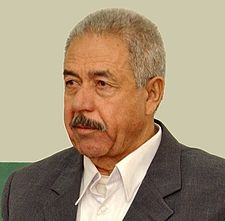 Ali Hassan al-Majid, a symbol of the former government of Saddam Hussein, who ordered a poison gas attack on a Kurdish village in northern Iraq, was executed on Monday. An Iraqi court had sentenced Mr. Majid, 68, to death by hanging last week. Mr. Majid, known as Chemical Ali for his role in the attack on the village of Halabja, in which more than 5,000 Kurds died, was perhaps the most notorious figure from the former regime to be executed since Mr. Hussein was himself hanged in December 2006.
Iraq’s state television broadcast pictures of what it said was the execution, showing a man in a black mask and red jumpsuit on a wood scaffold, with a rope around his neck. “His execution turns the page on another black chapter of repression, genocide and crimes against humanity that Saddam and his men practiced for 35 years,” said Prime Minister Nuri Kamal al-Maliki in a statement. In court cases that began in August 2006, Mr. Majid was handed eight death sentences for crimes that ranged from Halabja to a campaign known as Anfal at the end of the Iran-Iraq war in which at least 180,000 Kurds were killed and thousands others displaced, invoking accusations of genocide and serving as a powerful symbol of Kurdish suffering in their quest for self-determination. He was also convicted for his role in crushing a Shiite uprising in southern Iraq in 1991, in which thousands were killed and displaced. “His execution is great news for all Iraqis,” said Fakhri Karim, an adviser to President Jalal Talabani, a Kurd. “He was the killing machine of the former regime.” He was hanged on Monday for his role in the Anfal campaign, an official from the Justice Ministry said.
Kao Mahmoud, a spokesman for the government of the semi-autonomous Kurdistan region, said that Kurdish officials would pursue their efforts to classify the attack on Halabja as genocide. The government announced his execution shortly after three devastating bombings struck hotels in Baghdad, killing 36 people, in what appeared to be a coordinated attack. The delays in executing Mr. Majid stood in contrast to the speed with which Mr. Hussein’s death sentence was carried out. Mr. Hussein was sentenced Nov. 5, 2006; his appeal was rejected on Dec. 26 that year; and he went to the gallows just before dawn within four days. Video was soon circulated of Mr. Hussein’s confrontation with guards. Ali Dabbagh, the government’s spokesman, said that Mr. Majid’s execution “happened without any violations, shouting or cries of joy,” unlike that of Mr. Hussein.
Throughout his courtroom appearances and until last week, Mr. Majid remained unapologetic, explaining to the court during the Anfal trial that he had ordered the destruction of Kurdish villages because they were filled with Iranian agents. “I am the one who gave orders to the army to demolish villages and relocate villagers,” Mr. Majid had said during one of the hearings. “I am not defending myself, I am not apologizing. I did not make a mistake.” “Thanks to God,” an unrepentant Mr. Majid said last week when his eighth death sentence was read out in court.
On June 24, 2007, the court sentenced Mr. Majid and a former defense minister, Sultan Hashem Ahmed, to death for their role in the Anfal campaign. Mr. Majid’s sentence was set to be carried out on Oct. 16, but was postponed because of wrangling over Mr. Ahmed’s execution. Several top Iraqi leaders and American commanders wanted to spare him. Mr. Ahmed received a 15-year prison sentence last week for his role in the Halabja attack. It is not clear yet if or when he will be executed.
“Until now, there isn’t an executive order to execute him,” said Bosho Dizai, the deputy justice minister. “We don’t know what will happen yet.”
Mr. Ahmed was a top officer for decades, winning respect from many Iraqis for his professionalism. Some American officials said he helped limit the resistance of the Iraqi army to the invasion in 2003, and many Sunni leaders said he was simply a soldier following Mr. Majid’s orders.
After the 2003 American-led invasion, Mr. Ahmed fled to Mosul, where Gen. David H. Petraeus, then a major general in charge of military operations in the north, praised him as a “man of honor and integrity” and asked him to surrender in a letter stating that by doing so, he could “avoid capture, imprisonment and loss of honor and dignity befitting a general officer.”
But because of his role in the Anfal campaign, both Shiite and Kurdish officials believed that if Mr. Ahmed’s life was spared, it could set a precedent by which others who committed crimes would also seek to be let off. Some also feared executing Mr. Ahmed would affect efforts to persuade Sunnis to reconcile with a government now dominated by Shiites.
Mr. Majid, a first cousin to Mr. Hussein, was captured on Aug. 17, 2003, five months after the invasion of Iraq. He was listed as the fifth most-wanted men and as King of Spades in the pack of cards of most wanted issued by the US military in 2003. He was a soldier in the Iraqi army until Mr. Hussein’s Baath party seized power in a bloody coup in 1968 when he was appointed an aide to the defense minister. When Mr. Hussein became president in 1979, he was promoted to head of the Iraqi Intelligence Service. In the late 1980s, he was appointed secretary general of the northern bureau of the Baath Party, where he demonstrated ruthlessness against Kurdish rebels.
Following the Iraqi invasion of Kuwait in August 1990, he was named military governor of the emirate. In 1991 he became interior minister and was charged with quelling the Shiite uprising that broke out that year against Mr. Hussein in the south. In 1995 he became defense minister but was dismissed shortly afterward when Mr. Hussein discovered he was involved in smuggling illegal grain to Iran. Three years later, he was brought back and appointed commander of southern Iraq, a position he kept until the invasion.
Source: New York Times
Friday, September 4, 2009
Ancient people of the land
The Khoisan people of the Northern Cape are descended from 2 different tribes. An amalgam of the original San hunter-gatherers and the later-arriving KhoiKhoi, they were virtually annihilated by subsequent settlers. But the Khoisan culture lives on through some of the most compelling rock art on Earth. Khoisan is a term used by physical anthropologists to distinguish the aboriginal people of southern Africa from their black African farming neighbours.
The original San hunter-gatherer groups lived on this land for approximately 100 000 years before the arrival of other black people and European settlers. When the pastoral KhoiKhoi appeared 2 000 years ago they saw people similar to them in physical appearance, but with a different culture. They called these elders of the land 'the San', which means 'people different from ourselves'.
The San men usually hunted antelope using bows and arrows smeared with poison. Before a hunt, a shaman would conduct a religious ceremony. He would enter a trance and his vision was recorded on a rock by way of painting. This rock art is now a central feature of our heritage.
The Khoi brought pastoralism to the San – with their sheep and cattle contributing to a balanced diet. Unlike the San, who did not live in a hierarchical society, the Khoi had a complex social structure. These two cultures would later merge and become known as the Khoisan people.
It is a sad part of South African history that these two vibrant and culturally-rich tribes are now almost extinct; with Khoisan culture pushed to the periphery of our society. But they have left an indelible mark on our society.
The distinct clicks of their language, once found nowhere else in Africa, have been incorporated into Zulu and Xhosa speech. They have also contributed to the richness of Afrikaans and South African English with words such as 'eina' (ouch) and 'aikhona' (absolutely not). And place names like Karoo and Keiskamma.
Beyond the sphere of daily chores, Khoisan traditions include snuff and makaranga tobacco. This is a very strong tobacco that is mixed with wild honey and made into a paste before being allowed to dry. In Namaqualand traditions include distinct dress and music adapted from their heritage and early Boer influences.
The original San hunter-gatherer groups lived on this land for approximately 100 000 years before the arrival of other black people and European settlers. When the pastoral KhoiKhoi appeared 2 000 years ago they saw people similar to them in physical appearance, but with a different culture. They called these elders of the land 'the San', which means 'people different from ourselves'.
The San men usually hunted antelope using bows and arrows smeared with poison. Before a hunt, a shaman would conduct a religious ceremony. He would enter a trance and his vision was recorded on a rock by way of painting. This rock art is now a central feature of our heritage.
The Khoi brought pastoralism to the San – with their sheep and cattle contributing to a balanced diet. Unlike the San, who did not live in a hierarchical society, the Khoi had a complex social structure. These two cultures would later merge and become known as the Khoisan people.
It is a sad part of South African history that these two vibrant and culturally-rich tribes are now almost extinct; with Khoisan culture pushed to the periphery of our society. But they have left an indelible mark on our society.
The distinct clicks of their language, once found nowhere else in Africa, have been incorporated into Zulu and Xhosa speech. They have also contributed to the richness of Afrikaans and South African English with words such as 'eina' (ouch) and 'aikhona' (absolutely not). And place names like Karoo and Keiskamma.
Beyond the sphere of daily chores, Khoisan traditions include snuff and makaranga tobacco. This is a very strong tobacco that is mixed with wild honey and made into a paste before being allowed to dry. In Namaqualand traditions include distinct dress and music adapted from their heritage and early Boer influences.
More information
Source: South African TourismThursday, March 5, 2009
Omar Hassan al-Bashir
On June 30, 1989, Lieut. Gen. Omar Hassan al-Bashir, a military leader in Sudan, seized power in a bloodless coup backed by Islamists. He assumed the presidency in 1993.
He has been accused of genocide by the prosecutor of the International Criminal Court and has been vilified throughout the world as an incorrigible mass murderer bent on slaughtering his own people in the conflict-riddled region of Darfur.
He has stayed in power, appealing to national pride and causing deep-seated fears that the nation could tumble into Somalia-like chaos if he were removed.
In February 2009, judges at the International Criminal Court approved a warrant for his arrest. According to court lawyers and diplomats, the judges rejected diplomatic requests to allow more time for peace negotiations in Darfur.
The criminal court judges took more than seven months to examine the evidence on Mr. Bashir before charging him, on March 4, 2009, with five counts of crimes against humanity, including murder, extermination, forcible transfer, torture and rape. The two counts of war crimes were for attacks against a civilian population and for pillaging. In their statement, the judges said the court did not recognize immunity for a head of state and called for the cooperation of all countries - not just the 108 nations that are members of the court - to bring Mr. Bashir to justice.
The question of whether genocide was being committed in Darfur has been divisive, and was so among the judges, who said 2-to-1 that the prosecutor had not provided sufficient evidence of the government's intent, the key issue in determining genocide. The Bush administration and other governments, as well as some human rights activists, have called the attacks on civilians government's actions genocide. The United Nations has stopped short of doing so.
It is the first time the court has sought to detain a sitting head of state, and it could further complicate the tense, international debate over how to solve the Darfur crisis.
In announcing his request for a warrant, the prosecutor in the case, Luis Moreno-Ocampo, said that Mr. Bashir had "masterminded and implemented" a plan to destroy three main ethnic groups in Darfur, the Fur, the Masalit and the Zaghawa. The prosecutor said that the president, responding to attacks by rebel groups seeking greater autonomy, had used government soldiers and Arab militias and had "purposefully targeted civilians" belonging to these groups, killing 35,000 people "outright" in attacks on towns and villages.
Although there has been sporadic fighting in Darfur for decades, the conflict significantly intensified in 2003, when the rebel groups attacked Sudanese forces. The Arab-led government responded with a ferocious counterinsurgency campaign, which the prosecutor called a genocidal strategy against Darfur's black African ethnic groups.
The Sudanese forces and government-sponsored militias swept the countryside. They burned down villages, raped countless women and drove hundreds of thousands of people off their land, all part of an effort to put down the rebellion. Mr. Moreno-Ocampo has accused Mr. Bashir of being the mastermind of this strategy, the one with "absolute control."
There is broad concern that removing Mr. Bashir from power could threaten a landmark peace treaty between the Sudanese government and other rebels in the southern part of the country. The treaty was signed in 2005 to end a civil war in which 2.2 million people died, far more than in Darfur.
Source: New York Times
He has been accused of genocide by the prosecutor of the International Criminal Court and has been vilified throughout the world as an incorrigible mass murderer bent on slaughtering his own people in the conflict-riddled region of Darfur.
He has stayed in power, appealing to national pride and causing deep-seated fears that the nation could tumble into Somalia-like chaos if he were removed.
In February 2009, judges at the International Criminal Court approved a warrant for his arrest. According to court lawyers and diplomats, the judges rejected diplomatic requests to allow more time for peace negotiations in Darfur.
The criminal court judges took more than seven months to examine the evidence on Mr. Bashir before charging him, on March 4, 2009, with five counts of crimes against humanity, including murder, extermination, forcible transfer, torture and rape. The two counts of war crimes were for attacks against a civilian population and for pillaging. In their statement, the judges said the court did not recognize immunity for a head of state and called for the cooperation of all countries - not just the 108 nations that are members of the court - to bring Mr. Bashir to justice.
The question of whether genocide was being committed in Darfur has been divisive, and was so among the judges, who said 2-to-1 that the prosecutor had not provided sufficient evidence of the government's intent, the key issue in determining genocide. The Bush administration and other governments, as well as some human rights activists, have called the attacks on civilians government's actions genocide. The United Nations has stopped short of doing so.
It is the first time the court has sought to detain a sitting head of state, and it could further complicate the tense, international debate over how to solve the Darfur crisis.
In announcing his request for a warrant, the prosecutor in the case, Luis Moreno-Ocampo, said that Mr. Bashir had "masterminded and implemented" a plan to destroy three main ethnic groups in Darfur, the Fur, the Masalit and the Zaghawa. The prosecutor said that the president, responding to attacks by rebel groups seeking greater autonomy, had used government soldiers and Arab militias and had "purposefully targeted civilians" belonging to these groups, killing 35,000 people "outright" in attacks on towns and villages.
Although there has been sporadic fighting in Darfur for decades, the conflict significantly intensified in 2003, when the rebel groups attacked Sudanese forces. The Arab-led government responded with a ferocious counterinsurgency campaign, which the prosecutor called a genocidal strategy against Darfur's black African ethnic groups.
The Sudanese forces and government-sponsored militias swept the countryside. They burned down villages, raped countless women and drove hundreds of thousands of people off their land, all part of an effort to put down the rebellion. Mr. Moreno-Ocampo has accused Mr. Bashir of being the mastermind of this strategy, the one with "absolute control."
There is broad concern that removing Mr. Bashir from power could threaten a landmark peace treaty between the Sudanese government and other rebels in the southern part of the country. The treaty was signed in 2005 to end a civil war in which 2.2 million people died, far more than in Darfur.
Source: New York Times
Monday, February 23, 2009
Julius Malema is not a true leader
"Julius Malema is no true leader. He is only a dangerous rabble rouser and spreader of hate. This is the easiest type of politics. To bad-mouth opponents and call them cockroaches and snakes, anyone can do. In the short term one is popular but in the longer run your followers realize that you are not making any real contribution to solutions", Dr. Pieter Mulder, FF Plus leader said in reaction to the attacks of Malema on opposition parties.
The most difficult is to, with wisdom, give leadership to your followers. It may make you unpopular in the short term, but in the longer term you are proven to be correct and you rise as a true leader. This is the kind of leadership which Nelson Mandela had illustrated. Malema believes that ANC leaders have a history of controversy and tries to copy it on an amateurish level. As examples he however does not take Nelson Mandela, but Peter Mokaba with his "Kill the Boer" slogan and Winnie Madikizela-Mandela who wanted to free everyone with matches. Just like his role models, only the best is good enough for Malema. In the midst of his follower's poverty, he drives around with a Mercedes Benz E-class and lives in the rich man's area of Sandton.
South Africa can not afford to get stuck with this kind of leader and politics. A million Tutsi's were murdered in 1994 in genocide in Rwanda. That was preceded by hate speech in which Tutsi's were described as cockroaches which had to be eradicated.
If discipline disappears out of schools and society, then an individual such as Julius Malema becomes a youth leader. As youth leader he was elected at an ANC youth conference where poor behavior, alcohol abuse, indecent exposure and damage to property were the characteristics of the conference. In a disciplined society such as Japan or China, such a conference would have concentrated on the future of the country and Malema's kind of rhetoric would not even have been seen.
In order to prevent Malema from ever becoming president of this country, the ANC has to end in the opposition seats. No opposition party can succeed with this on its own. A coalition of opposition parties can succeed with this. That is why every voter has to go and vote for the party closest to its values. After the election, truly responsible leaders work together to accomplish this.
Source: Polity
The most difficult is to, with wisdom, give leadership to your followers. It may make you unpopular in the short term, but in the longer term you are proven to be correct and you rise as a true leader. This is the kind of leadership which Nelson Mandela had illustrated. Malema believes that ANC leaders have a history of controversy and tries to copy it on an amateurish level. As examples he however does not take Nelson Mandela, but Peter Mokaba with his "Kill the Boer" slogan and Winnie Madikizela-Mandela who wanted to free everyone with matches. Just like his role models, only the best is good enough for Malema. In the midst of his follower's poverty, he drives around with a Mercedes Benz E-class and lives in the rich man's area of Sandton.
South Africa can not afford to get stuck with this kind of leader and politics. A million Tutsi's were murdered in 1994 in genocide in Rwanda. That was preceded by hate speech in which Tutsi's were described as cockroaches which had to be eradicated.
If discipline disappears out of schools and society, then an individual such as Julius Malema becomes a youth leader. As youth leader he was elected at an ANC youth conference where poor behavior, alcohol abuse, indecent exposure and damage to property were the characteristics of the conference. In a disciplined society such as Japan or China, such a conference would have concentrated on the future of the country and Malema's kind of rhetoric would not even have been seen.
In order to prevent Malema from ever becoming president of this country, the ANC has to end in the opposition seats. No opposition party can succeed with this on its own. A coalition of opposition parties can succeed with this. That is why every voter has to go and vote for the party closest to its values. After the election, truly responsible leaders work together to accomplish this.
Source: Polity
Tuesday, January 25, 2005
International Commission of Inquiry on Darfur
Pursuant to Security Council Resolution 1564 of 18 September 2004, here is this Report of the International Commission of Inquiry on Darfur to the United Nations Secretary-General from Geneva, dated 25 January 2005.
Acting under Chapter VII of the United Nations Charter, on 18 September 2004 the Security Council adopted resolution 1564 requesting, inter alia, that the Secretary-General ‘rapidly establish an international commission of inquiry in order immediately to investigate reports of violations of international humanitarian law and human rights law in Darfur by all parties, to determine also whether or not acts of genocide have occurred, and to identify the perpetrators of such violations with a view to ensuring that those responsible are held accountable’.
In October 2004, the Secretary General appointed Antonio Cassese (Chairperson), Mohamed Fayek, Hina Jilani, Dumisa Ntsebeza and Therese Striggner-Scott as members of the Commission and requested that they report back on their findings within three months. The Commission was supported in its work by a Secretariat headed by an Executive Director, Ms. Mona Rishmawi, as well as a legal research team and an investigative team composed of investigators, forensic experts, military analysts, and investigators specializing in gender violence, all appointed by the Office of the United Nations High Commissioner for Human Rights. The Commission assembled in Geneva and began its work on 25 October 2004.
In order to discharge its mandate, the Commission endeavoured to fulfil four key tasks: (1) to investigate reports of violations of international humanitarian law and human rights law in Darfur by all parties; (2) to determine whether or not acts of genocide have occurred; (3) to identify the perpetrators of violations of international humanitarian law and human rights law in Darfur; and (4) to suggest means of ensuring that those responsible for such violations are held accountable. While the Commission considered all events relevant to the current conflict in Darfur, it focused in particular on incidents that occurred between February 2003 and mid-January 2005.
The Commission engaged in a regular dialogue with the Government of the Sudan throughout its mandate, in particular through meetings in Geneva and in the Sudan, as well as through the work of its investigative team. The Commission visited the Sudan from 7-21 November 2004 and 9-16 January 2005, including travel to the three Darfur States. The investigative team remained in Darfur from November 2004 through January 2005. During its presence in the Sudan, the Commission held extensive meetings with representatives of the Government, the Governors of the Darfur States and other senior officials in the capital and at provincial and local levels, members of the armed forces and police, leaders of rebel forces, tribal leaders, internally displaced persons, victims and witnesses of violations, NGOs and United Nations representatives.
The Commission submitted a full report on its findings to the Secretary-General on 25 January 2005. The report describes the terms of reference, methodology, approach and activities of the Commission and its investigative team. It also provides an overview of the historical and social background to the conflict in Darfur. The report then addresses in detail the four key tasks referred to above, namely the Commission’s findings in relation to: i) violations of international human rights and humanitarian law by all parties; ii) whether or not acts of genocide have taken place; iii) the identification of perpetrators; and iv) accountability mechanisms. These four sections are briefly summarized here.
A copy of the report can be downloaded (in pdf format) here.
Acting under Chapter VII of the United Nations Charter, on 18 September 2004 the Security Council adopted resolution 1564 requesting, inter alia, that the Secretary-General ‘rapidly establish an international commission of inquiry in order immediately to investigate reports of violations of international humanitarian law and human rights law in Darfur by all parties, to determine also whether or not acts of genocide have occurred, and to identify the perpetrators of such violations with a view to ensuring that those responsible are held accountable’.
In October 2004, the Secretary General appointed Antonio Cassese (Chairperson), Mohamed Fayek, Hina Jilani, Dumisa Ntsebeza and Therese Striggner-Scott as members of the Commission and requested that they report back on their findings within three months. The Commission was supported in its work by a Secretariat headed by an Executive Director, Ms. Mona Rishmawi, as well as a legal research team and an investigative team composed of investigators, forensic experts, military analysts, and investigators specializing in gender violence, all appointed by the Office of the United Nations High Commissioner for Human Rights. The Commission assembled in Geneva and began its work on 25 October 2004.
In order to discharge its mandate, the Commission endeavoured to fulfil four key tasks: (1) to investigate reports of violations of international humanitarian law and human rights law in Darfur by all parties; (2) to determine whether or not acts of genocide have occurred; (3) to identify the perpetrators of violations of international humanitarian law and human rights law in Darfur; and (4) to suggest means of ensuring that those responsible for such violations are held accountable. While the Commission considered all events relevant to the current conflict in Darfur, it focused in particular on incidents that occurred between February 2003 and mid-January 2005.
The Commission engaged in a regular dialogue with the Government of the Sudan throughout its mandate, in particular through meetings in Geneva and in the Sudan, as well as through the work of its investigative team. The Commission visited the Sudan from 7-21 November 2004 and 9-16 January 2005, including travel to the three Darfur States. The investigative team remained in Darfur from November 2004 through January 2005. During its presence in the Sudan, the Commission held extensive meetings with representatives of the Government, the Governors of the Darfur States and other senior officials in the capital and at provincial and local levels, members of the armed forces and police, leaders of rebel forces, tribal leaders, internally displaced persons, victims and witnesses of violations, NGOs and United Nations representatives.
The Commission submitted a full report on its findings to the Secretary-General on 25 January 2005. The report describes the terms of reference, methodology, approach and activities of the Commission and its investigative team. It also provides an overview of the historical and social background to the conflict in Darfur. The report then addresses in detail the four key tasks referred to above, namely the Commission’s findings in relation to: i) violations of international human rights and humanitarian law by all parties; ii) whether or not acts of genocide have taken place; iii) the identification of perpetrators; and iv) accountability mechanisms. These four sections are briefly summarized here.
A copy of the report can be downloaded (in pdf format) here.
Saturday, August 14, 2004
Germany admits Namibia genocide
Germany has offered its first formal apology for the colonial-era massacre of some 65,000 members of the Herero tribe by German troops in Namibia. German minister Heidemarie Wieczorek-Zeul told a commemorative ceremony that the brutal crushing of the Herero uprising 100 years ago was genocide. But the German government has ruled out compensation for victims' descendants.
A group of Herero has filed a case against Germany in the United States demanding $4bn in compensation.
"We Germans accept our historic and moral responsibility," Ms Wieczorek-Zeul, Germany's Development Aid Minister, told a crowd of some 1,000 at the ceremony in Okokarara. "Germany has learnt the bitter lessons of the past."
But after the minister's speech, the crowd repeated calls for an apology.
"Everything I said in my speech was an apology for crimes committed under German colonial rule," she replied.
Ms Wieczorek-Zeul repeated that there would be no compensation, but she promised continued economic aid for Namibia which currently amounts to $14m a year.
Driven into desert
The Herero rebelled in 1904 against German soldiers and settlers who were colonising south-west Africa.
In response, the German military commander, General Lothar von Trotha, ordered the Herero people to leave Namibia or be killed.
Germany argues that international laws to protect civilians were not in force at the time of the conflict.
Herero chief Kuaima Riruako said the apology was appreciated but added: "We still have the right to take the German government to court."
However, correspondents say the lawsuit filed in the US three years ago against the German government and two German companies is seen as having a limited chance of success.
Source: BBC
A group of Herero has filed a case against Germany in the United States demanding $4bn in compensation.
"We Germans accept our historic and moral responsibility," Ms Wieczorek-Zeul, Germany's Development Aid Minister, told a crowd of some 1,000 at the ceremony in Okokarara. "Germany has learnt the bitter lessons of the past."
But after the minister's speech, the crowd repeated calls for an apology.
"Everything I said in my speech was an apology for crimes committed under German colonial rule," she replied.
Ms Wieczorek-Zeul repeated that there would be no compensation, but she promised continued economic aid for Namibia which currently amounts to $14m a year.
Driven into desert
The Herero rebelled in 1904 against German soldiers and settlers who were colonising south-west Africa.
In response, the German military commander, General Lothar von Trotha, ordered the Herero people to leave Namibia or be killed.
Germany argues that international laws to protect civilians were not in force at the time of the conflict.
Herero chief Kuaima Riruako said the apology was appreciated but added: "We still have the right to take the German government to court."
However, correspondents say the lawsuit filed in the US three years ago against the German government and two German companies is seen as having a limited chance of success.
Source: BBC
Thursday, September 13, 1990
Preventing Genocide in Liberia
Until the 1980's, Liberia's main divide was between indigenous people and the Americo-Liberians, descended from freed U.S. slaves. Mr. Doe's bloody coup ended the old elite's dominance. Power and patronage flowed instead to the Krahn. That favoritism, along with the regime's brutality and incompetence, sparked opposition from other ethnic groups, like the Gio and the Mano. One rebel leader, Prince Johnson, is from the Gio. His rival, Charles Taylor, is an Americo-Liberian.
The U.S. cannot be proud of its own early association with the Doe dictatorship. The Reagan Administration convinced itself that Mr. Doe could provide a strategic bulwark against Communist advance. It ignored abundant evidence of official misdeeds and popular discontent and made Liberia the largest per capita recipient of U.S. aid in sub-Saharan Africa. Congress finally cut back American support after 1985. When Mr. Doe's enemies began closing in on him earlier this year, the Bush Administration rightly resisted his pleas for help.
Instead, a peacekeeping force was raised from the 16-member Economic Community of West African States. With 5,000 Liberian civilians dead and 400,000 refugees streaming over the borders, neighboring states feared chaos. Yet the force's arrival last month touched off reprisals against foreigners and fears of a wider war.
Those concerns remain valid. President Doe's murder has not ended Liberia's ordeal. The prospect of ethnic genocide compels preventive action. From Sri Lanka to the Balkans, political opportunists have exploited ethnic rivalries in the quest for short-term advantage. Too often, their efforts have drowned their countries in blood. For taking risks to prevent the worst, West Africa's peacekeepers deserve the world's appreciation, and support.
Source: New York Times
The U.S. cannot be proud of its own early association with the Doe dictatorship. The Reagan Administration convinced itself that Mr. Doe could provide a strategic bulwark against Communist advance. It ignored abundant evidence of official misdeeds and popular discontent and made Liberia the largest per capita recipient of U.S. aid in sub-Saharan Africa. Congress finally cut back American support after 1985. When Mr. Doe's enemies began closing in on him earlier this year, the Bush Administration rightly resisted his pleas for help.
Instead, a peacekeeping force was raised from the 16-member Economic Community of West African States. With 5,000 Liberian civilians dead and 400,000 refugees streaming over the borders, neighboring states feared chaos. Yet the force's arrival last month touched off reprisals against foreigners and fears of a wider war.
Those concerns remain valid. President Doe's murder has not ended Liberia's ordeal. The prospect of ethnic genocide compels preventive action. From Sri Lanka to the Balkans, political opportunists have exploited ethnic rivalries in the quest for short-term advantage. Too often, their efforts have drowned their countries in blood. For taking risks to prevent the worst, West Africa's peacekeepers deserve the world's appreciation, and support.
Source: New York Times
Subscribe to:
Comments (Atom)