Guinea’s
military leaders appointed a veteran opposition figure as prime
minister on Monday, a critical step in the transition to elections and
civilian government later in the year, officials and news agencies
reported.
The opposition figure, Jean-Marie Doré, was the choice of both a
coalition of opponents of the military government, and the current
military junta itself. Mr. Doré, in his 70s and the leader of the opposition coalition,
which is called the Forces Vives, is from the same ethnic group as the
country’s military dictator, Capt. Moussa Dadis Camara. Soldiers from that group are thought to have played a leading role in the massacre, beatings and rapes of regime opponents in a stadium
in the capital, Conakry, on Sept. 28. The ethnic group, from Guinea’s
remote forest regions, is considered a particularly volatile element in
the country’s armed forces, and Mr. Doré’s new role is considered a
potentially peacemaking one.
“It was the Forces Vives that proposed Jean-Marie Doré. We are
satisfied,” said Oury Bah, vice president of the political party Union
of Democratic Forces in Guinea. Late last week Guinea’s military leaders
and the coalition agreed to establish an interim government together,
while Captain Camara, wounded in an assassination attempt early in
December, announced that he would go into exile.
The deal caps a period of deep unrest in this West African country of
10 million people, a leading bauxite exporter whose people are among
the world’s poorest. Captain Camara took over in a coup
13 months ago and ruled in an increasingly arbitrary way from his
army-base headquarters. The September massacre, in which at least 156
people were killed by soldiers, resulted in intense pressure on the junta as both the United Nations and the International Criminal Court spoke of potential crimes against humanity.
Captain Camara, shot by one of his own guards, flew to Morocco for
treatment while power was assumed by his deputy, Gen. Sékouba Konaté.
The general, regarded as more flexible than the wounded autocrat, took
part in the negotiations that led to last week’s deal. But whether the troubled country finds peace in the months leading up
to the elections is an open question. Mr. Bah, for one, was sharply
critical of the proposed composition of the new government, which will
have 10 ministers each from the military junta, the opposition and the
different regions of the country.
That arrangement will effectively handcuff the prime minister, he
said. “It’s as if the prime minister has no real power. We can’t accept
this in the transition,” he said.
The army’s future role is also unclear. There is a strong
possibility that it will remain “the power behind power,” said Mike
McGovern, a Yale anthropologist and an expert on Guinea.
Mr. Doré has long been on the political scene in Guinea as an
unpredictable opponent of the country’s military rulers. He has publicly
proclaimed his friendship with the Liberian warlord Charles Taylor, according to Mr. McGovern, but was among those beaten at the stadium in September.
In an interview
shortly after Mr. Doré produced the bloodstained clothes he was
wearing at the time, he said, “With violence they forced me to my
knees.” He was strongly critical of the military government. “The country is
in a trap,” he said. “There’s a disjunction between the work that must
be done, and the people doing it. The competencies at hand are not up to
the job.”
Mr. McGovern said that Mr. Doré had “oscillated over time from being
something of a gadfly in Guinean politics to being over the last year a
pretty solid, level-headed spokesman for the Forces Vives.”
Source: New York Times
Showing posts with label Moussa Dadis Camara. Show all posts
Showing posts with label Moussa Dadis Camara. Show all posts
Tuesday, January 19, 2010


Guinea Junta Picks Opponent as Premier on Path to Civilian Control
Guinea’s
military leaders appointed a veteran opposition figure as prime
minister on Monday, a critical step in the transition to elections and
civilian government later in the year, officials and news agencies
reported.
The opposition figure, Jean-Marie Doré, was the choice of both a coalition of opponents of the military government, and the current military junta itself. Mr. Doré, in his 70s and the leader of the opposition coalition, which is called the Forces Vives, is from the same ethnic group as the country’s military dictator, Capt. Moussa Dadis Camara. Soldiers from that group are thought to have played a leading role in the massacre, beatings and rapes of regime opponents in a stadium in the capital, Conakry, on Sept. 28. The ethnic group, from Guinea’s remote forest regions, is considered a particularly volatile element in the country’s armed forces, and Mr. Doré’s new role is considered a potentially peacemaking one.
“It was the Forces Vives that proposed Jean-Marie Doré. We are satisfied,” said Oury Bah, vice president of the political party Union of Democratic Forces in Guinea. Late last week Guinea’s military leaders and the coalition agreed to establish an interim government together, while Captain Camara, wounded in an assassination attempt early in December, announced that he would go into exile.
The deal caps a period of deep unrest in this West African country of 10 million people, a leading bauxite exporter whose people are among the world’s poorest. Captain Camara took over in a coup 13 months ago and ruled in an increasingly arbitrary way from his army-base headquarters. The September massacre, in which at least 156 people were killed by soldiers, resulted in intense pressure on the junta as both the United Nations and the International Criminal Court spoke of potential crimes against humanity.
Captain Camara, shot by one of his own guards, flew to Morocco for treatment while power was assumed by his deputy, Gen. Sékouba Konaté. The general, regarded as more flexible than the wounded autocrat, took part in the negotiations that led to last week’s deal. But whether the troubled country finds peace in the months leading up to the elections is an open question. Mr. Bah, for one, was sharply critical of the proposed composition of the new government, which will have 10 ministers each from the military junta, the opposition and the different regions of the country.
That arrangement will effectively handcuff the prime minister, he said. “It’s as if the prime minister has no real power. We can’t accept this in the transition,” he said.
The army’s future role is also unclear. There is a strong possibility that it will remain “the power behind power,” said Mike McGovern, a Yale anthropologist and an expert on Guinea.
Mr. Doré has long been on the political scene in Guinea as an unpredictable opponent of the country’s military rulers. He has publicly proclaimed his friendship with the Liberian warlord Charles Taylor, according to Mr. McGovern, but was among those beaten at the stadium in September.
In an interview shortly after Mr. Doré produced the bloodstained clothes he was wearing at the time, he said, “With violence they forced me to my knees.” He was strongly critical of the military government. “The country is in a trap,” he said. “There’s a disjunction between the work that must be done, and the people doing it. The competencies at hand are not up to the job.”
Mr. McGovern said that Mr. Doré had “oscillated over time from being something of a gadfly in Guinean politics to being over the last year a pretty solid, level-headed spokesman for the Forces Vives.”
Source: New York Times
The opposition figure, Jean-Marie Doré, was the choice of both a coalition of opponents of the military government, and the current military junta itself. Mr. Doré, in his 70s and the leader of the opposition coalition, which is called the Forces Vives, is from the same ethnic group as the country’s military dictator, Capt. Moussa Dadis Camara. Soldiers from that group are thought to have played a leading role in the massacre, beatings and rapes of regime opponents in a stadium in the capital, Conakry, on Sept. 28. The ethnic group, from Guinea’s remote forest regions, is considered a particularly volatile element in the country’s armed forces, and Mr. Doré’s new role is considered a potentially peacemaking one.
“It was the Forces Vives that proposed Jean-Marie Doré. We are satisfied,” said Oury Bah, vice president of the political party Union of Democratic Forces in Guinea. Late last week Guinea’s military leaders and the coalition agreed to establish an interim government together, while Captain Camara, wounded in an assassination attempt early in December, announced that he would go into exile.
The deal caps a period of deep unrest in this West African country of 10 million people, a leading bauxite exporter whose people are among the world’s poorest. Captain Camara took over in a coup 13 months ago and ruled in an increasingly arbitrary way from his army-base headquarters. The September massacre, in which at least 156 people were killed by soldiers, resulted in intense pressure on the junta as both the United Nations and the International Criminal Court spoke of potential crimes against humanity.
Captain Camara, shot by one of his own guards, flew to Morocco for treatment while power was assumed by his deputy, Gen. Sékouba Konaté. The general, regarded as more flexible than the wounded autocrat, took part in the negotiations that led to last week’s deal. But whether the troubled country finds peace in the months leading up to the elections is an open question. Mr. Bah, for one, was sharply critical of the proposed composition of the new government, which will have 10 ministers each from the military junta, the opposition and the different regions of the country.
That arrangement will effectively handcuff the prime minister, he said. “It’s as if the prime minister has no real power. We can’t accept this in the transition,” he said.
The army’s future role is also unclear. There is a strong possibility that it will remain “the power behind power,” said Mike McGovern, a Yale anthropologist and an expert on Guinea.
Mr. Doré has long been on the political scene in Guinea as an unpredictable opponent of the country’s military rulers. He has publicly proclaimed his friendship with the Liberian warlord Charles Taylor, according to Mr. McGovern, but was among those beaten at the stadium in September.
In an interview shortly after Mr. Doré produced the bloodstained clothes he was wearing at the time, he said, “With violence they forced me to my knees.” He was strongly critical of the military government. “The country is in a trap,” he said. “There’s a disjunction between the work that must be done, and the people doing it. The competencies at hand are not up to the job.”
Mr. McGovern said that Mr. Doré had “oscillated over time from being something of a gadfly in Guinean politics to being over the last year a pretty solid, level-headed spokesman for the Forces Vives.”
Source: New York Times
Thursday, January 7, 2010
Guinea Junta Aims to Return Reins of Nation to Civilians
Guinea’s deputy junta chief pledged Wednesday to pave the way for a return to civilian rule, more than a year after the military took power in a bloodless coup. Guinea has been in a state of limbo since the leader of the military junta, Capt. Moussa Dadis Camara, was wounded in an assassination attempt by a former aide last month. He has not been seen in public for over a month since being flown to Morocco for treatment. The comments by his deputy, Sékouba Konaté, offered a possible way out of the deepening political crisis in the West African nation, the world’s top exporter of the aluminum ore bauxite. “We need to act to restore peace and the unity of all Guineans, and to put our state and political system on a new foundation,” said Mr. Konaté, promising to accept a prime minister drawn from the opposition as part of a national unity government.
Captain Camara, who took power in December 2008 after the death of President Lansana Conté, became the subject of international outrage and sanctions after security forces killed more than 150 people and raped scores of women protesting in a Conakry stadium in September.
Mr. Konaté, a professional soldier with no known ambitions for a front-line political role, visited Captain Camara in the hospital this week and held talks with American and French diplomats who urged him to allow a return to civilian rule in Captain Camara’s absence. He said Wednesday that he expected a transitional government to choose a new election date after a poll — initially set for this month — was delayed by the crisis. While it was unclear if Mr. Konaté would replace Captain Camara in any transitional government, he said he would not cling to power. An opposition leader welcomed Mr. Konaté’s announcement but said the success of the transitional government would depend on the powers given to the prime minister.
Source: New York Times
New York Times report for Guinea can be found here.
Captain Camara, who took power in December 2008 after the death of President Lansana Conté, became the subject of international outrage and sanctions after security forces killed more than 150 people and raped scores of women protesting in a Conakry stadium in September.
Mr. Konaté, a professional soldier with no known ambitions for a front-line political role, visited Captain Camara in the hospital this week and held talks with American and French diplomats who urged him to allow a return to civilian rule in Captain Camara’s absence. He said Wednesday that he expected a transitional government to choose a new election date after a poll — initially set for this month — was delayed by the crisis. While it was unclear if Mr. Konaté would replace Captain Camara in any transitional government, he said he would not cling to power. An opposition leader welcomed Mr. Konaté’s announcement but said the success of the transitional government would depend on the powers given to the prime minister.
Source: New York Times
New York Times report for Guinea can be found here.
Thursday, December 3, 2009
Guinea: Aide Wounds Junta Leader
 Shooting broke out in Guinea’s restive capital, Conakry, on Thursday, and the country’s military ruler was wounded, according to an opposition figure, a diplomat there and press reports. The country has been unsettled since an army massacre on Sept. 28 of demonstrators protesting in the capital’s stadium against the military government of Capt. Moussa Dadis Camara. At least 157 people are thought to have been killed and dozens of women raped then. The fighting Thursday appeared to be between rival military factions. Press reports citing a government spokesman said Toumba Diakite, an officer close to Captain Camara who has been widely cited as being responsible for the massacre, fired on the captain. The extent of Captain Camara’s injuries was not immediately known.
Source: New York Times
Friday, October 30, 2009
African Union imposes sanctions on Guinea junta
The African Union said on Thursday it was imposing immediate sanctions against the leaders of Guinea's ruling military junta, which took power in a coup last December after the death of veteran leader Lansana Conte. "These sanctions are targeted at the civilians and military personnel that are perpetuating these unconstitutional acts in Guinea," Lamamra Ramtane, AU commissioner for peace and security, told a meeting of the African body in Nigeria. "It is not intended to target the people of Guinea," he said, specifying the sanctions would include such measures as the freezing of bank accounts and travel visas rather than trade sanctions against the country. He said the measures would be directed against the leadership of the CNDD, the ruling junta in the West African country led by Captain Moussa Dadis Camara.
International pressure and internal dissent have grown in Guinea, the world's top supplier of bauxite, since live ammunition was used against anti-government protesters in a stadium a month ago. A local rights group said 157 people were killed. The United States, France and the European Union have called on Camara to step down and the International Criminal Court has said it is investigating the killings.
The EU agreed on Tuesday to impose an arms embargo on the West African country, and restrict the travel and freeze assets of those involved in the killing of the protesters. The U.S. government has also restricted travel to the United States by some members of the junta and the government, as well as others who support actions that "undermine the restoration of democracy and the rule of law".
The AU had threatened sanctions if Camara, who promised to rein in the army and transfer power to civilian rule through elections, refuses to opt out of a poll set for January.
Source: reuters
The African Union communique can be found here.
International pressure and internal dissent have grown in Guinea, the world's top supplier of bauxite, since live ammunition was used against anti-government protesters in a stadium a month ago. A local rights group said 157 people were killed. The United States, France and the European Union have called on Camara to step down and the International Criminal Court has said it is investigating the killings.
The EU agreed on Tuesday to impose an arms embargo on the West African country, and restrict the travel and freeze assets of those involved in the killing of the protesters. The U.S. government has also restricted travel to the United States by some members of the junta and the government, as well as others who support actions that "undermine the restoration of democracy and the rule of law".
The AU had threatened sanctions if Camara, who promised to rein in the army and transfer power to civilian rule through elections, refuses to opt out of a poll set for January.
Source: reuters
The African Union communique can be found here.
Tuesday, October 27, 2009
Guinea: September 28 Massacre Was Premeditated
An in-depth investigation into the September 28, 2009 killings and rapes at a peaceful rally in Conakry, Guinea, has uncovered new evidence that the massacre and widespread sexual violence were organized and were committed largely by the elite Presidential Guard, commonly known as the “red berets,” Human Rights Watch said today. Following a 10-day research mission in Guinea, Human Rights Watch also found that the armed forces attempted to hide evidence of the crimes by seizing bodies from the stadium and the city’s morgues and burying them in mass graves.
Human Rights Watch found that members of the Presidential Guard carried out a premeditated massacre of at least 150 people on September 28 and brutally raped dozens of women. Red berets shot at opposition supporters until they ran out of bullets, then continued to kill with bayonets and knives. “There is no way the government can continue to imply the deaths were somehow accidental,” said Georgette Gagnon, Africa director at Human Rights Watch. “This was clearly a premeditated attempt to silence opposition voices. Security forces surrounded and blockaded the stadium, then stormed in and fired at protesters in cold blood until they ran out of bullets,” added Gagnon. “They carried out grisly gang rapes and murders of women in full sight of the commanders. That’s no accident.”
A group of Guinean military officers calling themselves the National Council for Democracy and Development (Conseil national pour la démocratie et le développement, CNDD) seized power hours after the death on December 22, 2008, of Lansana Conté, Guinea’s president for 24 years. The CNDD is headed by a self-proclaimed president, Captain Moussa Dadis Camara.
Source: Human Rights Watch
Human Rights Watch found that members of the Presidential Guard carried out a premeditated massacre of at least 150 people on September 28 and brutally raped dozens of women. Red berets shot at opposition supporters until they ran out of bullets, then continued to kill with bayonets and knives. “There is no way the government can continue to imply the deaths were somehow accidental,” said Georgette Gagnon, Africa director at Human Rights Watch. “This was clearly a premeditated attempt to silence opposition voices. Security forces surrounded and blockaded the stadium, then stormed in and fired at protesters in cold blood until they ran out of bullets,” added Gagnon. “They carried out grisly gang rapes and murders of women in full sight of the commanders. That’s no accident.”
A group of Guinean military officers calling themselves the National Council for Democracy and Development (Conseil national pour la démocratie et le développement, CNDD) seized power hours after the death on December 22, 2008, of Lansana Conté, Guinea’s president for 24 years. The CNDD is headed by a self-proclaimed president, Captain Moussa Dadis Camara.
Source: Human Rights Watch
Friday, October 16, 2009
ICC prosecutor to examine Guinea killings
The prosecutor of the International Criminal Court said on Thursday he was investigating last month's deadly crackdown on opponents of Guinea's military ruler, Captain Moussa Dadis Camara. At least 157 people were killed and 1,200 injured on Sept. 28 when security forces in the West African nation attacked tens of thousands of protesters calling for Camara to step down.
It was the worst outbreak of violence since Camara seized control of the world's biggest bauxite-exporting nation in a December 2008 coup. "A preliminary examination of the situation has been immediately initiated in order to determine whether crimes falling under the Court's jurisdiction have been perpetrated," the office of ICC prosecutor Luis Moreno-Ocampo said in a statement. "From the information we have received, from the pictures I have seen, women were abused or otherwise brutalised on the pitch of Conakry's stadium, apparently by men in uniform", Deputy Prosecutor Fatou Bensouda said in a statement. "This is appalling, unacceptable. It must never happen again. Those responsible must be held accountable."
The violence drew international condemnation. U.S. Secretary of State Hillary Clinton said Guinea's military rulers should quit. France said it had cut military cooperation with its former colony. The European Union's aid chief, Karel De Gucht, said Camara should stand trial for a "crime against humanity". The African Union has given Camara until mid-October to confirm he will not stand in presidential elections slated for Jan. 31, warning of sanctions if he misses that deadline. Camara has blamed uncontrollable elements within the Guinean army for the killings, saying he cannot be held responsible. The Hague-based ICC is the world's first permanent court set up to try individuals for genocide, war crimes and other major human rights violations.
The African Union (AU) reiterated that Camara had about 24 hours to comply with the body's ultimatum. "What has happened is very, very unacceptable. It's condemnable," AU Commissioner for Peace and Security Ramtane Lamamra said, adding that the Peace and Security Council had considered the types of sanctions to be imposed. Lamamra did not give details. The Economic Community of West African States (ECOWAS) will discuss the situation in Guinea on Saturday at a one-day meeting in the Nigerian capital Abuja.
Source: reuters
It was the worst outbreak of violence since Camara seized control of the world's biggest bauxite-exporting nation in a December 2008 coup. "A preliminary examination of the situation has been immediately initiated in order to determine whether crimes falling under the Court's jurisdiction have been perpetrated," the office of ICC prosecutor Luis Moreno-Ocampo said in a statement. "From the information we have received, from the pictures I have seen, women were abused or otherwise brutalised on the pitch of Conakry's stadium, apparently by men in uniform", Deputy Prosecutor Fatou Bensouda said in a statement. "This is appalling, unacceptable. It must never happen again. Those responsible must be held accountable."
The violence drew international condemnation. U.S. Secretary of State Hillary Clinton said Guinea's military rulers should quit. France said it had cut military cooperation with its former colony. The European Union's aid chief, Karel De Gucht, said Camara should stand trial for a "crime against humanity". The African Union has given Camara until mid-October to confirm he will not stand in presidential elections slated for Jan. 31, warning of sanctions if he misses that deadline. Camara has blamed uncontrollable elements within the Guinean army for the killings, saying he cannot be held responsible. The Hague-based ICC is the world's first permanent court set up to try individuals for genocide, war crimes and other major human rights violations.
The African Union (AU) reiterated that Camara had about 24 hours to comply with the body's ultimatum. "What has happened is very, very unacceptable. It's condemnable," AU Commissioner for Peace and Security Ramtane Lamamra said, adding that the Peace and Security Council had considered the types of sanctions to be imposed. Lamamra did not give details. The Economic Community of West African States (ECOWAS) will discuss the situation in Guinea on Saturday at a one-day meeting in the Nigerian capital Abuja.
Source: reuters
Tuesday, September 29, 2009
Guinea: Stop Violent Attacks on Demonstrators
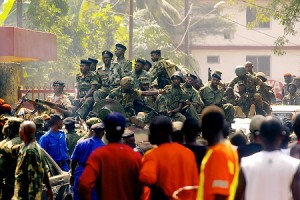 Guinean security forces should immediately cease violent attacks on demonstrators protesting against the military government, Human Rights Watch said today.
 Human Rights Watch called upon the government to hold accountable security forces responsible for firing upon and killing dozens of generally peaceful demonstrators in the Guinean capital, Conakry, on September 28, 2009. They were among tens of thousands of people protesting the rule of Capt. Moussa Dadis Camara, who had seized power in a bloodless coup in December.
"The killing of dozens of unarmed protesters is shocking even by the abusive standards of Guinea’s coup government," said Corinne Dufka, senior West Africa researcher at Human Rights Watch. "Guinea’s leaders should order an immediate end to attacks on demonstrators and bring to justice those responsible for the bloodshed."
The protesters, demonstrating against Camara’s presumed candidacy in Guinea’s January 2010 presidential elections, took to the streets of Conakry on September 28 and marched to a 25,000-seat stadium to attend a political rally. Backed by security forces, the minister responsible for combating drug trafficking and serious crime, Capt. Moussa Tiegboro Camara (no relation to the president), told the protesters not to enter the stadium. However, his troops were unable to stop the demonstrators from forcing open the doors and flooding inside.
Eyewitnesses and medical personnel told Human Rights Watch that many of the bodies of protesters were riddled with bullet holes. Others had stab wounds from knives and bayonets. A number of women taking part in the demonstration were stripped naked and sexually assaulted by security forces, victims and witnesses said.
Source: Human Rights Watch
Monday, September 28, 2009
Troops in Guinea Said to Fire on Pro-Democracy Protesters
Security forces fired on pro-democracy demonstrators on Monday in Conakry, Guinea, killing dozens, according to witnesses and news reports. Troops opened fire as thousands of opponents of the military junta led by Capt. Moussa Dadis Camara gathered in a stadium in Conakry, the capital, to protest his plans to run in presidential elections next January.
At first the troops fired tear gas at the crowd, estimated to have as many as 50,000 people, and then they started shooting, according to witnesses, who described scenes of panic and terror.
Witnesses spoke of seeing numerous wounded and dead demonstrators. Agence France-Presse, citing a doctor at a local morgue, reported that 58 bodies had been brought in. Reuters also reported 58 deaths, citing a human rights advocate.
The violence came after months of tension in the impoverished West African nation, brought on by what has been widely described as the erratic behavior of Captain Camara, the military man who led a coup last December, soon after the death of the longtime leader Lansana Conté.
At first welcomed by citizens weary from decades of authoritarian rule, Captain Camara has since lost support because of the actions of his troops — which human rights groups say include robberies, beatings and rapes — and his own inconsistencies.
He appears to make all government decisions alone, frequently with television cameras rolling. Tirades about drug dealers and incompetent officials; interrogations of Mr. Conté’s henchmen; and homilies about his own humble background have all been beamed into people’s homes.
The “Dadis Show,” as Guineans call it, has palled after initially beguiling people in the former French colony, and increasing numbers have demonstrated to hold Captain Camara to his pledge not to run for office. Recent suggestions that he would run mobilized the crowd on Monday, which included a number of opposition figures, who were subsequently wounded and arrested.
Source: New York Times
At first the troops fired tear gas at the crowd, estimated to have as many as 50,000 people, and then they started shooting, according to witnesses, who described scenes of panic and terror.
Witnesses spoke of seeing numerous wounded and dead demonstrators. Agence France-Presse, citing a doctor at a local morgue, reported that 58 bodies had been brought in. Reuters also reported 58 deaths, citing a human rights advocate.
The violence came after months of tension in the impoverished West African nation, brought on by what has been widely described as the erratic behavior of Captain Camara, the military man who led a coup last December, soon after the death of the longtime leader Lansana Conté.
At first welcomed by citizens weary from decades of authoritarian rule, Captain Camara has since lost support because of the actions of his troops — which human rights groups say include robberies, beatings and rapes — and his own inconsistencies.
He appears to make all government decisions alone, frequently with television cameras rolling. Tirades about drug dealers and incompetent officials; interrogations of Mr. Conté’s henchmen; and homilies about his own humble background have all been beamed into people’s homes.
The “Dadis Show,” as Guineans call it, has palled after initially beguiling people in the former French colony, and increasing numbers have demonstrated to hold Captain Camara to his pledge not to run for office. Recent suggestions that he would run mobilized the crowd on Monday, which included a number of opposition figures, who were subsequently wounded and arrested.
Source: New York Times
Wednesday, December 24, 2008
Army captain named head of Guinea junta

 Captain Moussa Dadis Camara was named Wednesday as head of the military junta which claims to have seized power in Guinea, a statement read on national radio said.
Camara, who commanded the fuel section of the armed forces supplies department, had been appointed "president of the National Council for Development and Democracy," the statement said. He was acting as spokesman for the junta on the radio following the reported coup early Tuesday in the wake of the death of President Lansana Conte.
Source: AFP
Monday, December 22, 2008
Guinea's long-time military leader Conte dies
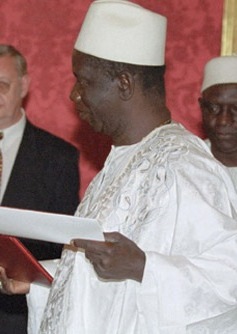
Guinea's President Lansana Conte, who ruled the West African nation with an iron fist for 24 years, has died aged 74, National Assembly Speaker Aboubacar Sompare told state television early Tuesday. In power since 1984, the ailing Conte, who relied on the army to put down growing discontent, was a chain smoker who suffered from chronic diabetes and was at one time diagnosed with leukemia. "We regret to announce to the people of Guinea the death of General Lansana Conte , after a long illness, at 6:45 pm," Sompare said.
Prime Minister Ahmed Tidiane Souare and armed forces chief of staff General Diarra Camara then confirmed the news on television. Sompare officially asked the president of the supreme court to declare the presidency vacant and to apply the constitution. If the supreme court rules that there is a vacancy in the top job, the speaker of the assembly takes over temporarily and has to organize a presidential election within 60 days.
Lansana Conte, a career soldier, came to power through a coup d'etat on April 3, 1984, one week after the death of Guinea's first president, Ahmed Sekou Toure. Top officials of the regime met overnight in the capital Conakry to discuss a successor to Conte, a source close to the presidential palace said. Among the officials meeting in emergency session at the People's Palace, seat of the national assembly, were Prime Minister Souare, Sompare, the president of the supreme court and military leaders. "All the members of the government were asked to go to the People's Palace," a minister told AFP.
Last week government spokesman Tibou Kamara had scolded "bearers of false reports" speculating about the president's state of health. Conte, who told AFP last year "I am the boss, others are my subordinates," has undergone frequent hospital treatments abroad.
Source: AFP
Subscribe to:
Posts (Atom)