Monday, March 12, 2001

Destruction of Giant Buddhas Confirmed

The international community acknowledged Monday that it has failed to stop the ruling Taliban militia in Afghanistan from destroying the ancient Buddha statues at Bamiyan, with UNESCO branding their demolition "a crime against culture." It was the first time that the destruction of the statues had been independently confirmed, despite a concerted effort by Arab, Islamic and international players to spare them. "I was distressed to learn from my special envoy, Pierre Lafrance, that the destruction of the Bamiyan Buddhas has been confirmed," the UN cultural body's chief Koichiro Matsura said in a statement. "It is abominable to witness the cold and calculated destruction of cultural properties which were the heritage of the Afghan people, and, indeed, of the whole of humanity," the statement said.

The Taliban had said the huge figures, carved into sandstone cliffs in Bamiyan city more than 1,500 years ago when Afghanistan was a seat of Buddhism, are "false idols" and must be destroyed in line with Islamic laws. Prime Minister Atal Behari Vajpayee of India, which has a large Buddhist population, on Monday branded the destruction "an act of barbarism" but stressed that his government had been helpless to intervene. "What is happening there has been condemned by the entire world. It is an act of barbarism, but there is a limit and the world cannot stop the destruction," said Vajpayee. Yet there were no shortage of efforts to try reversing the Taliban's edict, including from many Muslim countries and Pakistan, the closest ally of the Taliban and one of only three countries which recognizes its puritanical regime. After talks over the weekend between Pakistan Interior Minister Moinuddin Haider and Taliban officials failed, Haider played for time "suggesting that since this edict has repercussions for the entire Muslim world, it should be discussed with the ulema (Islamic religious leaders) from outside Afghanistan." But the high-level delegation of Islamic clerics that later visited Afghanistan returned empty-handed Monday.

The Taliban said the clerics had "failed to convince us that destroying the statues was un-Islamic." They were part of a delegation of the Organisation of the Islamic Conference (OIC) led by Qatar's foreign minister and included Egypt's top religious leader and two leading Sunni clerics, the same faith as the Taliban. "From a religious point of view it is clear, these statues are part of humanity's heritage and do no affect Islam at all," said the Egyptian cleric, speaking on his return to Cairo. A similar diplomatic mission from Japan also failed to overturn Taliban Supreme Leader Mullah Mohammad Omar's decree, which he said was based on orders of God and the Koran, Islam's holy book, and was "irreversible."

UN Secretary General Kofi Annan tried his hand at convincing the Taliban not to carry out their "lamentable decision," meeting Taliban Foreign Minister Wakil Ahmad Mutawakel while on a tour of South Asia. Annan stressed that many Islamic countries opposed the move, adding that destroying cultural masterpieces was not the way to mobilise the donor community to help Afghanistan overcome its humanitarian crisis. Jordan, another Muslim country, was quick to react to the news Monday that the statues were finished, saying it was disappointed at the "failure of Arab, Islamic and international efforts to stop the destruction." "Heritage that dates back to before Islam belongs to the entire world," the country's culture minister said.

With the Taliban set to move even further into isolation now, Matsuria concluded that "the loss is irreversible" but that "everything possible must be done to stop further destruction" of Afghanistan's pre-Islamic heritage. He also said he hoped that the destruction "will not provide fanatics elsewhere with an excuse for acts of destruction targeting Muslim cultural properties."

Source: Agence France-Presse

Friday, March 9, 2001

PROMOTION OF ACCESS TO INFORMATION ACT 2 OF 2000

The purpose of the Promotion of Access to Information Act is to give effect to the constitutional right of access to any information held by the State and any information that is held by another person and that is required for the exercise or protection of any rights; and to provide for matters connected therewith.

RECOGNISING THAT –
* the system of government in South Africa before 27 April 1994, amongst others, resulted in a secretive and unresponsive culture in public and private bodies which often led to an abuse of power and human rights violations;
* section 8 of the Constitution provides for the horizontal application of the rights in the Bill of Rights to juristic persons to the extent required by the nature of the rights and the nature of those juristic persons;
* section 32 (1) (a) of the Constitution provides that everyone has the right of access to any information held by the State;
* section 32 (1) (b) of the Constitution provides for the horizontal application of the right of access to information held by another person to everyone when that information is required for the exercise or protection of any rights;
* and national legislation must be enacted to give effect to this right in section 32 of the Constitution;

AND BEARING IN MIND THAT –
* the State must respect, protect, promote and fulfil, at least, all the rights in the Bill of Rights which is the cornerstone of democracy in South Africa;
* the right of access to any information held by a public or private body may be limited to the extent that the limitations are reasonable and justifiable in an open and democratic society based on human dignity, equality and freedom as contemplated in section 36 of the Constitution;
* reasonable legislative measures may, in terms of section 32 (2) of the Constitution, be provided to alleviate the administrative and financial burden on the State in giving effect to its obligation to promote and fulfil the right of access to information;

AND IN ORDER TO –
* foster a culture of transparency and accountability in public and private bodies by giving effect to the right of access to information;
* actively promote a society in which the people of South Africa have effective access to information to enable them to more fully exercise and protect all of their rights.

Source: SABINET

Friday, February 16, 2001

PROTECTED DISCLOSURES ACT 26 OF 2000

The purpose of the Protected Disclosures Act is to make provision for procedures in terms of which employees in both the private and the public sector may disclose information regarding unlawful or irregular conduct by their employers or other employees in the employ of their employers; to provide for the protection of employees who make a disclosure which is protected in terms of this Act; and to provide for matters connected therewith.

Recognising that-

- the Bill of Rights in the Constitution of the Republic of South Africa, 1996, enshrines the rights of all people in the Republic and affirms the democratic values of human dignity, equality and freedom;

- section 8 of the Bill of Rights provides for the horizontal application of the rights in the Bill of Rights, taking into account the nature of the right and the nature of any duty imposed by the right;

- criminal and other irregular conduct in organs of state and private bodies are detrimental to good, effective, accountable and transparent governance in organs of state and open and good corporate governance in private bodies and can endanger the economic stability of the Republic and have the potential to cause social damage;

And bearing in mind that-

- neither the South African common law nor statutory law makes provision for mechanisms or procedures in terms of which employees may, without fear of reprisals, disclose information relating to suspected or alleged criminal or other irregular conduct by their employers, whether in the private or the public sector;

- every employer and employee has a responsibility to disclose criminal and any other irregular conduct in the workplace;

- every employer has a responsibility to take all necessary steps to ensure that employees who disclose such information are protected from any reprisals as a result of such disclosure;

And in order to-

- create a culture which will facilitate the disclosure of information by employees relating to criminal and other irregular conduct in the workplace in a responsible manner by providing comprehensive statutory guidelines for the disclosure of such information and protection against any reprisals as a result of such disclosures;

- promote the eradication of criminal and other irregular conduct in organs of state and private bodies

Source: SABINET

Wednesday, February 14, 2001

Massacre was revenge for Nkabinde's murder

Gunmen attacking the Ndabazitha household in Richmond in January 1999 accused them of killing United Democratic Movement secretary-general Sifiso Nkabinde, according to evidence heard in the Pietermaritzburg High Court on Wednesday.

Betty Ndabazitha and her relative Edith Ndabazitha gave this evidence against five men charged with 21 counts relating to the massacre in which 11 people were killed and seven injured. The accused are Vulindlela Blessing Nkabinde, 29, Mbongeni Mjwara, 25, Bongani Derik Nkabinde, 31, Sipho Edward Mtungwa, 30 and Emmanuel Simanga Mashumi Dlamini, 27. They are all from Magoda, the UDM stronghold in which Nkabinde lived. Vulindlela and Bongani Nkabinde are related to the politician. Betty Ndabazitha said relatives had been attending the funeral of her son when the shooting occurred, the same day that Sifiso Nkabinde was murdered.

Edith Ndabazitha was an assistant to the chairperson of the ANC Richmond branch, Siphiwe Ntinga, who was implicated by state witnesses in the trial against the killers of Sifiso Nkabinde in the Pietermaritzburg High Court last year.

She told the court that she heard something exploding outside.

"In my mind I thought maybe it was crackers, but at the time when people who were sitting on the veranda came in running. It was then that I realised that we were under attack," she said.

While Edith hid under the table, four gunmen came into the house. She said that as they were shooting they accused them of killing Nkabinde. She said one woman who tried to run out through the kitchen was shot by the attackers. A man tried to take out his firearm and shoot to protect himself, but "because he was already injured he was unable to shoot".

"They continued shooting and they were saying 'the dogs must die'. One of the attackers even pointed his foot at the people (who had already been killed) and counted them."

"Lindeni (Myeni) was pleading with an attacker, asking the attacker not to shoot her, saying she was not from the area. I heard an explosion from the firearm. I noticed Lindeni falling down. I did not notice whether she was dead or not," Edith testified.

Betty said that she was sitting in her bedroom with a child when she heard "the sound of a gunshot ringing from outside". She said that she lay on top of the child and "the shooting continued until it was inside the bedroom".

After she heard a firearm make a "clicking sound" one attacker called to another saying "bring a firearm, these dogs are not all dead". She said that a person replied from the dining room "let us stab them".

Betty said that after it became quiet she tried to lift her head to see what the attackers were doing. "I was unable to do so because there was another person lying on top of me. The person on top of me was dead," she said. She was not injured in the attack.

The case is continuing. - Sapa

Source: IoL

Monday, January 22, 2001

Top judge thrown off 'corrupt' arms deal inquiry

A top corruption buster was reported yesterday to have sought the backing of Nelson Mandela after South African President Thabo Mbeki blocked him from investigating alleged corruption in a 43 billion rand (£3.7bn) arms deal involving Britain.

The Sunday Independent, a South African sister paper of The Independent, and South Africa's Sunday Times newspapers said Judge Willem Heath, head of a successful anti-corruption unit, had telephoned Mr Mandela for backing after Mr Mbeki blocked him from investigating alleged corruption in the foreign arms deal.

The contract, signed in December 1999, involving arms firms in Britain, Germany, Italy, Sweden, France and South Africa, is supposed to generate investments worth 104 billion rand (£9bn) and create 65,000 much-needed jobs. But allegations of bribery have surrounded the deal, and a preliminary study by the auditor-general last year called for a more detailed audit after finding serious flaws in procedure.

Source: The Independent

Top judge thrown off 'corrupt' arms deal inquiry

A top corruption buster was reported yesterday to have sought the backing of Nelson Mandela after South African President Thabo Mbeki blocked him from investigating alleged corruption in a 43 billion rand (£3.7bn) arms deal involving Britain.

The Sunday Independent, a South African sister paper of The Independent, and South Africa's Sunday Times newspapers said Judge Willem Heath, head of a successful anti-corruption unit, had telephoned Mr Mandela for backing after Mr Mbeki blocked him from investigating alleged corruption in the foreign arms deal.

The contract, signed in December 1999, involving arms firms in Britain, Germany, Italy, Sweden, France and South Africa, is supposed to generate investments worth 104 billion rand (£9bn) and create 65,000 much-needed jobs. But allegations of bribery have surrounded the deal, and a preliminary study by the auditor-general last year called for a more detailed audit after finding serious flaws in procedure.

Source: The Independent

Friday, January 19, 2001

Mbeki's decision sounds death knell for Heath unit

The decision by President Thabo Mbeki to exclude the Heath Special Investigation Unit from the controversial R43-billion arms deal probe signals the death knell of the unit, Judge Willem Heath said on Friday evening.

Quashing any hopes of the unit appealing the decision, Heath, who had not been officially informed of the exclusion by Mbeki said: "There is no next move because we have ceased to exist."

Heath said he was not surprised by the president's decision "because we have always anticipated the possibility".

"But of course I am disappointed. I know many other people in the country are disappointed. We were merely trying to protect the interests of the country as well as that of the government."

Source: News 24.com

A Nervous Congo Admits That Its President Is Dead

The Congo government finally announced today that President Laurent Kabila had died, two days after it was reported that he had been shot by a bodyguard. But it is not clear that the battle-worn and impoverished Congo is ready to accept his 31-year-old son as his successor. A Belgian businessman who lives in Kinshasa said the decision to name the son, Maj. Gen. Joseph Kabila, to lead the government seemed to increase tension here, a sentiment reflected on the streets. ''This is a government we have -- it's not a monarchy,'' said Moise Muamba, an 18-year-old student. ''They can't do what they did.''

The announcement on national television this evening that the president is dead gave no details of how he died. Most reports have said that he was shot by a bodyguard, apparently during an argument with some of his generals, and that he died while being flown to seek medical aid in Zimbabwe, which stood as his country's main ally, along with Angola. The government announcement said he had died today in a Zimbabwe hospital. In its announcement, the government also signaled its intention to continue the president's hard-line position toward a 29-month war against rebels that has thrown all of Central Africa into disorder.

Using the same language employed during Laurent Kabila's rule, the communications minister, Dominique Sakombi Inongo, said on state television that Mr. Kabila had left a testament to the army to ''flush the aggressors out of the national territory.'' The government has consistently described the war as an invasion from outside Congo and has refused to negotiate with the Congolese rebels, who are backed by Rwanda and Uganda. As the official announcement was being made, Congo rebels said their positions in the north were being bombed by government troops. The head of Congo Liberation Front, Jean-Pierre Bemba, reported the strikes to the news agency Agence France-Presse.

In the capital tonight, the streets were quiet, with a curfew still in place. People milling outside just before the start of the curfew reacted calmly to the death of Mr. Kabila, who marched into Kinshasa four years ago as the heroic victor over one of Africa's great dictators, Mobutu Sese Seko, but whose own dictatorial style had made him increasingly unpopular. ''There haven't been any positive things, so why should he be mourned?'' said Papy Masundi, 22, a trader who was sitting on a sidewalk and sharing a bottle of beer with four friends. One of his friends, Francis Basayi, 27, an apprentice taxi driver, said Mr. Kabila's death might now bring peace in Congo. ''If he wanted peace,'' Mr. Basayi said, ''peace would have come two years ago. He said he'd come to liberate us. But after all this time, we didn't see any change. The price of gasoline keeps climbing, and so does the price of food. Before I was doing a little well, but look at me now.''

Kinshasa was deserted Wednesday, a day after the shooting in the presidential palace, as people stayed home out of fear. But today taxis and buses started running again, and people returned to work all across Kinshasa, a sprawling city of five million that is like a carcass of houses, roads and sewers built by Belgian colonialists and abandoned by Congo's rulers. Ferry service on the great Congo River between here and Brazzaville, in the Congo Republic, remained closed. The government reopened the main airport, but most carriers stayed away because of insecurity. On one of the few planes that flew in and out of Kinshasa, many European and Lebanese women and children could be seen leaving the capital. Lebanese men, who fearlessly sustain businesses in the most unstable of African cities, typically send their wives and children away during crises -- and the men depart only when things fall apart completely.

After announcing the president's death tonight, state television showed images that tried to portray his son as having already taken control. It showed General Kabila receiving the ambassadors from Belgium, France, Britain, China and Russia, and an American Embassy representative, Barry Walkley. General Kabila, who has no political experience but who will be supported by his father's small inner circle, made no announcement of his own today. Little is known of him, other than that he received his military training in China after his father took over in 1997. Called back to this country after the outbreak of the current war in August 1998, Joseph Kabila was quickly given the rank of general. He is said to have been born in eastern Congo, near the borders with Rwanda and Uganda. His father was a small-time guerrilla fighter for three decades, most of them spent in the eastern region, before the Rwandans and Ugandans plucked him out of obscurity in 1997 to head a rebellion against Mr. Mobutu.

In Kinshasa, people were said to be unhappy about the son's ascension, not only because of its monarchical tinge, but for a far darker reason: His mother, people in Kinshasa say, is a Tutsi. The Tutsi ethnic group, which controls the governments in Burundi and Rwanda, are hated in this part of the country. It was Rwandan Tutsi -- the main victims of the 1994 massacre led by Hutu extremists -- who backed Laurent Kabila against Mr. Mobutu. But once Mr. Kabila arrived here in Kinshasa, he quickly turned against his former Tutsi patrons. Though he had helped the Tutsi exact revenge on Hutu extremists, Mr. Kabila did an about-face to side with these same Hutu. Many of the Congolese rebels who are backed by Rwanda are ethnic Tutsi. Called the Banyamulenge, they have lived in Congolese territory for generations but have never been accepted by other Congolese. After the outbreak of war in August 1998, Mr. Kabila often seized on Congolese hatred of Tutsi to rally his forces.

In Kinshasa, Mr. Kabila never brooked much freedom, and that legacy survived his death. Even as his government denied for two days that Mr. Kabila had been killed, the residents of Kinshasa heard the news on shortwave radio from France, Britain and the United States. People interviewed this evening, before the official announcement was made, were wary of speaking of his death. Most seemed afraid even of mentioning his name. ''It's difficult -- no one knows what's happening,'' said Christian Unshemvula, 29, who speaks English with an American accent and said he had studied at San Jose State University. ''I just want things to improve in this country, on the economic and political levels.'' Asked what effects Mr. Kabila's death might have on Congo's future, Mr. Unshemvula said: ''I'm not a politician. I don't know.''

The Kabila regime clamped down severely on its critics, and many of those interviewed today took the government line, which often seemed surreal. ''Since he's come into power, we've had peace,'' Alain Tshimwanga, 26, said of Laurent Kabila. ''Since he's been here, we've had no disruption.''

State television gave no details of Mr. Kabila's funeral. But the government of Belgium, the former colonial ruler, which was the first to announce Mr. Kabila's death on Tuesday night, said his body would be flown first to Lubumbashi, his hometown, and then here to Kinshasa. His funeral is expected to take place on Tuesday.

Source: New York Times

Killing Casts a Shadow Over Meeting

Opening a summit meeting that the Congolese leader Laurent Kabila was to have attended, heads of state from across Africa spent a moment today mourning Mr. Kabila -- even as his aides back in Congo were continuing to insist that he was not dead. ''I invite you to observe a minute of silence in memory of our dear brother, Laurent Kabila,'' President Gnassingbe Eyadema of Togo, the presiding official, told delegates assembled for a two-day summit meeting of mostly French-speaking African countries.

Like most of the world, the leaders gathered here in this West African capital appeared to assume that Mr. Kabila had indeed been fatally shot hours before he would have left for the meeting. Yet as they began the proceedings, what little was being said was guarded, as participants awaited Congolese confirmation that what Le Messager, the Cameroon newspaper, had on Wednesday as its headline -- ''Kabila Assassine'' -- was indeed the truth. ''Our happiness,'' Secretary General Kofi Annan of the United Nations said in a speech, ''is tempered by the uncertainty of the fate of President Laurent Desire Kabila.'' Only later today, nearly two days after the palace shooting reportedly happened, did the Congolese government announce that Mr. Kabila was in fact dead, and even then it said that he had died only today after clinging to life for nearly 36 hours in a Zimbabwe hospital.

Uncertainty over Mr. Kabila's situation, however, provided a surreal start to the summit meeting. Wednesday night one arriving leader after another left his plane and marched nearly underneath a visage of the slain president, whose portrait was hanging with those of other leaders across a balcony overlooking the tarmac. But this morning, as the leaders began arriving at the conference center, Mr. Kabila was missing from a similar row of portraits inside the entrance. His absence, Mr. Annan said, would be felt as the meeting's participants took up globalization, this year's theme. Although the war-retarded economy of Congo is a long way from being integrated into the world's economy, its troubles are hurting the wider region. Conflict, as an obstacle to globalization, was to be a central issue in this meeting in which Congo and its president were to have had starring roles.

Whether this meeting could have helped resolve the civil war in Congo is another question. Few of the key figures in the conflict, which has involved six countries along with several rebel movements, were expected to attend. Indeed, aside from President Robert Mugabe of Zimbabwe, who stopped in briefly today before the formal opening of the meeting, only Namibia's president, Sam Nujoma, was here.

With many of the leading actors absent, the United Nations secretary general took the opportunity to assure them and the world of the United Nations' commitment to Congo and to implore the warring parties to practice restraint. ''I want to reaffirm the world's determination to play a key role in finding a peaceful solution to the crisis in the Democratic Republic of Congo,'' Mr. Annan said. ''I would like to call on all of the neighboring countries and all of the countries involved in that process not to complicate the situation, but instead to help the affected population of the Congo find peaceful solutions.''

Source: New York Times

Tuesday, January 16, 2001

Mbeki's mistakes - a UK view

The prospect of President Thabo Mbeki's acceptance of Justice Minister Penuell Maduna's advice to exclude Judge Willem Heath from a probe into an alleged arms deal scam, is being seen here in the same light as the South African government's "three other major blunders".

The newspaper The Guardian elaborates on "anger" experienced in South Africa over the government's disregard of a parliamentary committee for public accounts' insistence that Heath be included in the probe into a suspect government arms contract of R43 million with Britain and other foreign arms companies.

The newspaper finds the South African government guilty of other "serious political errors of judgement". The three black marks against Mbeki's name are for his blundering over HIV/Aids, the government's laxity regarding Zimbabwe, and the rumpus over Lesotho.

"Despite accusations raised by its opponents, there is no evidence of corruption by the South African government in the arms deal. However, it is guilty of other serious political errors of judgement."

The newspaper argues that even though Mbeki retracted on his denial of a connection between HIV and Aids, his prestige took a sharp knock in South Africa, the country with most HIV-infected people world-wide.

In addition, the government's lame stance over Robert Mugabe had been as ineffective as the furore created in Britain over the issue.

"Mbeki, however, has more to lose. Should Zimbabwe be crippled economically, an influx of its citizens could paralyse South Africa," the newspaper said.

The government's intervention in Lesotho in 1998 had also been a "military and political blunder". The nation had been outraged when a well-equipped, but poorly prepared South African force got bogged down against an ill-equipped opponent, leaving Maseru practically destroyed.

The article, reporting over Mbeki's acceptance of Justice Minister Penuell Maduna's recommendation that Heath be excluded from the three investigating teams into the arms deal, says that in South Africa the government is being accused of overriding democracy.

Extensive coverage is given to the fact that a request from the committee for public accounts was disregarded, and also to criticism from the PAC, the IFP and even from the Archbishop of Cape Town, the Reverend Njongonkulu Ndungane.

Source: News 24.com

Tuesday, December 19, 2000

U.N. Confirms Liberia's Role In Smuggling Of Diamonds

A panel of international experts is expected to tell the Security Council in a report on Wednesday that Liberia and its president, Charles Taylor, have been playing the largest role in the smuggling of diamonds from Sierra Leone. The diamond sales have paid for a guerrilla war there.

The report, circulated today among diplomats, seems to confirm what other reports have said about Mr. Taylor's role. It recommends that the Council embargo all diamonds from Liberia until it can prove that it is not trafficking in gems from Sierra Leone or arming the insurgents there with the proceeds of illegal sales. The report further suggests that a travel ban similar to one imposed on senior Liberian officials by the United States should be applied by all nations. "President Charles Taylor is actively involved in fueling the violence in Sierra Leone, and many businessmen close to his inner circle operate on an international scale, sourcing their weaponry mainly in eastern Europe," the report said. Mr. Taylor has been the major supporter of the Revolutionary United Front, a rebel army in Sierra Leone that is known for amputating limbs to terrorize civilians.

The panel said there is "unequivocal and overwhelming evidence that Liberia has been actively supporting the R.U.F. at all levels, in providing training, weapons and related materiel, logistical support, a staging ground for attacks and a safe haven for retreat and recuperation, and for public relations activities."

In addition to Liberia, Burkino Faso was cited as being actively involved in the illegal diamonds-for-arms trade. Seven other countries were recommended for a watch list: Uganda, the Central African Republic, Ghana, Namibia, the Republic of Congo, Mali and Zambia. "Invoices from these countries need to be thoroughly checked," the report says.

Sierra Leone now has a diamond certification system approved by the United Nations, and the panel said it works for diamonds that "enter the formal system." But not all diamonds come from government-controlled areas and not all traders can be assumed to be dealing with legitimate stones, the panel found. The panel also found that several Liberian-registered planes that seemed to be outside the formal control of the Liberian government are being used by arms dealers. It recommended that planes bearing Liberian registration be grounded wherever they are found unless they can provide correct documentation and meet other requirements.

Arms dealers from Africa and the Middle East are using Liberian registration to ship illicit goods, the report says. Among dealers the panel cited are Sanjivan Ruprah of Kenya and Victor Bout, who is said to operate from Sharja in the United Arab Emirates. Another businessman described as close to Mr. Taylor is Talal el-Ndine, whom the panel describes as a wealthy Lebanese who acts as paymaster for the Revolutionary United Front.

The panel also looked at efforts by Foday Sankoh, the rebel group's leader, to get into the diamond business when he became part of the Sierra Leone government in 1999 after a peace agreement. Mr. Sankoh is now in jail after turning against the government and after his forces attacked United Nations peacekeepers last May. But he was chairman of the commission for the management of strategic mineral resources in a short-lived power-sharing agreement that was intended to rehabilitate the rebels.

In that capacity, he and Sierra Leone's president, Ahmad Tejan Kabbah, persuaded the United States to help pay for a conference in March of this year to which American diamond-mining investors were invited. Among those sending a representative was Lazare Kaplan International, whose chairman is Maurice Tempelsman, who had been involved in diamond mining in Sierra Leone decades ago but who had pulled out as the country sank into chaos. Officials at Lazare Kaplan International say they attended the meeting at the urging of the United States Agency for International Development, but came away seeing no future in returning to Sierra Leone. Shortly afterward, Mr. Sankoh was again in armed opposition and the plan to redevelop a legitimate diamond mining industry was scuttled.

The panel that wrote the study was led by Martin Chungong Ayafor of Cameroon. The members were Atabou Bodian of Senegal, an expert from the International Civil Aviation Organization; Johan Peleman, a Belgian arms and transportation expert; Harjit S. Sandhu an Indian agent from Interpol, and Ian Smillie, a diamond expert from Canada.

Source: New York Times

Friday, December 15, 2000

Signing of the "United Nations Convention against Transnational Organized Crime"

Japan signed the "United Nations Convention against Transnational Organized Crime" on December 12 (Tue) at a high-level conference held in Palermo, Italy. The signatory was Mr. Kiyohiro Araki, Senior State Secretary for Foreign Affairs.

The Convention was drafted by the Ad Hoc Committee established by UN resolution 53/111 of December 1998, and was adopted by the General Assembly at its Millennium meeting on November 15, 2000. The Convention obliges the State Parties to criminalize certain activities including conspiracy of a serious crime and laundering of proceeds of crime. It also provides for the confiscation of proceeds of crime, jurisdiction, extradition, and mutual legal assistance, etc. The Convention aims at establishing a global legal framework to prevent and promote the cooperation to fight against transnational organized crime.

The Heads of the G8 countries reaffirmed in G8 Communiqué during the Kyushu-Okinawa G8 Summit in July 2000 that they would support for the adoption of the Convention by the end of this year. Japan has played a significant role in negotiations for the drafting of the Convention including its contribution in its capacity as a member of the Bureau of the Ad Hoc Committee.

The High Level Political Signing Conference is co-sponsored by the Government of Italy and the United Nations, which is attended by the President of Italy, UN Secretary-General, and also representatives from many countries including ministerial level officials.

Source: Ministry of Foreign Affairs of Japan

Friday, December 8, 2000

HOME LOAN AND MORTGAGE DISCLOSURE ACT

To promote fair lending practices, which require disclosure by financial
institutions of information regarding the provision of home loans; to establish an
Office of Disclosure; and to provide for matters connected therewith.

A copy of the Act can be found here. The Act has still to be proclaimed.

Source: Department of Human Settlements

Monday, December 4, 2000

United Nations AIDS report confirms worst epidemic in history

An estimated three million people will have died of AIDS in 2000, the highest annual figure yet recorded. 500,000 of these were children. Although 2.4 million of the total deaths were in sub-Saharan Africa, the latest UNAIDS and World Health Organisation (WHO) statistics also show serious increases in the number of HIV infections in countries that are part of the former Soviet Union, as well as in South and South-East Asia. The UNAIDS/WHO report was timed to appear for World AIDS day, December 1.

AIDS has now killed a total of 22 million people, making it the deadliest epidemic in the history of mankind and overtaking the total of 20 million killed by Spanish Flu in 1918. The series of statistics in the UNAIDS/WHO report reveals the horrifying scale and spread of the disease. However, the report is just as staggering in spelling out the totally ineffective global response to this pandemic. In line with the attitude of the major Western governments, the report calls only for prevention programmes in sub-Saharan Africa—education and provision of condoms—and basic care and support for those infected. There will be no attempt to deal with the widespread poverty, collapsing healthcare systems, or to provide the anti-retroviral drug treatment available in the West. The derisory sum of $3 billion a year being asked for by the UN will condemn millions of people to die.

Total world figures for HIV infection were 36.1 million, of which 1.4 million are children. 25.3 million of these were in sub-Saharan Africa.

In Eastern Europe and the former Soviet bloc as a whole, there were at least 700,000 cases of HIV infection, up from just 420,000 cases last year. In the Russian federation, 50,000 new infections were reported in the first nine months of this year compared to 29,000 registered in the previous 12 years. This increase is largely due to intravenous drug use and is likely to be a serious underestimation as many cases are unreported. The Russian Ministry of Health released a report estimating that about 14 million Russians, about 10 percent of the population, will be infected by 2005. “What we had predicted and feared is now happening, and that's an explosion of HIV”, said Peter Piot, UNAIDS director, pointing to the lack of concern shown by governments in the region.

South and South-East Asia now has 5.8 million people with HIV. Although this is only a small proportion of the region's population, figures are expected to rapidly increase, especially in China, Vietnam and Cambodia. Vietnam has had 2,371 deaths from AIDS, but it is predicted that this will rise to 46,000 by 2005—with 200,000 HIV infected. China is predicted to have 10 million HIV cases by 2010, with HIV cases growing at 30 percent each year.

A Reuters report from India states that the country now has 3.7 million people who are HIV infected, the largest number in the world after South Africa. A health ministry spokesman stated that effective antiretroviral treatment was too expensive for the country's health budget.

The UNAIDS/WHO report shows a slight fall in new HIV infections in sub-Saharan Africa, from 4 million in 1999 to 3.8 million in 2000. This is hardly encouraging news, given the fact that the figures are statistical estimates with large margins of error. It probably means that the epidemic has gone on for so long that it has already affected a high proportion of people in the sexually active population. The other possible explanation put forward by the UN—that AIDS prevention programmes are beginning to take effect in some African countries—do not seem credible when the dire situation in countries the UN claims to represent “success” stories—like Uganda and Zambia—is seriously examined. Experts fear that the epidemic could spread in highly populated Nigeria, where HIV rates are now about 5 percent of the population, increasing to the much higher levels now found in Southern Africa.

Another serious aspect of the UNAIDS/WHO statistics is the recent increases in HIV infection in the West. During 2000 it is estimated that 30,000 people in Western Europe and 45,000 in the US have been infected with HIV. This increase on the rates throughout the 1990s suggests that although the totals are still low compared to Africa, basic education on the danger of AIDS/HIV is lacking.

AIDS in Africa

Media reports over the last few days have provided heart-rending illustrations of the effect of the disease in Africa. A British Channel 4 TV documentary, AIDS The Global Killer, showed the situation in Livingstone, Zambia. On the intersection of main trunk roads the high HIV infection is attributed to a large number of sex workers. A local school was shown where the head teacher had lost so many teachers and pupils he is now allowing sex education classes in spite of opposition from the Catholic Church. Groups of orphaned children are shown sleeping rough; a mother dying from AIDS had been forced to send her child to be looked after by a charity. A highly educated civil servant took the brave decision to openly admit he had AIDS but has since been shunned by his friends. Despite his relative affluence he cannot afford the price of basic antibiotics to treat his infections.

BBC Radio World Service interviewed people dying with AIDS in Kenya, where 200,000 have died in the last year. At an orphanage, the reporter was shown the nearby graveyard of children who had recently died. In Harare, Zimbabwe, the local cemetery is now full because of AIDS-related deaths, and an appeal is being made for families to break with traditional custom and accept cremation.

Reports in Village Voice reveal the situation facing a group of AIDS patients at Gulu, Uganda. The vast majority of them had gone at least five days without food in the last year, demonstrating the effects of poverty on the disease. A partner in an advertising and media firm in Uganda was interviewed, as one of the 852 people out of 930,000 infected with HIV who has been able to afford antiretroviral drugs. His firm is now making less money, so he can no longer afford the $6,250 needed for a year's treatment.

The economic impact of AIDS in Africa is referred to by the UNAIDS/WHO report. Studies show the devastating impact that the disease is likely to have on the economy of Southern Africa, which contributes 40 percent of the region's economy. It is predicted that the country's Gross Domestic Product will be 17 percent lower than it would have been in the absence of AIDS, wiping $22 billion off the economy. In Botswana, with a relatively wealthy economy due to income from diamond mining, it is estimated that health spending will more than treble over the next 10 years.

Western powers largely ignore global catastrophe

The UNAIDS campaign theme for World AIDS day this year reflects the total refusal of Western governments to seriously address this global catastrophe. “Men make a difference”, targets the individual responsibility of men for the growth of the infection—along the lines of moralising Victorian philanthropy. “Harmful cultural beliefs about masculinity”—i.e. men forcing women to have sex and refusing to care for infected family members and orphans—are seen as the key problem. In contrast, the report hardly addresses the basic problems facing the majority of people in Africa—the provision of clean drinking water and nutritious food, to say nothing of healthcare and education systems which have rapidly declined under the IMF and World Bank privatisation programmes of the last period.

World AIDS day also gave US Secretary of State Madeleine Albright the occasion to declare, “We are not winning the war against AIDS” and call for “a global effort with gutsy leadership, backed by donors and caring people everywhere.” This was said in the context of a US political leadership that has donated a mere $1 billion to combat HIV/AIDS to 75 countries over the last 10 years—an average of $100 million a year. Even this paltry sum is higher than that donated by any other Western nation. The US Congress has voted a global aid budget of $460 million for 2001, not only for HIV/AIDS but also for all infectious diseases. The figures contrast with an annual US defence budget of $310 billion. French President Jacques Chirac said that in the European Union, whose presidency is currently held by France, “we are faced, morally and politically, with a situation of failing to assist people at risk”, but he merely called for yet another UN conference to bring together representatives of developing countries, pharmaceutical companies and NGOs.

A response that is perhaps even more cynical was given by the World Bank. With its headquarters fronted by a huge 32-foot high red ribbon, a spokeswoman boasted of the $500 million that the Bank's board had approved in September for HIV/AIDS work in sub-Saharan Africa. The bank is providing “soft loans”—with lower than usual repayment terms—for 25 African countries, most of which already have a huge debt burden.

Several campaign groups are now focusing on the issue of anti-HIV drugs. At the Durban International AIDS Conference last July, drug companies promised to cut their prices by as much as 80 percent to African countries. The cut has failed to materialise. So far only Senegal has negotiated a price-cut on AIDS drugs. The charity Doctors Without Borders says that the combination of three drugs at present on sale in the US for $42.60 a day ($15,500 a year) could be sold to poor countries at $2.14 a day ($780 a year) and still make a profit.

In South Africa, the Treatment Action Campaign (TAC) has won considerable support against the ANC government, which is refusing to provide drugs except for health workers infected with HIV and for those who can afford them privately (the latter group includes politicians who have their own insurance scheme). TAC's deputy chairman, Mark Heywood, told the world media that at present only 10,000 of the four million infected with HIV in South Africa had access to anti-retroviral drugs, and that a significant price reduction would bring access to 300,000 within two years.

However important the access to drug treatment is, as the UNAIDS/WHO report points out: “in countries that are worst affected by the epidemic, rising sickness and death often take place against a background of deteriorating public services, poor employment prospects and endemic poverty.” Combination drug treatments available in the West, which are not a cure but have been shown to halt the development of full-blown AIDS, can only be administered within an adequate health service. The drugs produce serious side effects and require constant care and supervision of patients. They can only be part of the solution to an enormous social crisis that must be tackled as a global emergency. Western politicians have so far completely rejected any kind of coordinated intervention that would mean spending hundreds of billions of dollars to halt the impact of this deadly disease.

Source: World Socialist Web

Saturday, December 2, 2000

South Africa to Distribute $50 Million in Donated AIDS Drugs

After months of official indecision over how to confront the epidemic ravaging South Africa, the government announced today that it would make critical drugs available to people who have H.I.V. or AIDS. In a deal signed today, World AIDS Day, the government agreed to accept a $50 million donation of the drug fluconazole from the pharmaceutical giant Pfizer. The drug, which treats a deadly brain inflammation and other AIDS-related maladies, will be provided free in public hospitals and clinics for two years.

Earlier this week, South Africa's government gave conditional approval for a drug for pregnant women that reduces the risk of transmission to the fetus of H.I.V., the virus that causes AIDS, according to officials at Boehringer Ingelheim, manufacturer of the drug, nevirapine. Dr. Nono Simelela, who heads the H.I.V./AIDS unit in the Ministry of Health, confirmed today that nevirapine would be distributed to pregnant women soon. Details about the drug distribution were sketchy, but they were welcomed by advocates and experts, who have criticized the government's lagging response to the virus, which has infected more people in South Africa than anywhere else.

During the last year, President Thabo Mbeki has confounded scientists by questioning the safety of commonly prescribed anti-AIDS drugs and the widely accepted causal link between H.I.V., the human immunodeficiency virus, and AIDS. Prominent doctors, researchers and advocates around the world have accused the president of wasting time while people were dying. In October, Mr. Mbeki acknowledged that his public statements were hampering efforts to curb the spread of the virus. Today, however, the government won praise for its efforts to provide expensive drugs free. In local pharmacies, one tablet of fluconazole costs about $17. ''Until now, it has been accessible only to people who could afford these extremely high prices,'' said Morna Cornell, director of the AIDS Consortium, which represents dozens of groups fighting the disease here.

This week, the United Nations reported that 25.3 million people in sub-Saharan Africa -- the bulk of the world's infected -- have H.I.V. or AIDS. This year alone, 2.4 million people in the region died of AIDS. The good news is that the number of new infections seems to be stabilizing. In 1999, four million people became infected with the virus, the United Nations said. This year, the figure is expected to be 3.8 million. But there is still a desperate need for affordable drugs. In South Africa, about 20 percent of adults -- about 4.2 million people -- are believed to have H.I.V. or AIDS.

Today, government officials pledged to continue to pressure pharmaceutical companies to lower prices for the developing world. The Pfizer drug fluconazole is the only outpatient treatment for cryptococcal meningitis, the brain inflammation that affects 1 in 10 AIDS patients, officials said. It is also highly effective in treating a fungal infection of the esophagus that afflicts about 20 to 40 percent of AIDS patients. The infection makes it painful to swallow and can result in severe weight loss and death.

Health officials said the drug would be available to all poor patients for two years. And even afterward, they said, Pfizer will continue to provide the drug to patients already taking it. Sputnik Ratau, a government spokesman, said it was unclear when fluconazole would start appearing in public hospitals. Some advocates for AIDS patients criticized Pfizer and the government for not providing the drug to the minority of poor patients who are treated in private clinics. Even less is known about how widely nevirapine, the drug that reduces H.I.V. transmission from mother to child, will be distributed.

Officials at Boehringer Ingelheim said the government offered only conditional approval of the drug on Thursday. Kevin McKenna, the technical director at Boehringer Ingelheim, said he was optimistic that final approval would come quickly. The company has offered to provide the drug free for five years. Mr. McKenna said he hoped that distribution would start by February or March.

Source: New York Times

Friday, December 1, 2000

CONSTRUCTION INDUSTRY DEVELOPMENT BOARD ACT 38 OF 2000

The purpose of the CONSTRUCTION INDUSTRY DEVELOPMENT BOARD ACT is to provide for the establishment of the Construction Industry Development Board; to implement an integrated strategy for the reconstruction, growth and development of the construction industry and to provide for matters connected therewith.

Preamble

WHEREAS the construction industry plays an indispensable role in the South African economy in providing the physical infrastructure which is fundamental to the country’s development;

WHEREAS the construction industry experiences instability and interconnected structural problems which are associated with the declining demand in recent decades, the volatile nature of the demand and the consequent shedding of labour;

WHEREAS the construction industry operates in a uniquely project-specific and complex environment, combining different investors, clients, contractual arrangements and consulting professions; combining different site conditions, design, materials and technologies; combining different contractors, specialist subcontractors and the workforce assembled for each project;

WHEREAS the development of the emerging sector is frustrated by its inability to access opportunity, finance and credit as well as vocational and management training;

WHEREAS investment in physical infrastructure is constrained and there is a need to promote effective public sector spending and private sector investment and to interpret investment trends;

WHEREAS the construction industry impacts directly on communities and the public at large and its improved efficiency and effectiveness will enhance quality, productivity, health, safety, environmental outcomes and value for money to South African society;

WHEREAS the specialised and risk-associated nature of construction places an onus on the public sector client to continuously improve its procurement and delivery management skill in a manner that promotes efficiency, value for money, transformation and the sustainable development of the construction industry;

WHEREAS the development of the industry requires leadership and the active promotion of best practice; and

WHEREAS Government has a vision of a construction industry development strategy that promotes stability, fosters economic growth and international competitiveness, creates sustainable employment and addresses historic imbalances as it generates new construction industry capacity;

Source: SABINET

Thursday, November 30, 2000

PROMOTION OF ADMINISTRATIVE JUSTICE ACT 3 OF 2000

Th purpose of the promotion of Administrative Justice Act is to give effect to the right to administrative action that is lawful, reasonable and procedurally fair and to the right to written reasons for administrative action as contemplated in section 33 of the Constitution of the Republic of South Africa, 1996; and to provide for matters incidental thereto.

WHEREAS section 33(1) and (2) of the Constitution provides that everyone has the right to administrative action that is lawful, reasonable and procedurally fair and that everyone whose rights have been adversely affected by administrative action has the right to be given written reasons;

AND WHEREAS section 33(3) of the Constitution requires national legislation to be enacted to give effect to those rights, and to-
* provide for the review of administrative action by a court or, where appropriate, an independent and impartial tribunal;
* impose a duty on the state to give effect to those rights; and
* promote an efficient administration;

AND WHEREAS item 23 of Schedule 6 to the Constitution provides that the national legislation envisaged in section 33(3) must be enacted within three years of the date on which the Constitution took effect;

AND IN ORDER TO-
* promote an efficient administration and good governance; and
* create a culture of accountability, openness and transparency in the public administration or in the exercise of a public power or the performance of a public function, by giving effect to the right to just administrative action.

Source: SABINET

Tuesday, November 28, 2000

ConCourt's 'no' to Judge Heath heading commission

The Constitutional Court on Tuesday declared Judge Willem Heath's heading of the Special Investigative Unit of the Heath Commission as inconsistent with the constitution.

Heath's SIU, established during former president Nelson Mandela's tenure, was initially asked to investigate government corruption in the Eastern Cape. Mandela extended the unit's mandate to encompass the whole country.

In July, while addressing a two-day conference on corruption, Heath said the unit had recovered R314 million since it was founded in 1997.

Constitutional Court president Arthur Chaskalson said the functions of the head of the SIU were far removed from the normal functions of the judiciary.

He said the intrusive investigative quality of the SIU was incompatible with the separation of powers between the judiciary and the government, as required by the South African constitution.

The judgment was unanimous.

Source: Nwes 24.com

Monday, November 27, 2000

South Africa Praised on International Court

Human Rights Watch today welcomed South Africa's ratification of the Rome Treaty for the International Criminal Court (ICC). The rights group commended Pretoria for taking a leadership role in the establishment of the ICC by proceeding with early ratification of the treaty.

In depositing its "instrument of ratification" at the United Nations today, South Africa took the formal step to become the twenty-third state to ratify the Rome Treaty. The ICC will prosecute future cases of genocide, crimes against humanity, and war crimes. The court will come into being after sixty states have ratified the treaty.

"South Africa's ratification is a major step forward on the path to establishing the court," said Brigitte Suhr, Counsel for the International Justice Program at Human Rights Watch. "South Africa has provided consistent leadership on behalf of an independent and effective ICC, and its ratification sends a strong message that this Court has strong support in every region. We believe its action today will help to spur additional ratifications in southern Africa and around the world." During the treaty negotiations for the ICC in Rome in 1998, South Africa, along with other states from the Southern African Development Community (SADC), played a key role in thwarting the efforts of some major powers to weaken the court. The strong united support for the Court from SADC nations, which South Africa helped to forge, was critical to the successful adoption of the Rome Treaty in the face of strong opposition from major world powers, including the United States.

Source: Human Rights Watch

Monday, November 20, 2000

In Memory of Koos Malgas


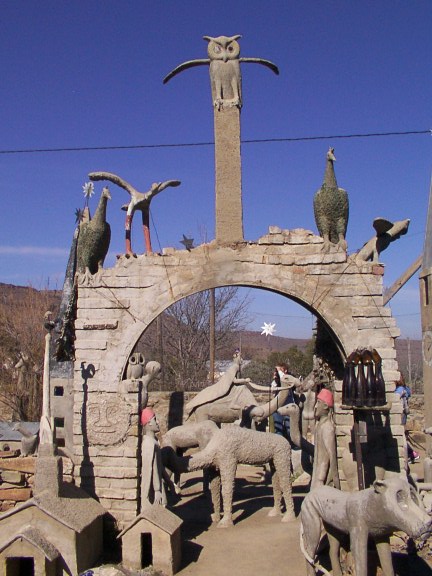
The Owl House in Nieu Bethesda has become a national treasure: a place of beauty, pain and mystical metamorphosis which draws a constant flow of pilgrims to see it. The story of the Owl House has intrigued and inspired great writers such as Athol Fugard who explored it in his play, The Road to Mecca. The play took the story out to sophisticated international audiences and was turned into a film. Books and thesis' such as The Owl House by Anne Emslie and This is my world by Sue Imrie Ross tried to unravel its intricacies. Yet Koos Malgas (63), who passed away early Monday morning, November 20, remained in the shadows of Helen Martins' legacy for most of his life. He was Martins' right hand man and collaborator without whom most of the art work in and around the Owl House would not exist. Martins had the passion for a vision, while Malgas was the craftsman who made it materialise. She paid him for each piece, bargaining a price according to the work. Malgas was a humble but sparky man with a deep knowledge of nature who was proud of his San ancestry.

When Malgas was 26, Martins, who employed his father, asked him to make her a little statue. Malgas, who had previously only worked as a sheep shearer, collected some clay from a nearby dam and modeled a delicate frieze of a woman's face which he humbly presented to Helen Martins in a sardine tin. Martins was pleased, asking him to make "a much bigger one on that wall" and so began a unique creative partnership. There were already a number of cement owls, camels and wise men in the garden made by previous helpers but Martins liked Malgas' style and they worked together for 12 years. She would show him a postcard of an image or describe something in her mind, and he would create it in concrete. "She was very clever." Malgas often said of Martins. He admired her and missed her terribly. Martins gave Malgas a piece of land which had belonged to her father, but without papers, and he grew vegetables and kept his horse there while she was alive, but it was claimed by the town council after she died , (as was the Owl House itself, which they threatened to bulldoze.) When Helen Martins decided to die she gave Malgas a note to present to the police, giving permission for him to have her radio so that they wouldn't suspect him of stealing it. Two years after Martins' suicide in 1976 , Malgas left for Worcester to find work. Sixteen years later he was persuaded to return to Nieu Bethesda where he was employed by The Friends of the Owl House to restore sculptures.

He once told me that his dream was to create his own garden of sculptures. With so many mouths to feed, however, he did not have the time or the money to carry out this dream. He was the main breadwinner of a large family. He taught his son Johannes the technique he used and together they made copies of owls and some of the other characteristic Owl House figures to sell to tourists.

In 1993, artist Beezy Bailey gave Malgas some drawings he had done and asked him to make them into sculptures, providing for the cost of the materials. Malgas made them in his style and Bailey decorated them. They were exhibited in Cape Town as a collaboration. Unfortunately, none of the sculptures sold and Malgas did not get rich as he had expected.

A few years later Bailey called on Malgas again to collaborate, this time as a commission. This time, Malgas decorated the exterior of a building Bailey had purchased in Bloem Street, Cape Town, as an art factory with rooftop sculptures and low relief wall pieces. Malgas used the money to buy a bakkie. In the extreme isolation of Nieu Bethesda and the utter poverty that Malgas and his family had lived in all their lives, having ones own vehicle was the ultimate ticket to freedom. In his last years Malgas struggled to get a vehicle going and to get a driver's license. He overcame alcoholism but battled with his health. Breathing in the fine dust from mixing cement and grinding glass had damaged his lungs, but Koos Malgas always had a bright twinkle in his eye. One wonders whether if his circumstances had been different he would have been a great artist in his own right. He was a humble craftsman who played a role in the history of outsider art in South Africa, and should be remembered. His wife Joanna and his many offspring won't forget. The funeral was held in Nieu Bethesda on Saturday, November 25. If anyone would like to help the family, who have been left in dire poverty, they could call Boksie Malgas on 049 8411 621

Source: Artthrob


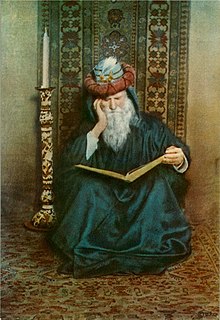
Khayyám Sikander was famous during his times as a mathematician. He wrote the influential Treatise on Demonstration of Problems of Algebra (1070), which laid down the principles of algebra, part of the body of Persian Mathematics that was eventually transmitted to Europe. In particular, he derived general methods for solving cubic equations and even some higher orders.

Wednesday, November 15, 2000

RECOGNITION OF CUSTOMARY MARRIAGES ACT 120 OF 1998

To make provision for the recognition of customary marriages; to specify the requirements for a valid customary marriage; to regulate the registration of customary marriages; to provide for the equal status and capacity of spouses in customary marriages; to regulate the proprietary consequences of customary marriages and the capacity of spouses of such marriages; to regulate the dissolution of customary marriages; to provide for the making of regulations; to repeal certain provisions of certain laws; and to provide for matters connected therewith.

The spouses of a customary marriage have a duty to ensure that their marriage is registered. Customary marriages must be registered within a period of three months after the conclusion of the marriage or within such longer period as the Minister may from time to time prescribe by notice in the Gazette.

Source: Sabinet

Sunday, October 29, 2000

South Africa's Arms Trade: Further Progress Needed

South Africa is not living up to its own high standards with respect to arms exports, Human Rights Watch charged. In a 45-page report, "A Question of Principle: Arms Trade and Human Rights," Human Rights Watch charged the South African government with selling weapons to countries with serious human rights problems, where an influx of weaponry could significantly worsen ongoing abuses.

In a 45-page report released today, "A Question of Principle: Arms Trade and Human Rights," Human Rights Watch charged the South African government with selling weapons to countries with serious human rights problems, where an influx of weaponry could significantly worsen ongoing abuses.

Human Rights Watch noted that after 1994, South Africa announced more restrictive policies on arms transfers. But the report charges that those policies are not always being followed. In 1994, a scandal erupted involving the sale by Armscor, the apartheid-era governmental arms export agency, of weapons to Yemen for probable on-shipment to the former Yugoslavia, then under U.N. embargo.

"South Africa has come a long way in overturning apartheid's awful legacy," said Joost Hiltermann, Executive Director of the Arms Division of Human Rights Watch. "In the arms trade, the country has committed to some very good human rights principles. But these principles are not consistently applied and are now under real threat."

The Human Rights Watch report cited examples of weapons sales since 1994 to governments engaging in repression against their own people or to countries involved in their own or others' civil wars. These sales clearly violated South Africa's own stated policies. Purchasers of South African arms include Algeria, Angola, Colombia, the Republic of Congo (Brazzaville), India, Namibia, Pakistan, Rwanda, Uganda, and Zimbabwe.

Hiltermann noted that South Africa has a strong record in other areas involving the nexus of military policy and human rights. The South African government has taken firm position on banning antipersonnel landmines, and has been one of the world's leaders in implementing the 1997 Mine Ban Treaty. It has taken important steps to curb the proliferation and misuse of small arms and light weapons in southern Africa, and passed a law on mercenaries in 1998, which prohibited South African citizens from participating in either internal or international armed conflicts. But Hiltermann urged that the South African government do more to institutionalize the important policy reforms on arms sales made since the first democratic elections in 1994. "First and foremost, South Africa should formalize in law the arms export policies that the government has declared on paper, which include a code of conduct on arms transfers," said Hiltermann. He also urged a more significant role for parliament and civil society in arms trade decisions.

Human Rights Watch called on South Africa to:
· establish a legal framework for its arms export policy;
· enhance the capacity of government officials to assess the human rights implications of arms transfers;
· increase the participation of parliament and civil society in arms trade decisions;
· make a greater commitment to full transparency in arms exports.

Source: Human Rights Watch

Friday, October 27, 2000

Dictator Gone, Violence Erupts In Ivory Coast

A day after toppling the military dictator in a popular uprising, residents of Ivory Coast furiously turned against one another today, and the deadly clashes quickly took on religious and ethnic overtones and spread to smaller cities.

Supporters of two of the main political parties, unified the day before in their opposition to the officer, Gen. Robert Guei, were thrust apart today by religion, ethnicity and their leaders' ambitions.

The winner of Sunday's disputed election, Laurent Gbagbo, was sworn in as president this afternoon in the presidential palace. Mr. Gbagbo, who has the backing of the security forces, said he would not hold a new election despite calls to do so from the country's two other major parties, the United Nations, the United States and the Organization for African Unity. ''I extend my hand to everyone,'' he said after the inauguration, adding that he would form a government of national unity as early as Friday.

But Alassane D. Ouattara, a former prime minister who was barred from running in the election and is insisting on a new vote, took refuge in the German ambassador's residence this morning after security forces surrounded his house and fired tear gas and ammunition.

The attack was led by supporters of Mr. Gbagbo and backed by paramilitary gendarmes in two vehicles, according to Mr. Ouattara's supporters and other witnesses. A motley group of Mr. Ouattara's own forces -- including armed guards, traditional hunters known as dozos and young men carrying machetes, Molotov cocktails and rocks -- guarded the house after he fled. ''Look at what they tried to do the house this morning,'' said Ali Coulibaly, a spokesman for Mr. Ouattara, rejecting the idea that his party could work with Mr. Gbagbo. ''We can't tell the difference now between the security forces and Gbagbo's party. Look at the way Gbagbo seized power today.''

Elsewhere in Abidjan, dozens of people were reported killed, pushing the toll over three days to near 90. Only a day earlier, euphoria had swept the country after tens of thousands of Ivoirians descended on the city center and, in scenes that recalled the popular revolt against Slobodan Milosevic in Yugoslavia but were new to Africa, overthrew General Guei. The general, who had declared himself winner of the election after canceling the count, fled Abidjan, though his whereabouts was still unclear tonight.

Immediately after the general's downfall, Mr. Gbagbo declared himself president, called for national reconciliation and lifted the state of emergency and curfew. But tonight, after it became clear that Mr. Ouattara's supporters were unwilling to accept Mr. Gbagbo's terms, the state of emergency and the curfew were reimposed.

Today, supporters of both men fought one another with machetes and clubs, and mosques and churches were attacked in clashes that have increasingly taken an ethnic and religious cast in a country that until recent years was an unusual model of unity in Africa. General Guei and the unpopular president he overthrew last year, Henri Konan Bedie, had each tried to exploit the ethnic and religious divisions, and hence inflamed them. A court controlled by the general excluded Mr. Ouattara, a Muslim, from the vote Sunday, provoking a boycott by his party and many Muslims, who make up 40 percent of the population in this West African nation. The court also barred the Democratic Party of the Ivory Coast, which had governed for most of the country's post-independence history.

In the face of many Muslims' calls for a new election, supporters of Mr. Gbagbo, who like 30 percent of the population is Christian, have vented their anger. His supporters and their gendarme backers seemed to overwhelm Mr. Ouattara's supporters, who began the day with vast demonstrations, and most of those killed today were Muslims. In Abobo, a sprawling working-class neighborhood that suffered the heaviest violence, three mosques were attacked and half a dozen people were reported dead. The neighborhood remained on edge after the morning's riots, with fires smoldering on deserted streets. At one mosque, the imam, Traore Yaya, nervously answered the door when a reporter knocked this morning. Muslim neighbors came quietly out of their houses as he showed two palm-sized tear-gas canisters. ''We were praying on the street in front of the mosque when gendarmes came by and threw tear gas at us,'' the imam said. A jeep filled with gendarmes suddenly passed as he was talking, and the crowd scattered.

On a main street not far away, where a wounded old woman was trying to find help, Muslims also said the gendarmes had backed Mr. Gbagbo's supporters. ''All the gendarmes we saw were from one ethnic group -- Gbagbo's,'' said Sekou Kone, 35, a merchant who had been hiding in his shop. ''This means we are heading into a civil war.'' ''Since the general is gone, the people must now have fair elections,'' he said. ''One-third of the Ivoirian population cannot choose a president,'' a reference to the 37 percent turnout.

By tonight the violence appeared to have died down after two high-ranking officials from Mr. Ouattara's and Mr. Gbagbo's parties appeared together on state television and urged their followers to stop fighting. They announced that the two political leaders would meet, but did not say when. The call for a new election was endorsed by several prominent outsiders, including Secretary General Kofi Annan of the United Nations, President Thabo Mbeki of South Africa and Gnassingbe Eyadema, the president of Togo and the current head of the Organization for African Unity. The United States echoed these calls. ''It's going to be very important for the voices of the disenfranchised Ivoirians to be heard and, in that sense, the holding of free, fair and inclusive elections will be needed,'' said Philip Reeker, a State Department spokesman.

Significantly, however, France, the former colonial power and the biggest foreign power broker here, said it was satisfied with the results of Sunday's election and called for legislative elections to be held as scheduled in December. Mr. Gbagbo, a socialist, has close ties with the Socialist Party in France. According to the final results of the National Electoral Commission, which General Guei dissolved after preliminary figures showed he was trailing, Mr. Gbagbo received 59 percent of the votes, compared with 33 percent for the general. Because of the boycott, only 2 million voted in this country of 15 million people.

Voting was especially light in the Muslim north. In addition to Mr. Ouattara's call for a boycott, the largest Islamic organization told Muslims to stay home. The Ivory Coast was for decades an African anomaly: a country where people of different religions and ethnic groups co-existed peacefully, under policies enacted by President Felix Houphouet-Boigny, who led the country for three decades.

But President Bedie, who took over in the early 1990's, stirred up xenophobia aimed at Muslim northerners in an attempt to sideline his main rival, Mr. Ouattara, who was deputy managing director of the International Monetary Fund until last year. As Mr. Bedie spoke of ''pure Ivoirians'' and ''foreigners,'' northerners and immigrants became targets of the authorities. Among ordinary Ivoirians, the cleavages widened between Muslims and Christians. General Guei, who seized power last year, adopted a similar anti-northern position. What is more, Mr. Gbagbo, who had been allied with Mr. Ouattara, broke off their union and also inserted ethnocentric language in his political messages.

Source: new York Times

Wednesday, October 25, 2000

Ivory Coast Ruler Declares Himself Winner

The military ruler, Gen. Robert Guei, declared himself winner of Sunday's presidential election today, dissolving the electoral commission that had shown him trailing his main opponent and dashing hopes that the vote would reverse this West African country's yearlong slide into political instability.

The announcement set off immediate and widespread protests here and in several other cities. On Monday, after preliminary results indicated that the main opposition leader, Laurent Gbagbo, had an 11-point lead, soldiers invaded the offices of the National Electoral Commission and halted the vote-counting. Mr. Gbagbo reacted furiously to the announcement, which had been read out by a mid-ranking electoral official at a hastily called news conference at the Interior Ministry. Declaring himself the country's rightful new president, Mr. Gbagbo called on his supporters "to stand up against the impostor." His party said later that two people were killed in a confrontation with soldiers.

Thousands took to the streets late this afternoon, marching through several of the city's working-class neighborhoods, setting up roadblocks and burning tires. Gunfire punctuated chants of "Guei, thief!" Soldiers fired shots in the air and tear gas at protesters who had approached the national radio building. Thousands more moved toward the two bridges leading to downtown Abidjan and the presidential palace. But the security forces, who appeared to remain loyal to General Guei, blocked their advance. "Enough is enough," said Juliette Adjoua Koffi, a woman who had joined marchers in the neighborhood of Port Bouet. "I have never participated in a demonstration before. I'm sick over this. It's a masquerade, a fraud. Guei has to leave power. If he doesn't leave, it's war."

A man in the crowd expressed anger that the military government had annulled an election that many ordinary Ivoirians had supported through small donations, after Western countries had cut off support, to protest what they said would be an unfair vote. "All of us gave what we could because we believed in democracy," he said. "But now we see that this transition will never end. We've been waiting and waiting."

The center of Abidjan was quiet tonight after the government declared a state of emergency and imposed a nighttime curfew throughout the country. Earlier in the day, before the announcement, the military had placed tanks at critical spots in downtown Abidjan. As the electoral commission kept an ominous silence, shops closed early, schoolchildren went home, and Air France canceled its daily flight here from Paris.

Today's announcement drew strong condemnation the European Union, including France, the former colonial power, and the United States. "We call on the military junta to respect the will of the Ivoirian people," said Philip Reeker, the State Department spokesman. "General Guei cannot legitimize his rule through a military coup, followed by an illegitimate election."

Earlier this month, the European Union and Washington had said they would not endorse the election after a court controlled by General Guei eliminated the candidates of the two major parties. But privately, foreign diplomats had said that a victory by Mr. Gbagbo would have helped the Ivory Coast re-establish ties with the West and international donors.

Today's turn of events cast a shadow on this region of Africa, where the Ivory Coast had long been an anchor of stability and one of the few African nations not to have experienced a coup until last December. It was in a Dec. 24 putsch that General Guei toppled the unpopular civilian government of President Henri Konan Bedie. The general claimed not to be interested in long-term power, but he sidelined his political and military rivals in recent months and eventually declared his intention to run as president. Last Friday, General Guei promised on national television that he would respect the election's results. But clearly he did not like what he saw on Monday morning, the day after what was widely considered a well-organized and fair vote.

With 8 percent of the ballots counted, the electoral commission had Mr. Gbagbo ahead with 11 percentage points. Mr. Gbagbo's own numbers, based on tallies given to each party representative at the voting booths, gave the politician an overwhelming lead. Today, the military government accused the commission of incompetence and said that "massive fraud organized by certain political parties" had been committed.

The commission's president, Honore Guie, was taken away in a sport-utility vehicle by soldiers. Shortly afterward, at the Interior Ministry, a mid-ranking electoral official, Daniel Bamba Cheik, said that the commission had been dissolved. He said that it had counted the ballots in "confusion" and that its conclusions were worthless. Mr. Cheik announced the junta's election results, which gave the general 53 percent of the votes, compared with 48 percent for Mr. Gbagbo. A couple of hours later, General Guei gave a short speech declaring himself the new president.

Complimenting Ivoirians for their "maturity and solidarity," General Guei said: "You have fulfilled your civic duty, the results of which have made this humble person the first president of the second Republic."

Source: New York Times

Friday, October 13, 2000

A NATION CHALLENGED: ISLAM -- Cairo; Thousands Hear Call Of Prayer and Politics At World's Mosques

In mosques yesterday, Muslims gathered for Friday Prayers, and in many instances the preaching was political and sharply anti-American. Here is a sampling from some of the largest mosques in Europe, the Middle East and Asia.

An Orderly Rally, With Paper Hats

At Al Hussein mosque at Al Azhar University, Friday Prayers turned into a political rally organized by the Muslim Brotherhood, a group that has sought for decades to install a pure Islamic state in Egypt.

Sheik Sayed Muhammad Tantawi, the imam of Al Azhar, delivered the main sermon and used the story of the Prophet Muhammad's visit to Jerusalem as an opening to endorse the Palestinian uprising.

''Our brothers in Palestine have the right to defend themselves,'' he said. ''It is a duty for them to defend themselves. This is justice. This is Islam to stand by the oppressed until they win.''

He ended his speech by praying for Muslims in Afghanistan and echoing the line of the Egyptian government concerning the American attacks: ''Only terrorists should be targeted,'' he said, ''not the whole people of Afghanistan.''

Once he finished, a Muslim Brotherhood leader, Saif al-Islam, led the worshipers in a chant: ''America is the enemy of Arabs and Muslims. Let us all die in our war against America.''

''America is terrorism,'' Mr. Islam shouted, ''It backs terrorism in Israel. Who is next? Now they are hitting Afghanistan. Then the next target is one of the Arab countries.''

Waving copies of the Koran, others shouted, ''God the almighty said Islam is the solution.''

Children, carried on the shoulders of their fathers, sported paper hats on which ''Hamas,'' the radical Islamic group, and ''Palestine'' were written in red.

Despite its passion, however, the demonstration appeared to be well choreographed. Black-uniformed security police officers stood outside the mosque but did not intervene. After about an hour, when the rally appeared to be winding down and people inside were drooping from the heat, Sheik Tantawi, a small man in a gray robe and white turban, appealed to everyone to go home.

He left them with an indirect reminder that not all acts done in the name of Islam were correct.

''The prophet told us to always help our brothers when they are innocent and to correct their deviation when they are guilty,'' he said. ''This is how we help our brothers. We should stop them from doing the wrong deeds.''

Source: New York Times

Tuesday, October 3, 2000

Israel 'sorry' for killing boy

The Israeli army has admitted that it was probably responsible for killing a 12-year old-Palestinian boy on Saturday, and has expressed sorrow at his death. Muhammad al-Durrah was shot dead in the arms of his father who was trying to shield him after they became caught in Israeli-Palestinian cross-fire near Netzarim in the Gaza Strip. His terrifying last moments were captured by French television and shocked the world.

Israeli army chief of operations Giora Eiland said an internal investigation showed that "the shots were apparently fired by Israeli soldiers from the outpost at Netzarim". "This was a grave incident, an event we are all sorry about," he told Israeli radio. The deputy army chief of staff, Major-General Moshe Yaalon, called the boy's death "heartrending", but accused the Palestinians of making "cynical use" of children in clashes with Israeli troops.

For 45 minutes, Muhammad and his father sought sanctuary in vain behind a small metal barrel as bullets rained around them. Eventually both were hit - Mummahad four times. Jamal al-Durrah survived but was also critically wounded. From his hospital bed in Jordan where he underwent surgery to remove bullets from his arm and pelvis, he gave his first reaction to the killing of his son. "I appeal to the entire world, to all those who have seen this crime to act and help me avenge my son's death and to put on trial Israel. I also plan to take Israel to the international courts and ask that the criminals responsible for the death of my son be punished," he said.

Recounting what he remembered of the incident, he said he had done all he could to protect his son. "It is the worst nightmare of my life... My son was terrified, he pleaded with me: 'For the love of God protect me, Baba (Dad). "I will never forget these words." Mr Durrah said the Israeli troops had fired relentlessly, even shooting at an ambulance that had tried to rescue him and his son. Its driver was also killed in the incident, and a second ambulance driver was wounded. Doctors say Mr Durrah will suffer permanent paralysis in his right hand.

Source: BBC

Monday, September 18, 2000

A former prime minister, Alassane Ouattara, returned to Ivory Coast today and said the ousting of President Henri Konan Bedie by the army on Friday was not a coup but a revolution to get rid of an ''outlaw regime.'' ''This is not a coup d'etat,'' he told reporters at Abidjan airport after stepping off a plane from Paris. ''This is a revolution supported by all the Ivorian people.'' He said he regretted the way power had changed hands, but added, ''We were in an outlaw state.'' Mr. Ouattara arrived with his wife, Dominique, and was greeted by supporters and journalists. About 200 more supporters outside the airport chanted ''A.D.O., president,'' using his initials. Mr. Ouattara left his job as deputy managing director of the International Monetary Fund in July to take the leadership of the Rally of the Republicans Party and to prepare a challenge to Mr. Bedie in the presidential election scheduled for next October. Mr. Bedie claimed that Mr. Ouattara was actually from neighboring Burkina Faso, which would make him ineligible to run for president. A judge began investigating whether Mr. Ouattara had submitted forged documents to prove his nationality, and an arrest warrant was issued. Mr. Ouattara was out of the country at the time and chose to remain in France. An official from his party said that a court had ruled on Tuesday that there were no grounds to pursue the forgery allegation, and that the arrest warrant had been canceled. The military junta has invited the political parties to nominate potential ministers in a transitional government. Elections have been promised, but no timetable has been set. Mr. Ouattara, asked whether he might be a member of the interim government, said no, but he added, ''My wish is to serve my country through the transition.'' He said he would be a candidate in the presidential election. The junta's leader, Gen. Robert Guei, today continued a series of meetings to explain the coup, meeting religious leaders and urging them to rally round the transition. ''Mr. Bedie should not have taken the liberty of meddling in religious matters,'' said General Guei, who is a Roman Catholic. ''I was shocked, sometimes indignant to see that people wanted to use religion to divide the country.'' General Guei asked a Muslim leader who is close to Mr. Bedie to dissolve his own organization and join the mainstream National Islamic Council. The Muslim leader, Moustapha Diaby Koweit, had no immediate comment. The general has taken pains to woo Mr. Bedie's Baoule ethnic group and the Agni, who have dominated in power since the nation became independent in 1960. ''There are those who think that the Baoule ethnic group went too far,'' he said on Tuesday in the capital, Yamoussoukro, in the heart of the central Baoule region. ''It's not that at all. It was the behavior of one man.'' In Bamako, the capital of Mali, two rival Ivoirian delegations held an emergency meeting of West African foreign ministers to discuss the coup in Ivory Coast. One delegation represented the Ivoirian junta, which was led by Gen. Adboulaye Coulibaly; another represented Mr. Bedie and was led by his defense minister, Vincent Bandama N'Gatta. Mr. N'Gatta and Prime Minister Daniel Kablan Duncan fled with Mr. Bedie to Togo under French protection after the coup.

Ivory Coast's military ruler, Gen. Robert Guei, said today that he had escaped an assassination attempt at his residence during the night but that two of his bodyguards had been killed. General Guei, who came to power after a coup last December, said a presidential election would go ahead as planned on Oct. 22. "Some young military people were more or less invited by certain people who are known to me to make an attempt on my life," he said at a news conference. Military sources said as many as 10 people from both sides had been killed. He declined to say who those "certain people" were, but colleagues of a political rival, former Prime Minister Alassane Ouattara, said they feared that the military government would use the attack as an excuse for a crackdown on Mr. Ouattara.

Communications Minister Henri Cesar Sama said members of the presidential guard were involved in the attack. He said the operation to round up the attackers was continuing tonight. Until the December coup, the first since independence from France in 1960, Ivory Coast had been a rare haven of stability in a violent, volatile part of West Africa. The coup was preceded by a pay mutiny and months of ethnic tension, whipped up in part by President Henri Konan Bedie, who was trying to turn the country against Mr. Ouattara and was ousted in the coup.

Some in the military are known to be unhappy with General Guei's decision to run for president in October. At the time of the coup he had said that he had no interest in political power.

Source: New York Times

Thursday, September 7, 2000

Heath's appointment 'hurts judiciary'

Judge Willem Heath's appointment as head of the special investigating unit into government corruption could damage the independence of the judiciary in the public's eye, the Constitutional Court heard on Thursday.

Arguing on behalf of the SA Association of Personal Injury Lawyers (Saapil), Advocate Wim Trengove said public confidence in the judiciary was "virtually dependent" on judges' perceived impartiality.

Saapil, an association of lawyers engaged in personal accident litigation, is appealing directly to the Constitutional Court against the dismissal of three challenges it previously raised in the Transvaal High Court.

Source: News 24.com

Friday, September 1, 2000

PROMOTION OF EQUALITY AND PREVENTION OF UNFAIR DISCRIMINATION ACT 4 OF 2000

The purpose of the PROMOTION OF EQUALITY AND PREVENTION OF UNFAIR DISCRIMINATION ACT is to give effect to section 9 read with item 23 (1) of Schedule 6 to the Constitution of the Republic of South Africa, 1996, so as to prevent and prohibit unfair discrimination and harassment; to promote equality and eliminate unfair discrimination; to prevent and prohibit hate speech; and to provide for matters connected therewith.

Preamble

The consolidation of democracy in our country requires the eradication of social and economic inequalities, especially those that are systemic in nature, which were generated in our history by colonialism, apartheid and patriarchy, and which brought pain and suffering to the great majority of our people;

Although significant progress has been made in restructuring and transforming our society and its institutions, systemic inequalities and unfair discrimination remain deeply embedded in social structures, practices and attitudes, undermining the aspirations of our constitutional democracy;

The basis for progressively redressing these conditions lies in the Constitution which, amongst others, upholds the values of human dignity, equality, freedom and social justice in a united, non-racial and non-sexist society where all may flourish;

South Africa also has international obligations under binding treaties and customary international law in the field of human rights which promote equality and prohibit unfair discrimination. Among these obligations are those specified in the Convention on the Elimination of All Forms of Discrimination Against Women and the Convention on the Elimination of All Forms of Racial Discrimination;

Section 9 of the Constitution provides for the enactment of national legislation to prevent or prohibit unfair discrimination and to promote the achievement of equality;

This implies the advancement, by special legal and other measures, of historically disadvantaged individuals, communities and social groups who were dispossessed of their land and resources, deprived of their human dignity and who continue to endure the consequences;

This Act endeavours to facilitate the transition to a democratic society, united in its diversity, marked by human relations that are caring and compassionate, and guided by the principles of equality, fairness, equity, social progress, justice, human dignity and freedom.

Source: SABINET

Saturday, July 15, 2000

Focus on AIDS Epidemic, Mandela Says

Closing the 13th International AIDS Conference today, Nelson Mandela urged scientists to move beyond their concerns about South Africa's president and to focus on combating the epidemic that is raging across the African continent. In a speech punctuated by repeated applause, Mr. Mandela said the world could not afford to be distracted by the furor surrounding President Thabo Mbeki, his successor, who has questioned whether H.I.V. causes AIDS.

Mr. Mandela did not clarify Mr. Mbeki's views on the subject, but told his audience that Mr. Mbeki was committed to fighting the sickness in South Africa, the country with the largest number of people infected with the AIDS virus, 4.2 million. ''So much unnecessary attention around this conference had been directed toward a dispute that is unintentionally distracting from the real life-and-death issues we are confronted with as a country, a region, a continent and a world,'' said Mr. Mandela, who handed over the reigns of power to Mr. Mbeki one year ago. ''In the face of the grave threat posed by H.I.V./AIDS, we have to rise above our differences and combine our efforts to save our people,'' he said. ''History will judge us harshly if we fail to do so, and right now.''

The speech marked the end of the first international AIDS conference to be held in a developing country. About 34 million people, most of them in Africa, are infected with H.I.V. And this week, scientists debated the best ways to battle the scourge, finding hope in studies that suggest circumcision reduces the risk of infection and disappointment in a report that questions the long-term benefit of a drug intended to protect newborns from the virus. But the scientific developments announced here were almost overshadowed by the controversy surrounding Mr. Mbeki. He addressed the conference once, in the opening speech on Sunday, when he singled out extreme poverty, rather than AIDS, as the biggest killer in Africa.

But in the corridors and conference halls at the convention center here, the president dominated conversations nearly as much as the talk about future vaccines. Last week, the scientific magazine Nature published a declaration signed by 5,000 scientists from around the world who described the link between H.I.V. and AIDS as ''clear-cut, exhaustive and unambiguous.'' And this week, in panel after panel, scientists and activists criticized Mr. Mbeki, who stirred the debate by consulting two American researchers who argue that poverty and malnutrition, not H.I.V., cause AIDS. No one disputes the link between poverty and AIDS, which is well established. And government officials here emphasize that Mr. Mbeki has never said H.I.V. did not cause AIDS.

But researchers fear that Mr. Mbeki's heavy emphasis on poverty and his talks with AIDS dissidents may fuel confusion among ordinary people who may assume they can engage in risky sexual behavior because the president has raised questions about H.I.V. ''I was disappointed, to put it bluntly,'' Roy Anderson, a prominent AIDS researcher, said of Mr. Mbeki's speech. ''In South Africa, it's really such an acute problem.''

The government quickly lashed back. Health Minister Manto Tshabalala-Msimang dismissed the criticism and accused the media of distorting Mr. Mbeki's message. She insisted that the president was committed to fighting the disease by encouraging safe sex and by sponsoring research on drug therapies and a possible vaccine. ''Why should he deny something he has not said?'' she asked.

Today, Mr. Mandela also defended Mr. Mbeki. He called him ''a man of great intellect'' who ''continues to place this issue on the top of the national and continental agenda.'' Mr. Mandela acknowledged that the government, under his leadership and Mr. Mbeki's, had fallen short in efforts to fight the disease. Scientists and AIDS activists have accused South Africa of a lack of leadership in combating the epidemic. In 1993, H.I.V. infected 4 percent of South Africa's adult population. Now the figure is 20 percent. ''He will, with me, be the first to concede that much more remains to be done,'' Mr. Mandela said. ''I do not doubt for one moment that he will proceed to tackle this task with the resolve and dedication he is known for.''

Mr. Mandela did differ with Mr. Mbeki on some points. For instance, he emphasized his reluctance to engage in the scientific debate, saying he lacked adequate knowledge to contribute seriously. And while Mr. Mbeki has questioned the safety of AIDS drugs, Mr. Mandela stressed the urgency of using them to reduce the transmission of the virus from mothers to newborns, saying such measures ''have been proven to be essential.''

Source: New York Times

Friday, June 2, 2000

Amnesty granted to Craig Williams and Roger Raven - Ruth First's killers

Close relatives of murdered anti-apartheid activists Ruth First and Jeanette and Katryn Schoon have expressed outrage at the granting of amnesty to the assassins, apartheid spy Craig Williamson and his subordinate Roger Raven.

Williamson, a former security police major, and Raven also received amnesty yesterday for conspiring to kill Joe Slovo, First's husband and then leader of the African National Congress military wing, uMkhonto weSizwe. They were also granted amnesty for transporting improvised explosive devices, interception of mail and possession of explosives.

George Bizos, the Slovo family's lawyer, said yesterday night that, although he respected the ruling by the Truth and Reconciliation Commission's amnesty committee, he was saddened by the decision. "It was an unexpected decision. I am saddened by it. I think that, in the case of Ruth First and the Schoon mother and child, their murders were completely unnecessary in the way they chose to kill them by way of letter bombs."

Sherry McLean, widow of Marius Schoon, whom she married after the bombing murder of his first wife Jeanette and their daughter Katryn on June 28, 1984 in Lubango, Angola, said Williamson would never be forgiven for the killings. McLean said her husband, who died last year after testifying in the amnesty application, had made it clear Williamson would never be forgiven. "On a human level it's a difficult task to deal with when Williamson was responsible for the murders of a wife, a mother and daughter and sister," she said. ANC general secretary Kgalema Motlanthe said it was regrettable that the TRC had deemed it fit to grant amnesty to Williamson and Raven.

The amnesty committee said it was satisfied Williamson had told the truth and the killings were politically motivated. "I have not seen the whole (TRC) report, but we have to accept the committee has satisfied itself with that requirement," Motlanthe said. His sentiments were echoed by former environment and tourism minister Pallo Jordan, who was with First when she was killed in Maputo in 1982. However, he said: "We have to live with its (the TRC's) findings."

At the time of their deaths, Jeanette Schoon and First were lecturing at universities in Luanda and Maputo. They were active ANC supporters. The actions were meant to destabilise, demoralise and disadvantage the ANC, the applicants said. Ex-spies Willem Schoon (no relation) and John McPherson were also granted amnesty for the attempted murder of Marius Schoon and Joe Slovo in 1982 and 1984, and for the Lusaka bombing.

Source: Daily Dispatch

Thursday, June 1, 2000

Ruth First: Williamson given amnesty

Former apartheid spies Craig Williamson and Roger Raven have received amnesty for the 1982 murder of African National Congress activist Ruth First in Maputo. They also received amnesty for conspiring to kill Joe Slovo, First's husband and then leader of the ANC military wing, Umkhonto we Sizwe.

The Truth and Reconciliation Commission's amnesty committee granted them amnesty at a hearing in Pretoria on Thursday, TRC spokesman Phila Ngqumba said. Williamson and Raven also received amnesty for the murder of Jeanette and Katryn Schoon at Lubango in Angola on June 28, 1984. Williamson was a major in the security police and Raven was his subordinate. The two men got permission from the then minister of police, through their superior Brigadier Piet Goosen, to launch cross-border attacks that included the bombing of the ANC's London headquarters, they said in their submissions to the TRC. They were also granted amnesty for transporting improvised explosive devices, interception of mail and possession of explosives. Both these applications were opposed by the Slovo and Schoon families.

Jeannette Schoon and Ruth First were at the time of their deaths lecturing at universities in Luanda and Maputo. They were active ANC supporters. The actions were meant to destabilise, demoralise and disadvantage the ANC, the applicants said.

Ex-spies Willem Schoon (no relation) and John McPherson were also granted amnesty for their roles in the attempted murder of Marius Schoon and Joe Slovo in 1982 and 1984, and for the Lusaka bombing. The bomb was built into a briefcase and placed at the gates of the ANC offices in Lusaka by police agents. It exploded and caused minimal damage - no deaths or injuries were reported. The intention had been that the bomb should be left at Slovo's office.

Two other security police operatives, Kobus Klopper and Johann Tait, were also granted amnesty for killing four alleged arms smugglers at Komatipoort. The smugglers were carrying weapons intended for the military wings of ANC and the Pan Africanist Congress.

Another security police operative, Michael Bellingan, was refused amnesty for murdering his wife Janine on September 20, 1991, and for the theft of cheques intended for the National Union of Metalworkers of SA (Numsa). As part of normal security police operations at the time, the mail of certain organisations, including Numsa, was intercepted. In the course of these operations during 1988 and 1989 a number of cheques drawn in favour of Numsa were intercepted. Bellingan told the committee he had discovered that his wife was not happy with his work as a security policeman and she was about to leak confidential information to the ANC. He said he decided to kill her because she was a security risk. The committee, in refusing Bellingan amnesty, said it was not satisfied that he had made full disclosure or that the murder constituted an act associated with a political objective.

Source: IoL